
REVIEW · OLD TOWN WALKING TOURS
Sightseeing Cruise around the Old Town of Gdansk
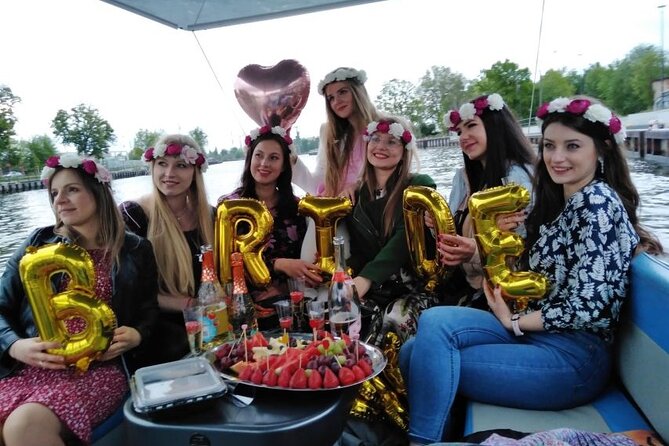
See Gdańsk from the water. This 50-minute cruise on the Motława River gives you a fresh view of the Old Town, with quiet electric boating and a route past the famous medieval Crane, Sołdek ship, and old water gates. I like the comfortable seats with pillows and blankets, and I like the small group size of no more than eight people. The main concern is reliability: several scheduled trips have been canceled because of boat problems or weather, so check the departure carefully.
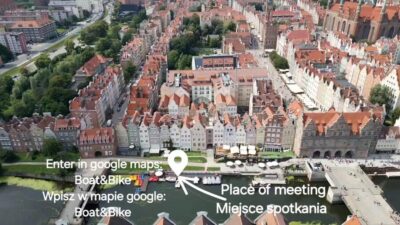
The boat returns to Powroźnicza 13/15, making this an easy outing to fit into a day of sightseeing. An English audio guide adds context as you pass the riverfront, though this is still a relaxed sightseeing ride rather than a full guided tour with a live historian.
In This Review
- Key points to know before boarding
- Why a river cruise helps you understand Gdańsk
- Boarding at Powroźnicza 13/15
- The Green Bridge and the first view of the Old Town
- Granary Island and Gdańsk’s trading past
- The Crane, Gdańsk’s unforgettable waterfront symbol
- Sołdek and the Ołowianka waterfront
- Fish Market and the river as a working place
- Brabank and the changing Motława shore
- Polish Hook and the grain trade
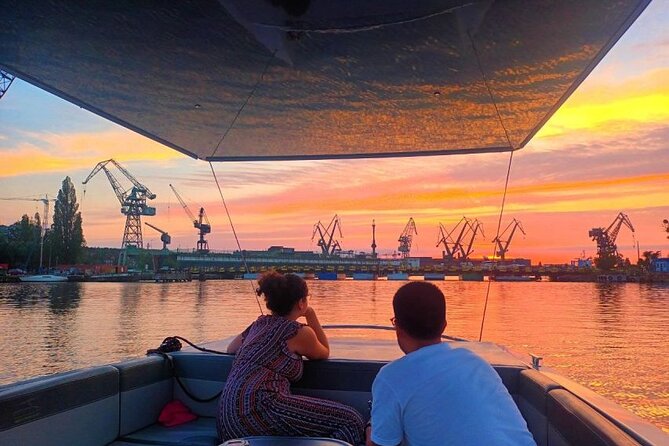
- The Imperial Shipyard and the industrial edge
- Comfort, audio, and the pace of the ride
- Is $21.62 a fair price?
- Cancellations and the practical risk
- Who should book this Motława cruise?
- Should you book it?
- FAQ
- How long is the sightseeing cruise?
- Where does the cruise start?
- Where does the cruise end?
- Is an English audio guide available?
- How many people can join the cruise?
- What happens if bad weather cancels the cruise?
Key points to know before boarding
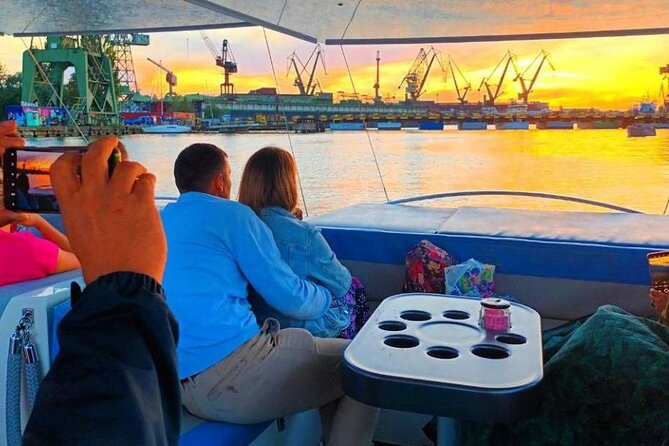
- A quiet electric boat: The low-speed ride lets you hear the riverfront and take photos without the roar of a large engine.
- A compact 50-minute route: You see many of Gdańsk’s best waterfront sights without giving up most of your day.
- A small maximum group of eight: This should feel more personal and less crowded than a large sightseeing vessel.
- Historic sights from an unusual angle: The Crane, Green Bridge, Granary Island, Sołdek, and old gates look different from the river.
- A roof with solar panels: The panels help shade the boat and can provide cover from light rain, according to the operator’s description.
- Weather and operations matter: Poor weather can cancel the trip, and past boat failures caused some departures not to run.
Why a river cruise helps you understand Gdańsk
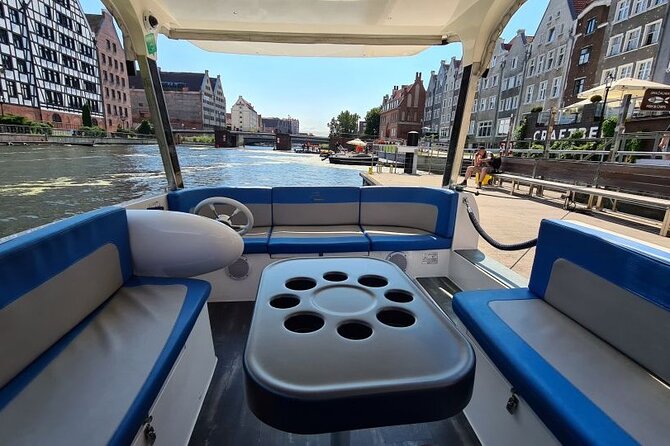
Gdańsk is built around water. The Motława was not simply a pretty backdrop for the city. It was the working edge of a major port, where grain, timber, resin, ash, and other goods moved in and out.
From street level, you see handsome façades and lively quays. From the boat, you see how the city’s bridges, gates, warehouses, islands, and shipyards fit together. That change in viewpoint is the real value of this experience.
I would not treat the cruise as a replacement for walking through the Old Town. You cannot stop at the Crane, wander through Granary Island, or study the World War II Museum from the boat. Instead, use the ride to get your bearings, rest your feet, and connect the separate parts of Gdańsk’s waterfront.
The 50-minute length works well early in your visit. It gives you an overview before you decide which sights deserve a closer look. It also suits a final afternoon when you want something pleasant but do not want another long museum visit.
More Boat Tours in Gdańsk
- Gdansk: City Cruise on Historical Polish Boat
★ 4.8 · 2,913 reviews - Gdańsk: Sunset Cruise on a Historic Polish Boat
★ 4.9 · 977 reviews - Gdansk: Guided Round-Trip Cruise to Westerplatte
★ 4.3 · 865 reviews
Boarding at Powroźnicza 13/15
The meeting point is at Powroźnicza 13/15 in central Gdańsk, and the cruise ends at the same place. That return to the starting point is useful because you do not need to plan a separate ride back across the city.
The ticket is mobile, so you can keep the confirmation on your phone. The activity is near public transportation, and most people can take part. Service animals are allowed.
The boat carries no more than eight people. That is one of the strongest practical features here. A small group means less competition for views and a calmer ride, especially when the boat passes narrow sections of the river.
Still, allow time to find the exact boarding point. Riverfront addresses can be confusing when several quays, restaurants, and boats sit close together. Arrive with your mobile ticket ready and confirm that you are at Powroźnicza 13/15 before departure.
The Green Bridge and the first view of the Old Town
The Green Bridge links the historic center with Granary Island. It continues the line of the Long Market, one of the most important parts of central Gdańsk.
The name comes from the paint that once covered the bridge. The original bridge was partly wooden until the nineteenth century, and it was a drawbridge until the end of World War II. After it was rebuilt as a steel structure, the old color disappeared, but the name stayed.
Seeing the bridge from below gives you a quick lesson in how Gdańsk connected its commercial center with its storage district. Look back toward the Old Town as the boat moves away. This is one of the better moments for a wide photograph of the waterfront, bridge, and historic buildings together.
The drawback is that a moving boat gives you only a short time to frame the view. Keep your phone or camera ready rather than waiting for the perfect composition.
Granary Island and Gdańsk’s trading past

Granary Island is surrounded by two arms of the Motława and stretches almost two and a half kilometers. At its widest, it is only about 300 meters across.
For centuries, this was a storage zone for Gdańsk’s trade. Nearly 360 granaries once occupied the island, holding grain as well as wood, resin, ash, and other goods. That number helps explain why the river was so important to the city’s fortunes.
Today, former warehouses have been converted into a modern residential and leisure district. From the boat, you get both sides of the story: the old commercial island and the new neighborhood built around its waterfront.
I like this part of the route because it shows how Gdańsk uses its old industrial spaces without turning the entire waterfront into a museum. You see historic forms beside modern buildings, and the contrast is easier to understand from the river.
The cruise passes by rather than stopping here. If the island interests you, return on foot later. A walk gives you time to inspect the restored warehouse fronts and bridges at your own pace.
More Old Town Walking Tours in Gdańsk
- Gdańsk: Sightseeing EcoCruise around the Old Town of Gdansk
★ 4.6 · 719 reviews - Gdańsk: Old Town Private Walking Tour with Legends and Facts
★ 4.9 · 245 reviews - Gdansk Old Town 2-Hour Walking Tour
★ 4.5 · 94 reviews - Sunset on the Shipyard and Old Town Evening Cruise
★ 4.5 · 86 reviews
The Crane, Gdańsk’s unforgettable waterfront symbol
The red brick Crane is likely the most recognizable sight on the route. It was both a defensive water gate and a port crane, a practical combination that tells you a lot about medieval Gdańsk.
After its fifteenth-century expansion, the Crane was considered the largest structure of its kind in medieval Europe. Its lifting system used two pairs of large walking wheels. Workers walked inside the wheels to operate the machinery, while pulley ropes allowed one set of wheels to lift up to two tons.
That detail makes the Crane more than a photogenic old building. It shows the physical effort behind medieval trade. Goods did not move with modern forklifts or motors. People powered the machinery, and the riverfront itself was part fortress, part warehouse, and part loading station.
The view from the water is especially useful because you can see the Crane’s size and position beside the river. On land, nearby buildings can make it harder to understand how directly it served the port.
The boat does not take you inside, so consider this a preview. The cruise is best for seeing the Crane in its working setting, while a land visit is better for architecture and museum displays.
Sołdek and the Ołowianka waterfront
Moored at Ołowianka Island is the s/s Sołdek, the first Polish ship built after World War II in the Gdańsk shipyard. The ship was named after Stanisław Sołdek, a stevedore and leading worker at the shipyard.
Sołdek was the prototype for a series of bulk carriers. Its hull still shows more than 300,000 rivets, a striking reminder of how ships were assembled before modern welding became standard.
From the boat, the ship reads as a solid piece of industrial history rather than just another vessel in the harbor. The audio guide can help you understand why it matters, especially if you are not familiar with Poland’s postwar shipbuilding story.
You will not have time to inspect every rivet from the river, of course. If ships and engineering appeal to you, plan a separate visit to the museum ship. During the cruise, focus on the outline of the vessel, its position on Ołowianka, and the connection between the old port and the modern shipyard tradition.
Fish Market and the river as a working place
The Fish Market has roots reaching back to the fourteenth century. The Teutonic Knights allowed fresh fish to be sold near the castle walls, while also claiming first choice of the catch.
Fishermen from Gdańsk, Wisłoujście, and Hel sold their fish here. That small fact adds texture to the waterfront. The river was not used only by wealthy merchants and large cargo ships. It also supported ordinary food trade and the daily work of local fishing communities.
The cruise passes this area fairly quickly, so listen to the audio guide and keep your attention on the shore. It is an understated stop, but it helps fill in the everyday side of Gdańsk’s port history.
Brabank and the changing Motława shore
At the mouth of the Radunia Canal, you pass Brabank, a modern residential complex beside the Motława. It is a clear example of the city’s newer riverfront development.
This section may appeal less to visitors who want only medieval buildings, but it gives the route a useful rhythm. Gdańsk’s waterfront is not frozen in the past. New homes and public spaces now occupy areas once tied to transport, storage, and industry.
The electric boat is well suited to this stretch. It moves slowly enough for you to compare the old and new edges of the river without the noise and spray associated with a faster vessel.
Polish Hook and the grain trade
The Polish Hook marks the meeting point where the Motława reaches the Martwa Wisła. For centuries, raftsmen stopped here after long journeys carrying grain toward Gdańsk.
Merchants came to inspect and buy the grain. Local people also visited for entertainment, as raftsmen sang, played music, danced, and gathered around bonfires. It sounds like a rough, social pause after a hard trip, and it gives the river a human story beyond trade statistics.
This is one of the more distant parts of the route. You may not get the same close architectural views found around the Old Town, but the broader setting helps you see Gdańsk as a port connected to inland Poland.
The Imperial Shipyard and the industrial edge
The route also reaches the former Imperial Shipyard. It began in the nineteenth century as a small corvette repair workshop serving the ship of the Gdańsk Navigational School.
The workshop grew into a larger industrial complex with shipbuilding facilities, warehouses, a forge, foundry, and offices. It was first known as the Royal Shipyard and became the Imperial Shipyard after German unification in 1871.
This section adds a different historical layer to the cruise. The Crane represents medieval port power, while the shipyard points to steam, iron, military production, and modern industry.
You will see the shipyard from the water rather than explore its buildings. That makes the cruise a good introduction, not a complete shipyard visit. The audio guide is important here because the structures alone may not explain the site’s changing role.
Comfort, audio, and the pace of the ride
The boat is designed for a calm outing. Comfortable seating, plush pillows, and blankets make it more appealing on a cool day, when a windy river trip could otherwise feel uncomfortable.
There is also a small onboard mini-bar where you can buy a drink. That is a modest feature, but it adds to the relaxed mood. This is not a fast transport boat. The slow pace is part of the point, giving you time to watch the riverfront and take pictures.
A roof fitted with solar panels helps block sun and light rain. One description of the ride praises the design because the panels provide shade and some weather cover. Do not treat that as a guarantee of comfort in poor conditions, though. The activity requires good weather, and bad conditions can lead to a cancellation.
The English audio guide provides cruise information. You should expect recorded commentary rather than a personal conversation with a live guide. If you want detailed questions answered on the spot, a walking tour with a live guide would suit you better.
Is $21.62 a fair price?
At $21.62 per person, the cruise is reasonably priced for a short private-style outing with a maximum of eight people. You are paying for the boat, the unusual river perspective, the audio information, and a comfortable return to the central meeting point.
The value is strongest if you see the cruise as a city orientation and a rest break. In 50 minutes, you cover several waterfront districts and major sights without arranging transport between them.
The value is weaker if you expect a full guided history tour or access to the interiors of the Crane, Sołdek, or museums. Those sights are viewed from the river, and the audio guide keeps the experience light.
I would book it early in a Gdańsk visit if you want an overview. Since the activity is often booked about a week ahead, reserve before your preferred day if your schedule is tight.
Cancellations and the practical risk
You can cancel for a full refund up to 24 hours before the start time. Cancellations made within 24 hours are not refunded, and changes in that period are not accepted.
The trip requires good weather. If the operator cancels because conditions are poor, you are offered another date or a full refund.
There is one extra point I would take seriously. Past departures have failed because a boat broke down, and one seasonal cancellation left passengers waiting without clear notice. If the cruise is important to your day, confirm the departure close to the start time and avoid scheduling a costly, nonrefundable activity immediately afterward.
A delayed refund can also take time when an intermediary handles the booking. That is not a reason to avoid the cruise, but it is a reason to keep your confirmation and cancellation messages.
Who should book this Motława cruise?
I would recommend it to you if you want:
- A gentle introduction to Gdańsk’s riverfront
- A small boat rather than a large group vessel
- A quiet, low-speed ride with an electric motor
- A break from walking while still seeing major sights
- Waterfront photographs from a different angle
- A short activity that returns to the Old Town area
I would choose another experience if you need a fully live-guided tour, guaranteed operation in uncertain weather, or enough time to visit each sight from inside. The cruise shows the city well, but it cannot replace walking tours and museums.
Should you book it?
Yes, if you value a calm viewpoint and want to understand how Gdańsk grew around its river. The Crane, Granary Island, Sołdek, and Imperial Shipyard give the ride real historical range, while the electric boat, blankets, and small group keep it comfortable.
Book with sensible expectations. Check the departure status, allow for weather changes, and treat the audio guide as a helpful overview rather than an in-depth lesson. For $21.62, it is a good-value way to see the city’s waterfront, provided the boat is running and the sky is cooperative.
FAQ
How long is the sightseeing cruise?
The cruise lasts approximately 50 minutes and returns to the original meeting point.
Where does the cruise start?
The meeting point is Powroźnicza 13/15, 80-828 Gdańsk, Poland.
Where does the cruise end?
The activity ends back at the meeting point on Powroźnicza.
Is an English audio guide available?
Yes. An audio guide in English provides information during the cruise.
How many people can join the cruise?
The maximum group size is eight people.
What happens if bad weather cancels the cruise?
You will be offered a different date or a full refund if the cruise is canceled because of poor weather.
Just added around Gdańsk
- Gdańsk: Boat Cruise from Gdańsk Old Town to Sopot Marina★ 4.4 · 3 reviews
- Stutthof Concentration Camp and Museum of WWII: Private Tour★ 4.7 · 3 reviews
- Gdansk: Bubble Football with Hotel Transfers★ 5.0 · 3 reviews
- Gdansk: Oliwa Zoo with Tickets and Roundtrip Transportation★ 5.0 · 3 reviews
- Segway Tour Gdańsk: Shipyard Tour – 1,5-Hour of Magic!★ 5.0 · 3 reviews
- Gdansk: Escape Room Adventure★ 4.0 · 3 reviews
- Gdańsk : Catamaran River Cruise (group)★ 4.3 · 3 reviews
- Artus Court and Gdansk Old Town Private Tour with Tickets★ 4.7 · 3 reviews
Old Town Walking Tours, compared.




Bike Tour of Old Town, Jewish Quarter and the Ghetto
Read our review →

Sightseeing EcoCruise around the Old Town of Gdansk
Read our review →
Browse the lists this tour appears in