
REVIEW · CITY TOURS
Gdansk: Private Top City Tour by Electric Cart & Live Guided
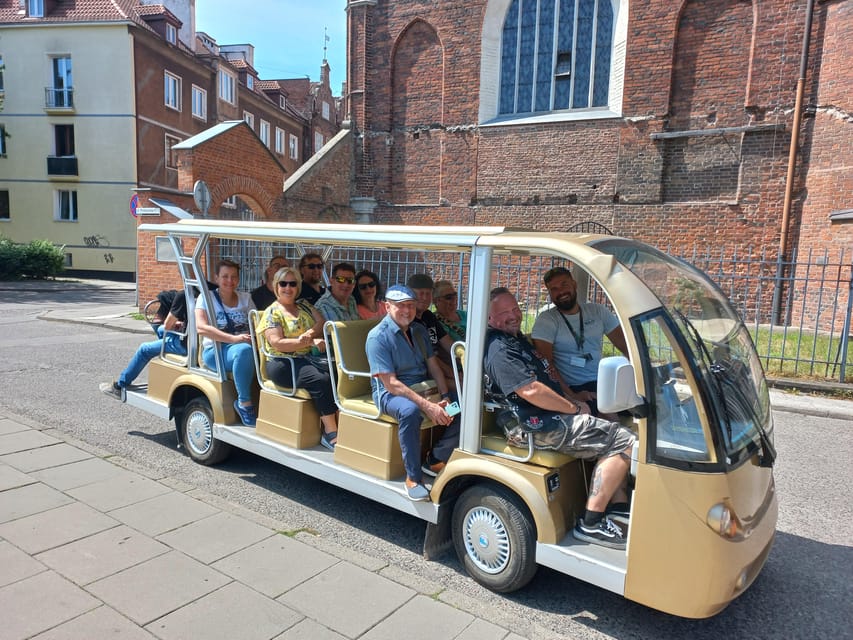
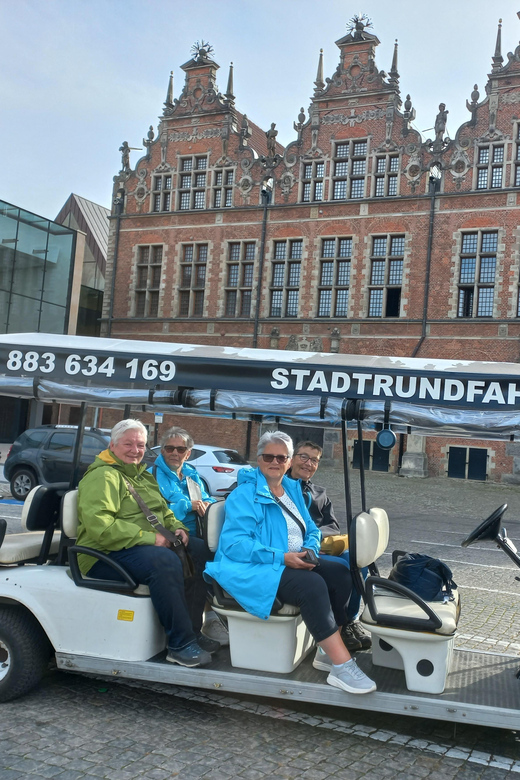
Gdansk reveals its story one street at a time. This 90-minute private electric-cart tour gives you a comfortable overview of the old center, Motława waterfront, churches, medieval gates, and the shipyard where Poland’s modern political story changed. I especially like the hotel pickup within 2 kilometers of Neptune’s Fountain and the chance to ask your own guide questions instead of following a large group. I also like the included drink, which can be water, coffee, or beer.
The main tradeoff is time. The route covers nearly 30 places in only 90 minutes, so most stops are brief photo points or guided views rather than full visits. You will see a great deal, but you should not expect long museum visits or detailed interior tours at every church.
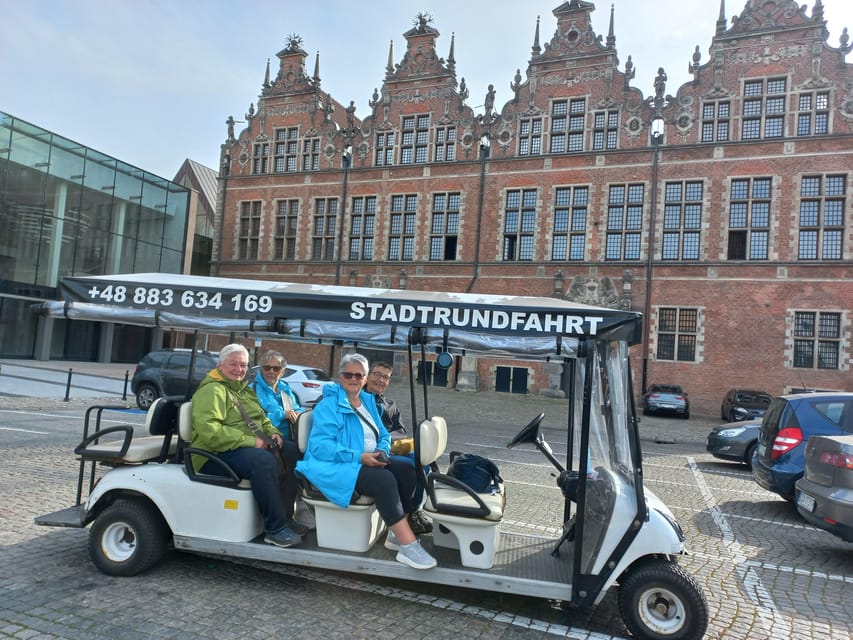
The tour has earned a 4.9 rating from 114 ratings, with repeated praise for friendly guides, humor, warmth in winter, and clear storytelling. Guides named in the feedback include Michał, Maciej, and Marti. The electric cart is enclosed against rain and wind, and guests in February described it as heated and comfortable even when temperatures hovered around 3 degrees Celsius.
In This Review
- Key points to know before booking
- Why an electric cart works well in Gdansk
- Neptune’s Fountain begins the old-city story
- Gates, armour, and the medieval city center
- St. Mary’s Basilica and Gdansk’s grandest church
- The Mill, market hall, and old-town contrasts
- The Motława waterfront and the old port crane
- From wartime memory to the shipyard
- St. Bridget’s Church and its amber altar
- What 90 minutes really gives you
- Price, pickup, and comfort at $34
- Who will get the most from this tour
- Should you book the Gdansk electric-cart tour?
- FAQ
- How long does the Gdansk electric-cart tour last?
- What languages are available for the live guide?
- Is the tour private?
- Is hotel pickup included?
- Is the electric cart suitable in bad weather?
- What is included in the price?
Key points to know before booking
- A private cart keeps the tour personal: You ride with your own group and can ask questions in English, Spanish, Ukrainian, German, or Polish.
- The route covers both famous sights and modern Polish history: You will see the old town, St. Mary’s Basilica, the port crane, the shipyard, and the European Solidarity Centre.
- The electric cart is useful in cold or wet weather: Protective covering helps with rain and wind, and recent winter feedback describes the inside as warm.
- St. Bridget’s Church is the main included interior visit: The entrance ticket is included, with its striking amber altar as a special highlight.
- The tour offers broad orientation rather than deep sightseeing: Several stops last only two or three minutes, so plan separate visits if you want museum interiors or extended church time.
- Pickup is convenient but not universal: Hotel or accommodation pickup is available within a 2-kilometer radius of Neptune’s Fountain, though restricted streets may require a nearby meeting point.
Why an electric cart works well in Gdansk
Gdansk’s central sights are close together, but the city’s story reaches beyond the prettiest streets. A walking tour can handle the historic core well, yet it takes more effort to connect the old center with the shipyard, the 1970 workers’ monument, and the modern European Solidarity Centre.
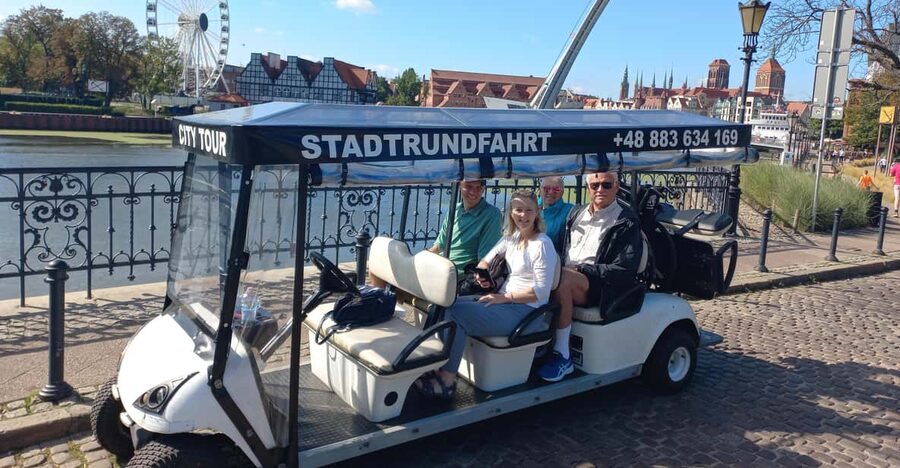
The electric cart solves that problem. You sit rather than walk between sights, and the private format means the guide can adjust the pace or answer questions for your group. This matters if you are traveling with children, older family members, or anyone who finds a long walking tour tiring.
The cart is protected from rain and wind. Winter feedback is especially encouraging: one February booking was described as warm inside, and another guest rode comfortably at about 3 degrees Celsius. Still, dress for the forecast. The activity runs rain or shine, and the covering is not a substitute for a proper coat.
This is not a silent sightseeing ride. Your guide provides live commentary throughout the route. The strongest praise goes to the guides’ humor and ability to keep children interested. Michał was praised for making the city’s story engaging, while Maciej was noted for responding flexibly to requests and speaking both German and Spanish during one tour.
A few more Gdańsk trips worth weighing up
- Gdansk: City Cruise on Historical Polish Boat
★ 4.8 · 2,913 reviews - Gdańsk: Sunset Cruise on a Historic Polish Boat
★ 4.9 · 977 reviews - Gdańsk City Sights & History Guided Walking Tour in English
★ 4.8 · 876 reviews
Neptune’s Fountain begins the old-city story
The usual meeting point is Neptune’s Fountain, though pickup from a hotel or other address in the historic center can be arranged. Neptune is a fitting starting point because this area quickly puts you among Gdansk’s grandest historic buildings.
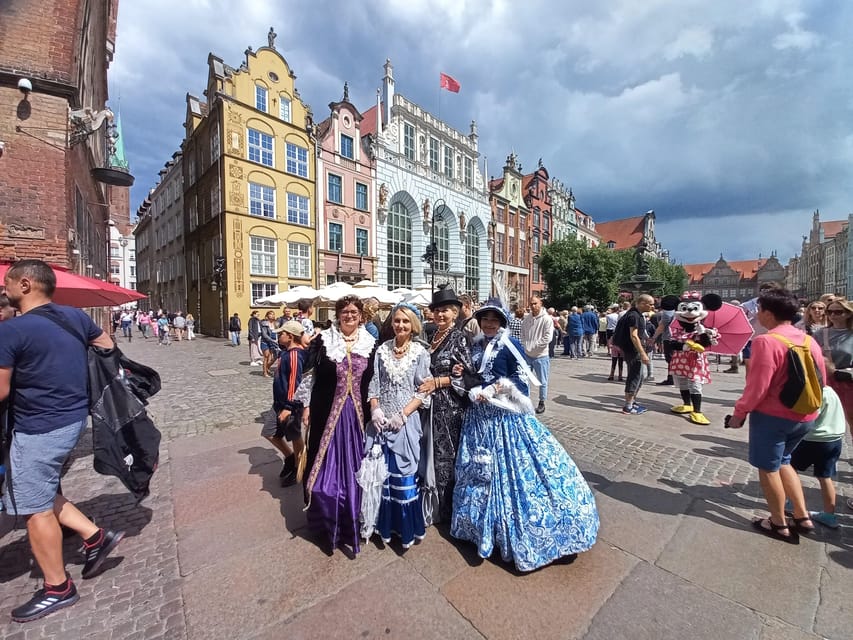
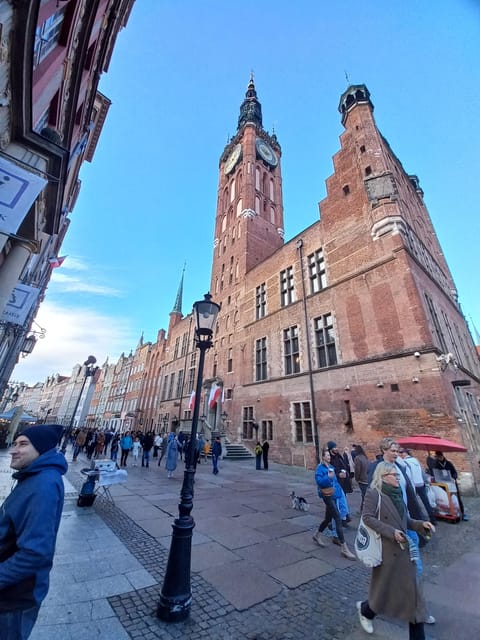
From here, the route moves through Artus Court, the Main Town Hall, Green Gate, and Long Market. These are some of the city’s best-known architectural landmarks, and the guide helps connect them rather than treating them as isolated photo stops.
The short timing at each early stop is worth understanding. Neptune’s Fountain, Artus Court, the Main Town Hall, Green Gate, and Long Market are generally viewed and explained from the cart, with only a few minutes at each location. You get orientation, background, and photographs, but not a lengthy architectural inspection.
Long Market is especially useful for getting a feel for Gdansk’s central public space. Artus Court and the town hall add civic and commercial context, while Green Gate points you toward the Motława side of the city. I would keep your camera ready, since the tour moves quickly through this section.
Gates, armour, and the medieval city center
The Golden Gate receives a longer five-minute stop, followed by the Great Armoury and the Upland Gate, also known as Brama Wyżynna. These locations show how Gdansk’s historic center was shaped by ceremony, defense, and trade.
The Golden Gate is one of the classic entrances to the main city. The Great Armoury brings a more decorative note, while Brama Wyżynna marks the approach into the old center. Your guide can give you the basic purpose and history of each place without requiring you to decode the buildings yourself.
The route also includes the Roman Catholic Basilica of St. Nicholas and the Royal Chapel. St. Nicholas gives you another church exterior and a reminder of the city’s long religious tradition. The Royal Chapel is a compact landmark near St. Mary’s, so the two can be understood together even with short stops.
If you want detailed church interiors, this part will feel too quick. The strength here is range. In a short period, you see gates, a former defensive setting, a major church, and royal-era architecture.
St. Mary’s Basilica and Gdansk’s grandest church
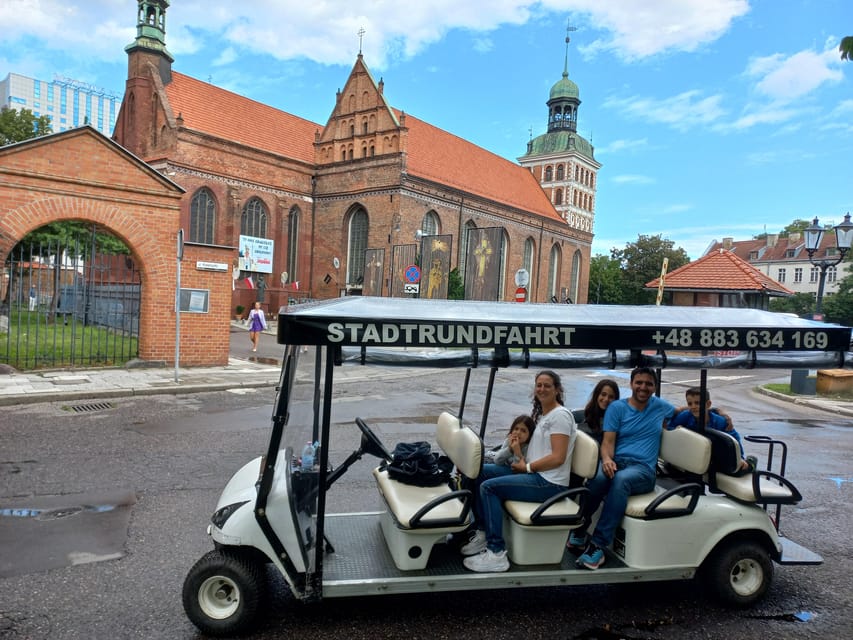
St. Mary’s Basilica is one of the tour’s headline sights. It is presented as the largest church in the world built in red brick, an impressive claim that reflects the scale and presence of this enormous Gothic church.
The stop is listed at four minutes, so expect an exterior view and a concise explanation rather than a full interior visit. The building is still one of the clearest symbols of Gdansk, and seeing it as part of a wider city route helps you place it among the surrounding streets and churches.
The route also includes St. John’s Church and St. Catherine’s Church. These short visits add variety and make it easier to understand how many historic religious buildings are packed into the central area. St. Catherine’s is allotted three minutes, while St. John’s receives two, so the guide’s commentary does most of the work.
You should treat this section as a preview. If St. Mary’s or St. Catherine’s matters greatly to you, return later with more time. The electric cart tour helps you decide which interiors deserve that extra visit.
A completely different kind of day out in Gdańsk:
- Gdansk: Firearm Shooting Experience with Instructor
★ 4.8 · 866 reviews - Gdansk: Guided Round-Trip Cruise to Westerplatte
★ 4.3 · 865 reviews - Gdańsk: Sightseeing EcoCruise around the Old Town of Gdansk
★ 4.6 · 719 reviews - Main Town Gdańsk Walking Tour
★ 5.0 · 644 reviews
The Mill, market hall, and old-town contrasts
The Great Mill, Wielki Młyn, gives the route a practical, working-city feel. It is not just another grand façade. The stop points to the old industrial and commercial side of Gdansk, then the tour moves toward the Millenium Tree, Forum Gdańsk, and Katownia.
Forum Gdańsk provides a modern contrast to the older streets. Katownia, associated with the historic defensive and judicial complex, brings the route back to the city’s older civic structure. This mixture is useful because Gdansk is not a preserved stage set. It is a living city with modern shopping, historic buildings, public spaces, and working neighborhoods sharing the same center.
The tour also passes the Dominican Merchants’ Market Hall and Gdansk Old City Hall. These stops are brief, but they help you see more than the postcard route around Long Market.
You may notice that the route uses both Main City and Old City labels. The central districts overlap in a compact area, but the names point to different layers of Gdansk’s development. A live guide can make that distinction clearer than a map alone.
The Motława waterfront and the old port crane
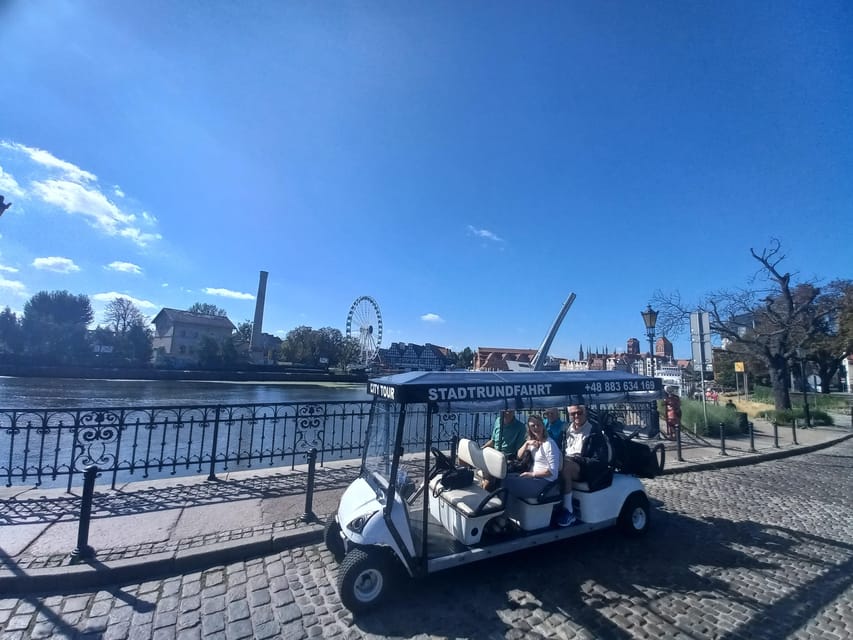
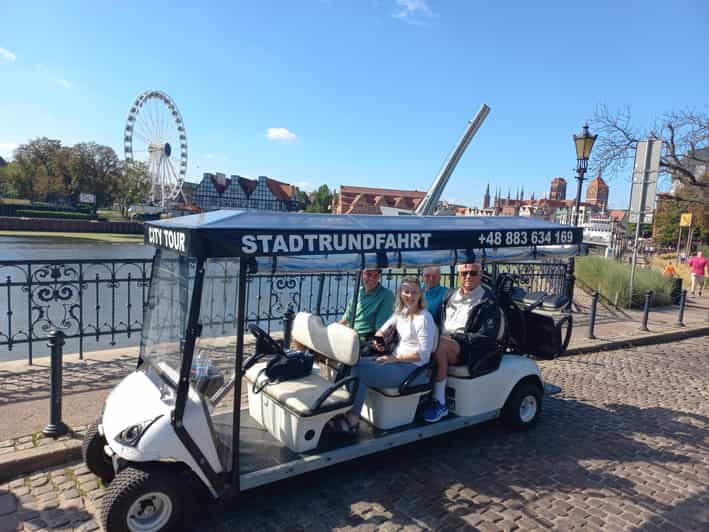
The old port crane, Stary Żuraw Portowy, receives only about a minute, but it is one of the most recognizable sights on the Motława. The historic port view is one of the tour’s best visual moments, especially if you want to understand how trade shaped the city.
The crane is closely tied to Gdansk’s waterfront identity. From the cart, you get a quick look rather than a full museum-style explanation. The route then includes the Museum of the Second World War, usually as a short sightseeing stop. The building and its subject add a serious historical turn after the lighter architectural highlights.
The tour does not include a full museum visit. That is important. If you want to spend time inside the Museum of the Second World War, plan a separate visit on another day or before the cart tour, depending on your schedule.
From wartime memory to the shipyard
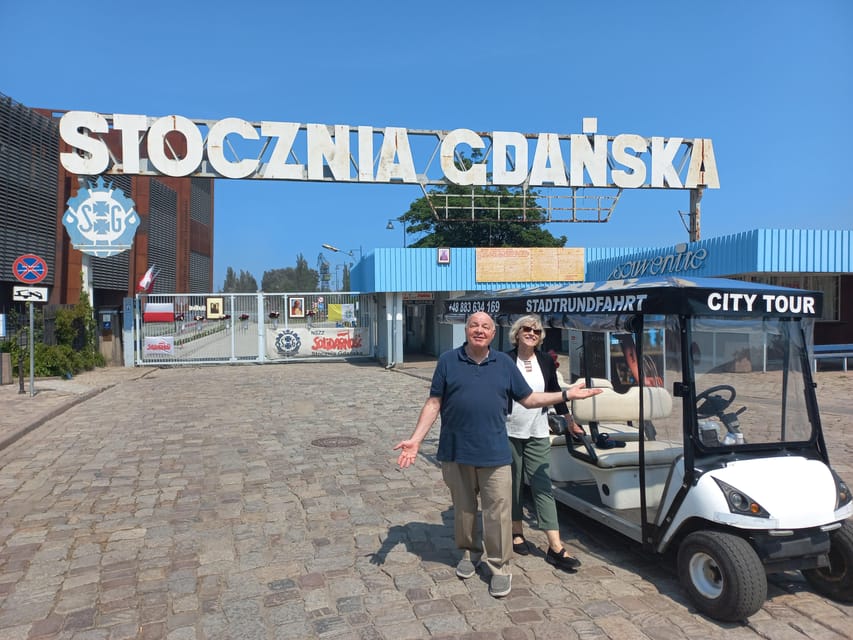
The most historically significant section moves away from the old center. You pass the Monument to the Fallen Shipyard Workers of 1970, the European Solidarity Centre, and Gdansk Shipyard.
This is where the tour explains the place where the fall of the socialist camp began. The shipyard became a major center of opposition, and the monument honors workers killed during protests in 1970. The European Solidarity Centre then connects that local struggle with the wider political changes that followed.
The stops here are photo stops and guided views, with about two to five minutes at each. That is enough to understand why these places matter, but not enough for a museum visit. The European Solidarity Centre deserves more time if you want exhibits, documents, and a fuller account of the Solidarity movement.
I like that this section is included in a city overview. Many quick tours stay among old façades and skip the shipyard, yet modern Polish history is essential to understanding Gdansk. The cart makes the connection practical without asking you to walk a long distance from the historic core.
St. Bridget’s Church and its amber altar
St. Bridget’s Church is the one clearly included interior visit. The entrance ticket is part of the price, and the stop is scheduled for about ten minutes, longer than nearly every other point on the route.
A February guest singled out the church’s amber altar as a major highlight. That detail gives you a good reason to pay attention here, even if religious buildings are not usually your main interest. The visit offers a more complete interior experience than the brief exterior views at several other churches.
One useful detail from the feedback involves a dog. A guide helped make the church visit possible by watching the guest’s dog while they went inside. That is not a guaranteed service, but it suggests that the company may respond thoughtfully to practical needs. If you have an animal, mobility concern, or other special request, contact the operator before booking rather than assuming.
What 90 minutes really gives you
The route includes around 30 named places, but the total duration remains 90 minutes. That means the tour is best understood as a moving introduction, not a set of long guided visits.
Some stops last one or two minutes. Others, including the Golden Gate, Great Armoury, Upland Gate, St. Nicholas, St. Mary’s, St. Bridget’s, and the shipyard, receive more time. The guide may also need to adjust the route because the cart shares city roads with other traffic.
The provider warns that delays can happen because of road conditions and traffic. That is a fair point in a central city where access can change. During the Saint Dominic’s Fair, from July 27 through August 25, 2025, some streets were restricted and the route was adjusted while keeping the normal length. Similar events or closures can affect the exact path at other times.
You should also expect limited time for photographs. The tour includes short photo stops, but you will not have ten relaxed minutes at every landmark. If photography is your priority, tell the guide at the start and use the private format to request a little extra time where possible.
Price, pickup, and comfort at $34
At $34 per person, the value depends on how you plan to use it. For a private group, the price includes transportation, a live guide in your language, a drink, pickup within the stated central radius, short photo stops, and the entrance ticket to St. Bridget’s Church.
That is a solid package for a first look at Gdansk, especially if your group would otherwise need taxis or a long walk to reach the shipyard area. The value is weaker if you already know the city well and want long interior visits, since the tour spends only a short time at most sights.
Pickup is offered within 2 kilometers of Neptune’s Fountain, at a hotel, accommodation, or another agreed point. Some streets in the central area have restricted vehicle access. If your address sits inside one of those zones, the guide will contact you and arrange a nearby pickup point.
The tour is private and wheelchair accessible. It is also offered in English, Spanish, Ukrainian, German, and Polish. You can request a customized route, though changes should be discussed in advance so the guide can explain what can fit into 90 minutes.
Who will get the most from this tour
I would choose this experience for a first visit, a short stay, or a family group that needs a comfortable way to cover more ground. It also suits anyone who wants the old city and shipyard history in one sitting.
Children may respond well to the guides’ humor and story-based approach. The feedback specifically describes a guide holding children’s attention, which is not a small achievement in a city full of dates and architectural names.
The cart is a sensible choice for winter and changeable weather. It is also useful for guests with mobility needs, although you should still contact the operator with exact requirements before the day of the tour.
I would not choose it as your only Gdansk sightseeing activity if you care about museums or church interiors. Use it to get your bearings fast, then return on foot to the places that caught your attention.
Should you book the Gdansk electric-cart tour?
Book it if you want a private, comfortable overview with strong coverage of both historic Gdansk and the shipyard. The guides are the heart of the experience, and the repeated praise for humor, warmth, flexibility, and clear explanations gives this tour an appealing human touch.
Skip it if you prefer to spend an hour inside one museum, climb through historic churches at your own pace, or stop for extended photographs. At $34, it offers good value for broad coverage, a drink, private transport, and St. Bridget’s entrance, but its fast rhythm is part of the deal.
For many visitors, the best plan is to take this tour early in your stay. Let the guide show you the city’s main pieces, note the places you want to revisit, and then explore those highlights on foot with more time.
FAQ
How long does the Gdansk electric-cart tour last?
The tour lasts 90 minutes.
What languages are available for the live guide?
Guides are available in English, Spanish, Ukrainian, German, and Polish.
Is the tour private?
Yes. The experience is arranged for a private group.
Is hotel pickup included?
Pickup is included within a 2-kilometer radius of Neptune’s Fountain in the historic city center. You can provide a hotel, accommodation, or another address. Restricted streets may require a nearby pickup point.
Is the electric cart suitable in bad weather?
The activity runs rain or shine, and the cart has protective covering against rain and wind. Guests should still wear clothing suitable for the weather.
What is included in the price?
The price includes private transportation, a live guide, short photo stops, a drink of water, coffee, or beer, tour customization, and the entrance ticket to St. Bridget’s Church.
Just added around Gdańsk
- Gdańsk: Boat Cruise from Gdańsk Old Town to Sopot Marina★ 4.4 · 3 reviews
- Stutthof Concentration Camp and Museum of WWII: Private Tour★ 4.7 · 3 reviews
- Gdansk: Bubble Football with Hotel Transfers★ 5.0 · 3 reviews
- Gdansk: Oliwa Zoo with Tickets and Roundtrip Transportation★ 5.0 · 3 reviews
- Segway Tour Gdańsk: Shipyard Tour – 1,5-Hour of Magic!★ 5.0 · 3 reviews
- Gdansk: Escape Room Adventure★ 4.0 · 3 reviews
- Gdańsk : Catamaran River Cruise (group)★ 4.3 · 3 reviews
- Artus Court and Gdansk Old Town Private Tour with Tickets★ 4.7 · 3 reviews
City Tours, compared.


City Sightseeing Tour Eco Electric Buggy Golf Cart
Read our review →



Gdańsk City Sights & History Guided Walking Tour in English
Read our review →
Extended City Sightseeing Tour – Eco Buggy Golf Cart
Read our review →
Browse the lists this tour appears in