
REVIEW · HISTORICAL TOURS
Gdańsk City Sights & History Guided Walking Tour in English
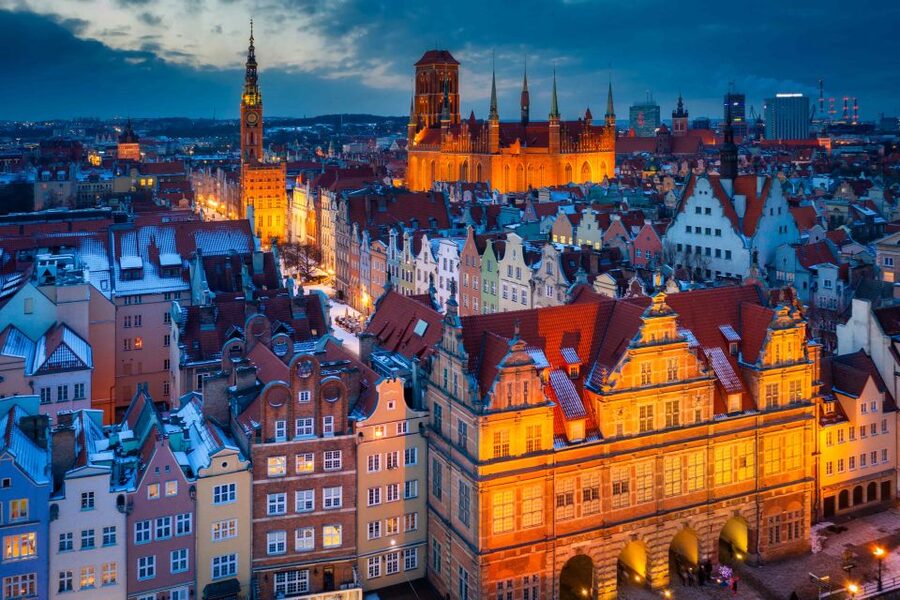
Gdańsk tells big stories in a compact center. This 150-minute walk follows the old royal route through rebuilt merchant streets, Long Market, St. Mary’s Basilica, and the harbor. I like the way it joins beautiful architecture with difficult history, especially the beginnings of WWII and the rise of Solidarity. I also like the human touch: guides such as Tufi, Kate, Sandra, Marcin, and Filip have been praised for humor, clear English, and a real love for the city.
The main thing to consider is the group format. You join a general walking tour, so the size can vary, and a large group may be awkward at busy stops. The tour also runs rain or shine, and Gdańsk can be bitterly cold in winter. Still, at $26 per person, it offers a strong introduction to the city, especially if you book it near the start of your stay.
In This Review
- Key Points Before You Book
- Starting at the Golden Gate
- The Merchant Houses and Gdańsk’s Baltic Wealth
- Long Market and Neptune Fountain
- St. Mary’s Basilica and the Famous Astronomical Clock
- Toward the Harbor and the Żuraw Crane
- WWII, the Polish Post Office, and the City’s Wounds
- Solidarity and Gdańsk’s Push for Independence
- The Guide Makes or Breaks the Experience
- Is $26 a Fair Price?
- Who Should Book This Gdańsk Walk?
- Should You Book It?
- FAQ
- Where does the Gdańsk walking tour meet?
- How long does the walking tour last?
- What language is the tour conducted in?
- Which major sights are included?
- Does the tour cover WWII and the Solidarity movement?
- Is hotel pickup included?
- What happens if the weather is bad?
Key Points Before You Book
- Royal route through the center: Follow the same ceremonial road once used by Poland’s kings, from the Golden Gate toward the harbor.
- History beyond pretty buildings: The guide connects medieval trade, WWII, the Solidarity movement, and Gdańsk’s long push for self-rule.
- Excellent guide quality: Specific guides praised for warmth and skill include Tufi, Kate, Sandra, Marcin, Filip, Paul, and Zosia.
- Major sights in one walk: See Long Market, Neptune Fountain, St. Mary’s Basilica, canals, rivers, and the Żuraw crane.
- Weather matters: The tour goes ahead in all conditions, so bring proper clothing. Winter guests have needed warm layers, even at Christmas and New Year.
- Good value, with a group-tour catch: Your payment covers the reservation fee and guide’s payment, but this is not a private walk.
Starting at the Golden Gate
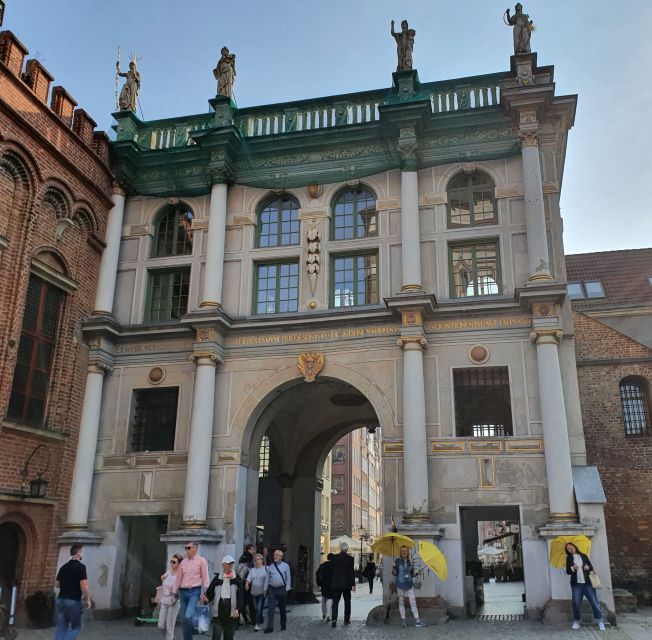
Your meeting point is the Golden Gate, or Złota Brama, at the entrance to Gdańsk’s historic center. Look for the yellow umbrella. That detail matters because the gate sits at a busy approach to the old town, and meeting on the wrong side can cause needless confusion.
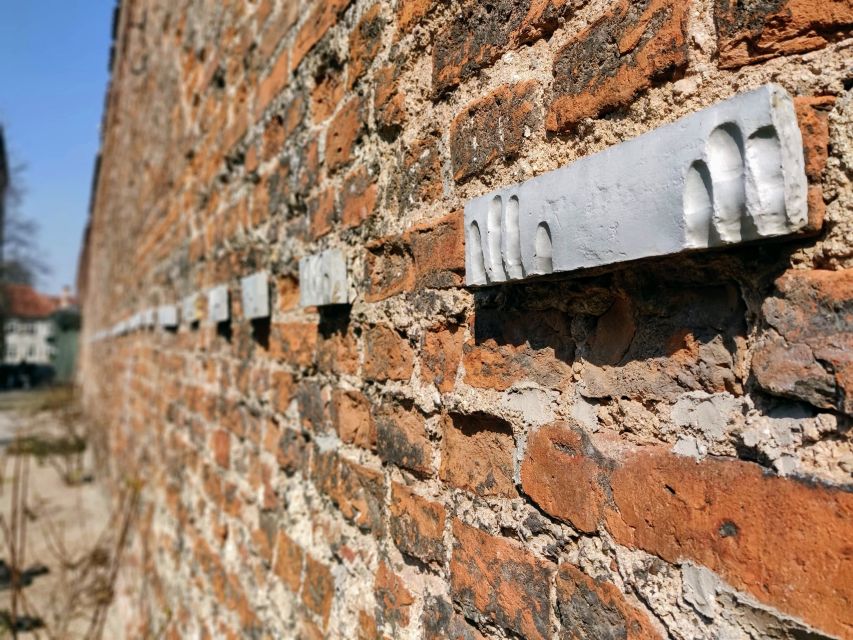
The Golden Gate is a fitting place to begin. From here, the route heads into the part of Gdańsk rebuilt after the destruction of WWII. The first lesson of the tour is visual: the elegant façades ahead look centuries old, but much of what you see was reconstructed with great care.
That reconstruction is one of the most important facts to understand before you start taking photographs. Gdańsk’s merchant houses were badly damaged during the war. Their rebuilt façades restore the city’s old appearance, but they also carry a modern story about memory, loss, and the decision to bring the historic center back to life.
Your guide sets the scene by explaining the city’s Polish, Dutch, and German influences. That mix is central to Gdańsk’s character. The city has changed political hands and cultural direction many times, yet its position on the Baltic kept it connected to merchants, sailors, rulers, and outside ideas.
The opening section is especially useful if you have just arrived. Instead of seeing isolated monuments, you begin to understand how streets, trade, power, and national identity fit together.
More History Tours in Gdańsk
- Gdansk: City Cruise on Historical Polish Boat
★ 4.8 · 2,913 reviews - Gdańsk: Sunset Cruise on a Historic Polish Boat
★ 4.9 · 977 reviews - Historic City Center Tour Gdansk in German
★ 4.6 · 455 reviews
The Merchant Houses and Gdańsk’s Baltic Wealth
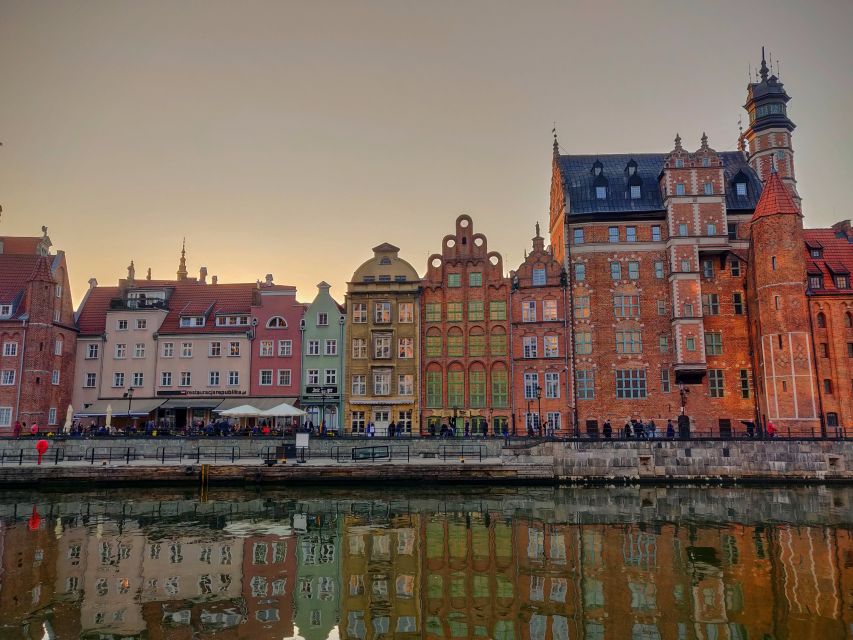
As you walk toward Long Market, look up at the narrow, colorful townhouses. Their decorated fronts are among Gdańsk’s most recognizable sights, but the guide gives them an economic purpose rather than treating them as scenery.
For centuries, merchants used this part of town to display prosperity. Gdańsk became one of the Baltic Sea’s richest cities because of its trade connections and port. The buildings make more sense once you know that they belonged to a commercial city competing for influence and wealth.
I appreciate this part of the walk because it slows down the usual sightseeing habit. You are not simply told that a building is pretty. You learn why the façades were so carefully designed and what they reveal about the people who lived and worked here.
The route also follows a road used for royal ceremonies. Polish kings once entered the city along this line, making it both a commercial avenue and a political stage. That is a useful distinction: Gdańsk was not merely a port town, but a place where local interests and royal authority repeatedly met.
The guides vary in personality, but the strongest ones add stories rather than reciting dates. Tufi has been praised for making battles and political struggles easy to follow, while Kate is known for presenting several centuries of history with clarity and humor. Paul and Filip have also been singled out for keeping the pace lively.
You should still expect a fair amount of information. One person found the history almost too dense, even while praising the guide. If you prefer a quick photo walk with only a few facts, this may feel long. If you want a framework for understanding Gdańsk, the detail is a benefit.
Long Market and Neptune Fountain
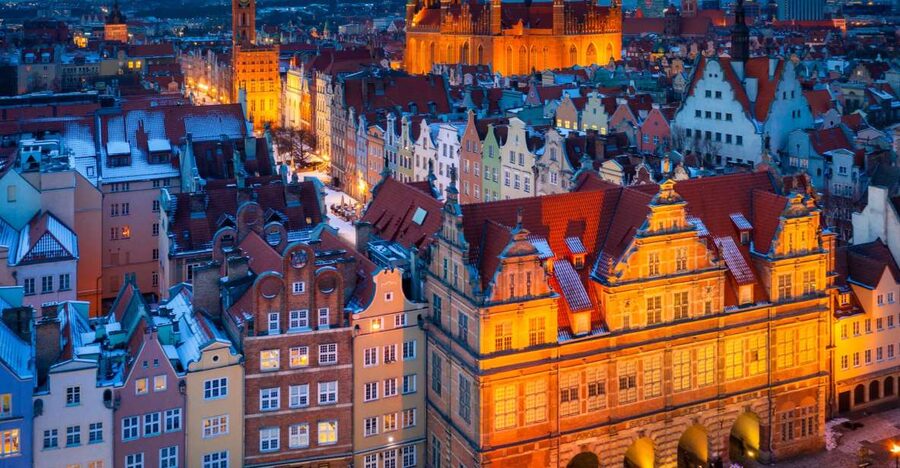
Long Market, or Długi Targ, is the visual center of the walk. The broad street is lined with rebuilt façades, landmark buildings, and the Neptune Fountain. This is the spot where Gdańsk’s wealth and civic pride come together most clearly.
Neptune is more than a convenient photo stop. The sea god points to the city’s close relationship with maritime trade and the Baltic. Your guide can also use the fountain and surrounding buildings to explain how public monuments helped cities express status and identity.
Give yourself time to look beyond the fountain. The real pleasure is the full setting: tall façades, shifting colors, decorative details, and the long perspective toward the harbor. The route is compact, so you can take photographs without losing the main thread of the explanation.
The walk is not designed around long interior visits. That is important if you want to see the inside of every church or museum. Instead, the guide uses outdoor stops to build a clear picture of the city, then points you toward places worth returning to on your own.
Weather can affect this section. In freezing conditions, guides have sometimes moved parts of the explanation indoors or built in a coffee or bathroom break. One winter group warmed up with mulled wine or coffee during a pause, while another arrived at St. Mary’s in time to see its clock figures move at noon.
Those thoughtful timing choices can make a difference. Two and a half hours outside is manageable in mild weather, but it becomes a test of patience in snow, wind, or rain. Bring weather-appropriate clothing, not just a camera and a light jacket.
St. Mary’s Basilica and the Famous Astronomical Clock
St. Mary’s Basilica is one of the tour’s biggest visual moments. It is described as the largest brick Gothic church in the world, and its scale becomes clear as you approach it from the surrounding streets.
The exterior brickwork gives the building a different mood from the colorful townhouses. It is massive, plain in material, and imposing in size. Your guide explains why it matters to Gdańsk and to the wider story of the city.
The basilica is also a useful place to pause the political narrative. After hearing about trade, royal power, war, and independence, you get a sense of the religious and civic institutions that shaped daily life.
Timing may bring an extra reward. Several groups have reached the church at noon and watched the clock’s figurines move. This is not presented as a separate attraction with a special ticket, so you should not assume the timing will always work. But when the schedule lines up, it gives the stop a memorable little performance.
The guide may discuss the church from outside, inside, or both depending on the conditions and timing. The supplied details confirm the basilica as a major stop, but not a guaranteed extended interior visit. If seeing every part of the church is a priority, plan to return independently.
The church is also where the tour’s pacing becomes important. The best guides allow enough time for photographs and questions without letting the group drift. Guests have praised guides for welcoming questions and adjusting the pace when people needed a break.
More Walking Tours in Gdańsk
- Main Town Gdańsk Walking Tour
★ 5.0 · 644 reviews - Discover Gdansk Walking Tour
★ 5.0 · 495 reviews - Gdańsk: Old Town Private Walking Tour with Legends and Facts
★ 4.9 · 245 reviews - Gdansk Old Town 2-Hour Walking Tour
★ 4.5 · 94 reviews
Toward the Harbor and the Żuraw Crane
From the center, the route continues toward Gdańsk’s rivers and canals. This change of setting helps explain why the city grew so powerful. The water is not a backdrop added for pretty photographs. It is the reason merchants, ships, laborers, and rulers cared so much about Gdańsk.
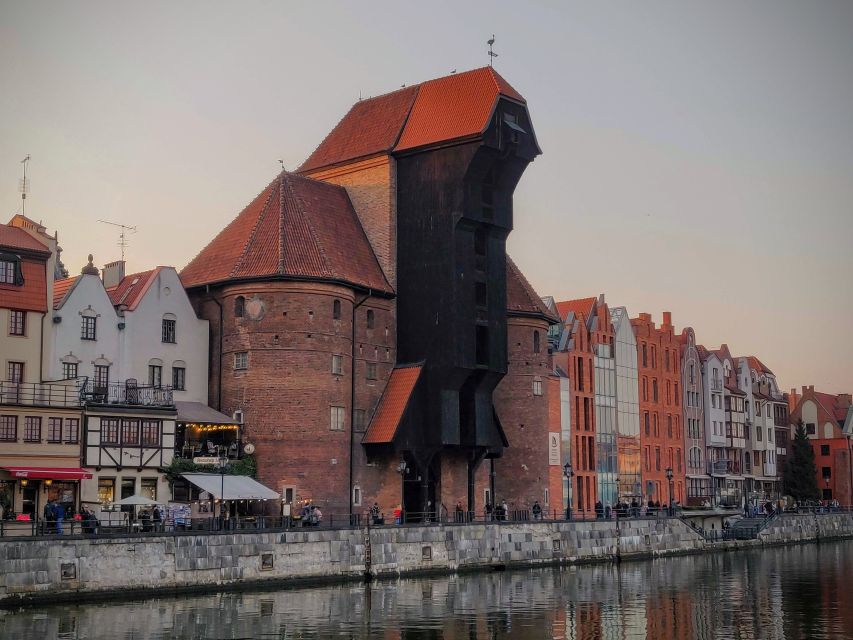
The highlight here is Żuraw, the medieval treadwheel crane on the harbor. It is described as the largest of its kind in the world and has become one of the city’s symbols.
The crane makes medieval trade easier to imagine. A large wooden lifting machine beside the water tells you more about the practical side of commerce than a polished façade can. Goods had to be unloaded, stored, and moved, and the harbor needed machinery capable of handling that work.
The stop is particularly valuable after the earlier discussion of merchant wealth. Long Market shows you the money. Żuraw shows you part of the machinery that helped create it.
The harbor area also offers a visual change after the dense old streets. You get open views along the water and a better sense of Gdańsk as a port city. The exact amount of time at the crane can depend on the guide and group, so do not expect a long museum visit unless that is specifically arranged.
WWII, the Polish Post Office, and the City’s Wounds
The tour does not present Gdańsk as an untouched medieval postcard. Its most useful quality is the way it connects attractive streets with the violence that shaped them.
You hear how WWII began in the city and how the conflict affected Gdańsk. The guide may also discuss the fighting connected with the Polish Post Office, a subject that one guide, Tufi, presented with particular force. Stories like this give the war a local face rather than reducing it to a list of dates and national armies.
The rebuilt townhouses become more meaningful after this section. Their clean façades are not proof that the city escaped the war. They are evidence of what was lost and what later generations chose to reconstruct.
This is one reason I would take the tour early in a visit. Once you understand the damage and rebuilding, you see the old town differently. Details that might otherwise seem decorative become part of a larger story about survival and identity.
The history can feel heavy, especially when combined with the medieval and modern material in a single walk. That is not a flaw, but you should know what kind of experience you are booking. This is a serious city-history tour with jokes and personal stories, not a light stroll focused only on architecture.
Solidarity and Gdańsk’s Push for Independence
The final part reaches into modern Poland and the Solidarity movement. The guide explains how labor unrest and political opposition in Gdańsk helped signal the fall of communism in the Eastern Bloc.
This section gives the tour a strong ending because it shows that the city’s wish for greater independence did not end with medieval privileges or wartime politics. Gdańsk repeatedly pushed against outside control, and that pattern continued into the 20th century.
The topic can be difficult to absorb after centuries of earlier history, so your guide’s ability to explain cause and effect matters. The best presentations connect the city’s port workers, political pressures, and national changes in plain English.
English clarity is a real strength here. Guides including Marcin, Sandra, Kate, Tufi, and Filip have been praised for speaking clearly and making complicated subjects easy to follow. That matters when the tour covers several centuries in only 150 minutes.
You should leave with more than a list of sights. You will have a basic timeline that links Gdańsk’s medieval trade, royal connections, wartime destruction, postwar rebuilding, and Solidarity. That makes it much easier to choose which museums, memorials, or neighborhoods to visit afterward.
The Guide Makes or Breaks the Experience
A walking tour depends heavily on the person holding the umbrella. This one has a strong record of guides who combine facts with humor, personal anecdotes, and practical advice.
Tufi has been praised for his passion, clear explanations, and easy humor. Kate is known for her depth of knowledge, wit, and ability to make a long historical timeline easy to absorb. Sandra has earned praise for adapting the route to cold weather and offering useful restaurant suggestions.
Marcin, Paul, Filip, Zosia, Isabella, Katie, and others have also been described as engaging and warm. Names and styles vary by departure, so you cannot book a particular personality unless the operator confirms it. But the repeated pattern is encouraging: guides are expected to do more than point at buildings.
You can ask questions during the walk, and guides have offered suggestions for restaurants and additional sights. One practical tip from the experience is to carry change for public toilets, which can speed up a group stop.
The main weakness is group management. A large crowd can be cumbersome at narrow or busy locations, and it may be harder to hear or take photographs. The tour provider can help arrange a smaller private tour after booking, but that would be a different format and likely a different cost.
Is $26 a Fair Price?
At $26 per person, I consider this good value for a two-and-a-half-hour introduction to central Gdańsk. You are paying for a live English guide, a planned route, historical context, and the convenience of seeing the main sights in a logical order.
The value is strongest if you are new to the city or have only a short stay. A guide can orient you quickly, explain why the rebuilt center looks old, and show how the port connects to the city’s wealth and politics. You then have the rest of your visit to return to the places that caught your interest.
The price does not include hotel pickup or drop-off, and the tour does not promise private attention. You meet at the Golden Gate and walk from there. If you need a slower pace, want to linger at every stop, or dislike group tours, you may prefer to arrange a private option.
The booking terms are traveler-friendly: you can cancel up to 24 hours before the start for a full refund, and you can reserve now and pay later. Accessibility is listed as wheelchair accessible, though the tour remains a walking experience over city streets, so it is sensible to confirm any specific mobility needs before booking.
Who Should Book This Gdańsk Walk?
I would choose this tour if you want a clear first look at Gdańsk and enjoy history told through buildings and streets. It suits first-time visitors, couples, solo visitors, families with older children, and anyone who wants help sorting out the city’s Polish, German, Dutch, medieval, wartime, and communist-era connections.
It is also a good choice for English-speaking visitors who value a guide’s recommendations. Several guides have suggested places to eat and additional sights, which can help you shape the rest of your stay.
You should think twice if you want a private tour, a museum-heavy itinerary, or a very short walk. The general group may be large, the historical material is dense, and the weather can be unforgiving. On the other hand, guides have shown good judgment in stopping for coffee, mulled wine, or warmth when conditions demanded it.
Book it near the start of your time in Gdańsk, wear proper shoes, and dress for the forecast. The yellow umbrella at the Golden Gate is your starting signal, and the route gives you the context to enjoy the city with sharper eyes.
Should You Book It?
Yes, if you want a well-priced, serious introduction to central Gdańsk rather than a quick photo circuit. The combination of Long Market, Neptune Fountain, St. Mary’s Basilica, Żuraw crane, WWII, and Solidarity gives you a useful sense of how the city became what it is.
I would skip it only if you strongly dislike group walks or need long, unhurried visits inside each landmark. For most visitors, especially those staying a few days, the tour is a sensible first step and a good use of $26.
FAQ
Where does the Gdańsk walking tour meet?
The meeting point is at the Golden Gate, called Złota Brama in Polish. Look for a yellow umbrella.
How long does the walking tour last?
The tour lasts 150 minutes, or two and a half hours.
What language is the tour conducted in?
The live tour guide speaks English.
Which major sights are included?
The walk includes Long Market, Neptune Fountain, St. Mary’s Basilica, the Żuraw medieval treadwheel crane, rivers, canals, and the historic center’s merchant townhouses.
Does the tour cover WWII and the Solidarity movement?
Yes. The guide discusses how WWII began in Gdańsk, the city’s wartime experience, and how the Solidarity movement contributed to the fall of communism in the Eastern Bloc.
Is hotel pickup included?
No. Hotel pickup and drop-off are not included. You make your own way to the Golden Gate.
What happens if the weather is bad?
The tour takes place rain or shine. Bring clothing suited to the weather, especially warm layers during the colder months.
Just added around Gdańsk
- Gdańsk: Boat Cruise from Gdańsk Old Town to Sopot Marina★ 4.4 · 3 reviews
- Stutthof Concentration Camp and Museum of WWII: Private Tour★ 4.7 · 3 reviews
- Gdansk: Bubble Football with Hotel Transfers★ 5.0 · 3 reviews
- Gdansk: Oliwa Zoo with Tickets and Roundtrip Transportation★ 5.0 · 3 reviews
- Segway Tour Gdańsk: Shipyard Tour – 1,5-Hour of Magic!★ 5.0 · 3 reviews
- Gdansk: Escape Room Adventure★ 4.0 · 3 reviews
- Gdańsk : Catamaran River Cruise (group)★ 4.3 · 3 reviews
- Artus Court and Gdansk Old Town Private Tour with Tickets★ 4.7 · 3 reviews
Historical Tours, compared.


POLIN Museum of the History of Polish Jews Ticket
Read our review →

Small-Group Historical Guided Tour of Warsaw with pick up/drop off. Public Tour.
Read our review →
Browse the lists this tour appears in