
REVIEW · WROCłAW TOURS
Jewels of Lower Silesia
History gets personal here. This small-group day trip from Wroclaw links Ksiaz Castle, its exotic Palm House, and the remarkable Church of Peace in Swidnica. I like the mix of grand architecture and difficult wartime history, and I like that the group is limited to eight people, keeping the day more flexible than a large coach tour. The main drawback is the pace: seven to eight hours is a long outing, and the castle tunnels involve many stairs.
Guides Adam Wronecki, Matthias, and Maciej have earned particular praise for clear English, good timing, and useful historical context. You should also know that lunch is not included, so you will need to plan around the day’s schedule. The tour begins at 8:30 a.m. near Cinema New Horizons and returns to the same meeting point in central Wroclaw.
In This Review
- Key points to know before booking
- Why this Wroclaw day trip is worth your time
- Starting at 8:30 a.m. in central Wroclaw
- Ksiaz Castle and the Hochberg legacy
- The underground tunnels: important, but physically demanding
- Palmiarnia Walbrzych, a colorful change of pace
- The Church of Peace in Swidnica
- How the guides shape the day
- Timing, group size, and the real value of $150.03
- Who should book this Lower Silesia excursion?
- Final verdict: Should you book Jewels of Lower Silesia?
- FAQ
- Where does the tour start?
- What time does the tour begin?
- Where does the tour end?
- How long does the tour last?
- What language is the tour offered in?
- How large is the tour group?
- Are admission tickets included?
- Is lunch included?
- What is included besides admission tickets?
- Can I cancel for a refund?
Key points to know before booking
- Ksiaz Castle gives the day its grand opening: Allow about three hours for the castle area, gardens, and possible tunnel visit.
- The Nazi-era tunnels require stamina: They involve many stairs, and the tunnel visit may not suit anyone who dislikes steep or extended stairways.
- The Palm House is more than a quick greenhouse stop: You can see unusual plants, lemurs, and peacocks in a setting built to reflect the Hochberg family’s wealth.
- The Church of Peace is the emotional high point: Its ornate interior and unusual construction make it one of the most memorable churches in Lower Silesia.
- The small group matters: With no more than eight people, guides can give clear instructions and answer questions without shouting across a bus.
- The $150.03 price includes the major admissions: Transport in an air-conditioned vehicle, parking, and entrance tickets are included, but lunch is extra.
Why this Wroclaw day trip is worth your time
Lower Silesia is easy to miss if you stay only in Wroclaw. The region has changed hands many times, and its castles, churches, and industrial fortunes reflect Polish, Bohemian, Hungarian, German, and Habsburg influence. This tour gives you a useful snapshot of that complicated past without asking you to arrange several separate day trips.
I especially like the way the route moves from aristocratic power to wartime destruction, then to religious conflict and survival. Ksiaz Castle shows the wealth of the Hochberg family. The tunnels expose a much darker chapter from the final years of World War II. The Church of Peace shows how religious divisions shaped architecture and daily life centuries earlier.
The tour is also practical for visitors without a car. You get an air-conditioned vehicle, parking fees are covered, and the route returns to the original pickup point. With a maximum of eight people, this is closer to a personal excursion than a standard full-size bus outing.
At $150.03 per person, it is not a cheap sightseeing ride. But the cost covers three admissions, private road transport, parking, and a full day outside Wroclaw. If you tried to connect these places independently, you would need to manage several transport legs and coordinate opening times. The value is strongest for couples, solo visitors, and small groups who want a guide to explain what they are seeing.
A few more Wrocław trips worth weighing up
- Wroclaw: E-Car Tour and Audio Guide
★ 4.6 · 1,738 reviews - Wroclaw: 2-Hour Private Guided Tour by Electric Car
★ 4.8 · 805 reviews - Wrocław: Old Town and Ostrów Tumski Walking Tour in English
★ 4.8 · 311 reviews
Starting at 8:30 a.m. in central Wroclaw
The meeting point is Cinema New Horizons, at Kazimierza Wielkiego 19a/21. The early start gives you enough time for the three main stops, but you should arrive ready for a full day rather than a relaxed late-morning outing.
The vehicle is air-conditioned, which matters during a long summer drive and makes the trip more comfortable in warmer weather. The ride also gives the guide time to set the scene. Adam has been praised for sharing information during the drive without overloading the day with lectures. Maciej received similar praise for clear instructions about schedules and meeting places.
That practical side matters. Castle visits can become confusing when you are watching the clock, finding the right entrance, and trying to remember where to meet your group. A guide who explains the timing clearly lets you focus on the sites instead.
The route lasts about seven to eight hours. Since lunch is not included, ask your guide about the day’s meal timing and options. One tour group stopped at a nearby restaurant for an early dinner and described the food as rustic Polish cooking. That is not a guaranteed part of the program, but it shows that the schedule may allow a meal stop near the end.
Ksiaz Castle and the Hochberg legacy
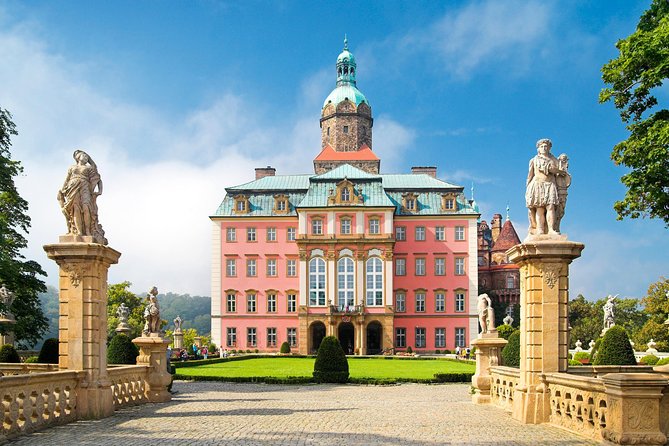
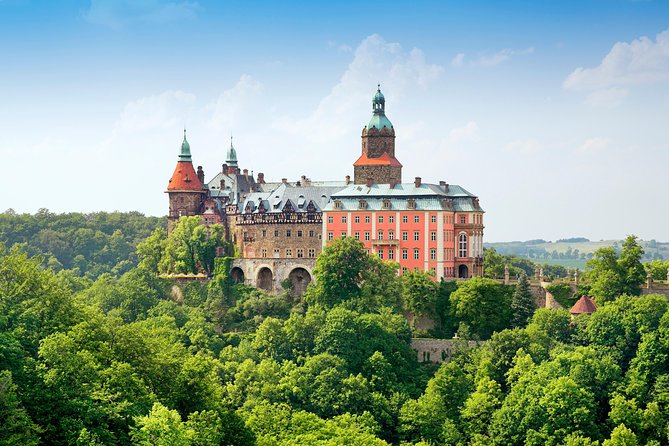
Ksiaz Castle receives about three hours, and that is the right amount of time for a site with this much to see. The castle itself is large, with roughly 500 rooms, and its long ownership history mirrors the shifting politics of Silesia.
The first builders were connected to the Swidnica dynasty, descendants of the Polish Piast royal line. The property later passed through the hands of Bohemian kings, robber barons, a Hungarian ruler, and finally the Hochberg family. That succession is more than a list of owners. It shows how Lower Silesia sat at a crossroads of Central European power.
The Hochbergs transformed Ksiaz into a symbol of aristocratic success. They were among the region’s most successful industrial-era entrepreneurs, and their wealth helped create the grand residence and gardens you see today. The Palm House later in the day makes more sense after you understand this family’s ambition and status.
Do not expect every room to feel lavish. The castle is in good condition overall, but some interiors are sparse. Wartime looting and damage by German and Soviet forces stripped away much of the original decoration. That absence is part of the experience. You are not simply walking through a preserved noble house. You are seeing how war damaged Poland’s cultural inheritance.
The setting around the castle is another reason to allow the full three hours. The grounds and views give you a break from the interior rooms, and the surrounding scenery makes the approach memorable. The excursion is not only about furniture and painted ceilings. It is also about scale, setting, and the remains of a family estate shaped by centuries of change.
The underground tunnels: important, but physically demanding
Some versions of the castle visit include the underground tunnels associated with Nazi construction during World War II. The tunnels were dug near the end of the war by Jewish labor camp inmates, adding a painful human dimension to the castle’s story.
This part should not be treated as a casual add-on. The route includes many stairs down and back up. One visitor chose not to enter because of the hundreds of steps, while another specifically appreciated seeing the tunnels before touring the castle. The practical advice is simple: if your knees, balance, or stamina are limited, tell the guide early and confirm what portion you can skip.
The tunnels also change the tone of the day. Ksiaz can first appear as an elegant aristocratic residence, but the underground works reveal how the site was pulled into the machinery of the war. That contrast is one of the tour’s strongest features, though it can also make the castle visit feel less like a simple palace outing and more like a lesson in Poland’s wartime losses.
Wear sensible shoes. This is especially useful if you plan to take the tunnel route and walk through the castle grounds. The supplied information does not promise that every departure includes the tunnels, so confirm the exact plan when booking or with the guide on the morning of the tour.
A completely different kind of day out in Wrocław:
- Wroclaw: Private Old Town Guided Walking Tour (2 hours)
★ 4.8 · 275 reviews - Old Town Wrocław Walking Tour
★ 5.0 · 249 reviews - Wroclaw: City Tour Sightseeing By Golf Cart Shared Or Privat
★ 4.8 · 189 reviews - Auschwitz-Birkenau Tour from Wrocław
★ 5.0 · 129 reviews
Palmiarnia Walbrzych, a colorful change of pace
After the castle, the Palm House in Walbrzych provides a welcome change. The visit lasts about 25 minutes, so do not expect a long botanical garden visit. Instead, think of it as a concentrated walk through colorful, exotic greenhouses.
The Palm House was created to serve the Hochbergs’ taste for rare plants and displays of wealth. In that sense, it is connected directly to Ksiaz Castle. The plants are not just decoration. They help you understand the money and effort that went into maintaining an aristocratic estate in the industrial age.
The greenhouse has received some of the strongest praise on the tour. It includes unusual plants, lemurs, and peacocks, giving the stop more character than a standard conservatory. The animals can be a hit with families, while the plant displays offer a calmer break after the castle and tunnels.
Twenty-five minutes is enough for a look around, but it is not enough for slow photography or a long botanical study. If greenhouses are your main interest, you may wish the stop were longer. As part of a full-day route, though, the short visit keeps the day moving and prevents the schedule from becoming too heavy.
The Church of Peace in Swidnica
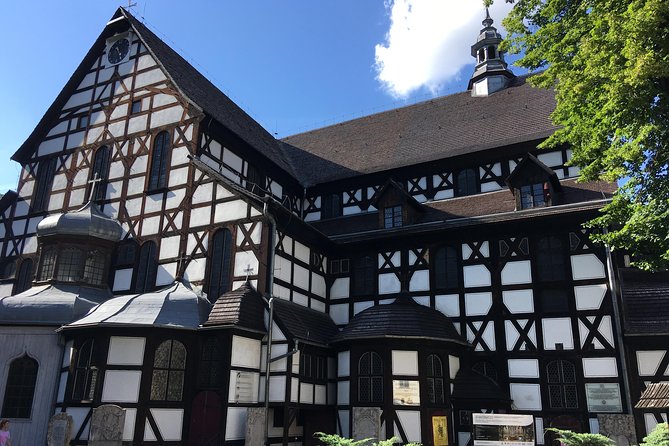
The final major stop is the Church of Peace in Swidnica, with about 35 minutes set aside for the visit. For many people, this is the most striking part of the day.
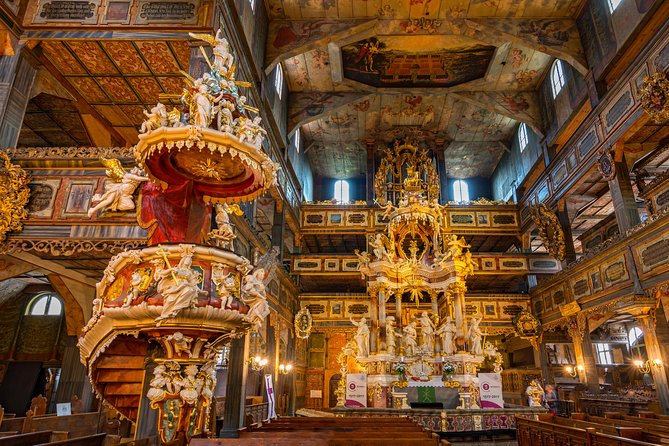
The church was built in the 17th century during Habsburg rule, after religious conflict had split Europe. Its construction followed strict conditions imposed on Protestants after the Thirty Years’ War and the Treaty of Westphalia in 1648. Built largely from oak and mortar, it is a remarkable example of how a religious community created an impressive place of worship under difficult limits.
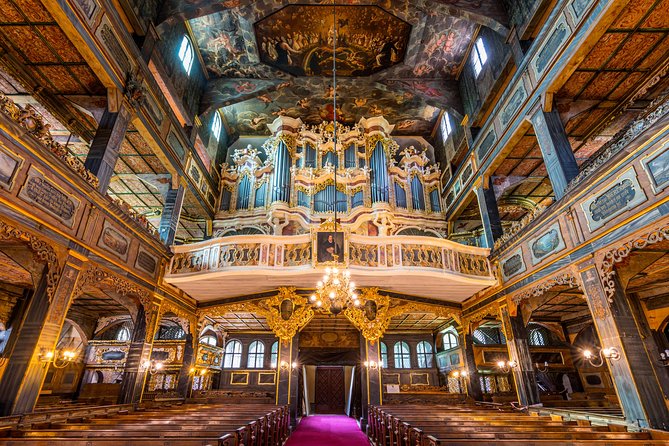
Inside, the effect is ornate and surprising. From the outside, you may not expect the elaborate decoration and scale within. The church’s artistic power comes partly from that contrast, and partly from the story behind its construction. It is not simply a pretty historic building. It represents compromise, restriction, faith, and persistence.
The church is listed as a UNESCO World Heritage site, and the 35-minute visit gives you time to appreciate the interior and hear the main historical points. I would not want the stop to be rushed, but the time allowance appears designed to fit the wider route rather than provide a long independent church visit.
Photography can help you remember the details, but the interior is the sort of place where you should also stop and look carefully. The layered decoration, wooden construction, and unusual political background give it more impact than its short visit might suggest.
How the guides shape the day
The guide may be the most important part of this experience. Adam Wronecki has been praised for promptness, warm manners, excellent English, and a good sense of humor. He also knows when to provide context and when to let the site speak for itself.
Matthias was praised for giving information throughout the drive and arriving at meeting points on time. Maciej received similar praise for precise instructions and easy-to-follow English. Since the tour is offered in English, this is a strong choice for anyone who does not speak Polish and wants more than basic transport between sights.
Good guiding is especially useful at Ksiaz Castle. The ownership story is complicated, and the effects of the war are not always obvious from the rooms alone. A clear explanation helps you connect the Hochberg family, Silesian industry, the tunnels, and the later damage.
The small group gives you a better chance to ask questions. A maximum of eight people also makes it easier for the guide to explain where to meet and how much time remains. That will appeal to you if you dislike the rigid feel of a large coach tour.
Timing, group size, and the real value of $150.03
The advertised price is $150.03 per person. That includes admission to Ksiaz Castle, the Palm House, and the Church of Peace, along with an air-conditioned vehicle and parking fees. Lunch is the main extra expense to plan for.
I see the price as reasonable for a full-day guided outing, especially if you are staying in Wroclaw without a rental car. You are paying for more than entry tickets. You are also paying for route planning, driving, parking, timing, and historical explanation.
The value improves if you are a solo visitor or a couple. Splitting a private rental car and guide among two people could cost more, while public transport would require extra planning. A group of friends may find the price easier to justify, particularly if they appreciate having a guide rather than simply being dropped at each site.
The tour is booked an average of 43 days ahead, so it is wise to reserve early during busy periods. Confirmation is sent within 48 hours, subject to availability. Free cancellation is available until 24 hours before the local start time. Cancellations or changes inside that window are not refunded, and the operator may offer a new date or a full refund if the minimum number of participants is not reached.
Who should book this Lower Silesia excursion?
I would recommend this trip to you if you want a day away from Wroclaw that combines grand architecture with serious historical context. It suits couples, families, solo visitors, and anyone who prefers a small group with an English-speaking guide.
It is also a good fit if you like variety. The day moves from castle rooms to wartime tunnels, from tropical plants to a richly decorated Protestant church. You are unlikely to feel that you have seen the same type of attraction three times.
The main caution is physical and emotional. The castle tunnels involve many stairs, and the war history can be difficult. The day is also tightly timed, with only 25 minutes at the Palm House and 35 minutes at the Church of Peace. If you want long, unhurried visits or extensive independent photography, a private itinerary may suit you better.
Final verdict: Should you book Jewels of Lower Silesia?
Yes, if you want an efficient and well-guided introduction to Lower Silesia beyond Wroclaw. The castle gives you aristocratic grandeur, the tunnels add hard wartime reality, the Palm House offers a light and unusual pause, and the Church of Peace delivers the day’s most powerful architectural moment.
I would book it for the small group size, included admissions, and strong guide record, especially if Adam Wronecki is leading the departure. Just prepare for a long day, bring comfortable shoes, budget separately for lunch, and ask about the tunnel route if stairs are a concern.
FAQ
Where does the tour start?
The tour starts at Cinema New Horizons, Kazimierza Wielkiego 19a/21, 50-077 Wroclaw, Poland.
What time does the tour begin?
The scheduled start time is 8:30 a.m.
Where does the tour end?
The activity ends back at the original meeting point in Wroclaw.
How long does the tour last?
The tour lasts approximately seven to eight hours.
What language is the tour offered in?
The tour is offered in English.
How large is the tour group?
The maximum group size is eight travelers.
Are admission tickets included?
Yes. Admission to Ksiaz Castle, the Palm House in Walbrzych, and the Church of Peace in Swidnica is included.
Is lunch included?
No. Lunch is not included in the tour price.
What is included besides admission tickets?
An air-conditioned vehicle and parking fees are included.
Can I cancel for a refund?
Yes. You can cancel at least 24 hours before the experience starts for a full refund. Cancellations or changes made less than 24 hours before the start time are not refunded.
Just added around Wrocław
- Wrocław: Following the dwarfs’. See the city differently! 2h★ 4.4 · 3 reviews
- Wroclaw to Rock City in Adsprach and Church of Peace in Świdnica Private Tour★ 5.0 · 3 reviews
- Wroclaw: Skip the Line Panorama Raclawicka and Ostrow Tumski Guided Tour★ 4.5 · 3 reviews
- From Wroclaw: Full-Day Stolowe Mountains Trekking Tour★ 3.9 · 3 reviews
- Wrocław: Polish Craft Beer Walking Tour with Tastings★ 4.1 · 3 reviews
- Segway Tour Wroclaw: Ostrów Tumski Tour – 1,5-Hours of Magic!★ 5.0 · 3 reviews
- Private Transfer from Wroclaw (WRO) Airport to Wroclaw city centre★ 5.0 · 3 reviews
- Wrocław: Ostrów Tumski and Old Town Highlights Private Tour★ 5.0 · 3 reviews
Wrocław Tours, compared.
Old Town and Ostrów Tumski Walking Tour in English
Read our review →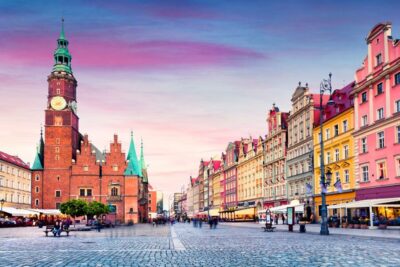
Private Old Town Guided Walking Tour (2 hours)
Read our review →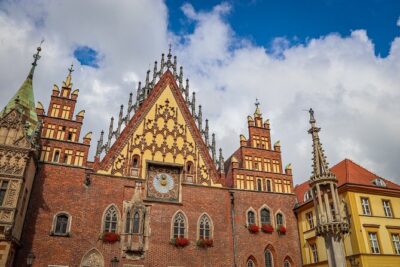
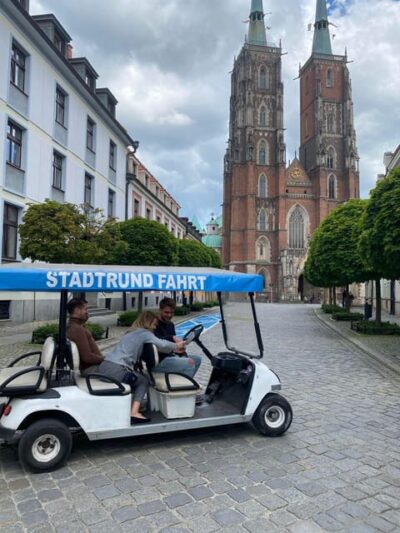
City Tour Sightseeing By Golf Cart Shared Or Privat
Read our review →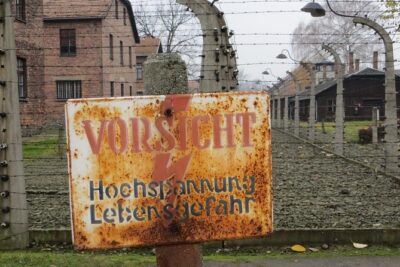

Browse the lists this tour appears in