
REVIEW · CITY TOURS
Wrocław: Following the dwarfs’. See the city differently! 2h
Small statues tell big stories. This two-hour walk gives you a playful way to see Wrocław’s Old Town, using its famous bronze dwarves as signposts to local history, student life, monuments, and the city’s unusual resistance movement. I like the private format, since your guide works only with your group, and I like the mix of major sights with odd little details you could easily miss alone.
The strongest part is the storytelling. The dwarf called Moczymorda links the tour to Piwnica Świdnicka and its student patrons, while Papa Dwarf introduces Waldemar Fydrych and the Orange Alternative of the 1980s. The main consideration is that the tour is available only in German or Polish, and the optional dwarf map costs an additional €6 per person.
In This Review
- Key points at a glance
- Why Wrocław’s dwarves make a useful city tour
- Starting at Piwnica Świdnicka and the Market Square
- Plac Solny and the rhythm of the dwarf hunt
- Papa Dwarf and the Orange Alternative
- The Bridge of Penitents and the Old Town route
- University of Wrocław and the Dwarf Swordsman
- Fencer Fountain and the return to the restaurant
- What $41 per person buys you
- Language, access, and planning details
- Who will enjoy this two-hour walk most
- Should you book the Wrocław dwarf tour?
- FAQ
- How long does the Wrocław dwarf tour last?
- Where does the tour begin?
- Where does the tour end?
- What languages are available?
- Is the tour private?
- Is the dwarf map included?
Key points at a glance
- Moczymorda starts the story at Piwnica Świdnicka, where student drinking traditions become part of Wrocław’s city tale.
- Papa Dwarf connects the statues to communism, Waldemar Fydrych, and the comic protests of the Orange Alternative.
- The Dwarf Swordsman near the university brings in stories of pawned clothing, beer, and student saber duels.
- The route covers the Old Town on foot, including Market Square, Plac Solny, the Bridge of Penitents, and the University of Wrocław.
- The guide is reserved for your private group, which allows questions and a pace suited to your party.
- The tour is family-friendly and wheelchair accessible, with free cancellation up to 24 hours before departure.
Why Wrocław’s dwarves make a useful city tour
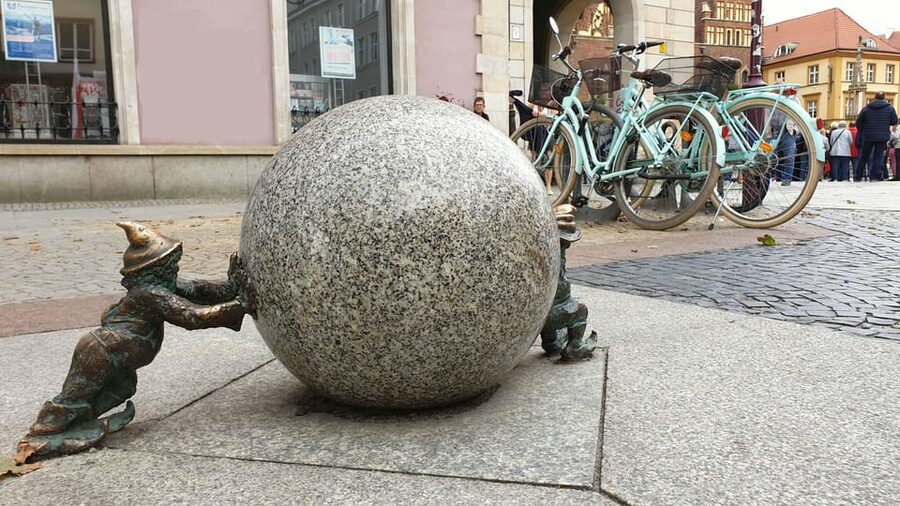
Wrocław has turned its small bronze dwarves into a citywide treasure hunt. Each figure points toward something: a place, a person, an event, a local joke, or a piece of the city’s past. You are not simply counting statues. You are using them to connect the streets around you.
That makes this different from a standard walk through the Old Town. Instead of hearing a long sequence of dates and names, you meet characters. One dwarf is a student. Another carries a sword. Papa Dwarf represents the movement that helped make the dwarf idea famous. The small scale and comic poses make the information easier to remember, especially if you are exploring with children.
I also like the way the tour gives adults something to think about. The statues are cute, but their background reaches into the communist period, when humor became a practical way to challenge official power. The tour can therefore work on two levels: children can search for amusing figures, while adults can listen for the political and social meaning behind them.
You should keep your expectations realistic. This is a walking introduction to the Old Town, not a museum visit or a full lecture on Wrocław. The listed stops are passed by rather than explored at length, and the two-hour time limit means the guide needs to keep moving.
A few more Wrocław trips worth weighing up
- Wroclaw: 2-Hour Private Guided Tour by Electric Car
★ 4.8 · 805 reviews - Wroclaw: Private Old Town Guided Walking Tour (2 hours)
★ 4.8 · 275 reviews - Wroclaw: 2-Hour Tour by Electric Car with a driver-guide
★ 4.8 · 66 reviews
Starting at Piwnica Świdnicka and the Market Square
The meeting point is the large entrance door of Restauracja Piwnica Świdnicka, on or beside the Market Square. Look for the guide at the restaurant entrance, not somewhere across the square. The tour begins with Moczymorda, a dwarf linked directly to the restaurant.
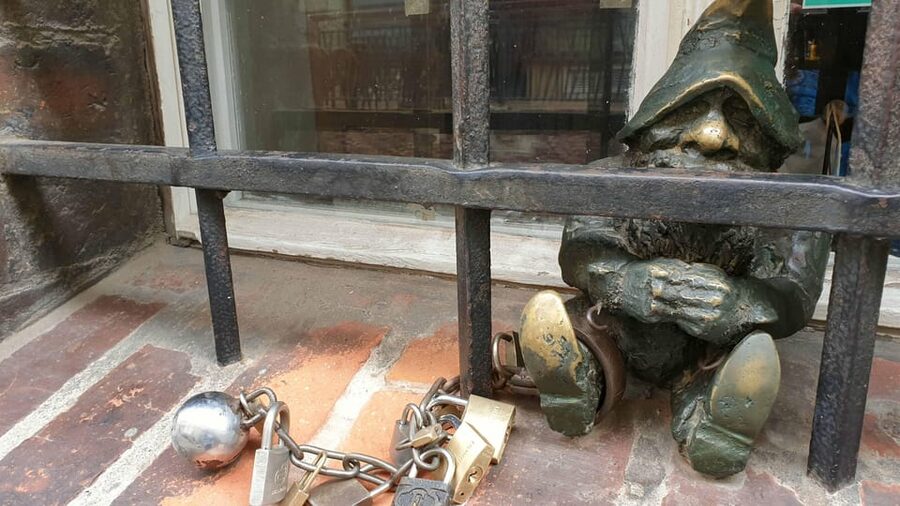
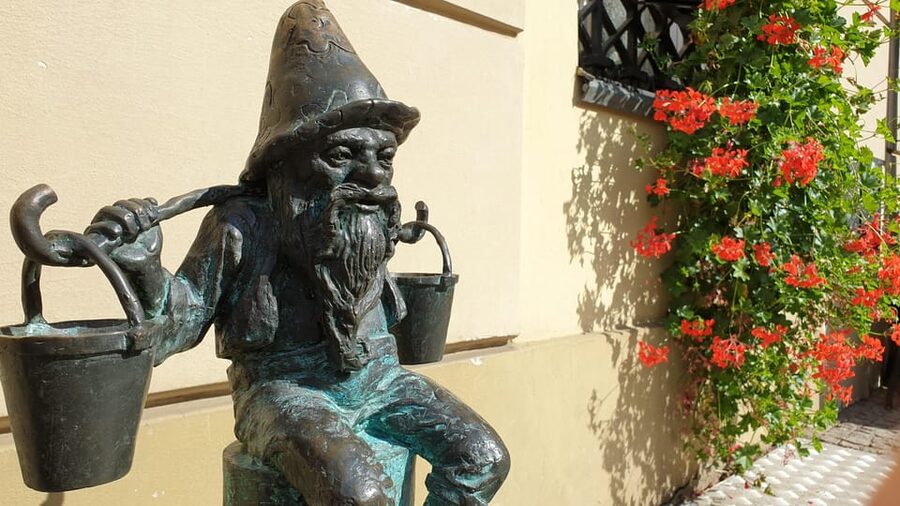
Moczymorda represents a Wrocław student who stayed too long at Piwnica Świdnicka and drank too much Biały Aries. The story is deliberately comic, but it also places the restaurant in an older student tradition. Before the Second World War, students were among its main patrons. They spent free time there talking, making arrangements, and even organizing duels.
This opening is useful because it gives you a local character before the tour turns to architecture. You begin by learning how Wrocław’s public places were used, not just how they looked. I would pay close attention here, since the restaurant itself becomes a recurring point in the tour and also serves as the end point.
The Market Square receives about 30 minutes of guided attention, though the group passes through rather than stopping for a formal entry. This is the longest part of the route, and it gives the guide room to point out dwarves and explain how they relate to the Old Town.
For a first look at Wrocław, the square is a sensible starting point. You get your bearings, hear the first stories, and begin the search among the buildings. If you are taking photos, remember that the dwarves are small and close to ground level. It is easy to walk past one while looking at the grand façades above.
Plac Solny and the rhythm of the dwarf hunt
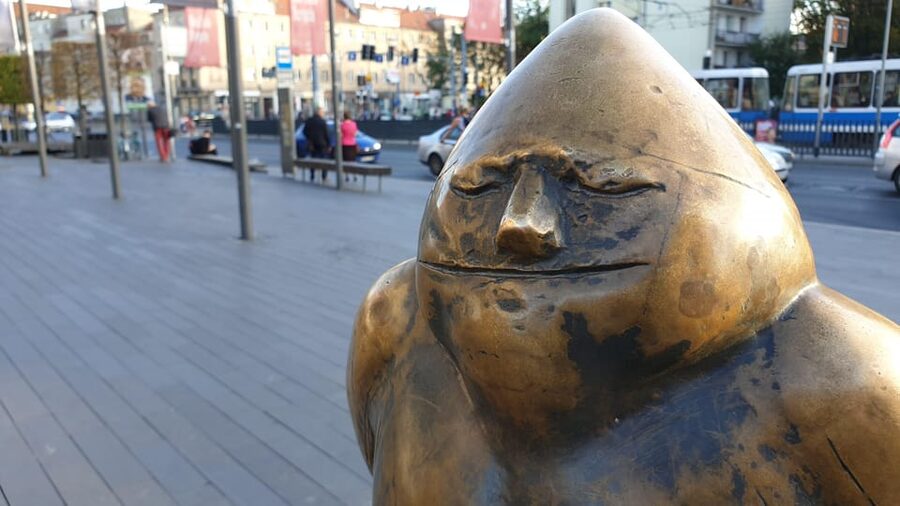
The next section leads to Plac Solny, or Salt Square. The stop is listed as a 10-minute guided pass-by, so expect a short explanation rather than a long pause. The value here is the change of setting. After the scale of the main Market Square, a smaller square gives the dwarf search a different rhythm.
A private guide can adjust the amount of time spent looking, especially if someone in your group wants to examine a statue or ask about the surrounding area. The tour is designed around meeting several dwarves, so the exact appeal is in the sequence: spot a figure, hear its story, then use that story to understand the place around it.
This is also where the tour’s family appeal becomes clear. Children have a simple task, find the next dwarf, while adults receive enough context to keep the walk from becoming a statue-counting game. I would treat the search as the tour’s organizing thread rather than expect every stop to be a major attraction on its own.
Papa Dwarf and the Orange Alternative
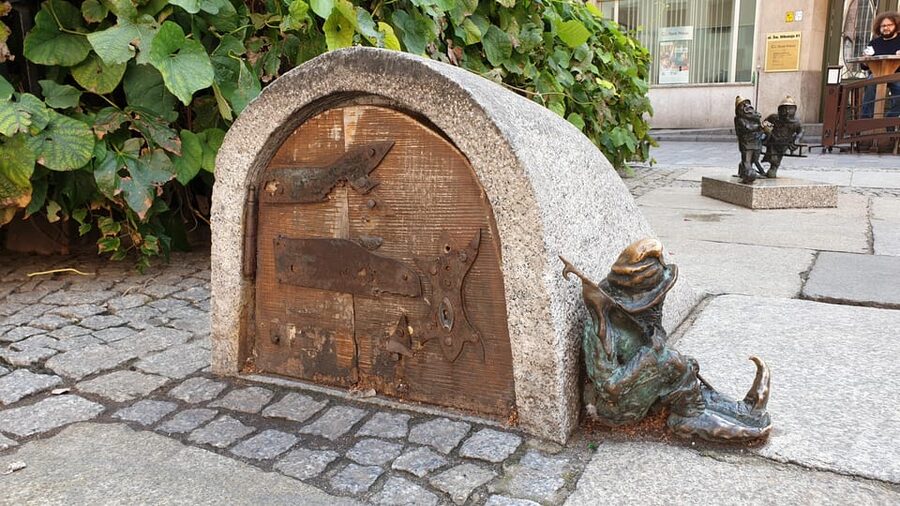
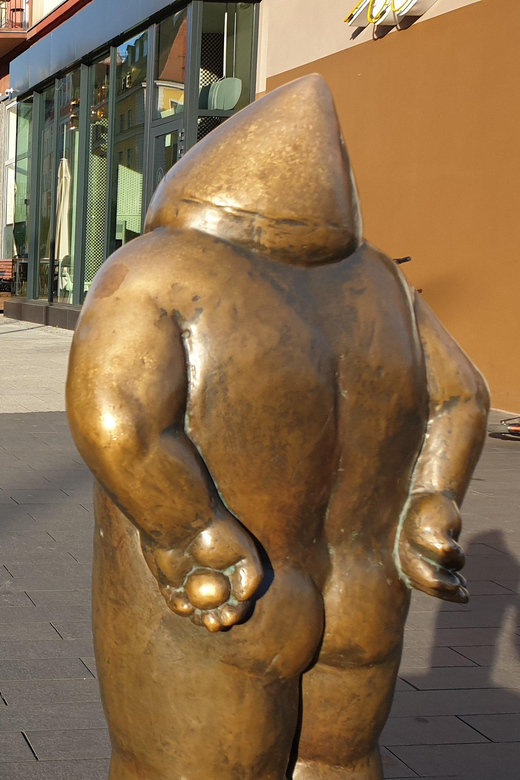
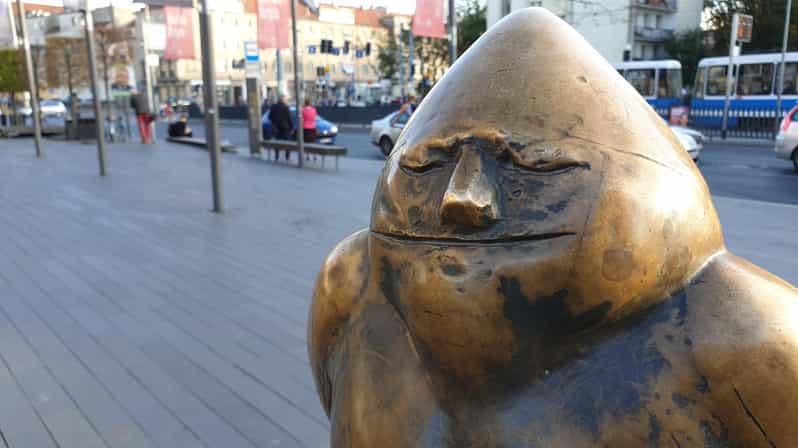
Papa Dwarf is one of the most important figures on the route. He is described as the largest of the Wrocław dwarves and as the character connected with the invention of the city’s dwarf tradition in the 1980s.
His story leads to Major Waldemar Fydrych, an artist and happener who created the Orange Alternative. This student-led group opposed the communist regime through humor. Members dressed as dwarves, painted dwarves in the streets, and organized illegal happenings.
That background gives the statues a sharper meaning. They are not merely modern decorations placed around a pleasant old city. Their story reaches back to a time when an absurd image could carry a political message. The Orange Alternative used silliness in public spaces to expose the silliness of official authority.
I find this the strongest historical part of the walk. It gives you a way to remember Wrocław’s communist past without reducing the subject to a list of political facts. Papa Dwarf acts as a visual anchor, and the guide can connect the bronze figures you see today with the creative protests of the 1980s.
The guide describes Papa Dwarf as the most famous dwarf in Wrocław. Even if you have already seen photographs of the city’s statues, this stop gives you a reason to look again. You are seeing the figure as part of a story about art, students, and public opposition.
A completely different kind of day out in Wrocław:
- Wroclaw: E-Car Tour and Audio Guide
★ 4.6 · 1,738 reviews - Wrocław: Old Town and Ostrów Tumski Walking Tour in English
★ 4.8 · 311 reviews - Old Town Wrocław Walking Tour
★ 5.0 · 249 reviews - Wroclaw: City Tour Sightseeing By Golf Cart Shared Or Privat
★ 4.8 · 189 reviews
The Bridge of Penitents and the Old Town route
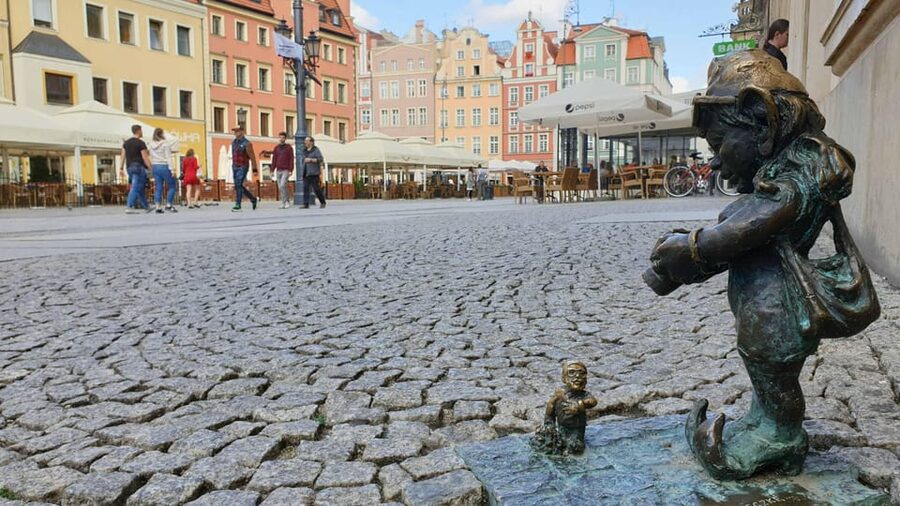
The walk continues toward the Bridge of Penitents. This stop receives about 10 minutes of guided attention. The name suggests a place with a strong local story, but the supplied details do not specify exactly which dwarf or legend the guide presents there.
That is worth keeping in mind. You can expect the guide to use the stop as part of the dwarf trail and to explain what connects it with Wrocław, but you should not book the tour expecting a separate bridge visit or a long architectural talk. The route is about links between statues and places.
The practical benefit is coverage. Over two hours, the group sees several recognizable parts of the Old Town instead of staying around one square. You get a broad first orientation, then you can return later to the places that interest you most.
Because the walk moves through central streets, comfortable shoes will help, though the supplied information does not give a precise distance or surface description. The meeting and return point are the same, so you do not need to plan transport back from a distant neighborhood.
University of Wrocław and the Dwarf Swordsman
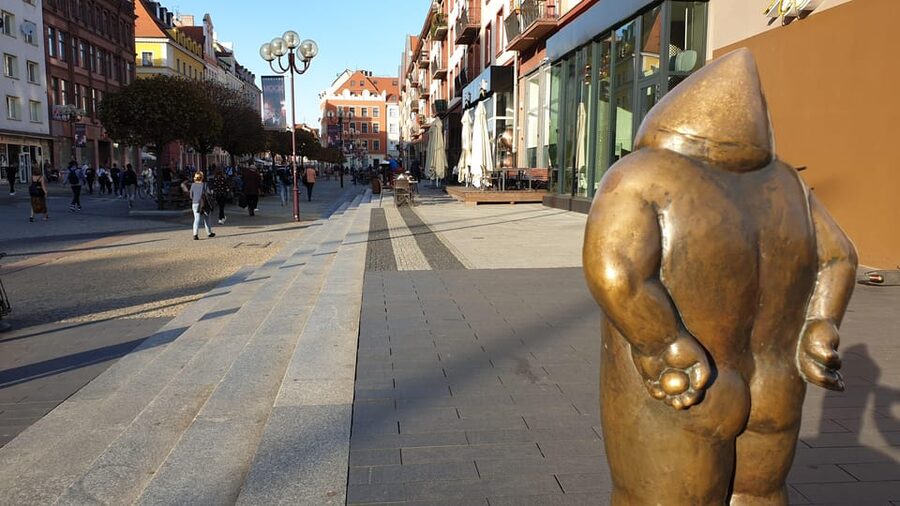
Near the University of Wrocław, the tour introduces the Dwarf Swordsman. This figure is naked and holds a sword, which naturally raises two questions: why no clothes, and why the weapon?
The explanation returns to Piwnica Świdnicka and Wrocław’s students. According to the story, students sometimes pawned their clothes at the restaurant to get money for beer. In the early morning, naked students could be seen heading home. They also enjoyed saber duels, and the sword mattered more to them than their clothing.
It is a funny story, but it also shows how the tour uses exaggeration and local humor to make a place memorable. You may forget a dry description of student customs. You are less likely to forget a naked student who refuses to pawn his saber.
The University stop also widens the tour’s subject. The dwarves are not tied only to old buildings or communist protests. They also represent student culture and the everyday stories that give a city personality. For families, this is likely to be one of the most entertaining stops. For adults, it offers a glimpse into the way local legends grow around restaurants and universities.
The stop is planned for about 10 minutes. You will pass by the university rather than receive a full campus tour. If your main goal is the university’s interior, this experience will not replace a dedicated visit. If you want a quick look at the building while hearing a memorable dwarf story, it fits well.
Fencer Fountain and the return to the restaurant
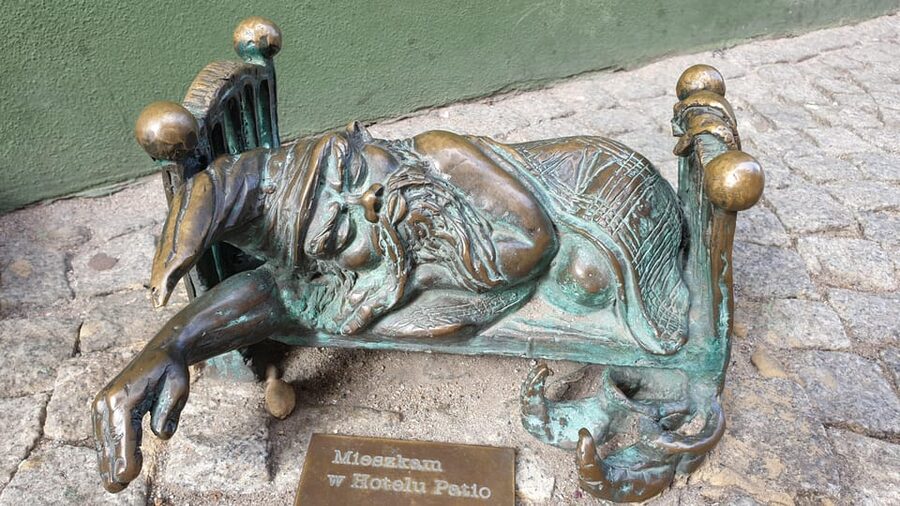
The Fencer Fountain is another 10-minute guided stop. Its connection to the Dwarf Swordsman gives the route a clear visual thread. You have heard about students and saber duels, then reach a place where the fencing theme becomes part of the physical setting.
As with the other stops, the emphasis is on passing by and listening. The guide keeps the tour moving through the Old Town, adding another point to the dwarf trail instead of settling into a long stop at one monument.
The walk then returns to Piwnica Świdnicka, where the tour ends. Finishing where you began is convenient, especially if you are meeting friends, planning lunch, or continuing your own walk around the Market Square. It also gives the route a pleasing loop. The restaurant is not just a meeting point. It starts the student stories and closes the path.
The route includes roughly 30 minutes at the Market Square and about 10 minutes each at Plac Solny, Papa Dwarf, the Bridge of Penitents, the University of Wrocław, the Fencer Fountain, and the return area at Piwnica Świdnicka. The published timing adds up to the advertised two hours, though a private group may experience small changes in pace.
What $41 per person buys you
At $41 per person, this is not the cheapest way to wander around Wrocław. You are paying for a private guide, not simply access to a map or a self-guided route. That price can make sense for a couple, family, or small group that values direct attention and wants the guide to explain the jokes behind the statues.
The private format matters more here than it would on a basic sightseeing walk. The dwarf figures are small, the stories invite questions, and children may want to stop often. A guide working only with your group can keep the search relaxed and respond to your interests.
The value is weaker if you only want to locate dwarves on your own. A dwarf map is available on request for €6 per person, but it is not included. If you prefer a self-guided hunt, you would need to decide if the guide’s stories justify the extra cost.
I see the tour as an orientation experience. It combines a city introduction, a short history lesson, and a family activity. It does not include food, museum admission, or a longer visit inside any listed attraction. The price is easiest to justify when you want a private, story-led start to Wrocław.
Language, access, and planning details
The live guide is available in German or Polish. Make sure that works for everyone in your group before booking, since no other language is specified.
The experience is wheelchair accessible. The supplied information does not give details about every street surface, entrance, or restroom, so you may still want to confirm any specific mobility needs in advance. The route stays within the Old Town and returns to its starting point.
You can cancel up to 24 hours before departure for a full refund. Reserve now and pay later is also available, which can help if your Wrocław schedule is still changing. Starting times vary, so check availability for the date you want.
A verified booking from Germany, dated August 20, 2025, gave the experience four out of five and praised the large amount of information and the strong first impression of the city. That assessment fits the tour’s purpose: it gives you plenty of facts in a short time and helps you get oriented quickly, though the pace may feel full if you want long photo stops.
Who will enjoy this two-hour walk most
I would recommend this experience to families, first-time visitors to Wrocław, and adults who enjoy local stories with a touch of absurdity. The dwarf hunt gives children a clear reason to stay engaged, while the communist-era background and student traditions give adults more substance.
It also suits anyone who wants a private introduction rather than a large group walk. You can ask about a particular statue, slow down for a photo, or move on when the group is ready. The guide is described as professional and friendly, and the format keeps the attention focused on your party.
You may want a different experience if you prefer major interiors, detailed architectural history, or a slower specialist tour. The stops are mainly pass-bys, and the tour does not promise entry to the University of Wrocław, Piwnica Świdnicka, or other attractions.
Bring curiosity more than a checklist. The best part is not simply how many dwarves you see. It is how each one gives you a reason to notice the city around it.
Should you book the Wrocław dwarf tour?
Book it if you want a light, memorable introduction to Wrocław with real historical context underneath the jokes. The stories of Moczymorda, Papa Dwarf, the Orange Alternative, and the Dwarf Swordsman give the two-hour walk more substance than a simple statue hunt.
Skip it if you want a full architectural tour or prefer exploring at no cost with a map. At $41 per person, the value rests on the private guide and the stories. For a family or small group that wants an easy first look at the Old Town, that combination is appealing.
FAQ
How long does the Wrocław dwarf tour last?
The tour lasts two hours.
Where does the tour begin?
It begins at the large entrance door of Restauracja Piwnica Świdnicka Wrocław.
Where does the tour end?
The tour returns to Restauracja Piwnica Świdnicka Wrocław.
What languages are available?
The live guide is available in German and Polish.
Is the tour private?
Yes. The guide is reserved for your private group.
Is the dwarf map included?
No. A dwarf map is available on request for €6 per person.
Just added around Wrocław
- Wroclaw to Rock City in Adsprach and Church of Peace in Świdnica Private Tour★ 5.0 · 3 reviews
- Wroclaw: Skip the Line Panorama Raclawicka and Ostrow Tumski Guided Tour★ 4.5 · 3 reviews
- From Wroclaw: Full-Day Stolowe Mountains Trekking Tour★ 3.9 · 3 reviews
- Wrocław: Polish Craft Beer Walking Tour with Tastings★ 4.1 · 3 reviews
- Segway Tour Wroclaw: Ostrów Tumski Tour – 1,5-Hours of Magic!★ 5.0 · 3 reviews
- Private Transfer from Wroclaw (WRO) Airport to Wroclaw city centre★ 5.0 · 3 reviews
- Wrocław: Ostrów Tumski and Old Town Highlights Private Tour★ 5.0 · 3 reviews
- Wroclaw: Czestochowa Day Trip to View the Black Madonna★ 4.7 · 3 reviews
City Tours, compared.
City Sightseeing Tour Eco Electric Buggy Golf Cart
Read our review →


Gdańsk City Sights & History Guided Walking Tour in English
Read our review →
Extended City Sightseeing Tour – Eco Buggy Golf Cart
Read our review →
Browse the lists this tour appears in