
REVIEW · 3-HOUR EXPERIENCES
Private Tour: Warsaw best of 3-Hour Sightseeing Tour
Warsaw rewards a well-planned first look. This private three-hour tour gives you a broad introduction to the Polish capital from a Mercedes vehicle, with stops at Łazienki Park, the Old Town, the former Jewish ghetto area, the Palace of Culture and Science, and the Vistula River. You get a guide, a driver, and a route that covers far more ground than you could manage on foot in one afternoon.
I like the private format, since your group of up to three can ask questions and adjust the pace within the available time. I also like the mix of major landmarks and serious historical sites, especially Mila 18, Umschlagplatz, and the Warsaw Uprising monuments. The main drawback is simple: three hours is tight, so several stops are brief photo visits rather than full museum visits.
Guides named Art, Radek, and Aurtor have drawn especially warm praise for their enthusiasm, clear explanations, and ability to make Warsaw’s complicated past easier to understand. If you want a quick orientation soon after arrival, this tour makes a sensible first step. If you prefer long walks, extended museum time, or a slow café-based day, you may find the schedule too packed.
In This Review
- Key points about this Warsaw sightseeing tour
- Why three hours can work well in Warsaw
- Łazienki Park: Warsaw’s calm royal beginning
- Jewish Warsaw: POLIN, Umschlagplatz, and Mila 18
- The reconstructed Old Town and Royal Castle area
- Palace of Culture and Science: Warsaw’s complicated landmark
- Vistula Boulevards and the Warsaw Mermaid
- PGE National Stadium and modern Warsaw
- Warsaw Uprising sites and the city’s wartime memory
- Maria Skłodowska-Curie and a short personal connection
- Price, private transport, and who gets good value
- What the guides add to the experience
- Who should book this tour?
- FAQ
- How long is the Warsaw sightseeing tour?
- How many people can join the private tour?
- Is hotel pickup available?
- Is the tour offered in English?
- Does the tour include admission fees?
- Which park is included?
- Can I cancel for a full refund?
- Is this suitable for most participants?
Key points about this Warsaw sightseeing tour
- Łazienki Park gets the longest stop, with 45 minutes among palaces, gardens, squirrels, and peacocks.
- The Mercedes vehicle saves time, linking widely separated parts of Warsaw without making you handle navigation or parking.
- Jewish Warsaw receives serious attention, including the POLIN Museum area, Umschlagplatz, and the Mila 18 bunker memorial.
- The private group limit is three people, useful for couples, families, or a small group that wants direct conversation with the guide.
- The route covers both old and modern Warsaw, from the reconstructed Old Town to the Palace of Culture and Science and PGE National Stadium.
- The tour costs $336.44 per group, not per person, so the value improves when three people share the price.
Why three hours can work well in Warsaw
Warsaw is spread across a large central area, and its major sights tell very different stories. The Old Town reflects centuries of royal power and wartime destruction. The former Jewish ghetto area recalls the Holocaust and Jewish resistance. Łazienki Park offers a quieter royal setting, while the Palace of Culture and Science represents the city’s difficult postwar relationship with Soviet influence.
Trying to connect all of this alone in three hours would mean constant map checking and transport decisions. Here, the driver handles the road while the guide supplies context between stops. That matters in Warsaw, where a short drive can carry you from one period of history to another.
The route includes about 225 minutes of listed stop time, although the experience itself lasts approximately three hours. That tells you to expect a flexible sightseeing approach rather than a full visit at every location. Some stops last only five or ten minutes. You will usually see the place, hear why it matters, and take a photograph before moving on.
That structure suits an arrival day. You can identify the places you want to return to later, then spend a full afternoon at the Warsaw Uprising Museum, POLIN, or the Old Town on your own.
A few more Warsaw trips worth weighing up
- 3-Hour Guided Cycling Tour of Warsaw
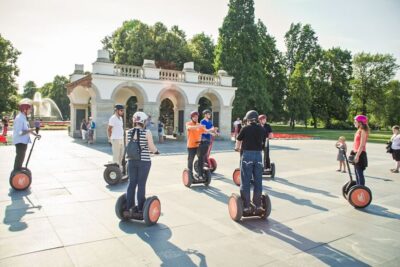
★ 4.9 · 624 reviews - Warsaw Old Town 1.5-Hour or Full 3-Hour Segway Tour
★ 4.9 · 209 reviews - Warsaw: 3-Hour Panoramic City Bus Tour with Pickup
★ 4.5 · 169 reviews
Łazienki Park: Warsaw’s calm royal beginning
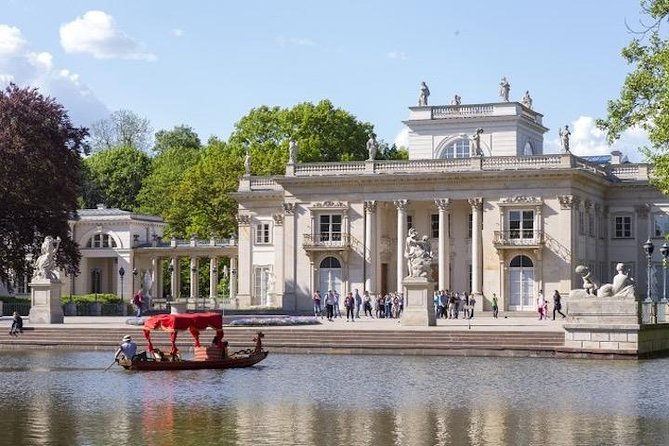
The 76-hectare Łazienki Park is the most generous stop, with 45 minutes. This is a good choice because it gives you room to leave the vehicle and enjoy one of Warsaw’s most pleasant public spaces without rushing every few steps.
The park began as a seventeenth-century baths park for nobleman Stanisław Herakliusz Lubomirski. In the eighteenth century, Poland’s last monarch, Stanisław II Augustus, reshaped it into a royal setting filled with palaces, villas, classical buildings, and monuments. It became a public park in 1918.
You might see peacocks and squirrels as you walk. Those details sound small, but they help the park feel like a living part of the city rather than a formal monument zone. The grounds also host music, art, and cultural events.
This stop gives the tour some breathing room after the drive. Still, 45 minutes is not enough to see every palace, garden, and monument. Think of it as an introduction. If the park appeals to you, return later with comfortable shoes and more time.
Jewish Warsaw: POLIN, Umschlagplatz, and Mila 18
The tour then turns to one of Warsaw’s most important and emotionally demanding areas. Around the POLIN Museum of the History of Polish Jews, you see the former Jewish ghetto territory, including commemorations and sculptures connected with Jewish life, persecution, and resistance.
The route includes the Umschlagplatz memorial, Mila 18, and the area around POLIN. You also see the monument to the Warsaw Ghetto Heroes by sculptor Nathan Rapoport, along with references to Jan Karski and sculptures by Leon Suzin.
Umschlagplatz marks the holding area where Jews from the Warsaw Ghetto were assembled before deportation to Nazi death camps. It is a quiet place, but the meaning is heavy. A short stop here can be more useful with a guide who explains the site’s role instead of leaving you to interpret a memorial on your own.
Mila 18 marks the former headquarters bunker of the Jewish Combat Organization, a Jewish resistance group in the ghetto. The five-minute listed stop is brief, but its importance is not. You may want to return to this area later, especially if you plan to visit the POLIN Museum itself.
One practical point matters here: this experience offers outdoor sightseeing at POLIN and the memorial sites. It does not list admission to the museum interior. If you want the museum’s exhibitions, collections, and full indoor presentation, plan a separate visit.
The reconstructed Old Town and Royal Castle area
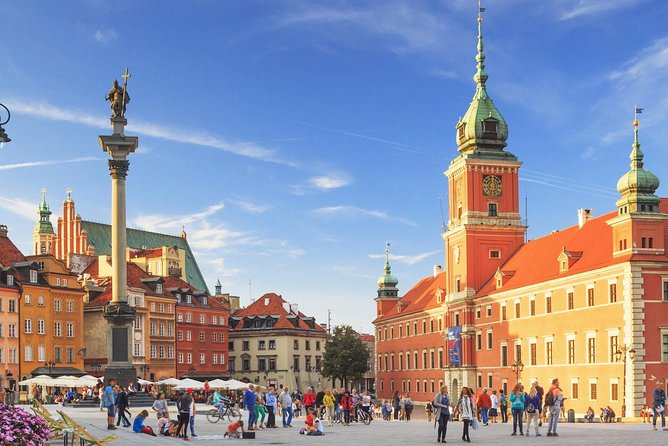
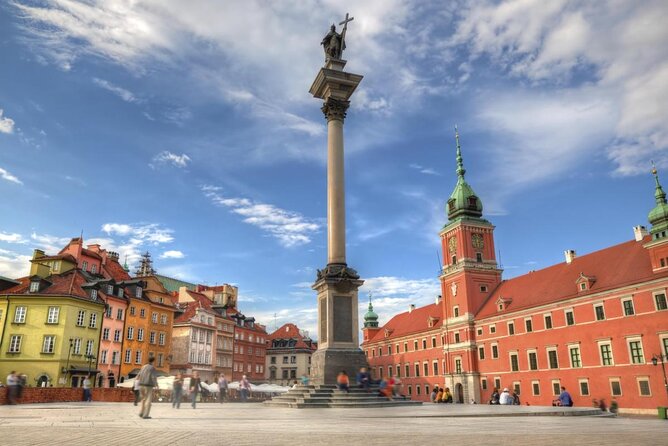
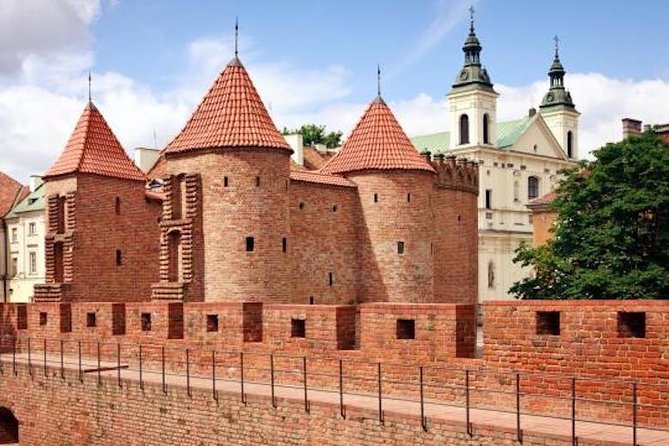
Warsaw’s Old Town is one of the city’s essential stops, and the tour gives it about 40 minutes. You see cobblestone lanes, reconstructed medieval-style buildings, and the market square, Rynek Starego Miasta.
The word reconstructed deserves attention. Much of Warsaw’s historic center was destroyed during World War II and rebuilt afterward. The Old Town is therefore not untouched medieval Warsaw, but it remains a powerful example of a city restoring its architectural identity.
The square is lined with burgher houses and Polish restaurants. Nearby, St. John’s Archcathedral dates from the fourteenth century and hosts summer concerts. You also see the Royal Castle area, with restored apartments and carefully maintained gardens.
Forty minutes lets you get your bearings and see the main spaces. It will not give you time for a relaxed meal, a full castle visit, and a long wander through every side street. I would use the tour to note where you want to return. The Old Town is especially easy to revisit independently after you understand its layout.
A completely different kind of day out in Warsaw:
- Warsaw: Chopin Concert in the Old Town
★ 4.8 · 2,287 reviews - Warsaw: Traditional Galar Cruise on The Vistula River
★ 4.6 · 1,640 reviews - Warsaw: Old Town Highlights Walking Tour in English
★ 4.7 · 1,516 reviews - Warsaw Concert: Chopin – Painted by Candlelights with Wine
★ 4.8 · 1,442 reviews
Palace of Culture and Science: Warsaw’s complicated landmark
The Palace of Culture and Science receives a 20-minute stop. At 237 metres, it remains Poland’s tallest building and is one of the most recognizable features of central Warsaw.
Its story is politically charged. Construction ran from 1952 to 1955, with Soviet plans and thousands of Soviet and Polish workers. The building was presented as a gift from the Soviet Union to Poland. It was originally known as Joseph Stalin’s Palace of Culture and Science, but Stalin’s name was removed during destalinization.
Architect Lev Rudnev designed it in the Soviet Seven Sisters style, while also drawing on Polish historical architecture and American art deco towers. The result is a building that can look grand, imposing, or simply oversized, depending on your view of it.
A 20-minute stop is enough for an exterior look and explanation. The tour data does not promise entry or a visit to an observation deck, so do not book this expecting an indoor tower experience. The value here is understanding what the building says about twentieth-century Warsaw.
Vistula Boulevards and the Warsaw Mermaid
The Vistula Boulevards provide a lighter change of mood. The riverside promenade stretches for about five kilometres and includes places to walk, cycle, sit, and visit seasonal clubs. You may see gazebos with loungers, stone benches, branch-made seats, a lookout, and a small beach with wicker baskets.
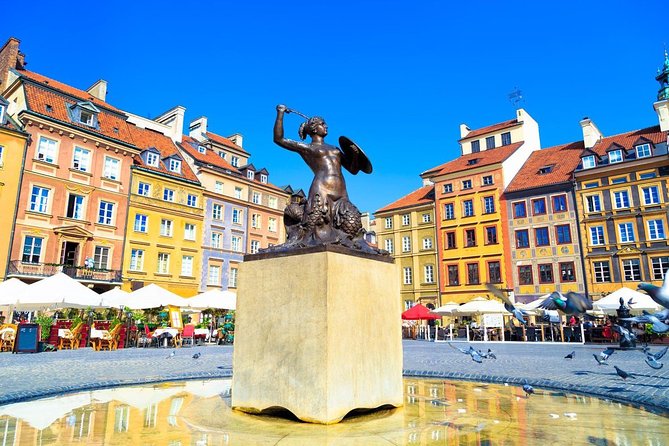
The stop lasts about 15 minutes. That is enough for a short riverside pause and a photograph of the Mermaid monument, a symbol of Warsaw and the Vistula. It is not enough for a full promenade walk or a leisurely evening at one of the seasonal venues.
This quick stop is useful because it shows how Warsaw relates to its river. The city’s story is not only royal buildings and wartime memorials. The Vistula area offers a more relaxed side of the capital, even if you only see a small section.
PGE National Stadium and modern Warsaw
PGE National Stadium adds a contemporary landmark to the route. The football stadium seats 58,580 and has a retractable roof that unfolds from a central spire above the pitch.
The stadium was built between 2008 and November 2011 on the site of the former 10th-Anniversary Stadium. It became closely associated with UEFA Euro 2012, when Poland and Ukraine hosted the tournament. Poland’s national football team uses it for home matches.
The 15-minute stop is aimed at seeing the building and hearing its role in modern Warsaw. There is no listed stadium tour or match admission. If you care about football architecture, this is a worthwhile visual stop. If stadiums are not your interest, it may feel like one of the less essential parts of the route.
Warsaw Uprising sites and the city’s wartime memory
The Warsaw Uprising Museum is included in the route, but only for about 15 minutes and with free listed admission. That timing signals a look at the museum rather than a full visit through its exhibitions.
The museum opened on July 31, 2004, marking the sixtieth anniversary of the 1944 uprising. Its collection includes weapons used by insurgents, personal letters, and material connected with the Polish Underground State. It also records memories from people who took part in or experienced the uprising.
A proper museum visit needs much more time than this tour allows. I would treat the stop as an introduction and return separately if the subject matters to you. The guide’s explanation during the drive can help you understand why the uprising remains central to Warsaw’s identity.
The Warsaw Uprising Monument receives about 20 minutes. The monument’s history reflects how difficult it was to speak openly about the 1944 fighting during the communist period. Earlier official memorials emphasized Red Army soldiers, while the Polish resistance received limited public recognition until after 1989.
That background makes the monument more than a photo stop. It shows how public memory changed along with Poland’s political life.
Maria Skłodowska-Curie and a short personal connection
The five-minute stop at the Monument to Maria Skłodowska-Curie includes a closer look at her birthplace and museum. She was the first woman to win a Nobel Prize.
Because the stop is short, you should not expect a museum visit. Still, this small detail adds a personal Polish connection to a route otherwise focused heavily on war, politics, and national monuments.
Her birthplace offers a reminder that Warsaw also produced scientists and cultural figures whose influence reached far beyond Poland. It is a quick stop, but it helps broaden the story of the city.
Price, private transport, and who gets good value
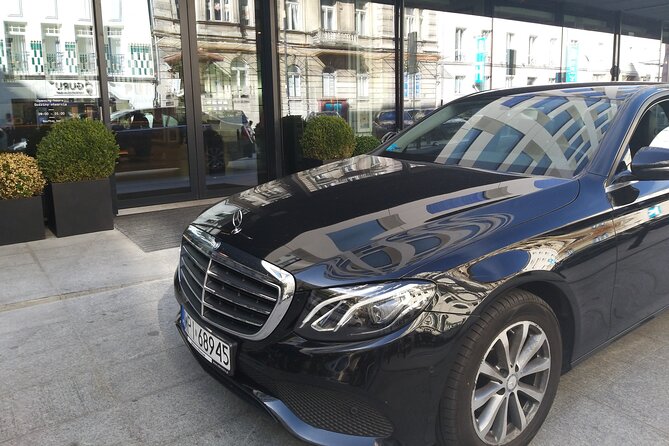
The price is $336.44 per group of up to three people. For one person, that is expensive. Split between three, it comes to roughly $112 per person, before considering that the price includes a private guide, a Mercedes vehicle, and pickup and drop-off anywhere in Warsaw.
The strongest value comes from convenience and coverage. You are not paying only to look at one attraction. You are paying to connect parks, memorials, museums, stadiums, riverfront areas, and the Old Town in one short outing.
For a couple, the cost may still make sense if you value comfort and a private conversation. For three people, the price becomes easier to justify. A larger group would need to check the stated limit, since this experience is designed for no more than three participants.
Pickup and drop-off anywhere in Warsaw remove another practical burden. The experience is offered in English, uses a mobile ticket, and confirmation is provided at booking. Service animals are allowed, and most participants can take part. Public transportation is nearby, but you do not need to rely on it during the tour.
Free cancellation is available up to 24 hours before the start time. Changes or cancellations inside that window are not accepted for a refund.
What the guides add to the experience
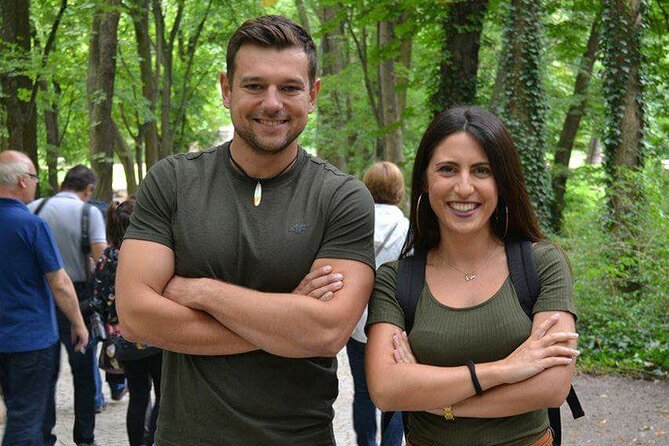
The most praised part of this tour is the guiding. Art is described as warm, enthusiastic, and deeply committed to sharing his country. Radek is praised for introducing Warsaw clearly and making the city feel accessible. Aurtor is credited with giving the right amount of background information during the drive.
That last point is particularly important. A car tour can become a blur of buildings if the guide talks too little, or a history lecture if the guide talks too much. The feedback suggests that the best guides on this experience keep the explanations understandable and connected to what you are seeing.
You should still tell the guide what interests you most. With only three hours, a group focused on Jewish Warsaw may want more explanation at POLIN, Umschlagplatz, and Mila 18. A first-time visitor may prefer a balanced introduction that gives equal attention to the Old Town, Łazienki, the river, and modern Warsaw.
Who should book this tour?
I would recommend it to first-time visitors, couples, small families, and anyone with only a short stay in Warsaw. It is also useful soon after arrival because it gives you a citywide orientation and helps you choose where to spend more time later.
This is a good fit if you want private transport, English-language guidance, and a broad route without planning every turn yourself. It is less suitable if you want to enter several museums, linger at memorials, or explore the Old Town on foot at a slow pace.
Book it when your priority is seeing the shape of Warsaw and understanding its major stories in one outing. Skip it when your priority is a detailed museum day. For the best use of the time, treat the tour as your introduction, then return to one or two favorite areas independently.
FAQ
How long is the Warsaw sightseeing tour?
The tour lasts approximately three hours.
How many people can join the private tour?
The private group can include up to three people.
Is hotel pickup available?
Yes. Pickup and drop-off are offered anywhere in Warsaw.
Is the tour offered in English?
Yes, the experience is offered in English.
Does the tour include admission fees?
The listed stops show free admission. The tour includes outdoor sightseeing and brief visits, but it does not promise entry to the interiors of the POLIN Museum, Warsaw Uprising Museum, or other attractions.
Which park is included?
The tour visits Łazienki Park, also called Royal Baths Park, for about 45 minutes.
Can I cancel for a full refund?
Yes, if you cancel at least 24 hours before the experience start time. Cancellations made less than 24 hours in advance are not refunded.
Is this suitable for most participants?
Yes. Most people can participate, and service animals are allowed. The experience is also near public transportation.
Just added around Warsaw
- Jewish heritage in Warsaw★ 4.5 · 3 reviews
- Warsaw Outdoor Paintball with Transfers (all year round)★ 5.0 · 3 reviews
- World War II Warsaw Old Town, Military Cemetery Walking Tour★ 4.7 · 3 reviews
- Warsaw: Wolf’s Lair & Swieta Lipka Small-Group Tour + Lunch★ 5.0 · 3 reviews
- Sunset Boat Tour with Unlimited Drinks in Warsaw★ 3.5 · 3 reviews
- Majdanek – German camp from II World War – Private Tour – 1 DAY TRIP FROM WARSAW★ 5.0 · 3 reviews
- From Warsaw: Guided Tour to Wieliczka Salt Mine and Krakow★ 4.5 · 3 reviews
- Warsaw Sightseeing with NEW Mercedes Sclass !!!★ 5.0 · 3 reviews
3-Hour Experiences, compared.
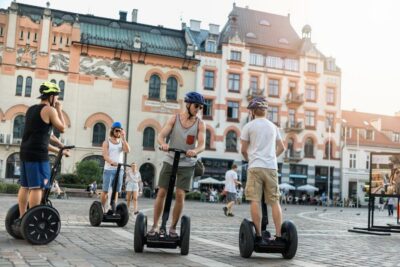
Warsaw Old Town 1.5-Hour or Full 3-Hour Segway Tour
Read our review →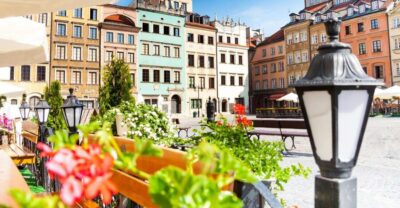
3-Hour Novice Ski Adventure & Relaxing Zakopane or Baths Combo
Read our review →
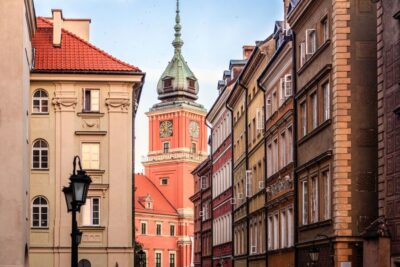
Private 3-Hour Sightseeing Tour by Car with Pickup
Read our review →Browse the lists this tour appears in