
REVIEW · HISTORICAL TOURS
Jewish heritage in Warsaw
Warsaw’s Jewish story is written in stone. This five-hour private tour connects the former ghetto, Jewish Cemetery, Nozyk Synagogue, Umschlagplatz, Praga Polnoc, and the Jewish Historical Institute, giving you a clear route through places that are spread across the city. I like the hotel pickup and drop-off, and I like the chance to visit both major memorials and less obvious surviving Jewish buildings. The main concern is the vehicle: one visitor found the car very cramped, so ask about transport if legroom matters to you.
This is also a strong choice if you want a guide to handle the city’s difficult chronology. Renata Kopczewska is praised for explaining the sites clearly, answering questions, and bringing Warsaw’s Jewish community to life. The tour is private, but the $270 price is much easier to justify for four people than for one or two.
In This Review
- Key points at a glance
- Why this five-hour route works in Warsaw
- The former Warsaw Ghetto and the Mila 18 area
- Reading Warsaw’s story in the Jewish Cemetery
- Umschlagplatz and the last journey to Treblinka
- Nozyk Synagogue, Warsaw’s surviving house of worship
- Praga Polnoc and the buildings that survived
- The Jewish Historical Institute and the Great Synagogue site
- What the $270 private price really buys
- Who will appreciate this tour most
- Practical advice before you book
- Should you book Jewish Heritage in Warsaw?
- FAQ
- How long does the Jewish heritage tour in Warsaw last?
- Is hotel transportation included?
- What sites does the tour visit?
- Is admission included in the tour price?
- Can I take the tour on a Saturday?
- How many people can join the private tour?
Key points at a glance
- Six important stops in five hours: The route covers the former Warsaw Ghetto, Jewish Cemetery, Umschlagplatz, Nozyk Synagogue, Praga Polnoc, and the Jewish Historical Institute.
- A rare surviving synagogue: Nozyk Synagogue is the only synagogue in Warsaw that survived World War II and still functions today.
- A cemetery full of clues: Preserved matzevots, wartime mass graves, and memorial stones help explain Jewish life in Warsaw and the scale of the destruction.
- Transport is built in: Hotel pickup, drop-off, fuel, and a driver-guide are included, saving you from arranging taxis between scattered sites.
- A private guide shapes the visit: You can ask questions and spend more time on subjects that matter to your group.
- Budget for entry fees: Lunch and admissions to the cemetery, synagogue, and Jewish Historical Institute are not included.
Why this five-hour route works in Warsaw
Warsaw’s Jewish heritage sites do not sit in one compact quarter. Some are in the former ghetto area, others lie north of the center, and Praga Polnoc is across the Vistula. That makes a private vehicle useful, especially if you have limited time or do not want to piece together several short taxi rides.
The tour also gives you a useful balance. You see places linked to the Holocaust, but you are not shown only ruins and memorials. The cemetery, synagogue, former library, map of prewar Poland, and surviving buildings in Praga help you understand the Jewish community as a living part of Warsaw before the war.
I especially like that the route includes the Jewish Historical Institute and Praga Polnoc. The better-known ghetto memorials are essential, but these two stops add texture. They point to education, religious life, family life, architecture, and the many towns that once made up Jewish Poland.
The tone is serious. This is not a sightseeing ride with a few quick photo stops. You will spend much of the morning listening, looking closely, and dealing with painful subjects. That is exactly why a good guide matters.
More History Tours in Warsaw
- Warsaw: POLIN Museum of the History of Polish Jews Ticket
★ 4.7 · 1,142 reviews - Warsaw: Chopin Concert at Historical Venue in Old Town
★ 4.7 · 445 reviews - Small-Group Historical Guided Tour of Warsaw with pick up/drop off. Public Tour.
★ 4.5 · 343 reviews
The former Warsaw Ghetto and the Mila 18 area
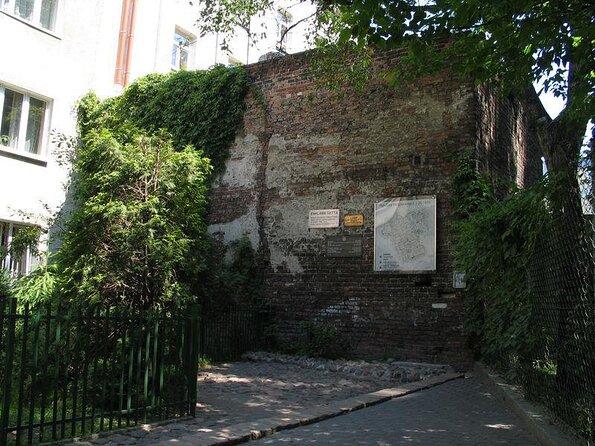
The first stop takes about an hour and focuses on the former Warsaw Ghetto. The ghetto itself was destroyed after the uprising, so you should not expect a preserved old quarter. Instead, the area is marked by memorials, surviving fragments, and locations whose meaning comes from the events connected to them.
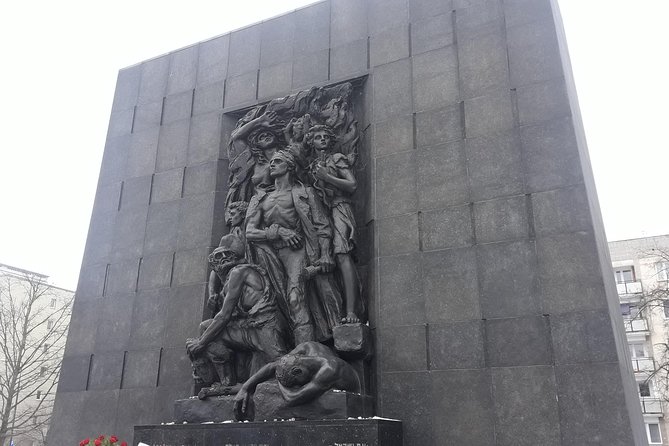
The Rappaport monument to the Heroes of the Ghetto is the main landmark here. It honors those who fought during the uprising and has become one of Warsaw’s most important memorials. The guide can connect the monument to nearby sites such as Mila 18 and the memorial to Szmul Zygelbojm.
Mila 18 has particular weight. It marks the bunker used by Jewish insurgents during the uprising. The point of visiting is not to see a dramatic ruin, since the former ghetto was largely erased, but to understand the ground beneath modern Warsaw and the choices people faced there.
This is also one of the places associated with scenes from The Pianist. The film used Warsaw locations to recreate the city’s wartime destruction, and the tour points out filming locations connected with that story. Film fans may find this especially useful, but the guide should keep the focus on the real events rather than turning the area into a movie set visit.
Give this stop your full attention. An hour can pass quickly, especially if you ask questions about the uprising, the ghetto’s destruction, or the people named at the memorials.
Reading Warsaw’s story in the Jewish Cemetery
The Jewish Cemetery, known in Polish as Cmentarz Zydowski, takes about 45 minutes. Admission is not included, and the cemetery is closed on Saturdays, so check the day carefully before booking.
The preserved matzevots, or Jewish grave markers, are the reason this stop matters. Their inscriptions, symbols, and names offer a direct link to the people who lived in Warsaw. The guide can help you see how the cemetery reflects Jewish contributions to Polish literature, science, and art, not just the tragedy of the war years.
You will also see mass graves from World War II and symbolic stones dedicated to those murdered at Treblinka. These areas shift the visit from individual memory to mass loss. The contrast is hard to miss: one part of the cemetery preserves personal names and family markers, while another points toward people whose lives were cut short without a normal grave.
The cemetery requires a moderate level of physical fitness. You will be walking through an outdoor site, and the tour information does not promise a fully level or accessible route. Wear practical shoes and allow time for the vehicle to stop and start between locations.
I consider this one of the most valuable stops on the route, but it can also be emotionally demanding. If your group wants a slower look at inscriptions or memorial stones, tell Renata early in the tour so she can judge the timing.
Umschlagplatz and the last journey to Treblinka
Umschlagplatz is a shorter stop, about 15 minutes, but its meaning is immense. It marks the former railway loading area from which roughly 300,000 Jews from the Warsaw Ghetto were deported to Treblinka during the summer of 1942.
The memorial wall carries 300 first names in alphabetical order. The names create a symbolic record of people beginning their final journey. It is a simple idea, but it gives the place a human scale. You are not looking at an abstract number alone.
Because the stop is brief, the explanation from the guide matters. If you want to read the memorial carefully or ask questions, this is a good place to say so. The tour schedule includes many sites, and the 15-minute timing may feel tight for anyone who prefers long, quiet visits.
There is no admission fee here. That helps keep the tour cost focused on the private transport and guide rather than entry tickets, though you should still expect separate charges at several other stops.
A completely different kind of day out in Warsaw:
- Warsaw: Chopin Concert in the Old Town
★ 4.8 · 2,287 reviews - Warsaw: Traditional Galar Cruise on The Vistula River
★ 4.6 · 1,640 reviews - Warsaw: Old Town Highlights Walking Tour in English
★ 4.7 · 1,516 reviews - Warsaw Concert: Chopin – Painted by Candlelights with Wine
★ 4.8 · 1,442 reviews
Nozyk Synagogue, Warsaw’s surviving house of worship
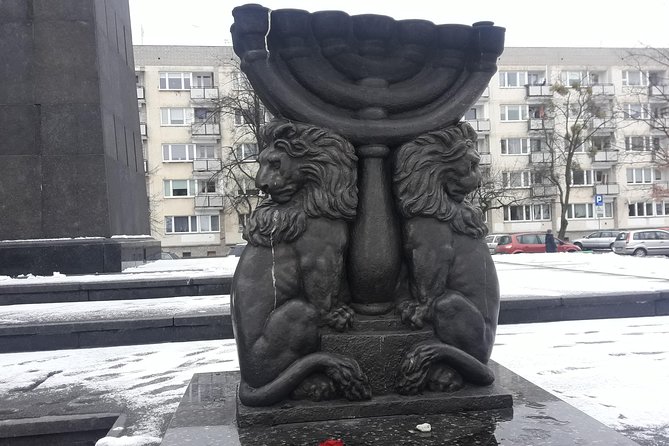
Nozyk Synagogue is a key stop for anyone interested in Jewish religious life in Warsaw. Built at the beginning of the 20th century, it is the only synagogue in Warsaw to survive World War II and remains in use.
The visit is scheduled for about 15 minutes. Admission is not included, and Saturday has a special rule: the synagogue is open for prayers only, with no admission fee charged at that time. Since the Jewish Cemetery is closed on Saturdays, Saturday is not the simplest day for this route, even though the synagogue still has religious activity.
The short visit means you may not have time for a long architectural study. Still, entering a functioning synagogue gives the tour a different tone from the memorial sites. It reminds you that Jewish life in Warsaw is not only something found in plaques, museums, and cemeteries.
Dress and behave respectfully. This is an active place of worship, not only a sightseeing stop. The tour information does not specify a dress code, so ask the guide if you have any concern before entering.
Praga Polnoc and the buildings that survived
Praga Polnoc was not destroyed as thoroughly as central Warsaw, which is why a few Jewish-related buildings remain there. The stop takes about 30 minutes and offers a change of pace from the memorials in the former ghetto.
The route includes a former student dormitory where Menachem Begin lived as a student. It also points out a former shelter for poor people and orphans, now used as a puppet theater, along with a former mikveh, or ritual bath, that survives as part of a high school.
These buildings are not presented as a polished historic quarter. Their present uses show how Warsaw has changed, sometimes in surprising ways. A former religious building may now serve a school, while a place connected to social care may have become a theater. That makes this stop useful for understanding what survival looks like in a modern city.
Praga Polnoc is also a reminder that Jewish heritage is not limited to grand monuments. Dormitories, shelters, ritual buildings, and neighborhood institutions helped make up ordinary Jewish life. You may find this stop less immediately dramatic than the ghetto memorials, but it adds needed context.
The Jewish Historical Institute and the Great Synagogue site
The Jewish Historical Institute receives about 45 minutes and has an entrance fee that is not included. It occupies the former Judaistic Library, a building that survived the war.
The institute’s location adds another layer. It stands near the former Great Synagogue, which was blown up after the Warsaw Ghetto Uprising. Traces of the fire can still be seen on the floor, linking the building to the destruction around it.
Inside, you can see a map of prewar Poland showing former shtetles. That map is important because it expands the story beyond Warsaw. Jewish life was spread through hundreds of towns and small communities, many of which disappeared during the war.
The institute also displays archives from the ghetto that survived against terrible odds. These documents offer a record made by people living through the events, rather than a story assembled only afterward. For me, this is one of the strongest reasons to choose the tour. You are not just seeing memorials; you are seeing evidence and records.
Forty-five minutes gives you a useful introduction, but not unlimited time for a museum. If you care most about the institute, ask how the guide plans to divide the visit. The total route has a fixed length, and adding time here could mean less time elsewhere.
What the $270 private price really buys
The price is $270 per group of up to four people. With four people, that works out to $67.50 per person for roughly five hours. For two people, it becomes $135 each, and for a solo visitor it is a major expense.
The value is strongest when you fill the vehicle. You are paying for a private driver-guide, hotel pickup and drop-off, fuel surcharge, and a route that crosses several parts of Warsaw. You also avoid planning transport between six separate stops.
Entry fees are extra, as is lunch. The tour runs from 9 a.m. to 1 p.m. according to the stated hours, although the advertised duration is approximately five hours, so confirm the exact start and finish when booking.
The private format gives you room to ask questions. The strongest feedback about Renata describes her as friendly, well informed, and able to answer questions while explaining the sites clearly. That personal exchange is a real advantage over a large group tour.
There is one practical warning. One person found the car extremely small, with so little legroom that the ride ended in real discomfort. That may have been a vehicle or booking-specific problem, but it is worth asking about the car before you commit, especially if four adults will share it.
Who will appreciate this tour most
I would recommend this experience to you if Jewish Warsaw is a main reason for visiting the city, or if you have only one morning to cover a wide area. It suits families, couples, and small groups who want a guide rather than a self-guided route through difficult material.
It is also a good fit if you value questions and conversation. The private format means your group can ask about names, memorials, architecture, the ghetto uprising, or the Jewish community before the war without waiting for a large group to move on.
You may want a different plan if you prefer to spend a full day in one museum, walk at your own pace, or avoid riding in a small vehicle. The schedule is efficient, but efficiency means the cemetery, Umschlagplatz, synagogue, and Praga stops are relatively short.
Plan for moderate physical activity and an emotionally serious morning. The route includes outdoor walking, a cemetery, memorials, and museum material concerning deportation and extermination. It is best approached with patience rather than as a checklist.
Practical advice before you book
Book with the calendar in mind. The Jewish Cemetery is closed on Saturdays, while Nozyk Synagogue is open on Saturdays for prayers only and does not charge admission then. If entering the synagogue as a visitor is important to you, ask for the most suitable day.
Ask about the vehicle if your group has four adults, taller passengers, or anyone who needs generous legroom. A private tour is only good value if the ride is comfortable enough for the full route.
Wear sensible shoes and bring water. You will move between indoor and outdoor locations, and the tour covers a lot of ground. Lunch is not included, so plan to eat before or after the morning route.
The tour offers a mobile ticket and confirmation at booking. Cancellation is free up to 24 hours before the start time, but changes or cancellations inside that period are not accepted for a refund.
Should you book Jewish Heritage in Warsaw?
Book it if you want a focused, private introduction to Warsaw’s Jewish past and you value having transport and a guide arranged for you. The combination of ghetto memorials, a functioning synagogue, the cemetery, Praga buildings, and the Jewish Historical Institute gives you a fuller picture than a route limited to World War II memorials.
The price makes the most sense for a group of four. Before paying, confirm the vehicle size, check the cemetery’s Saturday closure, and decide which museum or synagogue admissions you are willing to add. If those details suit your plans, Renata’s clear explanations and the wide range of sites make this a thoughtful and efficient morning in Warsaw.
FAQ
How long does the Jewish heritage tour in Warsaw last?
The experience lasts approximately five hours. The stated operating hours are 9:00 a.m. to 1:00 p.m., Monday through Sunday.
Is hotel transportation included?
Yes. Hotel pickup and drop-off are included, along with a driver-guide and fuel surcharge.
What sites does the tour visit?
The route includes the former Warsaw Ghetto, the Jewish Cemetery, Umschlagplatz, Nozyk Synagogue, Praga Polnoc, and the Jewish Historical Institute.
Is admission included in the tour price?
No. Lunch and entrance fees to museums are not included. Admission to the Jewish Cemetery, Nozyk Synagogue, and Jewish Historical Institute is also listed separately.
Can I take the tour on a Saturday?
The Jewish Cemetery is closed on Saturdays. Nozyk Synagogue is open on Saturdays for prayers only, and no admission fee is charged then.
How many people can join the private tour?
The $270 price covers a private group of up to four people. Only your group participates.
Just added around Warsaw
- Warsaw Outdoor Paintball with Transfers (all year round)★ 5.0 · 3 reviews
- World War II Warsaw Old Town, Military Cemetery Walking Tour★ 4.7 · 3 reviews
- Warsaw: Wolf’s Lair & Swieta Lipka Small-Group Tour + Lunch★ 5.0 · 3 reviews
- Sunset Boat Tour with Unlimited Drinks in Warsaw★ 3.5 · 3 reviews
- Majdanek – German camp from II World War – Private Tour – 1 DAY TRIP FROM WARSAW★ 5.0 · 3 reviews
- From Warsaw: Guided Tour to Wieliczka Salt Mine and Krakow★ 4.5 · 3 reviews
- Warsaw Sightseeing with NEW Mercedes Sclass !!!★ 5.0 · 3 reviews
- Czestochowa – Full Day Tour from Warsaw by private car★ 5.0 · 3 reviews
Historical Tours, compared.


POLIN Museum of the History of Polish Jews Ticket
Read our review →

Gdańsk City Sights & History Guided Walking Tour in English
Read our review →

Small-Group Historical Guided Tour of Warsaw with pick up/drop off. Public Tour.
Read our review →Browse the lists this tour appears in