
REVIEW · NOWA HUTA COMMUNISM TOURS
ROYAL & COMMUNIST WARSAW walking tour in English
Warsaw’s story changes every few blocks. This $5 English walking tour links the polished Royal Route with the stark communist center, giving you a useful first look at a city rebuilt, reshaped, and still full of contrasts. I especially like the local perspective from guides born and raised in Warsaw, along with the smart two-part route that covers major landmarks in just 2.5 hours. The main drawback is that the tour moves quickly, so you should not expect long interior visits or much time at each stop.
I also like the mix of solid history and personal anecdotes. Guides Arek, Margaret, and Gawel have each been praised for clear explanations, helpful organization, and stories that make the city easier to understand. Gawel’s tour lasted exactly 2.5 hours, while Margaret kept the group comfortable during a drizzly day. The route is a strong value for first-time visitors, though the walking and outdoor format make sensible shoes and weather-ready clothing important.
In This Review
- Key points at a glance
- Why this tour works as a first look at Warsaw
- Starting beneath Sigismund’s Column
- St. Anne’s Church and the elegant Royal Route
- University of Warsaw and the city’s cultural figures
- Presidential Palace and the power of the route
- From the Prudential Building to Holy Cross Church
- Adam Mickiewicz and the city’s literary identity
- Kubusia Puchatka and the city beyond grand monuments
- The Prudential Building and Warsaw’s twentieth-century turn
- The Palace of Culture and Stalin’s gift
- Kazimierza Brokla and the final city-center view
- What the $5 price really gives you
- Timing, weather, and accessibility
- Who should book this Warsaw walk?
- Should you book the Royal and Communist Warsaw tour?
- FAQ
- How long does the Royal and Communist Warsaw walking tour last?
- What language is the tour offered in?
- Where does the tour start?
- Where does the tour finish?
- What is included in the price?
- Are food and drinks included?
- Is the tour wheelchair accessible?
Key points at a glance
- Two versions of Warsaw in one walk: Begin with royal residences, churches, Chopin, and Marie Curie, then move into the communist-era city center.
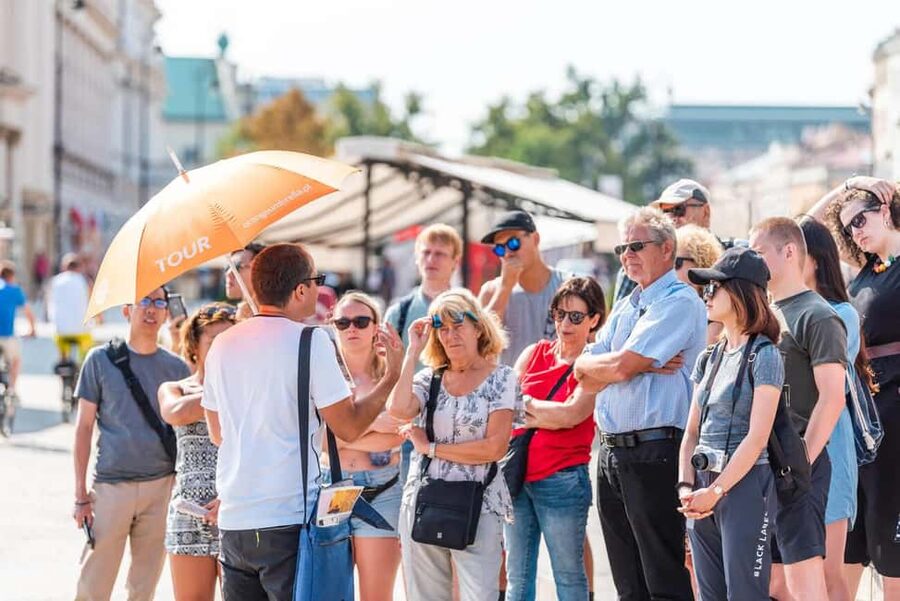
- Local guides with personal context: The guides are Varsovians born and raised in the city, and some grew up under communist rule.
- A useful first orientation: The route connects many central sights when Warsaw’s spread-out layout can otherwise feel confusing.
- The Palace of Culture provides the grand finale: Stalin’s famous gift to Poland remains the clearest symbol of the communist city.
- Strong value at $5: A professional English-speaking guide and city map are included, making this an inexpensive way to get your bearings.
- Plan for outdoor walking: The tour is wheelchair accessible, but the experience is still a continuous city walk with weather to consider.
Why this tour works as a first look at Warsaw

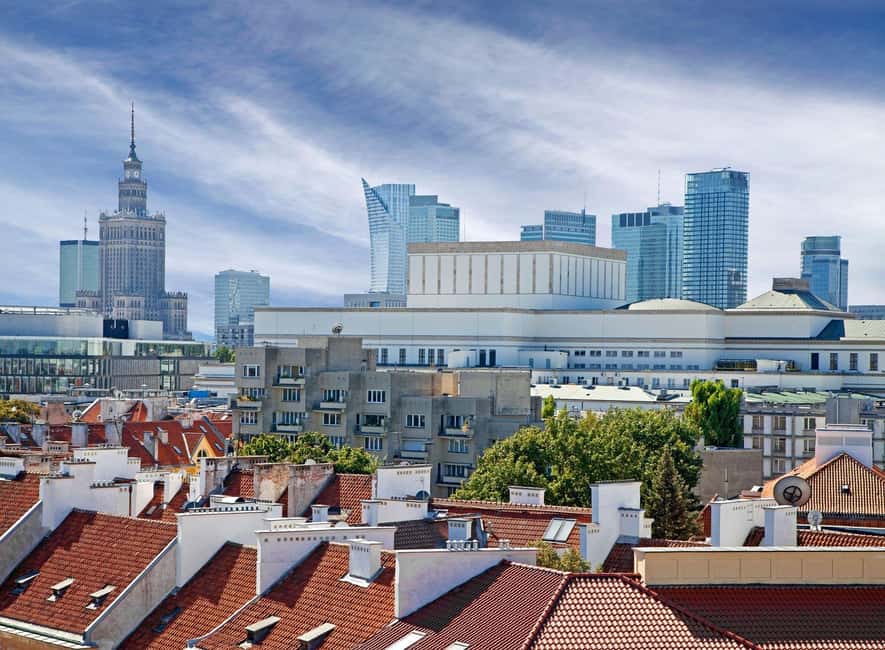
Warsaw can be hard to read at first. One street presents elegant palaces and baroque churches. A few blocks later, broad avenues and monumental buildings reveal the planning style of the communist period. This tour gives you a simple way to understand that contrast without spending your first day trying to piece the city together alone.
The route is divided naturally into two chapters. The first follows the Royal Route from Castle Square through some of the city’s most important historic addresses. The second shifts toward the twentieth-century center, where the Prudential Building, Palace of Culture, and broad urban spaces tell a different story.
I like that this is not simply a list of buildings. The guide’s job is to explain why the buildings look so different, how Warsaw’s political power moved through the city, and how residents experienced those changes. The personal angle matters most during the communist section, especially when the guide can explain what daily life felt like rather than offering only dates and architectural labels.
The tour has a 4.6 out of 5 rating based on 8 reviews. The strongest praise centers on clear explanations, useful anecdotes, helpful guides, and good value. One particularly useful detail is that Gawel’s tour finished exactly on time at 2.5 hours, which helps if you have a museum reservation or meal planned afterward.
More Walking Tours in Warsaw
- Warsaw: Old Town Highlights Walking Tour in English
★ 4.7 · 1,516 reviews - Warsaw: Old Town Guided Walking Tour
★ 4.9 · 599 reviews - Half-Day Polish Food Walking Tour with Guide and Dinner
★ 4.5 · 381 reviews
Starting beneath Sigismund’s Column
Meet your guide by Sigismund’s Column in Castle Square, at the edge of Warsaw’s Old Town. This is an easy landmark to recognize and a logical place to begin. The column honors King Sigismund III Vasa, who moved Poland’s capital from Krakow to Warsaw in the late sixteenth century.
The column and the surrounding square give the guide a strong opening scene. You are looking at royal Warsaw, but you are also looking at a city that had to be rebuilt after wartime destruction. The square’s polished appearance can make it easy to forget how much of Warsaw was reconstructed.
Expect about 20 minutes here. That is enough time for the guide to establish the royal story and explain why the area matters, but not enough for a slow architectural study. If you want photographs without rushing, take a few before the tour officially gets moving.
St. Anne’s Church and the elegant Royal Route
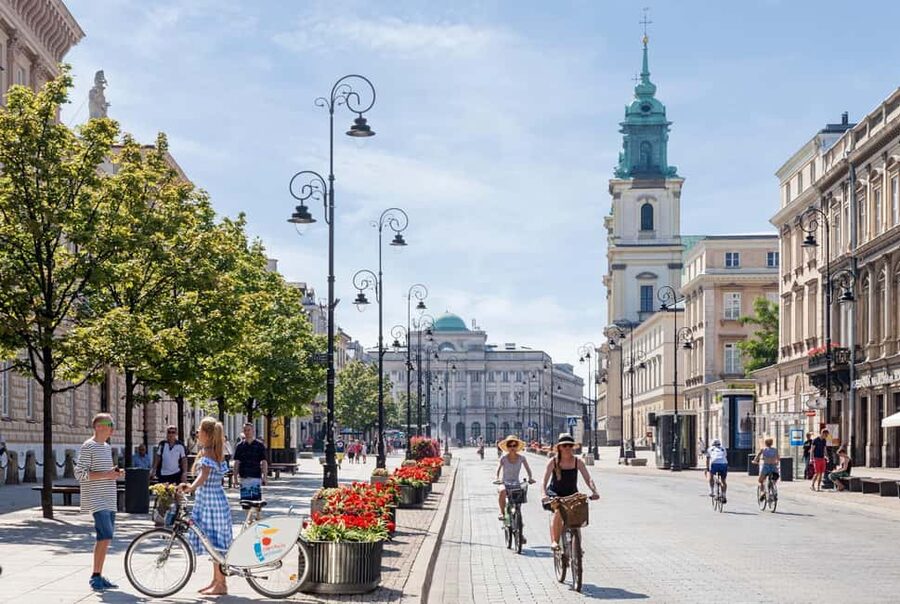
St. Anne’s Church receives another 20-minute guided stop. Its position near Castle Square makes it one of the most useful early examples of the Royal Route’s character. This part of Warsaw was shaped by monarchs, noble families, and religious orders, and the church helps show how closely religion and royal power were linked.
The Royal Route was the city’s grand corridor. In the seventeenth and eighteenth centuries, wealthy nobles built residences here, while religious orders commissioned impressive baroque churches. Your guide will put those buildings into a wider story instead of treating them as isolated photo stops.
The route is especially good for first-time visitors because it combines major landmarks with a clear direction. You are not zigzagging across town. You are following the historic spine of central Warsaw, which makes the city easier to picture on your own later.
University of Warsaw and the city’s cultural figures
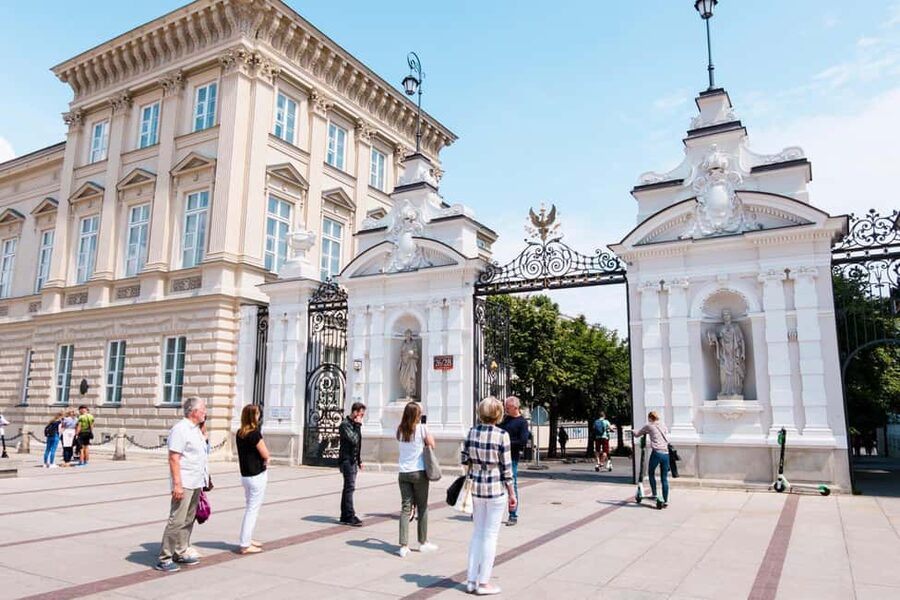
The stop at the University of Warsaw lasts about 10 minutes. It is brief, but it adds an important layer to the Royal Route. This is not only a corridor of rulers and wealthy families. It is also a place of education, science, literature, and political debate.
The tour connects this setting with two famous figures associated with Warsaw. Chopin lived along the Royal Route, and Marie Curie studied in the city. Those details help you see Warsaw as more than a capital of palaces and government buildings. It was also a center of artistic and scientific life.
You should treat this as an introduction rather than a full Chopin or Marie Curie tour. If either figure is a major interest, use the guide’s comments to mark places you may want to explore later. The short stop keeps the overall tour moving, but it will not satisfy anyone looking for an extended biography.
More Nowa Huta and communism tours:
- Private Tour: Warsaw’s Communist History by Retro Fiat
★ 5.0 · 115 reviews - Warsaw: Communism Tour in an Original Socialist Van
★ 4.9 · 75 reviews - Warsaw: Communist History Self-Driving Tour
★ 4.8 · 52 reviews - Warsaw: Communism Tour in an Original Socialist Van
★ 4.5 · 35 reviews
Presidential Palace and the power of the route
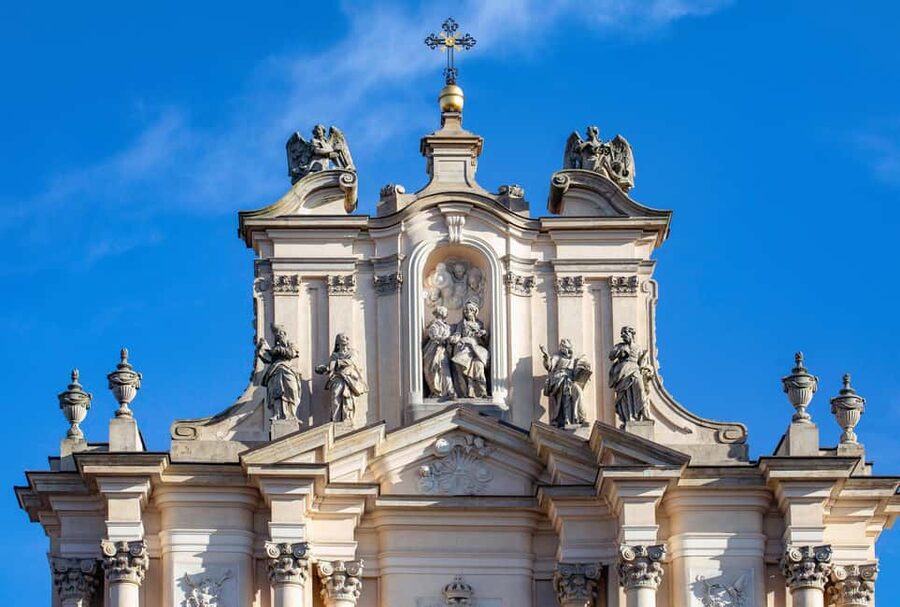
The Presidential Palace receives roughly 10 minutes. This stop continues the political theme of the Royal Route, showing how the same elegant avenue still carries national importance.
The value here is context. A palace can look like just another grand facade if you do not know who used it and why it was placed on this particular route. The guide can connect the building to Warsaw’s long role as a seat of power, helping you read the street as a ceremonial and political corridor.
The tour does not promise a long interior visit, so expect to remain focused on the exterior and the surrounding street. That is typical of a compact walking introduction, and it allows more time for the communist-era section later.
From the Prudential Building to Holy Cross Church

At the Prudential Building, now associated with Hotel Warszawa, the tour begins to shift from old royal Warsaw toward the modern city. The building is an important marker of Warsaw’s twentieth-century development, and its presence helps bridge the two halves of the walk.
The stop is listed for about 15 minutes. The building appears again later in the route, which may reflect the practical shape of the walk or a return to the same area while discussing another part of the city’s story. Do not expect every stop to function as a separate attraction. Some are viewpoint and storytelling locations that help connect the route.
Holy Cross Church receives another 15-minute explanation. It is tied to Warsaw’s cultural memory and to Chopin, making it a useful point where the royal, artistic, and personal sides of the city come together. The guide’s anecdotes are particularly valuable here because a short story can make an otherwise formal church facade much easier to remember.
Adam Mickiewicz and the city’s literary identity
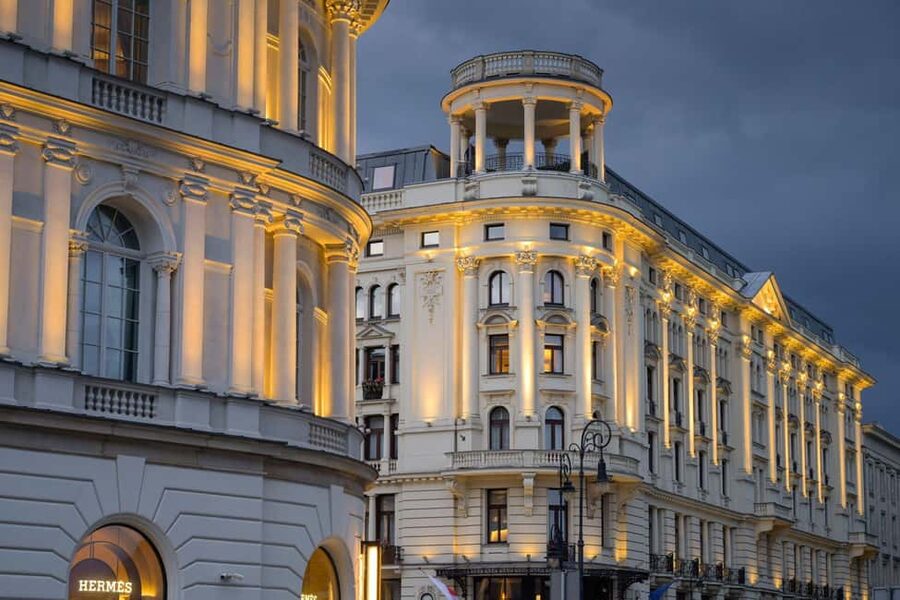
The Monument of Adam Mickiewicz receives about 15 minutes. Mickiewicz is one of Poland’s major literary figures, and the monument gives the guide a chance to explain how literature and national identity matter in Polish history.
This is one of the places where a local guide can add something that a map cannot. A monument may tell you who someone was, but it does not automatically explain why the person remains important. The tour’s balance of historical knowledge, fun facts, and anecdotes is most useful at stops like this.
The stop is also a reminder that Warsaw’s historic center is not only about royal architecture. Writers, scientists, composers, politicians, and ordinary residents all shaped the city’s identity. You get a broader picture by following the route on foot.
Kubusia Puchatka and the city beyond grand monuments
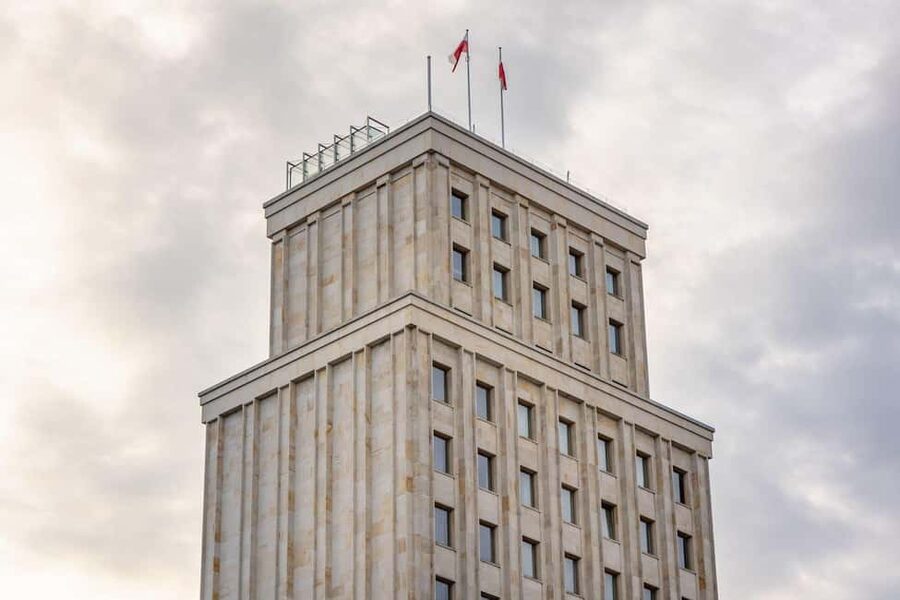
Kubusia Puchatka is a more unusual stop, and that is part of its appeal. Rather than another palace or church, it brings the walk into a more everyday urban setting. The name refers to Winnie-the-Pooh, and the location gives the guide a chance to point out a smaller, more local piece of Warsaw.
This kind of stop keeps the tour from becoming a march between official monuments. You see that the city’s character is also found in street names, small public spaces, and familiar cultural references. The guide’s personal stories are likely to be most useful here, since a local can explain why an ordinary-looking place matters to residents.
The stop lasts around 15 minutes. Keep your expectations realistic: it is a storytelling point, not a major attraction requiring a separate visit.
The Prudential Building and Warsaw’s twentieth-century turn
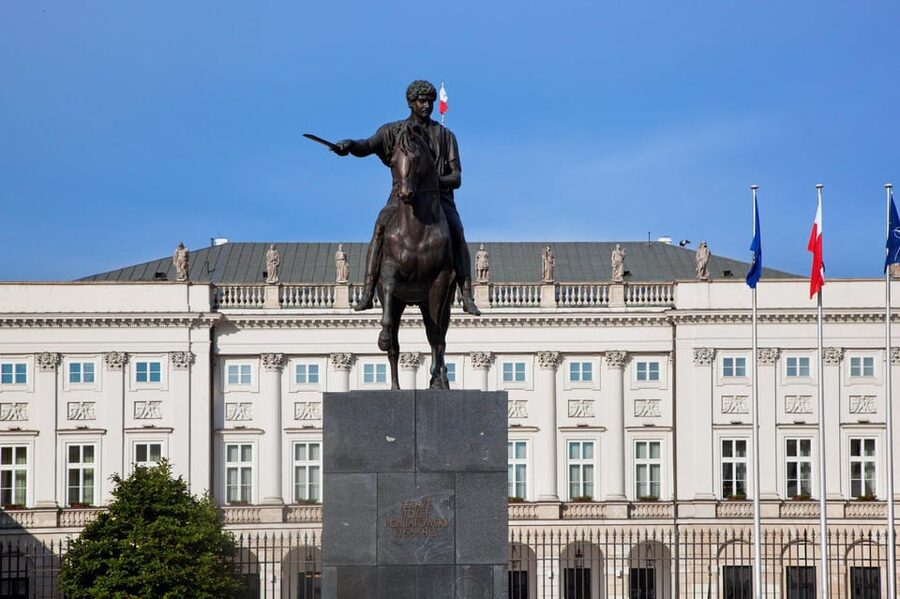
The route returns to the Prudential Building for another approximately 15-minute guided segment. This repetition can feel unusual if you are expecting a clean sequence of completely different locations. Still, the building serves as a useful marker for Warsaw’s changing skyline and modern history.
By this point, the tour’s focus is moving away from royal ceremony and toward the city that was rebuilt and reorganized in the twentieth century. The Prudential Building helps make that change visible. Warsaw’s central streets were not simply preserved as they were. They were reshaped by war, political power, and new urban plans.
This is where you should listen for the contrast between prewar ambition and communist reconstruction. The building is not just a place to photograph. It helps explain how Warsaw’s center acquired the mixture of older fragments, rebuilt structures, and large-scale modern planning that you see today.
The Palace of Culture and Stalin’s gift
The Palace of Culture and Science is the tour’s defining communist-era stop. It receives about 15 minutes and provides the clearest visual symbol of the second half of the experience.
The building was presented as a gift from Stalin to the People’s Republic of Poland. The gesture was meant to give Warsaw a new communist identity, and the result remains impossible to ignore. Its scale and position make it a powerful lesson in how architecture can express political authority.
Your guide can explain why many people regard the palace with mixed feelings. It is an important landmark, but it also represents Soviet influence and an imposed political system. That tension is exactly what makes the building worth seeing. You do not have to admire it to understand its place in Warsaw.
I like this part of the tour because the building makes the city’s contrast physical. Earlier, you were looking at royal residences and baroque churches built for elite and religious power. Now you are facing a monumental structure designed to project the authority of a communist state.
The activity ends at the Palace of Culture and Science, also called Pałac Kultury i Nauki. The meeting details describe the activity as ending back at the meeting point, so check the exact end instructions when booking if you need to coordinate transport or another appointment.
Kazimierza Brokla and the final city-center view
The final stop is at Kazimierza Brokla, with about 15 minutes of guided explanation before the walk concludes at the Palace of Culture and Science. This closing section keeps the focus on the communist-planned center and the way Warsaw’s streets were reshaped.
The name may be less familiar than the palace, but that is useful. It gives you a chance to see how the tour moves beyond the city’s headline sights. A good introduction should leave you with a map in your head, not just a handful of famous photographs.
By the finish, you should have a clearer sense of how the Royal Route, modern center, Prudential Building, and Palace of Culture relate to one another. That orientation is one of the tour’s practical strengths. Warsaw is spread out enough that a first walk with a clear route can save you time later.
What the $5 price really gives you
At $5 per person, this is unusually inexpensive for a 2.5-hour guided walk. The price includes a professional English-speaking Warsaw guide and a city map. Food and drinks are not included, so plan those separately.
The real value is not in the map. It is in the compressed explanation of a complicated city. If you have only two or three hours in Warsaw, the tour helps you decide what deserves a longer visit afterward. You get royal landmarks, cultural figures, communist architecture, and local context in one outing.
A low price does mean you should keep the format in perspective. This is not a private tour with unlimited questions or lengthy interior access. It is a brisk city walk designed to give you a useful foundation. For that purpose, the value is strong.
Timing, weather, and accessibility
The tour lasts 2.5 hours, and one guide’s group finished exactly on schedule. That makes it easier to fit into a short stay, especially if you book a meal or museum after the walk. Check the available starting times before booking, since the schedule can vary.
This is an outdoor walking experience, so wear comfortable shoes and prepare for changing weather. Margaret was praised for helping the group stay dry on a drizzly day, but you should still bring rain protection when the forecast looks uncertain.
The activity is wheelchair accessible. Since the tour covers city streets and several outdoor stops, confirm the current meeting and route details if you have specific mobility needs. The guide and map are included, while food and drinks are your responsibility.
Free cancellation is available up to 24 hours before the start for a full refund. You can also reserve and pay later, which is helpful if your Warsaw schedule is still shifting.
Who should book this Warsaw walk?
I would choose this tour for a first visit, a short stay, or an arrival day when you want the city explained before exploring on your own. It suits anyone who wants history without a lecture-heavy format, especially if personal anecdotes help you remember places.
Families and mixed-age groups may appreciate the variety. The route changes subject often enough to hold attention, moving from kings to churches, composers, scientists, writers, modern buildings, and communist politics.
You should look elsewhere if your main goal is extended time inside churches, museums, or palaces. The tour is built around exterior landmarks and walking commentary. It also may feel quick if you prefer to stop for long photographs at every location.
Should you book the Royal and Communist Warsaw tour?
Yes, if you want an inexpensive and efficient introduction to Warsaw. The strongest reason to book is the two-part story: the Royal Route shows the city’s older identity, while the Palace of Culture and surrounding center explain the communist layer that makes Warsaw different from many other European capitals.
The local guides are another reason to go. Arek, Margaret, and Gawel are praised for clarity, helpfulness, anecdotes, and dependable timing. Book it early in your stay, listen for places you want to revisit, and treat the walk as your city orientation rather than your complete Warsaw sightseeing plan.
At $5, the risk is small. If you have 2.5 hours, comfortable shoes, and an interest in how Warsaw became the city you see today, this is a sensible first step.
FAQ
How long does the Royal and Communist Warsaw walking tour last?
The tour lasts 2.5 hours. Starting times vary, so check availability when booking.
What language is the tour offered in?
The tour is conducted in English with a live English-speaking guide.
Where does the tour start?
The guide waits by Sigismund’s Column in Castle Square, Warsaw Old Town.
Where does the tour finish?
The activity finishes at the Palace of Culture and Science, Pałac Kultury i Nauki. The meeting information also describes the activity as ending back at the meeting point, so check the final directions when booking.
What is included in the price?
The price includes a professional English-speaking Warsaw guide and a city map.
Are food and drinks included?
No. Drinks and food are not included.
Is the tour wheelchair accessible?
Yes, the activity is listed as wheelchair accessible.
Just added around Warsaw
- Jewish heritage in Warsaw★ 4.5 · 3 reviews
- Warsaw Outdoor Paintball with Transfers (all year round)★ 5.0 · 3 reviews
- World War II Warsaw Old Town, Military Cemetery Walking Tour★ 4.7 · 3 reviews
- Warsaw: Wolf’s Lair & Swieta Lipka Small-Group Tour + Lunch★ 5.0 · 3 reviews
- Sunset Boat Tour with Unlimited Drinks in Warsaw★ 3.5 · 3 reviews
- Majdanek – German camp from II World War – Private Tour – 1 DAY TRIP FROM WARSAW★ 5.0 · 3 reviews
- From Warsaw: Guided Tour to Wieliczka Salt Mine and Krakow★ 4.5 · 3 reviews
- Warsaw Sightseeing with NEW Mercedes Sclass !!!★ 5.0 · 3 reviews
Nowa Huta Communism Tours, compared.
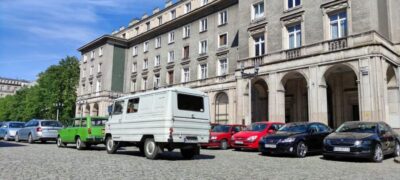
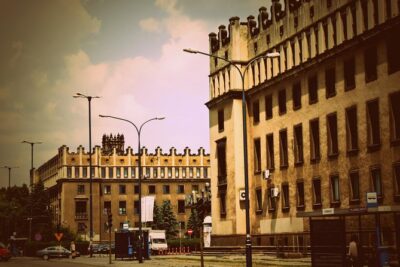
Legendary Private Nowa Huta Communism Tour with Crazy Guides
Read our review →
Nowa Huta: Steelworks Administration Buildings/Shelters Tour
Read our review →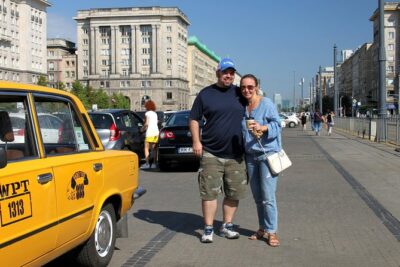
Private Tour: Warsaw’s Communist History by Retro Fiat
Read our review →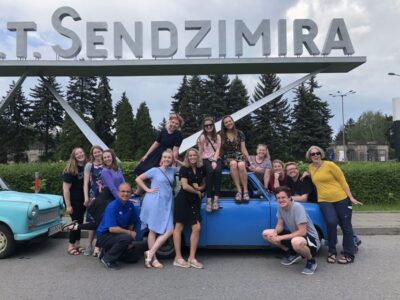
Private Nowa Huta Adventure Tour in Communist Cars
Read our review →


Browse the lists this tour appears in