
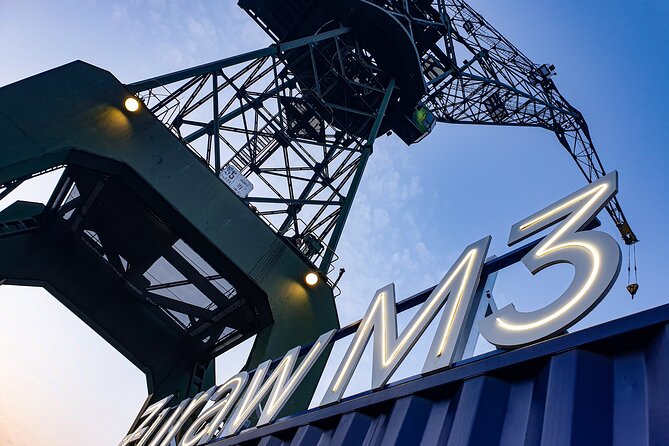
REVIEW · GDAńSK TOURS
Solidarity Tour
Poland’s freedom story begins at a shipyard gate. This three-hour private tour connects the European Solidarity Center with the working history of Gdansk’s shipyard, where the Solidarity movement challenged communist rule and helped change Europe. I like the way the experience joins museum displays with real places, and I also like that the tour reaches old warehouses, docks, and less polished corners beyond Gdansk’s postcard center. The main consideration is the price: at $114.45 per person, it is a serious spend, especially for one person, though the private format gives your group personal attention.
The tour works best if you want more than a quick political overview. Guides such as Bozena and Sebastian have been praised for clear explanations, warmth, and the ability to answer questions. You should expect a thoughtful visit rather than a light sightseeing stroll, and some parts of the story are emotional and politically complex.
In This Review
- Five things to know before you book
- Why the Solidarity story matters in Gdansk
- Starting at the European Solidarity Center
- Sala BHP and the Gdansk Agreement
- Walking through the former Gdansk Shipyard
- The Lenin Gates and the wider shipyard setting
- What the private format adds at $114.45
- Which guide might suit your group?
- Who should book this tour?
- Practical advice for a better visit
- Should you book the Solidarity Tour?
- FAQ
- Where does the Solidarity Tour begin?
- Where does the tour end?
- How long does the tour last?
- Is admission to the European Solidarity Center included?
- Is this a private tour?
- Is the tour offered in English?
- Can I cancel for a full refund?
Five things to know before you book
- Two hours inside the European Solidarity Center gives you the main historical framework, with admission included.
- The Gdansk Agreement site, Sala BHP, marks the room where Lech Wałęsa signed a landmark agreement with communist authorities.
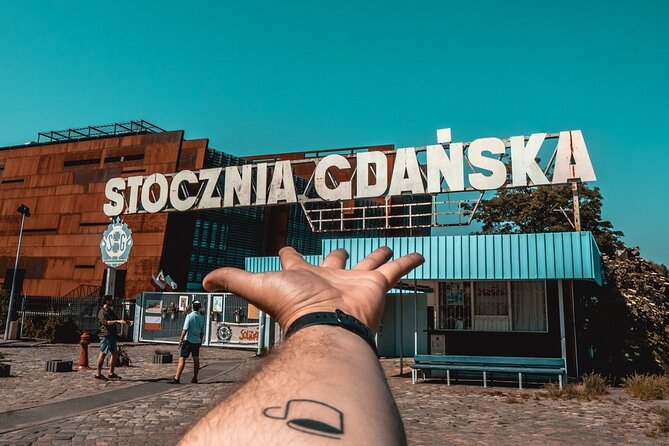
- The former shipyard remains a changing working area, with old industrial buildings alongside newer clubs, galleries, and entertainment spaces.
- This is a private experience, so only your own group participates and you can ask questions as you go.
- Bozena and Sebastian receive especially warm praise for their energy, personal approach, and ability to explain a complicated period.
- Plan for weather and walking, since the tour operates in all conditions and requires moderate physical fitness.
Why the Solidarity story matters in Gdansk
Gdansk is not simply the setting for this tour. It is the place where the story happened. The Solidarity movement grew from labor unrest at the shipyard, then became a wider push for rights, dignity, and political change in communist Poland.
You do not need a specialist’s background to follow the tour. The guide’s job is to connect the people, places, and decisions. That matters because the subject can otherwise feel like a pile of dates and political names. Here, the shipyard gates, meeting rooms, and museum exhibits give the story physical reference points.
I especially like that the experience does not stop at a museum entrance. The museum gives you the structure, while the outdoor stops help you picture the events in their original surroundings. That combination makes the subject easier to grasp and gives the tour a stronger sense of place.
The story also reaches beyond Gdansk. The movement helped set Poland on a new course and influenced changes elsewhere in Europe. A good guide will help you understand that wider effect without turning the experience into a dry lecture.
A few more Gdańsk trips worth weighing up
- Gdansk: City Cruise on Historical Polish Boat
★ 4.8 · 2,913 reviews - Gdańsk: Sunset Cruise on a Historic Polish Boat
★ 4.9 · 977 reviews - Gdańsk City Sights & History Guided Walking Tour in English
★ 4.8 · 876 reviews
Starting at the European Solidarity Center
The tour begins at the European Solidarity Center, at Plac Solidarności 1. You spend about two hours here, and the admission ticket is included in the tour price.
This is the main teaching portion of the experience. The center presents the struggle for a free Poland, life under communism, and the difficult choices made by people who opposed the system. You should allow yourself to pay attention to the human side of the story, not just the political outcome.
Two hours is a useful amount of time. It gives the guide room to explain the exhibits while leaving enough time for questions and discussion. If you prefer to race through museums, this stop may feel long. For most people interested in Gdansk’s modern past, though, the time is justified.
The guide makes a real difference here. Bozena has been praised for her energy and for telling the story in an absorbing way. Sebastian has also received strong praise for the amount of information he provides and for his willingness to respond to questions. Since this is a private tour, you can ask for clarification when a name, event, or political detail becomes hard to follow.
That private setup is more valuable in a museum than it might first appear. If something catches your attention, you can pause and discuss it instead of keeping pace with a large group. If your party already knows something about Poland’s communist period, the guide can spend more time on the points you find most interesting.
The subject is not presented as simple or tidy. Poland’s path away from communism involved conflict, compromise, courage, and uncertainty. I would recommend this part of the tour to anyone who wants context before seeing the shipyard itself.
Sala BHP and the Gdansk Agreement
The next stop is Sala BHP, where you spend about 20 minutes. Admission is included at no extra charge.
This is a compact visit, but the room carries considerable importance. It was here that Solidarity leader Lech Wałęsa signed the Gdansk Agreement with the authorities of the Polish People’s Republic. The agreement became a key moment in the movement’s development.
Do not expect a long museum session at this stop. The value comes from being in a place directly tied to the negotiations. After two hours at the European Solidarity Center, Sala BHP gives you a more focused connection to one specific event.
Your guide’s explanation matters because the room alone cannot tell you what happened. With Bozena or Sebastian, you can ask about the agreement, the people involved, and its place in the wider movement. The short visit works best as a bridge between the museum and the shipyard walk.
This is also where the tour feels less like a standard city sightseeing route. You are not simply checking off a landmark. You are visiting a place connected to a major political decision, then moving through the setting where the wider struggle unfolded.
Walking through the former Gdansk Shipyard
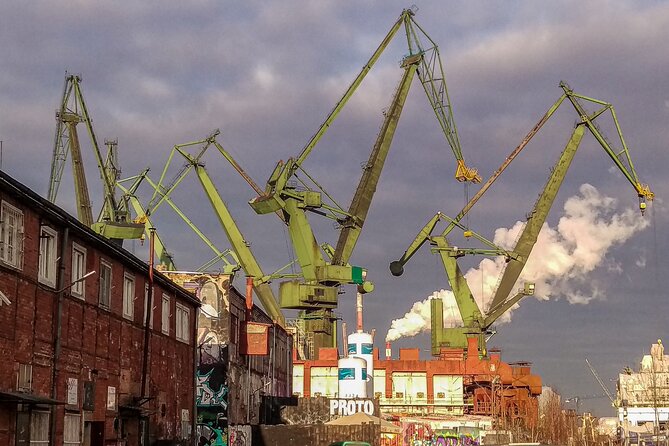
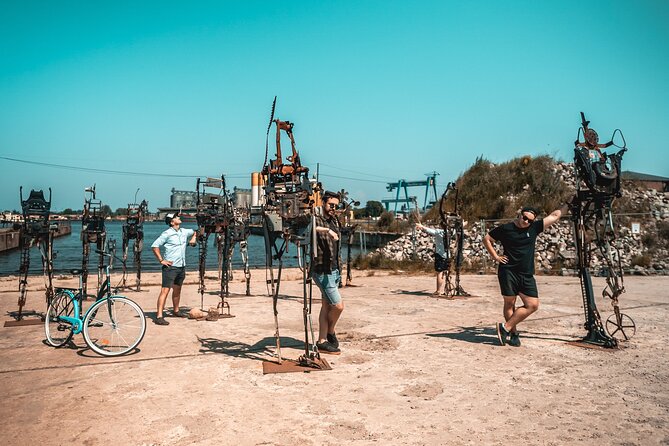
The final scheduled stop takes about 40 minutes and leads through the former Gdansk Shipyard. The shipyard is still functioning, but it is changing. Old industrial areas now share space with clubs, galleries, and newer entertainment centers.
That mix gives the walk its character. You see a place with a working past and an uncertain future, rather than a preserved monument frozen in time. Old warehouses and dock areas provide the industrial setting, while the newer businesses show how Gdansk is reusing parts of the district.
This is the section that takes you beyond the familiar tourist route. The area may feel less finished and less polished than the old center, which is exactly the point. You get a better sense of the scale and atmosphere of the shipyard than you would from a quick photograph at the Lenin Gates.
The walk also helps put the earlier museum visit in context. Inside the European Solidarity Center, you learn about the movement through exhibits and explanations. Outside, you see the type of industrial environment in which the workers lived and organized. The connection between those two parts is one of the tour’s strongest features.
Wear practical shoes. The tour lasts about three hours overall, includes time outdoors, and requires moderate physical fitness. Since it operates in all weather, bring clothing suited to the forecast. Rain or wind could make the shipyard portion less comfortable, but the tour does not simply stop because conditions are poor.
A completely different kind of day out in Gdańsk:
- Gdansk: Firearm Shooting Experience with Instructor
★ 4.8 · 866 reviews - Gdansk: Guided Round-Trip Cruise to Westerplatte
★ 4.3 · 865 reviews - Gdańsk: Sightseeing EcoCruise around the Old Town of Gdansk
★ 4.6 · 719 reviews - Main Town Gdańsk Walking Tour
★ 5.0 · 644 reviews
The Lenin Gates and the wider shipyard setting
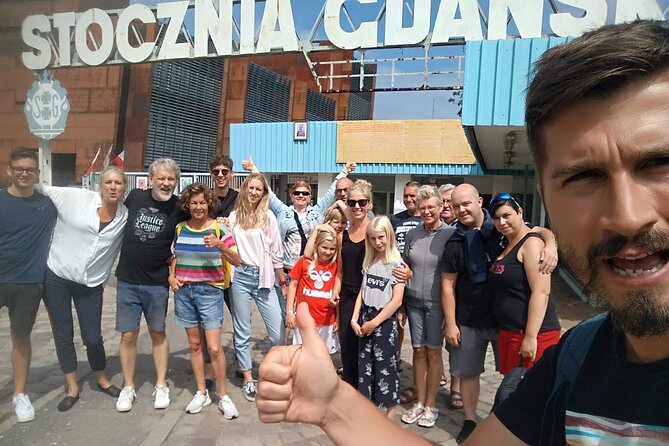
The Lenin Gates are listed among the key landmarks included in the day’s route. They are an important visual marker of the shipyard and help connect the tour to the public face of the Solidarity movement.
The gates are not treated as an isolated photo stop. Their value comes from seeing them as part of the wider shipyard area, alongside docks, warehouses, and places tied to the movement’s story. The guide can explain why this entrance became such a strong symbol.
I like this approach because it avoids reducing Solidarity to one famous name or one monument. Lech Wałęsa is central to the story, but the movement also involved workers, families, organizers, and people living under an uneasy political system. The places around the gates help widen your view.
The area’s current changes also add an important layer. New clubs, galleries, and entertainment venues are appearing among older structures. You may find the contrast striking: a place associated with political tension is now also part of Gdansk’s changing cultural life.
What the private format adds at $114.45
The listed price is $114.45 per person. That is not a budget activity, but it includes a local guide, beverages, admission to the European Solidarity Center, and a private experience for your group.
The most important part of the value is the guide’s time. A private tour means you are not sharing the experience with strangers, and you can ask questions throughout the museum visit and outdoor stops. This matters with a complicated subject, especially if you want the guide to explain details at your own pace.
The price makes more sense for couples, families, or small groups who value personal attention. Group discounts are available, so check the final rate for your party before deciding. For a solo visitor, the cost may feel harder to justify unless the subject is a major reason for visiting Gdansk.
Beverages are included, while alcoholic drinks are available to buy separately. Do not count alcohol as part of the package. The ticket to the European Solidarity Center is included, which removes one extra admission cost and keeps the three stops together as one planned experience.
The tour is usually booked about 79 days ahead, suggesting that you should not leave it until the last moment if your schedule is fixed. Confirmation arrives at booking, and free cancellation is available if you cancel at least 24 hours before the local start time.
Which guide might suit your group?
You cannot choose a guaranteed guide from the information provided, but Bozena and Sebastian are the names associated with especially strong experiences.
Bozena is described as energetic, polite, personable, and highly engaged with the subject. One unusual advantage of her approach is flexibility. When a booking problem forced a change in the planned route, she added alternative stops that helped give the group a broader view of the shipyard and Gdansk.
Sebastian is praised for giving a large amount of information while keeping the tour personal. He is also described as someone who welcomes questions, which is useful when you want to understand the difficult links between the Gdansk movement and political change elsewhere in Europe.
The guide’s style may shape your experience more than the exact order of the stops. This is not a tour for someone who wants only quick facts and photo opportunities. It suits you if you enjoy conversation, explanation, and time to consider what you are seeing.
Who should book this tour?
I would recommend it to first-time visitors who want to understand Gdansk beyond its old-town streets. It is also a good choice if you have already seen the main landmarks and want a more serious look at the city’s twentieth-century story.
The tour suits:
- Couples and small groups who want a private guide
- Visitors interested in Poland’s communist period
- People who prefer real locations alongside museum exhibits
- Families with older children who can engage with political history
- Anyone who wants to ask questions instead of following a fixed large-group script
It may not suit you if you have limited mobility, dislike outdoor walking, or want a relaxed tour focused only on architecture and food. Moderate fitness is required, and the route operates in all weather.
The emotional weight of the subject is another consideration. The story involves repression, uncertainty, protest, and political conflict. That is part of its importance, but it may not be the right choice if you are looking for a light afternoon activity.
Practical advice for a better visit
Start with a clear idea of what you want from the guide. You might ask about Lech Wałęsa, the Gdansk Agreement, daily life under communism, or how the movement affected other countries. A private tour gives you room to shape the discussion.
Dress for changing conditions. The museum portion is indoors, but Sala BHP and the shipyard walk take you outside. Comfortable shoes are a sensible choice, and a waterproof layer could make the final 40 minutes much easier in poor weather.
Keep the full three hours available. The museum visit lasts around two hours, the Sala BHP stop about 20 minutes, and the shipyard portion about 40 minutes. The tour returns to its starting point at the European Solidarity Center, so you do not need to arrange a separate return transfer.
The meeting point is Europejskie Centrum Solidarności, Plac Solidarności 1, 80-863 Gdańsk. Confirmation is provided at the time of booking. Since this is a private activity, only your own group participates.
Should you book the Solidarity Tour?
Book it if you want the story behind Gdansk’s shipyard, not just a quick look at its gates. The included museum admission, private guide, Sala BHP visit, and walk through the former shipyard create a well-connected three-hour experience.
At $114.45 per person, the value rests on the personal guiding rather than on the number of stops. If Bozena or Sebastian leads your group, you can expect an energetic, well-informed, and conversational approach based on the strongest praise attached to this experience.
I would choose this tour for a small group with a real interest in modern Polish history. If you are willing to spend the money and dress for the weather, it gives you a clear, human-scale way to understand why Gdansk matters.
FAQ
Where does the Solidarity Tour begin?
It begins at the European Solidarity Center, Plac Solidarności 1, 80-863 Gdańsk, Poland.
Where does the tour end?
The activity ends back at the European Solidarity Center, the meeting point.
How long does the tour last?
The tour lasts approximately three hours. About two hours are spent at the European Solidarity Center, 20 minutes at Sala BHP, and 40 minutes walking through the Gdansk Shipyard.
Is admission to the European Solidarity Center included?
Yes. Admission to the European Solidarity Center is included in the tour price.
Is this a private tour?
Yes. Only your group participates in the activity.
Is the tour offered in English?
Yes. The tour is offered in English.
Can I cancel for a full refund?
Yes, if you cancel at least 24 hours before the experience start time. Cancellations made less than 24 hours in advance are not refunded, and changes within that period are not accepted.
Just added around Gdańsk
- Gdańsk: Boat Cruise from Gdańsk Old Town to Sopot Marina★ 4.4 · 3 reviews
- Stutthof Concentration Camp and Museum of WWII: Private Tour★ 4.7 · 3 reviews
- Gdansk: Bubble Football with Hotel Transfers★ 5.0 · 3 reviews
- Gdansk: Oliwa Zoo with Tickets and Roundtrip Transportation★ 5.0 · 3 reviews
- Segway Tour Gdańsk: Shipyard Tour – 1,5-Hour of Magic!★ 5.0 · 3 reviews
- Gdansk: Escape Room Adventure★ 4.0 · 3 reviews
- Gdańsk : Catamaran River Cruise (group)★ 4.3 · 3 reviews
- Artus Court and Gdansk Old Town Private Tour with Tickets★ 4.7 · 3 reviews
Gdańsk Tours, compared.


Gdańsk City Sights & History Guided Walking Tour in English
Read our review →
Sightseeing EcoCruise around the Old Town of Gdansk
Read our review →

Browse the lists this tour appears in