
REVIEW · CANOES & KAYAKS
Sunset Kayak Tour
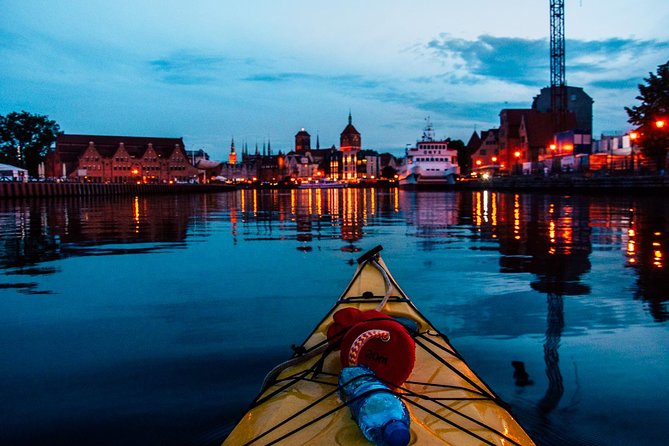
The river tells Gdansk’s story. This beginner-friendly sunset paddle gives you water-level views of the Old City, then carries you toward working shipyards and places ferries cannot reach. I like the calm, careful instruction, and I like the way the route joins medieval trade, modern industry, and the Solidarity era in one short outing. The main consideration is that you are on public harbor waterways, so you must be able to swim, follow safety rules, and accept that you may get wet.
You will paddle around Granary Island and Olowianka Island, passing the Crane, the SS Sołdek, and Gdansk Remontowa Shipyard. Small-group guidance and a sunset setting make this feel more personal than a standard sightseeing cruise, but it is still an active tour, not a passive boat ride.
In This Review
- Five things to know before you paddle
- Why kayaking gives Gdansk a different face
- Meeting at Dokowa 1 and getting ready
- From the Crane to Gdansk’s trading past
- The SS Sołdek and the industrial waterfront
- Paddling beside a working shipyard
- Granary Island, Olowianka Island, and the river route
- The sunset payoff
- Is $54.33 a fair price?
- Who should book this sunset paddle?
- Should you book the Gdansk Sunset Kayak Tour?
- FAQ
- Where does the sunset kayak tour begin?
- Where does the tour end?
- How long does the kayak tour last?
- Is the tour suitable for beginners?
- Do I need to know how to swim?
- What is the maximum weight limit?
- How many people can join the tour?
- What happens if bad weather cancels the tour?
Five things to know before you paddle
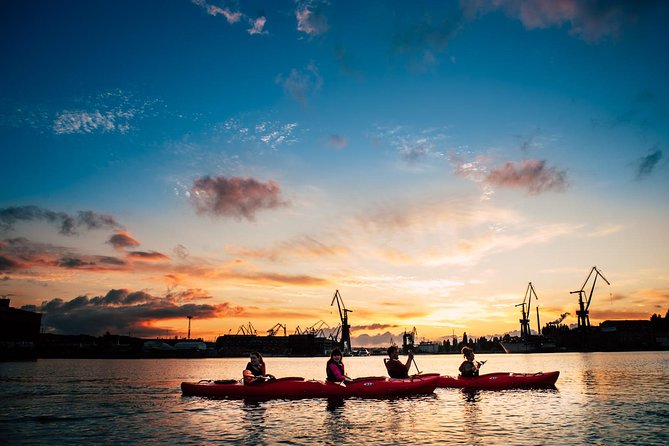
- The route mixes old Gdansk and working industry: You see the historic Crane, the SS Sołdek, ship repair activity, and the waterways around two central islands.
- It suits first-time kayakers: The guide gives a safety briefing and basic paddling instruction before you set off.
- The harbor setting matters: You are using public waterways with harbor traffic, so safety instructions are not just a formality.
- You may get wet: Bring clothing suited to an active outing, since splashes are possible.
- The tour is limited to 20 people: That keeps the group manageable while still giving the outing a social feel.
- The price is $54.33 per person: For about two hours, the cost is fair if you value a guide, equipment, and a different view of central Gdansk.
Why kayaking gives Gdansk a different face
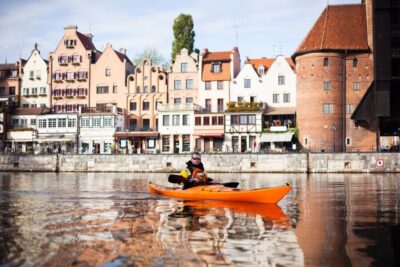
Gdansk is tied closely to water. The Motława connects the city with the Vistula river system and the Baltic estuary, while the Radunia and other waterways helped shape trade, work, and daily life. From the quays, you can sense this connection. From a kayak, you move through it.
That is the chief reason to book this outing. You are not simply looking at the Main City from another angle. You are paddling through the routes that helped make Gdansk a trading port and industrial center.
The route circles Granary Island and Olowianka Island. Both sit near the heart of the city, but the water creates a useful distance from the streets. The towers, quays, old warehouses, and ships appear as parts of one connected story rather than as isolated sights.
I especially like the access to narrow waterways and corners that larger ferries cannot use. You get closer to the shoreline and can pause as a group while the guide explains what you are seeing. The pace is active, but there is still room to look around.
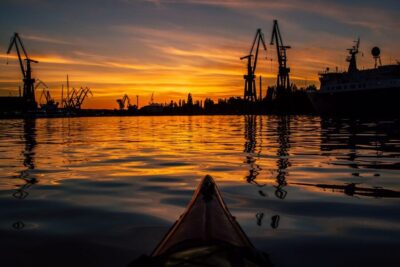
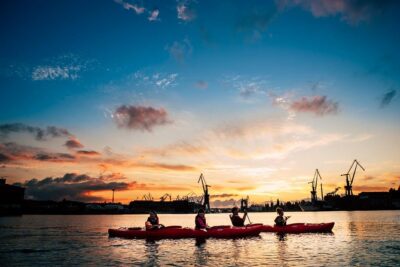
The sunset adds atmosphere, though it is not the only reason to go. Light on the river can make the old waterfront especially appealing, and the end of the day gives the tour a relaxed mood. Still, the real value is the combination of scenery and context. You see how the historic city, port, and shipyards relate to one another.
A few more Gdańsk trips worth weighing up
- Gdansk: Sunset Kayak Tour
★ 4.9 · 199 reviews - Gdansk: Guided Kayak Tour
★ 4.9 · 105 reviews - Guided Sightseeing Kayak Tour at Gdansk
★ 5.0 · 98 reviews
Meeting at Dokowa 1 and getting ready
The tour begins at Around Gdansk | Kayak Tours & Adventures, Dokowa 1, 80-863 Gdańsk. It returns to the same meeting point, which makes the outing easy to fit into a day of sightseeing.
Arrive several minutes early. The safety briefing is mandatory, and late arrivals will not be admitted. That rule may feel strict, but it makes sense on public harbor water. The guide needs the whole group present before equipment is handed out and the route begins.
You receive a kayak, life vest, and basic instruction. One detailed account also describes water bottles and waterproof bags, with a secure shelf available for a bag that could then be locked in a container. These useful touches reduce the usual worry about phones, wallets, and small personal items.
The introduction covers paddling technique and basic know-how. That matters if you have never used a kayak. The guide does not simply point you toward the river and hope for the best. First-time participants have described feeling nervous at the start, then settling down after clear instruction and a calm approach from the guide.
Simon has been praised for both kayak instruction and historical information. Guide availability can vary, so you should not assume Simon will lead every departure. The important point is that instruction is part of the experience, not an afterthought.
The group can include up to 20 people. That is not an intimate private tour, but it is small enough for a guide to keep the group together and stop for shared explanations.
From the Crane to Gdansk’s trading past
The first listed sight is the Crane, one of Gdansk’s most recognizable waterfront buildings. Its large wooden lifting mechanism recalls the era when the city’s quay handled cargo, ships, and trade on a major scale.
The Crane dates to the mid-15th century and was part of a large double-towered shoreline gate. It served practical purposes, including fitting and removing ship masts and moving heavy cargo between vessels and the quay.
Its lifting power is remarkable. The human-powered mechanism could handle loads of up to 2,000 kilograms, making it the largest crane in medieval Europe. From the water, you see why the building was more than a decorative landmark. It was working port machinery built into the city wall.
The stop is listed as about five minutes, with no separate admission charge. You do not go inside as part of this kayak outing. The value comes from seeing the Crane in its waterfront setting and hearing how it functioned within the port.
This is a short stop, so do not expect a full museum visit or a long architectural talk. If you want a detailed interior tour, you would need to visit the Crane separately. On the kayak, it works as a compact introduction to Gdansk’s older commercial life.
The SS Sołdek and the industrial waterfront
The route continues to the SS Sołdek, a Polish coal and ore freighter. The ship represents a later chapter in the city’s working waterfront, far removed from medieval cargo handling but linked by the same dependence on water.
The contrast is useful. The Crane suggests wooden sailing vessels, hand-operated machinery, and an old trading port. The SS Sołdek points toward industrial shipping and Poland’s modern maritime economy.
Again, the listed stop lasts about five minutes and does not include a separate admission ticket. You are seeing the ship from the kayak, not taking a standard museum tour aboard it.
That brief look is enough to give the route structure. The tour moves from medieval trade to postwar industry, then onward to the active shipyard. You are not just collecting sights. You are following the changing role of the river.
A completely different kind of day out in Gdańsk:
- Gdansk: City Cruise on Historical Polish Boat
★ 4.8 · 2,913 reviews - Gdańsk: Sunset Cruise on a Historic Polish Boat
★ 4.9 · 977 reviews - Gdańsk City Sights & History Guided Walking Tour in English
★ 4.8 · 876 reviews - Gdansk: Firearm Shooting Experience with Instructor
★ 4.8 · 866 reviews
Paddling beside a working shipyard
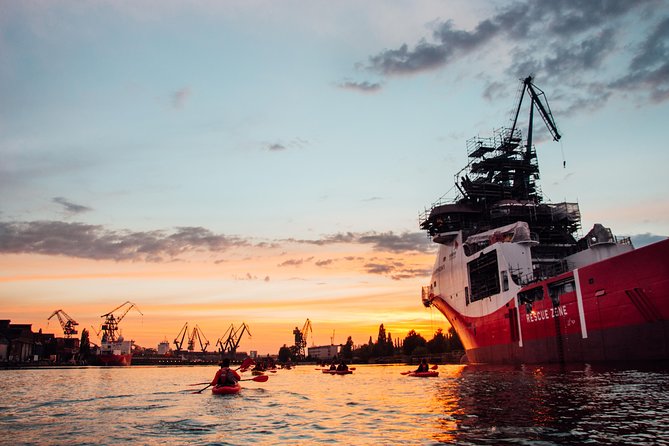
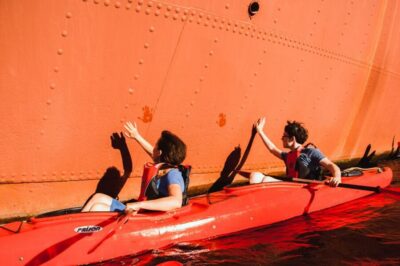
Gdansk Remontowa Shipyard is one of the more unusual parts of the outing. It is still a busy working yard, with ships in different stages of repair or construction. From the water, you may see ferries and other vessels being worked on while the crew goes about its business.
This is where the tour feels most different from a normal city walk. Historic Gdansk is carefully presented on land. The shipyard shows the city as a place where maritime work still happens.
The view is not polished or staged. That is its strength. You might see industrial equipment, hulls, repairs, and workers rather than postcard scenery. For me, that gives the route more substance than a sunset-only paddle.
The setting also explains why the safety briefing matters. This is a public waterway with harbor traffic, not a closed recreational lake. You must stay alert and follow the guide’s directions. The tour is beginner-friendly, but beginner-friendly does not mean consequence-free. You still need basic swimming ability and enough comfort in a kayak to manage an active water setting.
The provider requires every participant to be able to swim and understand basic English. Each minor must be accompanied by an adult in the kayak. Alcohol, drugs, and other intoxicating substances are forbidden before and during the tour. Smoking and electronic cigarettes are also not allowed.
These rules may be stricter than some casual paddling outings, but they fit the location and the presence of harbor traffic.
Granary Island, Olowianka Island, and the river route
The main paddle takes you around Granary Island and Olowianka Island on the Motława. The islands give the route a clear shape and let you see central Gdansk from several directions.
Granary Island’s name points to its former role in storing grain and handling trade. Its waterfront is closely tied to the commercial life of the city. From a kayak, you see the relationship between the island, the river, and the older Main City.
Olowianka Island adds another section of working waterfront and urban scenery. The route between the islands is part sightseeing, part movement. You are almost always paddling, according to the tour description, so this is not a slow drifting excursion.
That level of activity is worth noting. If you want to sit back while someone else does all the work, book a cruise instead. Here, you help power the experience. The effort is moderate enough for beginners who receive instruction, but you should still expect to use your arms and maintain attention for much of the two hours.
The guide stops the group to share historical information. One participant particularly appreciated learning a lot in a short time. That is a fair description of the format. You will not receive a full academic account of Gdansk, but you will gain a useful framework for understanding the buildings and ships around you.
The sunset payoff
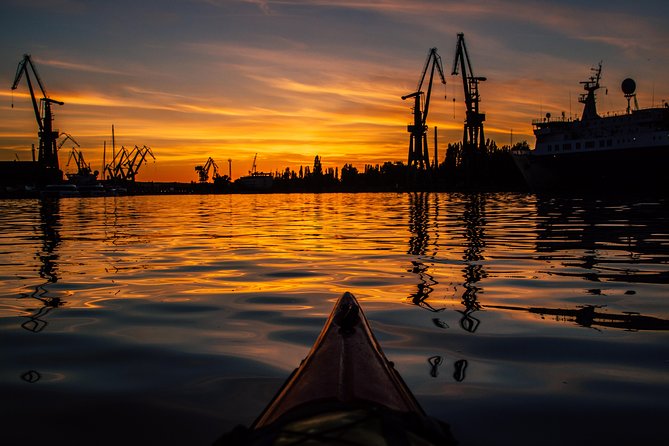
The sunset is the emotional high point. The river, old waterfront, and shipyard take on a softer appearance as the light changes. You get views that are difficult to reproduce from land because the kayak keeps you close to the water and moving through the harbor itself.
You should keep your expectations practical. Weather affects the experience, and the tour requires suitable conditions. If poor weather forces a cancellation, you are offered another date or a full refund.
The weather rule is also a benefit. Kayaking in poor conditions would spoil the outing and could make the harbor less safe. A sunset tour depends on nature, so some flexibility is part of the deal.
Bring clothing that can handle splashes. You may get wet, especially if you are not careful. Waterproof bags are available according to the supplied tour details, but I would still avoid carrying anything delicate or unnecessary.
The guide may take photos and email them afterward. That was a welcome extra for one group, especially because it lets you enjoy the paddle without constantly managing your phone. Confirm this when you arrive, since photo arrangements can depend on the departure and guide.
Is $54.33 a fair price?
At $54.33 per person, this is not the cheapest way to see Gdansk. You can walk the waterfront for free, and a standard sightseeing cruise may offer more time sitting down. The kayak earns its price by combining equipment, instruction, a guide, a small-group format, and access to waterways that larger boats cannot use.
The two-hour duration is also sensible. It gives you enough time to learn the basics, paddle around the islands, see the historic sights, and reach the shipyard without turning the activity into a half-day commitment.
I consider the value strongest for first-time kayakers and visitors who have already seen Gdansk’s main streets. You get exercise, history, port views, and sunset scenery in one booking.
The value is weaker if you dislike water, cannot swim, or want a dry and fully passive tour. It is also less suitable if you need a completely flexible arrival time, since late arrivals are not admitted and the safety briefing is compulsory.
The experience is booked, on average, about 16 days ahead. That suggests you should reserve before your visit rather than wait until the afternoon you want to go, especially if your schedule is tight.
Who should book this sunset paddle?
I would recommend it to couples, families with an adult in each kayak, and small groups who want a shared activity with more character than a standard city tour. It also suits solo participants who are comfortable joining a group and following a guide.
First-time kayakers should not be put off. The clearest repeated strength of the experience is the instruction. Guides explain the equipment, demonstrate basic technique, and help participants who feel unsure at the beginning.
You should think twice if you cannot swim, weigh more than 110 kilograms, do not understand basic English, or are uncomfortable around harbor traffic. The weight limit is firm, and the swimming requirement is not optional.
The tour is offered in English and uses a mobile ticket. It is near public transportation, though one participant had trouble finding Dokowa 1 after a map application sent them the wrong way. I would check the meeting point carefully in advance and allow extra time rather than trusting a single navigation app.
Should you book the Gdansk Sunset Kayak Tour?
Book it if you want to see Gdansk through its working waterways, not just from the pavement. The strongest reasons are the calm beginner instruction, the route past the Crane and SS Sołdek, the chance to see the Remontowa Shipyard, and the sunset over the Motława.
Skip it if you need a dry, effortless sightseeing experience or cannot meet the swimming and safety requirements. For everyone else, $54.33 is a reasonable price for a well-guided two-hour outing that joins Gdansk’s medieval trade, industrial present, and waterfront setting in one memorable loop.
Free cancellation is available until 24 hours before the start time. Changes or cancellations inside that window are not accepted for a refund.
FAQ
Where does the sunset kayak tour begin?
It begins at Around Gdansk | Kayak Tours & Adventures, Dokowa 1, 80-863 Gdańsk, Poland.
Where does the tour end?
The activity ends back at the meeting point on Dokowa 1.
How long does the kayak tour last?
The tour lasts approximately two hours.
Is the tour suitable for beginners?
Yes. The tour is beginner-friendly and includes equipment instruction, basic kayaking guidance, and a mandatory safety briefing.
Do I need to know how to swim?
Yes. You must be able to swim to participate.
What is the maximum weight limit?
The weight limit is 110 kilograms.
How many people can join the tour?
The maximum group size is 20 people.
What happens if bad weather cancels the tour?
You will be offered a different date or a full refund if poor weather causes the tour to be canceled.
Just added around Gdańsk
- Gdańsk: Boat Cruise from Gdańsk Old Town to Sopot Marina★ 4.4 · 3 reviews
- Stutthof Concentration Camp and Museum of WWII: Private Tour★ 4.7 · 3 reviews
- Gdansk: Bubble Football with Hotel Transfers★ 5.0 · 3 reviews
- Gdansk: Oliwa Zoo with Tickets and Roundtrip Transportation★ 5.0 · 3 reviews
- Segway Tour Gdańsk: Shipyard Tour – 1,5-Hour of Magic!★ 5.0 · 3 reviews
- Gdansk: Escape Room Adventure★ 4.0 · 3 reviews
- Gdańsk : Catamaran River Cruise (group)★ 4.3 · 3 reviews
- Artus Court and Gdansk Old Town Private Tour with Tickets★ 4.7 · 3 reviews
Canoes & Kayaks, compared.
Guided Winter Kayak Tour in Gdańsk & Hot Chocolate Treat
Read our review →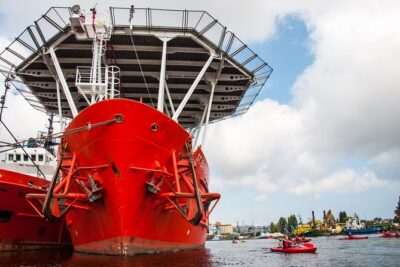
Packrafting kayaking guided tour Vistula river Warsaw Poland
Read our review →
Browse the lists this tour appears in