
REVIEW · AUDIO TOURS
The Birthplace of Poland: A Self-Guided Audio Tour of Poznań
Poland begins on a quiet river island. This low-cost Poznań walk brings you through Cathedral Island and Śródka, two places packed with early Polish history. I like the GPS-triggered narration, which lets you walk at your own speed, and the offline maps and audio, which make the tour practical without mobile data. The main drawback is simple: if your phone or location service misbehaves, you may feel lost without a live guide.
You’ll cover the route in about 45 minutes to 1 hour 15 minutes, depending on your pace and stops. The English narration has a pleasant, guide-like feel, and the tour can be paused and resumed. Still, download everything before you arrive, and bring your own smartphone and headphones.
In This Review
- Key points to know before you go
- Why Cathedral Island matters to Poznań
- The Church of Our Lady in Summo and Poland’s earliest foundations
- Poznań Cathedral, the oldest Polish cathedral
- The Archbishop’s Palace and layers of rebuilding
- Crossing Jordan Bridge into Śródka
- Śródka’s independent past and famous mural
- Saint Margaret Church and the neighborhood scale
- Porta Posnania, a modern museum beside an old story
- The Cathedral Lock and Prussian defenses
- Genius Loci and the remains of the old walls
- Finishing at the Archdiocese Museum and Lubrański Academy
- How the VoiceMap format works in real use
- Is $8.99 good value?
- Who should choose this Poznań walk?
- Should you book The Birthplace of Poland tour?
- FAQ
- How long does the self-guided audio tour take?
- What language is the tour offered in?
- Where does the tour start?
- Where does the tour finish?
- What does the price include?
- Do I need my own smartphone and headphones?
- Are museum entrance fees included?
- Can I take the tour without mobile data?
- Can I pause the tour and continue later?
Key points to know before you go
- Begin at the Ostrów Tumski scale model: The tour opens with a short introduction to Cathedral Island and instructions for using VoiceMap.
- See the foundations of Mieszko’s palace chapel: The Church of Our Lady in Summo sits above important early Polish remains.
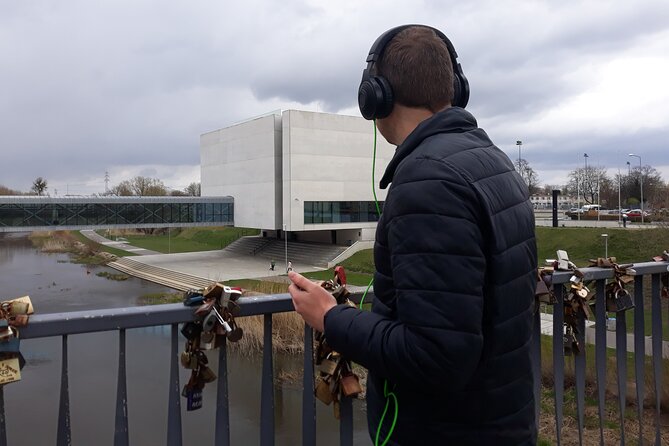
- Cross the rebuilt Jordan Bridge: You’ll hear how the bridge was built, destroyed, and restored to reconnect Cathedral Island with Śródka.
- Pair history with modern city art: The route includes the famous Śródka mural and the modern Porta Posnania Heritage Center.
- Expect an outdoor walk, not museum admission: Entrance tickets, food, transport, a phone, and headphones are not included.
- Best for independent sightseers: The tour costs $8.99 per person and works especially well if you value flexibility over conversation with a live guide.
Why Cathedral Island matters to Poznań
Poznań’s Cathedral Island, known as Ostrów Tumski, is the right place to begin if you want to understand the city’s role in Poland. The route is not a general stroll through the old market square. Instead, it focuses on the island and nearby Śródka, where religious, political, military, and neighborhood history meet.
I like this focus. A short tour can easily become a rushed list of churches and monuments. Here, the route has a clear theme: the origins of Poland and the changing fortunes of one small area beside the river.
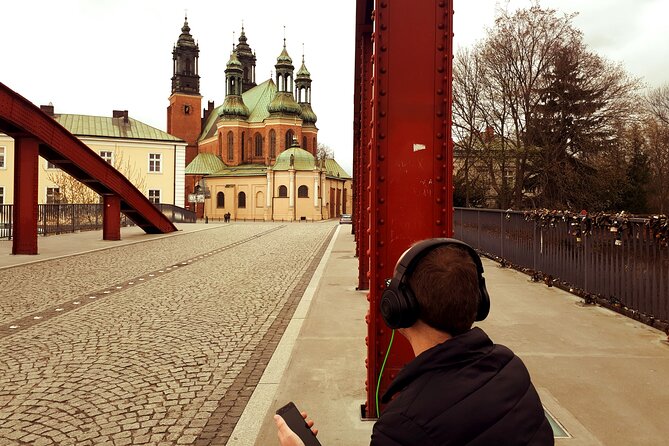
The tour begins in front of a scale model of the island at Ostrów Tumski 9. That is a sensible meeting point because you can first see how the area fits together before walking through it. You’ll also hear an explanation of how VoiceMap works, which matters because the experience depends on the app, your phone’s GPS, and your ability to follow the route.
The listed duration is flexible. You can finish in 45 minutes if you keep moving, or take up to around 75 minutes if you pause to look at buildings and absorb the narration. I would allow the longer time. The walk has enough sights to reward a slower pace, even though the audio itself is designed to be fairly compact.
A few more Poznań trips worth weighing up
- Wroclaw: E-Car Tour and Audio Guide
★ 4.6 · 1,738 reviews - Krakow: Vistula River Sightseeing Cruise with Audio Guide
★ 4.4 · 820 reviews - From Krakow: Auschwitz-Birkenau and Self-Guided Day Tour
★ 4.1 · 576 reviews
The Church of Our Lady in Summo and Poland’s earliest foundations
One of the first important stops is the Church of Our Lady in Summo. The audio points you toward the church and explains what lies below it: the remains of Mieszko’s palace and palace chapel.
That detail gives this stop real weight. You are not simply looking at an old church exterior. You are being directed toward the physical remains connected with the earliest stage of Poland’s state and Christian identity. The tour uses the building as a doorway into that larger story without requiring you to enter a museum first.
The information is delivered while you walk, so you should pay attention to where the app places you. This is one of the moments when GPS narration is useful, but it also shows its limits. If you move away from the intended point or your phone struggles to locate you, the audio may not match what you are seeing.
Poznań Cathedral, the oldest Polish cathedral
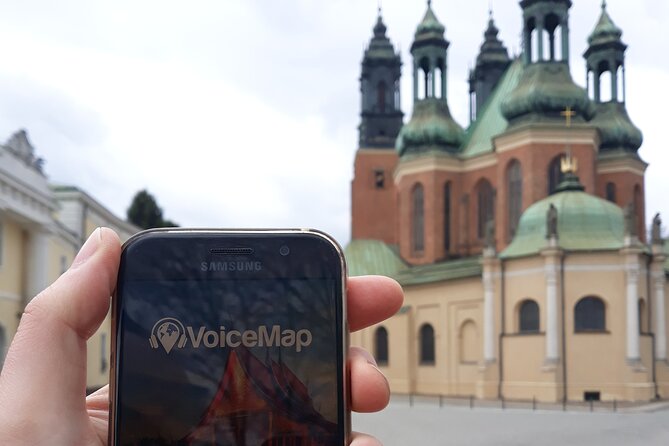
The route continues to Poznań Cathedral, described as the oldest Polish cathedral. This is the central religious sight on Cathedral Island, and the audio gives you context as you approach and pass by.
You do not need to buy a ticket to follow the outdoor tour. That keeps the price low, but it also means the experience is not a substitute for visiting the interior of the cathedral or any other attraction along the route. If you want more time inside, plan that separately and treat the audio walk as your introduction.
I like the way this stop fits the tour’s purpose. The cathedral is not presented as an isolated monument. It follows the discussion of Mieszko’s palace and chapel, so the route gradually builds a picture of the island as a center of power and religion.
The audio format also gives you room to look. A live group may keep moving because the next stop is waiting. With this tour, you can pause the narration, study the building, and restart when you are ready.
The Archbishop’s Palace and layers of rebuilding
Next comes the Archbishop’s Palace. The narration covers the building and its many versions over time.
That is useful because historic buildings often look more stable than they really are. A palace may appear to be one grand object, but its current form can reflect repairs, rebuilding, and changes in taste. The stop encourages you to see the building as part of a long process rather than a frozen piece of the past.
This is also where a short audio tour earns its modest fee. A plaque may give you a name and date. A good narrator helps you connect the palace with the religious authority of the island and understand why it belongs on a walk about Poland’s beginnings.
A completely different kind of day out in Poznań:
- Poznań Experience 2-Hours Guided Walking Tour
★ 5.0 · 155 reviews - Undercover City Games: Poznan
★ 5.0 · 88 reviews - Old Town Poznan: Guided Walking Tour in English
★ 4.6 · 78 reviews - Poznań: Private or Public Highlights Tour with a local guide
★ 5.0 · 66 reviews
Crossing Jordan Bridge into Śródka
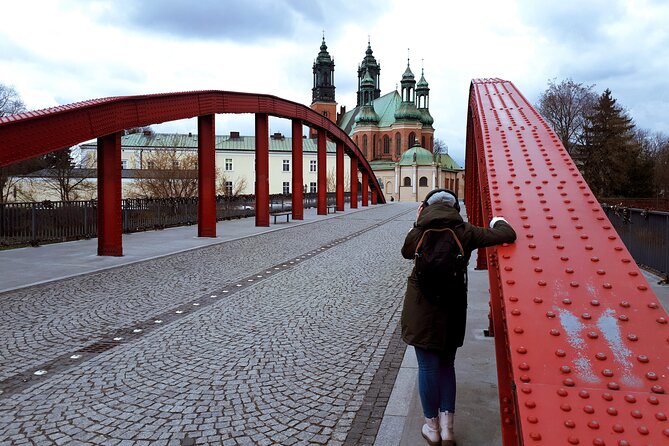
The route then crosses Jordan Bridge. You’ll hear how it was built, destroyed, and rebuilt before once again linking Cathedral Island with the Śródka District.
For me, this is one of the most effective parts of the walk because the bridge is both a practical crossing and a clear transition. You leave the cathedral area and enter a neighborhood with its own identity. The story of the bridge also gives you a sense of how fragile urban connections can be.
The route is not only about ancient remains. It follows the way the area changed and how modern Poznań reconnected places that had been separated. That makes the walk easier to follow geographically. You are not being pulled randomly from one sight to the next.
The bridge itself may not require much time, but do not rush the transition. The narration helps explain why the crossing matters, and the route becomes more neighborhood-focused once you reach Śródka.
Śródka’s independent past and famous mural
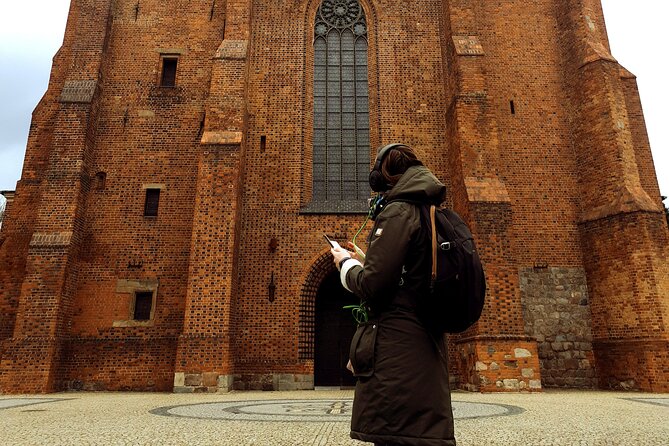
Śródka was, at one stage, independent from the rest of Poland. The audio introduces that past before taking you to the Śródka mural, one of the first wall paintings of its type in Poland.
This change of mood is one of the tour’s strengths. You move from major religious buildings to a district with a more local feel, then encounter a modern public artwork. The mural shows how the area’s identity is not limited to medieval or church history.
I would make sure your phone is charged here. The mural is a visual stop, and you’ll want to look carefully while listening rather than simply walk past with your eyes on the map. The app’s automatic location prompts are convenient, but this is a good place to pause and take your time.
The mural also helps keep the tour from becoming too solemn. Poland’s early political and religious story can be heavy material. A large wall painting gives the route a lighter, more contemporary pause before you continue to Saint Margaret Church.
Saint Margaret Church and the neighborhood scale
The walk passes Saint Margaret Church, with narration about the church as you go.
Compared with Poznań Cathedral, this stop works on a smaller scale. The tour does not need every building to carry the same national importance. A neighborhood church helps you see Śródka as a lived-in district rather than simply a collection of historical markers.
The audio approach is particularly handy here. You can keep walking while the story unfolds, then stop if a detail catches your interest. Since the tour is private to your group in the sense that no other participants are assigned to you, you are not tied to another party’s pace.
That flexibility is a major reason to choose this format. You can walk quickly, linger, take photos, or pause for a break. Just remember that the experience does not provide a person who can answer questions on the spot.
Porta Posnania, a modern museum beside an old story
The route passes Brama Poznania, also called the Porta Posnania Heritage Center. This state-of-the-art museum was created in 2014 to present the important themes connected with Cathedral Island and Śródka.
The museum is a useful counterpoint to the older buildings. The tour’s subject is ancient, but the way Poznań presents that subject is modern. You’ll see how the city uses new museum design to explain the island, the district, and the events tied to them.
Entrance is not included, so decide ahead of time if you want only the exterior stop or a separate museum visit. The audio tour gives you an orientation, but it does not replace the exhibitions. If you are short on time, the walk may be enough. If you want displays and a fuller presentation, set aside extra time and budget for admission.
This is also a good reminder that the $8.99 price buys a walking guide, not a package of attraction tickets. That is a fair deal for an independent route, but you should not expect an all-inclusive sightseeing pass.
The Cathedral Lock and Prussian defenses
The walk next reaches the Cathedral Lock, a 19th-century part of the Prussian fortification system.
This stop broadens the story again. Cathedral Island is not only about Poland’s earliest rulers and churches. It also carries evidence of later military planning and the political changes that shaped the city.
I appreciate this kind of contrast in a short tour. You see religious foundations, a bridge, a neighborhood mural, a modern museum, and military infrastructure. The sights do not all look alike, and the narration keeps asking you to notice different periods of Poznań’s past.
Because the tour passes by the lock rather than promising entry, you should think of it as an outdoor history stop. You’ll hear why the structure matters, look at it from the route, and continue.
Genius Loci and the remains of the old walls
The Genius Loci museum provides another modern presentation of the area. It shows relics of the one-thousand-year-old borough walls and includes 3D immersive films.
The museum makes a strong final stretch for the route because it connects physical remains with modern interpretation. You can look at surviving fragments and then consider how technology helps explain structures that may otherwise be difficult to picture.
As with Porta Posnania, admission is not part of the $8.99 tour. The audio walk can point out the museum and explain its purpose, but you will need a separate ticket if you want to go inside. This is not a flaw, as long as you understand the boundary between the self-guided route and the paid attractions.
If you enjoy archaeology, old fortifications, and museum displays, this stop may persuade you to return for a longer visit. If your goal is simply a quick orientation, continue on to the finish.
Finishing at the Archdiocese Museum and Lubrański Academy
The tour ends in front of the Archdiocese Museum in Poznań, at Jana Lubrańskiego 1, in front of the Lubrański Academy.
The museum and academy bring the route back to religious and national institutions. The site played an important role in Poznań and Poland from the 1500s through the 1700s, giving the final stop a later historical focus than the early remains near the start.
Ending here is practical. You finish near a clearly identified attraction rather than in an anonymous side street. It also gives you a choice: stop after the audio ends, visit the museum separately, or use the location as a springboard for more independent sightseeing.
The listed operating window runs from April 15, 2022, through February 7, 2027, with hours shown as Monday through Sunday, 12:00 a.m. to 11:59 p.m. That is the stated availability for the tour, not a promise that every museum on the route is open around the clock.
How the VoiceMap format works in real use
VoiceMap automatically plays guidance based on your phone’s GPS location. In the best case, this feels like having a guide in your ear without needing to check a printed route at every corner.
The narration has been praised for sounding like a real guided walk, with an engaging voice and clear explanations of architecture and history. The ability to move at your own pace is another major plus. You can pause, take a break, and continue later, and lifetime access means you can return to the audio after your first walk.
You should download the audio, map, and geodata before starting. Offline access is included, which is especially helpful if you do not want to depend on a mobile connection.
There is one important warning. A technical problem at the start caused one person to lose track of where to go and what to look at. The issue was reportedly resolved quickly after contacting VoiceMap support, but you should still test the app before setting off. Check that your headphones work, the route is downloaded, and location services are enabled.
Bring:
- A charged smartphone
- Headphones
- Comfortable shoes
- Extra time if you want to visit museums
You do not need to arrange transport for the route itself, and the starting area is near public transportation. Food and drinks are not included.
Is $8.99 good value?
At $8.99 per person, this is an inexpensive way to get historical context in English. A live private guide would normally cost far more, while a free map may tell you where to look but not why each site matters.
I think the price is strongest for independent visitors who want structure without a fixed appointment. You receive lifetime access, offline audio, an offline map, and geodata. You can also repeat the walk or revisit the narration after seeing the area.
The value drops if you want personal answers, detailed discussion, or help when your phone loses its position. The tour is also less useful if you plan to enter every museum, since admission fees are separate.
A rating of 4.4 from 13 ratings suggests a generally positive experience, but the small number means I would not treat that figure as a guarantee. The practical lesson is to prepare your phone carefully and know that this is a self-guided tool, not a person walking beside you.
Who should choose this Poznań walk?
I would recommend it to you if you:
- Want an affordable introduction to Cathedral Island
- Prefer exploring alone or with your own group
- Like history explained while you walk
- Need an English-language option
- Want to pause, restart, or revisit the route
- Are comfortable using GPS apps
You may want another option if you dislike smartphone tours, expect spontaneous questions and conversation, or have had trouble with navigation apps in the past. The single negative experience connected to the app shows the main risk clearly.
The walk is also a good fit for a short Poznań stay. It covers a distinct part of the city in under 75 minutes, while leaving room for separate visits to Porta Posnania, Genius Loci, the cathedral, or the Archdiocese Museum.
Should you book The Birthplace of Poland tour?
Yes, if you want a low-cost, flexible introduction to Poznań’s Cathedral Island and Śródka District. The route has a clear story, the sights vary nicely, and the narration helps you notice connections between early Polish remains, churches, bridges, murals, museums, and Prussian defenses.
I would book it with realistic expectations. Download the tour before you arrive, carry headphones, and keep your phone charged. Choose it for independence and value, not for the give-and-take of a live guide.
At $8.99, it is an easy choice for an English-speaking visitor who wants to get oriented fast and then decide which museums deserve a longer look.
FAQ
How long does the self-guided audio tour take?
The tour takes approximately 45 minutes to 1 hour 15 minutes, depending on your walking speed and how long you pause at the sights.
What language is the tour offered in?
The tour is offered in English.
Where does the tour start?
It starts in front of the scale model of Ostrów Tumski at Ostrów Tumski 9, 61-109 Poznań, Poland.
Where does the tour finish?
It ends in front of the Lubrański Academy, near the Archdiocese Museum in Poznań at Jana Lubrańskiego 1, 61-003 Poznań, Poland.
What does the price include?
The $8.99 price includes lifetime access to the English self-guided tour, the VoiceMap app for Android and iOS, and offline access to the audio, maps, and geodata.
Do I need my own smartphone and headphones?
Yes. A smartphone and headphones are not included, so you need to bring your own.
Are museum entrance fees included?
No. Tickets and entrance fees for museums and other attractions along the route are not included.
Can I take the tour without mobile data?
Yes. Offline access to the audio, maps, and geodata is included. You should download the materials before starting.
Can I pause the tour and continue later?
Yes. The self-guided format lets you walk at your own speed, take a break, and continue. Lifetime access also allows you to return to the tour later.
Just added around Poznań
- Poznan Old Town and Croissant Museum Private Walking Tour★ 5.0 · 3 reviews
- Poznan Private Vodka Tasting Tour★ 5.0 · 3 reviews
- Poznan: Private Polish Beer Tasting Tour★ 4.6 · 3 reviews
- Discover Poznan: Walk, Take a tram and have a traditional snack★ 5.0 · 4 reviews
- Palace, Castle and Ancient Oaks – Rogalin and Kórnik guided tour from Poznan★ 5.0 · 4 reviews
- Poznan: City and Brewery Private Walking Tour with Beer★ 4.6 · 5 reviews
- Private 3-hour Poznan Old Town Tour★ 5.0 · 5 reviews
- Poznan: Private Jewish Heritage Tour★ 5.0 · 5 reviews
Audio Tours, compared.


Vistula River Sightseeing Cruise with Audio Guide
Read our review →
Sightseeing Cruise on Vistula River with Audio Guide
Read our review →Vistula River Sightseeing Cruise with Audio Guide
Read our review →
Vistula Night Cruise by Gondola w/ Audio Commentary
Read our review →
Browse the lists this tour appears in