
REVIEW · NOWA HUTA COMMUNISM TOURS
Warsaw: Private Communism Tour with Hotel Pickup
History feels different from the back seat of a Żuk. This private Warsaw tour combines a retro communist-era minibus with clear stories about shortages, censorship, rebuilding, and political change. I especially like the hotel pickup and the chance to see several important sites without arranging taxis between them. I also like that the private format lets you ask questions and adjust the pace. The main consideration is comfort: these historic vehicles may lack air conditioning, and some do not have seat belts.
The three-hour route is a good fit if you want more than grand buildings and dates. Guides such as Martin and Lucasz have been praised for being friendly, thoughtful, and open to discussion about Poland’s past and present. Martin even added two church stops for one group, showing how the private format can make the outing more personal. Still, walking is part of every stop, so bring sensible shoes and dress for the weather.
In This Review
- Key points before you book
- Why a Żuk makes the opening half-hour special
- Warsaw rebuilt according to socialist ideals
- Palace of Culture and Science: a symbol you cannot ignore
- Constitution Square and the planned city
- The former Communist Party headquarters and political power
- Daily life behind the official story
- Walking stops and the real pace of the tour
- The value of $165 per person
- Who will get the most from this experience?
- Should you book the Warsaw Communism Tour?
- FAQ
- How long is the Warsaw Communism Tour?
- Is hotel pickup included?
- Where can I be dropped off after the tour?
- Is this a private tour?
- How many people fit in one Żuk minibus?
- What language is the tour conducted in?
- Which Warsaw landmarks are included?
- What period of Polish history does the tour cover?
- Are food and drinks included?
- Can children join the tour?
Key points before you book
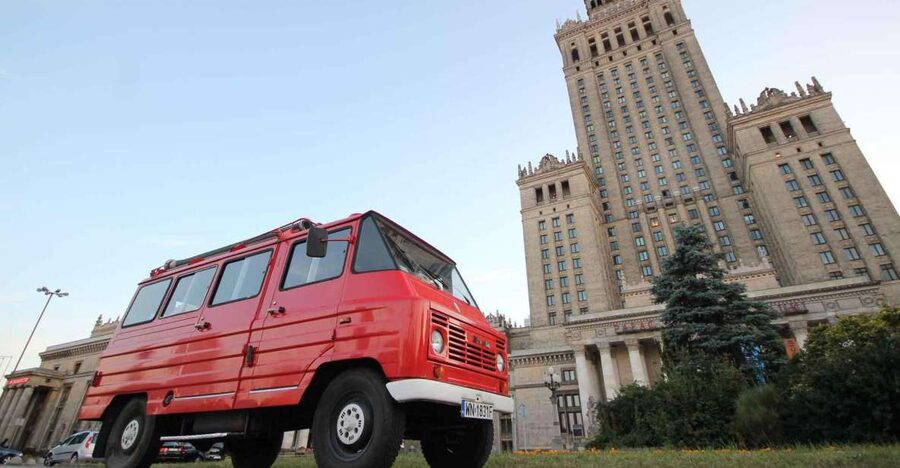
- The Żuk is part of the history: This Polish-made minibus was produced during the communist period, so the ride itself sets the mood before the first landmark.
- You see more than one famous building: The route includes the Palace of Culture and Science, Constitution Square, the former Communist Party headquarters, and other Cold War sites.
- The focus is daily life: Expect stories about shortages, censorship, planned production, informal networks, and practical ways people coped.
- Private means flexible: Your group can pause for questions, spend more time on a subject, or possibly add a suitable stop.
- The group stays small: Each minibus holds up to eight people, and five minibuses are available.
- Comfort has limits: The historic vehicles have heating in winter, but no air conditioning, and some lack seat belts.
Why a Żuk makes the opening half-hour special
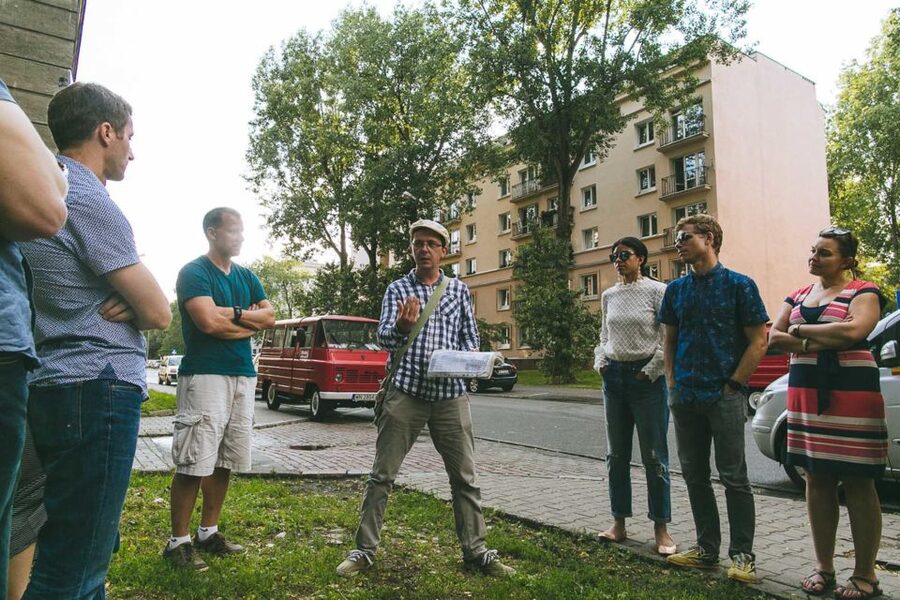
Your experience begins with pickup at your Warsaw hotel, provided it is within 3 kilometers of the city center. That simple start matters. You do not need to find a meeting point or cross town before the tour begins, and the guide can start explaining the city as soon as you are on board.
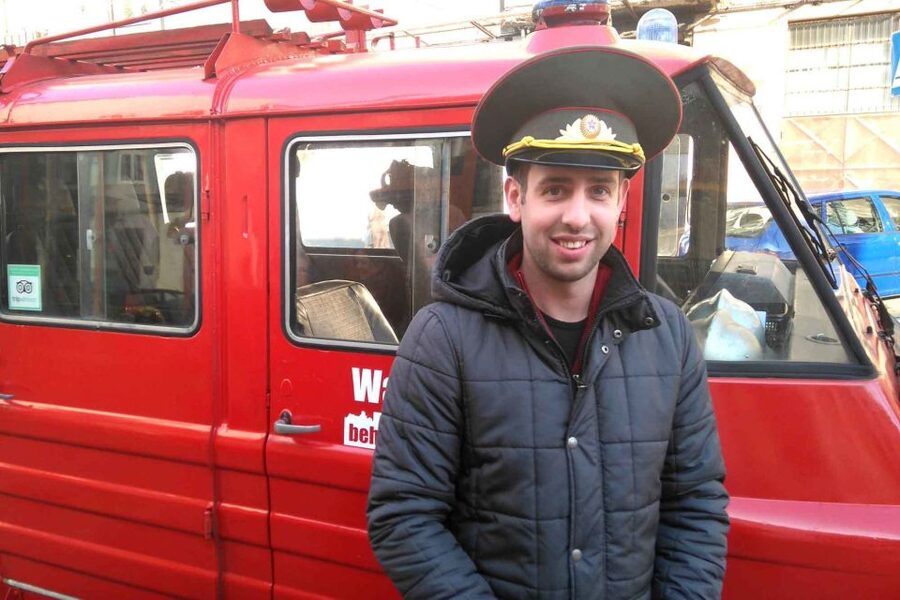
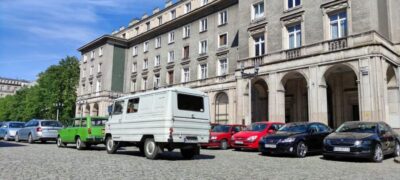
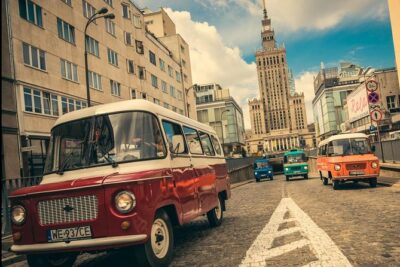
The Żuk is not just a cute prop. It was a vehicle made in communist Poland, and riding in one gives the tour a physical connection to the period. You get a sense of the old transport style rather than simply hearing about it in a modern van.
The minibus is mainly used to move between locations. This is important when you picture the day. You will not spend three hours looking through windows while a guide talks nonstop. Instead, you ride between sites, get out, and walk around each stop.
There are practical limits. Classic vehicles are not equipped with air conditioning, which could matter on a hot summer afternoon. Some vehicles also do not have seat belts, a feature permitted for historic vehicles. Heating is available in winter, but you should still wear weather-appropriate clothing.
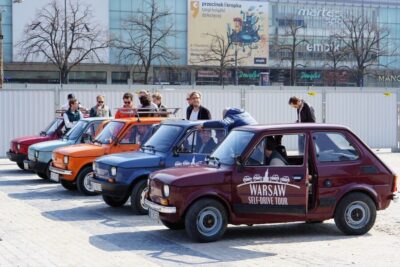
With space for up to eight people, the minibus suits a family, a couple traveling with friends, or a small private group. Five vehicles are available, but the small-group arrangement remains central to the experience.
More Nowa Huta and communism tours:
- Private Tour: Warsaw’s Communist History by Retro Fiat
★ 5.0 · 115 reviews - Warsaw: Communism Tour in an Original Socialist Van
★ 4.9 · 75 reviews - Warsaw: Communist History Self-Driving Tour
★ 4.8 · 52 reviews
Warsaw rebuilt according to socialist ideals
The tour sets the communist period against the destruction of World War II. Warsaw emerged from the war badly damaged, and the city that followed was rebuilt according to socialist ideals. That context helps explain why the architecture and public spaces can feel so different from the older streets associated with prewar Warsaw.
Your guide connects physical places with the political system behind them. The point is not simply to label a building communist and move on. You learn how ideology shaped the city, how power was displayed, and how public construction carried a political message.
That approach is useful because communist Warsaw can otherwise be confusing. You may see a grand avenue, a huge public building, or an open square without knowing what it was meant to communicate. The guide supplies the missing layer: who commissioned it, what it represented, and how ordinary people experienced it.
The tour does not treat the period as a simple story of stern officials and passive citizens. It also explains how people adapted. Shortages, censorship, and a centrally planned economy affected daily choices, but residents developed informal networks and creative ways to get things done.
This is where the experience has its strongest value. You are not only looking at monuments. You are learning how a political system reached into shopping, work, public speech, and family life.
Palace of Culture and Science: a symbol you cannot ignore
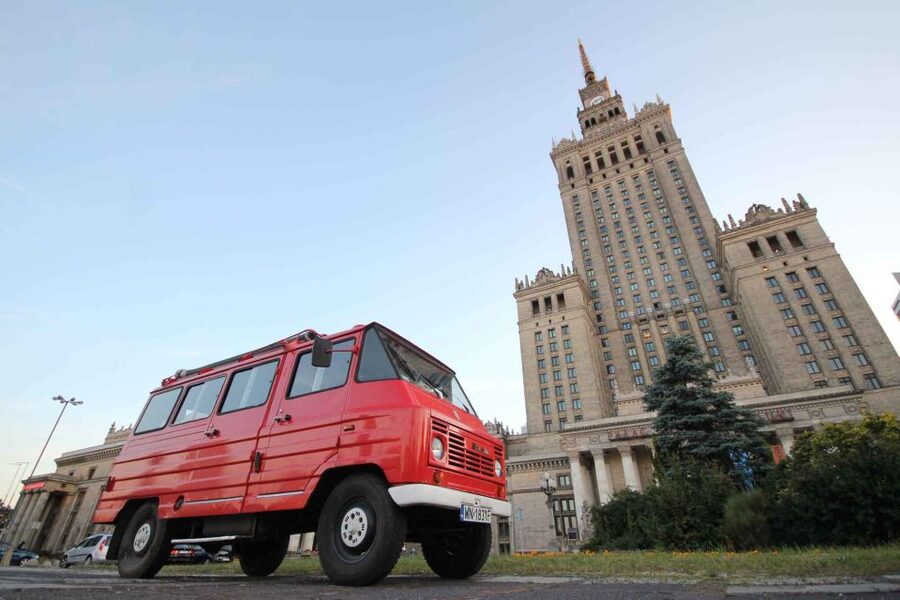
The Palace of Culture and Science is one of the tour’s key landmarks. Its size and location make it an obvious starting point for discussing communist power and the rebuilt city.
You will see it in the wider context of Warsaw rather than as an isolated photo stop. The guide explains why such a large structure mattered during the communist period and how it fitted into the city’s socialist plan.
The building can prompt strong reactions. Some people see it as an impressive architectural landmark. Others connect it with Soviet influence and political control. A good guide allows those views to sit side by side, giving you context without forcing a single response.
Do not expect the tour to turn this into a long interior visit based on the information provided. The minibus is used to reach locations, and the experience includes walking segments at each stop. The focus is the building’s meaning and place in Warsaw’s Cold War story.
For photography, the Palace provides one of the clearest visual reminders that Warsaw’s twentieth-century history is not confined to museums. It is part of the city you are walking through.
Constitution Square and the planned city
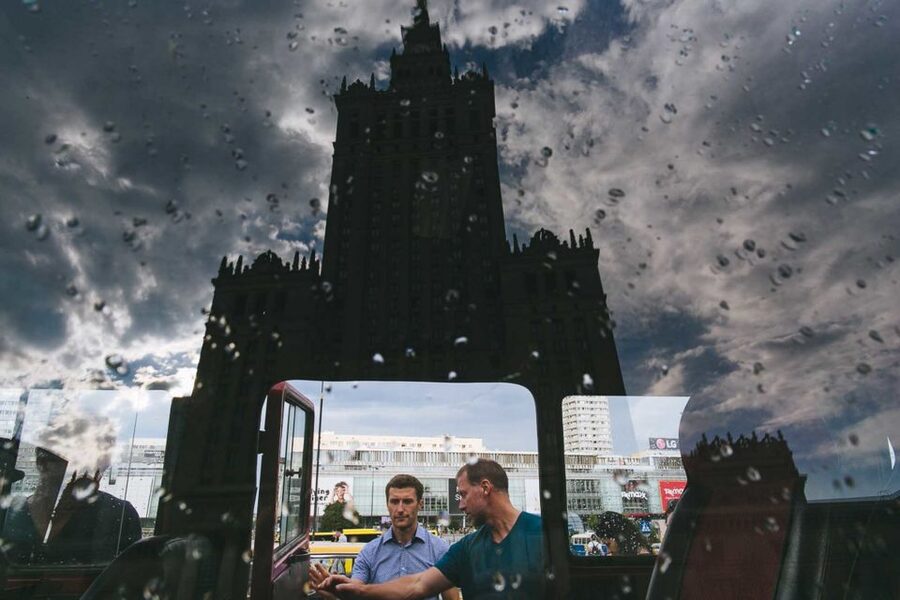
Constitution Square offers another way to read communist Warsaw. Its broad scale and formal design reflect the desire to create public spaces that could express the values of the state.
Your guide uses places like this to show how planning shaped movement and public life. The square was not merely an attractive open area. It had a civic and political role, and its design tells you something about how the authorities wanted the city to function.
This stop is especially helpful if you have already seen Warsaw’s old town and reconstructed historic center. Those areas can give you one picture of the city, while Constitution Square presents a very different one. Seeing both makes the postwar rebuilding effort easier to understand.
Because the tour is private, you can ask the guide to explain the architectural details that catch your eye. You might want to know how the square was used, why it was designed at that scale, or how daily life around it differed from the official image presented by the state.
The drawback is that a square can feel less dramatic than a famous monument if you do not have the explanation. This is a guide-led stop, not a place that always speaks for itself. The quality of the storytelling matters.
A few more Warsaw trips worth weighing up
- Warsaw: Chopin Concert in the Old Town
★ 4.8 · 2,287 reviews - Warsaw: Traditional Galar Cruise on The Vistula River
★ 4.6 · 1,640 reviews - Warsaw: Old Town Highlights Walking Tour in English
★ 4.7 · 1,516 reviews - Warsaw Concert: Chopin – Painted by Candlelights with Wine
★ 4.8 · 1,442 reviews
The former Communist Party headquarters and political power
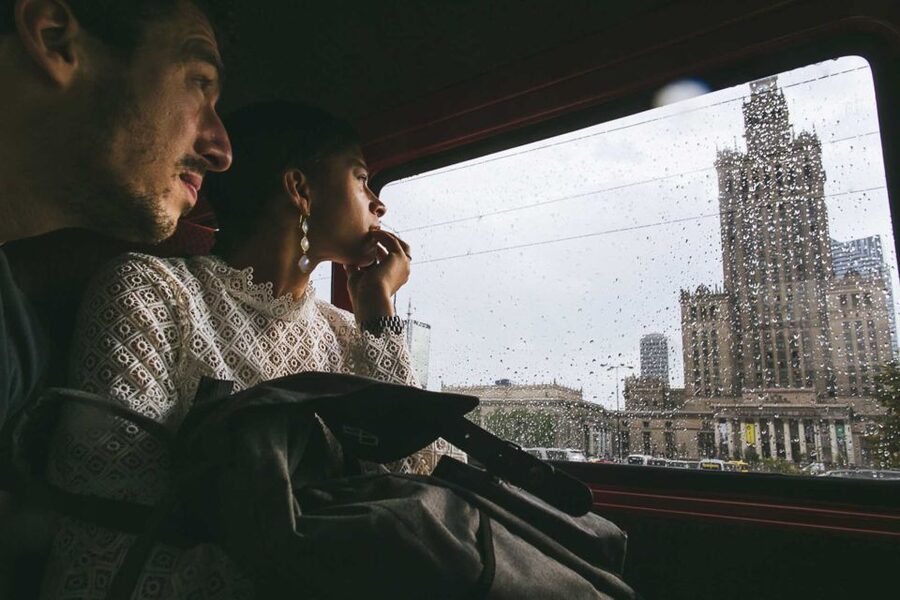
The former Communist Party headquarters gives the tour a direct link to the people and institutions that governed Poland. Here, the story moves from urban design to political authority.
The building helps place the 1950s, 1960s, and 1970s in a clear framework. During those decades, the state controlled much of the economy and public information. Your guide discusses censorship and planned production, then connects those broad policies with the practical problems people faced.
This is where questions are particularly useful. You can ask how ordinary residents responded to official restrictions, how informal contacts helped people obtain goods or solve problems, and how public behavior differed from private opinion.
The tour also follows the political changes of the 1980s. It finishes with the first free elections in 1989, which marked the end of communist rule in Poland. That gives the route a clear arc, from postwar rebuilding and state control to opposition, change, and a new political era.
I like that the experience covers the full period instead of treating 1989 as an isolated turning point. The election makes more sense when you have first heard about the pressures and adaptations of the previous decades.
Daily life behind the official story
The most useful part of the tour is likely to be the discussion of ordinary life. Grand buildings explain what the state wanted to project. Stories about shortages and censorship explain what it was like to live within that system.
You learn how a centrally planned economy affected everyday existence. The guide can connect economic policy with the practical habits people developed, including informal networks and creative survival strategies. These details give the political history a human scale.
The period covered includes the 1950s, 1960s, and 1970s, then continues through the changes of the 1980s. That range lets you compare different stages of communist Poland instead of treating four decades as one unchanging block.
The exact balance between architecture, politics, and daily life can depend on your guide and your questions. If you want more on shortages, ask for it. If you are more interested in urban planning or the opposition movement, say so early. A private tour gives you room to steer the conversation.
Past guides have been praised for being open to discussion about Poland’s past, present, and future. That matters here. Communism is not a tidy subject, and you will get more from the tour if you treat it as a conversation rather than a lecture.
Walking stops and the real pace of the tour
Three hours is enough for a focused introduction, but it is not a full study of every communist-era site in Warsaw. You will cover ground by minibus, then walk at each location.
Wear comfortable footwear. The walking sections are part of the experience, and the vehicle cannot take you directly through every part of a site. Weather-appropriate clothing is also important because you will spend time outside.
The private setup should make the pace easier to manage. If someone in your group needs more time at a stop, or if a particular discussion becomes interesting, you have more freedom than you would on a large scheduled group tour.
One useful example comes from a December outing when Martin added two church stops. That does not mean every group receives the same additions, but it shows the value of speaking with your guide about your interests. A flexible route can make the difference between a standard sightseeing drive and a more personal look at the city.
The minibus itself may be charming rather than luxurious. Some classic vehicles lack seat belts, and none have air conditioning. You should think of it as part of the period setting, not as a modern sightseeing coach.
The value of $165 per person
At $165 per person, this is not a budget way to see Warsaw. The price makes more sense if you value hotel pickup, a private English-speaking guide, a historic vehicle, and a route built around conversation rather than just transportation.
For a full group of eight, the cost is easier to justify because the private guide and vehicle are shared among your party. For two people, it is a more expensive choice, but you gain privacy and the ability to ask as many questions as you like.
You are also paying for access to several locations in one three-hour outing. Arranging separate rides to the Palace of Culture and Science, Constitution Square, the former party headquarters, and other sites could take time and planning. The Żuk handles the transfers while the guide ties the stops together.
I would choose this tour for the historical interpretation, not simply for transport. If you only want quick photos of the Palace of Culture and Science, a cheaper sightseeing option may be enough. If you want to understand why these places matter, the private guide adds the main value.
Hotel pickup and drop-off are included within 3 kilometers of central Warsaw. At the end, you can be dropped at a location of your choice within central Warsaw, which can help you continue your day without returning to the hotel.
Who will get the most from this experience?
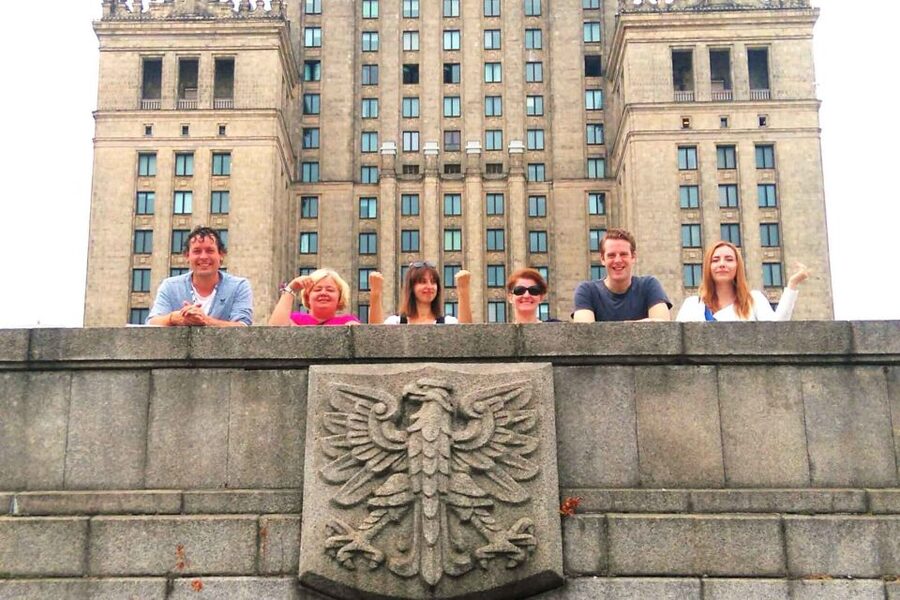
I would recommend it to you if you enjoy recent history, city planning, political change, or stories about ordinary life under difficult systems. It also suits visitors who prefer asking questions instead of following a fixed speech.
The tour works well for a small family group or friends who want a private activity. Children and adults over 150 centimeters can book online. For a child under 150 centimeters, contact the operator first to check booster-seat availability, since boosters are required under Polish law.
Unaccompanied minors are not allowed. The tour is in English, with a live local guide, so you should be comfortable following a spoken historical discussion.
I would be more cautious if you need modern vehicle comforts. The Żuk may be warm in winter and atmospheric all year, but it does not offer the climate control or safety equipment you might expect from a newer van. Anyone who dislikes outdoor walking should also take that into account.
Should you book the Warsaw Communism Tour?
Book it if you want a personal, story-led look at Warsaw’s communist period and like the idea of riding between sites in a genuine Żuk minibus. The strongest parts are the focus on everyday life, the small private group, and the chance to discuss the subject openly with a guide such as Martin or Lucasz.
Skip it if your priority is the lowest price, a fully indoor activity, or modern vehicle comfort. For the right audience, though, $165 buys more than a ride past famous buildings. It gives you a clear three-hour framework for understanding how communist ideas shaped Warsaw, how people lived within them, and how Poland reached 1989.
Free cancellation is available up to 24 hours before the tour, and you can reserve now and pay later, which gives you some flexibility while planning.
FAQ
How long is the Warsaw Communism Tour?
The tour lasts three hours, including the minibus transfers and walking portions at the stops.
Is hotel pickup included?
Yes. Pickup and drop-off are included for hotels within a 3-kilometer radius of Warsaw city center.
Where can I be dropped off after the tour?
You can choose a drop-off location within central Warsaw.
Is this a private tour?
Yes. The tour is arranged for a private group rather than a shared public group.
How many people fit in one Żuk minibus?
Each minibus accommodates up to eight passengers.
What language is the tour conducted in?
The live tour is conducted in English by a local English-speaking guide.
Which Warsaw landmarks are included?
The route includes the Palace of Culture and Science, Constitution Square, the former Communist Party headquarters, and other locations linked with Warsaw’s Cold War history.
What period of Polish history does the tour cover?
The tour discusses communist Poland from the 1950s through the 1980s and ends with the first free elections in 1989.
Are food and drinks included?
No. Food and drinks are not included in the tour price.
Can children join the tour?
Adults and children over 150 centimeters can book instantly online. For children under 150 centimeters, contact the operator in advance to check booster-seat availability. Unaccompanied minors are not allowed.
Just added around Warsaw
- Jewish heritage in Warsaw★ 4.5 · 3 reviews
- Warsaw Outdoor Paintball with Transfers (all year round)★ 5.0 · 3 reviews
- World War II Warsaw Old Town, Military Cemetery Walking Tour★ 4.7 · 3 reviews
- Warsaw: Wolf’s Lair & Swieta Lipka Small-Group Tour + Lunch★ 5.0 · 3 reviews
- Sunset Boat Tour with Unlimited Drinks in Warsaw★ 3.5 · 3 reviews
- Majdanek – German camp from II World War – Private Tour – 1 DAY TRIP FROM WARSAW★ 5.0 · 3 reviews
- From Warsaw: Guided Tour to Wieliczka Salt Mine and Krakow★ 4.5 · 3 reviews
- Warsaw Sightseeing with NEW Mercedes Sclass !!!★ 5.0 · 3 reviews
Nowa Huta Communism Tours, compared.
Legendary Private Nowa Huta Communism Tour with Crazy Guides
Read our review →
Nowa Huta: Steelworks Administration Buildings/Shelters Tour
Read our review →
Private Tour: Warsaw’s Communist History by Retro Fiat
Read our review →
Private Nowa Huta Adventure Tour in Communist Cars
Read our review →
Browse the lists this tour appears in