
REVIEW · WIELICZKA SALT MINE TOURS
Wieliczka Salt Mine: Fast-Track Ticket and Guided Tour
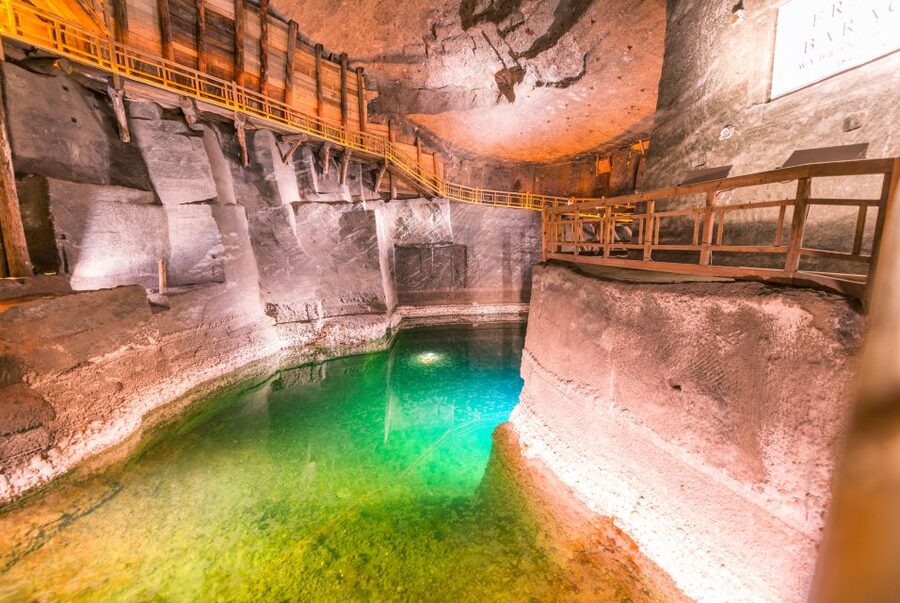
Salt can become great art.
I like the way this UNESCO-listed mine combines working-mining history with chapels, altars, sculptures, galleries, lakes, and shafts far below Krakow. I also like the practical setup: fast-track entry, assistance at the meeting point, and a licensed museum guide once you enter. The main drawback is the uncertain start time, which may be confirmed only the day before and can shift your plans at short notice.
You should also prepare for a serious walk. The route reaches 135 meters below ground, covers more than 2.5 kilometers, and includes about 800 steps. The mine is cool, at 14 to 16 degrees Celsius, so comfortable shoes and a light layer matter.
In This Review
- Key points at a glance
- What the Wieliczka Salt Mine tour is really like
- Meeting the group beside the UNESCO sign
- The first 400 steps set the tone
- Salt chambers, underground churches, and carved details
- Why the underground scale matters
- The guide can shape the whole visit
- Returning in the original miners’ elevator
- Is $67 a fair price?
- Timing, cancellation, and practical planning
- Who should book this underground visit?
- Should you book the Wieliczka Salt Mine tour?
- FAQ
- How long does the Wieliczka Salt Mine tour take?
- How far underground does the tour go?
- How many steps are involved?
- What temperature is it underground?
- Is transportation to the salt mine included?
- Is the tour suitable for wheelchair users?
- Can I cancel the booking?
Key points at a glance
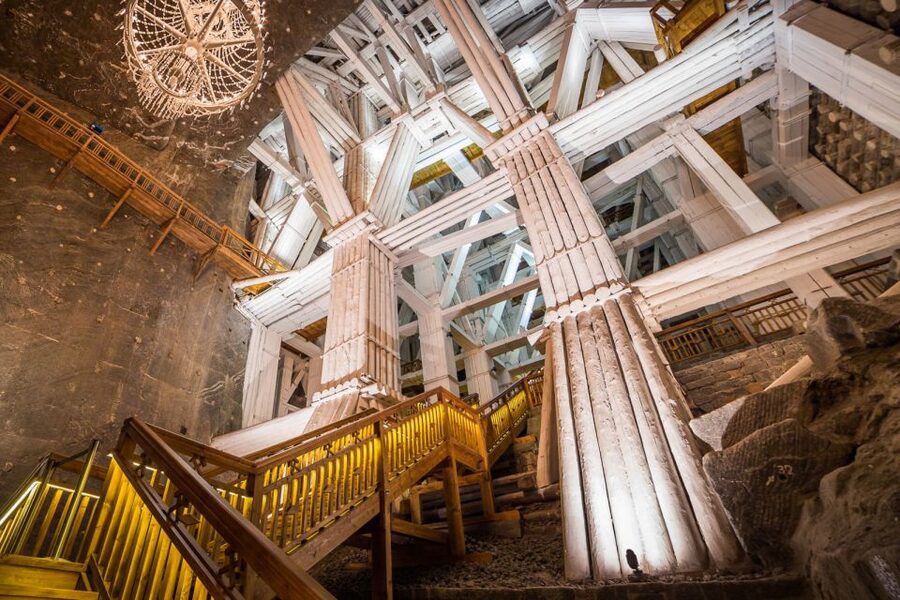
- 800 steps lead underground: About 400 come near the beginning, so the first part demands the most effort.
- The mine is much larger than the tour: The full complex reaches 327 meters below ground and includes about 287 kilometers of corridors and chambers.
- Salt looks gray, not snowy white: The rock has shades that resemble rough granite.
- The museum supplies the guide: Your English-speaking guide is licensed by the Salt Mine Museum.
- The final ride uses a miners’ elevator: You return to the surface in the original lift used by mine workers.
- Timing needs flexibility: Your requested start time is not guaranteed, and the exact time may arrive only the day before.
What the Wieliczka Salt Mine tour is really like
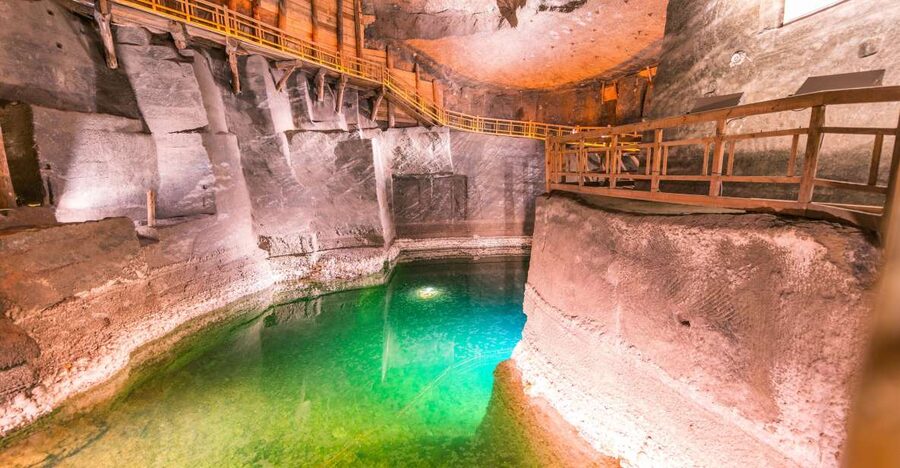
This is not a quick look at a single salt chamber. It is a substantial underground walking route through excavated holes, ramps, galleries, shafts, lakes, churches, chapels, and altars.
The tour lasts about 150 minutes, though the full sightseeing process can take up to three hours. That difference matters. You need time to meet your group, enter the museum, walk the route, wait at busy stations, and return to the surface.
I would leave the rest of your day loose. One person arrived expecting a particular start time, only to learn that the tour had shifted by 45 minutes. Another group waited at the meeting place when nobody appeared at the expected time. These problems do not define the attraction itself, but they show why you should not book a tight connection or timed activity afterward.
More Wieliczka Salt Mine tours:
- Krakow: Wieliczka Salt Mine Skip-the-Line Live Guided Tour
★ 4.5 · 462 reviews - From Krakow: Wieliczka Salt Mine Guided Tour
★ 4.4 · 323 reviews - From Krakow: Wieliczka Salt Mine Half-Day Trip with Pickup
★ 4.5 · 140 reviews
Meeting the group beside the UNESCO sign
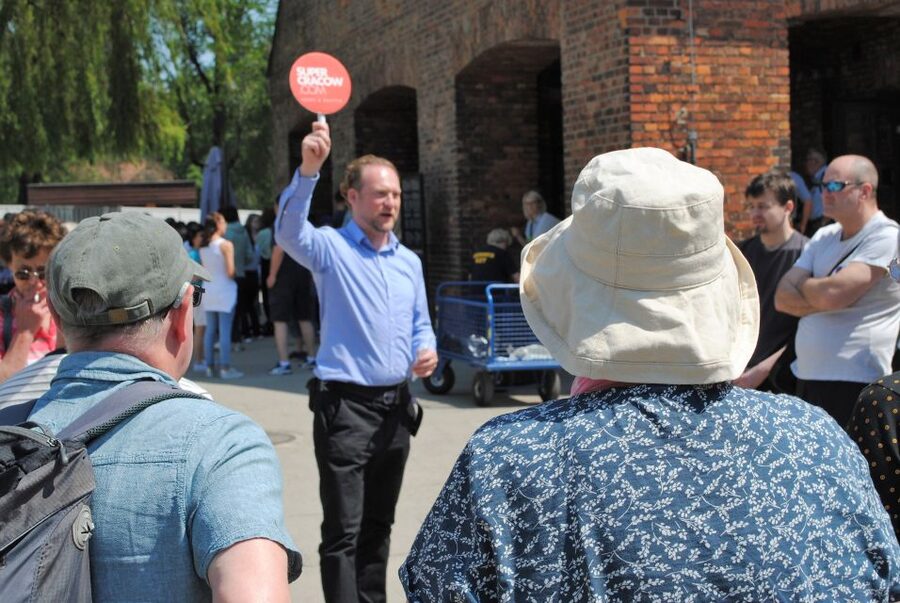
Your local tour leader helps you find the correct group and enter the museum. The meeting point is in front of the UNESCO sign near the Salt Mine Museum, and you should arrive at least 15 minutes early.
That advice is worth taking seriously. The entrance area can feel confusing when several groups gather for different start times. Arriving early gives you a chance to locate the sign, check your booking, and avoid a last-minute scramble.
The local host is not necessarily the same person who leads the underground tour. The museum provides the licensed guide for the mine itself. That division is useful because the guide works within the museum’s own route and system.
Still, punctuality has been uneven. A guide or group representative arrived late for one start, and another group had to call when nobody was waiting at the meeting place. I would keep your phone available and make sure you know the meeting location before leaving your hotel.
The first 400 steps set the tone
The tour begins with a descent of roughly 800 steps, including around 400 near the start. You do not need special equipment, but you do need steady legs and comfortable footwear.
This opening section is the clearest warning for anyone with mobility limits. The tour is not suitable for wheelchair users or people with mobility impairments. Baby strollers are also not allowed, and oversize luggage cannot enter.
Once underground, the temperature stays between 14 and 16 degrees Celsius. That is pleasantly cool compared with a hot summer day in Krakow, but it can feel chilly after a while. I would wear trousers or another comfortable layer rather than arriving in light summer clothing alone.
The route is more than a sequence of pretty rooms. You move through the spaces shaped by centuries of extraction, with ramps, corridors, shafts, and excavated openings showing how much work went into taking salt from the earth.
Salt chambers, underground churches, and carved details
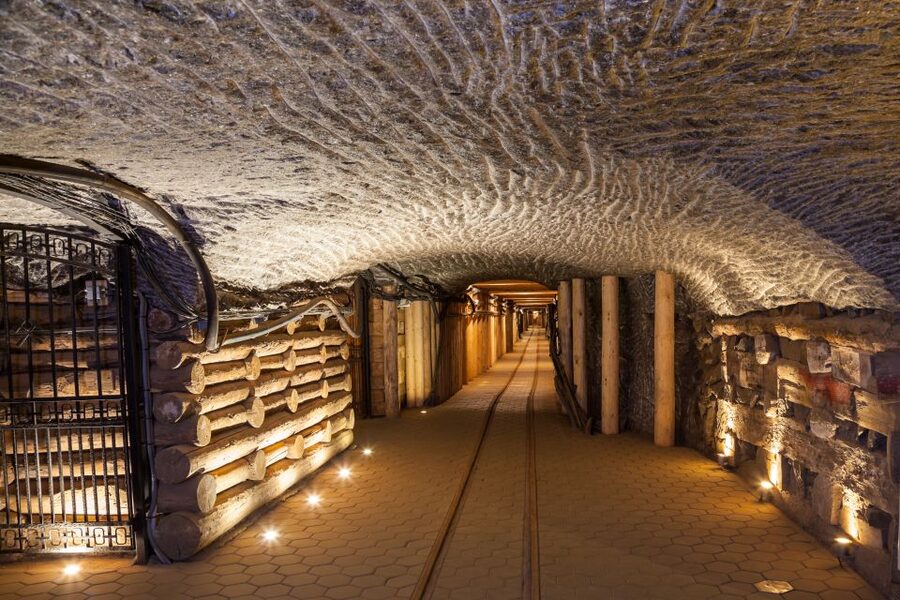
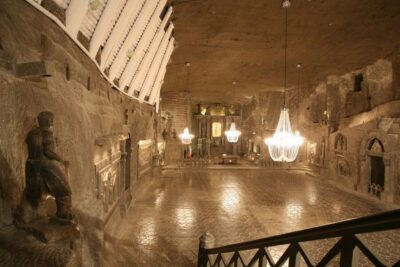
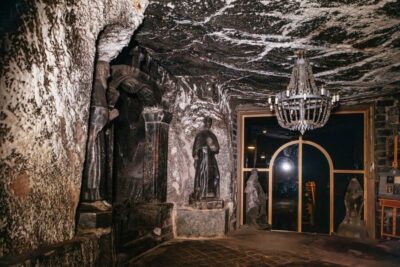
The most memorable part for many people is the art. Salt workers created sculptures, chapels, altars, and church interiors from the material around them.
The salt is not the bright white crystal many people picture. Natural rock salt here appears in shades of gray, closer to coarse granite. That subdued color gives the chambers a rugged feel, while the carved details provide the visual surprise.
You will follow the guide through underground chambers and religious spaces rather than wandering independently. That structure keeps the group moving and helps explain what you are seeing, though it also means you have limited control over how long you pause in each room.
One important point is the tour’s emphasis. The route focuses strongly on salt mining and the mine itself. If your main interest is underground art and cathedrals, you may find that the explanations give more attention to extraction, tunnels, and the work of miners than to every sculpture or chapel.
I see that as a strength if you want context. The carved interiors make more sense when you understand that they were created inside an active salt mine, not designed as a separate art museum. It can feel less satisfying if you hoped for a quiet, art-centered visit.
A few more Wieliczka trips worth weighing up
- Wieliczka: Salt Mine Entrance and Guided Tour Ticket
★ 3.7 · 77 reviews - Krakow to Auschwitz Birkenau Guided Tour with Transfer and Ticket
★ 5.0 · 8,197 reviews - Krakow: Wieliczka Salt Mine Fast-Track Ticket & Guided Tour
★ 4.5 · 5,872 reviews - Auschwitz Birkenau Guided Tour with Ticket Hotel Pickup Small Van
★ 5.0 · 4,769 reviews
Why the underground scale matters
The public route gives you only a small part of the entire mine. The complex reaches 327 meters below the surface and extends through about 287 kilometers of horizontal corridors and chambers.
You will not walk all of that, of course. The guided route covers more than 2.5 kilometers, enough to make the mine feel like a real underground world rather than a single decorated room.
I like this contrast between the manageable tour and the huge hidden network beyond it. The 150-minute visit gives you a strong sense of scale without asking you to spend an entire day below ground.
The route can become slow at busy points. One group found itself waiting behind a much larger group moving through the stations at a slow pace. That may reduce the time available for looking closely at the rooms, and it can make the tour feel less smooth.
You should also expect a set route rather than an open-ended exploration. The guide’s job is to keep the group with the museum schedule, so do not count on stopping wherever you wish.
The guide can shape the whole visit
The museum guide is central to the experience. A professional English-speaking guide can turn a long underground walk into a clear story about mining, salt, religious spaces, and the mine’s unusual construction.
The strongest feedback has focused on guide professionalism and the beauty of the site. One guide named Paulina was described as businesslike rather than warm, but the tour still provided useful information. That style may suit you if you prefer efficient explanations and a firm pace.
Guide quality can vary. One visitor found the guide’s speech so quiet and monotone that much of it was hard to understand, even after asking for the microphone to be used. That is a real concern, because you cannot easily absorb the details of the rooms if you cannot hear the commentary.
If your guide speaks too softly, ask early rather than waiting until the end. Underground acoustics, group noise, and the size of the chambers can all make clear speech important.
The site itself earns much of the praise. Even a less engaging presentation cannot erase the odd pleasure of walking through salt-carved interiors and seeing a mine transformed into a place of worship and public art.
Returning in the original miners’ elevator
After the long route, you return to the surface by elevator. It is the original type of lift used by miners, which gives the final stage a practical connection to the mine’s working past.
This is not presented as a luxury ride. Think of it as a functional part of the visit and a fitting end to the descent. By this point, many people will be ready to stop walking, so the lift provides welcome relief after the stairs and 2.5-kilometer route.
The return also helps keep the visit within the advertised time. You do not retrace the entire descent on foot, but you should still allow up to three hours for the overall sightseeing process.
There may be little time for lingering after the tour. One person wanted to browse the gift shop, but the guide insisted on returning to the starting area right away. If you want souvenirs, ask about the available time before the group begins its final return.
Is $67 a fair price?
At $67 per person, this is not the cheapest attraction in the Krakow area. The fee covers the fast-track entrance ticket, booking fee, assistance from a local tour leader, and the museum’s licensed guide.
The value depends on how much help you want. If you are comfortable finding the entrance, handling ticket arrangements, and joining a museum group on your own, you may prefer a simpler admission option. If you want help at the meeting point and want to avoid the regular ticket line, the package is easier.
The guide is the main reason to pay for this format. The mine is large, the route is complicated, and the underground spaces benefit from explanation. A poor delivery can reduce that value, but a strong guide adds useful context to rooms that might otherwise become a long series of gray corridors and carved walls.
Transportation is not included. You need to reach the museum yourself, and parking is also extra. Food and drinks are not included, so plan those separately rather than expecting a full-day excursion with meals.
The price looks most reasonable for a first visit to Wieliczka when you value structure, skip-the-line entry, and English commentary. It looks less attractive if you want complete freedom, a slow photography stop, or a guaranteed start time.
Timing, cancellation, and practical planning
You choose a preferred start time when booking, but that time is not guaranteed. The exact starting time may be sent the day before, so check your messages and email before setting out.
That uncertainty is the most important planning issue. I would avoid scheduling a train, airport transfer, or another timed sight immediately afterward. The route can run close to three hours, and delays at the meeting point or underground stations can stretch the day.
Cancellation is flexible up to 24 hours before the activity, with a full refund. You can also reserve now and pay later, which helps if your Krakow schedule is still changing.
Bring comfortable shoes. Do not bring oversize luggage or a stroller. Smoking is forbidden, including in any vehicle connected with the activity, and alcohol and drugs are not allowed.
Who should book this underground visit?
I would recommend it to you if you enjoy unusual historic sites, long walking routes, industrial spaces, religious art, and places that feel unlike ordinary museums.
It works especially well for people who want a guided introduction to the mine rather than trying to understand the route alone. The fast-track entry and meeting-point assistance are useful when you want a simpler arrival.
You should think twice if stairs are difficult, if you dislike cool enclosed spaces, or if you need a highly flexible schedule. The physical demands are clear, and the start time may change with little notice.
Art lovers should also set the right expectation. You will see salt sculptures, churches, and altars, but the guide may focus just as much on the mining operation and the structure of the complex. That balance is part of the site’s identity.
Should you book the Wieliczka Salt Mine tour?
I would book this tour if you have room for a half-day style visit and want the mine explained in English. The salt-carved chapels, gray rock, underground lakes, working-mining details, and original miners’ elevator make this far more interesting than a standard museum stop.
I would not book it for a tightly planned day or if you need a guaranteed start time. Leave plenty of space around the tour, arrive early at the UNESCO sign, and prepare for 800 steps.
At $67, you are paying for convenience as much as admission. For many first-time visitors, that is a fair trade. Just remember that the site itself is the star, while the guide’s clarity and punctuality can shape how much you enjoy it.
FAQ
How long does the Wieliczka Salt Mine tour take?
The advertised duration is 150 minutes. The sightseeing process can take up to three hours, including the guided route and return to the surface.
How far underground does the tour go?
The tour reaches 135 meters below the surface. The full mine complex extends to 327 meters, but the guided visit covers only part of the overall site.
How many steps are involved?
There are around 800 steps on the way, with about 400 steps near the beginning of the descent.
What temperature is it underground?
The underground temperature ranges from 14 to 16 degrees Celsius. A light layer and comfortable shoes are sensible choices.
Is transportation to the salt mine included?
No. Transportation to and from the museum is not included, and any parking fee is also excluded.
Is the tour suitable for wheelchair users?
No. The tour is not suitable for wheelchair users or people with mobility impairments. Baby strollers and oversize luggage are not allowed.
Can I cancel the booking?
Yes. You can cancel up to 24 hours before the tour for a full refund. The activity also offers a reserve-now, pay-later option.
Just added around Wieliczka
- Kraków: Street Food and Historical Adventure★ 4.8 · 3 reviews
- Krakow: Schindler’s Factory, Jewish Ghetto & Salt Mine Tour★ 5.0 · 3 reviews
- From Krakow: Wine Tasting at Vineyard★ 3.6 · 3 reviews
- Krakow: Vistula River Cruise and Wieliczka Salt Mine Tour★ 4.6 · 3 reviews
- Winnica Wieliczka: Wine Tasting and Tour★ 5.0 · 4 reviews
- Krakow: River Cruise and Wieliczka Salt Mine Group Tour★ 3.9 · 5 reviews
- Kraków: Jewish Quarter, Auschwitz, And Salt Mine 3-Day Tour★ 4.8 · 5 reviews
- Krakow: Wieliczka Salt Mine Tour with Private Transfers★ 4.7 · 6 reviews
Wieliczka Salt Mine Tours, compared.

Wieliczka Salt Mine Guided Tour with Transport
Read our review →
Wieliczka Salt Mine Fast-Track Ticket & Guided Tour
Read our review →
Day Trip: Auschwitz-Birkenau and Wieliczka Salt Mine from Krakow
Read our review →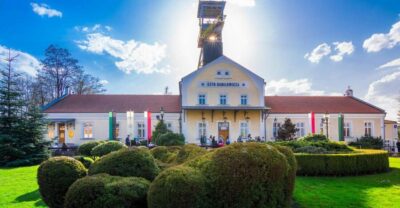
Wieliczka Salt Mine Tour & Skip the Line Ticket
Read our review →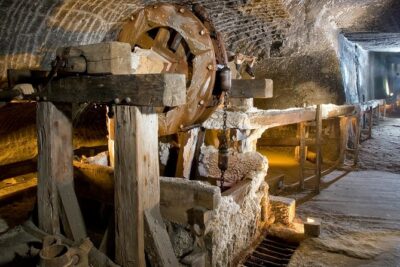
Krakow to Wieliczka: Salt Mine Guided Tour with Ticket & Transfer
Read our review →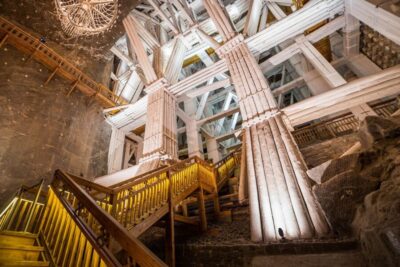
Auschwitz-Birkenau & Salt Mine Full-Day Guided Tour
Read our review →Browse the lists this tour appears in