
REVIEW · 2-HOUR EXPERIENCES
Wroclaw: 2-Hour Private Electric Bus Tour with Guide or Tape
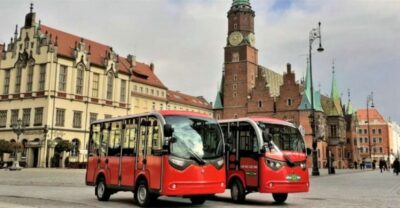
Wroclaw reveals itself from a quiet electric bus. This private two-hour ride gives you a comfortable way to see the city’s key sights, from Plac Solny and the White Stork Synagogue to Cathedral Island and Centennial Hall. You can listen to an audio guide in seven languages or hear live commentary in English or Polish from the driver-guide.
I like the private setting, since the bus is reserved for your group rather than packed with strangers. I also like the year-round comfort: heating in winter, air conditioning in summer, and warm blankets on cold days. The main drawback is that two hours gives you a broad introduction, not much time inside monuments. You will see many landmarks, but most stops are short photo stops or guided drive-bys.
In This Review
- Key points to know before booking
- Why an electric bus works well in Wroclaw
- Starting under the Old Town Hall
- From St. Elizabeth’s Church to the medieval market
- University of Wroclaw and the Fencer’s Fountain
- Following the Oder to Cathedral Island
- Centennial Hall, the Spire, and Wroclaw Fountain
- Returning through the National Museum and Shoe Bridge
- Guide commentary or audio guide
- Comfort in winter and summer
- Is $44 per person good value?
- Who should book this Wroclaw tour?
- Should you book it?
- FAQ
- How long does the electric bus tour last?
- Where does the tour begin?
- Where does the tour finish?
- Is the electric bus private?
- Can the tour pick me up at my hotel?
- Which languages are available?
- What sights are included?
- Is the bus heated or air-conditioned?
- Can I cancel for a full refund?
Key points to know before booking
- A private electric bus keeps the tour personal: The vehicle is only for your group, with a driver-guide or recorded commentary.
- The route covers Wroclaw’s biggest sights: You pass the Old Town, Jewish Quarter, University of Wroclaw, Cathedral Island, Centennial Hall, and the Opera House.
- Cathedral Island gets the longest historic stop: Plan on about 20 minutes for this atmospheric part of the city.
- Centennial Hall includes a useful pause: The stop lasts about 20 minutes and may include time for coffee or a beer.
- Hotel pickup is possible on request: The standard meeting point is beside Piwnica Swidnicka under the Old Town Hall.
- The tour works best as a first look: It helps you decide where to return later on foot, by boat, or for a longer museum visit.
Why an electric bus works well in Wroclaw
Wroclaw is spread across a large historic center, several bridges, the Oder River, Cathedral Island, and the Centennial Hall area. You can walk much of the Old Town, but reaching the farther sights takes time. This bus connects them without asking you to spend the whole afternoon marching between districts.
The quiet electric vehicle is also a sensible match for a city tour. You get a protected seat and a clear view while moving through central Wroclaw without adding exhaust to the streets. That will matter most if you are visiting in winter, traveling with older family members, or simply want to save your legs for later.
The private format is the bigger selling point. You do not have to adjust to a large group’s pace, and you can focus on the language option that suits you. The driver speaks English or Polish, while the audio guide is available in English, Polish, Spanish, French, German, Italian, and Russian.
The format is not designed for long, detailed visits inside each attraction. Think of it as a moving orientation tour with a few short pauses. I would use it at the start of a Wroclaw stay, then return to the places that catch your interest.
A few more Wrocław trips worth weighing up
- Wroclaw: 2-Hour Private Guided Tour by Electric Car
★ 4.8 · 805 reviews - Wroclaw: Private Old Town Guided Walking Tour (2 hours)
★ 4.8 · 275 reviews - Wroclaw: 2-Hour Tour by Electric Car with a driver-guide
★ 4.8 · 66 reviews
Starting under the Old Town Hall
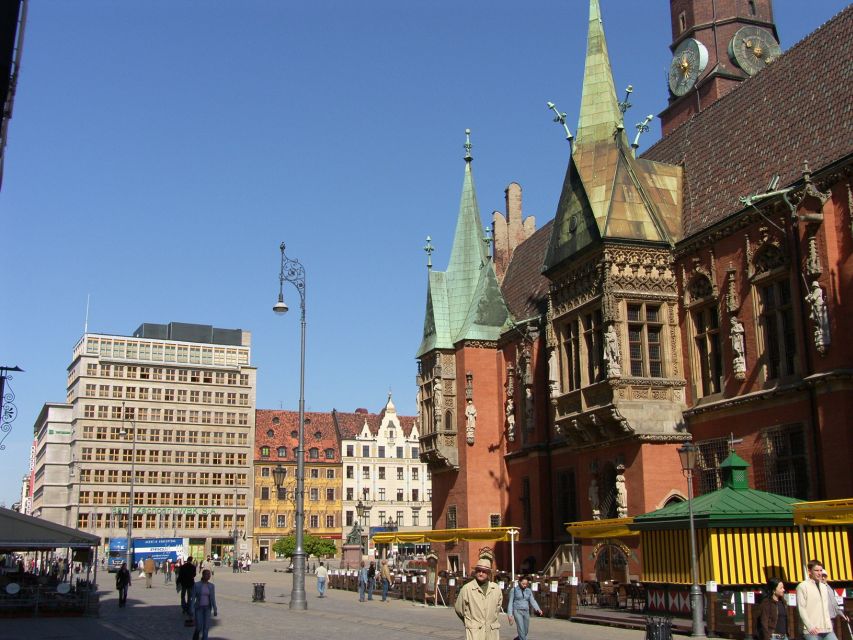
The meeting point is easy to identify: under the Old Town Hall, by the entrance to Piwnica Swidnicka at Ratusz 1. Look for the large wooden door with decorated writing. This is on the Market Square, so allow a little time to find the entrance if you are approaching from one of the surrounding lanes.
The tour begins around Plac Solny, one of Wroclaw’s main flower markets. The square is a useful first stop because it places you right in the historic core. You can also return here at the end for about 10 minutes of free time.
The route then introduces the Jewish Quarter and the White Stork Synagogue. The synagogue is one of the important Jewish landmarks in Wroclaw, and the stop is mainly for a photo and guided explanation. Since the schedule gives this part roughly 10 minutes, do not expect a full interior visit or a long walk around the district.
That short timing is typical of the whole experience. You get enough information to understand why a place matters, then the bus carries you onward. If a single site is your main reason for visiting Wroclaw, plan a separate visit.
From St. Elizabeth’s Church to the medieval market
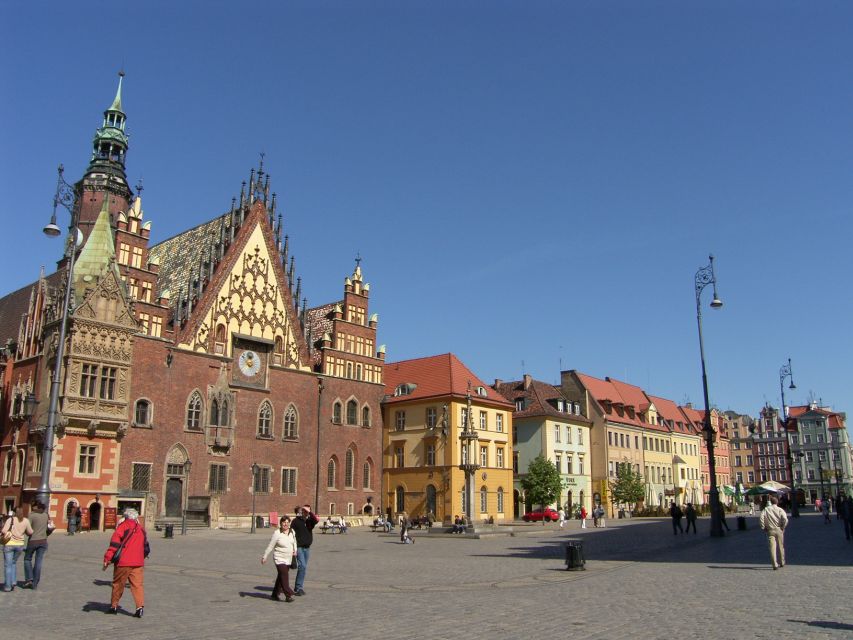
St. Elizabeth’s Church comes next, with around 10 minutes of guided attention or a drive-by. The church is close to the Market Square and helps frame the older city around you. This is also a good area for spotting Wroclaw’s famous small dwarf figures.
The dwarves are scattered around the city, so the bus tour gives you a chance to notice them without turning the whole outing into a dwarf hunt. Near St. Elizabeth’s, you also pass the medieval meat stalls and a copper animal statue. These small details add character to the route and keep the tour from becoming a parade of only grand buildings.
The Old Town Prison is another quick landmark along the way. You will hear about it as part of the city’s past, but the schedule does not leave time for a full visit. I like these brief references because they make the streets easier to read later, though anyone wanting detailed historical interpretation may find the pace brisk.
University of Wroclaw and the Fencer’s Fountain
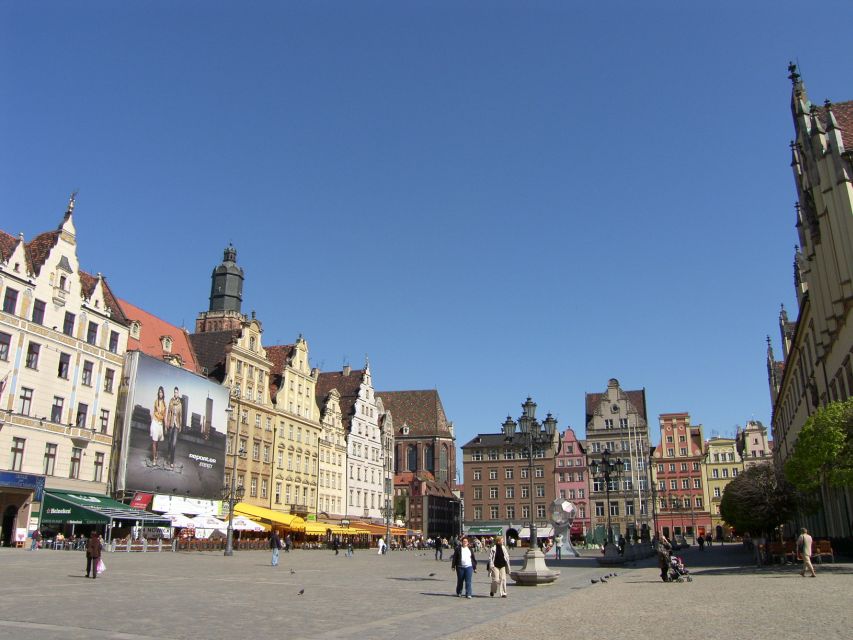
The University of Wroclaw receives about 10 minutes, including a photo stop and guided explanation. The building is one of the route’s more recognizable sights, and the nearby Fencer’s Fountain gives you a clear visual marker for the university area.
The tour also connects the building with Wroclaw’s student life. That context is useful because this is not just an old facade. The university helps explain the city’s academic identity and the steady flow of young people through the center.
Again, the bus provides an outside view rather than a full university tour. If you want to see the interior rooms, you will need to return independently. For a first orientation, the stop is well judged. You get the setting, a story, and a photo without losing too much time.
Before reaching the Red Cross Monastery, the guide explains more about students from Wroclaw. The recorded option may suit you if you prefer a steady presentation in your own language. The live guide is better if you want to ask questions or adjust the focus.
A completely different kind of day out in Wrocław:
- Wroclaw: E-Car Tour and Audio Guide
★ 4.6 · 1,738 reviews - Wrocław: Old Town and Ostrów Tumski Walking Tour in English
★ 4.8 · 311 reviews - Old Town Wrocław Walking Tour
★ 5.0 · 249 reviews - Wroclaw: City Tour Sightseeing By Golf Cart Shared Or Privat
★ 4.8 · 189 reviews
Following the Oder to Cathedral Island
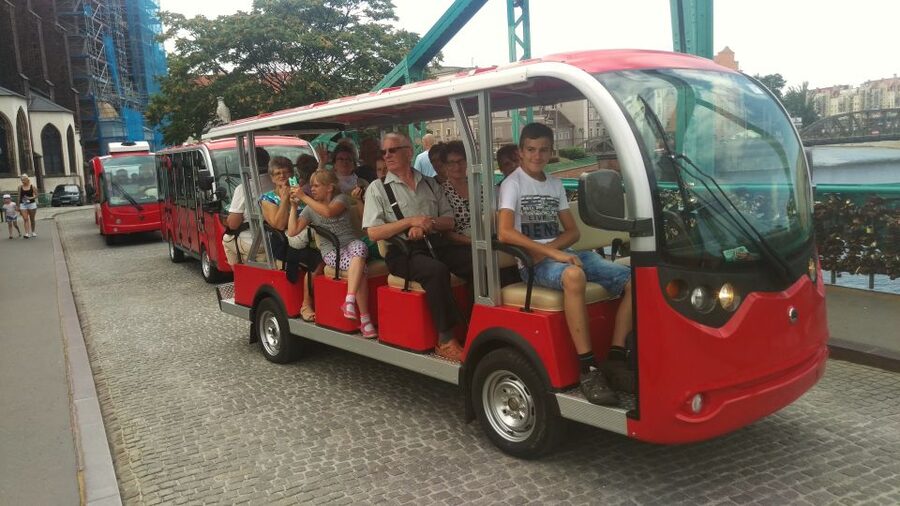
The Oder Promenade marks a change in mood. The route leaves the tight medieval streets and opens toward the river, where you can see why boat and gondola cruises are popular ways to view Wroclaw. The promenade is also a useful place to return for a slower walk.
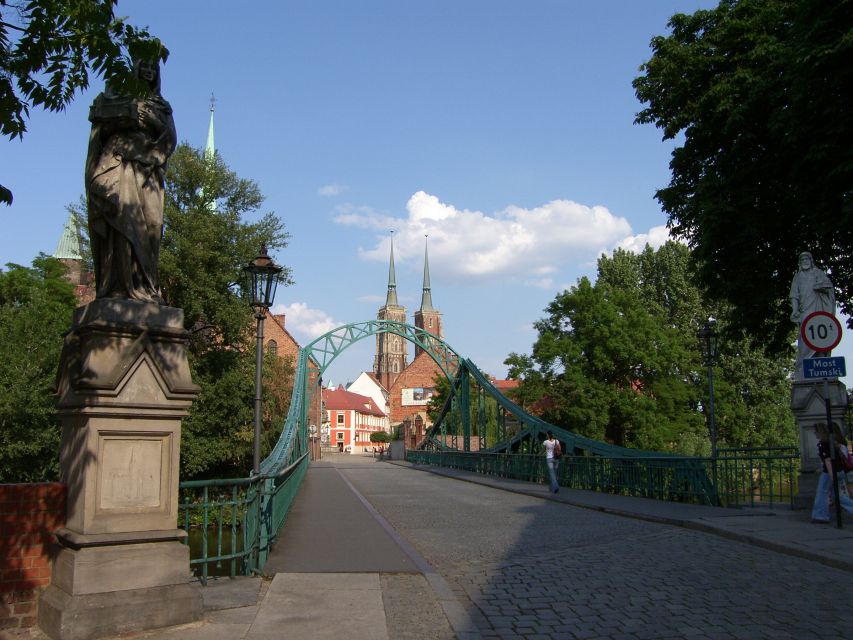
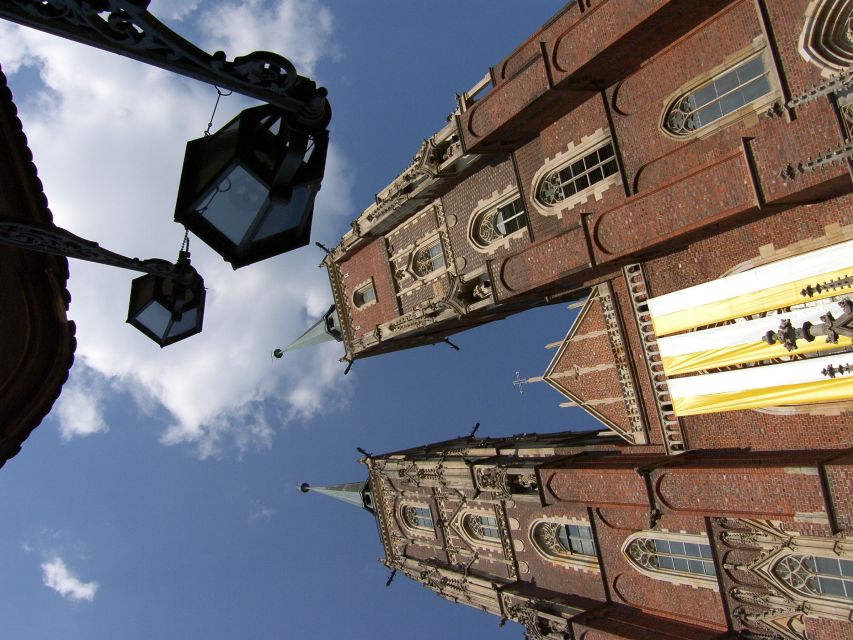
Cathedral Island, or Ostrow Tumski, is one of the tour’s main highlights and receives about 20 minutes for sightseeing, a photo stop, and guided commentary. This is where the city’s religious identity becomes most visible, with the Cathedral of St. John among the key sights.
The island is especially valuable as a contrast to the Market Square. Instead of commercial streets and civic buildings, you get a quieter group of churches, bridges, and river views. The bus lets you reach it without spending a large part of your two hours walking across the city.
Twenty minutes is enough to get your bearings and take photographs. It is not enough for a patient look inside every church. I would note what interests you, then return later on foot if you want more time with the cathedral or the surrounding streets.
As the bus crosses Lessing Bridge, look toward the Imperial Bridge and the Water Tower. These crossings give you another view of how the Oder shapes Wroclaw. You are seeing the city as a connected group of islands and riverbanks, not just as a compact old center.
Centennial Hall, the Spire, and Wroclaw Fountain
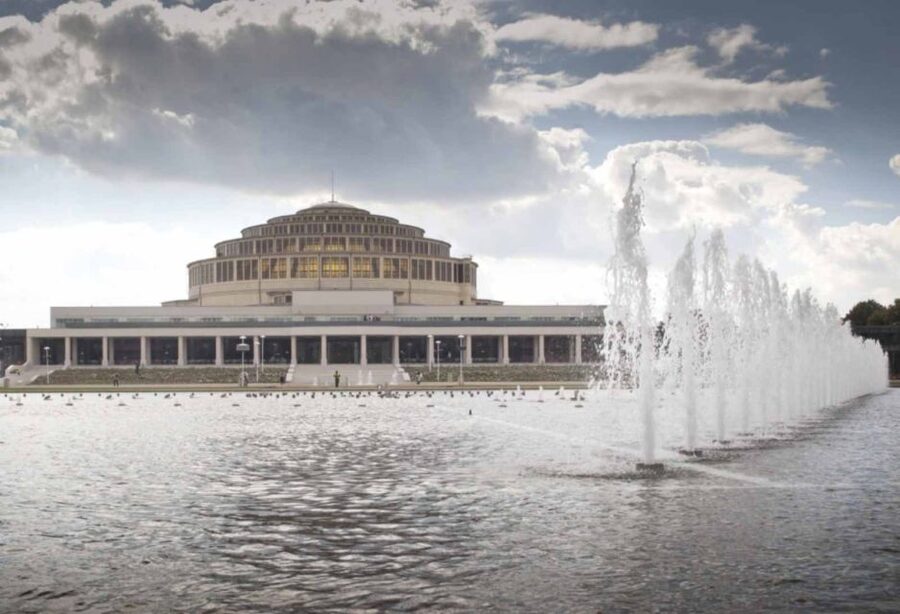
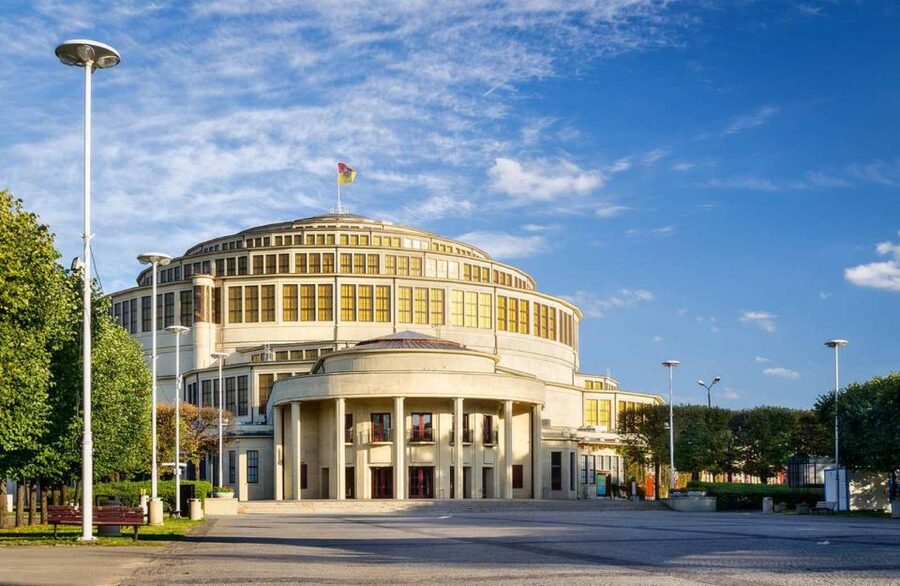
The route continues to the Spire and Centennial Hall, two of Wroclaw’s best-known modern landmarks. Centennial Hall is linked with the city’s UNESCO recognition, and the Spire makes the area easy to identify from a distance.
This stop lasts around 20 minutes and may include time for coffee or a beer. That small pause matters. Most city tours keep moving until everyone is tired, while this one gives you a chance to sit, refresh yourself, and take in the wider setting.
The Wroclaw Fountain is scheduled for a separate 10-minute visit. A multimedia fountain show is part of the experience, although the exact presentation can depend on the operating schedule. The tour description presents it as a relaxing stop, so you should expect a short look rather than a long event.
Centennial Hall and the fountain are outside the oldest part of Wroclaw. Reaching them by bus makes the route more practical than trying to squeeze them into a walking tour. The trade-off is that you will not have much time to explore the grounds or study the architecture from several angles.
Returning through the National Museum and Shoe Bridge
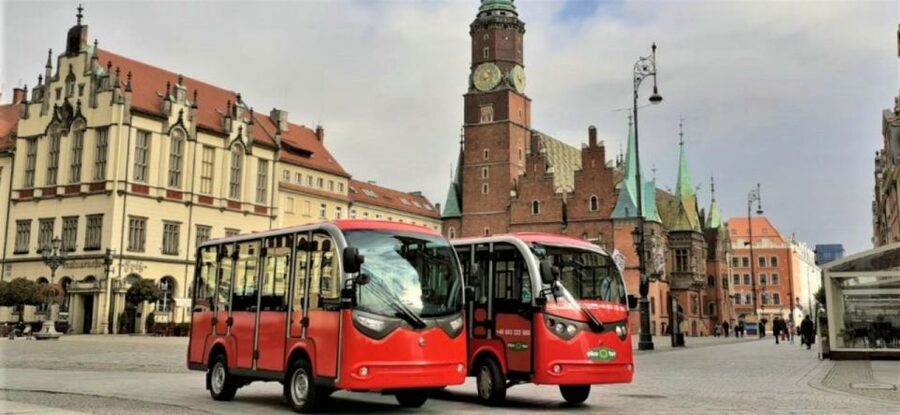
After the fountain, the route turns back toward the Oder Promenade. You pass the gondola bay and the National Museum before crossing the Shoe Bridge. These are useful visual links between the river district and the old center.
The Shoe Bridge leads toward St. Mary Magdalene Church. Here the commentary includes the legend of the poor sinner’s bell and the witches’ bridge. The story gives the final part of the route a bit of local color, and it is the sort of detail that can make an otherwise ordinary crossing memorable.
You then continue along Swidnicka Street toward the Wroclaw Opera House before returning to Piwnica Swidnicka. This ending is convenient because you finish where you began, right in the center and close to restaurants, cafes, and the Market Square.
The final 10 minutes at Plac Solny provide a little free time. You can use it to take more photographs, look at the flower stalls, or simply continue exploring without the vehicle.
Guide commentary or audio guide
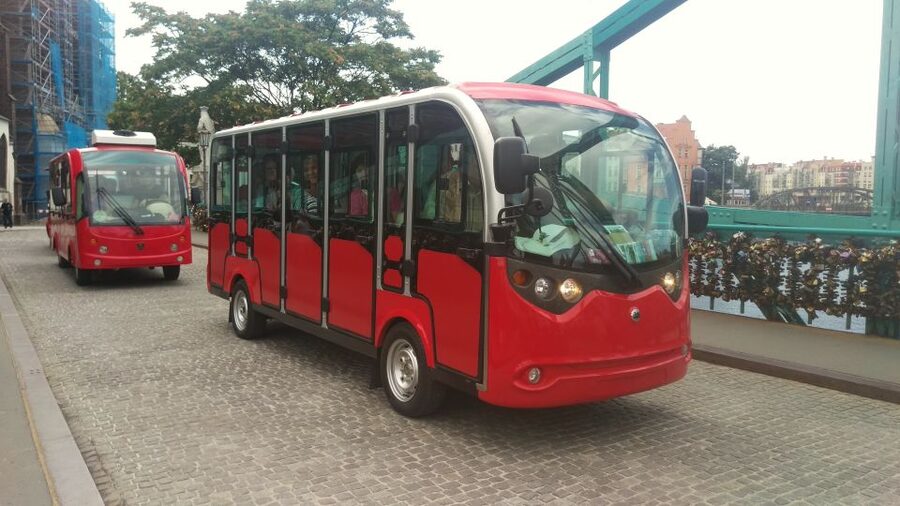
You choose between a live driver-guide in English or Polish and a recorded guide in your selected language. The audio options are English, Polish, Spanish, French, German, Italian, and Russian.
I would choose the live guide if you understand English or Polish and want local suggestions. A September 2024 tour was extended from two hours to three, with the guide offering many useful insider tips. The guide’s name was not recorded, but the extra hour suggests that the private format can sometimes allow more flexibility than the published schedule.
The live option can also make the ride feel more personal. You can ask for clarification and perhaps spend more time on a place that interests you. Still, no specific guarantee promises an extended tour, so treat that three-hour outing as a pleasant possibility rather than part of the standard deal.
The audio guide is the safer choice for language comfort. It lets you follow the information without relying on a driver’s accent or pace. The cost is that you lose the chance for spontaneous questions.
Comfort in winter and summer
The electric bus is heated during winter and air-conditioned in summer. Warm blankets are available on cold days. These details are more important than they first sound, since the route includes short pauses and views through the windows rather than constant walking.
You should still dress for the weather at the outdoor stops. Heating inside the bus does not make Cathedral Island, Plac Solny, or the fountain area warm. The vehicle gives you a comfortable base between stops, not a replacement for a coat.
The private group setup also helps with comfort. You are not competing for window space with a large crowd, and your own group can stay together throughout the ride. The exact vehicle size is not given, so I would not book this expecting a limousine or a large sightseeing coach. It is best understood as a small private electric city vehicle.
Is $44 per person good value?
At $44 per person, the price is reasonable if you value privacy, door-to-door convenience, and coverage of distant sights. You are paying for a reserved electric vehicle, a driver-guide or audio guide, and a route that joins the Old Town with Cathedral Island and Centennial Hall in only two hours.
The value improves for a small group that would otherwise need several taxis or a private guide. Hotel pickup is available on request, which may save time and simplify the start, though you should arrange it in advance rather than assume it is automatic.
The price is less compelling if you are happy walking and only want to see the Market Square and nearby churches. Much of the central old town is walkable, and a self-guided visit costs less. This tour earns its fee through the private ride, the river crossings, the outlying Centennial Hall stop, and the language choice.
Free cancellation up to 24 hours before departure and reserve-now, pay-later booking add flexibility. The standard duration is two hours, and starting times depend on availability.
Who should book this Wroclaw tour?
I would recommend it to first-time visitors who want a clear overview before choosing where to spend more time. It also suits families, couples, and small groups who want their own vehicle rather than a large coach.
The tour is a good fit if you have limited time in Wroclaw. In two hours, you cover the main historic core, the university district, Cathedral Island, the river, Centennial Hall, and the Opera House. That is a lot of ground without exhausting yourself.
It may also work well for anyone visiting in cold or hot weather. The heated and air-conditioned bus protects you between outdoor stops, and the blankets are a welcome touch in winter.
I would hesitate to recommend it as your only history experience in Wroclaw. The short stops leave little time for interiors, museums, or slow observation. Use it as an introduction, then return to St. Elizabeth’s Church, the White Stork Synagogue, Cathedral Island, or Centennial Hall if one deserves more attention.
Should you book it?
Book this tour if you want private transport, broad coverage, and comfort in a short window. The electric bus reaches places that are awkward to combine on foot, and the live or recorded commentary lets you choose between personal interaction and language control.
Skip it if your priority is long visits inside monuments or the lowest possible price. For most first visits, though, $44 per person buys a useful orientation, especially for a group that wants hotel pickup or a relaxed ride through Wroclaw’s historic center.
FAQ
How long does the electric bus tour last?
The scheduled tour lasts two hours. One recorded outing ran for three hours, but the standard duration is two hours.
Where does the tour begin?
It begins under the Old Town Hall on the Market Square, beside the entrance to Piwnica Swidnicka at Ratusz 1, 50-029 Wroclaw.
Where does the tour finish?
The tour returns to Piwnica Swidnicka, the starting point.
Is the electric bus private?
Yes. The electric vehicle is reserved only for your group, making this a private group tour.
Can the tour pick me up at my hotel?
Yes, hotel pickup is available on request.
Which languages are available?
The driver-guide speaks English or Polish. The audio guide is available in Spanish, English, French, German, Italian, Russian, and Polish.
What sights are included?
The route includes Plac Solny, the Jewish Quarter, the White Stork Synagogue, St. Elizabeth’s Church, Wroclaw’s dwarves, the Old Town Prison, the University of Wroclaw, the Oder Promenade, Cathedral Island, St. John’s Cathedral, Centennial Hall, the Spire, Wroclaw Fountain, the National Museum, Shoe Bridge, St. Mary Magdalene Church, Swidnicka Street, and the Wroclaw Opera House.
Is the bus heated or air-conditioned?
Yes. It is heated in winter and air-conditioned in summer. Warm blankets are available on cold days.
Can I cancel for a full refund?
Yes. You can cancel up to 24 hours before the tour for a full refund.
Just added around Wrocław
- Wrocław: Following the dwarfs’. See the city differently! 2h★ 4.4 · 3 reviews
- Wroclaw to Rock City in Adsprach and Church of Peace in Świdnica Private Tour★ 5.0 · 3 reviews
- From Wroclaw: Full-Day Stolowe Mountains Trekking Tour★ 3.9 · 3 reviews
- Wroclaw: Skip the Line Panorama Raclawicka and Ostrow Tumski Guided Tour★ 4.5 · 3 reviews
- Wrocław: Polish Craft Beer Walking Tour with Tastings★ 4.1 · 3 reviews
- Segway Tour Wroclaw: Ostrów Tumski Tour – 1,5-Hours of Magic!★ 5.0 · 3 reviews
- Private Transfer from Wroclaw (WRO) Airport to Wroclaw city centre★ 5.0 · 3 reviews
- Wrocław: Ostrów Tumski and Old Town Highlights Private Tour★ 5.0 · 3 reviews
2-Hour Experiences, compared.

Private Old Town Guided Walking Tour (2 hours)
Read our review →
2H City Sightseeing Tour LIVE GUIDED by Buggy/Golf cart
Read our review →
2-Hour Tour by Electric Car with a driver-guide
Read our review →Browse the lists this tour appears in