
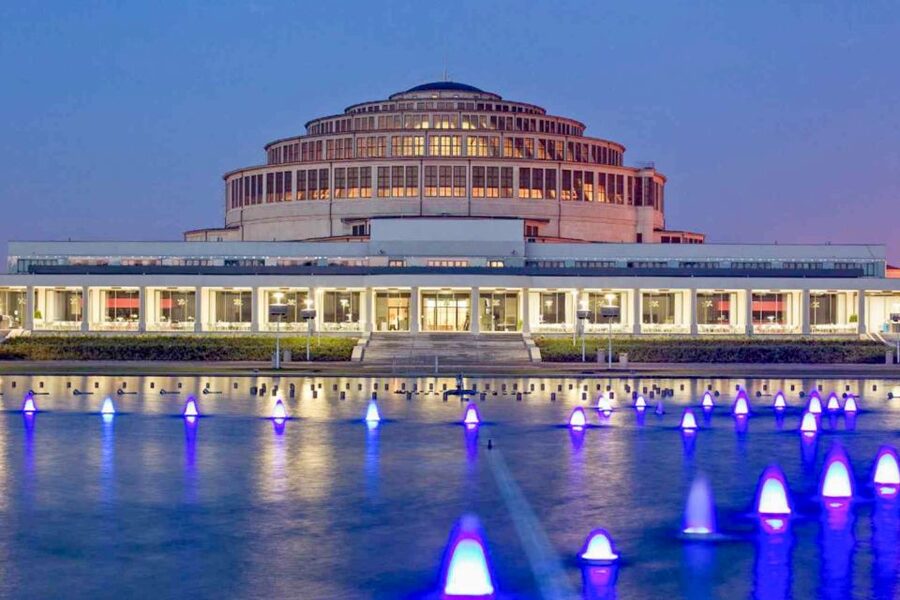
REVIEW · WROCłAW TOURS
Wrocław Centennial Hall and Surroundings Private Tour UNESCO
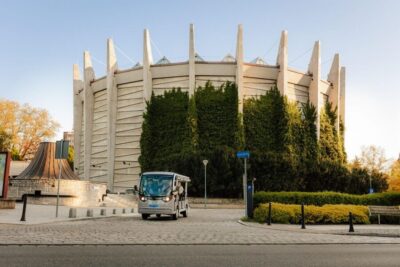
A concrete dome tells Wrocław’s modern story. This private tour pairs the UNESCO-listed Centennial Hall with the Japanese Garden, pergola, fountain, and Four Domes Pavilion, giving you a useful look at the city’s 20th-century architecture in just two hours. I especially like the private guide, since you can ask questions as you go, and the chance to add a boat ride back toward the old town.
The main caution is simple: check opening conditions before you book. Centennial Hall can close for concerts or other events, and the Japanese Garden closes seasonally. When both are unavailable, the tour loses much of its appeal, even though the guide may adapt the route.
In This Review
- Key points to know before you go
- Why Centennial Hall matters in Wrocław
- The opening view: Iglica and the hall entrance
- Four Domes Pavilion and WuWa 1929
- Pergola, fountain, and the best summer views
- Japanese Garden: a calm change of pace
- Inside Centennial Hall and the Cognitive Center
- How the private format affects the experience
- Adding the boat ride or the zoo
- Price, extra fees, and overall value
- Best seasons and useful planning tips
- Who should book this Centennial Hall tour?
- Should you book it?
- FAQ
- Where does the tour begin?
- How long does the tour last?
- What languages are available?
- Is this a private tour?
- Is the Centennial Hall museum included?
- Is the Japanese Garden entrance included?
- Can Centennial Hall be closed during the tour?
- Can I add a boat trip to the old town?
Key points to know before you go
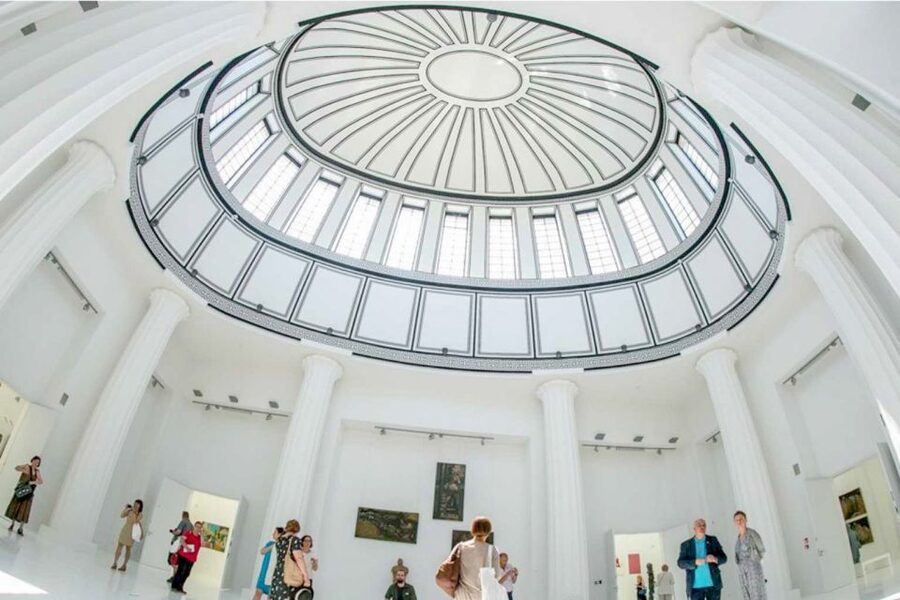
- Centennial Hall is the star: See one of Europe’s major early concrete structures, named a UNESCO World Heritage Site in 2006.
- The tour mixes architecture and gardens: The Japanese Garden, pergola, Wrocław Fountain, and Four Domes Pavilion break up the museum visit.
- A private guide adds flexibility: Your group has a licensed guide rather than joining a large shared party.
- The best outdoor details are seasonal: Water features are most enjoyable in summer, while the Japanese Garden may be closed outside its operating season.
- Budget for entrance tickets: The multimedia Centennial Hall museum costs 8 EUR, and the Japanese Garden costs 8 EUR.
- A boat return is optional: On request, you can go from the nearby pier by boat toward Wrocław’s old town.
Why Centennial Hall matters in Wrocław

Centennial Hall, once called Hala Ludowa in Polish and Jahrhunderthalle in German, is not a pretty old building in the usual European sense. Its appeal comes from scale, engineering, and the boldness of its design.
The huge concrete dome was a major feat when the hall opened in the early 20th century. Even from outside, the structure feels unusually large and spare. You are looking at a building designed to make a public statement, not a palace meant to impress with carved stone.
I find the site especially useful for understanding Wrocław’s layered identity. The German name reflects the city’s pre-1945 past, while the Polish name reflects the period after the Second World War. Today, the UNESCO designation gives the building a place in the wider story of modern architecture.
The tour begins at the big main entrance. That makes the meeting point easy to identify, but give yourself enough time to reach the hall across the broad grounds. Your guide will lead you through the complex and explain how the different structures relate to one another.
A few more Wrocław trips worth weighing up
- Wroclaw: E-Car Tour and Audio Guide
★ 4.6 · 1,738 reviews - Wroclaw: 2-Hour Private Guided Tour by Electric Car
★ 4.8 · 805 reviews - Wrocław: Old Town and Ostrów Tumski Walking Tour in English
★ 4.8 · 311 reviews
The opening view: Iglica and the hall entrance
Near the entrance, you will see Iglica, the tall needle-like sculpture associated with the Centennial Hall grounds. It is a quick stop, listed at about 10 minutes, but it helps you get oriented before the tour moves on.
This is not a long monument visit. The value lies in seeing how Iglica contrasts with the low, heavy form of the hall. One points sharply upward, while the other spreads outward in a broad dome.
The guide can also set the political and architectural context here. Since the tour is private, you can ask for more detail about the building, the former names, or the UNESCO status instead of waiting for a standard script to finish.
Four Domes Pavilion and WuWa 1929

The Four Domes Pavilion provides a different architectural experience. Its separate pavilions relate to the 1929 exhibition known as WuWa, a major display of modern housing and design.
The stop is planned for about 10 minutes, so expect an introduction and exterior viewing rather than a long museum session. The pavilion adds an important point: the Centennial Hall complex was not only about one giant dome. It was part of a wider effort to show new ideas in architecture, urban planning, and daily life.
This stop will suit you if you enjoy modern architecture and design. If your main interest is medieval Wrocław, it may feel less immediately exciting. That is not a flaw in the site, but it is worth knowing before you spend limited time here.
Pergola, fountain, and the best summer views
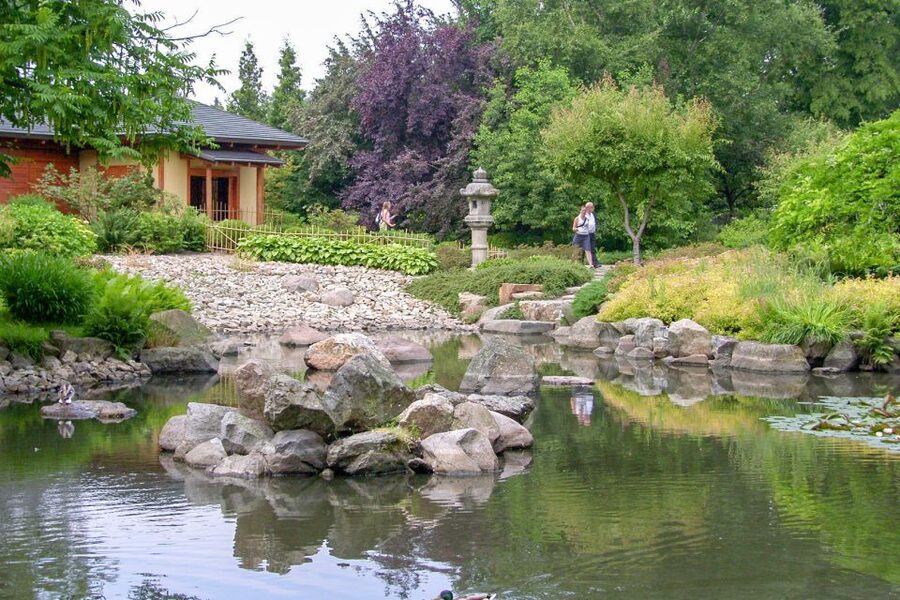
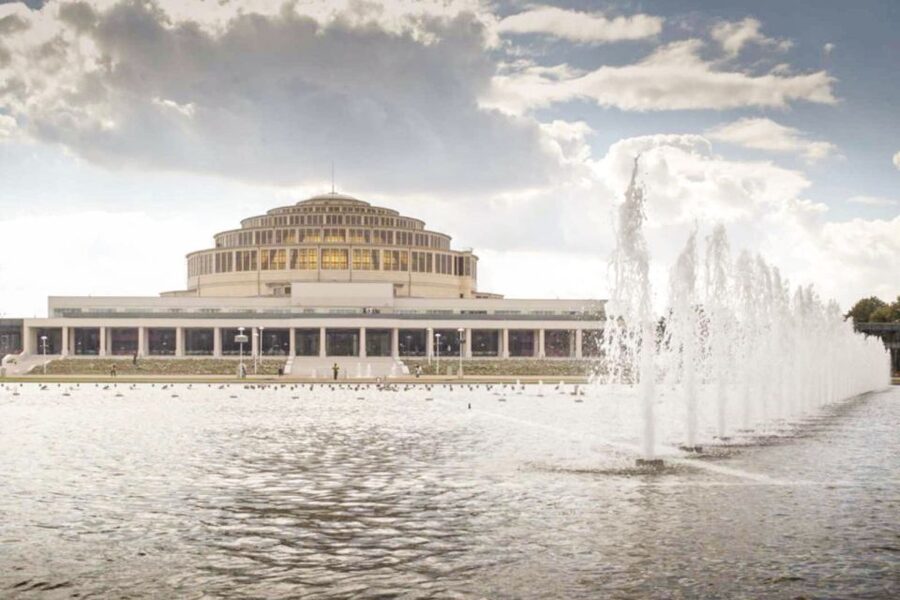
The pergola is one of the most pleasant parts of the grounds. Its long colonnade frames the water features and gives you a more relaxed setting after the concrete scale of the hall.
In summer, multimedia water displays add movement and sound. The Wrocław Fountain is also part of the route, with sightseeing time listed at around 10 minutes. Concerts and fountain programs may make this stop more lively, but the schedule provided for the tour does not promise a particular performance.
I would plan this section as an outdoor break rather than a guaranteed show. Weather, season, and programming matter. The water features are most appealing during warm months, while a cold or wet day can make the open grounds feel less inviting.
There is also Restauracja Pergola, where you can stop for coffee, beer, dessert, street food, or a regional Polish meal. The restaurant has a view toward the water features, which makes it a sensible place to pause instead of treating lunch as a separate city stop.
The planned restaurant break is about 15 minutes. That is enough for a quick drink or small bite, but not necessarily a leisurely meal. If you want a full Polish lunch, ask the guide how the timing can be adjusted.
A completely different kind of day out in Wrocław:
- Wroclaw: Private Old Town Guided Walking Tour (2 hours)
★ 4.8 · 275 reviews - Old Town Wrocław Walking Tour
★ 5.0 · 249 reviews - Wroclaw: City Tour Sightseeing By Golf Cart Shared Or Privat
★ 4.8 · 189 reviews - Auschwitz-Birkenau Tour from Wrocław
★ 5.0 · 129 reviews
Japanese Garden: a calm change of pace
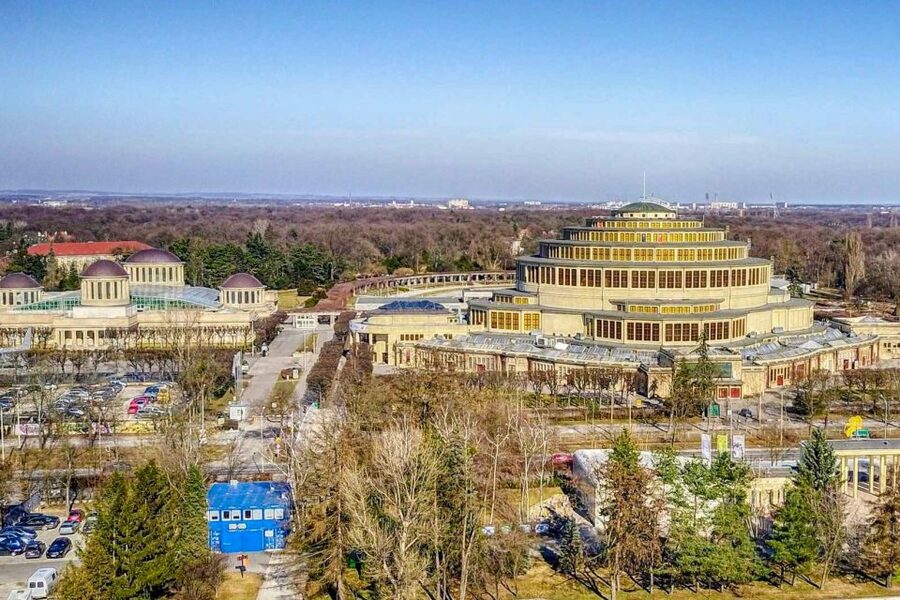
The Japanese Garden is the most obvious contrast with Centennial Hall. After broad concrete surfaces and large exhibition buildings, the garden offers a quieter route with water, plants, paths, and carefully arranged views.
The visit is scheduled for about 30 minutes, making it the longest outdoor stop. That should give you enough time to walk through at a measured pace and take photographs, though you will not have unlimited time for a slow garden visit.
The key practical issue is opening season. The Japanese Garden may already be closed in late autumn or winter. A November visit, for example, was affected by the garden’s closure. If the garden matters to you, confirm its operating dates before paying for the tour.
The entrance fee is not part of the tour price. Expect to pay 8 EUR per person. That extra charge is reasonable if you value designed gardens, but it changes the total cost. For two people, the tour price plus both the garden and museum tickets can become a noticeably larger expense than the advertised per-person rate suggests.
Inside Centennial Hall and the Cognitive Center
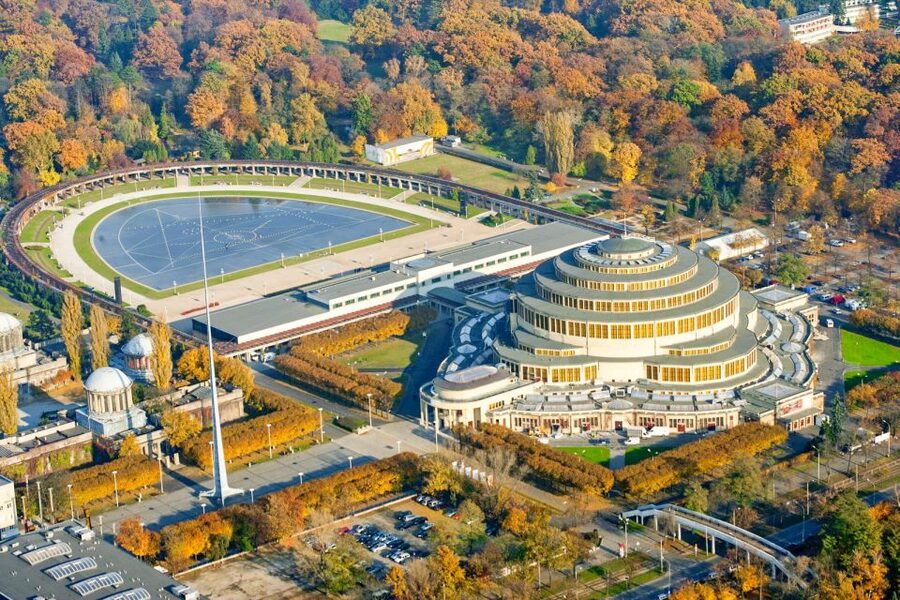
The main indoor choice is the Centennial Hall itself and its Cognitive Center, called Centrum Poznawcze Hali Stulecia. The museum uses multimedia displays to explain the building and its design, so it can help you understand what you are seeing rather than simply admiring a large dome.
The museum entrance costs 8 EUR per person and is separate from the guide price. I think this is the most useful add-on if the hall is open but you want more than a quick look at the interior.
The hall interior may close because of an entertainment event or concert. The museum, however, is expected to remain open even when the main hall cannot be visited. This distinction matters. You might still receive a worthwhile architectural explanation, but you will not get the full experience of standing inside the main dome.
A renovation that caused difficulty during 2019 to 2022 was completed in 2023. That is good news for current planning, but it does not remove the risk of temporary event closures. Ask specifically about interior access, not only whether the grounds are open.
The planned time for the hall portion is about 45 minutes. That is enough for a focused explanation, an interior visit when available, and time at the multimedia exhibition. The schedule also includes several outdoor stops, so the guide will need to keep the group moving.
How the private format affects the experience
A private group is the strongest reason to choose this outing instead of simply visiting the complex alone. You have a professional licensed guide assigned only to your party, and the route can be explained at a pace that suits your interests.
I would use the private format actively. Ask about the hall’s former German and Polish names, the UNESCO decision, the 1929 exhibition, and the role of modern concrete in the building’s design. If your group prefers gardens to architecture, say so early.
The listed timing adds up to more than a strict two-hour visit if every stop receives its full stated duration. That suggests the schedule is best understood as an outline rather than a minute-by-minute promise. Some stops are pass-by views, and the guide may shorten or adjust them.
The guide languages are Polish and German. If you need English, this particular experience may not be the right fit based on the stated language options.
The private arrangement also helped on at least one winter visit, when the guide added a small city tour because low temperatures made the planned outdoor time harder. That kind of adjustment is useful, but it should not be treated as a guaranteed extra route.
Adding the boat ride or the zoo
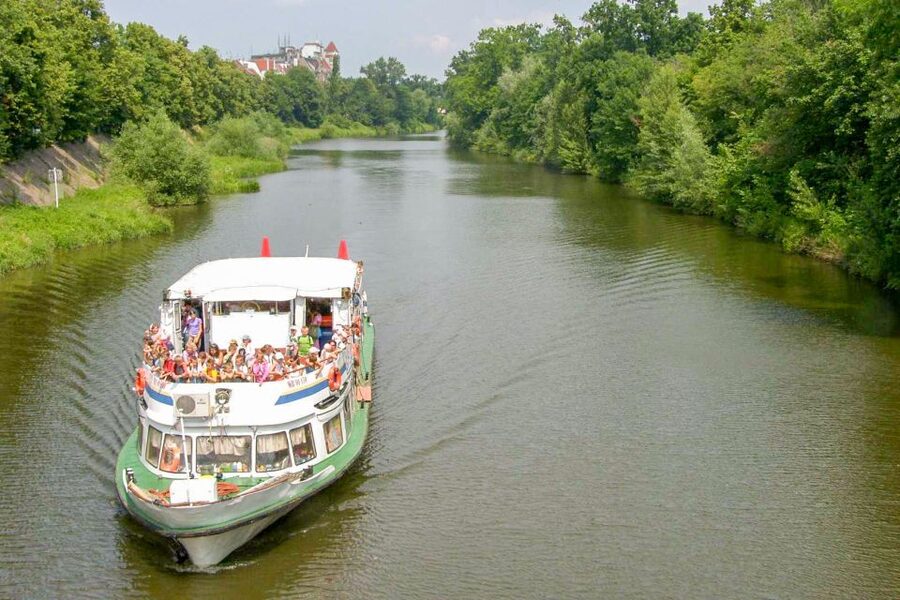
At the end, you can walk to the pier and return by boat toward the old town, if arranged in advance. This is a pleasant way to connect the Centennial Hall area with central Wrocław, but the boat ride is not listed as included in the tour price.
Ask about it before the tour begins. The wording allows the group to go independently to the pier, so you should not assume the guide will escort you for the entire boat journey or that a ticket is covered.
Another option is to continue toward the zoo and its Afrikanarium. This is useful if you are building a full day around the eastern side of Wrocław. The zoo visit is not part of the two-hour tour, so plan it as a separate activity.
The official end point is back at Centennial Hall, although the experience can also finish at the restaurant. If you choose the boat, your own schedule continues beyond the formal end of the guided visit.
Price, extra fees, and overall value
At $40 per person, this is a fair price for a two-hour private tour with a licensed guide, especially for a small group that wants explanation rather than a self-guided walk.
The value depends heavily on what you add. The museum costs 8 EUR per person, and the Japanese Garden costs another 8 EUR per person. The restaurant, boat trip, and zoo are additional personal expenses.
For someone interested in architecture, the price is easier to justify. You are paying for a guide who can connect the hall, Iglica, Four Domes Pavilion, WuWa 1929, and the surrounding grounds into one story.
For a casual visitor who only wants to see the exterior, the cost is less compelling. The complex can be viewed outdoors, and a private guide may feel unnecessary if you do not plan to ask questions or enter the museum.
I would also be cautious about booking around major events. A previous closure caused serious disappointment when the hall could not be entered and the garden was also unavailable. The safer approach is to confirm both access points shortly before your date and ask what replacement plan applies if they close.
Best seasons and useful planning tips
Summer offers the strongest version of this route. The water features are active, the pergola is more inviting, and the Japanese Garden is more likely to be open. You can also make better use of the restaurant terrace or waterside setting.
Winter can still work if you care mainly about the hall and museum. Outdoor stops may be brief, and the guide may adjust the route in response to cold weather. The Japanese Garden is the biggest seasonal concern.
I would allow extra time around the two-hour tour if you plan to eat, visit the zoo, or take the boat. The schedule moves through several stops, and the restaurant break is short.
Book only when you are comfortable with the stated language options. The guide service is available in Polish or German, and no other language is specified.
Free cancellation is available up to 24 hours before the start time, with a full refund. You can also reserve and pay later, which is helpful while you are still fixing your Wrocław plans.
Who should book this Centennial Hall tour?
I would recommend it to:
- Architecture fans who want context for a major modern building.
- Small groups that prefer a private guide and flexible questions.
- Visitors combining the hall with the Japanese Garden and Four Domes Pavilion.
- German-speaking visitors who want a guided explanation in German.
- People planning a longer day around the zoo, Afrikanarium, or a boat ride into central Wrocław.
I would hesitate if your date falls outside the Japanese Garden season, or if you mainly want to enter the hall itself but cannot confirm that it will be open. I would also skip it if you need an English-language guide.
Should you book it?
Book this tour if you want the full Centennial Hall area, not just a photograph of the dome. The private format, museum option, Japanese Garden, pergola, and architecture-focused route offer good value for a curious small group.
Before paying, confirm three points: interior access to Centennial Hall, opening hours for the Japanese Garden, and the language of your guide. If all three work for your date, this is a smart way to see one of Wrocław’s most unusual UNESCO sites. If the hall and garden are both closed, choose another day or expect a much thinner experience.
FAQ
Where does the tour begin?
The meeting point is the big main entrance to Centennial Hall.
How long does the tour last?
The stated duration is two hours. The route includes several short sightseeing stops, a restaurant break, and time at the hall.
What languages are available?
The live guide service is available in Polish and German.
Is this a private tour?
Yes. The guide is provided only for your group.
Is the Centennial Hall museum included?
No. The multimedia exhibition at the Cognitive Center costs 8 EUR per person.
Is the Japanese Garden entrance included?
No. Entry to the Japanese Garden costs 8 EUR per person.
Can Centennial Hall be closed during the tour?
Yes. The main hall may close because of an entertainment event or concert. The multimedia museum is expected to remain open, but you should confirm current access before visiting.
Can I add a boat trip to the old town?
Yes, a boat trip can be arranged on request. The group can go to the pier and return by ship toward the old town, but the boat ticket is not listed as included.
Just added around Wrocław
- Wrocław: Following the dwarfs’. See the city differently! 2h★ 4.4 · 3 reviews
- Wroclaw to Rock City in Adsprach and Church of Peace in Świdnica Private Tour★ 5.0 · 3 reviews
- Wroclaw: Skip the Line Panorama Raclawicka and Ostrow Tumski Guided Tour★ 4.5 · 3 reviews
- From Wroclaw: Full-Day Stolowe Mountains Trekking Tour★ 3.9 · 3 reviews
- Wrocław: Polish Craft Beer Walking Tour with Tastings★ 4.1 · 3 reviews
- Segway Tour Wroclaw: Ostrów Tumski Tour – 1,5-Hours of Magic!★ 5.0 · 3 reviews
- Private Transfer from Wroclaw (WRO) Airport to Wroclaw city centre★ 5.0 · 3 reviews
- Wrocław: Ostrów Tumski and Old Town Highlights Private Tour★ 5.0 · 3 reviews
Wrocław Tours, compared.

Old Town and Ostrów Tumski Walking Tour in English
Read our review →
Private Old Town Guided Walking Tour (2 hours)
Read our review →
City Tour Sightseeing By Golf Cart Shared Or Privat
Read our review →

Browse the lists this tour appears in