
REVIEW · OLD TOWN WALKING TOURS
Wroclaw Private Old Town Guided Walking Tour
Wroclaw rewards curious walkers. This three-hour private tour links the city’s oldest island, handsome bridges, baroque university rooms, and lively central squares into one easy-to-follow introduction. I especially like the focus on Ostrow Tumski and the city’s dwarves, two very different ways to understand Wroclaw. The main consideration is that entrance fees are not included, so you may need to pay separately if you enter the cathedral or Aula Leopoldinum.
The $15 price is appealing for a private guide, particularly if you are sharing the cost with family or friends. The route covers a lot, and the guide can answer questions in English, German, Polish, Spanish, French, Italian, Portuguese, or Russian. The tour has earned a perfect rating from eight bookings, with praise for personal attention, clear answers, stories, legends, and professional guiding. One German-language review specifically praised Hr. Cencora, though your guide may be someone else.
In This Review
- Key points before you book
- Starting beside the cathedral on Ostrow Tumski
- Crossing the Oder by Wroclaw’s bridges
- Inside Wroclaw University and Aula Leopoldinum
- Walking the cobbled streets toward Market Square
- Salt Square and Wroclaw’s small bronze residents
- What the private format is worth at $15
- The kind of guide experience you can expect
- Who should book this Wroclaw walk
- Should you book the Wroclaw private walking tour?
- FAQ
- How long is the Wroclaw private walking tour?
- Where does the tour meet?
- Is the tour private?
- Which languages are available?
- Are entrance fees included?
- Can I cancel for a full refund?
Key points before you book
- Ostrow Tumski starts the story: Begin at the Cathedral of St. John the Baptist on Wroclaw’s oldest part.
- Bridges shape the route: Cross the Oder and see why Wroclaw is sometimes compared with Venice, Amsterdam, St. Petersburg, and Hamburg.
- Aula Leopoldinum requires extra planning: The university’s baroque hall is a highlight, but entrance fees are not included.
- Market Square is the grand finale: The late Gothic town hall, colorful houses, cafes, and Salt Square bring the city center together.
- Dwarf hunting adds a playful touch: Look closely around doorways, corners, and alleyways for Wroclaw’s small bronze characters.
- Private means personal: You can ask questions, adjust the conversation, and learn what to see after the tour ends.
Starting beside the cathedral on Ostrow Tumski
Your guide meets you by the main entrance of the Cathedral of St. John the Baptist on Ostrow Tumski. Be ready on time, since this is a walking tour with a fixed three-hour length rather than a casual drop-in stroll.
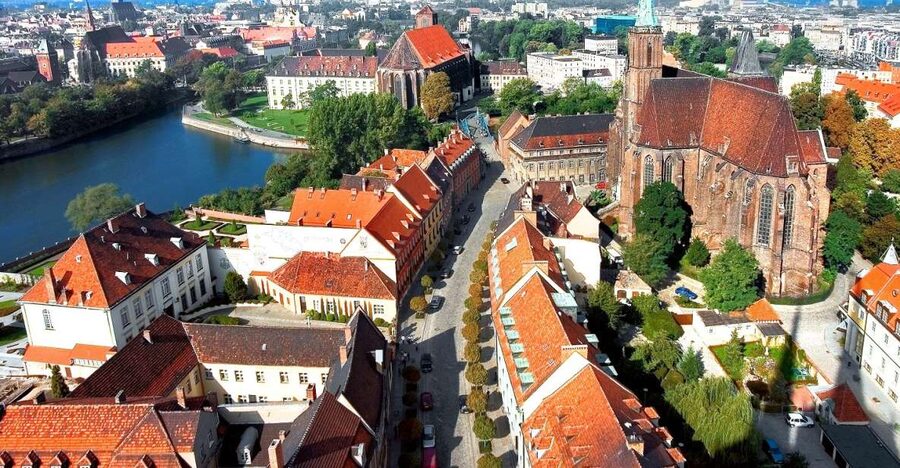
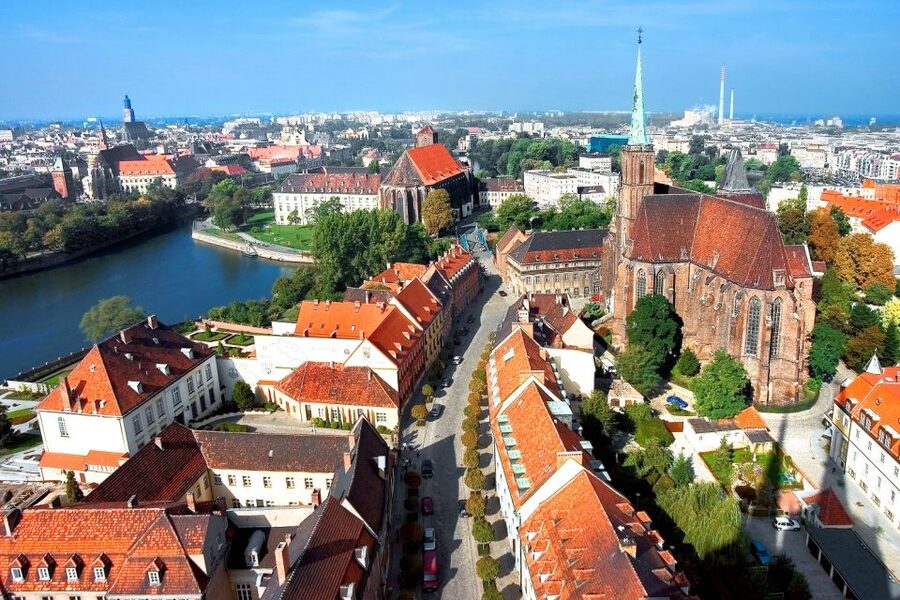
Ostrow Tumski, often called Cathedral Island, is the oldest part of Wroclaw. The cathedral’s twin towers rise sharply above the island and give the opening stop real drama. The building dates to the 13th century, and its position helps explain how Wroclaw first developed around the Oder River.
I like beginning here because the tour starts with place, not just a list of monuments. Your guide can connect the cathedral and island to the wider story of Wroclaw, a city shaped by Polish, Bohemian, Austrian, Prussian, and German rule before becoming part of Poland again in 1945.
That history matters as you walk. Wroclaw is not a city with one simple identity. Its architecture and public spaces reflect several political eras, and the guide’s job is to help you read those changes without turning the walk into a lecture.
The cathedral visit is listed as part of the route, but entrance fees are not included. If you want to go inside, confirm the cost and opening conditions with your guide. Even from outside, the towers and island setting make this a strong first stop.
More Old Town Walking Tours in Wrocław
- Wrocław: Old Town and Ostrów Tumski Walking Tour in English
★ 4.8 · 311 reviews - Wroclaw: Private Old Town Guided Walking Tour (2 hours)
★ 4.8 · 275 reviews - Old Town Wrocław Walking Tour
★ 5.0 · 249 reviews
Crossing the Oder by Wroclaw’s bridges
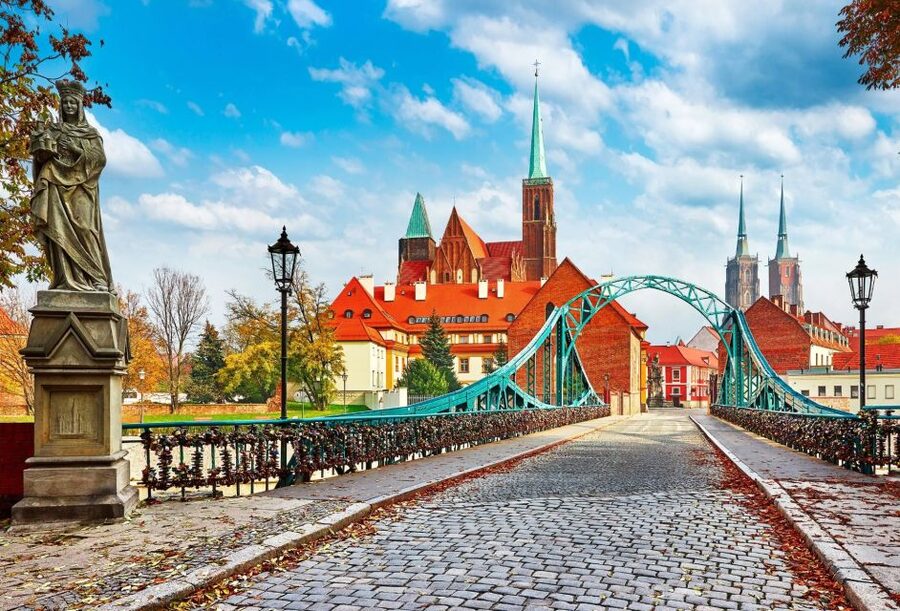
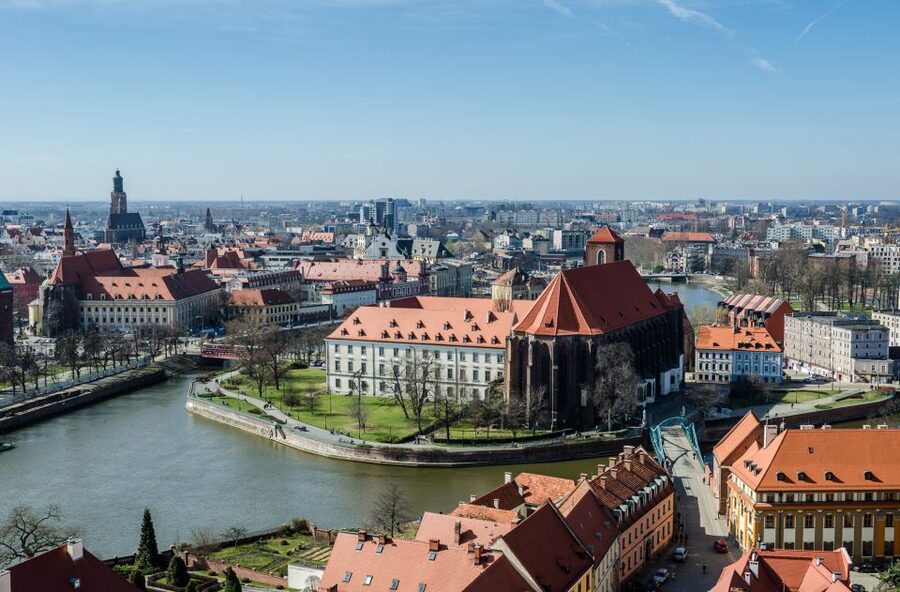
From Ostrow Tumski, you cross a bridge over the Oder toward the Old Town. This is more than a change of scenery. The river is one of the main forces behind Wroclaw’s character, dividing and connecting the city at the same time.
Wroclaw has more than 100 road bridges and footbridges. Only Venice, Amsterdam, St. Petersburg, and Hamburg are identified as having more. You do not need to count them to appreciate the point: water and crossings are part of daily city life here.
The bridge section gives you a pleasant change from church interiors and historical explanations. You get open views, moving water, and a sense of how the city’s separate areas fit together. The route is still urban, but it does not feel like a march from one indoor sight to another.
This is also one reason comfortable shoes matter. The tour covers medieval cobblestones and several central streets, and the pace has to balance sightseeing with covering the route. Bad weather can affect the mood. A Polish-language review noted that the weather was poor, but praised the guide for staying professional and mixing history with stories and legends.
Inside Wroclaw University and Aula Leopoldinum
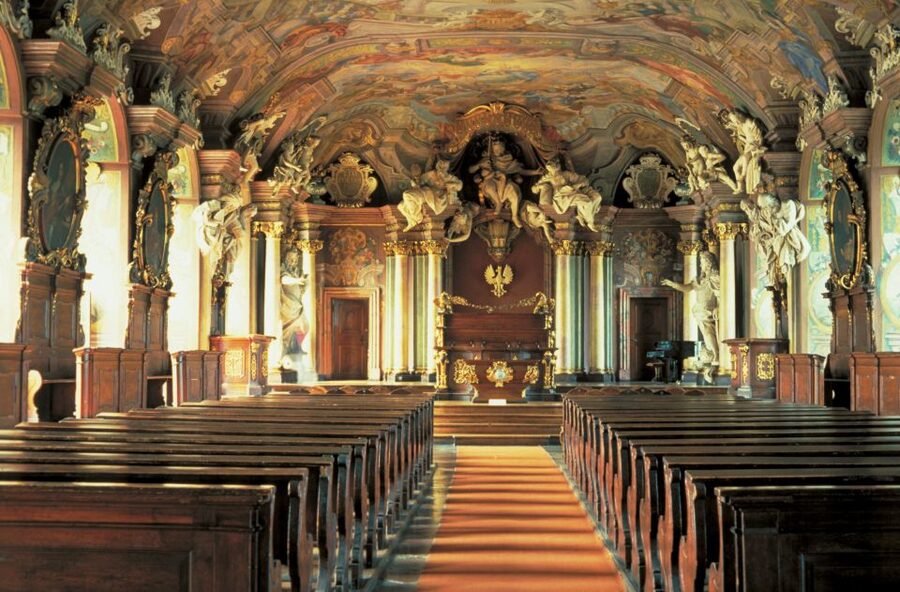
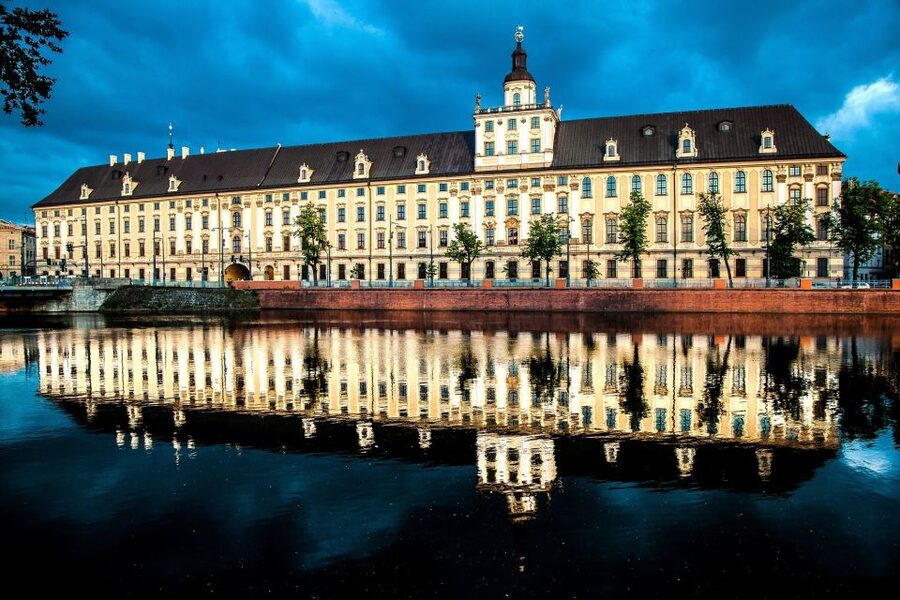
After crossing the river, the walk continues to Wroclaw University. The star attraction here is Aula Leopoldinum, a baroque hall designed by the Italian architect Christophorus Tausch.
This stop gives the tour a different visual note. Ostrow Tumski offers medieval religious architecture, while the university brings ornate academic style. The hall’s baroque design is one of the clearest reminders that Wroclaw’s cultural connections reached well beyond the region.
The guide can explain why the university matters and point out the hall’s artistic details. Since entrance fees are excluded, plan on paying separately if you want to enter. The tour description specifically highlights Aula Leopoldinum, but it does not promise a particular interior access arrangement, so it is sensible to confirm this on the day.
That small bit of planning is worthwhile. A private tour works best when you know which stops you most want to enter and which ones you are happy to admire from outside. You can ask about the hall before arriving and decide how to use your time.
Walking the cobbled streets toward Market Square
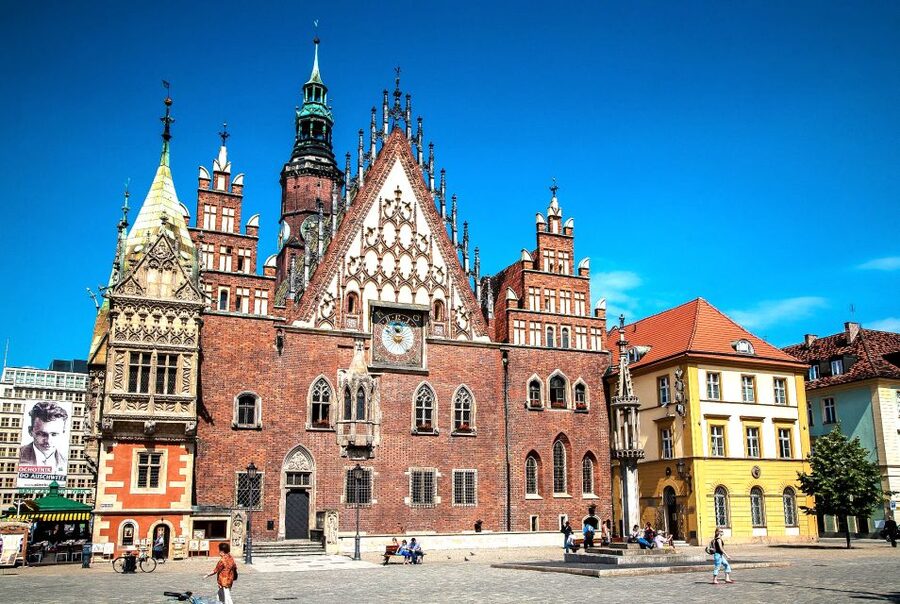
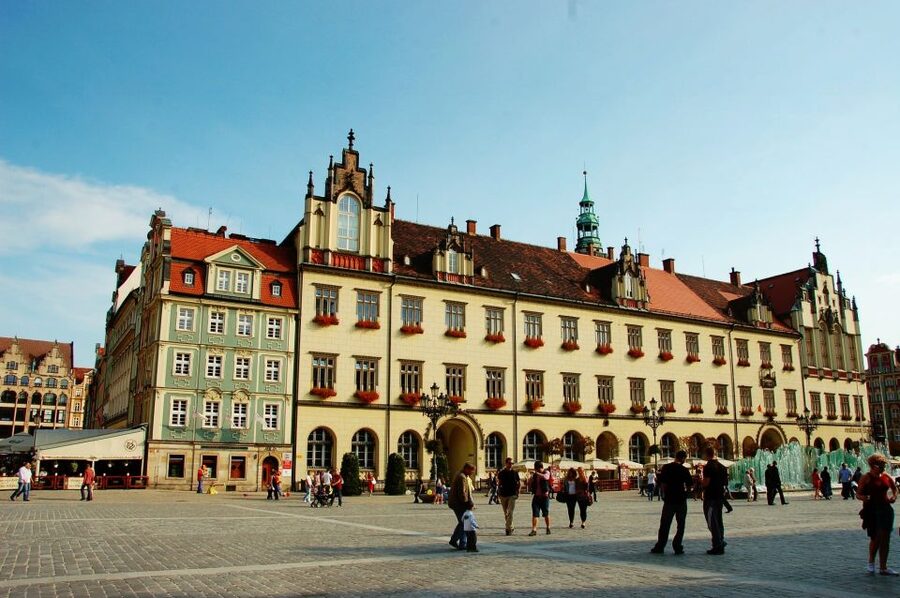
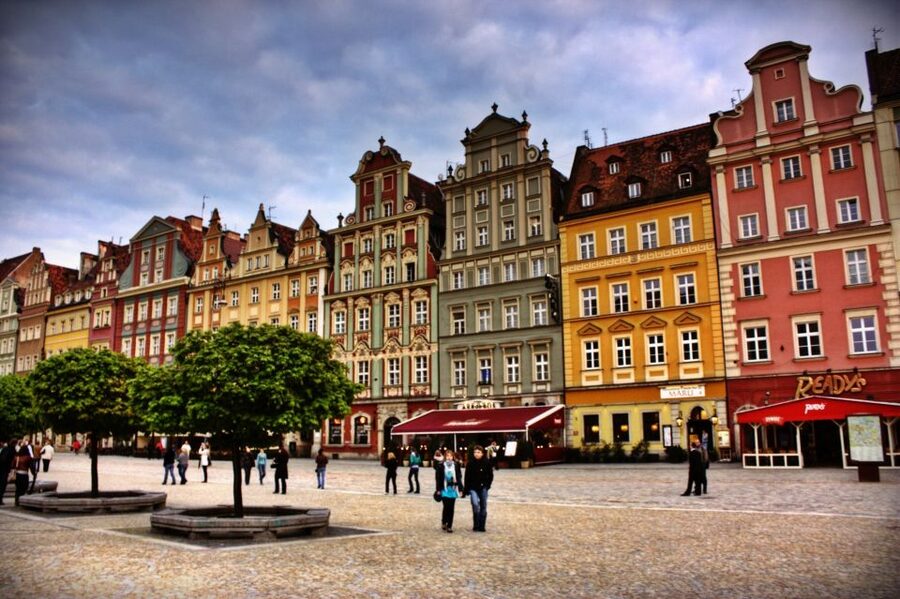
The route then follows medieval cobblestone streets toward the Market Square. This is where Wroclaw’s colorful tenement houses become the main event. Their varied facades create the feeling of a city built in layers rather than designed all at once.
Market Square is one of Europe’s largest. It serves as Wroclaw’s municipal and cultural center, with cafes, restaurants, concerts, performances, and public events. The square can be a busy place, but its size gives you room to look up and take in the surrounding buildings.
The huge late Gothic town hall dominates the square. Its tower includes a clock tower bell installed in 1368, described as the oldest clock tower bell in the city. Details like this are exactly where a guide earns the fee. Without context, you see an impressive building. With context, you begin to notice how old the civic center really is.
The town hall cellars are home to Piwnica Świdnicka, a restaurant dating to 1273 and described as one of Europe’s oldest. The restaurant is not included in the tour, and no meal is promised, but its location gives you another option for later. Ask your guide if it suits your plans after the walk.
I would not treat Market Square as only a quick photo stop. Give yourself a moment to look at the different house fronts, compare the colors and shapes, and notice how the square functions as a public room for the city. The guide’s explanation helps you see beyond the prettiest facade.
More Walking Tours in Wrocław
- Wroclaw Old Town Guided Walking Tour
★ 5.0 · 100 reviews - Group city tour (walking tour) through Wroclaw in German
★ 4.9 · 89 reviews - Wroclaw: Guided City Walk
★ 4.9 · 87 reviews - Wrocław: Long City Walk and River Cruise
★ 4.8 · 68 reviews
Salt Square and Wroclaw’s small bronze residents
Next comes neighboring Plac Solny, or Salt Square. It is known as the Flower Market, giving you a smaller and more intimate space after the broad Market Square.
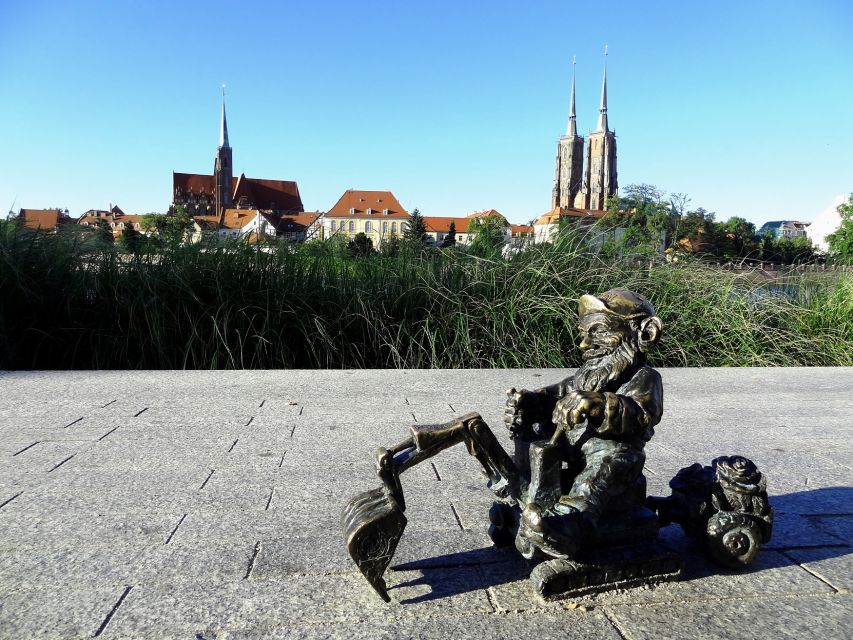
The most playful part of the tour is the dwarf hunt. Small dwarves appear around Wroclaw’s center, tucked beside doorways, along alleyways, and near street corners. They are easy to miss if you hurry, which makes the activity work well as a walking game.
You can take a selfie with one, but the better approach is to keep your eyes low and look carefully. The dwarves are not just one monument placed in a single location. They are scattered through the city, so the tour gives you a useful introduction to an attraction you can continue seeking after the guide leaves.
This is especially good for families, children, and anyone who enjoys small details. It also keeps the route from becoming too solemn. Wroclaw has serious historical subjects, but the dwarves add humor and give you a simple reason to explore side streets.
Do not expect the guide to show every dwarf in the city during three hours. The point is to learn how the hunt works and spot a few memorable examples. Your guide can also suggest what else to find on your own.
What the private format is worth at $15
At $15 per person, this is an unusually accessible way to get a private introduction to central Wroclaw. The value depends partly on group size. For one or two people, the total cost remains modest compared with many private city walks. For a larger private group, the per-person price becomes even more attractive.
The guide is the only included service. Cathedral, university, and other entrance fees are not included, so keep a little extra money available if you decide to enter a sight. The route itself is on foot, with no transportation included or needed.
The private format is more important than the low price. You can ask why Wroclaw changed hands so many times, request more detail about German or Polish history, or pause over architecture that interests you. Several highly positive comments emphasize this personal quality. One booking praised a tour tailored closely to the group, with every question answered. Another said the guide met the group’s requests and wishes.
Language choice also adds practical value. Tours are offered in English, German, Polish, Spanish, French, Italian, Portuguese, and Russian. Pick the language in which you can ask natural questions, not merely follow basic directions.
The schedule is three hours, and starting times depend on availability. That is enough time for a strong orientation but not enough for every museum or interior. I would use this as your first substantial look at Wroclaw, then return to the places you want to explore more slowly.
The kind of guide experience you can expect
The strongest pattern in the feedback is not one particular monument. It is the guide’s approach. Comments praise professional conduct, clear answers, personal adjustment, good customer focus, and storytelling that combines history with legends.
A German-language booking from 2023 singled out Hr. Cencora as a perfect city guide. Another praised an excellent tour, strong subject knowledge, and a good attitude toward the group. Those comments suggest a tour that is meant to respond to you rather than deliver a memorized speech without pause.
Still, guide quality can vary because the named guide is not guaranteed. The provider is PT Team, and several languages are available. If a specific language or guide matters to you, confirm it while booking.
The tour is best for someone who wants an introduction with human explanation. If you prefer to walk alone, stop for long photographs, or spend an hour inside one building, the three-hour route may feel structured. If you want the city’s main sights placed in context, the format should suit you well.
Who should book this Wroclaw walk
I would recommend this tour to first-time visitors who want to understand Wroclaw’s layout quickly. It brings together the cathedral island, river crossings, university, Market Square, Salt Square, and dwarves without requiring you to plan a route yourself.
It also suits couples, families, and small groups who want a private conversation rather than a large gathering. The dwarf hunt gives children something concrete to watch for, while the historical material gives adults a clear way to understand the city’s changing identity.
History fans will appreciate the mix of Polish, Bohemian, Austrian, Prussian, and German influences. Architecture fans get medieval, Gothic, and baroque highlights in one walk. Casual sightseers get colorful houses, bridges, cafes, and easy photo opportunities.
You may want something else if your priority is a long interior visit. The itinerary names the cathedral and Aula Leopoldinum, but admission is not included, and three hours must also cover the streets and squares between them. Treat the tour as a city orientation with selected highlights, not as a full museum program.
Free cancellation up to 24 hours before the start gives you some flexibility, and you can reserve now and pay later. Those terms are useful if your schedule is still shifting, but the key practical step is to arrive at the cathedral entrance on time with your guide’s meeting details ready.
Should you book the Wroclaw private walking tour?
Book it if you want a low-cost, private introduction to the city’s main center, especially if you value questions, stories, and local guidance. The route is well chosen: cathedral towers, bridges, a baroque university hall, colorful houses, a grand market square, and the city’s famous dwarves.
I would also book it early in your Wroclaw stay. The final advice from the guide can help you decide what to revisit, where to look for more dwarves, and which historic interiors deserve your time.
Skip it only if you want a slow, specialized architecture tour or guaranteed long visits inside every featured building. For most people, $15 per person is a fair price for three hours of private orientation, with the small extra cost of entrances clearly worth considering before you go.
FAQ
How long is the Wroclaw private walking tour?
The tour lasts three hours. Starting times depend on availability.
Where does the tour meet?
Your guide waits by the main entrance of the Cathedral of St. John the Baptist on Ostrow Tumski.
Is the tour private?
Yes. The activity is organized for a private group.
Which languages are available?
Guiding is available in French, Italian, Portuguese, Spanish, English, German, Polish, and Russian.
Are entrance fees included?
No. Entrance fees are not included in the $15 price per person.
Can I cancel for a full refund?
Yes. You can cancel up to 24 hours in advance for a full refund.
Just added around Wrocław
- Wrocław: Following the dwarfs’. See the city differently! 2h★ 4.4 · 3 reviews
- Wroclaw to Rock City in Adsprach and Church of Peace in Świdnica Private Tour★ 5.0 · 3 reviews
- Wroclaw: Skip the Line Panorama Raclawicka and Ostrow Tumski Guided Tour★ 4.5 · 3 reviews
- From Wroclaw: Full-Day Stolowe Mountains Trekking Tour★ 3.9 · 3 reviews
- Wrocław: Polish Craft Beer Walking Tour with Tastings★ 4.1 · 3 reviews
- Segway Tour Wroclaw: Ostrów Tumski Tour – 1,5-Hours of Magic!★ 5.0 · 3 reviews
- Private Transfer from Wroclaw (WRO) Airport to Wroclaw city centre★ 5.0 · 3 reviews
- Wrocław: Ostrów Tumski and Old Town Highlights Private Tour★ 5.0 · 3 reviews
Old Town Walking Tours, compared.




Bike Tour of Old Town, Jewish Quarter and the Ghetto
Read our review →

Sightseeing EcoCruise around the Old Town of Gdansk
Read our review →
Browse the lists this tour appears in