
REVIEW · WARSAW TOURS
13-Day Highlights of Poland Tour – private for 2-10 persons
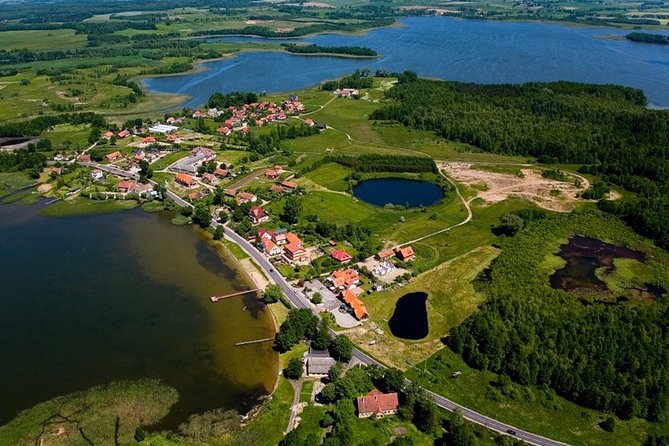
Poland rewards the curious and well organized. This 13-day private journey links Warsaw, Gdansk, Krakow, and the Tatra Mountains with castles, churches, museums, and country roads that are awkward to manage alone. I like the private vehicle and the broad mix of culture and nature. I also like that breakfasts, dinners, hotels, guides, attraction tickets, and airport transfers are handled for you.
The main drawback is the pace. You cover much of Poland, so several days include long drives and only a short visit in each place. At $5,350 per person, this is a serious investment, though the price includes far more than transport alone. You should also confirm the exact group size and meal count before paying, since the details refer to both private groups of 2 to 10 and a maximum of 15, while three evenings are described as being on your own.
In This Review
- Key points at a glance
- Why this Poland tour works for a first visit
- Warsaw begins with rebuilding and remembrance
- From Wolfs Lair to a castle bedroom
- The Elblag Canal and Malbork’s Teutonic fortress
- Gdansk, Westerplatte, and Sopot by the Baltic
- Torun and the world of Copernicus
- Biskupin, Gniezno, and Poland’s early beginnings
- Poznan and the Black Madonna at Jasna Gora
- Auschwitz-Birkenau requires time and attention
- Wadowice and the Dunajec Gorge
- Zakopane and the Tatra Mountains
- Wieliczka Salt Mine and Krakow’s wartime story
- Krakow finishes with royal tombs and market squares
- What the $5,350 price really covers
- Who should book this journey
- Final verdict: a wide-ranging route with a busy rhythm
- FAQ
- How long is the Poland tour?
- Where does the tour begin?
- Where does the tour end?
- Is this a private tour?
- What type of transportation is used?
- Are hotels included?
- Are meals included?
- Does the tour include attraction tickets?
Key points at a glance
- A full north-to-south route: Begin in Warsaw, reach the Baltic coast at Gdansk and Sopot, then finish in Krakow after visiting southern Poland.
- A castle night in Warmia: Sleep in the restored 14th-century Bishops’ Castle at Lidzbark Warminski.
- History at full weight: Visit the Warsaw Uprising Monument, Wolfs Lair, Westerplatte, Malbork Castle, and Auschwitz-Birkenau.
- Poland beyond the major cities: Ride the Elblag Canal, raft through the Dunajec Gorge, and take the funicular to Gubalowka.
- Strong guiding support: The journey uses a main tour leader plus local specialists, including Grzegorz Brzostek and Witek, names associated with especially warm praise.
- A useful fit for first-time visitors: You avoid booking trains, hotels, restaurants, and entrance tickets across a large country.
Why this Poland tour works for a first visit
Poland is not a small country, and its best sights are spread widely. Warsaw lies in the center, Gdansk on the Baltic, Torun farther south along the Vistula, and Krakow near the mountains and former concentration camps. Planning all of that by rail and bus is possible, but it takes time and patience.
This tour removes much of that work. A private, air-conditioned vehicle carries you from city to city, while a tour leader keeps track of hotels, meal arrangements, local guides, and admissions. That is valuable if you want to focus on what you are seeing instead of studying Polish train schedules.
You should expect a busy trip rather than a slow one. The route includes 12 nights and 13 days, with most days combining sightseeing and a transfer. You will rarely have a whole day without a scheduled activity, but you will see far more of Poland than you would on a single-city visit.
The guide is central to the experience. Grzegorz Brzostek is praised for clear explanations and strong organization, while Witek is noted for his helpful manner, local knowledge, humor, and care with practical details. The exact guide assigned to your departure can vary, so ask when booking.
A few more Warsaw trips worth weighing up
- Warsaw: Chopin Concert in the Old Town
★ 4.8 · 2,287 reviews - Warsaw: Traditional Galar Cruise on The Vistula River
★ 4.6 · 1,640 reviews - Warsaw: Old Town Highlights Walking Tour in English
★ 4.7 · 1,516 reviews
Warsaw begins with rebuilding and remembrance
Your arrival transfer takes you from Frederic Chopin Airport to your Warsaw hotel. The first afternoon begins with a city tour, including the Old Town, Lazienki Park, the Warsaw Uprising Monument, and the Royal Castle.
Warsaw’s Old Town is especially important because the city was almost entirely destroyed during the Second World War and rebuilt afterward. The rebuilt facades and public squares are attractive, but the real lesson is the scale of the loss and the effort required to recreate the historic center.
Lazienki Park gives you a calmer start. You walk among gardens and see the monument to Frederic Chopin, Poland’s famous composer, along with the Palace on the Water. The Warsaw Uprising Monument offers a sharp change of mood, honoring the Polish resistance fighters who rose against German occupation in 1944.
The day ends with a welcome dinner in the Old Town. It is a smart opening: you meet the tour leader, begin learning the national story, and eat without having to find a restaurant after a long arrival day.
From Wolfs Lair to a castle bedroom
Day two is one of the longest driving days. The journey north toward Masuria takes about four and a half hours before you reach Wolfs Lair, one of Adolf Hitler’s wartime headquarters.
A local specialist leads the visit. The site is made up of heavy concrete bunkers hidden in a wooded setting, and the contrast between the quiet surroundings and the decisions made there is unsettling. This is not a quick photo stop. Allow the guide’s explanation to set the place in its wartime context.
Afterward, you continue to Lidzbark Warminski and check into the restored Bishops’ Castle, a 14th-century building. Sleeping in castle chambers is one of the tour’s most unusual touches. You also have time for the pool, sauna, bowling, or biking, though some activities cost extra.
This overnight stop adds character to a day that otherwise contains a lot of road time. If you dislike long transfers, you should know that Poland’s geography makes them unavoidable on a route this broad.
The Elblag Canal and Malbork’s Teutonic fortress
Day three pairs an inventive 19th-century engineering project with one of Poland’s great medieval monuments. At Buczyniec, you board a two-hour cruise on the Elblag Canal. The canal is known for its unusual system of land sections and inclined planes, which helps boats handle changes in elevation.
The ride gives you a slower morning after the previous day’s drive. It also shows a side of Poland that a standard city tour misses: water, farmland, and practical engineering rather than palaces and churches.
Then comes Malbork Castle, the largest castle in Poland and a major stronghold of the Teutonic Knights. Its walls, courtyards, towers, and defensive design make the visit worthwhile even if medieval military history is not your main interest. The scale can be hard to grasp from outside, so stay close to the guide’s explanation.
You finish in Gdansk, one of the most attractive cities on the Baltic. The transfer is efficient, but the day is full, so comfortable shoes will help.
A completely different kind of day out in Warsaw:
- Warsaw Concert: Chopin – Painted by Candlelights with Wine
★ 4.8 · 1,442 reviews - Warsaw: City Sightseeing Hop-On Hop-Off Bus Tour
★ 3.6 · 1,415 reviews - Warsaw: POLIN Museum of the History of Polish Jews Ticket
★ 4.7 · 1,142 reviews - #1 Pub Crawl Warsaw with Optional Premium 1 Hour Open Bar
★ 5.0 · 790 reviews
Gdansk, Westerplatte, and Sopot by the Baltic
Gdansk receives a full sightseeing day. You see the Basilica, Neptune Monument, the historic crane, the harbor, and the old center. Gdansk was shaped by trade and by its position on the Baltic, and its streets have a distinct maritime character.
The city also carries major 20th-century meaning. It was the birthplace of the Solidarity movement, which challenged communist rule in Poland. At Westerplatte, you visit the site associated with the beginning of the Second World War. The stop is brief, but it gives the larger conflict a specific location.
At Oliwa Cathedral, you can hear a concert on the baroque pipe organ. This is a welcome sensory change after several heavily historical sites. You then continue to Sopot, a resort town with the longest wooden pier in Europe, for a walk beside the Baltic Sea.
Dinner is on your own this evening. That gives you a little freedom, though you should budget for the meal and confirm how much free time you will have in Sopot or Gdansk.
Torun and the world of Copernicus
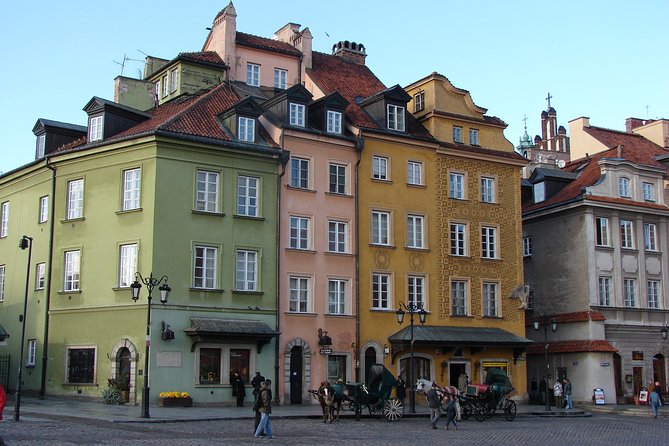
After breakfast, you drive to Torun, a beautiful city on the Vistula River. The guided walk includes the Old Town, City Hall, cathedral, and the House of Nicolas Copernicus Museum.
Copernicus changed the way people understood the universe, and seeing his family home adds a personal scale to an otherwise enormous scientific story. The museum visit lasts about an hour, while the city walk gives you time to appreciate Torun’s medieval setting.
This is a gentler day than the route through northern military sites. You dine and sleep in Torun, which keeps the visit from becoming a rushed stop between larger cities.
Biskupin, Gniezno, and Poland’s early beginnings
Day six looks farther back than the modern wartime sites. At Biskupin, an open-air archaeological museum presents a reconstruction of a settlement dating to about 750 BC. A guided visit helps explain how the settlement was built and used.
The reconstructed nature of the site makes it easier to picture ancient life, though you should remember that you are seeing a modern interpretation rather than untouched ruins. It is a worthwhile stop for anyone who enjoys archaeology or wants a break from churches and city squares.
In Gniezno, you visit the cathedral with a local guide. Gniezno was the historic first capital of Poland, and the cathedral connects the country’s early political and religious story. The day ends in Poznan, where you check into your hotel and have dinner.
Poznan and the Black Madonna at Jasna Gora
Poznan’s guided tour includes the impressive Town Hall and the Cathedral of St. Peter and Paul, described as Poland’s oldest cathedral and the burial place of early Polish rulers. The visit provides another look at the country’s beginnings, this time through a major urban center.
In the afternoon, you travel to Czestochowa. The Black Madonna at Jasna Gora Monastery is one of Poland’s most important religious icons, and the evening schedule may allow you to attend Mass.
You do not have a completely secular version of Poland here. Churches and pilgrimage sites are woven into the route, so this tour suits you best if you are interested in Catholic art, worship, and Polish religious life. Dinner is on your own, and you stay overnight in Czestochowa.
The following morning, a Pauline Father guides you around Jasna Gora. That local religious perspective can make the monastery more meaningful than a quick independent visit. The visit lasts about two hours before you leave for Oswiecim.
Auschwitz-Birkenau requires time and attention
A guided visit to Auschwitz-Birkenau is scheduled on day eight. The former Nazi German concentration and death camp is now a memorial and museum, and the tour allows about four hours for the visit.
This is the most emotionally difficult part of the journey. You should approach it with quiet attention and avoid treating it as just another stop between cities. The guide’s role matters here, since the site requires historical context as well as physical orientation.
You then return to your hotel in Oswiecim for dinner and the night. That overnight arrangement is practical. It avoids adding another long drive after a demanding visit.
Wadowice and the Dunajec Gorge
Day nine shifts from religious memory to mountain scenery. In Wadowice, the hometown of John Paul II, you visit the basilica where he was baptized. The guide also invites you to sample the cream cakes associated with the pope.
The day continues into Pieniny National Park, where you take a traditional rafting trip on the Dunajec River. Uplander raftsmen pilot the boats through the gorge, and you see the limestone walls and views toward the castles of Niedzica and Czorsztyn.
This is a refreshing change of pace, but it is still an organized activity with a fixed schedule. If you prefer a quiet mountain walk, the rafting is less flexible. If you enjoy being outdoors without committing to a strenuous hike, it is a fine choice.
You reach Zakopane in the evening for dinner and an overnight stay.
Zakopane and the Tatra Mountains
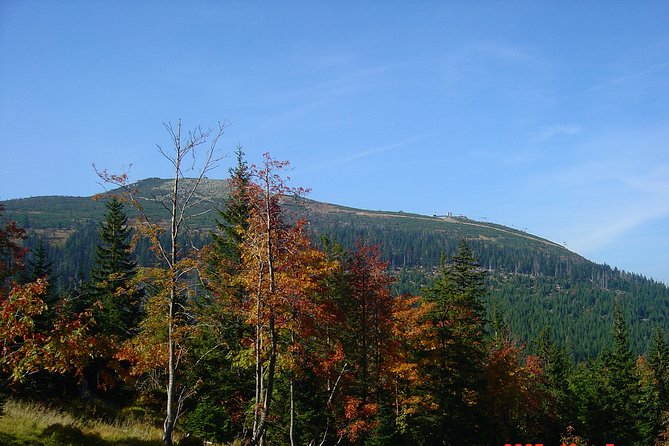
Zakopane is Poland’s winter capital, though the tour also visits outside the ski season. A morning city tour introduces the distinctive wooden architecture of the region, followed by a funicular ride to the top of Gubalowka.
The mountain view is the payoff. From the summit, you look toward the Tatra Mountains, and the open time afterward lets you browse local shops and handmade crafts.
You may also join a two-hour guided walk into one of the valleys of Tatra National Park. The details of the selected valley are not fixed, so ask your guide about distance and terrain. The tour calls for moderate physical fitness, and the combination of walking, castle stairs, city centers, and outdoor stops means this is not a sit-back-and-watch journey.
Dinner takes place in a regional restaurant with live music. After several solemn historical visits, this gives the southern part of the trip a warmer, more social finish.
Wieliczka Salt Mine and Krakow’s wartime story
On day eleven, you leave Zakopane for the Wieliczka Salt Mine. The underground visit reaches a place kept at about 14 degrees Celsius, so bring a sweater or light jacket.
The mine is about 800 years old and includes corridors, former mining chambers, salt lakes, medieval equipment, and St. Kinga’s Chapel, whose sculptures and furnishings were carved from salt. The scale and craftsmanship make this one of the trip’s most memorable paid admissions.
You then visit Oskar Schindler’s Enamel Factory Museum for about an hour with a guide. The museum connects Krakow’s wartime occupation to the story of the people Schindler helped. Because the mine and museum deal with very different subjects, the day has a strong contrast, but it also asks you to absorb a lot in a short time.
Dinner is on your own before the final hotel stay in Krakow.
Krakow finishes with royal tombs and market squares
Krakow gets the last full day, and rightly so. Unlike Warsaw, Krakow was not destroyed during the war, leaving a remarkable collection of older buildings and public spaces.
The walk begins on Wawel Hill, where you visit the Royal Castle and Coronation Cathedral. The cathedral contains the tombs of kings and important figures, while the castle’s Royal Chambers include a valuable collection of Flemish tapestries.
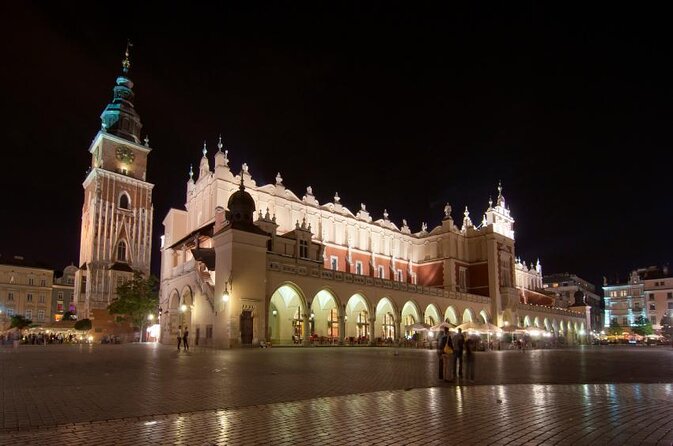
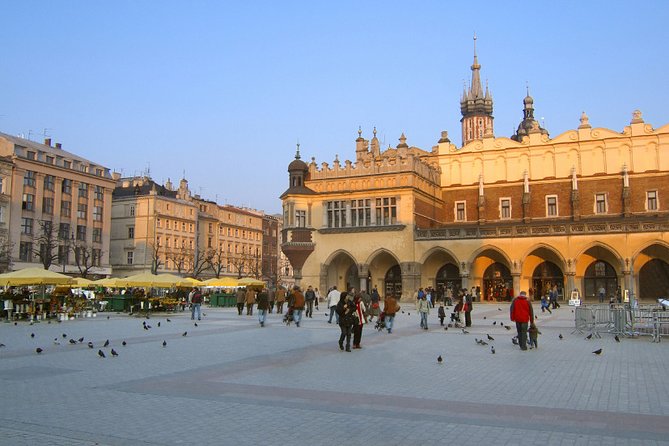
The route continues through the defensive walls, Barbican, and central Market Square. St. Mary’s Basilica and the Cloth Hall complete the essential old center sights. The Market Square is a good place to pause and absorb the city rather than rush from one admission to the next.
Your final transfer takes you to Krakow Airport after breakfast on day 13.
What the $5,350 price really covers
The cost is high, but it includes a great deal: 3-star and 4-star hotels, private air-conditioned transport, a licensed main guide, local guides, attraction entries, arrival and departure airport transfers, 12 breakfasts, and 12 dinners as stated in the inclusions.
That package can be good value if you would otherwise pay separately for intercity transport, hotels, guides, meals, and tickets. The castle night, canal cruise, Dunajec rafting, salt mine, and multiple local guides would be difficult to coordinate without help.
Still, you are paying for convenience and coverage, not a budget trip. The route moves quickly, and some meals are listed as being on your own despite the inclusion of 12 dinners. Ask for a written breakdown of hotel names, dinner arrangements, group size, and the exact vehicle before making a non-refundable booking.
The tour is offered as a private activity, so only your group participates. The title specifies groups of 2 to 10, while another detail gives a maximum of 15. That discrepancy deserves a clear answer, especially if you are booking as a couple and expect a small vehicle.
Who should book this journey
I would recommend it to a first-time visitor who wants to understand Poland as a whole rather than spend a week in Krakow. It suits people who value clear logistics, guided history, religious sites, regional food, and a steady stream of new places.
It is also a strong choice for anyone tracing Polish family roots. One past participant chose the route because their grandparents came from Poland and appreciated its coverage of regional culture, food, and history.
I would think twice if you want long museum visits, late mornings, or several free days in each city. The route includes many four-hour drives and short stops, and the non-refundable terms leave little room for a change of plans. You should also be comfortable with moderate walking and a full schedule.
Final verdict: a wide-ranging route with a busy rhythm
Book this tour if you want Poland’s major chapters in one organized trip: rebuilt Warsaw, Baltic Gdansk, medieval Malbork, early Gniezno, Catholic Czestochowa, Auschwitz, the Pieniny and Tatra Mountains, Wieliczka, and Krakow.
The strongest features are the private transport, the experienced guide support, the unusual overnight castle, and the balance between cities, memorials, nature, and local culture. The tradeoff is speed. You will see a great deal, but you will not linger everywhere.
For many first visits, that is a fair bargain. Just confirm the group size, dinner schedule, and hotel details before booking, then pack good shoes, a warm layer for the salt mine, and enough patience for the long drives.
FAQ
How long is the Poland tour?
The experience lasts approximately 13 days, beginning in Warsaw and ending with a transfer to Krakow Airport.
Where does the tour begin?
Pickup begins at Frederic Chopin Airport in Warsaw, Poland. The stated start time is 9:00 am.
Where does the tour end?
After breakfast on day 13, you are transferred to Krakow Airport.
Is this a private tour?
Yes. The activity is private, meaning only your group participates. The title describes groups of 2 to 10 people, while another detail lists a maximum of 15, so confirm the exact limit before booking.
What type of transportation is used?
The tour uses a private air-conditioned vehicle for the journey between destinations.
Are hotels included?
Yes. Accommodation in 3-star and 4-star hotels is included, including a night in the restored Bishops’ Castle at Lidzbark Warminski.
Are meals included?
The inclusions state 12 breakfasts and 12 dinners. The daily schedule also identifies dinner as being on your own in Gdansk, Czestochowa, and Krakow, so confirm the final meal arrangements.
Does the tour include attraction tickets?
Yes. Entry tickets and activities listed as included include Wolfs Lair, the Elblag Canal cruise, the Copernicus Museum, Biskupin, Poznan Cathedral, Jasna Gora Monastery, Wadowice, Dunajec rafting, Gubalowka, Wieliczka Salt Mine, Schindler’s Factory, Wawel Castle, and St. Mary’s Basilica.
Just added around Warsaw
- Jewish heritage in Warsaw★ 4.5 · 3 reviews
- Warsaw Outdoor Paintball with Transfers (all year round)★ 5.0 · 3 reviews
- World War II Warsaw Old Town, Military Cemetery Walking Tour★ 4.7 · 3 reviews
- Warsaw: Wolf’s Lair & Swieta Lipka Small-Group Tour + Lunch★ 5.0 · 3 reviews
- Sunset Boat Tour with Unlimited Drinks in Warsaw★ 3.5 · 3 reviews
- Majdanek – German camp from II World War – Private Tour – 1 DAY TRIP FROM WARSAW★ 5.0 · 3 reviews
- From Warsaw: Guided Tour to Wieliczka Salt Mine and Krakow★ 4.5 · 3 reviews
- Warsaw Sightseeing with NEW Mercedes Sclass !!!★ 5.0 · 3 reviews
Warsaw Tours, compared.

Traditional Galar Cruise on The Vistula River
Read our review →
Warsaw Concert: Chopin – Painted by Candlelights with Wine
Read our review →

POLIN Museum of the History of Polish Jews Ticket
Read our review →
#1 Pub Crawl Warsaw with Optional Premium 1 Hour Open Bar
Read our review →