
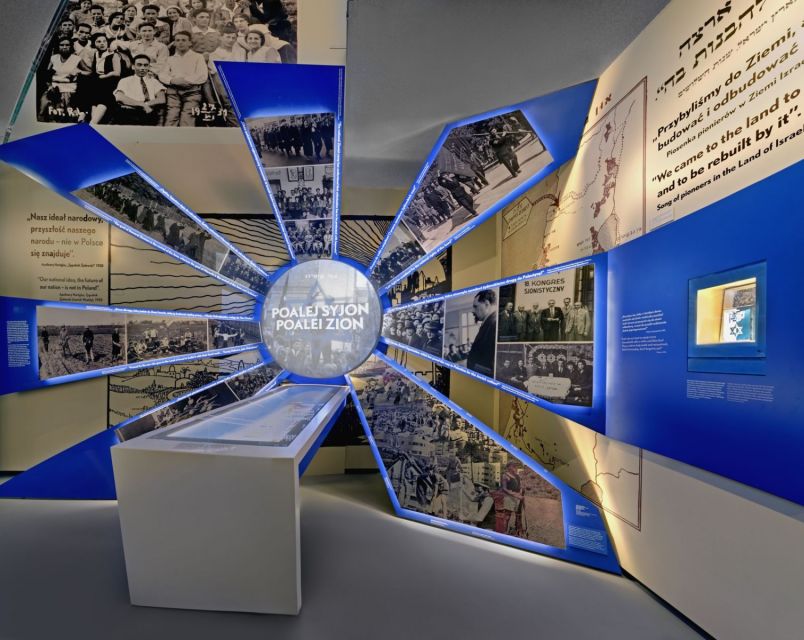
REVIEW · MUSEUMS
Warsaw: POLIN Museum of the History of Polish Jews Ticket
History comes alive inside these walls. Warsaw’s POLIN Museum takes you through 1,000 years of Jewish life in Poland, using artifacts, paintings, reconstructed spaces, sound, film, and hands-on displays. I like that it begins long before the Holocaust, and I like how the exhibits show Jewish people as active members of Polish society, not only as victims of war.
At $12 per person, this is excellent value if you allow enough time to use it properly. The main drawback is simple: two hours is only a brisk introduction. If you read the text, use the audio guide, and pause at the personal stories, you may need three to five hours, and some visitors spend most of a day here.
In This Review
- Key points to know before you go
- Why POLIN matters in Warsaw
- Entering the first galleries: Jewish settlement and community life
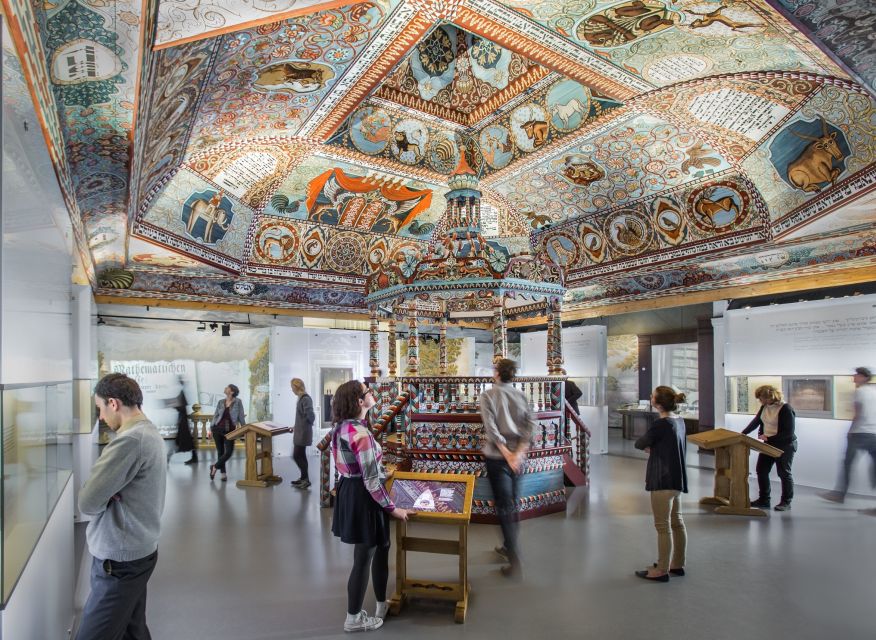
- The reconstructed synagogue ceiling and the power of place
- Jewish life in a changing Poland
- The Holocaust galleries: essential, painful, and carefully handled
- After 1945: survival, memory, and cultural renewal
- The audio guide: useful, clear, and sometimes demanding
- How long should you spend inside?
- Food, seating, and practical comfort
- Is the $12 ticket good value?
- Who will appreciate POLIN most?
- Should you book the POLIN Museum ticket?
- FAQ
- Where is the POLIN Museum located?
- What does the ticket include?
- Is a live guided tour included?
- How long is the ticket valid?
- Can I leave and come back?
- How long does the core exhibition take?
- Which languages are available?
- Is the museum wheelchair accessible?
- Can I bring oversize luggage?
- Is the museum open every day?
- Are children admitted free?
Key points to know before you go
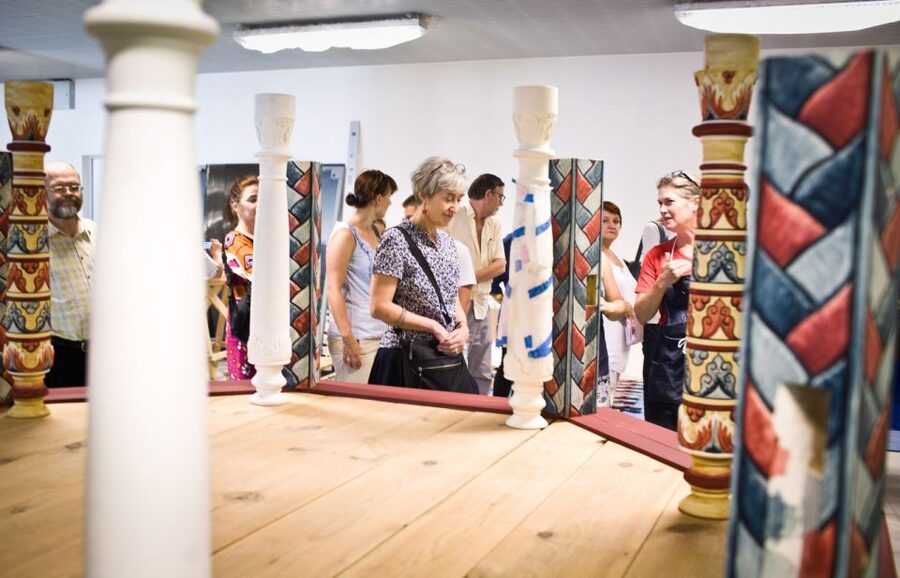
- A full story, not only a Holocaust museum: The galleries cover Jewish settlement, religious life, work, politics, culture, persecution, the Holocaust, postwar Poland, and the renewal of Jewish life.
- The audio guide is a major strength: It is available in Polish and English, and its clear narration helps explain a large amount of material.
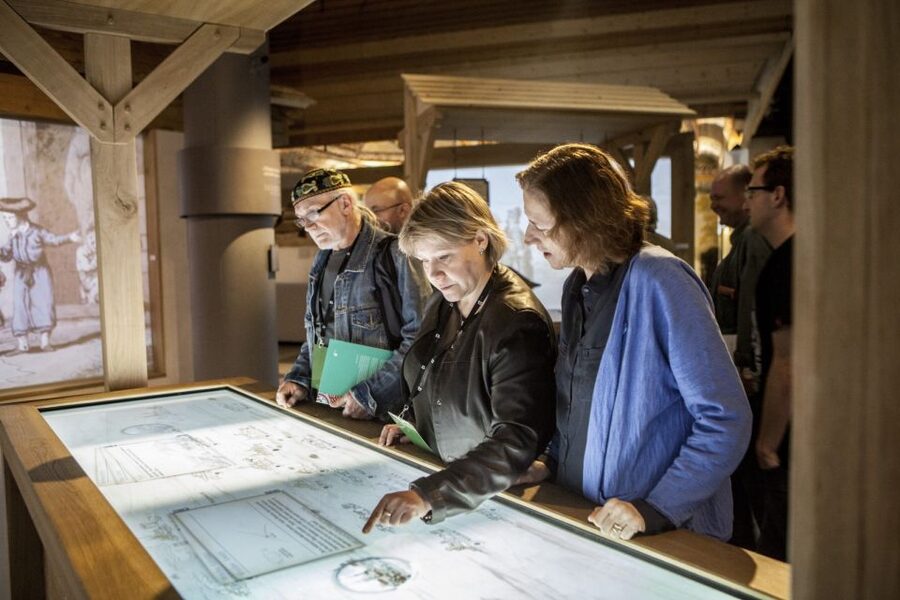
- Expect an interactive museum: Buttons, audio, visual displays, paintings, artifacts, and reconstructed settings keep the visit active rather than turning it into a long line of glass cases.
- Plan at least three hours: The museum gives two hours as an estimated time for the core exhibition, but serious readers may need four to six hours.
- You can take a break and return: Your ticket is valid for one day, so you may leave for lunch and come back the same day.
- It is wheelchair accessible, but pack light: Oversize luggage is not allowed, and all visitors pass through electronic screening before entering the core exhibition.
Why POLIN matters in Warsaw
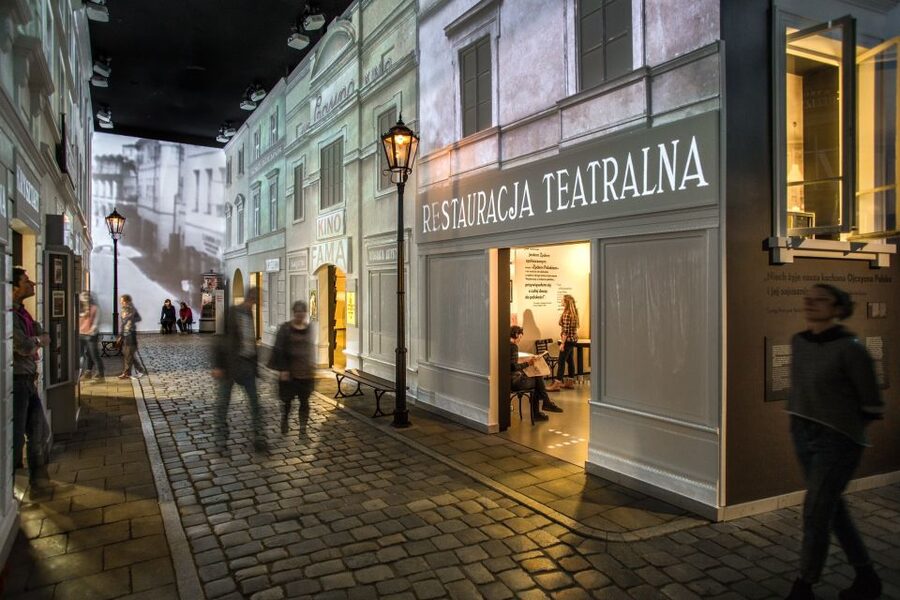
POLIN sits in an area closely linked with the history of Warsaw’s Jewish community and the wartime ghetto. A visit here gives useful context for the nearby Warsaw Ghetto Uprising Monument, and it can also add meaning to a later visit to Auschwitz-Birkenau.
The museum’s most important choice is its broad time frame. Instead of starting with Nazi persecution, it begins with the arrival and growth of Jewish communities in Poland. You see how communities formed, how they organized religious and civic life, and how Jewish figures contributed to Polish society.
That approach changes the emotional effect of the visit. The Holocaust remains a central and painful part of the story, but it is presented as the destruction of a long-established society rather than the beginning and end of Jewish history in Poland.
I find this balance especially valuable for first-time visitors. If your knowledge of Polish Jewish history begins with World War II, the earlier galleries may be the section that teaches you the most.
More History Tours in Warsaw
- Warsaw: Chopin Concert at Historical Venue in Old Town
★ 4.7 · 445 reviews - Small-Group Historical Guided Tour of Warsaw with pick up/drop off. Public Tour.
★ 4.5 · 343 reviews - Warsaw: Jewish History Guided Walking Tour in English
★ 4.7 · 324 reviews
Entering the first galleries: Jewish settlement and community life
The opening section introduces the first Jewish communities in Poland and explains why people settled there. You move through displays that connect Jewish migration with wider political and social developments in Poland.
This early material is not a quick preface. It has real weight, and the museum gives it plenty of space. You may see religious objects, written records, paintings, and visual explanations of how communities worked.
The displays help explain Jewish communal independence and the importance of local institutions. You learn about religious practice, education, trade, family life, and the ways Jewish communities related to surrounding Polish society.
This is also where the museum demands patience. Some visitors find the medieval and early modern sections so detailed that they need to speed up later. If your main interest is the Holocaust or 20th-century politics, you may want to set a time limit for the first galleries.
I suggest doing the opposite if you can. The early sections explain what was lost later. Without that foundation, the Holocaust galleries can feel like an isolated wartime story rather than the destruction of centuries of community life.
The reconstructed synagogue ceiling and the power of place
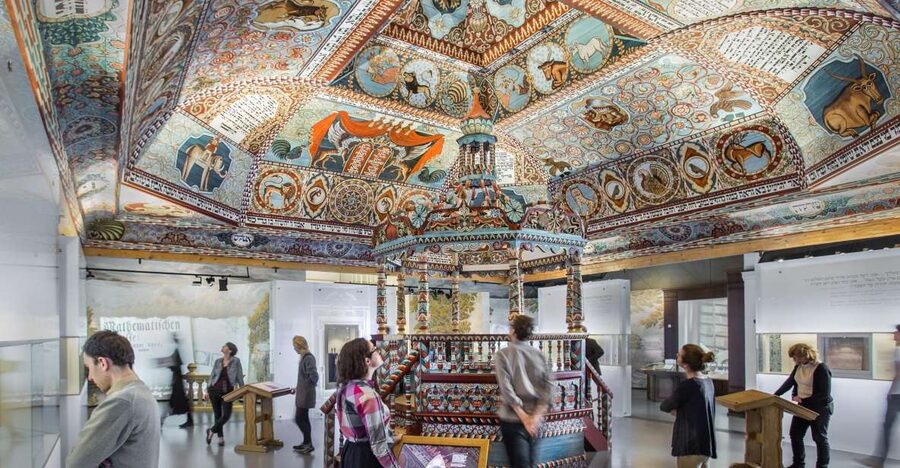
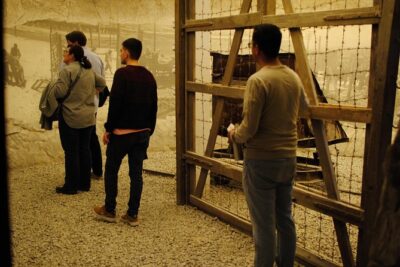
One of the memorable visual features is the reconstructed synagogue interior, including its striking painted ceiling. It offers a sense of Jewish religious spaces that photographs alone cannot provide.
The reconstruction is not just decoration. It gives you a physical idea of how communal worship and artistic expression fitted into daily life. The museum often works best when it lets you understand a period through a space, sound, or object rather than through text alone.
There are seats throughout the exhibition, which matters more than you might expect. This is a large museum with plenty to read and hear, so regular pauses help you stay alert and give difficult material room to sink in.
Jewish life in a changing Poland
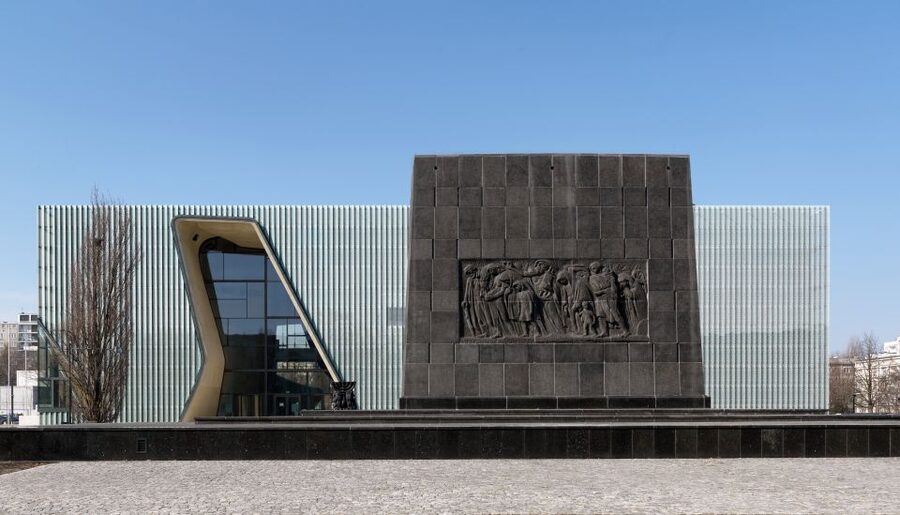
As you move forward, the story follows Jewish life through political change, urban growth, industrialization, and modernization. This section asks hard questions about identity.
How could Jewish people take part in modern Polish society while keeping religious and cultural traditions? What did education, political movements, new jobs, migration, and changing cities mean for Jewish families? The museum does not reduce these issues to one simple answer.
You may find this part especially useful because it shows internal debate. Jewish life in Poland was not one uniform experience. People held different religious views, political beliefs, languages, and ideas about the future.
The museum also places Jewish experiences within Polish history. Policies, borders, economic changes, and urban development all affected Jewish communities. You gain a better sense of how minority life was shaped by the country around it, while still seeing Jewish communities as active forces in their own right.
This section is easy to rush through because there is so much material. Slow down for the personal accounts and political displays. They help turn broad history into choices faced by real people.
More Museum Visits in Warsaw
- Warsaw: Polish Vodka Museum Tour with Tasting
★ 4.6 · 788 reviews - Warsaw: Museum World of Illusion Entry Ticket
★ 3.9 · 666 reviews - Warsaw: Ghetto, Jewish Cemetery & POLIN Museum Private Tour
★ 4.8 · 132 reviews - World of Illusion Museum Skip-the-Line Ticket
★ 4.0 · 55 reviews
The Holocaust galleries: essential, painful, and carefully handled
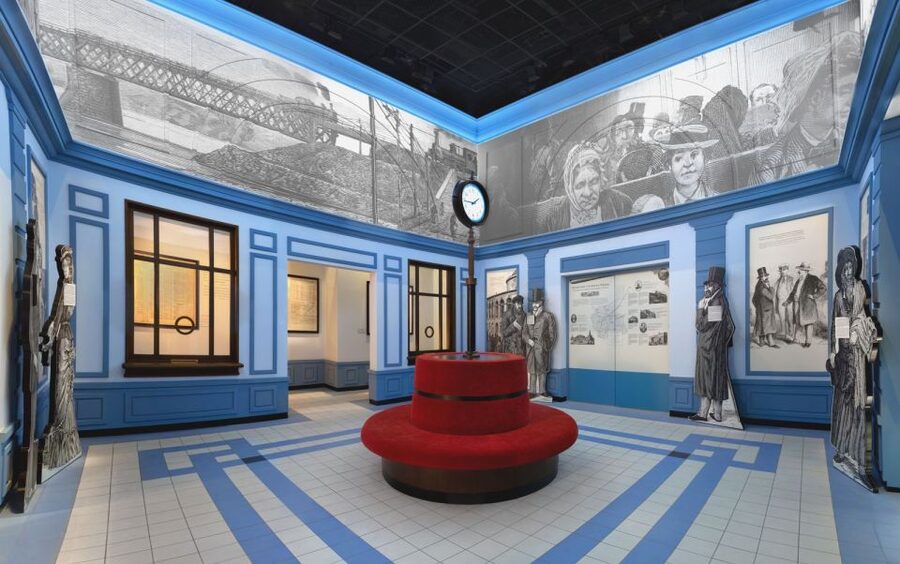
The Holocaust section is intense. It covers the destruction of Jewish communities in Poland, the impact of Nazi rule, and the conditions that led to mass murder.
The presentation is direct rather than theatrical. The museum uses documents, photographs, testimony, artifacts, and multimedia displays to explain what happened. It does not need constant dramatic effects. The facts and individual stories carry the emotional weight.
You should allow time here. Even if you have visited Auschwitz-Birkenau, this section adds a different layer. Auschwitz focuses heavily on the camp system and mass murder. POLIN places the Holocaust within the longer story of Polish Jewish life, showing what communities, families, religious institutions, and cultural networks looked like before they were destroyed.
Some visitors wish the World War II galleries had a stronger emotional impact. Others appreciate the restrained tone. I think the straightforward presentation is one of the museum’s strengths, but it does require your attention.
This is not a section to race through just because the material is difficult. Take one of the many resting spots if you need it. The museum is large enough for you to pause, collect yourself, and continue at your own pace.
After 1945: survival, memory, and cultural renewal
The story does not stop in 1945. Later sections look at the postwar period and the condition of Jewish life in Poland after the Holocaust.
This matters because it avoids the impression that Jewish history in Poland ended completely with the war. You see the problems of survival, memory, identity, and rebuilding. The museum also shows how Jewish culture has been revived after World War II.
This final part may be smaller than the Holocaust galleries, but it gives the visit a necessary sense of continuity. It also raises difficult questions about how societies remember destruction and how communities rebuild after enormous loss.
If you visit Warsaw’s Ghetto Uprising Monument before or after POLIN, the two experiences work well together. The monument is stark and immediate. The museum gives you the larger human and historical setting around it.
The audio guide: useful, clear, and sometimes demanding
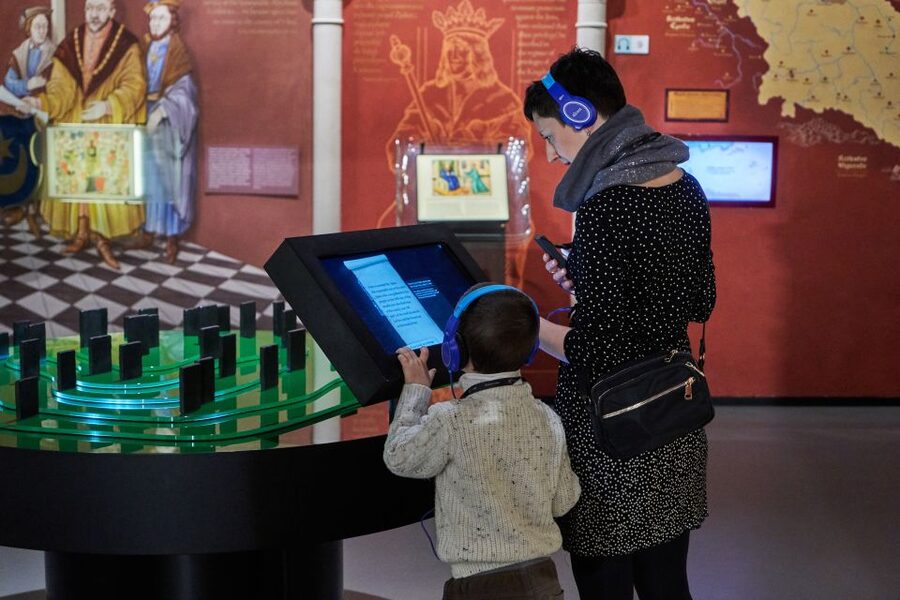
The included audio guide is one of the best reasons to choose this ticket. It is available in Polish and English, and the narration provides a clear path through the museum’s complicated timeline.
The system can identify where you are in the museum and provide the relevant narration. That makes it easier to keep moving without constantly checking a number or menu. The explanations are detailed enough to add context, but they also help you decide which displays deserve extra time.
There is one catch. The audio guide and the wall text can compete for your attention. If you try to listen to every recording while reading every panel, the visit becomes slow and tiring.
I recommend using the audio guide selectively. Listen to the introduction for each gallery, then choose the objects or stories that interest you most. You can also pause the recording while reading. That simple habit may save you from museum fatigue.
A few visitors prefer a live guide because the audio system cannot answer questions or adjust the pace for your group. A guided tour is not included with this ticket, so choose this option if you are comfortable exploring independently.
How long should you spend inside?
The official estimate for the core exhibition is two hours. That is realistic for a brisk visit focused on the main ideas.
For a better experience, I would plan three to four hours. That gives you time for the audio guide, interactive displays, major objects, and a few quiet pauses.
History readers and visitors with a personal connection to Jewish heritage may want five or six hours. The museum allows you to leave for lunch and return on the same day, which makes a longer visit much easier.
A practical plan looks like this:
- Spend about 45 minutes to an hour on the early galleries.
- Allow another hour for Jewish life, modernization, and the changing political world.
- Set aside at least an hour for the Holocaust section.
- Use the remaining time for postwar life, temporary displays, and anything you skipped.
The museum closes admission two hours before closing time. Do not arrive late in the afternoon expecting to complete the full route.
Food, seating, and practical comfort
You can eat during the visit, then return to the exhibition the same day. The museum restaurant has informal cafeteria-style service, generous portions, and good-quality food. That is useful because many people stay longer than planned.
Wear comfortable shoes. Even though the museum is on one floor, the route is extensive, and parts of the exhibition move down a level. One practical review noted that some ceilings are low in this area.
The museum is wheelchair accessible. Children age 12 or younger must be supervised by an adult, and children age 7 or younger may enter free of charge. Oversize luggage is not allowed, so arrive with only a manageable day bag.
Security screening is required before entering the core exhibition. Allow a little extra time at the entrance, especially if you are visiting with a family or group.
Is the $12 ticket good value?
Yes, provided you use the museum as a major part of your Warsaw day rather than a quick stop between sights.
The ticket includes the permanent exhibition, a temporary exhibition if one is available, and the audio guide. At $12, that is strong value for an attraction that can occupy half a day or more.
The ticket does not include a live guided tour. Still, the audio guide is detailed and well organized enough for most independent visitors. The value is even better if you take the lunch break and use the same ticket to return.
Buying ahead can also make sense during busy periods. The museum is spacious, but advance booking helps you avoid uncertainty and ensures that you have the audio guide option arranged with your admission.
Who will appreciate POLIN most?
I would recommend POLIN to anyone interested in Polish history, Jewish heritage, World War II, religion, minority communities, or modern European society.
It is especially useful for:
- First-time visitors who know little about Jewish life in Poland before 1939.
- People visiting the Warsaw Ghetto Uprising Monument or Auschwitz-Birkenau.
- Families with older children who can handle serious historical material.
- Museum fans who enjoy interactive displays and audio narration.
- Visitors who prefer to set their own pace rather than follow a group.
- Anyone who wants a fuller view of Jewish life beyond the Holocaust.
Very young children may not gain much from the written material, although the interactive features can hold their attention for a while. The subject matter is also emotionally demanding, so families should decide how much of the Holocaust section is suitable for their children.
Should you book the POLIN Museum ticket?
Yes, if you can give it at least three hours.
The museum is thoughtfully designed, highly informative, and unusually good at showing the full arc of Jewish life in Poland. Its strongest feature is the balance between everyday community life, political change, cultural achievement, persecution, destruction, and renewal.
Book it if you want context, not just a quick memorial visit. Skip it only if your Warsaw schedule is so tight that you can spare no more than an hour, because you will see only a fraction of what makes POLIN worthwhile.
FAQ
Where is the POLIN Museum located?
The POLIN Museum of the History of Polish Jews is in Warsaw, in Poland’s Mazovia Province. You present your voucher at the museum entrance.
What does the ticket include?
The ticket includes access to the permanent exhibition, access to a temporary exhibition if one is available, and an audio guide.
Is a live guided tour included?
No. A guided tour is not included. The ticket provides an audio guide instead.
How long is the ticket valid?
The ticket is valid for one day. You may enter at your own convenience during that day, but admission closes two hours before the museum’s closing time.
Can I leave and come back?
Yes. You may leave to have lunch and return later, as long as you return on the same day.
How long does the core exhibition take?
The estimated time for the core exhibition is two hours. If you listen to the audio guide and read more of the displays, plan on three to five hours or longer.
Which languages are available?
The activity information lists Polish and English as the available languages.
Is the museum wheelchair accessible?
Yes. The museum is wheelchair accessible.
Can I bring oversize luggage?
No. Oversize luggage is not allowed.
Is the museum open every day?
No. The museum is closed on Tuesdays.
Are children admitted free?
Children aged 7 or younger may enter free of charge. Children aged 12 or younger must be supervised by an adult at all times.
Just added around Warsaw
- Jewish heritage in Warsaw★ 4.5 · 3 reviews
- Warsaw Outdoor Paintball with Transfers (all year round)★ 5.0 · 3 reviews
- World War II Warsaw Old Town, Military Cemetery Walking Tour★ 4.7 · 3 reviews
- Warsaw: Wolf’s Lair & Swieta Lipka Small-Group Tour + Lunch★ 5.0 · 3 reviews
- Sunset Boat Tour with Unlimited Drinks in Warsaw★ 3.5 · 3 reviews
- Majdanek – German camp from II World War – Private Tour – 1 DAY TRIP FROM WARSAW★ 5.0 · 3 reviews
- From Warsaw: Guided Tour to Wieliczka Salt Mine and Krakow★ 4.5 · 3 reviews
- Warsaw Sightseeing with NEW Mercedes Sclass !!!★ 5.0 · 3 reviews
Museums, compared.
Auschwitz-Birkenau Museum and Memorial Guided Tour from Krakow
Read our review →


Krakow Schindler’s Factory Museum Guided Tour in English
Read our review →
Auschwitz Birkenau Museum Guided Tour with Pickup
Read our review →
Browse the lists this tour appears in