
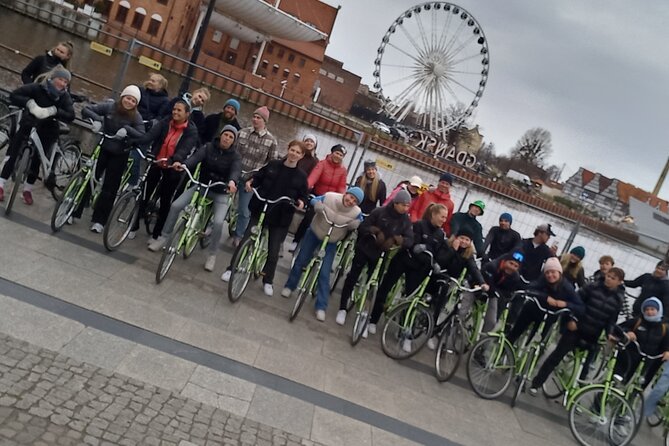
REVIEW · CYCLING TOURS
Bike Tour Gdansk – Standard
See Gdańsk from the saddle. This private two-hour ride packs the city’s old town, Solidarity landmarks, shipyard, and waterfront into one easy-moving introduction. I like the local-born guide and the chance to shape the route around your interests. I also like the relaxed pace, which lets you see more ground than a walking tour without turning the outing into a race. The main consideration is time: with ten stops in roughly two hours, several visits are brief and some attractions are viewed from outside.
The tour costs $43.05 per person, with group discounts available. Because only your group participates, you can ask for more time at a favorite place or request extra attention to Polish traditions, daily life, or the city’s Solidarity story. I would book this for a first look at Gdańsk, but I would not treat it as a substitute for visiting the city’s major museums in depth.
In This Review
- Key points to know before you pedal
- Why a bicycle works well in Gdańsk
- Starting at Kołodziejska 7
- Dluga Street and the old-town introduction
- St. Mary’s Church and its remarkable interior
- The European Solidarity Centre and Gdańsk Shipyard
- The Museum of the Second World War
- Golden Gate and the return toward the historic core
- Granary Island and the Motława crossing
- The Crane and Green Gate
- What $43.05 buys you
- Who should book this ride?
- My call on Bike Tour Gdańsk Standard
- FAQ
- How long does the Bike Tour Gdańsk Standard last?
- Where does the tour start?
- Where does the tour end?
- Is this a private tour?
- Can the tour be customized?
- Is admission included at every stop?
- What happens if the weather is poor?
Key points to know before you pedal
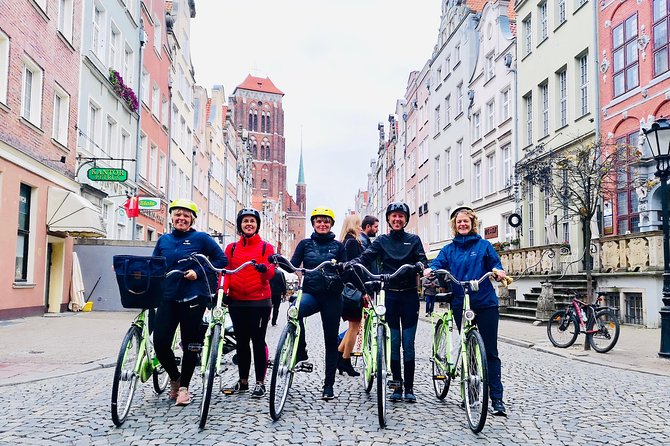
- The route links two sides of Gdańsk: You move from Dluga Street and the historic center to the European Solidarity Centre, Gdańsk Shipyard, and the Motława waterfront.
- A local perspective shapes the ride: The guide was born in Gdańsk and presents Polish traditions, local habits, and personal experience alongside the sights.
- Private touring gives you flexibility: Your group is alone, so the guide can adjust the conversation and focus to your interests.
- The Solidarity section is a major strength: The European Solidarity Centre and shipyard explain Poland’s modern political story, not just its old monuments.
- The pace is gentle but the schedule is tight: Ten stops fit into about two hours, so most places receive a short introduction rather than a full visit.
- Weather matters: The experience requires good weather, with a different date or full refund offered if poor conditions force cancellation.
Why a bicycle works well in Gdańsk
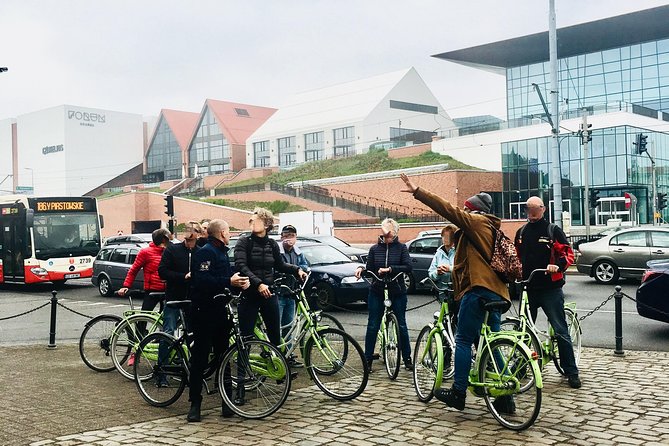
Gdańsk’s center is compact, but its important sights are spread across several connected areas. A bicycle makes it possible to cover the grand streets of the old town, the waterfront, the former shipyard, and the Solidarity district in a single outing.
I like this format because you get a sense of how the parts of Gdańsk relate to one another. On foot, you may spend most of your energy around Dluga Street and the main waterfront. By bike, you also reach places tied to the city’s twentieth-century story.
This is not described as a strenuous ride. The promise is a relaxing pace, and the short stops suggest that the focus is on orientation and explanation rather than exercise. You should still be comfortable cycling for about two hours, with time spent getting on and off the bike.
The private setup matters. You are not trying to hear a guide over a large group, and you can ask for more information about a particular monument or period. If your interest is Polish traditions, modern politics, architecture, or local life, say so early.
More Bike Tours in Gdańsk
- Gdańsk: Highlights Bike Tour
★ 4.9 · 173 reviews - Gdansk Private Bike Tour
★ 5.0 · 36 reviews - Gdansk Private Bike Tour
★ 5.0 · 21 reviews
Starting at Kołodziejska 7
The meeting point is Kołodziejska 7, 80-836 Gdańsk. The tour returns to this same point, which keeps the beginning and end simple.
A two-hour tour needs a prompt start. Arrive ready to ride, especially since the route includes ten planned stops. The schedule gives only a few minutes at several locations, so delays at the beginning can reduce the time available for questions later.
The experience is mobile-ticket friendly, and confirmation is provided when you book. Most people can participate, but the supplied information does not give details about bike sizes, child seats, helmets, or the exact cycling route. If any of those points matter to you, ask Tourist Point Gdansk before paying.
Dluga Street and the old-town introduction
The first stop is Dluga Street, one of the clearest places to begin understanding Gdańsk’s historic center. The planned ten minutes cover Neptune’s Fountain, the Town Hall, and nearby landmarks.
This is a quick orientation rather than a long architectural lesson. Neptune’s Fountain gives you an instantly recognizable city symbol, while the Town Hall helps frame the old civic center. I would use this opening to ask the guide how the area fits into present-day Gdańsk and which details are easiest to miss.
Admission is not included here, though the short stop appears designed mainly for an exterior look. You will have more freedom to return on your own after the ride if one of the old-town sights catches your attention.
St. Mary’s Church and its remarkable interior
St. Mary’s Church receives another ten-minute stop, with admission included. The details named for this visit are unusually strong for such a short tour: Memling’s triptych The Last Judgment, the Beautiful Madonna sculpture, a basket chandelier dating from 1490, and the famous astronomical clock.
This is likely to be one of the most rewarding stops if you care about art and church interiors. The guide can point out several objects that might otherwise blur together in a quick visit. Ten minutes is enough to identify the key pieces, but not enough for a careful look at every work.
I would keep your expectations practical. This portion gives you a focused introduction, not a full museum visit. If The Last Judgment or the astronomical clock is a priority, note the church’s location and plan to return independently with more time.
A completely different kind of day out in Gdańsk:
- Gdansk: City Cruise on Historical Polish Boat
★ 4.8 · 2,913 reviews - Gdańsk: Sunset Cruise on a Historic Polish Boat
★ 4.9 · 977 reviews - Gdańsk City Sights & History Guided Walking Tour in English
★ 4.8 · 876 reviews - Gdansk: Firearm Shooting Experience with Instructor
★ 4.8 · 866 reviews
The European Solidarity Centre and Gdańsk Shipyard
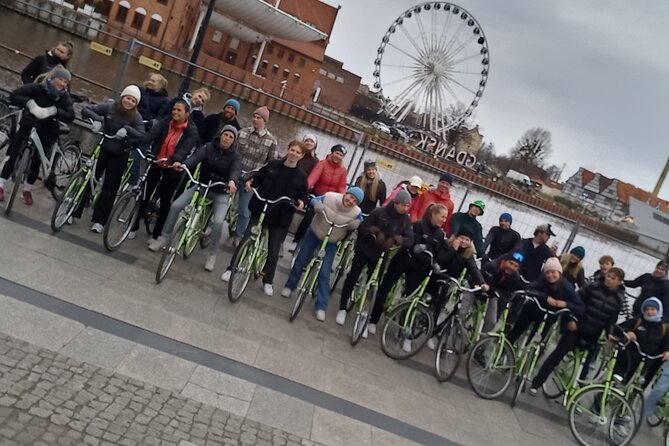
The route then shifts from old-town symbols to the modern Polish story. At the European Solidarity Centre, you spend about ten minutes learning why this place matters to Polish people.
That context is essential. Gdańsk is not only a city of handsome gates and waterfront buildings. It is also closely tied to the Solidarity movement of the 1980s and the collapse of the communist system. The guide’s personal connection to the city may be especially useful here, since the tour promises an explanation of local attitudes and Polish traditions rather than a string of dates.
The next stop is Gdańsk Shipyard, also scheduled for ten minutes. The shipyard gained international fame through the Solidarity movement, so seeing the site after the European Solidarity Centre creates a sensible link between place and event.
This is the part of the ride I would value most for first-time visitors who know little about Poland’s recent past. One French-language review praised the interesting commentary, especially the discussion of Solidarity in the 1980s. That emphasis matches the route well. The short timing remains the limitation. You will get the story’s framework, not a full examination of the movement.
The Museum of the Second World War
The Museum of the Second World War is included as a five-minute stop, but admission is not included. The wording attached to this visit indicates that it deserves your attention.
Five minutes cannot cover a museum of this importance. I would understand this stop as a strong recommendation and a chance to locate the museum, not as a genuine museum visit. If you want to go inside, plan separate time and budget for admission.
This is a useful example of how the tour works. It brings you to major sites and tells you why they matter, then leaves the longer visits for your own schedule. That approach keeps the bike ride moving, but you need to separate sightseeing from museum-going when planning your day.
Golden Gate and the return toward the historic core
The Golden Gate, or Złota Brama, receives five minutes. Allegorical statues on the gate represent Peace, Freedom, Wealth, Fame, Piety, Justice, and Concord.
This is a compact stop with a clear visual payoff. You can take in the gate, hear the meaning of its figures, and connect it to the old town’s ceremonial streets. Since admission is not included, the visit is naturally an exterior one.
The short time is appropriate here. You do not need a long pause to appreciate the gate, but the guide’s explanation gives the decoration more meaning than a quick photograph alone.
Granary Island and the Motława crossing
Wyspa Spichrzów, or Granary Island, is described as the historical heart of Gdańsk. It was destroyed during World War II, giving the guide a chance to explain the damage and the island’s place in the city’s story. Admission is included for this stop.
This section helps you see that Gdańsk’s waterfront is not just a pretty setting. It carries the marks of war, trade, destruction, and later change. The five-minute stop will be brief, but it adds useful context after the old-town monuments.
The route may also use the footbridge over the Motława to Ołowianka, if it is open. That condition is important. The bridge cannot be guaranteed, so you should see it as a possible route feature rather than a fixed promise. If it is operating, the crossing offers a practical way to connect the waterfront sights. If not, the guide will adjust the ride.
The Crane and Green Gate
The Crane is one of Gdańsk’s defining symbols and receives five minutes. It is a natural highlight along the river, with its distinctive form making it easy to recognize even during a short visit.
Admission is not included, so the tour focuses on the exterior and the guide’s explanation. I would use this stop to ask how the Crane fits into the city’s working waterfront and why it became such a familiar emblem.
The final listed stop is the Green Gate, or Brama Zielona, which leads toward the Green Bridge. Like the Golden Gate, it is best treated as a brief architectural stop. Admission is not included, and five minutes gives you time for photographs and a quick explanation before the group returns to Kołodziejska 7.
By ending near the waterfront and historic center, the tour leaves you well placed to continue exploring on your own, though the activity itself finishes back at the original meeting point.
What $43.05 buys you
At $43.05 per person, this is not the cheapest way to see Gdańsk, but the price makes more sense when you consider what is included. You are paying for a private guide, a bicycle-based route, local commentary, and transport between widely separated parts of the city. Group discounts may improve the value if you are not traveling alone.
The private format is the key factor. A standard group tour can cost less, but it may not give you the same chance to ask questions or change the emphasis. Here, the guide can customize the experience to your preferences, at least within the fixed two-hour window.
The price does not cover every admission. The itinerary specifically excludes admission at Dluga Street, the Museum of the Second World War, the Golden Gate, the Crane, and the Green Gate. St. Mary’s Church, the European Solidarity Centre, and Wyspa Spichrzów are listed with admission included.
I would see this as a value-focused introduction, not an all-access pass. It works best when you want an efficient first look and plan to choose one or two places for a longer visit later.
Who should book this ride?
I would recommend it to first-time visitors who want a quick mental map of Gdańsk. It also suits people who prefer movement to a long walking tour and anyone curious about the connection between the old city, the shipyard, and the Solidarity movement.
The tour is a particularly good match for a private party with mixed interests. One person can ask about architecture, another about Polish traditions, and another about modern politics. The guide’s promise to share personal experience as someone born in Gdańsk gives the ride a more personal direction than a basic monument checklist.
I would be more cautious if you want long museum visits, extensive time inside churches, or a slow photography tour. Ten stops in two hours means the route favors breadth. You will see the main framework of the city, then decide where to spend more time.
Weather is another practical concern. The experience requires good weather. If poor conditions cancel the ride, you are offered another date or a full refund. For your own flexibility, cancel at least 24 hours before the start time for a full refund. Cancellations or changes within 24 hours are not refunded or accepted.
My call on Bike Tour Gdańsk Standard
I would book this tour if I had two hours and wanted a local-led introduction to both historic Gdańsk and the Solidarity story. The best feature is not simply the bicycle. It is the route’s range, moving from Neptune’s Fountain and St. Mary’s Church to the shipyard, the European Solidarity Centre, and the Motława waterfront.
I would book it with one clear plan: use the ride to identify your priorities for the rest of the day. Ask the guide for extra context on Solidarity, note the museums you want to revisit, and accept that some stops are quick.
At $43.05 per person, the private format makes the cost reasonable for a small group that values flexibility. If you want a deep museum experience, choose a dedicated museum visit instead. If you want a lively, efficient overview with a local voice and a relaxed ride, this is a sensible way to begin.
FAQ
How long does the Bike Tour Gdańsk Standard last?
The tour lasts approximately two hours.
Where does the tour start?
It starts at Kołodziejska 7, 80-836 Gdańsk, Poland.
Where does the tour end?
The activity ends back at the meeting point on Kołodziejska 7.
Is this a private tour?
Yes. Only your group participates in the activity.
Can the tour be customized?
Yes. The tour is described as customizable to your interests and preferences.
Is admission included at every stop?
No. Admission is included at St. Mary’s Church, the European Solidarity Centre, and Wyspa Spichrzów. Admission is not included at Dluga Street, the Museum of the Second World War, the Golden Gate, the Crane, or the Green Gate.
What happens if the weather is poor?
The experience requires good weather. If it is canceled because of poor weather, you can choose another date or receive a full refund.
Just added around Gdańsk
- Gdańsk: Boat Cruise from Gdańsk Old Town to Sopot Marina★ 4.4 · 3 reviews
- Stutthof Concentration Camp and Museum of WWII: Private Tour★ 4.7 · 3 reviews
- Gdansk: Bubble Football with Hotel Transfers★ 5.0 · 3 reviews
- Gdansk: Oliwa Zoo with Tickets and Roundtrip Transportation★ 5.0 · 3 reviews
- Segway Tour Gdańsk: Shipyard Tour – 1,5-Hour of Magic!★ 5.0 · 3 reviews
- Gdansk: Escape Room Adventure★ 4.0 · 3 reviews
- Gdańsk : Catamaran River Cruise (group)★ 4.3 · 3 reviews
- Szymbark: Kashubian Switzerland 5-Hour Private Tour★ 3.7 · 3 reviews
Cycling Tours, compared.
Complete Cracow Bike Tour (small group of maximum 15 people!)
Read our review →
Bike Tour of Old Town, Jewish Quarter and the Ghetto
Read our review →
Full Bike Tour – the Old Town, Jewish Qtr & the Ghetto NEW BIKES
Read our review →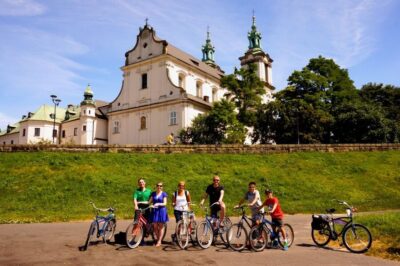
Bike Tour of the Old Town, Kazimierz, and the Ghetto
Read our review →
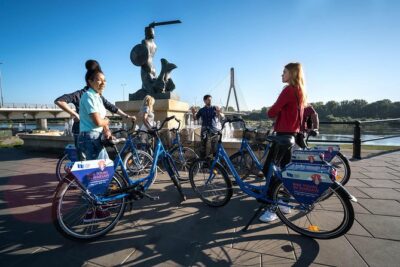
Half-Day Warsaw City Sightseeing Bike Tour for Small Group
Read our review →Browse the lists this tour appears in