
REVIEW · CYCLING TOURS
Highlights of Krakow Bike Tour – Small group
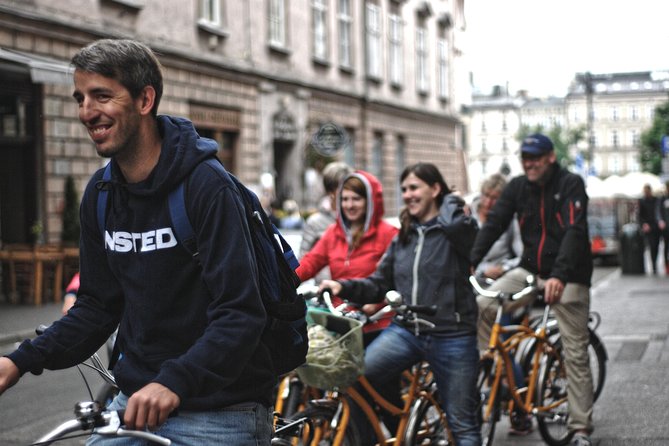
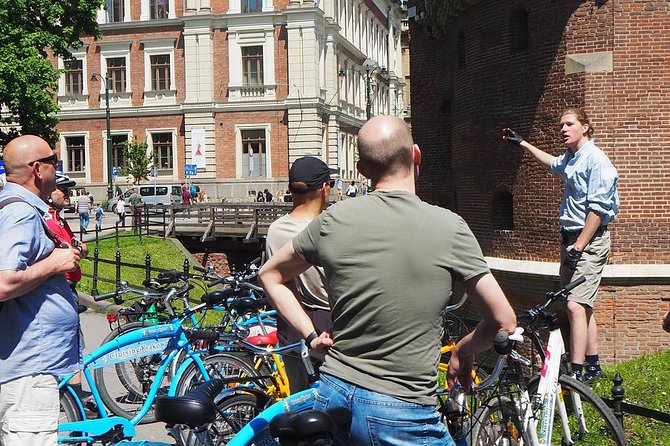
Krakow reveals itself quickly by bike. This four-hour ride links the Main Square, Wawel Castle, the Vistula River, and Kazimierz without making you walk between every sight. I like the comfortable beach cruisers and the mostly flat route, and I like how guides such as Mike, Zoe, and Chris add stories, humor, and useful restaurant advice. The main tradeoff is that the tour covers a lot of ground, so several stops are brief photo and explanation breaks rather than full visits inside the sights.
The maximum group size is 15, though groups can be smaller, which makes it easier to hear the guide and keep the pace together. At $36.28 per person, the tour is good value if you have only one day in Krakow or want an overview before exploring on foot. Food and drinks cost extra, and you should allow for changing weather because the ride can be canceled if conditions are poor.
In This Review
- Key points at a glance
- Why a bicycle works so well in Krakow
- Starting at Europe’s great medieval square
- Planty Park and Krakow’s university quarter
- Wawel Castle, the river, and the dragon
- Podgórze and the wartime ghetto
- Kazimierz, synagogues, and a well-earned lunch
- The return through Krakow’s smaller squares
- The guide makes or breaks the four hours
- Price, timing, and who should book
- FAQ
- Where does the Krakow bike tour start?
- How long does the tour last?
- How much does the tour cost?
- What is included in the price?
- Is lunch included?
- What sights does the route cover?
- Are children allowed to join?
- How large is the group?
- What happens if the weather is bad?
- Should you book the Krakow bike tour?
Key points at a glance
- Around eight miles of Krakow: The route covers far more ground than a typical walking tour, while reviews describe the cycling as easy and non-strenuous.
- A rare mix of sights: You move from medieval Old Town to the university quarter, Wawel Hill, the former Jewish quarter, the wartime ghetto, and the Vistula River.
- Comfortable bikes on mostly flat roads: Beach cruisers, baskets, and rain ponchos when needed make the ride practical for sightseeing.
- Strong guide-led experience: Mike, Zoe, Chris, and other guides are praised for clear English, humor, personal stories, and helpful food and drink suggestions.
- A useful lunch pause: The stop at a Polish restaurant gives you time to rest and buy food, though lunch is not included.
- Good for families: Children over 128 centimeters can use the bikes, and helmets are offered for children.
Why a bicycle works so well in Krakow
Krakow’s center is compact, but its main sights are spread across several connected districts. Walking from the Main Square to Wawel, then onward to Kazimierz and Podgórze, takes time and energy. On a bicycle, you can cover the same route while still stopping often to listen, take photographs, and look around.
The route is described as mainly flat, with much of the riding on cycle paths and quieter sections. Short stretches use the road, but the overall ride has been described as safe and easy to follow. You are not signing up for a sporty cycling challenge. This is a sightseeing ride, with frequent pauses breaking up the pedaling.
Several people covered about eight miles, while one family reported finishing with children after a similar distance. That gives you a useful idea of the scale: expect a real city ride, not a quick loop around the Old Town. The bicycle lets you see more, but you still need to be comfortable sitting on a bike for several hours.
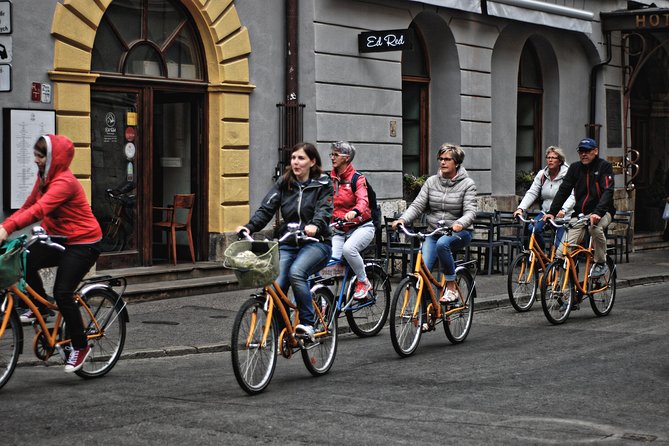
The beach cruisers are a good match for Krakow. Their upright position and comfortable seats suit sightseeing better than racing-style bicycles. Baskets are available, and rain ponchos can be provided if necessary. Bikes are suitable for children taller than 128 centimeters. Helmets were specifically offered for children, so families should ask about equipment when they arrive.
More Bike Tours in Kraków
- Complete Cracow Bike Tour (small group of maximum 15 people!)
★ 5.0 · 1,322 reviews - Krakow: Bike Tour of Old Town, Jewish Quarter and the Ghetto
★ 4.9 · 1,155 reviews - Full Bike Tour – the Old Town, Jewish Qtr & the Ghetto NEW BIKES
★ 5.0 · 437 reviews
Starting at Europe’s great medieval square
The meeting point is by the Adam Mickiewicz Monument on Rynek Główny, Krakow’s Main Market Square. This is an easy place to identify, but give yourself enough time to find the monument among the square’s arcades, cafés, horse carriages, and pedestrian traffic.
The square is the natural beginning for a Krakow orientation. It is one of Europe’s largest medieval squares, framed by important buildings and connected to nearly every major Old Town street. Your first stop is short, so do not expect a full architectural lecture here. Instead, use it to understand the city center before setting off.
The tour office, Cruising Krakow Bike and Segway Tours, is also part of the opening sequence. This is where you receive your bicycle and meet the guide. Guides have included Mike, Zoe, and Chris, with Mike receiving especially warm praise for his Canadian-Polish background, fluent English, humor, and local recommendations. One memorable ride even included the guide’s dog, Ramsey, though you should not assume the dog joins every departure.
Planty Park and Krakow’s university quarter
From the square, you ride into Planty Park, the green belt that circles the Old Town. Planty follows the line of the former city walls and extends for about four kilometers. It is an ideal cycling corridor because it gives you a calmer route around the center while showing how Krakow grew beyond its medieval defenses.
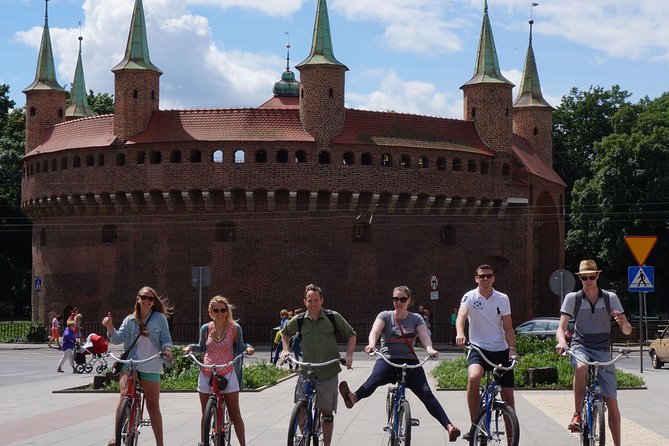
The Barbican and old city walls come next. The stop is short, so you will mainly hear the explanation and take photographs from outside. If you want to explore the Barbican museum in detail, plan to return later on foot. This is an important point about the tour: it gives you the city’s broad story, but it does not replace museum visits.
The ride then shifts to the university area. The Jagiellonian University dates to 1364 and is one of Krakow’s most important institutions. You see the Collegiate Church of St. Anne, the university buildings, and Collegium Maius, the university museum known for its courtyard and clock.
These stops reward careful listening. The guide connects university life, Polish history, and Krakow’s intellectual traditions in a way that is easier to absorb while moving between buildings. You may not go inside every structure, and the listed stop times are often only five to ten minutes. That keeps the tour moving, but it means you should return later if you want a full look at Collegium Maius.
The Bishop’s Palace adds another personal thread, connected with Pope John Paul II. It is the kind of stop that gives the ride a human face. Rather than seeing only grand buildings, you hear how a major Polish figure was linked with this part of the city.
Wawel Castle, the river, and the dragon
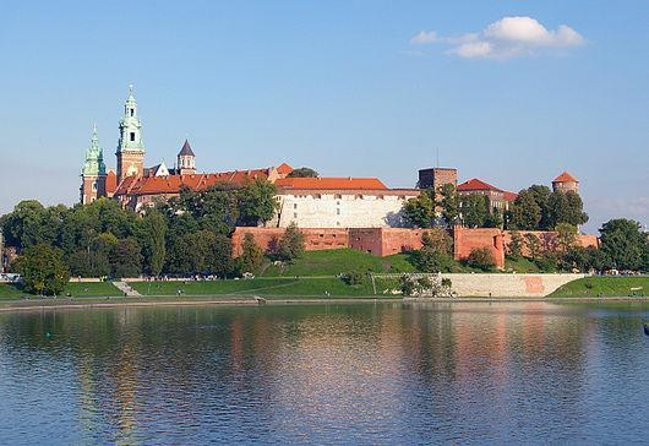
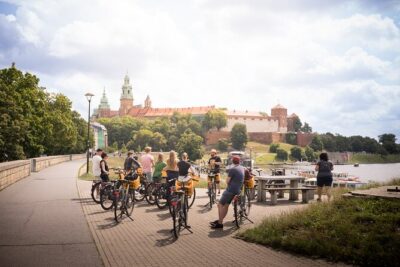
Wawel Royal Castle is the historic center of Polish royal power. For centuries it was the seat of the Polish throne, and today it holds important art collections. The bicycle stop gives you a strong first look at Wawel Hill and its setting above the Vistula.
The listed stop at the castle is brief, about five minutes, so treat it as an introduction rather than a castle tour. That is also a strength if your goal is to see Krakow’s wider layout on one outing. You can note what you want to revisit, then return when you have time for the courtyards, cathedral, or museum interiors.
Near the hill, you meet the Monument of the Wawel Dragon. Krakow’s fire-breathing dragon is one of the city’s best-known legends, and this lighter stop adds humor after the heavier royal and religious material. The dragon is especially useful for families because it gives children a story to remember as the tour moves on.
The ride along the Vistula is one of the most pleasant parts of the day. Reviews describe it as a welcome break from walking, with shade and an open feel. It also shows you a different side of Krakow, away from the tight streets and dense buildings of the Old Town.
You then pass the Church on the Rock, or Skałka. The stop touches on Poland’s occupations and the story of Saint Stanisław, one of the country’s patron saints. The subject matter is weightier here, and a good guide helps place the church in the larger story without turning the ride into a long lecture.
A completely different kind of day out in Kraków:
- From Krakow: Auschwitz-Birkenau Guided Tour & Hotel Pickup
★ 4.5 · 33,358 reviews - From Krakow: Auschwitz-Birkenau Guided Tour & Hotel Pickup
★ 4.5 · 29,340 reviews - Krakow: Auschwitz Guided Tour with Optional Hotel Pickup
★ 4.5 · 15,280 reviews - Krakow–Zakopane: Cable Car, Chocholow Baths, Cheese & Vodka
★ 5.0 · 10,720 reviews
Podgórze and the wartime ghetto
Crossing toward Podgórze changes the tone of the tour. At Plac Bohaterów Getta, you learn about the World War II ghetto and the people forced to live there. The square is associated with the ghetto’s deportations, so this is a serious stop that deserves attention and respect.
A fragment of the ghetto wall remains nearby. It helps you understand the physical boundaries imposed on the Jewish population. The stop is short, but seeing an actual remnant can make the scale of the ghetto easier to grasp than reading about it in a guidebook.
The route continues to Oskar Schindler’s Enamel Factory. The site is tied to Oskar Schindler and the Jewish people he helped save, as well as the famous list connected with his story. The bicycle tour does not include an admission visit, and the stop is listed at about eight minutes. If Schindler’s story is central to your Krakow plans, reserve separate time for the museum.
This portion is one reason the bicycle format works. Podgórze, the former ghetto area, and Kazimierz are close enough to connect in one ride, but far enough apart that walking between all of them can take a substantial part of your day. You gain geographic context, not just isolated facts.
Kazimierz, synagogues, and a well-earned lunch
The tour then enters Kazimierz, Krakow’s historic Jewish quarter. You see the New Jewish Cemetery, Szeroka Street, the Old Synagogue, and the Remuh Cemetery. Each stop gives you a different view of Jewish Krakow.
Szeroka Street is especially atmospheric and is located at the heart of Kazimierz. The Old Synagogue stop lasts longer, around 40 minutes, making it the main pause in this district. You have more time here to hear about Jewish Kazimierz and the later bohemian character of the neighborhood.
The Remuh Cemetery is much smaller as a stop, but it carries great importance as the old Jewish cemetery. You should expect explanation from the guide rather than an extended independent visit. The tour’s value is in connecting these places, allowing you to understand how the streets, synagogues, cemeteries, and former ghetto relate to one another.
Plac Nowy provides a lighter, more modern contrast. It is known for its famous pizza baguettes and nightlife. This is a good place to make a mental note for later, especially if you want to return to Kazimierz for food or drinks after the tour.
Lunch takes place at an authentic Polish restaurant, with food and drinks at your own expense. The break is practical, not decorative. You can rest, eat, and escape the heat if you are riding in summer. One account described the restaurant as cozy with good food and drinks, while another praised the guide’s restaurant suggestions for later in the trip.
Plan your spending accordingly. The tour price includes the bicycle and guide, but not lunch. You may prefer to buy a full meal, or simply use the pause to recover before the final stretch. Ask your guide for recommendations, since food advice is one of the useful extras repeatedly associated with this ride.
The return through Krakow’s smaller squares
After lunch, the route heads back toward the center. You pass Little Market Square, or Mały Rynek, a smaller historic square that provides a quieter counterpoint to Rynek Główny.
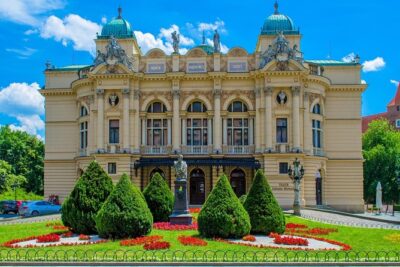
The Słowacki Theatre finishes the sightseeing sequence. Its architecture is considered one of the town’s most appealing, and it makes a fitting final stop before returning to the departure area. The ride ends near where it began, which is convenient if you want to continue exploring the Old Town afterward.
This final section also shows why you should think of the tour as an orientation. You will see enough locations to choose what deserves a second visit. The Old Synagogue, Wawel Castle, Collegium Maius, and Schindler’s Factory all offer more than the short exterior stops can cover.
The guide makes or breaks the four hours
The route is well planned, but the guide shapes the experience. Mike is praised for humor, clear explanations, personal anecdotes, and strong recommendations for restaurants and bars. Zoe is described as passionate about Krakow’s past and attentive to the group’s questions. Chris is noted for adding humor and personal stories to the historical material.
That variety matters. A bicycle tour can become a list of names and dates if the guide simply points at buildings. Here, the best version of the ride connects legends, royal power, religious life, university history, the Jewish quarter, and World War II.
English is the offered language, and the feedback describes the guides’ English as fluent and easy to understand. One Canadian guide’s background was particularly helpful for clear communication. The small-group limit of 15 also helps, though your exact group may be much smaller or close to the maximum.
The pacing earns strong marks. You ride for short sections, stop for an explanation, then continue. That rhythm keeps the day active without making it a workout. Still, if you want to enter every church or museum, this is not the right format. The tour favors breadth and orientation over long visits.
Price, timing, and who should book
At $36.28, the price is reasonable for about four hours of bicycle rental, guiding, and city coverage. You are paying for the ability to connect districts efficiently, along with the guide’s local knowledge and food suggestions. For a first day in Krakow, that can save both time and tired feet.
The advertised duration is approximately four hours. Some accounts describe the ride as three and a half hours, while one short account refers to two hours, so allow a flexible block of time rather than scheduling a tight appointment immediately afterward. The route itself has been described as about eight miles, depending on the exact ride.
I would choose this tour if:
- You have only one or two days in Krakow.
- You want an overview before choosing museums and neighborhoods to revisit.
- You enjoy easy cycling and can ride for several hours.
- You are traveling with older children or teenagers who may tire of a long walking tour.
- You want to combine Old Town, Wawel, Kazimierz, and the ghetto in one outing.
I would choose a walking tour or private vehicle instead if you dislike bicycles, need long indoor visits, or want a highly focused tour of Jewish Krakow or World War II sites. The many short stops are useful for orientation, but some people may wish for more time at each sight.
The route can work well in warm weather because riding is less tiring than walking from district to district, and the river sections may feel cooler. It still requires good weather, and a rain poncho is available if needed. If the weather becomes unsuitable, the operator offers another date or a full refund.
FAQ
Where does the Krakow bike tour start?
The tour starts at the Adam Mickiewicz Monument on Rynek Główny, the Main Market Square in Krakow, Poland.
How long does the tour last?
The advertised duration is approximately four hours. Some descriptions of the experience place it closer to three and a half hours, so allow a flexible schedule.
How much does the tour cost?
The listed price is $36.28 per person. Group discounts are available.
What is included in the price?
The price includes bicycle rental, a city guide, and a rain poncho if necessary.
Is lunch included?
No. The tour stops at an authentic Polish restaurant, but food and drinks are at your own expense.
What sights does the route cover?
The route includes the Main Square, Planty Park, the Barbican, Jagiellonian University, Collegium Maius, Wawel Castle, the Vistula River, the Wawel Dragon, Podgórze, the former ghetto, Schindler’s Factory, Kazimierz, Szeroka Street, the Old Synagogue, Remuh Cemetery, Plac Nowy, Little Market Square, and the Słowacki Theatre.
Are children allowed to join?
Yes. The bicycles are suitable for children over 128 centimeters tall. Most people can participate, and helmets are offered for children.
How large is the group?
The maximum group size is 15 people. The tour is also offered with group discounts.
What happens if the weather is bad?
The experience requires good weather. If the operator cancels because of poor conditions, you can choose another date or receive a full refund.
Should you book the Krakow bike tour?
Yes, if you want to see Krakow’s main districts in one active, easy-going outing. The strongest reasons to book are the comfortable bikes, flat route, clear English-speaking guides, and the sheer amount of ground covered. It is especially useful at the start of a visit, when you want to understand how the Old Town, Wawel, Kazimierz, and Podgórze fit together.
Go in with the right expectations. You will hear plenty of stories and see many important locations, but you will not fully tour every museum or church. If that balance suits you, this is a smart use of four hours and a friendly introduction to Krakow.
Just added around Kraków
- Rynek Underground Museum & Wawel Castle, Cathedral – Cracow★ 5.0 · 3 reviews
- Schindler’s Factory, Ghetto and Plaszow Camp Guided Tour★ 4.7 · 3 reviews
- Nowa Huta – a guided tour of a utopian socialist city★ 5.0 · 3 reviews
- Krakow: Kazimierz by Golf Cart and Schindler’s Factory Tour★ 4.8 · 3 reviews
- Krakow: Jewish Traces Private Electric Car Tour★ 4.1 · 3 reviews
- Private Krakow City Tour by Car and Walk with private tour guide★ 5.0 · 3 reviews
- Discover the Jewish Quarter with a Bike Tour★ 5.0 · 3 reviews
- Krakow: Indoor Go-Karting (24-Minute Races)★ 4.8 · 3 reviews
Cycling Tours, compared.
Complete Cracow Bike Tour (small group of maximum 15 people!)
Read our review →
Bike Tour of Old Town, Jewish Quarter and the Ghetto
Read our review →
Full Bike Tour – the Old Town, Jewish Qtr & the Ghetto NEW BIKES
Read our review →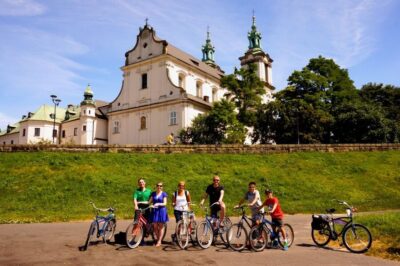
Bike Tour of the Old Town, Kazimierz, and the Ghetto
Read our review →
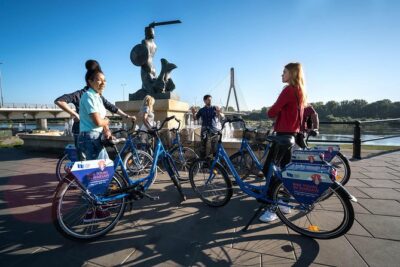
Half-Day Warsaw City Sightseeing Bike Tour for Small Group
Read our review →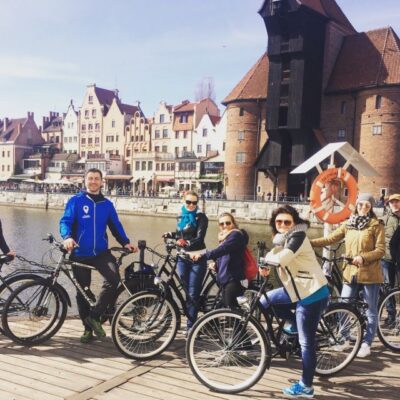
Browse the lists this tour appears in