
REVIEW · CITY TOURS
Faces of Warsaw’s 3-hour orientation city tour with hotel pick-up
Warsaw reveals itself in layers. This private three-hour tour gives you a smart first look at the city, linking Łazienki Park, wartime history, and the rebuilt Old Town in one comfortable route. I like the hotel pickup and private transportation, and I especially like the clear focus on both Polish culture and the city’s Jewish past. The main drawback is its brisk pace: several stops last only 10 to 15 minutes, so you get orientation rather than long museum visits.
I also like the human side of the guiding. Marzena, one guide named in the feedback, earned praise for her patience, historical perspective, and ability to answer questions in a short time. At $72.72 per person, the price makes the most sense for a small private group that wants a broad introduction without arranging taxis between distant sights.
In This Review
- Key points at a glance
- What this three-hour Warsaw tour does well
- Łazienki Park and Palace: a calm opening
- Parliament and the Palace of Culture
- Grzybowski Square and the former Jewish district
- POLIN and the Ghetto Heroes Monument
- Umschlagplatz and the hardest chapter
- Sigismund’s Column and reconstructed Old Town
- The Presidential Palace and famous Polish names
- Old Town Market Square and the final walk
- Marie Curie’s birthplace on Freta Street
- How the $72.72 price works out
- Pickup, timing, and what to expect
- The guide can make or break the experience
- Who should book this tour?
- Should you book Faces of Warsaw?
- FAQ
- How long is the Faces of Warsaw tour?
- Is hotel pickup available?
- How does the hotel pickup work?
- Is the tour private?
- What language is the tour offered in?
- Is transportation included?
- Where does the tour end?
- Is lunch included?
- Is admission to the Maria Skłodowska-Curie Museum included?
- Can I cancel for a full refund?
Key points at a glance
- Private hotel pickup and transport: Your guide collects you from a city-center hotel or accommodation in an air-conditioned car or minibus, with parking included.
- Eight sharply different stops: The route moves from royal gardens and communist-era architecture to Jewish history, royal Warsaw, and Marie Curie’s birthplace.
- A serious look at Warsaw’s past: Grzybowski Square, the POLIN area, and Umschlagplatz address the former Jewish ghetto and the Holocaust.
- Fast Old Town orientation: You see Sigismund’s Column, the Presidential Palace, and the Market Square before finishing near the Marie Skłodowska-Curie Museum.
- Strong guide element: Marzena received praise for her warmth, patience, and ability to explain modern Polish life alongside historical events.
- Plan for a moving vehicle and short walks: This is designed to cover ground efficiently, not to replace full visits to Warsaw’s museums.
What this three-hour Warsaw tour does well
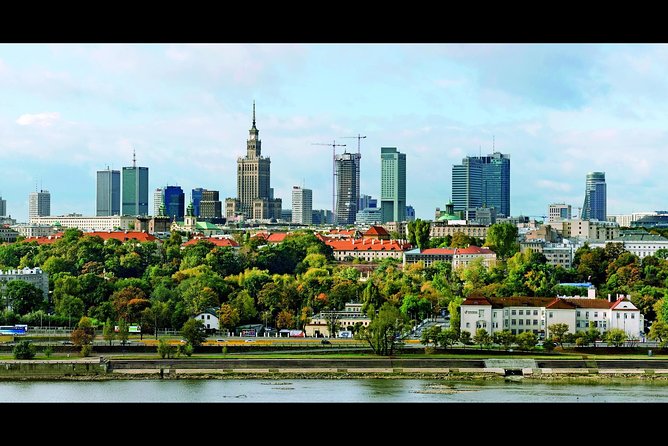
Warsaw is spread out, and its key sights do not tell one simple story. The royal park sits away from the Old Town. The former ghetto area has a very different mood and purpose. The Palace of Culture recalls the communist period, while the rebuilt Old Town reflects a city that had to reconstruct much of its center.
This tour works because it connects those pieces. You are not asked to spend three hours on one subject. Instead, you move through several chapters of Warsaw’s identity, with a guide helping you understand how they fit together.
The private format matters. Only your group takes part, so you can ask questions and set the pace within the fixed schedule. That is a better arrangement than a large bus tour if you want to ask about Polish figures such as Chopin, Marie Curie, or Lech Wałęsa.
The route is also practical for a first day. You receive a city overview before choosing which places deserve a longer return visit. If you have only a short stay in Warsaw, this helps you identify your priorities quickly.
A few more Warsaw trips worth weighing up
- 3-Hour Guided Cycling Tour of Warsaw
★ 4.9 · 624 reviews - Warsaw Old Town 1.5-Hour or Full 3-Hour Segway Tour
★ 4.9 · 209 reviews - Warsaw: 3-Hour Panoramic City Bus Tour with Pickup
★ 4.5 · 169 reviews
Łazienki Park and Palace: a calm opening
The tour begins with about 30 minutes at the Royal Łazienki Park and Palace Complex. This is the longest single stop, and it gives the itinerary a pleasant opening before the heavier historical material later in the day.
You can expect an introduction to one of Europe’s distinctive royal park and palace settings. The admission ticket is free, so this part of the experience does not add a museum charge. Still, 30 minutes is enough for an overview, not an extended walk through the grounds.
I like this first stop because it gives you a sense of Warsaw beyond monuments and war memorials. You see a side of the city connected with royal residences, formal grounds, and leisure. If gardens or palace interiors are high on your list, ask your guide what deserves a separate visit, since this tour moves on fairly quickly.
The park also helps you settle into the tour’s rhythm. You will be walking at some stops, riding between others, and listening to a guide place each sight in context. Comfortable shoes remain a good idea even though private transport reduces the amount of ground you must cover.
Parliament and the Palace of Culture
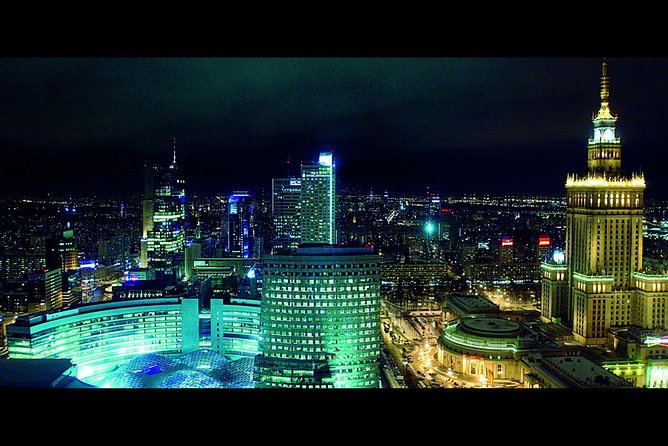
The route includes a look at the seat of the Polish parliament, described as the Polish Reichstag in the tour material. This is a short orientation stop rather than a formal government-building visit. The value lies in understanding where modern Polish political life is centered.
You also learn about communism and the controversial Palace of Culture, the gift from Stalin. That building is one of Warsaw’s most loaded landmarks. It can be read as an imposing city-center structure, but also as a reminder of Soviet influence and the political order imposed after the Second World War.
The tour treats Warsaw as a city of contrasts. Modern development meets older royal buildings, reconstructed streets, and reminders of occupation. That framing is useful because it keeps the city from becoming a row of pretty facades with no explanation.
Do not expect a long architectural inspection at these points. The schedule is designed to show you the landmarks and explain why they matter. If you want to go inside the Palace of Culture or study parliament in detail, you will need separate time.
Grzybowski Square and the former Jewish district
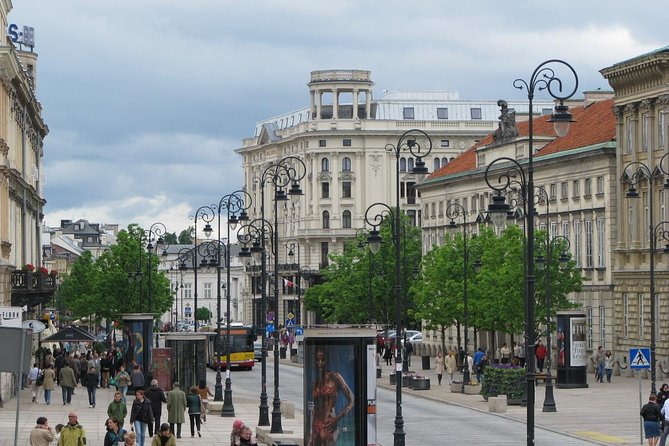
The stop at Grzybowski Square lasts about 15 minutes and focuses on the former Warsaw ghetto and the history of Warsaw’s Jewish population. This is a compact stop, but it changes the tone of the tour.
The square and surrounding area are not simply scenic locations. They help you understand that prewar Warsaw had a major Jewish community and that the ghetto was part of the city itself, not an isolated place with no connection to ordinary urban life.
I appreciate the route’s decision to place this subject near the center of the tour. You have already seen royal and political Warsaw, so the visit broadens your understanding of the people and communities that shaped the city.
The short timing calls for attention. Listen closely to the guide and ask questions while you are there. You will not have much spare time for wandering before the vehicle continues.
A completely different kind of day out in Warsaw:
- Warsaw: Chopin Concert in the Old Town
★ 4.8 · 2,287 reviews - Warsaw: Traditional Galar Cruise on The Vistula River
★ 4.6 · 1,640 reviews - Warsaw: Old Town Highlights Walking Tour in English
★ 4.7 · 1,516 reviews - Warsaw Concert: Chopin – Painted by Candlelights with Wine
★ 4.8 · 1,442 reviews
POLIN and the Ghetto Heroes Monument
The next stop is the POLIN Museum of the History of Polish Jews area, with about 20 minutes devoted to the Warsaw Ghetto Uprising and the Ghetto Heroes Monument. You also hear about Willy Brandt kneeling at the monument, a highly symbolic moment in postwar European memory.
The tour material does not include an admission ticket to the POLIN Museum. Treat this stop as an exterior orientation and historical explanation unless your guide tells you otherwise. If you want the museum’s full exhibitions, plan a separate visit on another day or before the tour, allowing much more time than this itinerary provides.
The monument is especially important because it connects the physical site with the people who resisted during the uprising. A good guide can help you understand why the uprising remains central to Warsaw’s identity and how the monument became a place of international significance.
This is one of the tour’s strongest sections for anyone who wants more than a postcard view of Warsaw. The subject is painful, and the schedule is short, but the stop gives you a starting point for further study.
Umschlagplatz and the hardest chapter
At Umschlagplatz, you spend about 15 minutes at the place associated with the deportation of Warsaw’s Jews during the Holocaust. The wording of the tour is direct, and the subject deserves that seriousness.
This is not a light sightseeing stop. You are shown a real location connected with the implementation of the Nazi plan to murder Europe’s Jews. The guide’s explanation is central here, since the site itself cannot tell you the full story.
I value the inclusion of Umschlagplatz because it prevents the city tour from presenting Warsaw only as a restored capital. Reconstruction is part of the story, but so are the people who were forced out, killed, or displaced.
The brief visit may feel insufficient if this history is your main reason for coming to Warsaw. That is not a fault unique to this tour. It simply means you should use this introduction to decide whether you want a longer dedicated Jewish history or Holocaust tour.
Sigismund’s Column and reconstructed Old Town
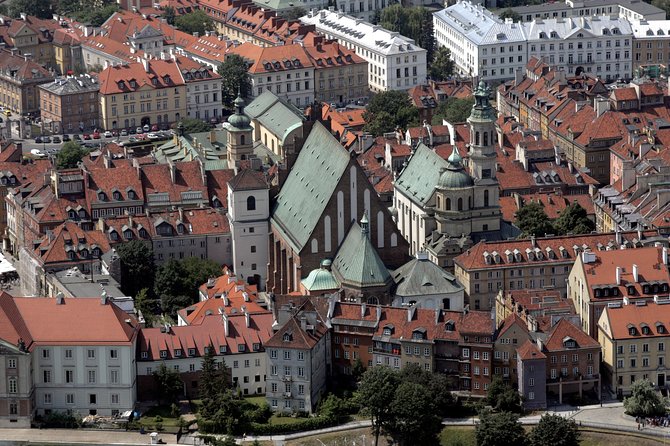
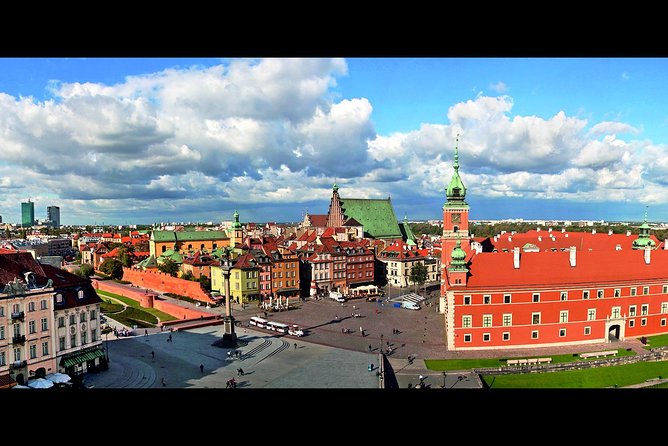
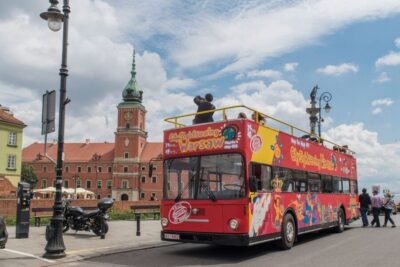
The itinerary then turns toward historical Warsaw and Sigismund’s Column at Castle Square. This is your gateway to the completely reconstructed Old Town, which has UNESCO World Heritage status.
The word reconstructed matters. Warsaw’s Old Town looks historic, but much of it was rebuilt after wartime destruction. That fact makes the area more than a pretty collection of colorful buildings. It is also a lesson in national memory, careful restoration, and the decision to bring an old city center back to life.
You get about 15 minutes at Sigismund’s Column. The guide introduces royal Warsaw, important monuments, palaces, residences, and architectural details. You will not have time to inspect every corner, but you will know where the main sights are and how the district fits together.
This is a good point to keep your camera ready, but do not let photographs replace the explanation. The most useful part of the stop is learning how the column, Castle Square, and the Old Town connect.
The Presidential Palace and famous Polish names
The Presidential Palace receives about 10 minutes. Here the guide shifts from buildings to people, with attention to major Poles including Frederick Chopin, Marie Curie, and Lech Wałęsa.
That short stop helps link Warsaw’s streets to figures who shaped music, science, and modern politics. You may already know their names, but the tour places them within the Polish story rather than presenting them as unrelated celebrities.
The schedule does not allow a full visit to the palace, and no admission ticket is included. Think of it as a passing orientation with historical context.
This part also prepares you for the final stop, the Marie Skłodowska-Curie Museum. The tour returns to Curie at the end, giving one of the city’s most famous scientists a more tangible connection to Warsaw.
Old Town Market Square and the final walk
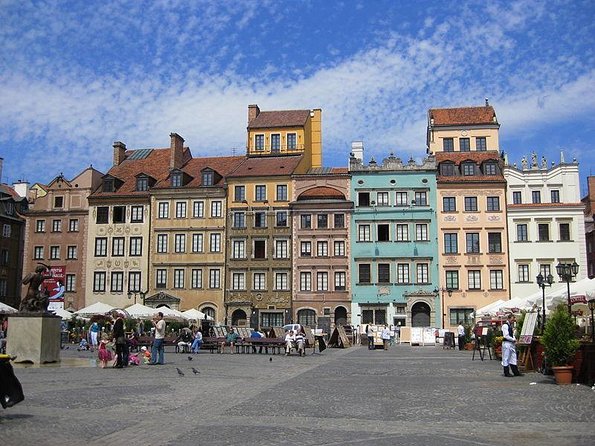
The Market Square in Warsaw’s Old Town receives about 30 minutes, tied with Łazienki Park for the longest stop. You stroll through the romantic streets and see the heart of the UNESCO-listed district.
This is the part of the tour most likely to feel relaxed. After the more serious ghetto sites and the quick political stops, you have time to walk, look up at the reconstructed facades, and get your bearings for a later return.
Still, 30 minutes is not a full Old Town visit. You will not be lingering over every street or entering several attractions. The practical advantage is that you finish with a clear sense of the area, including where to return for a longer walk, meal, or museum visit.
The tour ends near the Maria Skłodowska-Curie Museum on Freta Street. That ending is convenient if you want to continue exploring the Old Town on foot. The museum admission is not included, so check your plans before assuming the tour covers entry.
Marie Curie’s birthplace on Freta Street
The final stop takes about 10 minutes at the Marie Skłodowska-Curie Museum. You see the birthplace of the famous scientist and learn more about Warsaw’s connection to her life.
Because the ticket is not included, this stop functions mainly as an introduction unless you arrange admission separately. Ten minutes is enough to identify the museum and hear the basic story, but not enough for a full museum visit.
I like ending here rather than returning you to the hotel. The location keeps you in the Old Town area, where you can continue sightseeing. It also gives the tour a personal finish after its larger themes of war, politics, rebuilding, and national identity.
How the $72.72 price works out
The listed price is $72.72 per person. Its value depends heavily on your group size and your plans for getting around Warsaw.
For a private group, the price includes hotel pickup and return, an air-conditioned car or minibus, parking fees, and the guide’s time. You are paying for convenience as well as commentary. A private vehicle is useful because the route covers separate parts of the city and avoids the need to arrange several taxi rides.
The price is less attractive if you want long museum visits. Lunch is not included, and the Marie Curie Museum ticket is not included. The POLIN stop also does not provide a museum admission ticket. You should budget separately for food and any museums you decide to enter.
For a couple or small group that values a private guide, the arrangement can be sensible. Solo visitors may find the per-person price harder to justify, especially since the tour lasts only about three hours and many stops are brief.
The tour is booked, on average, 11 days ahead. That is a useful planning clue, particularly if you want a specific date or are visiting during a busy period.
Pickup, timing, and what to expect
Hotel pickup is offered from accommodations in Warsaw’s city center. Your guide either meets you at reception with a PolinTours sign or waits in the car in front of the entrance. Confirm the exact pickup details when booking, especially if your accommodation is not clearly within the central area.
The published meeting point is Sigismund’s Column at plac Zamkowy, but the pickup arrangement allows the guide to collect you from a city-center hotel. The stated end point is the Maria Skłodowska-Curie Museum at Freta 16, in the Old Town area.
The tour is offered in English. Confirmation arrives at booking, and the activity is described as suitable for most participants. Service animals are allowed, and the tour is near public transportation.
The day includes both vehicle time and walking. You should be ready for short stops, quick transitions, and a few moments when you need to listen closely because the group will soon move on. Private transport helps, but it does not turn this into a slow, fully accessible sightseeing experience with unlimited time at each site.
The guide can make or break the experience
This itinerary depends on the guide more than a simple hop-on sightseeing route would. The places are important, but several stops are too short to explain themselves.
Marzena received particular praise for her historical perspective, patience, and good cheer. Those qualities matter in a tour that moves from royal parks to the Holocaust, then back to reconstructed streets and famous Polish figures. You need a guide who can handle serious subjects without rushing past them or making every stop feel like a lecture.
You can also ask questions about life in Poland, a strength specifically associated with the guiding on this experience. Since only your group participates, take advantage of that private setting. Ask for clarification when a date, name, or political reference moves too quickly.
Who should book this tour?
I would choose this tour if you are visiting Warsaw for the first time and want a compact orientation with private transport. It suits couples, families, or small groups who prefer a personal guide and want to cover several districts in one morning or afternoon.
It is also a good match if your interests include Polish history, the Jewish heritage of Warsaw, communist-era architecture, and the rebuilt Old Town. The itinerary does not treat the city as a single period, which gives you a more useful first picture.
I would choose something else if you want extended museum time, a slow walking tour, or a specialist focus on the Warsaw Ghetto. The 10 to 20-minute stops are introductions, not full site visits.
Free cancellation is available when you cancel at least 24 hours before the start time. Changes or cancellations made later are not accepted for a refund, so keep that deadline in mind.
Should you book Faces of Warsaw?
Book it if you want to see Warsaw’s major themes in three hours and value a private car, hotel pickup, and an English-speaking guide. The combination of Łazienki Park, communist-era Warsaw, Jewish history, and the reconstructed Old Town gives you a useful city framework.
Skip it if your priority is entering POLIN, spending hours in the Old Town, or visiting the Marie Curie Museum in depth. For those goals, this tour works best as a first look, followed by your own longer visits.
At $72.72 per person, I see the strongest value for a small group that wants personal attention and efficient transport. The route is fast, but the scope is unusually broad, and a warm guide such as Marzena can turn a tight schedule into a thoughtful introduction.
FAQ
How long is the Faces of Warsaw tour?
The tour lasts approximately three hours.
Is hotel pickup available?
Yes. Pickup is offered from hotels or accommodations in Warsaw’s city center.
How does the hotel pickup work?
The guide either meets you at reception with a PolinTours sign or waits in the car in front of your accommodation.
Is the tour private?
Yes. Only your group participates in the activity.
What language is the tour offered in?
The tour is offered in English.
Is transportation included?
Yes. Private transportation in an air-conditioned car or minibus is included, along with parking fees.
Where does the tour end?
The tour ends at the Maria Skłodowska-Curie Museum on Freta Street in Warsaw’s Old Town area.
Is lunch included?
No. Lunch is not included.
Is admission to the Maria Skłodowska-Curie Museum included?
No. Admission to the museum is not included.
Can I cancel for a full refund?
Yes, if you cancel at least 24 hours before the experience’s start time. Cancellations made less than 24 hours in advance are not refunded.
Just added around Warsaw
- Jewish heritage in Warsaw★ 4.5 · 3 reviews
- Warsaw Outdoor Paintball with Transfers (all year round)★ 5.0 · 3 reviews
- World War II Warsaw Old Town, Military Cemetery Walking Tour★ 4.7 · 3 reviews
- Warsaw: Wolf’s Lair & Swieta Lipka Small-Group Tour + Lunch★ 5.0 · 3 reviews
- Sunset Boat Tour with Unlimited Drinks in Warsaw★ 3.5 · 3 reviews
- Majdanek – German camp from II World War – Private Tour – 1 DAY TRIP FROM WARSAW★ 5.0 · 3 reviews
- From Warsaw: Guided Tour to Wieliczka Salt Mine and Krakow★ 4.5 · 3 reviews
- Warsaw Sightseeing with NEW Mercedes Sclass !!!★ 5.0 · 3 reviews
City Tours, compared.
City Sightseeing Tour Eco Electric Buggy Golf Cart
Read our review →


Gdańsk City Sights & History Guided Walking Tour in English
Read our review →
Extended City Sightseeing Tour – Eco Buggy Golf Cart
Read our review →
Browse the lists this tour appears in