
REVIEW · WARSAW TOURS
From Warsaw: Guided Tour of Treblinka Camp
Silence can explain what ruins cannot. This six-hour trip from Warsaw takes you to Treblinka, the Nazi extermination camp hidden in the forest northeast of the capital. I like the hotel pickup and comfortable air-conditioned transport, and I like the care taken by guides such as Leszek, Janusz, Marek, and Jan, who bring maps, memoirs, and clear historical context to a difficult visit.
The main drawback is the price, $134 per person, especially for a solo visitor. Treblinka also requires emotional preparation. Much of the camp was destroyed, so you are visiting a memorial site shaped by absence rather than preserved buildings. One visitor also felt that time spent at Warsaw’s Umschlagplatz reduced the time available at Treblinka itself.
In This Review
- Key points about the Treblinka tour
- Why Treblinka makes a powerful day trip from Warsaw
- Hotel pickup keeps the morning simple
- The museum gives you the basic map
- Walking through a camp the Nazis tried to erase
- Treblinka I adds another layer to the story
- The August 1943 revolt deserves attention
- The guide makes or breaks this experience
- Is six hours enough?
- Food, clothing, and accessibility
- Does $134 offer good value?
- Who should book this Treblinka tour?
- Should you book it?
- FAQ
- Where is Treblinka located?
- How long does the tour last?
- Does the tour include hotel pickup?
- Is transportation included?
- Is the tour conducted in English?
- What is included at Treblinka?
- Are food and drinks included?
- What should I bring?
- Can I cancel the tour?
Key points about the Treblinka tour
- Hotel pickup and drop-off: Start and finish at your accommodation in Warsaw, with an English-speaking driver and guide.
- About six hours total: The trip includes the drive, museum, memorial grounds, and guided explanation of the camp.
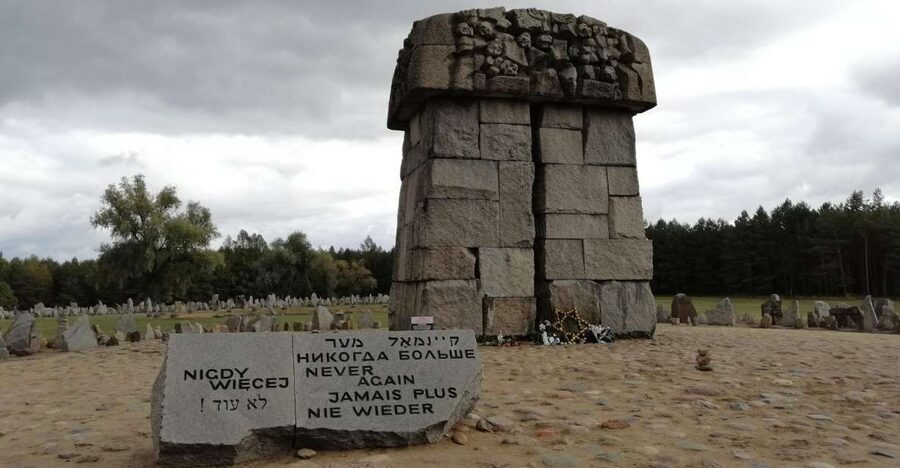
- A site built around absence: Nazi Germany dismantled Treblinka to hide its crimes, leaving memorial stones, ruins, reconstructed areas, and open forest.
- Strong historical guidance: Guides including Leszek, Janusz, Marek, Jan, and Janusz have been praised for clear explanations and personal, thoughtful presentation.
- Treblinka I and Treblinka II: You learn about the extermination camp and the nearby penal labour camp, where about 20,000 people were held between 1941 and 1944.
- Flexible booking: You can cancel up to 24 hours before departure for a full refund, and reserve now while paying later.
Why Treblinka makes a powerful day trip from Warsaw
Treblinka is about four kilometres south of Treblinka train station, in the Masovian Voivodeship northeast of Warsaw. The drive is short enough for a half-day outing, yet the setting feels far removed from city life.
That distance matters. Treblinka was deliberately placed in a wooded area and connected to the railway network. Nazi Germany operated the extermination camp from July 22, 1942, until October 19, 1943, as part of Operation Reinhard, the deadliest stage of the Final Solution.
Between 700,000 and 900,000 Jews were murdered at Treblinka, along with about 2,000 Romani people. More Jews were killed here than at any Nazi extermination camp apart from Auschwitz.
You do not need to be a specialist in World War II to appreciate the visit. You do need to be ready for a serious historical site. The guide’s role is important because Treblinka does not offer the large surviving buildings found at some other former camps. Without context, the memorial stones and woodland can be hard to read.
A few more Warsaw trips worth weighing up
- Warsaw: Chopin Concert in the Old Town
★ 4.8 · 2,287 reviews - Warsaw: Traditional Galar Cruise on The Vistula River
★ 4.6 · 1,640 reviews - Warsaw: Old Town Highlights Walking Tour in English
★ 4.7 · 1,516 reviews
Hotel pickup keeps the morning simple
The tour begins with pickup from your Warsaw accommodation. You meet the driver and guide, then set off in an air-conditioned vehicle for the journey to Treblinka.
This arrangement is one of the strongest practical features. You do not need to find a distant bus stop, arrange a taxi, or work out the rural connection from Warsaw. Several visitors specifically praised punctual pickup, friendly drivers, and smooth transport. Vehicles have included comfortable cars and a Mercedes minibus, depending on the group.
The exact group size can vary. One small group had seven people plus the guide, which allowed plenty of room for questions. A private-feeling small group can make a major difference at a place where the subject is difficult and the information is detailed.
Drivers have also added useful context during the ride. Leszek, Maciej, Kris, Marzena, and Mateusz were all singled out for being friendly, punctual, and helpful. One guide stopped at important Warsaw locations connected with the movement of Jews from the Warsaw Ghetto toward Treblinka. That extra city context helps connect the camp to the wider story of occupied Warsaw.
One practical note: a visitor found it difficult to hear the guide during the drive and suggested a small microphone. If you are in a larger vehicle, sit near the front when possible and ask the guide to repeat anything you miss.
The museum gives you the basic map
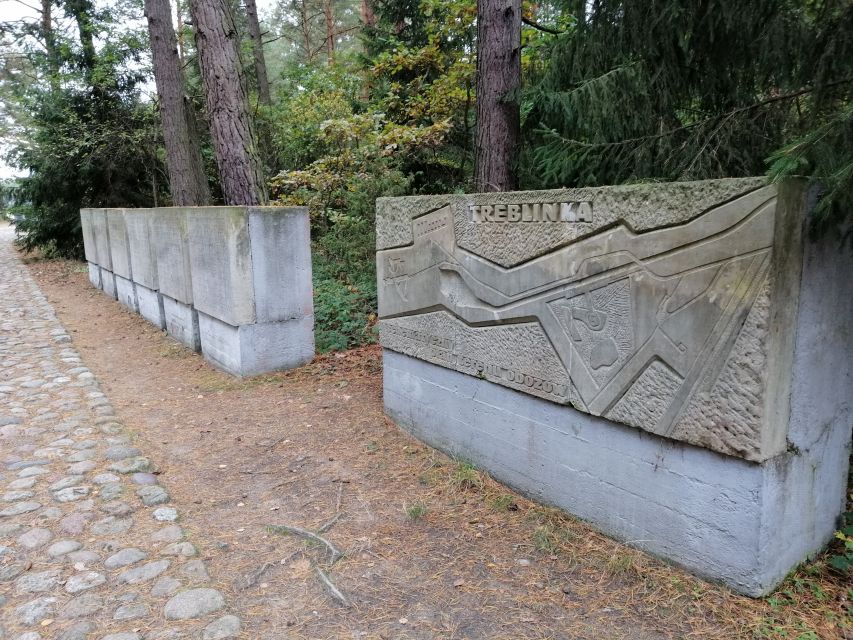
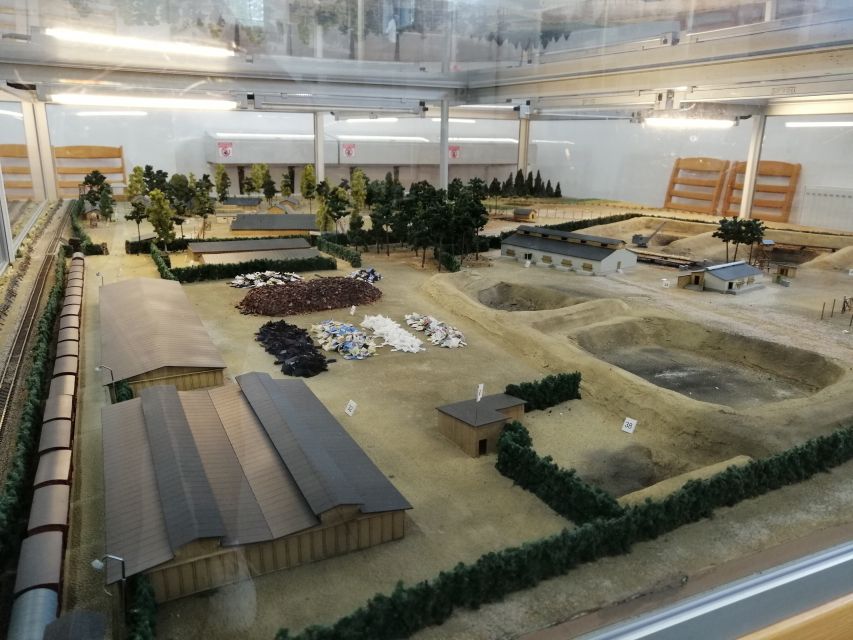
Your visit includes the Treblinka museum, which provides an introduction to the camp and the people held there. A miniature model helps explain the camp’s layout and architecture.
This is a useful first stop because the physical site can otherwise seem confusing. The museum helps you understand the railway arrival process, the division of the camp, and the purpose of the structures that once stood there. Films and displays add human detail to a place where very little original construction remains.
Do not rush the museum. It gives you the framework needed for the memorial walk. If you want a clear account of how Treblinka functioned, the museum is where the guide’s explanations and the visual material work together best.
The museum also covers daily life for prisoners, though it is important to understand the limits of that phrase. Treblinka II was an extermination camp, not a normal prison camp. People were brought there to be murdered, and the camp was designed to hide that purpose from those arriving.
Walking through a camp the Nazis tried to erase
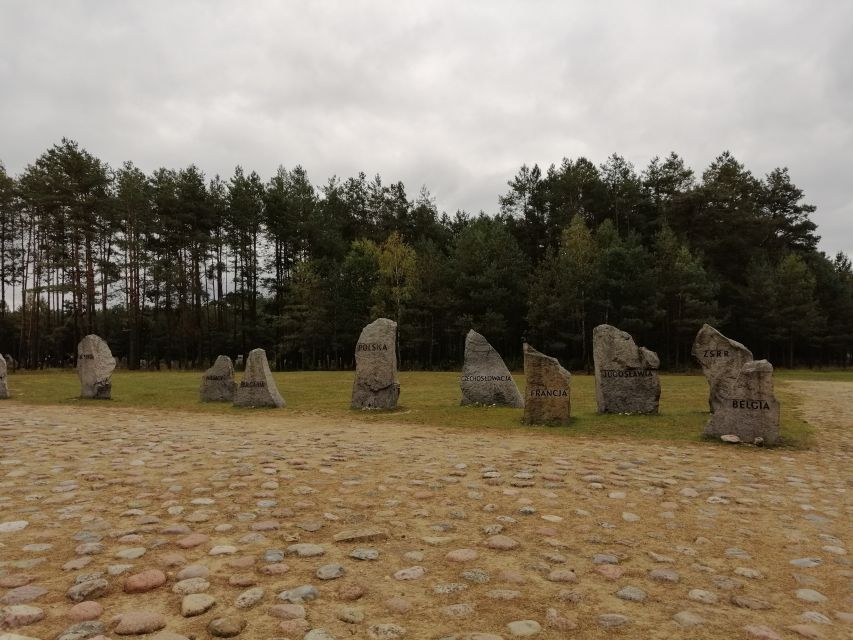
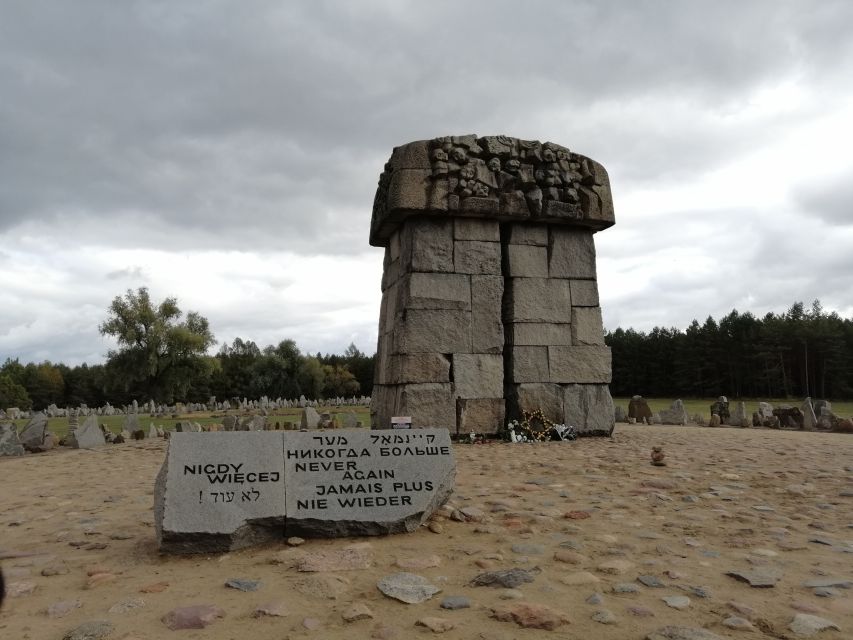
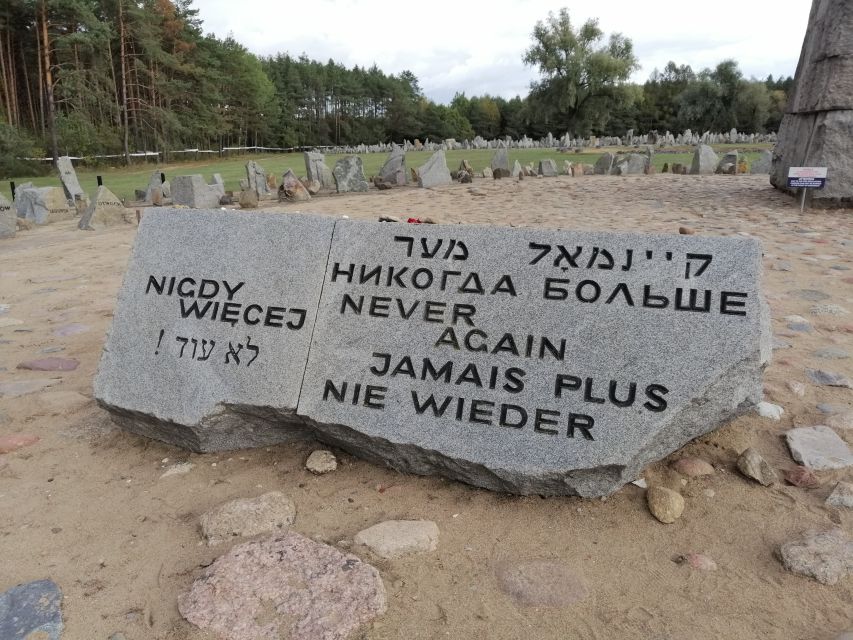
Treblinka is unusual because the Nazis dismantled much of the extermination camp after the prisoner revolt and attempted to conceal the evidence. The site was flattened and altered. What you see today includes memorial works, reconstructed areas, ruins, and the wide forest setting.
That absence is not a gap in the story. It is part of the story.
Your guide helps explain how the camp operated and why so little survives. The memorial stones mark places and communities connected with those murdered at Treblinka. Together, they create a place of mourning on a scale that is difficult to take in one glance.
You will walk through the former camp area rather than simply view it from a platform. Comfortable shoes are essential. The site can involve walking over uneven ground, and the experience is more thoughtful when you are not distracted by sore feet or poor clothing.
The atmosphere is quiet and plain. There are no grand interiors to inspect and no long row of preserved barracks. If you want a highly reconstructed museum experience, this may feel sparse. If you understand that the emptiness reflects the attempt to destroy evidence, it becomes one of the site’s most striking features.
A completely different kind of day out in Warsaw:
- Warsaw Concert: Chopin – Painted by Candlelights with Wine
★ 4.8 · 1,442 reviews - Warsaw: City Sightseeing Hop-On Hop-Off Bus Tour
★ 3.6 · 1,415 reviews - Warsaw: POLIN Museum of the History of Polish Jews Ticket
★ 4.7 · 1,142 reviews - #1 Pub Crawl Warsaw with Optional Premium 1 Hour Open Bar
★ 5.0 · 790 reviews
Treblinka I adds another layer to the story
The tour also includes the ruins of the penal labour camp, often called Treblinka I. About 20,000 prisoners were held there between 1941 and 1944.
Treblinka I was different from the extermination camp, but visiting both places helps you see that Nazi persecution operated through several linked systems. Forced labour, imprisonment, deportation, and mass murder were not separate stories. They formed part of the wider machinery of occupation.
The ruins here give the guide another chance to explain what happened on the ground. You will hear about the prisoners held there and the conditions they faced. Because little remains, the spoken explanation matters more than the physical remains alone.
The guide’s pacing is important. A good guide will give you time to look, then explain what you are seeing without turning the visit into a rushed lecture. Leszek was praised for answering questions patiently, while Janusz was praised for offering a detailed account of the events leading to the Holocaust and the war itself.
The August 1943 revolt deserves attention
One of the most important parts of the visit is the story of the prisoner revolt in August 1943. About 840 prisoners of the extermination camp took the extraordinary risk of rebelling against the camp system.
The revolt was an act of desperate courage. Prisoners knew that the camp was designed to kill them, and they also understood that the Germans might destroy the site if the camp became harder to operate. The uprising did not end the horror, but it helped bring Treblinka’s operation closer to its end.
Your guide should explain the revolt in relation to the camp’s design, the prisoners’ choices, and the later destruction of the site. This is more meaningful than treating it as an isolated dramatic episode.
The story also gives you a way to remember people at Treblinka as prisoners who made decisions under impossible conditions, not only as victims of a system. That human focus is one reason the guide can matter so much here.
The guide makes or breaks this experience
The strongest part of this tour is the quality of the guiding. The experience is conducted in English, and the guides have been praised for clear speech, patience, warmth, and serious subject knowledge.
Some guides have offered a short briefing with maps, memoirs, and other material before or during the visit. One participant compared this to a small seminar, which is a fair description of the better version of this tour. You are not only shown where things happened. You are given the sequence of events and the evidence needed to understand them.
Jan was praised for remembering everyone’s names and keeping the visit personal rather than mechanical. Leszek was repeatedly praised for his command of the subject and his patience at a difficult site. Janusz was described as especially strong at explaining the war, the Holocaust, and the events that led to Treblinka.
Guides can vary, so you should not expect the same person on every departure. The consistently strong feedback about several different guides is encouraging, but the experience still depends on who is assigned to your group.
The tone is also worth noting. A few visitors appreciated guides who could be friendly and relaxed during the drive while remaining respectful at the memorial. That balance works well. Treblinka should not feel cold or theatrical, but neither should the guide treat it as a casual sightseeing stop.
Is six hours enough?
Six hours is enough for a meaningful introduction, but it is not an unlimited amount of time. The trip includes hotel pickup, the drive from Warsaw, the museum, the memorial grounds, and the return journey.
Your time at Treblinka may feel short if you want to study every memorial marker, watch all museum films, and examine both camp areas at a slow pace. One visitor specifically preferred more time at Treblinka and less time at Warsaw’s Umschlagplatz.
That point is worth considering before you book. If your main goal is Treblinka itself, ask at the start how the six hours will be divided. The supplied information confirms that the tour can include Warsaw locations connected with deportation, but the exact amount of time at each stop may vary.
For a first visit from Warsaw, the duration is practical. You can see the museum and memorial without giving up an entire day. If you are researching Treblinka for academic work or want extended quiet time at the memorial, a longer or private arrangement may suit you better.
Food, clothing, and accessibility
Food and drinks are not included. Bring water and something to eat, since the day is long and the site is outside Warsaw. One past excursion included a restaurant stop on request, but that should not be treated as a standard part of the tour.
Wear comfortable shoes. You will spend time walking outdoors, and Treblinka is a place where moving slowly and standing quietly are part of the experience.
The tour is listed as wheelchair accessible. If you have specific mobility needs, confirm the vehicle and route details before departure, since the tour includes outdoor memorial areas and camp grounds.
Free cancellation is available up to 24 hours before departure, and you can reserve while paying later. Starting times depend on availability, so check the schedule before fixing other plans in Warsaw.
Does $134 offer good value?
At $134 per person, this is not the cheapest way to reach Treblinka. The price needs to be judged against what it saves you: hotel pickup, return transport, an English-speaking driver, skip-the-line admission, and a guided visit at a difficult rural site.
For a couple or small group, the price can be reasonable because you avoid building the journey yourself and gain access to a guide who can explain a place with few visible structures. Several visitors described the transport as smooth and professional, which matters on a half-day trip.
For a solo visitor, the cost may feel high. One person specifically considered it expensive, even while rating the tour itself highly. If you are comfortable arranging transport and reading in advance, you might prefer an independent visit. The tradeoff is that you will lose the maps, explanations, and historical connections that make Treblinka easier to understand.
The value is highest for you if the guide is a major part of what you want. It is lower if you only want to walk around the memorial and leave quickly.
Who should book this Treblinka tour?
I would choose this trip if you are staying in Warsaw and want a serious, guided visit without handling rural transport. It suits adults and older teenagers with a strong interest in World War II, Jewish history, Holocaust remembrance, or memorial design.
It is also a good choice if you prefer questions and conversation over a recorded audio guide. The small groups reported on some departures allowed personal attention, and the guides were willing to explain difficult points more than once.
I would think twice if you want a light day out, dislike emotionally heavy sites, or expect preserved buildings and a large collection of original objects. Treblinka is quiet, stark, and intentionally incomplete.
Should you book it?
Book it if you want the historical explanation as much as the visit itself. The hotel pickup, comfortable transport, and strong English guides remove much of the practical friction, while the museum and memorial grounds give you a clear way into Treblinka’s history.
Before paying, check how much time is planned at Treblinka compared with any Warsaw stop. Bring food, water, and sturdy shoes. If possible, request or confirm a small group and sit close enough to hear the guide during the drive.
For most people interested in the Holocaust and World War II, this is a meaningful half-day from Warsaw. Its greatest strength is not the amount of surviving material. It is the guide’s ability to help you understand why the missing buildings, flattened ground, and memorial stones speak so forcefully.
FAQ
Where is Treblinka located?
Treblinka is in Poland’s Mazovia Province, in a forest northeast of Warsaw. The former camp is about four kilometres south of Treblinka train station.
How long does the tour last?
The tour lasts about six hours, including hotel pickup and drop-off, transport, the guided visit, and time at the museum and memorial areas.
Does the tour include hotel pickup?
Yes. Hotel pickup and drop-off from your accommodation in Warsaw are included.
Is transportation included?
Yes. You travel in an air-conditioned vehicle with an English-speaking driver. Vehicles may include a comfortable car or minibus.
Is the tour conducted in English?
Yes. The live tour guide and driver service are provided in English.
What is included at Treblinka?
The tour includes skip-the-line tickets, a guided tour of Treblinka Camp, and a visit to the museum. The itinerary also includes the former penal labour camp area.
Are food and drinks included?
No. Food and drinks are not included, so bring your own provisions.
What should I bring?
Bring comfortable shoes for walking and food and drinks for the six-hour outing.
Can I cancel the tour?
Yes. You can cancel up to 24 hours in advance for a full refund. You can also reserve now and pay later.
Just added around Warsaw
- Jewish heritage in Warsaw★ 4.5 · 3 reviews
- Warsaw Outdoor Paintball with Transfers (all year round)★ 5.0 · 3 reviews
- World War II Warsaw Old Town, Military Cemetery Walking Tour★ 4.7 · 3 reviews
- Warsaw: Wolf’s Lair & Swieta Lipka Small-Group Tour + Lunch★ 5.0 · 3 reviews
- Sunset Boat Tour with Unlimited Drinks in Warsaw★ 3.5 · 3 reviews
- Majdanek – German camp from II World War – Private Tour – 1 DAY TRIP FROM WARSAW★ 5.0 · 3 reviews
- From Warsaw: Guided Tour to Wieliczka Salt Mine and Krakow★ 4.5 · 3 reviews
- Warsaw Sightseeing with NEW Mercedes Sclass !!!★ 5.0 · 3 reviews
Warsaw Tours, compared.

Traditional Galar Cruise on The Vistula River
Read our review →
Warsaw Concert: Chopin – Painted by Candlelights with Wine
Read our review →

POLIN Museum of the History of Polish Jews Ticket
Read our review →
#1 Pub Crawl Warsaw with Optional Premium 1 Hour Open Bar
Read our review →