
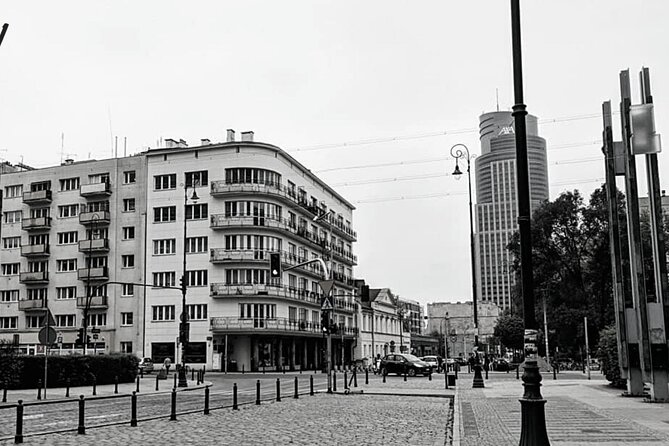
REVIEW · WALKING TOURS
Jewish Warsaw Walking Tour
Some stories survive in fragments. Warsaw’s Jewish history is one of them, and this 2.5-hour walk helps you read those fragments: a synagogue, a former ghetto boundary, a street crossing, and monuments that carry far more weight than their size suggests. I like the strong storytelling and the way the route connects scattered remains into one clear account. I also like that the walk ends at POLIN Museum, where you can continue learning on your own.
The main drawback is physical rather than intellectual. You spend much of the tour standing outdoors, and the group can include up to 40 people. The tour is also primarily historical, so if you want extensive synagogue interiors or many surviving Jewish buildings, you may find the route limited.
In This Review
- Key points to know before you go
- Why this walk matters in modern Warsaw
- Grzybowski Square and the surviving city
- Nozyk Synagogue, a rare surviving building
- Waliców and the former ghetto boundary
- Chlodna Street and the missing footbridge
- POLIN Museum and the Ghetto Heroes memorial
- Guide quality makes the difference
- Price, pace, and what your $26.59 buys
- Who will get the most from this experience
- Should you book the Jewish Warsaw Walking Tour?
- FAQ
- How long does the Jewish Warsaw Walking Tour last?
- What time does the tour begin?
- Where does the tour begin?
- Where does the tour end?
- Is transportation included?
- Is entry to POLIN Museum included?
- Is the tour offered in English?
- How large can the group be?
- Can I cancel for a full refund?
Key points to know before you go
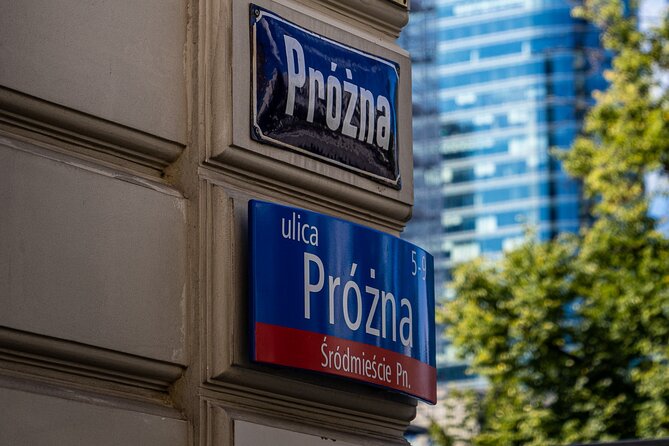
- The route begins at All Saints Church on Grzybowski Square, one of the few parts of Warsaw’s former ghetto area to survive wartime destruction.
- Nozyk Synagogue is the only surviving pre-war synagogue in Warsaw, though this walking tour does not promise an interior visit.
- Chlodna Street explains the ghetto footbridge, an especially vivid stop for understanding how the sealed district was divided.
- Guides such as Olivia, Jacek, Andrew, and Tomas receive high praise for clear explanations, strong storytelling, humor, and patient answers.
- The tour costs $26.59 per person, with the price covering the reservation fee and guide payment, while the operator still frames it as a pay-as-you-wish style tour.
- The walk runs in all weather, begins at 10:00 a.m., ends at POLIN Museum, and requires a moderate level of fitness.
Why this walk matters in modern Warsaw
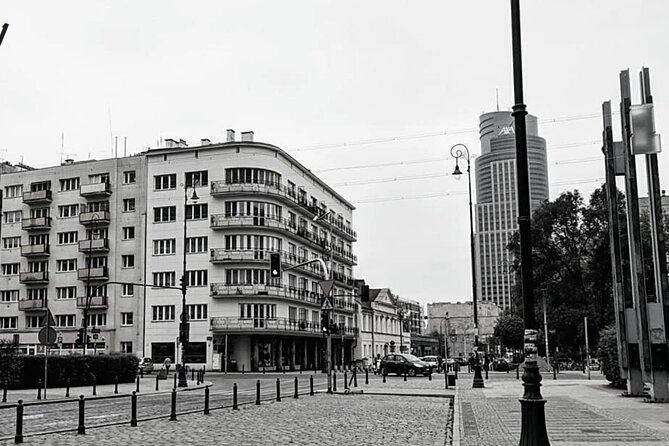
Warsaw’s Jewish quarter cannot be understood by looking for a single preserved old neighborhood. Nazi Germany and the Second World War destroyed most of the physical city, and postwar rebuilding changed the streets again. Much of the former Jewish district is now made up of newer buildings, roads, open spaces, and isolated memorials.
That can make independent sightseeing difficult. You may pass a plaque or monument without realizing what happened on that exact block. A good guide supplies the missing map, linking the places you see today with the streets, walls, borders, and communities that once occupied them.
This tour focuses on Polish Jewish life, the Warsaw ghetto, wartime destruction, and the monuments created afterward to preserve memory. The subject is painful, and the walk does not soften it. At the same time, guides bring in dry humor and small human details, which can help keep the experience from becoming a string of dates and tragedies.
I would choose this tour early in a Warsaw visit if you want the city’s twentieth-century story to make more sense. It gives you a framework for later visits to POLIN Museum and the Warsaw Uprising Museum, though only POLIN is part of this route.
More Walking Tours in Warsaw
- Warsaw: Old Town Highlights Walking Tour in English
★ 4.7 · 1,516 reviews - Warsaw: Old Town Guided Walking Tour
★ 4.9 · 599 reviews - Half-Day Polish Food Walking Tour with Guide and Dinner
★ 4.5 · 381 reviews
Grzybowski Square and the surviving city
The meeting point is All Saints Church at Pl. Grzybowski 3/5. The tour allows about 20 minutes here, and that opening pause does useful work. Grzybowski Square is one of the very few areas connected with the former Warsaw ghetto that survived the destruction around it.
You will not get a perfectly preserved Jewish quarter here. That is exactly why the stop matters. The square offers a physical starting point for comparing the city you see with the wartime city described by the guide.
Your guide will likely begin setting out the wider story here: the presence of Warsaw’s Jewish community before the war, the creation of the ghetto, and the destruction that followed. The best part of this opening is the sense of scale. You begin to understand that the tour is not only about monuments. It is about a community that once shaped a major part of Warsaw.
The square is also a practical meeting point. It is near public transportation, and the fixed 10:00 a.m. start gives you a clear morning plan. Arrive ready to begin on foot rather than expecting a vehicle transfer between stops.
Nozyk Synagogue, a rare surviving building
The next stop is Nozyk Synagogue, with about 30 minutes devoted to it. This is the only surviving pre-war synagogue in Warsaw, making it one of the most important physical links to the city’s Jewish past.
That single fact gives the building unusual weight. While many tour stops are places where something once existed, Nozyk Synagogue is an actual surviving structure. It helps you move from an imagined reconstruction to a building you can see and place in the modern city.
Do not assume that this walking tour includes a full interior visit. One useful piece of preparation is to treat the synagogue stop as a historical explanation and exterior landmark unless the guide confirms otherwise. A past participant specifically wished for even a brief look inside, so this is one area where expectations matter.
The guide’s interpretation is the main value here. Olivia receives especially strong praise for answering questions and explaining the subject with care. Other guides, including Jacek, Andrew, and Tomas, are also singled out for clear detail and strong command of the material. Since the operator uses a general tour format, your exact guide will shape the tone.
Waliców and the former ghetto boundary
Waliców receives about 30 minutes, making it one of the longer stops. The street once marked the ghetto border, and that fact turns an ordinary-looking urban space into a place for careful attention.
This is where a guided walk earns its price. Without explanation, you may see a street and continue on. With the historical boundary described, you can start to understand how the ghetto was imposed on the city and how sharply it divided people from the rest of Warsaw.
The stop also shows the tour’s central challenge. There is little physical material left in many places, so the guide has to reconstruct the past through words. A strong storyteller can make this work. One guide was praised for making the vanished quarter feel present through stories, while another used a dry sense of humor to keep the group engaged during difficult material.
You will spend much of the stop on your feet. The route is not described as strenuous hiking, but the overall experience involves a lot of standing and walking. Wear comfortable shoes and do not plan it as a relaxed indoor activity.
A completely different kind of day out in Warsaw:
- Warsaw: Chopin Concert in the Old Town
★ 4.8 · 2,287 reviews - Warsaw: Traditional Galar Cruise on The Vistula River
★ 4.6 · 1,640 reviews - Warsaw Concert: Chopin – Painted by Candlelights with Wine
★ 4.8 · 1,442 reviews - Warsaw: City Sightseeing Hop-On Hop-Off Bus Tour
★ 3.6 · 1,415 reviews
Chlodna Street and the missing footbridge
Chlodna Street is allotted around 20 minutes and includes a monument marking the footbridge that once connected two parts of the Warsaw ghetto. This may be the most immediately visual stop on the route because a bridge suggests movement, yet the ghetto was designed around control and separation.
The monument helps explain how the district was divided. People living on opposite sides could be physically close while still being separated by streets used by others. A footbridge also brings the wartime setting down to human scale. Instead of hearing only about borders on a map, you can picture people crossing above the road.
This stop is likely to be especially useful for visitors who have read about the ghetto but have trouble imagining its layout. The guide can connect Chlodna Street with Waliców and the other locations, turning separate points into a connected route.
Cold or windy weather can make this section less comfortable. The tour operates in all weather, and one person found the outdoor format difficult on a cold, windy day. Dress for the forecast, with an extra layer if needed. There is no promise of regular indoor breaks.
POLIN Museum and the Ghetto Heroes memorial
The route finishes at POLIN Museum of the History of Polish Jews on Mordechaja Anielewicza 6. About 20 minutes are assigned to the museum area, along with the 1948 Monument to the Ghetto Heroes.
The walk does not include museum admission. That is not necessarily a weakness. Ending here gives you the option to enter POLIN afterward at your own pace, rather than trying to absorb a major museum during a short outdoor tour.
I recommend treating the museum as a separate half-day plan if you want to see its galleries properly. The tour can give you the background needed to understand why the museum is here and why the monument in front of it matters. You can then decide how much more time your schedule allows.
The 1948 Monument to the Ghetto Heroes is a serious, restrained place. It commemorates the Jewish resistance fighters and gives the tour a strong final point. The supplied route also lists a final stop called the Monument to the Heroes of Warsaw, described as the Monument to the Ghetto Heroes, with about 30 minutes there. Since the descriptions overlap, confirm the exact final order with the guide or operator on the day.
Guide quality makes the difference
The strongest feature of this experience is the guide. The subject demands accuracy, tact, and the ability to explain events without turning the walk into a lecture. The best comments praise guides for detailed knowledge, fluent English, vivid storytelling, patience with questions, and a measured sense of humor.
Olivia is praised for her personality, careful explanations, and passion for telling Warsaw’s story accurately. Jacek is credited with painting a clear picture of Jewish Warsaw and the devastation caused by Nazi Germany and the war. Andrew is described as vivid and well documented, while Tomas receives praise for making Polish Jewish history accessible.
Those details matter because the route contains many gaps. You are not moving from one perfectly preserved building to another. The guide has to help you see what is missing and understand why it is missing.
The general group may contain up to 40 people. That is a reasonable maximum for a public walking tour, but it is not the same as a private experience. You may need to stay close to the guide, and questions may take longer when the group is full. If you want a smaller or private walk, the operator says it can arrange one separately.
The tour also makes its tipping structure clear from the start. The $26.59 price covers the reservation fee and the guide’s payment, yet the experience is presented as part of a pay-as-you-wish tour tradition, and you may be asked to consider an additional tip. I see this as something to budget for rather than a surprise. The guides receive strong praise, but you should know the full payment expectation before booking.
Price, pace, and what your $26.59 buys
At $26.59, this is a good-value introduction to a difficult part of Warsaw’s past. You get about 2 hours and 30 minutes with a professional local guide, a planned route, and interpretation that would be hard to recreate from signs alone.
The cost does not include transport to or from the attractions, hotel pickup, museum entry, or a guaranteed synagogue interior visit. That keeps the base price fairly focused: you are paying for the guided walk and the reservation arrangement.
The timing is also useful. A 10:00 a.m. start leaves much of the afternoon open for POLIN Museum, nearby memorials, or another Warsaw sight. The end point at POLIN is convenient if you want to continue there, but you must make your own way to the meeting point and home afterward.
The pace is not simply a brisk march. You will stop for long explanations, and much of the tour is spent standing while the guide talks. Some people expected more walking and found the standing tiring, especially in poor weather. If you have mobility concerns, keep this in mind even though the route is described as requiring moderate physical fitness.
Who will get the most from this experience
I would recommend this walk to you if you want a clear introduction to Jewish Warsaw before visiting POLIN Museum. It suits first-time visitors who have seen memorials but lack the context behind them, as well as people who have already explored Warsaw and want to understand the places they passed.
It is also a good choice if you value a human guide over an audio recording. The route depends on explanation, questions, and stories. Several guides use humor carefully, and that can make a heavy subject easier to follow without making it feel casual.
You may want something else if your priority is architecture, indoor sightseeing, or a long visit inside an active synagogue. The tour is mostly outdoors and historical. It cannot show you all the buildings that disappeared, and one afternoon walk cannot cover the full story of Polish Jewish life.
Children can join, but they must be accompanied by an adult. Service animals are allowed. The activity is near public transportation, and it runs in all weather, so choose clothing with the season in mind.
Should you book the Jewish Warsaw Walking Tour?
Book it if you want the city’s Jewish history explained by a strong English-speaking guide, and if you are willing to spend 2.5 hours outdoors with limited physical remains. The price is fair for the guide time and historical context, especially if you pair the walk with a later visit to POLIN Museum.
Before booking, be realistic about the format. This is a public tour that may reach 40 people, not a private conversation. Bring good shoes, dress for wind or rain, and allow extra money for a possible tip. Most important, reserve it for a day when you can give the subject your full attention. This is not a checklist of old buildings. It is a guided effort to understand a community through the few places and memorials that remain.
FAQ
How long does the Jewish Warsaw Walking Tour last?
The tour lasts approximately 2 hours and 30 minutes.
What time does the tour begin?
The tour starts at 10:00 a.m.
Where does the tour begin?
The meeting point is All Saints Church, Pl. Grzybowski 3/5, 00-115 Warszawa, Poland.
Where does the tour end?
The tour ends at POLIN Museum of the History of Polish Jews, Mordechaja Anielewicza 6, 00-157 Warszawa, Poland.
Is transportation included?
No. Transportation to and from the attractions is not included, and hotel pickup and drop-off are not provided.
Is entry to POLIN Museum included?
No. Museum admission is not included in the tour.
Is the tour offered in English?
Yes. The experience is offered in English and includes a local professional guide.
How large can the group be?
The tour can have a maximum of 40 travelers.
Can I cancel for a full refund?
Yes. You can cancel at least 24 hours before the local start time for a full refund. Cancellations or changes made less than 24 hours before the start are not accepted for a refund.
Just added around Warsaw
- Jewish heritage in Warsaw★ 4.5 · 3 reviews
- Warsaw Outdoor Paintball with Transfers (all year round)★ 5.0 · 3 reviews
- World War II Warsaw Old Town, Military Cemetery Walking Tour★ 4.7 · 3 reviews
- Warsaw: Wolf’s Lair & Swieta Lipka Small-Group Tour + Lunch★ 5.0 · 3 reviews
- Sunset Boat Tour with Unlimited Drinks in Warsaw★ 3.5 · 3 reviews
- Majdanek – German camp from II World War – Private Tour – 1 DAY TRIP FROM WARSAW★ 5.0 · 3 reviews
- From Warsaw: Guided Tour to Wieliczka Salt Mine and Krakow★ 4.5 · 3 reviews
- Warsaw Sightseeing with NEW Mercedes Sclass !!!★ 5.0 · 3 reviews
Walking Tours, compared.




Gdańsk City Sights & History Guided Walking Tour in English
Read our review →


Browse the lists this tour appears in