
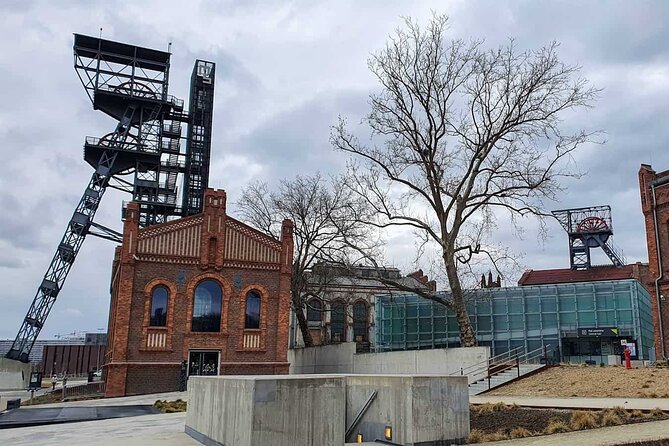
REVIEW · OLD TOWN WALKING TOURS
Katowice Old Town Walking Tour
Katowice has more layers than first appear. This private three-hour walk connects the city’s old streets, churches, political landmarks, and modern symbols, while explaining how Silesia’s Polish, German, Catholic, and Protestant influences shaped local life. I especially like the focus on culture rather than postcard sights, and the chance to walk through areas tied to music, theater, food, and everyday city life. The main consideration is the distance: you cover about 6.5 kilometers, so comfortable shoes and a moderate fitness level matter.
I also like the personal format. Your group has its own guide, and the route gives you time to ask questions instead of being swept along in a large crowd. Guide Malwina receives especially strong praise for turning the walk into a clear learning experience. The drawback is that the tour is mostly outdoors, and poor weather can lead to cancellation or a change of date.
In This Review
- Key points at a glance
- Starting at the Silesian Theatre on Market Square
- The Immaculate Conception Church and Silesian spirituality
- Music at the Academy of Music
- The Silesian Parliament and a region that changed hands
- Christ the King Cathedral and mixed religious influences
- From Miarka Square to Stawowa Street
- Monuments, memory, and resistance
- Finishing at Spodek, Katowice’s great symbol
- What the private format is worth
- Who should book this walk?
- Should you book the Katowice Old Town Walking Tour?
- FAQ
- Where does the Katowice Old Town Walking Tour start?
- Where does the tour end?
- How long is the walking tour?
- How far do you walk?
- Is this a private tour?
- What happens if the weather is poor?
Key points at a glance
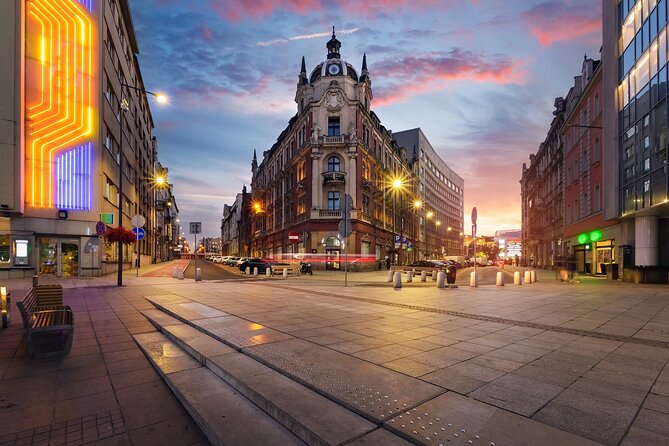
- 6.5-kilometer route: This is an active walk, not a short central-city stroll.
- A private experience: Only your group takes part, which allows for questions and a flexible conversation.
- Silesian identity at the center: Churches, uprisings, politics, music, and architecture all help explain the region.
- Strong guide-led history: Malwina is praised for her clear explanations and local insight.
- Free-entry stops: The price pays mainly for the guide’s time, interpretation, and private format rather than admission tickets.
- A mix of old and new Katowice: You pass nineteenth-century tenements, historic public buildings, and the futuristic Spodek arena.
Starting at the Silesian Theatre on Market Square
The walk begins at the Silesian Theatre, at Rynek 10. That puts you in a useful place to start: the central Market Square introduces Katowice as a city where older buildings, twentieth-century planning, shopping, entertainment, and public life sit close together.
The opening section includes the Silesian Theatre, the Skarbek and Zenit buildings, and some of the oldest structures in the city. Skarbek and Zenit are especially interesting because they recall the shopping culture of communist-era Poland. They were once symbols of the consumer dream, a reminder that department stores could carry enormous social meaning when goods were not always easy to find.
You get about 15 minutes here, so expect an orientation rather than an extended architectural study. That is a good use of time early in the walk. You can begin to read Katowice through its buildings, while your guide supplies the political and social background that façades alone cannot provide.
Market Square also serves as a window into present-day Katowice. It is connected with Silesia’s eating, drinking, and nightlife scene, so your guide may help you understand how the area functions after the sightseeing day ends. If you are deciding where to return later, pay attention to the streets and venues mentioned during this first stop.
More Old Town Walking Tours in Kraków
- Old Town Krakow & Wawel Castle Walking Tour
★ 5.0 · 1,508 reviews - Krakow: Bike Tour of Old Town, Jewish Quarter and the Ghetto
★ 4.9 · 1,155 reviews - Krakow: The Old Town Walking Tour
★ 4.8 · 794 reviews
The Immaculate Conception Church and Silesian spirituality
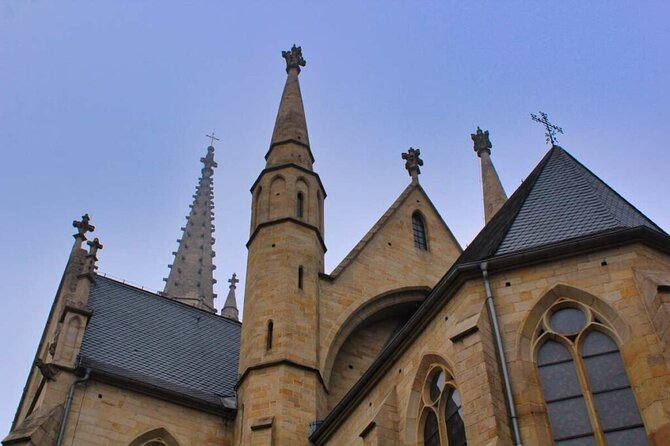
The Church of the Immaculate Conception, often called Kosciol Mariacki, brings a more traditional architectural note to the route. You spend around 10 minutes here, mainly taking in the exterior and the artworks inside.
The church is described as striking from outside, but the interior matters just as much. Works by leading Polish artists give the visit more depth than a quick look at another religious building. This is a useful stop for understanding how art and faith have helped express local identity.
The short timing means you should not expect a long museum-style visit. Still, the church works well as part of the larger story. Katowice is not presented as a city with one simple cultural character. Instead, you see different religious and national influences appearing in its buildings, art, and public traditions.
If you want photographs, take them quickly and respectfully. A church visit is best treated as a cultural stop, not just a backdrop for pictures. Your guide’s explanation is likely to be the most valuable part because the exterior alone does not explain why the building matters.
Music at the Academy of Music
The Academy of Music in Katowice receives only about seven minutes, but it gives the route a strong cultural link. It is regarded as Poland’s most prestigious music academy, making it one of the city’s important institutions rather than simply another attractive building.
This stop helps explain why music belongs in a walking tour of Katowice. The city’s cultural life is not limited to galleries and theaters. Formal music education also shapes its reputation and gives the center a sense of purpose beyond offices, shops, and traffic.
The short visit is a reminder that this is a broad city overview. You will not tour the academy or attend a performance. Instead, you pause, learn why it matters, and move on. I find that approach useful if you are visiting Katowice for the first time and want a sense of the city’s cultural structure before choosing what to explore on your own.
The Silesian Parliament and a region that changed hands
The former Silesian Parliament is one of the most important historical stops. You spend roughly 10 minutes here, examining the former seat of parliament for the autonomous Silesia region.
This building opens the door to the complicated question of Silesian identity. The region changed hands between Slavic and German powers, and the political status of Silesia has shifted over time. That background helps make sense of the architecture, language, religious differences, and regional pride you encounter throughout the walk.
The parliament stop is valuable because it moves the tour beyond a simple Polish national story. Silesia has its own regional experience, and Katowice makes more sense when you understand that local identity can sit alongside Polish identity rather than being replaced by it.
The tour also points out a favorite local theater with an informal atmosphere. The exact name is not specified in the tour details, but the inclusion fits the route’s focus on living culture. You are not only looking at official institutions. You are also hearing about places where people gather for performances and social events today.
More Walking Tours in Kraków
- Creepy Krakow: 2-Hour City Walking Tour
★ 4.7 · 1,131 reviews - Krakow: Kazimierz Jewish Quarter Walking Tour
★ 4.8 · 571 reviews - Kraków: Old Town & Wawel Castle Walking Tour in English
★ 4.8 · 532 reviews - Krakow: Evening Walking Tour with Spooky Stories
★ 4.7 · 500 reviews
Christ the King Cathedral and mixed religious influences
Christ the King Cathedral offers one of the clearest visual contrasts on the walk. From the outside, it appears Catholic. Inside, the atmosphere is described as more Protestant in character.
That contrast is used to explain Silesia’s mixed origins and spiritual life. You are not simply ticking off another church. You are looking at how a region’s changing political and cultural ties can appear in religious spaces.
The visit lasts about 10 minutes. That is enough to notice the difference between exterior and interior, then hear the guide connect the building to the wider story of Silesia. It is one of the stops where a good explanation matters more than the amount of time spent inside.
I would give this part your full attention, especially if you are interested in Central European history. Religious buildings often provide the clearest clues to a city’s past, and this cathedral offers a compact example of that idea.
From Miarka Square to Stawowa Street
The longest section of the walk takes about 30 minutes and passes through Miarka Square, Dworcowa Street, and 3 Maja Street before reaching Stawowa. This is where the tour shifts from individual landmarks to the texture of central Katowice.
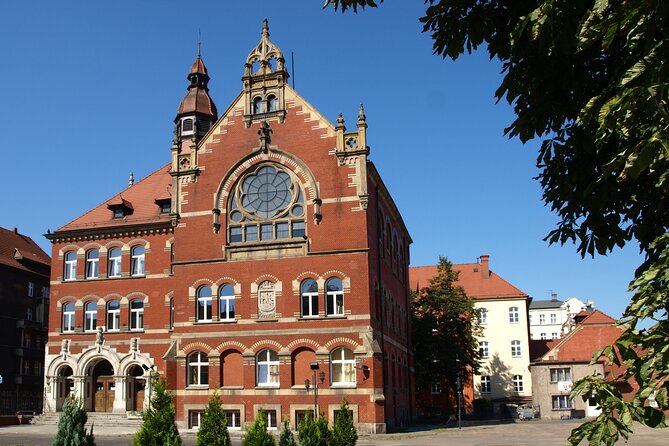
You see nineteenth-century tenements and the oldest high school in Katowice. These streets are useful because they show how the city developed as an urban center, not just as a collection of grand public buildings. Look upward at the façades as you walk. Details on upper floors can tell you more about the city’s growth than a quick glance at the shopfronts.
Stawowa adds another side of local life. It is part of the central route where shops, food, and public movement come together. The walk does not treat Katowice as a museum frozen in the past. You see an active city shaped by old buildings and modern routines.
This is also the point where the walking distance becomes noticeable. The route is about 6.5 kilometers in all, and the stop-to-stop movement forms a substantial part of the experience. You will want supportive shoes, water, and a willingness to keep moving. There is no need for athletic ability, but anyone expecting a gentle 90-minute stroll may find the pace and distance more demanding.
Monuments, memory, and resistance
The route includes a monument honoring Silesian scouts who opposed the Nazis in 1939. The exact stop name is not provided, but its subject gives the place real weight. It connects local youth, resistance, and the opening period of the Second World War.
A later stop is devoted to the Silesian Insurgents’ Monument, or Pomnik Powstancow Slaskich. Its three large wing-like forms commemorate the three Silesian uprisings. The visit lasts about 10 minutes.
The monument is one of Katowice’s clearest symbols of regional political memory. The uprisings were tied to the struggle over Silesia’s future, so the monument fits directly with the earlier discussion of changing borders and local identity. Your guide can help connect the monument to the parliament, the churches, and the broader question of who has claimed this region over time.
There is also a venue used for art exhibitions, international meetups, and other events. The details do not specify its name, but its role is clear: Katowice’s identity is still being shaped through public gatherings and cultural programs. That makes a useful bridge between historical memory and present-day city life.
Finishing at Spodek, Katowice’s great symbol
The final major stop is Spodek, the saucer-shaped arena widely recognized as a symbol of Katowice. You spend about 10 minutes here before returning to the Silesian Theatre.
Spodek gives the walk a strong ending because it looks so different from the churches, tenements, and parliament building earlier in the route. Its form represents a more modern Katowice, one associated with large events, entertainment, and twentieth-century architecture.
You do not need a long visit to understand why it matters. The building is memorable at a glance, and its place in the city’s public image makes it a natural final stop. After several hours of older political and religious history, Spodek shows you how Katowice also presents itself as a modern urban center.
Ending where you began is convenient. You are not left at an unfamiliar edge of town, and you can easily continue with dinner, a drink, or another central-city visit.
What the private format is worth
The cost is $81.62 per person. Since all listed stops have free admission, you are paying primarily for a private guide, planning, interpretation, and the ability to focus on your own group’s interests.
That can be good value if you want context. Katowice’s story is not always obvious from the street. A building may look Polish, German, Catholic, Protestant, communist, or modern depending on what you know about it. A capable guide turns those separate sights into one understandable story.
The private setup is particularly useful for couples, families, or small groups who prefer questions and conversation. If your group has a special interest in architecture, religion, music, or Silesian politics, you can ask for more explanation in those areas. The tour is offered in English, and Malwina is praised for her experience and clear teaching style.
Group discounts may improve the per-person value for larger parties. Solo visitors should think carefully about the cost, since the same private price structure may feel higher when paid by one person. Still, a solo booking can provide unusually direct access to the guide. One solo customer received the guide’s full attention, which made the walk feel like a personal lesson rather than a standard group outing.
Who should book this walk?
I would choose this tour if you want to understand Katowice rather than simply photograph it. It suits people interested in Central European borders, regional identity, religious architecture, music, public monuments, and twentieth-century urban design.
It is also a good first activity in the city. The route covers enough ground to help you get oriented, and the guide can point out areas connected with food, nightlife, theater, and cultural events. You can then decide where to spend more time on your own.
You may want a different experience if you prefer interior visits, museums, or a slow architectural stroll. Many stops last only 7 to 15 minutes, and the tour keeps moving. The 30-minute Stawowa section adds useful street-level context, but it also confirms that this is an active overview rather than a series of long visits.
The weather policy deserves attention. This experience requires good weather, and poor conditions can lead to another date or a full refund. You can cancel for a full refund up to 24 hours before the start time, but cancellations or changes made inside that window are not refunded or accepted. Service animals are allowed, and the meeting point is near public transportation.
Should you book the Katowice Old Town Walking Tour?
Book it if you want a private, English-language introduction to Katowice with real attention to Silesian identity. The best parts are the guide-led connections between the churches, parliament, uprisings, old tenements, music academy, and Spodek. This is a city story told through streets and institutions, not a parade of isolated sights.
Before booking, be honest about the 6.5-kilometer distance and the outdoor format. If you have moderate fitness, good shoes, and an interest in how borders and cultures shape a place, the $81.62 price can be justified by the private guidance. If you only want a brief look around Market Square, this tour will ask more time and energy than you need.
FAQ
Where does the Katowice Old Town Walking Tour start?
The tour starts at the Silesian Theatre, Rynek 10, 40-003 Katowice, Poland.
Where does the tour end?
The activity ends back at the Silesian Theatre meeting point.
How long is the walking tour?
The tour lasts approximately three hours.
How far do you walk?
You walk about 6.5 kilometers during the experience, so a moderate level of physical fitness is recommended.
Is this a private tour?
Yes. Only your group participates in the activity.
What happens if the weather is poor?
The experience requires good weather. If it is canceled because of poor weather, you will be offered another date or a full refund.
Just added around Kraków
- Rynek Underground Museum & Wawel Castle, Cathedral – Cracow★ 5.0 · 3 reviews
- Schindler’s Factory, Ghetto and Plaszow Camp Guided Tour★ 4.7 · 3 reviews
- Nowa Huta – a guided tour of a utopian socialist city★ 5.0 · 3 reviews
- Krakow: Kazimierz by Golf Cart and Schindler’s Factory Tour★ 4.8 · 3 reviews
- Private Krakow City Tour by Car and Walk with private tour guide★ 5.0 · 3 reviews
- Krakow: Jewish Traces Private Electric Car Tour★ 4.1 · 3 reviews
- Discover the Jewish Quarter with a Bike Tour★ 5.0 · 3 reviews
- Krakow: Indoor Go-Karting (24-Minute Races)★ 4.8 · 3 reviews
Old Town Walking Tours, compared.




Bike Tour of Old Town, Jewish Quarter and the Ghetto
Read our review →

Sightseeing EcoCruise around the Old Town of Gdansk
Read our review →
Browse the lists this tour appears in