
REVIEW · OLD TOWN WALKING TOURS
Krakauer old town tour
Krakow keeps its medieval heart beating. This 150-minute walking tour brings together the city’s best-known sights, from the Barbican and Main Market to Wawel Castle and the dragon below the hill. I like the carefully ordered Royal Route, which helps you understand how Krakow’s streets connect, and I like the focus on kings, scholars, churchmen, and legends rather than on dates alone. The main drawback is pace: one review found parts of the walk rushed, so anyone who prefers long stops for photographs may feel hurried.
The German-language guiding is another strong point. Monika, named in one especially positive review, was praised for clear German, charm, humor, and a large store of useful information. The tour is also wheelchair accessible and runs in any weather, though you should wear sensible shoes and bring rain protection if the forecast looks poor.
In This Review
- Key points at a glance
- Starting between the Barbican and St. Florian’s Gate
- Walking the Royal Route into Main Market Square
- St. Mary’s Basilica and the trumpeter’s call
- Collegium Maius and Krakow’s academic past
- The Archbishopric Palace and the papal window
- Wawel Hill, the Cathedral, and the castle courtyard
- Meeting the Wawel Dragon
- Why the UNESCO setting matters
- The guide style and the German-language experience
- Is $26 good value for 150 minutes?
- Timing, weather, and practical comfort
- Who should book this Krakow walk?
- Should you book the Krakow Old Town tour?
- FAQ
- How long does the Krakow Old Town tour last?
- What language is the tour conducted in?
- Where does the tour meet?
- Is the tour wheelchair accessible?
- Does the tour run in bad weather?
- What sights are included on the route?
- Are Collegium Maius and the Wawel King’s Palace included?
- Can I cancel the booking for a full refund?
Key points at a glance
- The meeting point sits between Krakow’s Barbican and St. Florian’s Gate, an easy place to begin beside two major medieval defenses.
- The Royal Route links the city’s main sights, including Main Market Square, St. Mary’s Basilica, Collegium Maius, and Wawel Hill.
- Collegium Maius adds an academic side to the tour, with connections to Krakow’s old university and Nicolaus Copernicus.
- Wawel Castle and Cathedral bring royal Krakow into focus, with the palace courtyard included in the visit.
- The Wawel Dragon supplies a welcome dose of legend, balancing the churches, palaces, and formal history.
- The tour is conducted in German, lasts two and a half hours, and has a 4.8 rating from 95 reviews.
Starting between the Barbican and St. Florian’s Gate
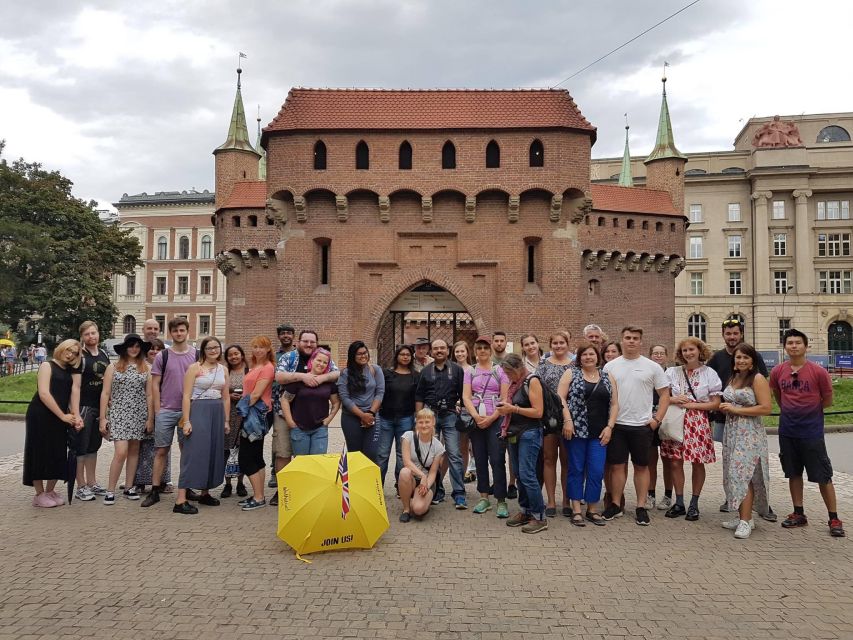
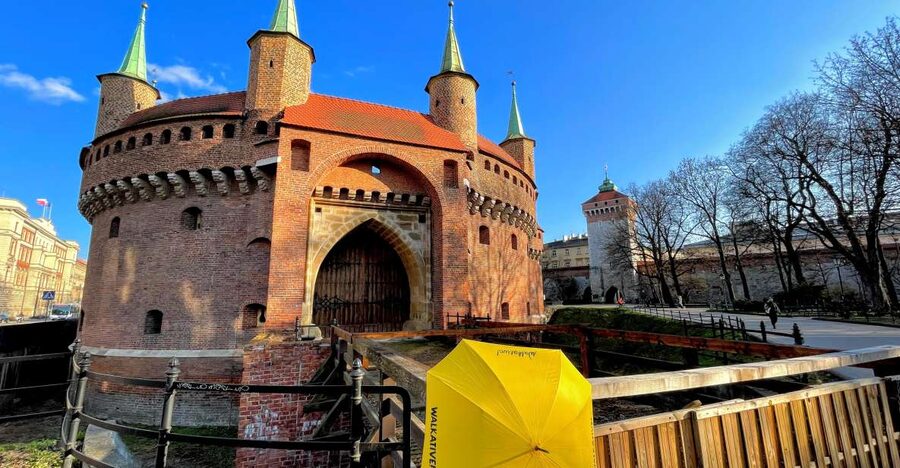
The walk begins at a small meeting point between the Barbican and St. Florian’s Gate. This is a smart starting place because you meet Krakow first as a fortified medieval town, not simply as a collection of attractive buildings.
The Barbican is the round defensive structure outside the old city walls. St. Florian’s Gate was the medieval entrance into the city, and the route from here leads naturally toward the Old Town. You do not need a separate history lesson before arriving. The setting itself introduces the basic story: Krakow was protected, prosperous, and important enough to require serious defenses.
I would arrive a little early. The meeting point is described as small, so finding the exact group may take more care than locating a large hotel lobby or a famous square. Since hotel pickup and return transport are not included, you make your own way to the start and leave from the final stop independently.
More Old Town Walking Tours in Kraków
- Old Town Krakow & Wawel Castle Walking Tour
★ 5.0 · 1,508 reviews - Krakow: Bike Tour of Old Town, Jewish Quarter and the Ghetto
★ 4.9 · 1,155 reviews - Krakow: The Old Town Walking Tour
★ 4.8 · 794 reviews
Walking the Royal Route into Main Market Square
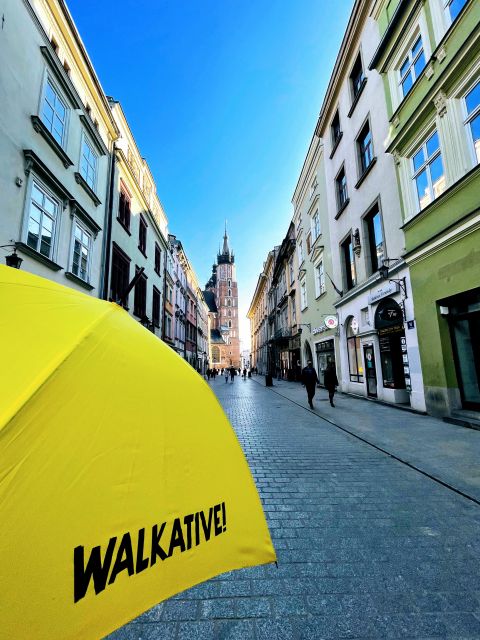
From the city gate, the tour follows Krakow’s Royal Route. This old ceremonial path connected the entrance to the city with the royal center on Wawel Hill. Walking it gives the tour a clear purpose: you are not just ticking off sights, you are following the route used by kings and important visitors.
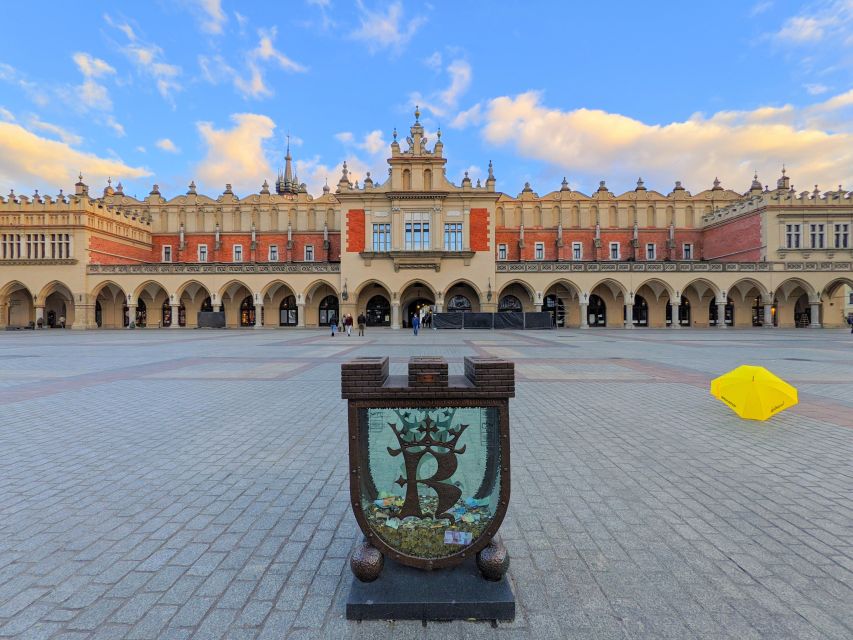
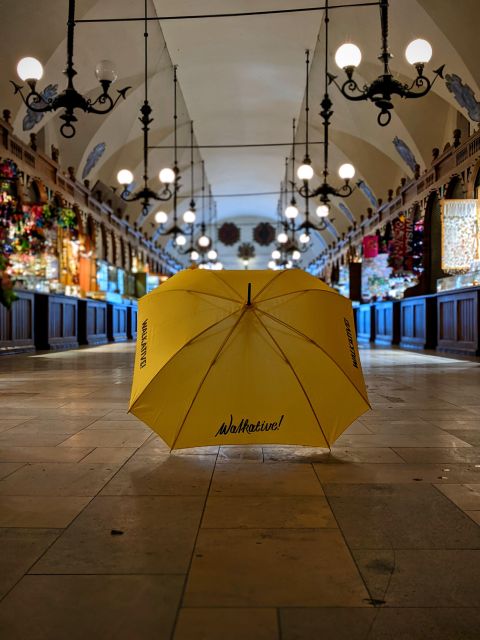
The route reaches the Main Market Square, one of Krakow’s defining spaces. The square is broad and easy to understand, with the Cloth Hall at its center. The hall, known in Polish as Sukiennice, recalls the commercial life that helped make Krakow a powerful city. Its presence also makes the square more than a pretty open space. This was a place for trade, public business, religious ceremony, and royal display.
The tour’s value here comes from having a guide explain how the square fits into Krakow’s wider story. Without context, you may see the Cloth Hall as a photogenic building and move on. With a good explanation, you begin to see why the square became the city’s social and economic center.
The square is also one of the places where the pace may feel brisk. There is a lot to see, and the group must keep moving to cover the route in 150 minutes. If you want careful architectural photographs from every angle, you may need to return later on your own.
St. Mary’s Basilica and the trumpeter’s call
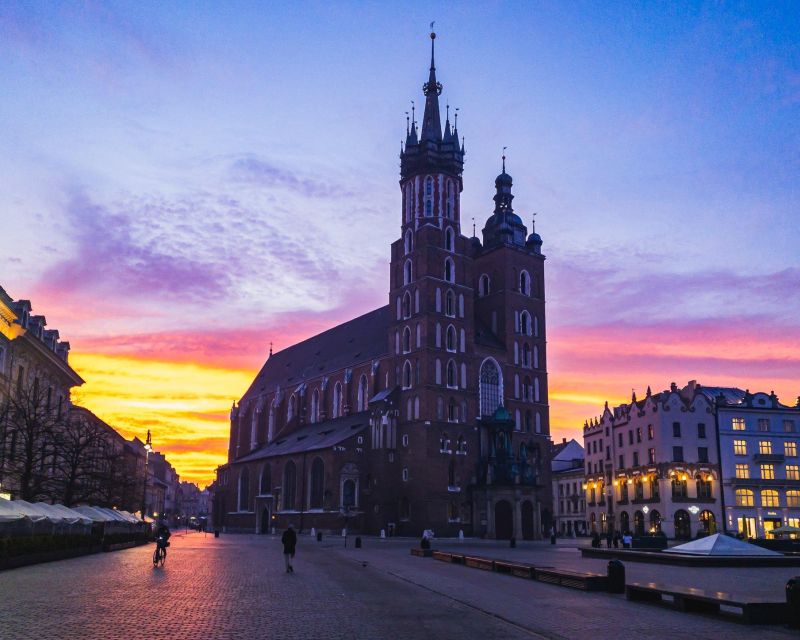
St. Mary’s Basilica is one of the tour’s essential stops. Its twin towers dominate the Main Market Square, and the church is closely linked with one of Krakow’s best-known traditions: the trumpeter who plays from the tower.
The interrupted trumpet call is tied to a medieval warning story. The tour uses this legend as part of the city’s wider collection of tales about danger, faith, rulers, and survival. That mix of fact and folklore works well in Krakow. A walking tour should not treat the city as a museum label. The dragon and the trumpeter belong here because local identity is built from stories as much as stone.
You should expect an exterior-focused explanation unless the guide indicates otherwise. The information confirms the church as a stop, but it does not promise an extended interior visit or a religious service. If seeing the inside is important to you, ask the guide about the planned access on the day.
Collegium Maius and Krakow’s academic past
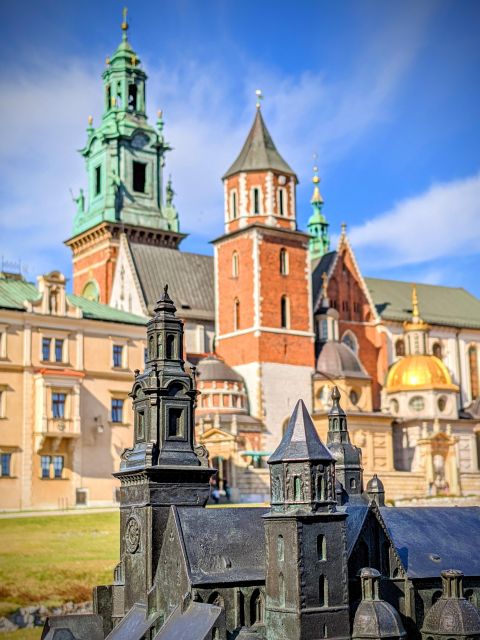
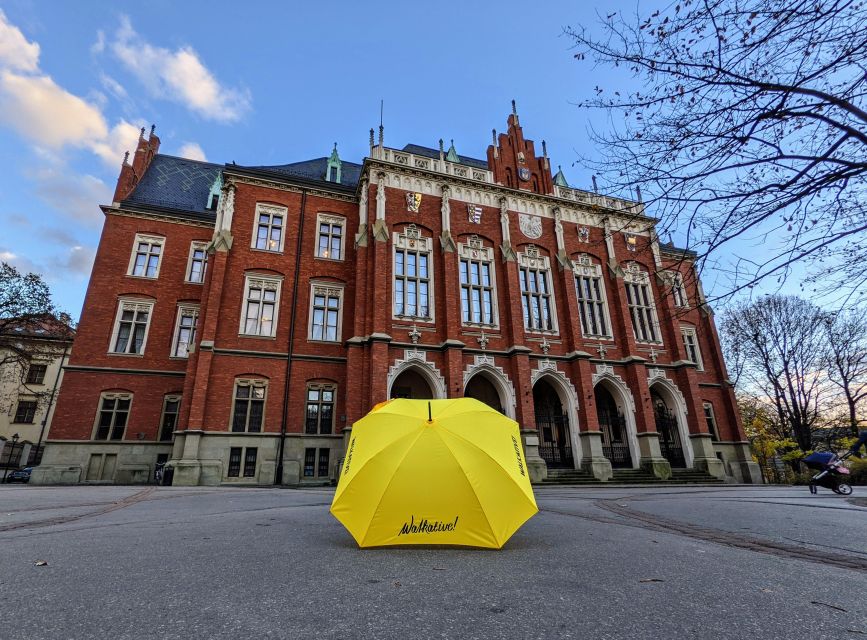
Collegium Maius changes the mood of the walk. After fortifications, merchants, and church towers, you reach the oldest building at the oldest university in Central and Eastern Europe, according to the tour information.
This is one of the more distinctive parts of the route because it shows Krakow as a center of study, not only a royal capital. Artists, scholars, and leading figures from across Europe were drawn to the city. The tour also connects these streets with Nicolaus Copernicus, who studied at the university.
The inclusion says you will visit Collegium Maius, rather than simply pause outside. That matters. A palace courtyard or university interior can make the past feel more tangible than another explanation in a square. Still, the experience does not specify how much time is spent inside, which rooms are open, or whether there are restrictions on the day. Keep your expectations focused on a guided introduction, not a private academic tour.
For anyone interested in architecture, education, or the development of European thought, this stop adds welcome variety. Families may also appreciate it because the Copernicus connection gives younger minds a recognizable figure to hold onto.
A completely different kind of day out in Kraków:
- From Krakow: Auschwitz-Birkenau Guided Tour & Hotel Pickup
★ 4.5 · 33,358 reviews - From Krakow: Auschwitz-Birkenau Guided Tour & Hotel Pickup
★ 4.5 · 29,340 reviews - Krakow: Auschwitz Guided Tour with Optional Hotel Pickup
★ 4.5 · 15,280 reviews - Krakow–Zakopane: Cable Car, Chocholow Baths, Cheese & Vodka
★ 5.0 · 10,720 reviews
The Archbishopric Palace and the papal window
The route continues to the Archbishopric Palace, linked with Pope John Paul II and the famous papal window. This stop brings Krakow’s modern religious memory into the medieval center.
The window became associated with John Paul II during his years as Archbishop of Krakow and later during visits to the city as pope. The stop is brief in physical terms, but it helps show how Krakow’s story continued long after the Middle Ages. Kings and scholars are not the whole picture. The city also shaped major religious and political life in the 20th century.
This is a good example of the tour’s broad time span. You move from medieval gates to royal ceremony, university study, and recent Catholic memory without leaving the compact Old Town. The guide’s job is to connect those periods so the city does not feel like a random sequence of monuments.
Wawel Hill, the Cathedral, and the castle courtyard
The final major section leads toward Wawel Hill. This is where Krakow’s royal identity comes fully into view. Wawel Cathedral and the castle are part of the UNESCO World Heritage Site, along with the Old Town, and the hill has long been the city’s symbolic center.
The cathedral is tied to Poland’s monarchs and national figures. The castle courtyard gives you a sense of the royal complex as a working seat of power, not merely a grand building for photographs. The tour includes a visit to the Wawel King’s Palace, although the supplied details do not specify which palace rooms or exhibitions are included.
That distinction is useful. Wawel is a large complex with more to see than any 150-minute city walk can cover. This tour gives you an organized introduction, but it is not a substitute for a separate, slower castle visit if royal interiors are high on your list.
The hill also changes the physical rhythm of the walk. Most of the route passes through streets and squares, while Wawel offers a more open setting and a stronger sense of arrival. Comfortable shoes will help, especially if you are managing a wheelchair or mobility aid. The tour is described as wheelchair accessible, but Krakow’s historic surfaces and the details of individual entrances can still affect how easy each stop feels. It is sensible to confirm current access needs when booking.
Meeting the Wawel Dragon
Below Wawel Hill, the Wawel Dragon adds a playful finish. The creature belongs to Krakow’s founding legend and is one of the city’s most popular symbols.
A dragon story might seem far removed from kings and university buildings, but that is exactly why it works. Krakow’s identity includes serious royal ceremony, church tradition, scholarship, and a monster said to have lived beneath the hill. The legend gives the walk a lighter final note and helps children stay interested after a long sequence of historical explanations.
Do not expect a long attraction visit or a theatrical show. The dragon is presented as one stop within the walking route. Its value is the story, the location, and the connection to local tradition.
Why the UNESCO setting matters
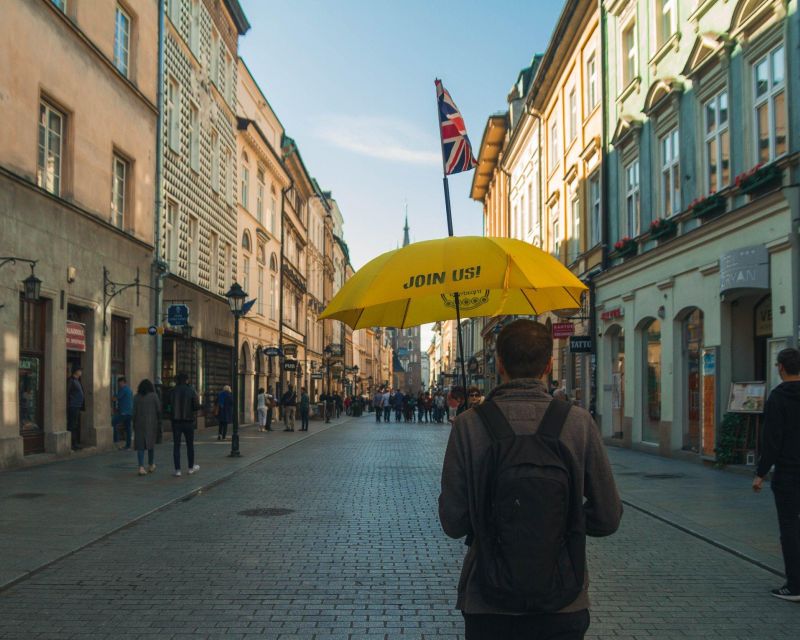
Krakow’s Old Town and Wawel Castle belong to the UNESCO World Heritage Site for clear reasons: the medieval street plan remains unusually intact, the architecture covers several important periods, and the royal and civic centers still read as one connected urban space.
The phrase perfectly preserved should not make you expect a frozen town with no modern life. Krakow is an active city center. Shops, restaurants, traffic, and daily city life share space with the monuments. What has survived is the historic structure and much of the architectural character, not a sealed medieval stage set.
A guide helps you notice the links between places. The Barbican explains defense. The Main Market explains commerce. St. Mary’s explains religious life and local legend. Collegium Maius explains learning. Wawel explains royal power. The dragon explains the city’s imagination. That sequence is the best reason to take the walk early in your Krakow visit.
The guide style and the German-language experience
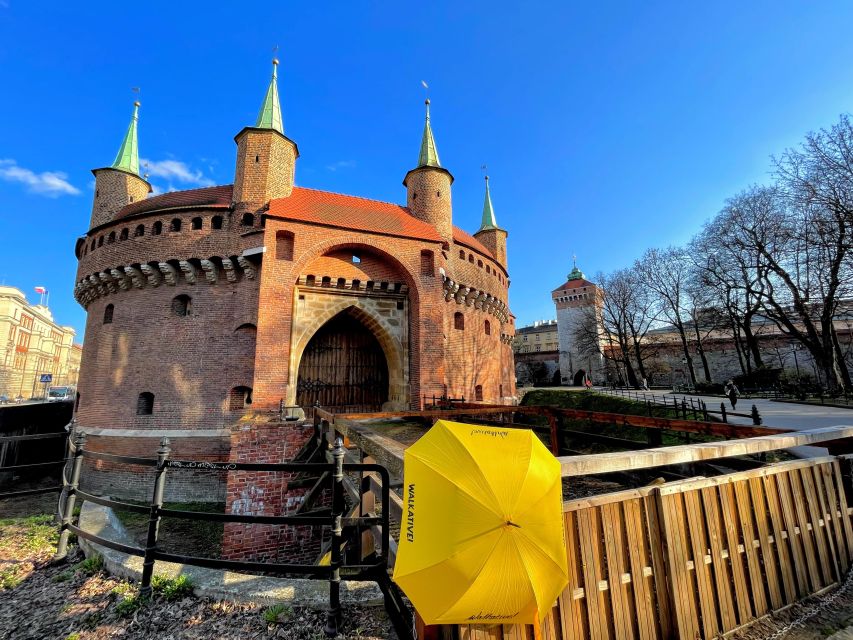
The tour is conducted in German, and this is an important booking condition. If German is not comfortable for you, this is not the right choice simply because the route is convenient.
The strongest praise centers on the guides’ delivery. Monika was specifically praised for excellent German, competence, humor, and an entertaining manner. Another review described the walk as informative and enjoyable, while a further review praised a friendly guide and a fine touch of humor.
That combination matters. Krakow has a lot of history, and a guide who only recites names can make even a beautiful route feel like school. A clear story, good timing, and occasional humor help the information stick. The one less positive comment is worth taking seriously: parts of the walk may feel fast or hurried because another group is close behind. You should see this as a structured overview, not a slow private stroll.
Is $26 good value for 150 minutes?
At $26 per person, the tour offers a solid amount of sightseeing for the price. You get a local guide, a planned route, explanations at major landmarks, and visits connected with Collegium Maius and the Wawel King’s Palace. Paying for a guide is especially useful in Krakow because several stops are valuable mainly when you understand the story behind them.
There is one pricing detail to check carefully. The experience is also described as a Pay What You Wish walk, while the stated price is $26 per person. Those descriptions do not fully match. Before booking, confirm whether $26 is a standard reservation price, a suggested contribution, or a platform display amount.
The value is strongest if you want orientation on your first day. You can then return to the Main Market, St. Mary’s, or Wawel for longer visits. If you already know Krakow well and prefer to spend an hour inside one museum, the broad route may feel less useful.
There is no hotel pickup, return transport, or snack. That is normal for a city walking tour, but budget time and money for getting to the meeting point and for food afterward.
Timing, weather, and practical comfort
The walk lasts 150 minutes, or two and a half hours. That is long enough to cover the main historic core without taking up an entire day, but it is still a serious walk. Wear shoes that suit historic streets, and carry water if you need it.
The tour runs in any weather. If rain or cold arrives, the guide finds a roof, but you should not read that as a promise of indoor shelter for the entire route. A light waterproof layer and warm clothing are sensible choices outside the height of summer.
Free cancellation is available up to 24 hours before the start, and the reserve-now, pay-later option keeps your plans flexible. Wheelchair access is listed, which is helpful, but you should still communicate any specific mobility needs in advance because historic buildings can have uneven surfaces or different entrance arrangements.
Who should book this Krakow walk?
I would recommend it to a first-time Krakow visitor who wants the major sights explained in a sensible order. It also suits anyone who enjoys stories about rulers, religious figures, scholars, and local legends in the same walk.
German-speaking families could find the dragon, trumpeter, and royal stories especially useful for keeping the route lively. The walk also suits visitors with limited time, since it places the Old Town and Wawel in one compact experience.
You may want another option if you need a very slow pace, long photography stops, or detailed access to every castle room. The tour covers a lot, and that means some stops will be introductions rather than extended visits.
Should you book the Krakow Old Town tour?
Book it if you want a strong first look at Krakow’s historic center, especially in German. The Royal Route, UNESCO setting, Collegium Maius, Wawel Castle, and dragon legend create a well-rounded introduction, and the high rating reflects consistently positive impressions of the guiding.
Before paying, clarify the unusual difference between the $26 price and the Pay What You Wish description. Also allow for a brisk pace and arrive ready for two and a half hours on foot. If those points suit your plans, Walkative Tours offers a useful way to understand why Krakow’s Old Town feels like one connected story rather than a pile of separate sights.
FAQ
How long does the Krakow Old Town tour last?
The tour lasts 150 minutes, which is two and a half hours.
What language is the tour conducted in?
The live tour guide conducts the experience in German.
Where does the tour meet?
The meeting point is a small place between Krakow’s Barbican and St. Florian’s Gate, the medieval entrance to the city.
Is the tour wheelchair accessible?
Yes, the activity is described as wheelchair accessible.
Does the tour run in bad weather?
Yes. The tour takes place in any weather. If it rains or becomes cold, the guide finds a roof.
What sights are included on the route?
The route includes the medieval city walls and Barbican, Main Market Square and the Cloth Hall, St. Mary’s Church and its trumpeter, Collegium Maius, the Archbishopric Palace and papal window, Wawel Hill, Wawel Cathedral, the castle courtyard, and the Wawel Dragon.
Are Collegium Maius and the Wawel King’s Palace included?
Yes. The included experiences specify a visit to Collegium Maius and the Wawel King’s Palace.
Can I cancel the booking for a full refund?
Yes. You can cancel up to 24 hours in advance for a full refund. The reserve-now, pay-later option is also available.
Just added around Kraków
- Rynek Underground Museum & Wawel Castle, Cathedral – Cracow★ 5.0 · 3 reviews
- Schindler’s Factory, Ghetto and Plaszow Camp Guided Tour★ 4.7 · 3 reviews
- Nowa Huta – a guided tour of a utopian socialist city★ 5.0 · 3 reviews
- Krakow: Kazimierz by Golf Cart and Schindler’s Factory Tour★ 4.8 · 3 reviews
- Krakow: Jewish Traces Private Electric Car Tour★ 4.1 · 3 reviews
- Private Krakow City Tour by Car and Walk with private tour guide★ 5.0 · 3 reviews
- Krakow: Indoor Go-Karting (24-Minute Races)★ 4.8 · 3 reviews
- Discover the Jewish Quarter with a Bike Tour★ 5.0 · 3 reviews
Old Town Walking Tours, compared.




Bike Tour of Old Town, Jewish Quarter and the Ghetto
Read our review →

Sightseeing EcoCruise around the Old Town of Gdansk
Read our review →
Browse the lists this tour appears in