
REVIEW · OLD TOWN WALKING TOURS
Krakow Old Town Walking Tour
Krakow rewards a good first walk. I like the 9:45 a.m. start, which gives you a calm way to get oriented before a full day of sightseeing, and I like that the route links the Market Square, Jagiellonian University, Wawel Cathedral, and the royal castle area. The main drawback is that the tour lasts about three hours, so you will need comfortable shoes and enough time afterward for your own castle visit or lunch.
This is a useful introduction to a city whose medieval center is easy to underestimate. You get a guide, a mobile ticket, admission to Wawel Cathedral, and a small group capped at 25 people for $29.52 per person. That price is fair if you want context and direction, but less appealing if you prefer to wander alone with an audio guide.
In This Review
- Key points to know before booking
- Why this is a smart first look at Krakow
- Meeting at Rynek Główny at 9:45 a.m.
- Reading the Main Market Square as a working city
- Jagiellonian University and Krakow’s intellectual life
- Inside Wawel Cathedral for about 20 minutes
- Wawel Royal Castle and the Italian connection
- Meeting Krakow’s fire-breathing dragon
- Is $29.52 a fair price?
- Pace, group size, and practical planning
- Who will get the most from this Old Town walk?
- Should you book the Krakow Old Town Walking Tour?
- FAQ
- Where does the Krakow Old Town Walking Tour start?
- What time does the tour begin?
- Where does the tour finish?
- Is admission to Wawel Cathedral included?
- How many people can join the tour?
- Can I cancel for a refund?
Key points to know before booking
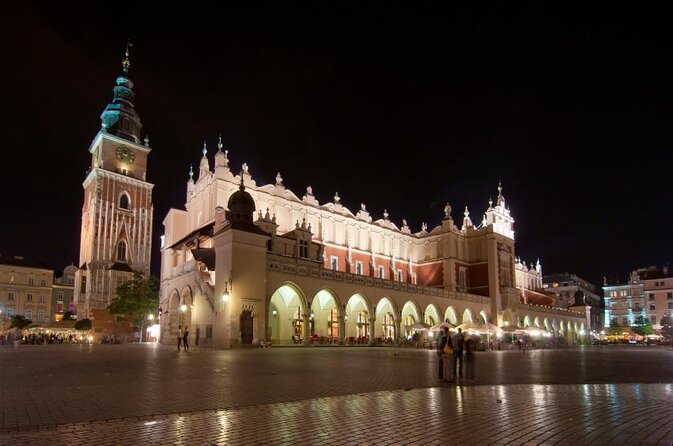
- The walk starts beside the Town Hall Tower on Krakow’s huge Main Market Square.
- Wawel Cathedral admission is included, with royal tombs, bishops’ sarcophagi, and church history explained along the way.
- The route covers Krakow’s essential center, including the square, Jagiellonian University, Wawel Royal Castle, and the dragon symbol.
- The 25-person maximum matters, since a guide can usually keep a group moving and answer more questions than on a large coach tour.
- The company has a strong record for friendly guiding, especially through guide Basia Polarczyk, whose past tours earned praise for clear English, good preparation, and an easy manner with families.
- You must book at least three people together, and cancellations are free up to 24 hours before the 9:45 a.m. start.
Why this is a smart first look at Krakow
Krakow’s Old Town is compact on a map but full of layers. The Main Market Square is enormous, streets leave it in several directions, and Wawel Hill sits close enough to tempt you onward before you have figured out what you are seeing.
I like a walking tour here because the city rewards explanation. A guide can point out the traces of defense, trade, royal power, university life, church ceremony, and local legend without forcing you to stop and read every sign. You spend your time looking up instead of checking your phone.
The route is also well shaped for a first morning. You begin in the city’s main public room, move through its intellectual center, enter one of Poland’s most important cathedrals, and finish near the royal complex. By the end, you should know where the major sights sit in relation to one another.
The group limit of 25 is not tiny, but it is manageable. You will still want to stay close to the guide, especially around the square, yet the size should feel more personal than a large city tour. A mobile ticket keeps the start simple, though you should still arrive early enough to find the Town Hall Tower meeting point.
More Old Town Walking Tours in Kraków
- Old Town Krakow & Wawel Castle Walking Tour
★ 5.0 · 1,508 reviews - Krakow: Bike Tour of Old Town, Jewish Quarter and the Ghetto
★ 4.9 · 1,155 reviews - Krakow: The Old Town Walking Tour
★ 4.8 · 794 reviews
Meeting at Rynek Główny at 9:45 a.m.
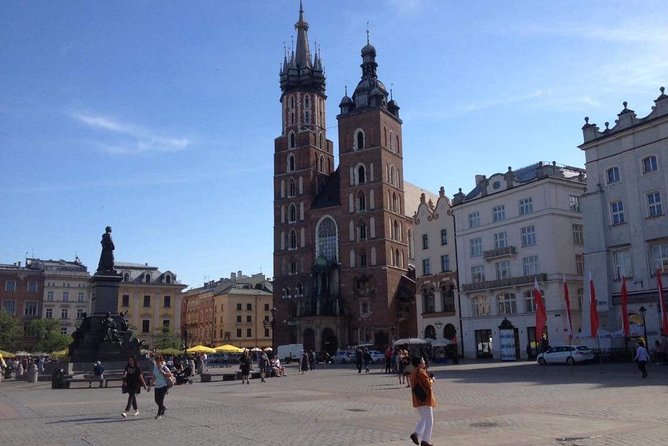
The tour begins at Rynek Główny 1, by the Town Hall Tower in the Main Market Square. This is an excellent meeting place because the square is one of Krakow’s clearest reference points. If you lose your way elsewhere, returning here usually gives you a fresh start.
The guide begins with the square itself, not just the buildings around it. You hear how Krakow defended its center and how the square served commercial, social, and entertainment purposes over the centuries. That framing helps you read the space as a working part of city life rather than a large open plaza filled with cafés and souvenir stalls.
The square’s scale can make it hard to take in at first. A guide gives you a fixed place to stand, then draws your attention toward the Town Hall Tower, surrounding facades, and the city’s former power centers. I find that useful because Krakow’s beauty can otherwise become a blur of Gothic brick, painted fronts, towers, and church interiors.
You will also hear about archaeological work beneath the square. Excavations led to the opening of a museum, giving visitors a chance to see what earlier streets and buildings reveal about Krakow’s past. The museum is not listed as a separate stop with its own visit, so treat this as historical context unless the guide confirms an entry during your tour.
Reading the Main Market Square as a working city
The square is not merely a backdrop for photographs. Its location helped Krakow function as a major center of trade, government, religion, and public life. That is why this opening section matters: it explains why so many important buildings and routes gather around one broad space.
The guide’s discussion of defense also gives you a better sense of Krakow before you reach Wawel. Cities do not grow large medieval squares by accident. Trade brought money, money brought political power, and political power required walls, officials, churches, and places for public ceremony.
You should expect a mix of stories and orientation rather than a museum-style lecture. The route covers many subjects in a limited time, so the guide must keep the walk moving. If you want detailed architectural analysis of every building, this tour may feel brisk. If you want a clear first picture of the city, the pace is more suitable.
The archaeological material adds another useful layer. What you see above ground is only part of Krakow. The museum created through the square’s archaeological research offers evidence of earlier life beneath the modern surface. Even if you do not enter it during the walk, you may want to return later if underground city history interests you.
Jagiellonian University and Krakow’s intellectual life
The next important part of the route brings you to Jagiellonian University, one of the oldest universities in Poland. The tour takes you to the university headquarters and explains the institution’s place in Krakow’s story.
This stop helps keep the tour from becoming only a procession of royal and religious sights. Krakow was also a place of study, debate, and scholarship. The guide connects the university with well-known figures admired today, giving you a sense of why this institution matters beyond its attractive old buildings.
The supplied information does not promise a full interior tour of university rooms, so you should not assume a long visit inside every historic building. The value here is the setting and the explanation. You learn how the university fits into the city’s identity and why its presence adds weight to the Old Town route.
Families may find this part especially useful if children are curious about famous people, old schools, or unusual university traditions. Basia Polarczyk, a guide associated with Active Krakow Tours by BikeMe, has been praised for friendly English and for encouraging children’s questions on past Krakow excursions. That does not guarantee she will lead your particular walk, but it gives you a helpful idea of the company’s guiding style.
More Walking Tours in Kraków
- Creepy Krakow: 2-Hour City Walking Tour
★ 4.7 · 1,131 reviews - Krakow: Kazimierz Jewish Quarter Walking Tour
★ 4.8 · 571 reviews - Kraków: Old Town & Wawel Castle Walking Tour in English
★ 4.8 · 532 reviews - Krakow: Evening Walking Tour with Spooky Stories
★ 4.7 · 500 reviews
Inside Wawel Cathedral for about 20 minutes
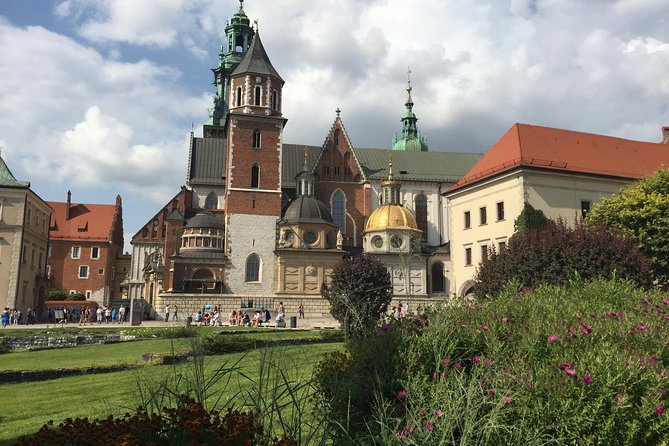
Wawel Cathedral is the tour’s clearest interior highlight. About 20 minutes are set aside for the cathedral, and admission is included. The guide explains its construction, its religious importance, and its role in Polish public life.
The cathedral’s strongest visual feature is its collection of royal tombs and sarcophagi. Polish kings, princes, bishops, and saints are connected to the building, so you are not simply looking at decorative stonework. You are entering a place tied to ceremony, burial, national memory, and the long authority of the Polish monarchy and church.
Twenty minutes is enough for a focused introduction, but not enough for every chapel and detail. I would treat this as a first visit that shows you what deserves a slower return. If cathedral art and royal burials are high on your list, pay close attention to the guide’s explanation, then consider coming back with more time.
The cathedral may feel like a change of pace after the open square and university streets. That contrast is part of the route’s appeal. Krakow’s center is not one continuous type of sight. It shifts from public commerce to scholarship, then to worship and royal ceremony within a relatively short walk.
Dress and behavior should suit a working cathedral. The supplied details do not give a specific dress code, but the site remains a religious place, so modest clothing and quiet conduct are sensible. Your guide can also explain where you may stand and when photography is appropriate.
Wawel Royal Castle and the Italian connection
From the cathedral, the route continues to Wawel Royal Castle. Wawel is one of Krakow’s key symbols, and finishing here gives the walk a strong sense of direction. You arrive at the royal center after first seeing the commercial and academic parts of the city.
The guide discusses Italian artists and the commissions given to them by the Polish king. This is a useful reminder that royal Krakow was connected to wider European culture. The castle was not shaped only by local builders and traditions. Royal patrons brought in outside talent to create a court worthy of their ambitions.
The supplied details clearly place the tour at Wawel Royal Castle and end the experience there, but they do not clearly promise admission to the castle’s State Art Collection or royal rooms. Wawel Cathedral entry is included, while the castle visit is described as a sight and a subject of explanation. Before booking, I would confirm exactly which castle areas, if any, are entered.
That distinction matters because Wawel can easily fill half a day on its own. If you plan to visit the castle interiors, you may need a separate ticket and extra time after the walking tour. The tour gives you a strong introduction and ends at Wawel 5, which is convenient for continuing your visit, but do not confuse reaching the castle with seeing every collection.
Meeting Krakow’s fire-breathing dragon
The final local touch is the fire-breathing dragon, one of Krakow’s best-known symbols. It gives the tour a lighter ending after the serious subjects of royal burials, defense, and church history.
The dragon belongs to Krakow’s folklore and public image. You get a story that is easy to remember, especially if you are touring with children, and a clear marker that you have reached the Wawel area. It also shows how the city mixes formal history with a playful legend.
I like this kind of ending because a good city tour should leave you with more than dates. You remember the royal hill, the cathedral, the university, and a dragon. Those images help you navigate later and make the city feel like a place with personality rather than a list of monuments.
Is $29.52 a fair price?
At $29.52 per person, this is a mid-priced introduction to Krakow. The value comes from the guide’s explanations, the route planning, and included admission to Wawel Cathedral. You are paying to save research time and to connect sights that might otherwise feel separate.
The cost is easier to justify if this is your first morning in Krakow. A good guide can help you decide which sights deserve a return visit, where the main routes run, and how to fit Wawel into the rest of your day. You also avoid spending your first hours stopping to read maps and background notes.
The price is less attractive if you mainly want photographs or prefer to set your own pace. Three hours with a group means you cannot linger everywhere. You may also need to pay separately for castle interiors or other museums, since those entries are not clearly included.
The company’s past Krakow excursions received praise for organization, useful information, and a friendly approach. Those comments include bicycle tours as well as walking experiences, so I would not treat them as a precise promise about this exact route. Still, they point to a guide service that values preparation and personal contact.
Pace, group size, and practical planning
The advertised duration is two to three hours, while the detailed route gives three hours for the main walk plus about 20 minutes at the cathedral. Plan for roughly three hours, and allow extra time if the group pauses or if you continue into Wawel afterward.
The maximum group size is 25. That is reasonable for a city walk, but you should stay within hearing distance of the guide. The Main Market Square and Wawel area can be busy, and a group can spread out quickly when people stop for photographs.
Most people can take part, and the meeting point is near public transportation. The route is on foot, so comfortable shoes are the sensible choice. You should also keep your phone charged because the booking uses a mobile ticket.
A minimum of three people per booking is required. That makes this less convenient for a solo visitor booking alone, unless you can join an existing arrangement or meet the provider’s minimum in another way.
Free cancellation is available if you cancel at least 24 hours before the start time. Within 24 hours, you should expect no refund, and late changes are not accepted. The cut-off follows Krakow’s local time.
Who will get the most from this Old Town walk?
I would choose this tour for a first-time visitor who wants a clear introduction without spending hours on preparation. It also suits couples, families, and small groups who like asking questions and moving between major sights with a local guide.
Families may appreciate the mix of royal tombs, university stories, archaeological clues, and the dragon. The route has enough variety to keep a child from hearing one long lecture about buildings. Basia’s past guiding work, including her warm response to children’s questions, suggests that the company understands how to make Krakow accessible to different ages.
This is also a good pick if you want to visit Wawel but are unsure how it connects to the Old Town. The route makes that connection on foot and ends at the castle, so you can continue exploring without retracing your steps.
I would skip it if you have only a short time and want to enter several Wawel interiors during the same booking. The walk introduces the castle area, but the included entrance specifically identified is Wawel Cathedral. Confirm the castle admissions before you count on them.
Should you book the Krakow Old Town Walking Tour?
I would book this tour if you want orientation, cathedral entry, and a guided route through Krakow’s central sights for a reasonable price. The 9:45 a.m. departure leaves the rest of the day open, and ending at Wawel gives you a practical next step.
Go in with the right expectations. This is a guided overview, not a full Wawel Castle study visit or a slow architectural workshop. You will see and understand the city’s main pieces, then decide where to spend more time.
The strongest reasons to book are the well-chosen route, included Wawel Cathedral admission, manageable group cap, and the company’s record of friendly, well-prepared guides. The main reasons to hesitate are the three-hour commitment, the three-person booking minimum, and uncertainty about separate castle interior admission.
FAQ
Where does the Krakow Old Town Walking Tour start?
It starts at Rynek Główny 1 in Krakow, by the Town Hall Tower on the Main Market Square.
What time does the tour begin?
The scheduled start time is 9:45 a.m.
Where does the tour finish?
The tour ends at Wawel Royal Castle, at Wawel 5, Krakow.
Is admission to Wawel Cathedral included?
Yes. Admission to Wawel Cathedral is included, and about 20 minutes are scheduled there.
How many people can join the tour?
The maximum group size is 25 people, and a minimum of three people per booking is required.
Can I cancel for a refund?
Yes, if you cancel at least 24 hours before the experience starts. Cancellations made within 24 hours are not refunded, and late changes are not accepted.
Just added around Kraków
- Rynek Underground Museum & Wawel Castle, Cathedral – Cracow★ 5.0 · 3 reviews
- Schindler’s Factory, Ghetto and Plaszow Camp Guided Tour★ 4.7 · 3 reviews
- Nowa Huta – a guided tour of a utopian socialist city★ 5.0 · 3 reviews
- Krakow: Kazimierz by Golf Cart and Schindler’s Factory Tour★ 4.8 · 3 reviews
- Private Krakow City Tour by Car and Walk with private tour guide★ 5.0 · 3 reviews
- Krakow: Jewish Traces Private Electric Car Tour★ 4.1 · 3 reviews
- Discover the Jewish Quarter with a Bike Tour★ 5.0 · 3 reviews
- Krakow: Indoor Go-Karting (24-Minute Races)★ 4.8 · 3 reviews
Old Town Walking Tours, compared.




Bike Tour of Old Town, Jewish Quarter and the Ghetto
Read our review →

Sightseeing EcoCruise around the Old Town of Gdansk
Read our review →
Browse the lists this tour appears in