
REVIEW · WAWEL CASTLE TOURS
Krakow: Wawel Castle & Cathedral, Old Town & City Basilica
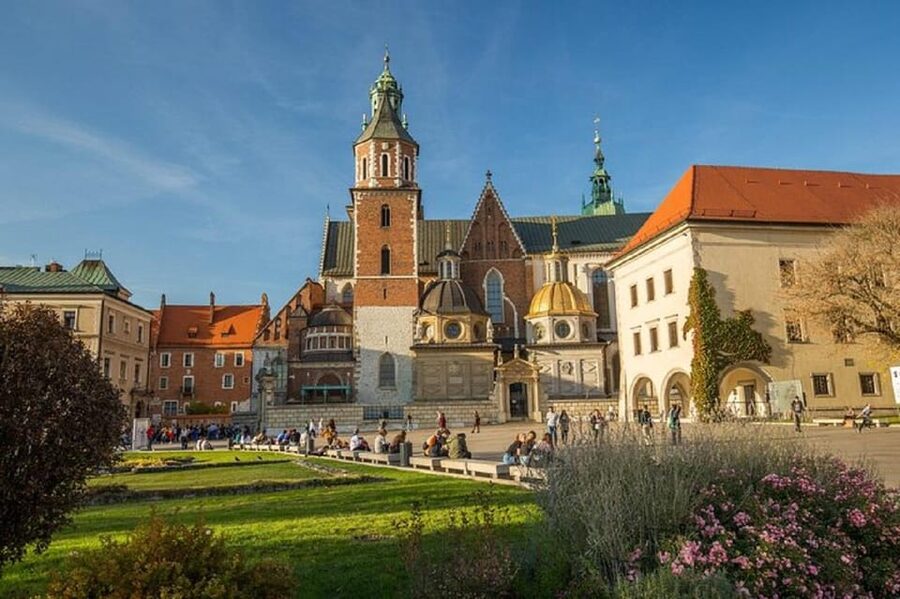
Kraków’s royal story starts on Wawel Hill. This 210-minute walking tour links the city’s greatest sights in one well-organized morning or afternoon, from Renaissance royal rooms to the Gothic altar of St. Mary’s Basilica. I especially like the chance to touch the legendary Sigismund Bell and the guided explanation of Veit Stoss’s masterpiece. The main drawback is that the schedule is full, and climbing the bell tower and walking the Old Town may be tiring for some people.
You meet at St. Mary Magdalene Square by the Piotr Skarga Monument, then follow a certified local guide through Wawel Castle, Wawel Cathedral, and Kraków’s historic center. Guides such as Helen and Magdalena have been praised for being punctual, prepared, passionate, and easy to follow. Just remember that this is a group tour, so arriving late can mean missing the start.
- Touch the Sigismund Bell: Climb Wawel Cathedral’s tower for a close look at one of Poland’s best-known bells and broad views across Kraków.
- See one Wawel Castle exhibition: Fast-track access is included to one permanent exhibition, subject to availability.
- Visit royal burial places: Wawel Cathedral and its crypts connect Poland’s kings, national leaders, and major cultural figures.
- Walk Kraków’s medieval center: The route covers the Main Market Square, Cloth Hall, Collegium Maius, and historic streets.
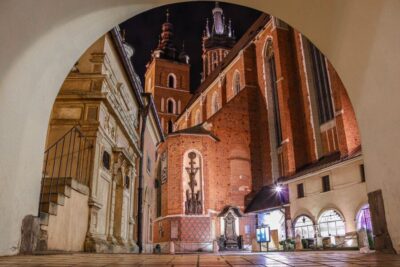
- Study Veit Stoss’s altar: St. Mary’s Basilica contains one of Europe’s great late Gothic woodcarvings.
- Choose your language: Tours are offered in English, Polish, German, Italian, Spanish, and French.
In This Review
- Why Wawel Makes a Strong Starting Point
- The State Rooms and the Value of a Guide
- Wawel Cathedral and the Royal Crypts
- Climbing the Tower to Meet the Sigismund Bell
- From Wawel Hill to the Main Market Square
- Collegium Maius and Kraków’s Scholarly Side
- St. Mary’s Basilica and the Veit Stoss Altar
- Is $88 a Fair Price?
- Timing, Languages, and Practical Fit
- Who Will Enjoy This Kraków Tour Most?
- Should You Book It?
- FAQ
- How long does the Kraków tour last?
- Where does the tour meet?
- Which languages are available?
- Does the tour include Wawel Castle admission?
- Can I visit Wawel Cathedral and St. Mary’s Basilica?
- Is the tour suitable for wheelchair users?
Why Wawel Makes a Strong Starting Point
Wawel Hill is more than a castle stop. It is the symbolic heart of Polish royal power, and the buildings gathered here let you move through several centuries without crossing half the city.
The tour begins with the State Rooms of Wawel Castle, now part of a major museum. You can expect polished Renaissance interiors, historic tapestries, Italian paintings from the Lanckoroński collection, and displays of porcelain, weapons, and Eastern art.
The castle’s collections also point to Poland’s links with other parts of Europe and Asia. The Ottoman tent collection is especially unusual. It is described as the largest collection of Ottoman tents in Europe, a reminder that Wawel was connected to diplomacy, warfare, trade, and court life far beyond Kraków.
I like having a guide here because the rooms can otherwise become a parade of names and objects. A good explanation helps you understand why a tapestry mattered, how a royal room was used, and what the collections say about Poland’s position between East and West.
The fast-track entry applies to one permanent castle exhibition, not every room or temporary show. That distinction matters. If you arrive hoping to see every part of Wawel, you may need another visit or a separate ticket.
The State Rooms and the Value of a Guide
The State Rooms are the most polished portion of the castle visit. Renaissance design, decorative furnishings, paintings, and large wall hangings create a clear picture of court life rather than simply presenting an empty royal shell.
Your guide can also connect the castle displays to Kraków’s broader story. Royal processions passed through the city, merchants gathered in the central square, and political decisions made at Wawel affected the country far beyond the hill.
The Lanckoroński collection adds an art-focused layer. Italian paintings give the rooms an international character, while the weapons and porcelain help show how power and refinement worked together at a royal court.
The Eastern art displays may be the surprise for visitors who expect only Polish history. The Ottoman tents, in particular, offer a visual break from portraits and furniture. They also show how objects captured, exchanged, or received through diplomacy could become part of a royal collection.
Because the full activity lasts three and a half hours, the guide must keep the pace moving. That is useful if you have limited time in Kraków, but it also means you cannot linger equally long at every painting or object. If one part of the castle matters greatly to you, ask your guide about it during the visit.
More Old Town Walking Tours in Kraków
- Old Town Krakow & Wawel Castle Walking Tour
★ 5.0 · 1,508 reviews - Krakow: Bike Tour of Old Town, Jewish Quarter and the Ghetto
★ 4.9 · 1,155 reviews - Krakow: The Old Town Walking Tour
★ 4.8 · 794 reviews
Wawel Cathedral and the Royal Crypts
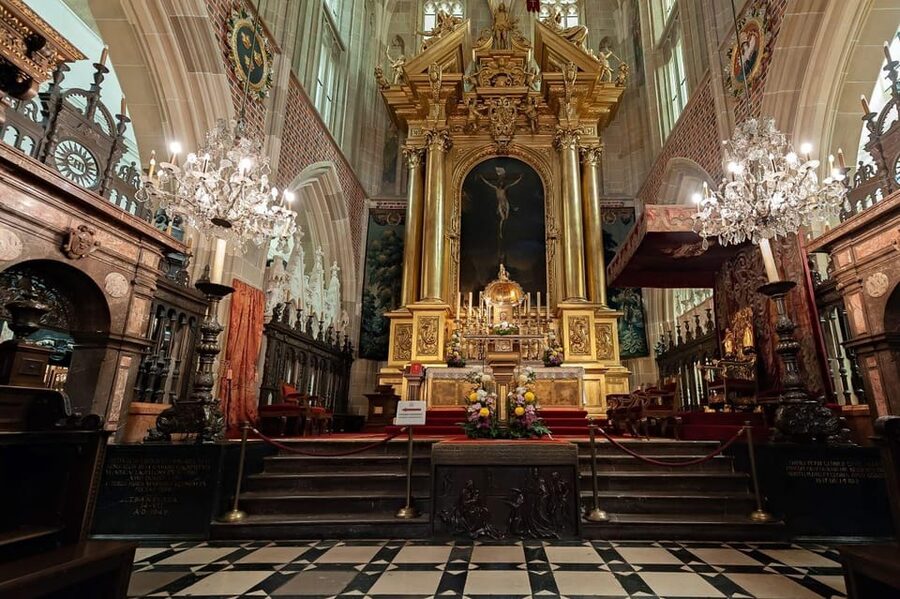
Wawel Cathedral has a different mood from the castle rooms. This is an active place of worship, as well as the historic church where Polish monarchs were crowned, married, and buried.
Inside, look for richly decorated chapels, golden domes, and layers of architectural detail. The cathedral does not feel like a single-period building. Its appearance reflects changes made over many centuries, which gives the visit a strong sense of Poland’s religious and royal life.
The royal crypts are an important part of the route. They contain the remains of Polish rulers and major national figures. The guide’s role is especially helpful here, since a short explanation can clarify who is buried where and why certain people are remembered.
There is one practical uncertainty. Religious ceremonies, state occasions, jubilee events, or visits by important officials can suspend entry to the cathedral, royal tombs, or bell tower without advance notice. If that happens, the organizer may substitute another entrance within the castle complex.
That rule is worth taking seriously, but it is not a reason to avoid the tour. It simply means you should not treat every listed stop as absolutely guaranteed on a particular date. The cathedral is an active church first and a sightseeing site second.
Climbing the Tower to Meet the Sigismund Bell
The climb to the cathedral tower is one of the most memorable parts of the experience. You get panoramic views of Kraków and the rare chance to touch the Sigismund Bell.
The bell carries strong national meaning, and seeing it at close range gives the cathedral visit a physical focus. It is not just another object behind a barrier. You climb to it, stand near it, and connect the legend to the actual structure above the city.
The tower climb also changes your view of Kraków. From Wawel Hill, the city opens out around you, making it easier to understand how the castle relates to the Old Town below.
This portion may not suit everyone. The tour is not suitable for wheelchair users, and the tower climb can be demanding for anyone with mobility concerns. Comfortable shoes are sensible for the entire route, since the day includes stairs and a lengthy city walk.
From Wawel Hill to the Main Market Square
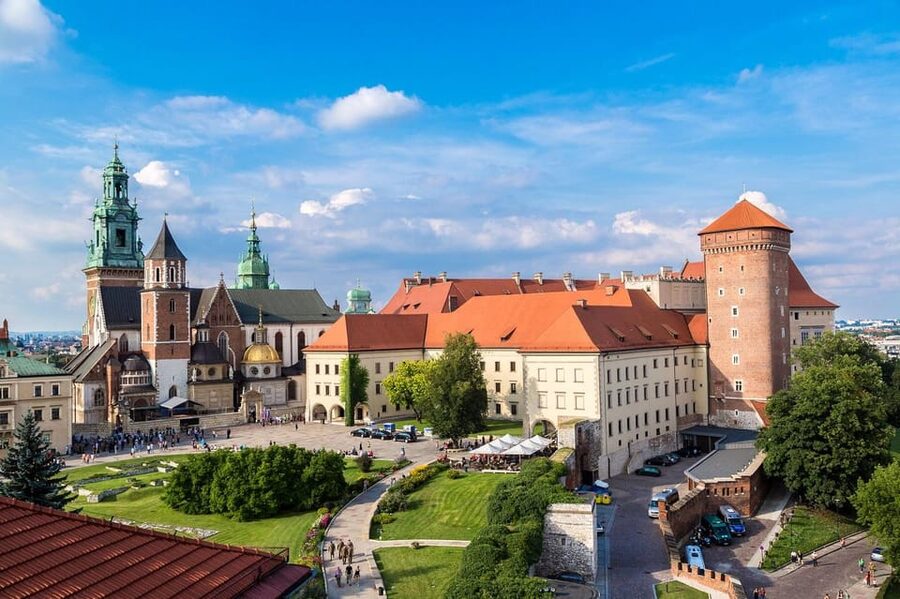
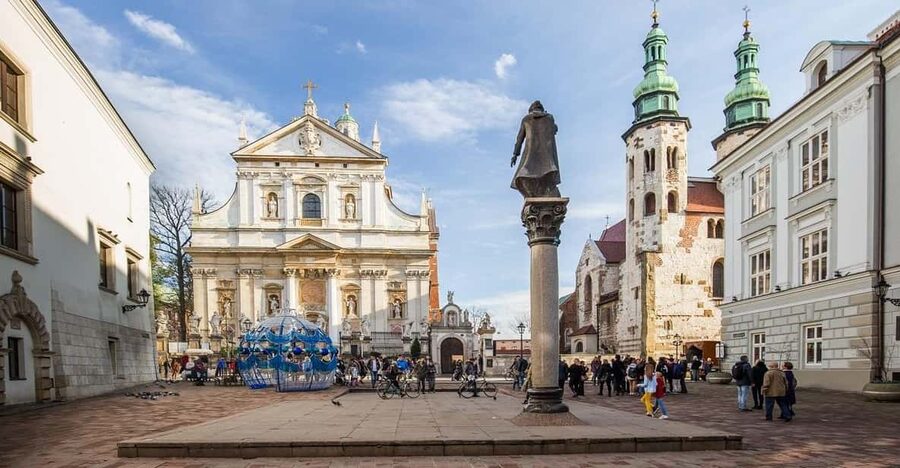
After Wawel, the tour continues on foot through Kraków’s UNESCO-listed Old Town. This connection is one of the tour’s best features. Instead of treating the castle as an isolated monument, it shows how royal Kraków relates to the city of merchants, scholars, churches, and civic life.
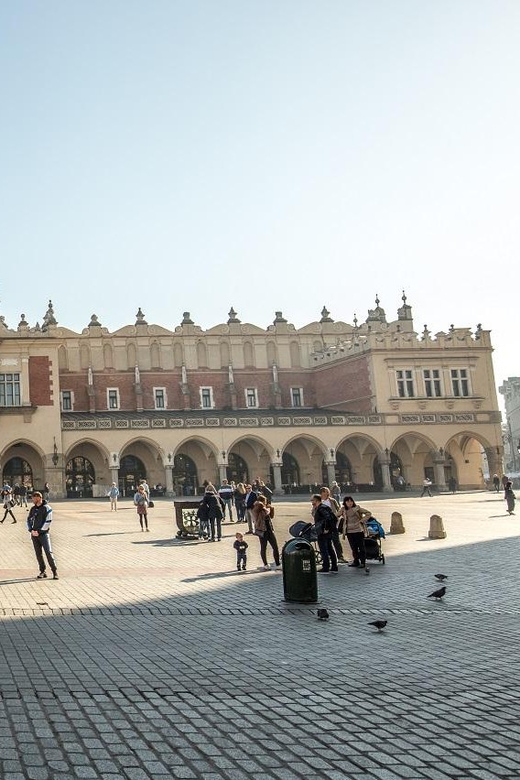
The Main Market Square is the natural center of the walk. Here you see the Cloth Hall, a landmark tied to Kraków’s long commercial tradition. The square also helps you understand the scale of the medieval city, with major streets and important buildings radiating from this broad public space.
Your guide brings the setting to life with stories about merchant guilds, royal processions, and ordinary medieval routines. I find this kind of commentary more useful than a list of construction dates. It gives you a sense of how people used the city, not only how it looked.
The streets between Wawel and the square are part of the experience, too. You will be walking in the open rather than moving from one indoor attraction to another. Keep an eye on the meeting point at the beginning, and stay close to the group once the tour gets underway.
More Wawel Castle tours:
- Krakow: Wawel Castle & Cathedral Guided Tour
★ 4.7 · 2,111 reviews - Krakow: Wawel Royal Hill with Optional Castle and Cathedral
★ 4.2 · 1,220 reviews - Krakow: Wawel Castle and Cathedral Guided Tour
★ 4.6 · 595 reviews - Kraków: Old Town & Wawel Castle Walking Tour in English
★ 4.8 · 532 reviews
Collegium Maius and Kraków’s Scholarly Side
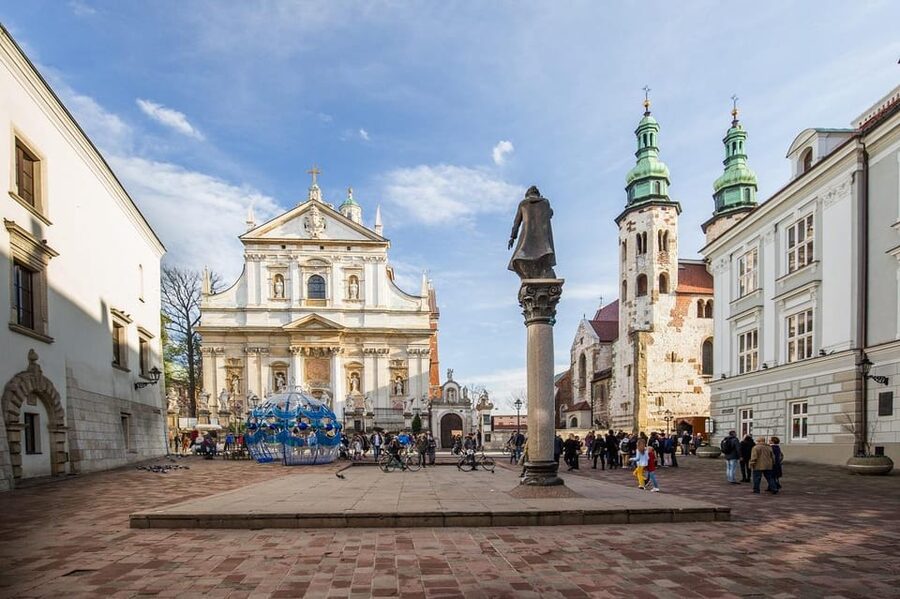
Collegium Maius adds a university chapter to the route. It is the oldest university building in Poland and is linked with Nicolaus Copernicus, its most famous student.
This stop broadens the tour beyond kings and churches. Kraków was also a place of study, debate, science, and intellectual exchange. Copernicus’s connection gives the building an immediate point of interest, even if you are not especially focused on academic history.
The guide can help place the university within the city’s golden age. After seeing royal spaces at Wawel and commercial life around the Main Market Square, you get a third perspective: Kraków as a center of learning.
As with the castle, the value here comes from context. Collegium Maius might seem like a handsome old building if you pass it alone. A short explanation about its age and Copernicus makes it part of the city’s larger story.
St. Mary’s Basilica and the Veit Stoss Altar
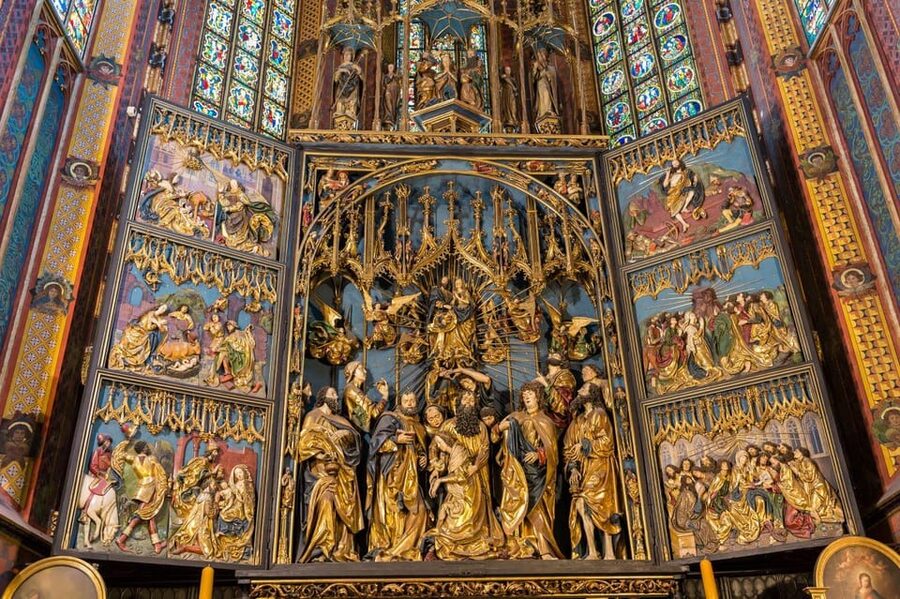
The final major stop is St. Mary’s Basilica, one of Kraków’s defining churches. The guided entrance is included, and the main reason to go inside is the extraordinary Gothic altar carved by Veit Stoss.
The altar is not a minor decoration. It is the artistic centerpiece of the basilica, and its scale and detail reward a close look. Your guide explains its imagery, symbolism, and place in Kraków’s identity, helping you notice more than the overall impression.
This is a strong ending because it brings together art, religion, and civic pride. Wawel shows royal power. The Old Town shows public and commercial life. St. Mary’s presents the city through sacred art and craftsmanship.
The guided visit also helps you use your time well. Without background, a large Gothic altarpiece can be impressive but difficult to read. With clear commentary, you can follow the scenes and understand why the work remains so important.
St. Mary’s is still a working church, so quiet and respectful behavior is required. The atmosphere may change during services or other religious activity, just as it can at Wawel Cathedral.
Is $88 a Fair Price?
At $88 per person, this is not the cheapest way to see Kraków. You are paying for a live guide, admission to Wawel Cathedral, entrance to St. Mary’s Basilica, and fast-track access to one permanent castle exhibition when available.
The value depends on how you like to sightsee. If you want to arrange every ticket yourself and read independently, you can probably spend less. If you have only a few days and want the major landmarks explained in one continuous route, the price is easier to justify.
I see the strongest value in the combination of sites. Many city walks cover the Old Town but skip the castle interiors. Castle visits, meanwhile, may not include St. Mary’s Basilica or the broader city story. This tour links all of them.
The guide is another important part of the calculation. Positive feedback has singled out Helen for her professionalism and passion, while Magdalena was praised for her information and excellent attitude. An Italian-speaking guide was also described as punctual, well prepared, and professional. Those details suggest that the human side of the tour is a real strength, though your specific guide will depend on the date and language.
Lunch is not included, so plan to eat before or after the tour. At three and a half hours, the route takes a substantial part of your day, but it also gives you a useful orientation for later independent exploring.
Timing, Languages, and Practical Fit
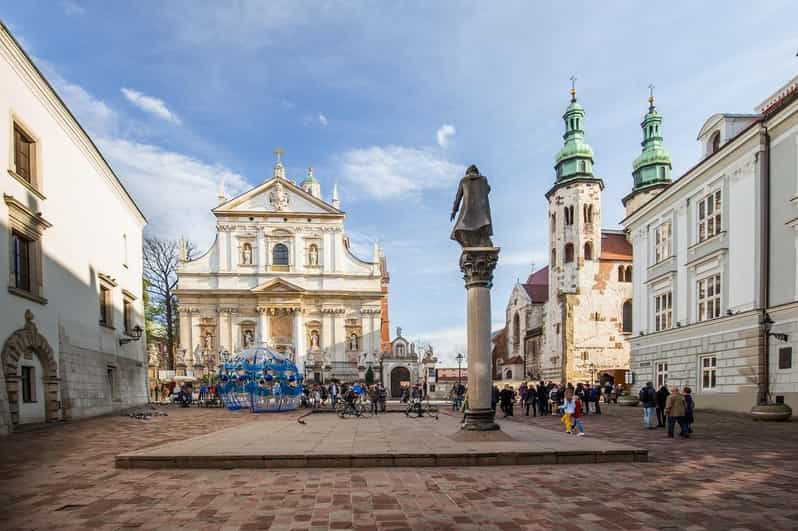
The meeting point is St. Mary Magdalene Square, at the Piotr Skarga Monument. Look for the guide holding an Excurison.city sign. The unusual spelling of the sign is worth noting so you do not scan the square for a different company name.
The tour operates as a group, and punctuality matters. I would arrive early rather than try to find the group at the last second. The route includes indoor visits, stairs, and outdoor walking, so wear shoes that can handle several hours on historic surfaces.
You can select English, Polish, German, Italian, Spanish, or French. If you are booking in a language other than English, check that the chosen option matches what you need before paying.
Free cancellation is available up to 24 hours before the start, and you can reserve now while paying later. Those terms are useful if your Kraków schedule is still changing.
Wheelchair users should not book this particular experience. The tower and the historic buildings make the route unsuitable for wheelchair access, and the activity is not presented as an accessible tour.
Who Will Enjoy This Kraków Tour Most?
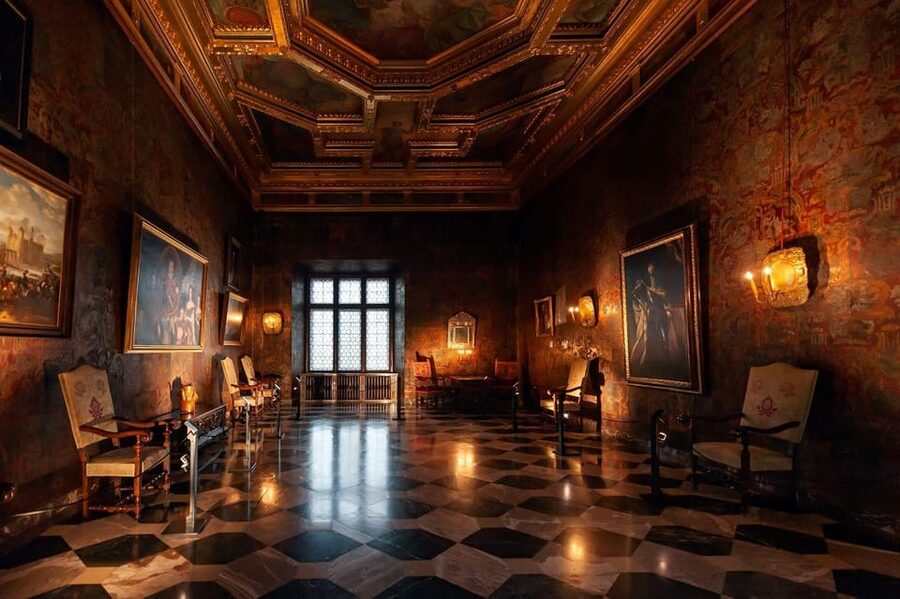
I would recommend this experience to a first-time visitor who wants the essential historic center explained by one local guide. It works especially well if you have limited time and want to combine major sights rather than arrange separate entries.
It also suits people who enjoy both art and political history. The castle rooms, Italian paintings, Ottoman tents, cathedral chapels, royal crypts, university building, and Gothic altar give the tour plenty of variety.
Families with older children may find the bell tower and royal stories more engaging than a standard museum visit. The route still requires attention and walking, so very young children or anyone who tires easily may find the pace demanding.
I would choose a different plan if you prefer slow museum visits, photography stops, or long unstructured breaks. Three and a half hours is efficient, but it is not leisurely. You will see a lot, and the guide will keep the group moving.
Should You Book It?
Book this tour if you want Kraków’s main historic sights connected into one clear story. The combination of Wawel Castle, Wawel Cathedral, the Sigismund Bell, the Old Town, Collegium Maius, and St. Mary’s Basilica gives you an unusually full introduction to the city.
The strongest reasons to go are the expert guidance, the included church entries, the chance to see Veit Stoss’s altar with an explanation, and the panoramic tower visit. The main cautions are the fixed group pace, the physical demands of the route, and the possibility that religious or state events could restrict cathedral access.
For a first visit, I think the $88 price is reasonable if you value your time and want context rather than a checklist of buildings. Arrive early, wear good shoes, and treat the tour as your foundation for exploring Kraków on your own afterward.
FAQ
How long does the Kraków tour last?
The tour lasts 210 minutes, or three and a half hours.
Where does the tour meet?
The meeting point is St. Mary Magdalene Square at the Piotr Skarga Monument. Look for a guide holding an Excurison.city sign.
Which languages are available?
The live tour guide may provide the tour in English, Polish, German, Italian, Spanish, or French.
Does the tour include Wawel Castle admission?
It includes fast-track access to one permanent Wawel Castle exhibition, subject to availability. Other exhibitions are not included.
Can I visit Wawel Cathedral and St. Mary’s Basilica?
Yes. Admission to Wawel Cathedral and an entrance ticket to St. Mary’s Basilica are included. Access to parts of Wawel Cathedral can be suspended during religious, state, jubilee, or official events.
Is the tour suitable for wheelchair users?
No. The experience is not suitable for wheelchair users.
Just added around Kraków
- Rynek Underground Museum & Wawel Castle, Cathedral – Cracow★ 5.0 · 3 reviews
- Schindler’s Factory, Ghetto and Plaszow Camp Guided Tour★ 4.7 · 3 reviews
- Nowa Huta – a guided tour of a utopian socialist city★ 5.0 · 3 reviews
- Krakow: Kazimierz by Golf Cart and Schindler’s Factory Tour★ 4.8 · 3 reviews
- Krakow: Jewish Traces Private Electric Car Tour★ 4.1 · 3 reviews
- Private Krakow City Tour by Car and Walk with private tour guide★ 5.0 · 3 reviews
- Krakow: Indoor Go-Karting (24-Minute Races)★ 4.8 · 3 reviews
- Discover the Jewish Quarter with a Bike Tour★ 5.0 · 3 reviews
Wawel Castle Tours, compared.

Wawel Royal Hill with Optional Castle and Cathedral
Read our review →
Old Town & Wawel Castle Walking Tour in English
Read our review →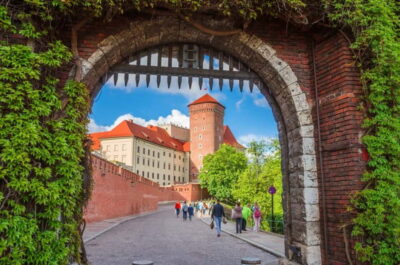
Krakow’s Essential Tour of the Old Town and Wawel Castle
Read our review →Browse the lists this tour appears in