
REVIEW · WALKING TOURS
Life Behind the Iron Curtain Warsaw Walking Tour
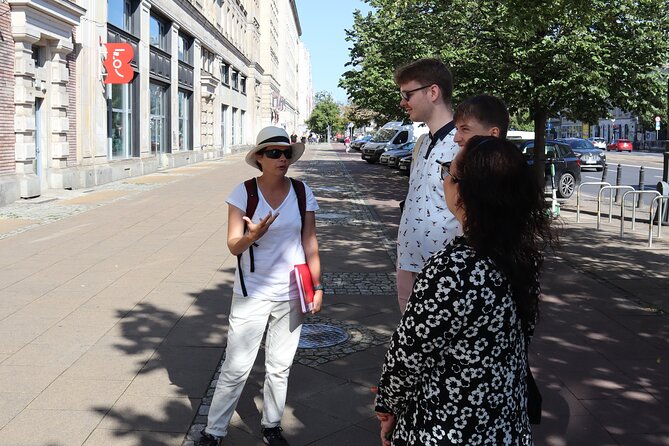
Communism gets stranger up close. This 150-minute Warsaw walk turns grand squares, office blocks, and department stores into clues about daily life behind the Iron Curtain. I like the way it explains both the big political system and the small tricks people used to cope. I also like the personal family stories and dry humor brought by guides such as Oliwia and Agnieszka. The main drawback is simple: you walk about 3 kilometers, often outdoors, so it is not a great pick if long walks are difficult.
This is not a tour built around pretty views alone. It asks you to look at ordinary streets differently, then explains why a parade avenue, an empty shop, a tiny communist symbol, or a grim government building mattered. You get a small-group or private experience in English, plus visual aids and useful Warsaw suggestions. At $32 per person, I find it good value if you want social history rather than a quick list of monuments.
In This Review
- Six details that make this Warsaw walk worthwhile
- Why this 2.5-hour tour works
- Constitution Square and the planned city center
- Marszałkowska Street and the parade city
- The Free Speech Memorial and the risks of speaking openly
- Communist Party headquarters and the machinery of power
- Central Department Store Cedet and the empty-shop problem
- Warsaw Central Station and controlled movement
- The Palace of Culture and Science, Warsaw’s most debated building
- The tiny symbol and the humor of survival
- What the guides add to the experience
- Pace, price, and who should book
- Should you book Life Behind the Iron Curtain?
- FAQ
- How long does the Life Behind the Iron Curtain tour last?
- How far do you walk?
- Where does the tour begin?
- Where does the tour finish?
- Is the Palace of Culture and Science viewing terrace included?
- Is the tour available in English and suitable for wheelchair users?
Six details that make this Warsaw walk worthwhile
- Constitution Square reveals a planned communist city center: Its huge scale and formal layout show how architecture was used to project order and power.
- Marszałkowska Street explains the theater of the regime: The wide avenue was made for parades, marches, and public display.
- Personal stories make the period feel real: Oliwia and Agnieszka connect national events with family life, shopping, work, travel, and censorship.
- The Free Speech Memorial opens the discussion beyond architecture: You learn about underground publishing, censorship, and espionage.
- The Palace of Culture and Science remains a complicated symbol: You see why the building is admired by some and disliked by many Poles.
- The tour is practical as well as historical: You receive visual aids, a Warsaw information pack, and ideas for places to eat, drink, and visit afterward.
Why this 2.5-hour tour works
Warsaw’s communist-era story can be hard to read from a map. Much of the period’s architecture was designed to look permanent, disciplined, and impressive. The human reality was often far less tidy: shortages, rules, queues, censorship, and official slogans shaped everyday life.
This walk helps you connect the two. You see the grand stage first, then hear about the private behavior that took place behind it. The result is a useful contrast between what the state wanted people to see and how people actually lived.
I like that the tour does not treat communism as only a Cold War subject. The focus is on ordinary Poles. You hear how people managed to buy goods in shops with empty shelves, why the friendly question what can I get you? became a joke, and how the state restricted foreign travel.
The tone matters. The subject is serious, but the guides use irony and wit rather than giving you a grim lecture. That balance helps the stories stick. Oliwia is often praised for a dry sense of humor and a strong personal connection to Warsaw. Agnieszka is especially good at taking questions and linking private stories to larger changes in Poland.
More Walking Tours in Warsaw
- Warsaw: Old Town Highlights Walking Tour in English
★ 4.7 · 1,516 reviews - Warsaw: Old Town Guided Walking Tour
★ 4.9 · 599 reviews - Half-Day Polish Food Walking Tour with Guide and Dinner
★ 4.5 · 381 reviews
Constitution Square and the planned city center
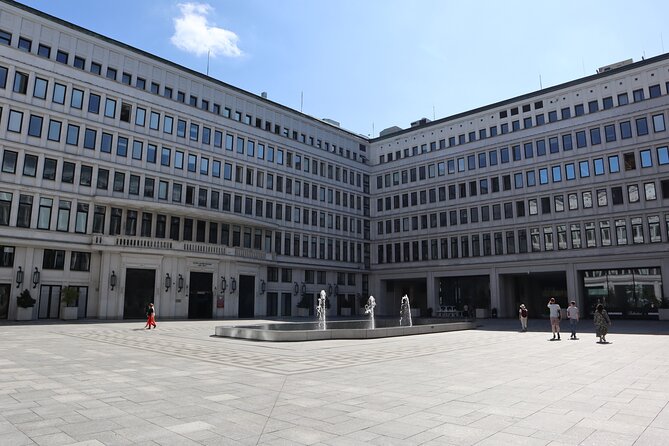
The tour begins at Constitution Square, a fitting place to start because the square was intended to become the new center of Warsaw. Its broad proportions and monumental character tell you a lot before the guide says a word.
This is one of the best stops for understanding socialist realism. The style often used grand buildings, heroic decoration, and carefully planned public spaces to suggest that the new political order was strong, modern, and built for the people.
You may find the architecture attractive at first glance. That is part of the point. The buildings can look orderly and even elegant, but many Poles associate them with forced labor, political control, poor housing choices, and a government that wanted to shape public life from above.
The guide explains why the square was designed as more than a neighborhood space. It was a stage for the state. Large gatherings and official events needed room, and the surrounding buildings helped frame the message.
I would give this opening your full attention. If you rush past the square on another Warsaw walk, it may look like a large urban junction. With context, it becomes a lesson in how architecture can carry political meaning.
Marszałkowska Street and the parade city
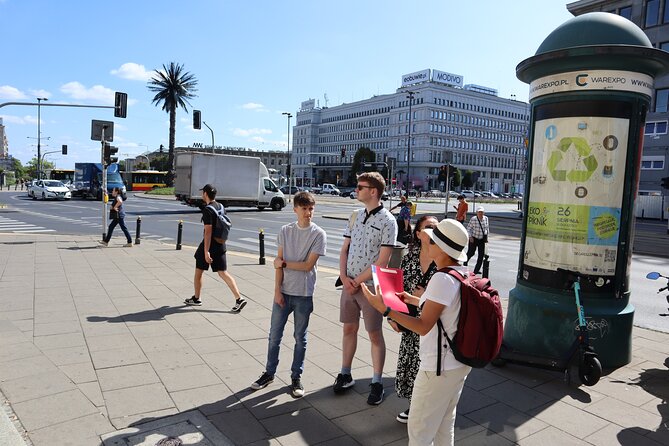
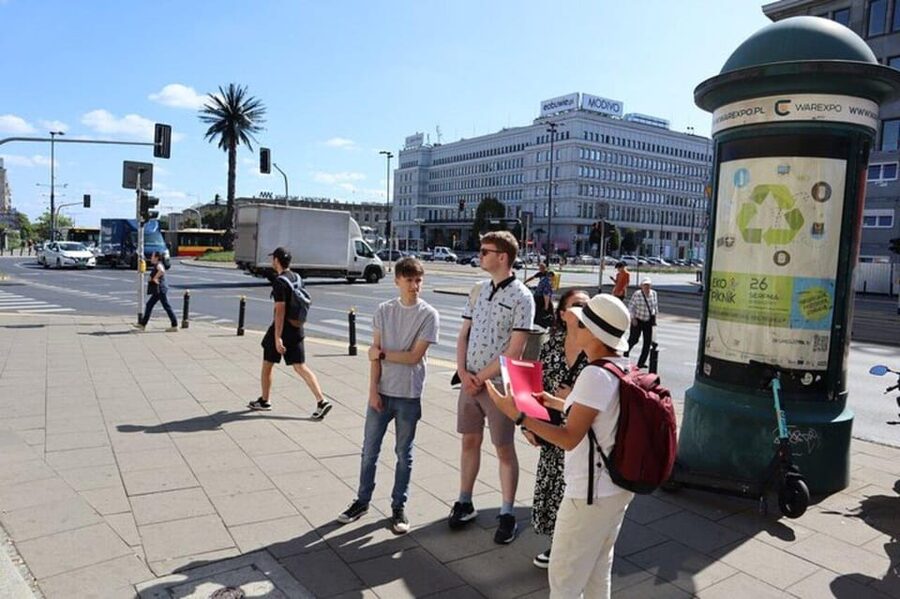
From Constitution Square, the route continues along Marszałkowska Street. Its width is not accidental. The avenue was used for parades and marches, giving the authorities a place to display military power, political unity, and public loyalty.
This is where the tour makes a useful distinction between a street designed for residents and a street designed for spectacle. You can imagine the official version of Warsaw: flags, banners, organized crowds, and carefully managed public ceremonies.
The guide also brings the story down to street level. The same city built for parades still had to function for people trying to shop, work, meet friends, and get home. That tension between public show and private frustration runs through the whole walk.
You will not be walking through a preserved outdoor museum. The area is a living part of central Warsaw, with modern activity mixed into the older urban plan. That is an advantage if you want to see how the communist period remains part of the city rather than a sealed-off historical display.
The drawback is that the early section can feel visually spread out. The meaning comes mainly through explanation, so this is not ideal if you want constant interior access or a stream of famous sights.
The Free Speech Memorial and the risks of speaking openly
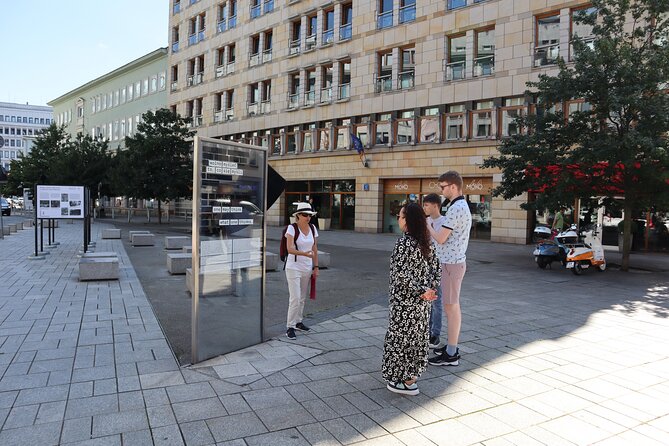
The Free Speech Memorial shifts the focus from concrete and stone to information. Here the guide discusses censorship, underground publishing, and espionage.
This stop helps explain why communication was such a serious matter under communist rule. Printed material could be controlled, public criticism could carry consequences, and information moved through channels outside the official press.
You learn how censorship affected more than political speeches. It shaped what people could read, discuss, publish, and trust. The conversation about espionage adds another layer, showing how the division between public life and private belief could become dangerous.
I find this part especially useful for visitors who know the phrase Iron Curtain but want to understand how it affected daily behavior. The issue was not only what the government announced. It was also what people avoided saying, what they passed along quietly, and how they judged the reliability of information.
The guide’s visual aids help here. A memorial can be easy to overlook, particularly in a city full of larger monuments. The explanation gives the site a clear purpose and ties it to the broader experience of living under surveillance and censorship.
A completely different kind of day out in Warsaw:
- Warsaw: Chopin Concert in the Old Town
★ 4.8 · 2,287 reviews - Warsaw: Traditional Galar Cruise on The Vistula River
★ 4.6 · 1,640 reviews - Warsaw Concert: Chopin – Painted by Candlelights with Wine
★ 4.8 · 1,442 reviews - Warsaw: City Sightseeing Hop-On Hop-Off Bus Tour
★ 3.6 · 1,415 reviews
Communist Party headquarters and the machinery of power
The route then reaches the former location of the Communist Party headquarters, now identified with Centrum Bankowo Finansowe. This stop gives you a direct look at the physical center of political authority.
The building is valuable because it shifts attention away from slogans and toward administration. Communist power depended on offices, officials, records, decisions, and systems that reached into work, housing, travel, education, and shopping.
Your guide explains how authority operated and why certain institutions mattered. The point is not simply to name a former headquarters. It is to show how a political party could dominate public life while presenting itself as the natural manager of the country.
This is also a good moment to ask questions. The tour works best when you use the guide’s knowledge of Poland’s recent past to connect the site with issues that interest you. The small-group format makes that easier than a large group with a fixed script.
Central Department Store Cedet and the empty-shop problem
Central Department Store Cedet offers one of the tour’s most relatable subjects: shopping.
The official image of a modern socialist city included department stores and consumer goods. The everyday reality could be very different. Shelves might be empty, certain products might appear without warning, and buying something useful could require patience, contacts, or quick thinking.
The guide explains how people managed to shop when stores had little to offer. This is where the tour’s humor becomes especially effective. Shortages were frustrating, but people developed practical methods and jokes to deal with a system that often made simple purchases absurdly difficult.
You also hear about the language of service. The question what can I get you? became funny because the answer was often limited by what happened to be available. It is a small example, but it shows how official routines could lose their meaning in real life.
The department store stop is valuable for families and younger visitors because it connects political economics with familiar choices. You do not need a specialist background in Polish history to understand the irritation of wanting an item and finding nothing on the shelf.
Warsaw Central Station and controlled movement
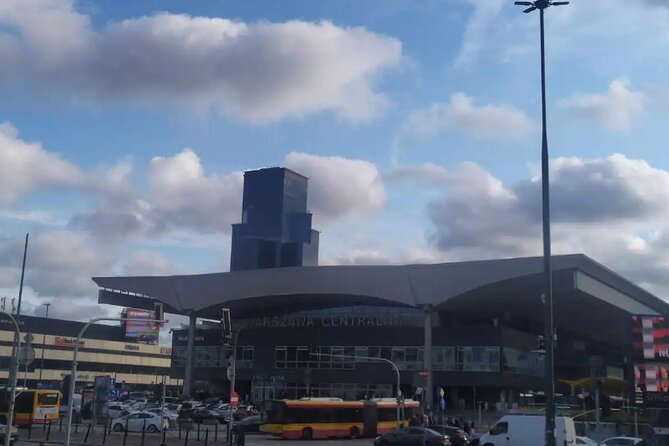
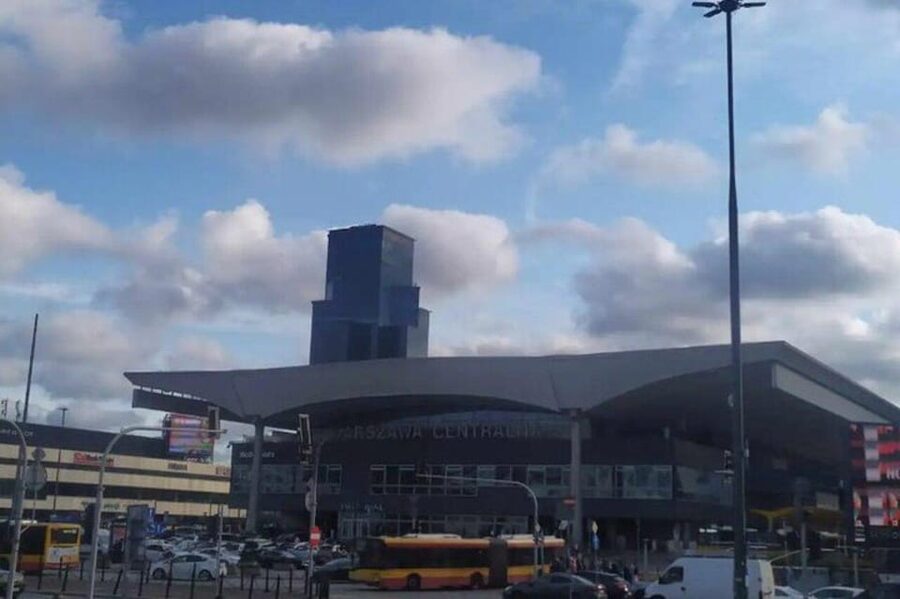
Warsaw Central Station brings the subject to travel. A railway station usually suggests freedom to go somewhere else. Under communism, movement could be limited by money, paperwork, borders, and state rules.
The guide discusses how the government made sure Poles did not travel too far. This gives you a practical view of control. Restrictions were not always dramatic arrests or visible barriers. Sometimes they appeared as permits, limited access, official approval, or a passport that was difficult to obtain.
The station also helps show the difference between internal and international travel. A person might move around the country in one way but face much greater limits when trying to go abroad.
This stop will appeal to anyone interested in how political systems shape personal choices. It asks a basic question: what does freedom mean if you cannot easily leave, visit family abroad, or see another society for yourself?
Because the station remains an active public place, the surroundings can be busy and noisy. That is worth keeping in mind. The location is historically useful, but it is not a quiet museum setting.
The Palace of Culture and Science, Warsaw’s most debated building
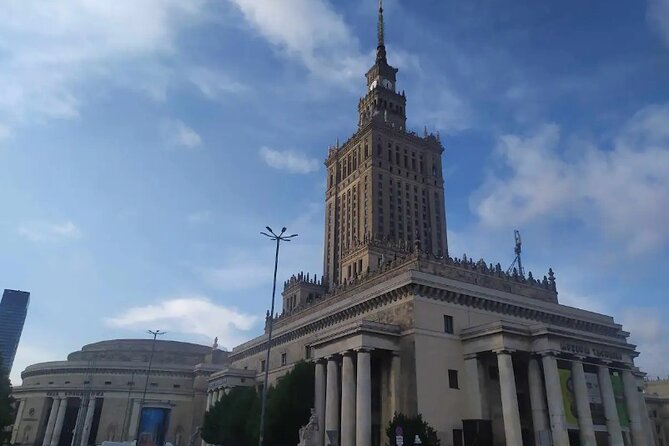
The Palace of Culture and Science is the tour’s biggest visual landmark and perhaps its most complicated subject. It is often called the most controversial building in Warsaw, and the reasons are not limited to its size.
The palace is tied to the Soviet presence and communist power. Its monumental form was meant to impress, but for many Poles it also recalls domination and an unwanted political order. The guide explains why some people see a striking example of socialist-era architecture while others see a symbol that should never have been imposed on Warsaw.
This is also the place to discuss socialist realism in a broader way. You may look at the decoration and think it is attractive, carefully designed, or even charming. A Polish visitor may see the same details through a very different emotional lens.
That difference is one of the tour’s most useful lessons. Buildings do not carry one fixed meaning for everyone. A style that appears picturesque to an outsider can be tied to fear, hardship, or loss for the people who lived under the system that created it.
The Palace of Culture and Science is the final major stop, but entry to its viewing terrace is not included in the $32 tour price. If you want the panorama, budget separately and check the terrace schedule. The walk itself focuses on the building’s political and social meaning rather than promising an included interior visit.
The tiny symbol and the humor of survival
One of the tour’s memorable details is the smallest icon of communism, described as so cute you may want one of your own. This sounds light, but it captures the way political symbols could be reworked through humor.
People did not respond to official power in only one way. They could resist openly, remain cautious, joke privately, or turn an emblem into something less threatening. Humor gave people a little control over a system that controlled so much else.
The guide uses these small details to avoid making the period feel like a timeline of leaders and dates. You hear about domestic life, work, shopping, rationing, travel, and the habits that helped people get through the day.
This personal scale is one of the strongest reasons to choose the walk. It gives you an idea of what the period felt like, not just what happened politically.
What the guides add to the experience
The guides are central to the tour. Oliwia is praised for her clear English, passion for Warsaw, quick humor, and ability to adapt to different questions. Her family connection gives some stories a personal edge without turning the walk into a private memoir.
Agnieszka brings a similarly personal approach. She takes time with questions and explains how the communist period affected Polish society after the political system ended. That wider view matters because the story does not stop at 1989.
You should expect an engaged, conversational walk rather than a formal lecture. The guides use stories and visual material to make complex subjects easier to follow. If you are curious, ask questions. The small-group or private setup gives you more room to do so.
The tour company also sends a Warsaw information pack with frequently asked questions, useful links, and extra suggestions. The material is a nice bonus if you are still planning your stay. You can also get recommendations for places to eat, drink, and visit after the walk.
Pace, price, and who should book
At about 3 kilometers over 2.5 hours, the pace should be manageable for most people who are comfortable walking through central Warsaw. Still, the activity is not recommended if you have problems with long-distance walking.
You will be outside for much of the experience, so sensible shoes and weather-appropriate clothing are practical choices. On warm days, the guide may stop in shaded areas and adjust the pace, but you should still plan for an outdoor walk.
The $32 price is fair for a private or small-group English tour with a live guide, visual aids, pre-tour information, and local suggestions. The value comes from interpretation. You can see Constitution Square, Marszałkowska Street, and the palace without paying for a tour, but it is much harder to understand why these places matter without a guide.
I would choose this walk if you have already seen Warsaw’s Old Town and want a different side of the city. It also works well near the start of your stay, since the information pack and restaurant suggestions may help shape the rest of your visit.
Families can enjoy it, especially if children are old enough to follow a discussion about censorship, shortages, and political control. History fans will find plenty to think about, but you do not need to arrive with a long list of dates. The guide builds the story from places you can see.
This is less suitable if you want interiors, museum collections, or a relaxed sightseeing stroll with little explanation. The tour is talk-heavy by design. Its reward is understanding.
Should you book Life Behind the Iron Curtain?
Book it if you want Warsaw explained through ordinary life, not just monuments. The strongest parts are the personal stories, the dry humor, the clear connection between architecture and political power, and the small details about shopping, censorship, travel, and survival.
I would especially recommend it for a first visit after you have covered the historic center, or for anyone who wants to understand why some Warsaw buildings carry such strong feelings. At $32, it earns its price through the guide’s context and storytelling.
Skip it if 3 kilometers of walking is too much, or if you mainly want a panoramic view from the Palace of Culture and Science. The viewing terrace costs extra, and the walk is about communist-era life rather than a standard highlights tour.
For most curious visitors, this is a thoughtful and funny way to see a difficult part of Warsaw’s past. It leaves you looking at ordinary streets with sharper eyes.
FAQ
How long does the Life Behind the Iron Curtain tour last?
The tour lasts approximately 150 minutes, or 2.5 hours.
How far do you walk?
The route covers approximately 3 kilometers.
Where does the tour begin?
The tour begins at Constitution Square in Warsaw. Look for a guide carrying a white and green umbrella.
Where does the tour finish?
The tour finishes at Emilii Plater 54.
Is the Palace of Culture and Science viewing terrace included?
No. The entry fee to the viewing terrace is not included in the tour price.
Is the tour available in English and suitable for wheelchair users?
Yes. The live tour is offered in English and is listed as wheelchair accessible. The activity is not recommended for people who have problems walking long distances.
Just added around Warsaw
- Jewish heritage in Warsaw★ 4.5 · 3 reviews
- Warsaw Outdoor Paintball with Transfers (all year round)★ 5.0 · 3 reviews
- World War II Warsaw Old Town, Military Cemetery Walking Tour★ 4.7 · 3 reviews
- Warsaw: Wolf’s Lair & Swieta Lipka Small-Group Tour + Lunch★ 5.0 · 3 reviews
- Sunset Boat Tour with Unlimited Drinks in Warsaw★ 3.5 · 3 reviews
- Majdanek – German camp from II World War – Private Tour – 1 DAY TRIP FROM WARSAW★ 5.0 · 3 reviews
- From Warsaw: Guided Tour to Wieliczka Salt Mine and Krakow★ 4.5 · 3 reviews
- Warsaw Sightseeing with NEW Mercedes Sclass !!!★ 5.0 · 3 reviews
Walking Tours, compared.




Gdańsk City Sights & History Guided Walking Tour in English
Read our review →


Browse the lists this tour appears in