
REVIEW · NOWA HUTA COMMUNISM TOURS
Nowa Huta Tour from Krakow: Communist City, Vodka & Zapiekanka
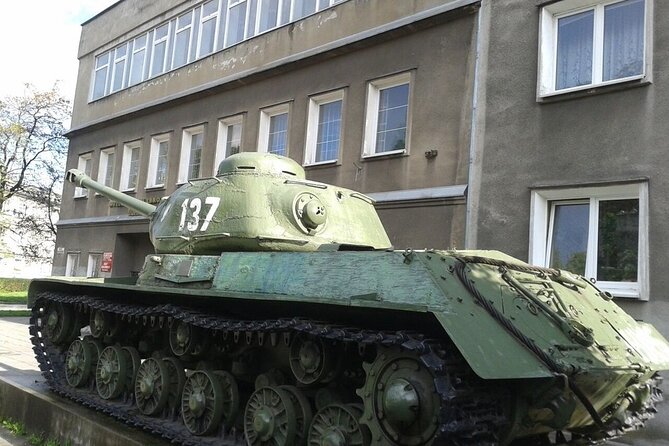
Communist history is best read on foot. This four-hour Nowa Huta tour combines a Cold War shelter museum with wide socialist avenues, a local zapiekanka, and vodka in a communist-style bar. I like the personal stories from guides such as Anna and Marta, and I like that the tour ends with the powerful Arka Pana church. The main drawback is value: at $114.14 per person, you should want more than a pleasant walk and a few historical anecdotes.
I also like the easy tram ride between Krakow and Nowa Huta, plus the small maximum group of 12 people. The tour gives you a useful look at daily life under communism, not just grand political events. Still, if your main goal is detailed architecture or a close study of workers’ protests, you may find the historical explanation lighter than expected.
In This Review
- What makes this Nowa Huta tour worth your time
- Why Nowa Huta matters beyond Krakow’s Old Town
- Starting at Długa 1 and riding toward the socialist city
- Inside Podziemna Nowa Huta, a shelter beneath the city
- Reading the city through its avenues and squares
- The Nowa Huta Cultural Centre and the role of art
- Zapiekanka, vodka, and ordinary life under communism
- Arka Pana, the church that challenged communist authority
- What the $114.14 price includes
- Who should book the Nowa Huta experience?
- Should you book this Nowa Huta tour?
- FAQ
- Where does the Nowa Huta tour begin?
- Where does the tour end?
- How long does the tour last?
- Is transport included?
- Is museum admission included?
- Is food included?
- Is vodka included?
- Is the tour offered in English?
- How large is the group?
What makes this Nowa Huta tour worth your time
- A former Cold War shelter sets the scene with original interiors, household objects, propaganda, and personal stories.
- A planned socialist city reveals how wide avenues, housing blocks, squares, and public buildings served political goals.
- A local zapiekanka and vodka tasting connect big historical themes to ordinary food and social life.
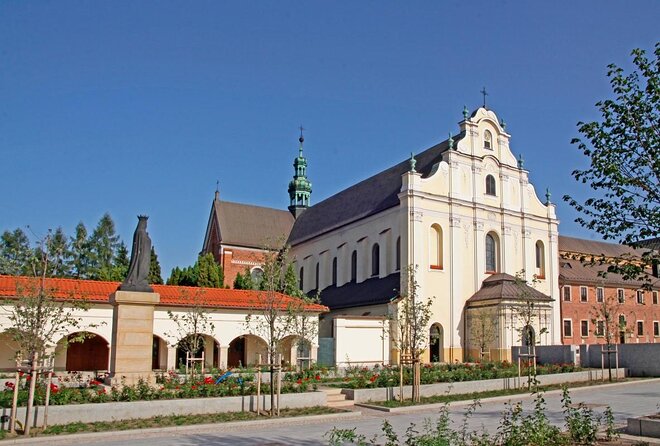
- Arka Pana church shows how religion and community resistance challenged communist power.
- A guide-led tram journey makes the trip from central Krakow simple and adds useful context on the way.
- A maximum of 12 people keeps the walk more personal than a large bus excursion.
Why Nowa Huta matters beyond Krakow’s Old Town
Krakow’s historic center is full of medieval towers, royal buildings, and handsome streets. Nowa Huta offers a sharp contrast. It was created after the Second World War as a planned industrial city, built around socialist ideals and the massive steelworks that shaped local employment and identity.
The point of the district was not simply to provide housing. Its layout reflected a political vision. Broad avenues, formal squares, symmetrical blocks, and large public spaces were meant to express order, collective life, and the strength of the state.
That makes Nowa Huta useful for understanding Poland from 1945 to 1989. You see how political ideas reached into city planning, culture, religion, work, and even the design of an apartment building.
I like this tour because it treats the district as a living part of Krakow rather than a frozen museum. The guide explains how Nowa Huta functions today, while also showing the marks left by the socialist period.
More Vodka Tastings in Kraków
- Krakow–Zakopane: Cable Car, Chocholow Baths, Cheese & Vodka
★ 5.0 · 10,720 reviews - Krakow: Zakopane Cable Car, Vodka, Cheese & Hot Springs Tour
★ 4.9 · 1,832 reviews - The Kraków Vodka Tour
★ 5.0 · 862 reviews
Starting at Długa 1 and riding toward the socialist city
The tour begins at Długa 1 in central Krakow. From there, transport by tram takes you toward Nowa Huta and back again. That matters because the district sits away from the Old Town, and arranging the journey yourself can take time from a short visit.
The ride also gives your guide a chance to introduce the area before you start walking. One of the strongest parts of the experience can be the personal context shared during this stage. Anna, for example, lived through communist Poland and took part in protests. Her stories about being a student and a protester helped connect national events with everyday life.
You should think of the guide as a major part of the tour’s value. Anna received especially warm praise for her stories and her easy conversational manner. Marta was also praised for adjusting her pace, explaining both the district’s past and its current life, and making the walk comfortable.
The quality of the tour may depend on how much historical detail your guide provides. The company responds well to requests for stronger coverage of socialist realism and workers’ protests, but you should still make your expectations clear at the beginning.
Inside Podziemna Nowa Huta, a shelter beneath the city
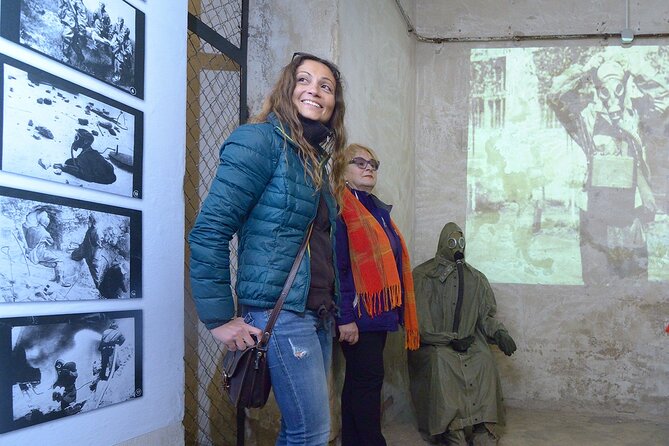
The first main stop is Podziemna Nowa Huta, the Museum of Nowa Huta, located in a former Cold War shelter. You have about 45 minutes here, and admission is included in the tour price.
This is an effective opening because it brings communist Poland down to human scale. Instead of starting with dates and political labels, you see original interiors, propaganda material, household objects, and personal accounts from the socialist period.
The shelter setting adds a physical sense of the Cold War. It helps explain the fear and uncertainty that shaped public life, while the household displays show how ideology appeared in ordinary routines.
I find this kind of museum most useful when you pay attention to the contrast between official messages and private reality. Propaganda presented a confident, organized society. Personal objects and stories can reveal a more complicated picture, one shaped by shortages, caution, compromise, humor, and quiet resistance.
The museum also answers a basic question: why was Nowa Huta built in the first place? Once you understand its industrial purpose and political design, the broad avenues and monumental spaces you see later make far more sense.
The museum is closed on Mondays. Check the day before booking if this stop is important to you, since it is the main indoor part of the experience.
Reading the city through its avenues and squares
After the museum, the tour continues on foot through Nowa Huta for about 30 minutes. The ground is level, but you still need comfortable shoes because the full outing involves walking between several places.
This is the part of the tour that rewards close attention. Your guide points out the planned shape of the district, including wide roads, symmetrical housing blocks, formal squares, and public areas designed around collective life.
A city plan can tell you what a government wanted people to believe. Grand scale suggests strength. Repeated building forms suggest equality and order. Wide avenues allow ceremonies, gatherings, and parades, but they also create a very different daily setting from Krakow’s tight medieval lanes.
The walk is not only about concrete and geometry. Your guide explains how architecture affected community life and how the district changed after communism ended. You may find the current-day perspective just as useful as the historical one, especially if you want to understand Nowa Huta as a real neighborhood rather than a political relic.
This is also where expectations matter most. The tour offers a broad introduction to socialist city planning, but the 30-minute walking section is not a specialist architecture lecture. If you want detailed discussion of every building or a close study of socialist realism, ask questions as you go.
More Nowa Huta and communism tours:
- Krakow: Nowa Huta Guided Tour in Vintage Car
★ 4.9 · 277 reviews - Legendary Private Nowa Huta Communism Tour with Crazy Guides
★ 5.0 · 262 reviews - Nowa Huta: Steelworks Administration Buildings/Shelters Tour
★ 4.9 · 160 reviews - Krakow: Private Nowa Huta Adventure Tour in Communist Cars
★ 4.9 · 114 reviews
The Nowa Huta Cultural Centre and the role of art
During the walk, you pass the Nowa Huta Cultural Centre. Under communism, it helped promote state-approved values through art, theatre, and music. Today, it continues as a local cultural institution.
That change gives you a useful example of how public buildings can outlive the political system that created them. The building’s original role was tied to socialist culture, but its present use serves the local community in a different way.
I like this stop because it widens the story beyond factories and government offices. Communist power also worked through performances, education, public events, and cultural programming. A cultural center could offer entertainment and social contact while also supporting official ideas.
The stop is part of the walking explanation rather than a separate scheduled admission visit. You should expect to see it from the outside and hear about its role from your guide.
Zapiekanka, vodka, and ordinary life under communism
The food stop lasts about 45 minutes and includes a local zapiekanka plus a vodka tasting in a communist-style restaurant. The zapiekanka is an open-faced toasted baguette, a simple Polish snack that became closely linked with everyday food culture.
This part adds welcome variety after the museum and walking tour. Food can explain a period in a way political speeches cannot. A cheap toasted snack, a neighborhood eating place, and a small glass of vodka show how people socialized and made do in daily life.
The stop takes place away from the main tourist path, which gives local vendors a direct share of the benefit. You also support a local market by sampling a familiar Polish treat rather than eating only at places designed for sightseeing groups.
The included food and drink are limited. Additional food and drinks cost extra, so do not treat this as a full meal. Vegetarians are welcome, and the operator says food allergies can usually be managed unless you have multiple combined allergies or follow a vegan diet.
The vodka tasting is part of the cultural experience, not a drinking contest. If you do not drink alcohol, ask about the practical options before booking, since the included item is specifically a vodka degustation.
This stop may be the highlight for anyone who wants social history. It is less important for someone seeking a longer museum visit or a detailed account of political opposition. The tour works best when you appreciate both types of information.
Arka Pana, the church that challenged communist authority
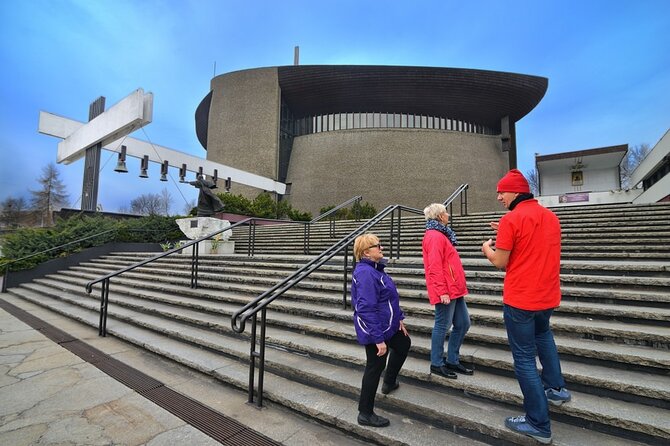
The final major stop is the Church of Our Lady Queen of Poland, better known as Arka Pana, or the Ark of the Lord. You spend about 45 minutes here.
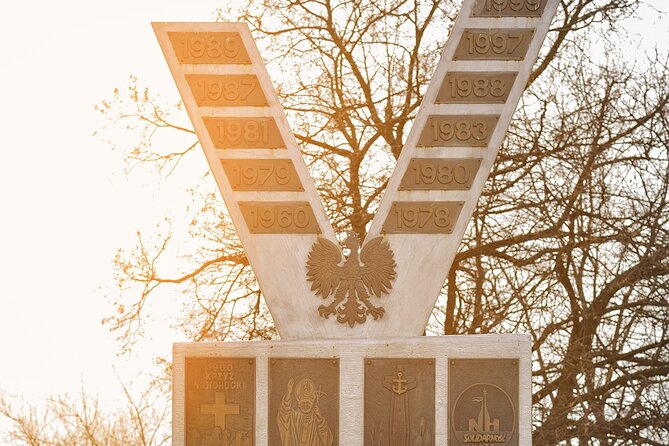
The church carries unusual weight in Nowa Huta’s story. It was built despite opposition from communist authorities and became a symbol of faith, community action, and resistance. Its story helps correct the old picture of communist Poland as a society controlled entirely from above.
Religion offered many people a place to gather, express identity, and maintain forms of public life outside direct state control. The church therefore connects local events with the wider story of Polish solidarity and opposition.
Your guide explains why this building became so important to the district. I would pay close attention here, especially if you are interested in the Solidarity Movement or in the role of the Catholic Church in modern Polish history.
The church also gives the tour a strong ending. You move from the state’s planned city, through its shelter and cultural institutions, to a building created through community effort and religious conviction.
What the $114.14 price includes
At $114.14 per person, this is not a cheap add-on to a Krakow visit. The price includes an English-speaking local guide, tram transport to Nowa Huta and back, museum admission, vodka, and one zapiekanka.
The maximum group size is 12, which helps justify some of the cost. A small group gives you a better chance to ask questions, hear personal stories, and keep a comfortable pace. Private tours include pickup from central Krakow hotels, but the small group option does not include hotel pickup.
The value depends on what you want from a four-hour outing. I think the price makes more sense if you value a personal guide, local food, and transport handled for you. It is harder to justify if you mainly want a formal architecture tour or a detailed academic history lesson.
The 4.9 rating and 94 percent recommendation suggest strong overall satisfaction, but the lower assessment provides a useful warning. A warm guide can make the day memorable, yet personal storytelling should be balanced with clear explanations of socialist realism, labor protests, and the Solidarity period.
You can cancel for a full refund up to 24 hours before the start time. Changes or cancellations made inside that window are not accepted for a refund.
Who should book the Nowa Huta experience?
I would recommend this tour to you if you:
- Want to understand Krakow beyond the Old Town
- Have an interest in Eastern Bloc or Cold War history
- Prefer local stories to a purely academic presentation
- Enjoy walking on level ground at an easy pace
- Want transport and museum admission included
- Like mixing history with a snack and a drink
- Are curious about how political ideas shaped ordinary neighborhoods
You may want another option if you need a specialist architecture tour, extensive coverage of workers’ protests, or a full-day examination of Poland’s communist era. The walking section is fairly short, and the museum visit lasts 45 minutes, so the experience provides an introduction rather than an exhaustive study.
Comfortable shoes are essential. Most people can take part, and the route is near public transport, but you should still be prepared for several stops and time on your feet.
Should you book this Nowa Huta tour?
Book it if you want a friendly, story-led introduction to communist Krakow, especially one that connects political history with food, public spaces, and religion. The shelter museum, tram ride, personal guide, zapiekanka, vodka, and Arka Pana church create a varied half-day.
Before paying $114.14, decide what kind of history you want. If you hope to hear first-person memories from someone like Anna, walk through a planned socialist city, and finish with a local snack, the tour offers a distinctive experience. If you expect a detailed architectural survey or a thorough account of every protest, ask the guide for that focus at the start, or choose a more specialized tour.
FAQ
Where does the Nowa Huta tour begin?
The tour begins at Długa 1, 31-147 Kraków, Poland.
Where does the tour end?
The tour ends near Krakow’s Main Market Square, Rynek Główny.
How long does the tour last?
The experience lasts approximately four hours.
Is transport included?
Yes. Transport by tram to the communist district and back is included.
Is museum admission included?
Yes. The entrance ticket to the Museum of Nowa Huta is included. The museum is closed on Mondays.
Is food included?
Yes. The tour includes one local zapiekanka. Additional food and drinks are not included.
Is vodka included?
Yes. A vodka tasting in a communist-style restaurant is included.
Is the tour offered in English?
Yes. The tour is offered in English and includes a local English-speaking guide.
How large is the group?
The tour has a maximum of 12 people. Hotel pickup is available for the private tour option, but not for the small group option.
Just added around Kraków
- Rynek Underground Museum & Wawel Castle, Cathedral – Cracow★ 5.0 · 3 reviews
- Schindler’s Factory, Ghetto and Plaszow Camp Guided Tour★ 4.7 · 3 reviews
- Nowa Huta – a guided tour of a utopian socialist city★ 5.0 · 3 reviews
- Krakow: Kazimierz by Golf Cart and Schindler’s Factory Tour★ 4.8 · 3 reviews
- Krakow: Jewish Traces Private Electric Car Tour★ 4.1 · 3 reviews
- Private Krakow City Tour by Car and Walk with private tour guide★ 5.0 · 3 reviews
- Krakow: Indoor Go-Karting (24-Minute Races)★ 4.8 · 3 reviews
- Discover the Jewish Quarter with a Bike Tour★ 5.0 · 3 reviews
Nowa Huta Communism Tours, compared.
Legendary Private Nowa Huta Communism Tour with Crazy Guides
Read our review →
Nowa Huta: Steelworks Administration Buildings/Shelters Tour
Read our review →
Private Tour: Warsaw’s Communist History by Retro Fiat
Read our review →
Private Nowa Huta Adventure Tour in Communist Cars
Read our review →
Browse the lists this tour appears in