
REVIEW · CYCLING TOURS
Sopot Private City Walking or Bike Tour with a local architect
Sopot reveals its best stories at walking speed. This private tour pairs Agnieszka Lasota, an architect and licensed guide, with a carefully chosen route through Sopot’s old streets, villas, parks, beach, and spa district. I like the use of historical photographs, which lets you compare today’s resort with its earlier days as a fishing village and the Riviera of the North. I also like the personal scale: your group can include up to nine people, so the experience should feel more like a guided conversation than a standard city tour.
The main consideration is time. The tour lasts about 90 minutes to two hours, and Sopot offers more architecture and stories than that schedule can comfortably hold. The lighthouse climb is optional, several buildings are viewed from outside, and anyone hoping to visit museums will need to plan those separately.
In This Review
- Key points to know before booking
- Why Sopot works so well with an architect
- Starting on Bohaterów Monte Cassino
- Dworek Sierakowskich and the quieter side of town
- Villas Street and Sopot’s Montmartre reputation
- Goyki 3 and the Tower Villa
- Spa architecture, artists, and the Crooked House connection
- The Haffner monument and Sopot’s founder figure
- The Grand Hotel and the beach-facing resort
- Skwer Kuracyjny and the Riviera of the North
- Changing rooms, fishermen’s cottages, and the pier
- Climbing the Sopot Lighthouse
- Price, group size, and the value of a private guide
- Who will get the most from this Sopot tour?
- Should you book the Sopot private tour?
- FAQ
- Where does the Sopot tour start?
- Where does the tour end?
- How long does the experience last?
- Is the tour private?
- Is the tour offered in English?
- Is the lighthouse climb required?
- Are museum admissions included?
- Can I cancel for a full refund?
Key points to know before booking
- Architect-led sightseeing: Agnieszka Lasota brings professional training in architecture to Sopot’s villas, spa buildings, streets, and public spaces.
- A private group of up to nine: You can ask questions and adjust the pace more easily than on a large group tour.
- Historical photographs included: Old images help show how Sopot changed from a small fishing settlement into a famous seaside resort.
- A strong architecture route: The tour covers 18th-century buildings, late-19th-century villas, spa structures, the Grand Hotel, and the famous Crooked House area.
- An optional lighthouse climb: You can decide if the steps are worth the view on the day.
- Good for repeat visitors: The guide focuses on details and lesser-seen corners, not just Sopot’s most familiar postcard sights.
Why Sopot works so well with an architect
Sopot is easy to underestimate. Many people come for the beach, the pier, and the lively pedestrian street, then leave without understanding why the town looks so different from nearby Gdańsk. This tour gives you the missing frame: Sopot developed as a resort, and its buildings reflect changing ideas about health, leisure, status, and seaside life.
Agnieszka’s architectural background matters here because the route is not only a parade of pretty facades. You’ll hear why a building uses a certain style, how a villa fits into the resort’s growth, and what public spaces once meant to visitors arriving from across Europe. The guide’s approach is described as clear rather than overloaded with facts, which suits a short tour.
I especially like that the historical photographs are part of the experience. A building can be attractive on its own, but an old image shows what has disappeared, what has changed, and what has survived. That gives the modern resort more meaning.
More Bike Tours in Gdańsk
- Gdańsk: Highlights Bike Tour
★ 4.9 · 173 reviews - Gdansk Private Bike Tour
★ 5.0 · 36 reviews - Gdansk Private Bike Tour
★ 5.0 · 21 reviews
Starting on Bohaterów Monte Cassino
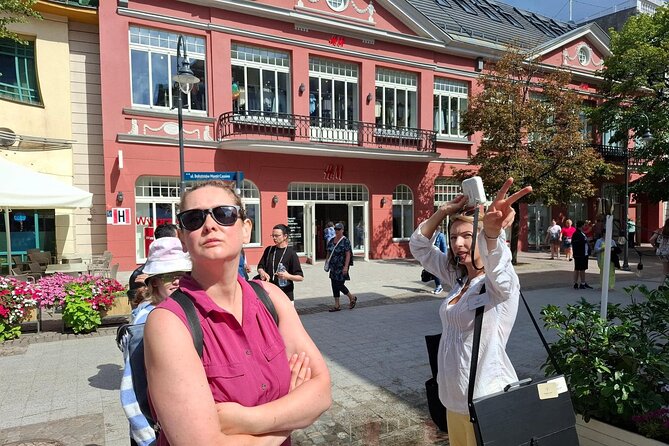
The meeting point is outside the McDonald’s at Bohaterów Monte Cassino 21. It is a practical place to find, near the main pedestrian activity, but do not expect the restaurant itself to be the subject of the tour. You’ll quickly move into the story of Sopot’s best-known street.
Bohaterów Monte Cassino was once the main route from the village to the sea. Fishermen used it to reach the shore, long before Sopot became a fashionable resort. Today it is Poland’s first pedestrian street and remains the town’s social spine.
This opening is useful because it sets up Sopot’s transformation. You see how a route linked to work and the sea became a promenade lined with shops, cafés, and visitors. With old photographs in hand, you can trace the change instead of simply hearing a list of dates.
The stop is scheduled for about 14 minutes, enough to get the broad story and orient yourself. If you want extended time for shopping or coffee, plan to return after the tour.
Dworek Sierakowskich and the quieter side of town
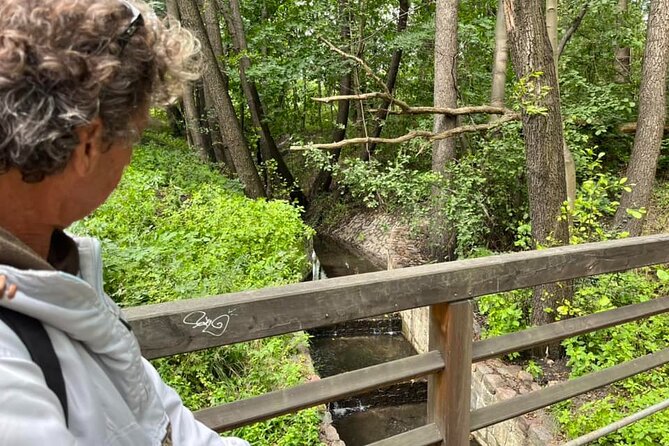
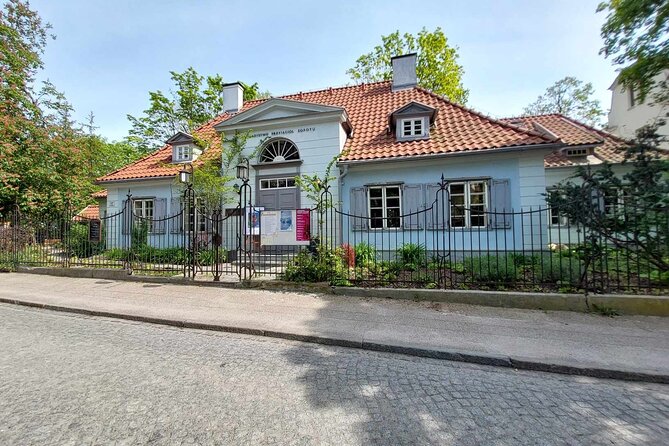
From the central street, the route moves toward Dworek Sierakowskich, an 18th-century building that once served as a guest house for a large manor. It has a calm garden and a more authentic, low-key feel than the main resort streets.
That change of mood is one of the tour’s strengths. Sopot is not only grand hotels and beach crowds. Places like this help you picture an earlier town, before its public image became tied to fashionable holidays.
Inside, you may hear about the bust of Fryderyk Chopin. He very probably stayed here while on holiday and played the piano. The careful wording is appropriate: this is a story with historical uncertainty, not a fact to accept without question. The stop takes about six minutes, so you’ll get an introduction rather than a full interior visit.
Villas Street and Sopot’s Montmartre reputation
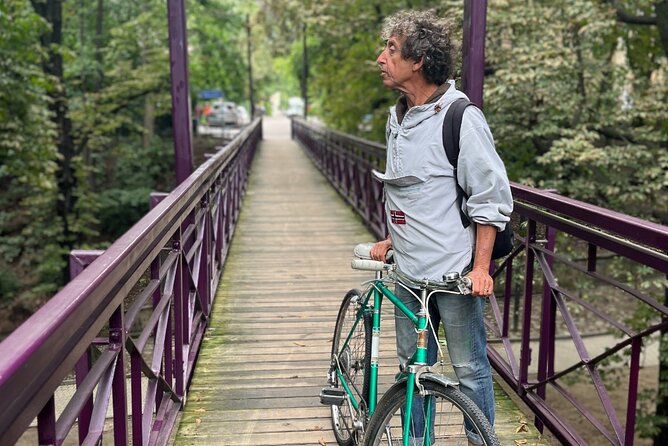
The route then crosses a picturesque bridge over a deep ravine and reaches a street first known as Villas Street. Its oldest house dates from 1881, and the classical architecture is a key reason people enjoy this part of Sopot.
Look up as you walk. The appeal here is in the collection of houses, not one grand monument. Walls, windows, towers, and gardens tell you how the resort attracted people who wanted private space close to the sea.
In the second half of the 20th century, this street was nicknamed Poland’s Montmartre. The comparison hints at its artistic character, but the real value is hearing the stories attached to the buildings. The guide’s job is to turn a pleasant residential walk into a readable neighborhood.
This section may be less exciting if you only want major landmarks. For anyone interested in architecture, local residents, and the way a town grows around its villas, it is likely one of the most rewarding parts.
More Walking Tours in Gdańsk
- Gdańsk City Sights & History Guided Walking Tour in English
★ 4.8 · 876 reviews - Main Town Gdańsk Walking Tour
★ 5.0 · 644 reviews - Discover Gdansk Walking Tour
★ 5.0 · 495 reviews - Gdańsk: Old Town Private Walking Tour with Legends and Facts
★ 4.9 · 245 reviews
Goyki 3 and the Tower Villa
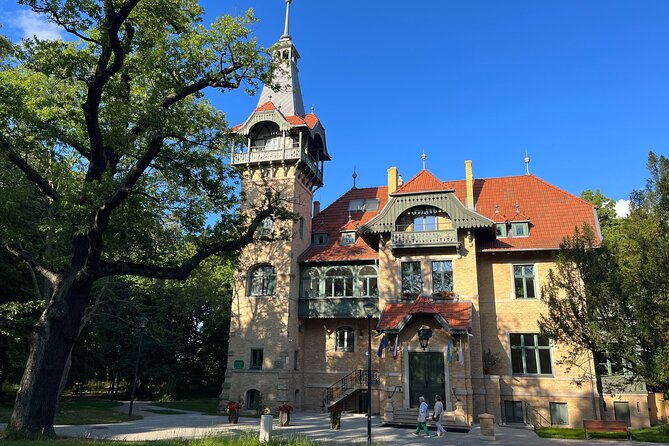
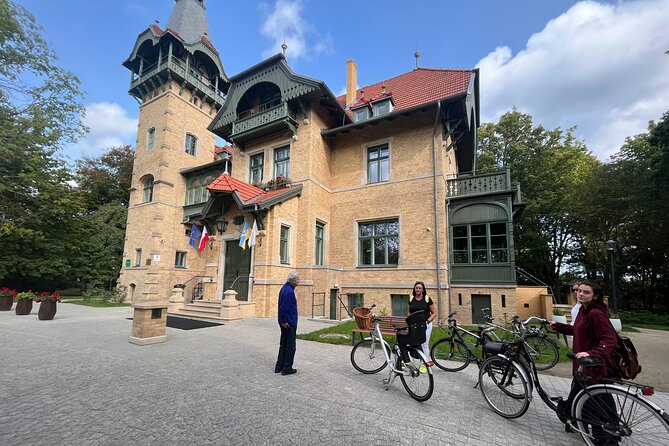
At Goyki 3 Art Inkubator, you’ll see one of Sopot’s largest villas, the late-19th-century Tower Villa. Its Alpine Resort style is a particularly good subject for an architect-led explanation. Why use a mountain resort style in a seaside town?
The answer connects Sopot to the wider European spa movement that began in the 18th century. Resorts borrowed visual ideas from one another, and buildings were designed to suggest health, escape, nature, and fashionable leisure. The villa’s style makes more sense once you understand that Sopot was part of this larger resort culture.
The building also has a long and sad story, accompanied by music in the telling. Today it houses an art institution, giving the property a current purpose rather than leaving it as a frozen historic object. The scheduled stop lasts about 13 minutes.
The surrounding park adds another layer. You’ll walk through an area associated with spa architecture, and the guide will explain why Sopot is considered to have one of Europe’s largest collections of this type of building.
Spa architecture, artists, and the Crooked House connection
This neighborhood is also tied to Per Oscar Gustav Dahlberg, a Swedish artist who moved to Sopot in 1996 after falling in love with the town. His house and studio may be a possible stop, and you can ask about arranging a meeting or buying his graphics and albums about Sopot or Gdańsk architecture.
That opportunity is not guaranteed, so treat it as an optional possibility rather than a fixed part of the tour. Still, it shows the guide’s interest in living culture, not only old buildings.
Dahlberg’s drawings inspired the design of Sopot’s famous Crooked House. The tour does not simply point at the unusual facade and move on. It gives you a connection between an artist’s work and one of the town’s most recognizable modern buildings.
This is a useful reminder that Sopot’s identity is still developing. Historic villas, spa buildings, contemporary art, and playful design all share the same compact town.
The Haffner monument and Sopot’s founder figure
At the Jan Jerzy Haffner Monument, the story shifts from buildings to the man linked with Sopot’s development. Haffner had been a surgeon in Napoleon’s army before choosing Sopot as his home, long before the area became widely known.
The stop is brief, about three minutes, but it gives you a human point of reference. The nearby tennis courts, large parks, trees, and sandy beaches reflect the kind of resort town Sopot became. Haffner’s decision to settle here helps explain why the place grew around health, leisure, and outdoor life.
Do not expect a long biography. This is a short stop within a larger story, and its purpose is to connect Sopot’s resort character with one of its early promoters.
The Grand Hotel and the beach-facing resort
Sofitel Grand Sopot is one of the route’s grandest sights. The hotel sits directly on the beach, an impressive position that was not simply the result of private luxury development. In the 1920s, the city of Sopot decided to make this investment itself.
That detail says a lot about the resort’s ambitions. Sopot wanted to compete on an international stage, and the Grand Hotel gave the town a setting for prestige, ceremony, and high-end holiday life. You’ll hear stories about the building’s splendor while looking at its relationship with the sea.
The stop lasts about 15 minutes. It is a good point to pause and notice the scale of the resort, especially after the smaller villas and quieter streets earlier in the walk.
The hotel is viewed as part of the tour rather than presented as a museum visit. If you want to explore interiors or learn more through a formal exhibition, you’ll need to arrange that separately.
Skwer Kuracyjny and the Riviera of the North
Skwer Kuracyjny, or the spa square, was created in 1925 and remains one of the central public spaces near the shore. Here, old photographs show Sopot during its period of European fame, when it was known as the Riviera of the North.
This is where the route’s separate threads come together. The pedestrian street, villas, parks, Grand Hotel, beach, pier, and spa buildings were not random attractions. They formed a resort system designed to keep visitors entertained, healthy, and impressed.
You’ll hear about the many attractions that once filled the area. The photographs help you imagine the energy of the square without pretending that the past can be perfectly recreated. At around 12 minutes, the stop is long enough for context and a close look at the surroundings.
The square can also be a useful place to pause after the tour. Since the route ends near the shore, you can continue toward the pier or return to the pedestrian street for food and coffee.
Changing rooms, fishermen’s cottages, and the pier
Near the southern changing rooms, you’ll see structures built in 1905. The guide includes funny stories connected with the changing rooms, which should lighten the more serious architectural material.
The route can also end near a plaza surrounded by small fishermen’s houses. These cottages were gently moved from their original location in the same year. That detail gives the area a sense of ordinary working life, a useful contrast to the hotels and resort buildings.
At some point, you’ll pass the famous Sopot pier. The tour explains its history and layout so you can return to visit it afterward. The pier is not simply treated as a photo stop. It belongs to the story of Sopot as a seaside resort and helps you understand how the town presents its connection with the water.
Because the tour ends in a different place from where it begins, pay attention to the guide’s final directions. The provided details identify the start clearly but do not give one single fixed end point, so ask where you’ll finish before setting a tight schedule afterward.
Climbing the Sopot Lighthouse
The final listed stop is Sopot Lighthouse, with about 14 minutes allowed. You can choose to climb the steps, and the view is considered worth the effort, though the climb may be tiring.
This is a nice way to finish because it gives you a high view after so much close attention to streets and facades. If you are short on energy, declining the climb does not erase the value of the tour. If you enjoy viewpoints, ask to include it.
The lighthouse stop is the only listed place with an admission ticket included. The other buildings and sites are viewed or entered without a separate charge during the tour.
Price, group size, and the value of a private guide
The price is $204.04 per group of up to nine people, not per person. For a full group, that works out to roughly $23 per person before any currency changes or booking fees. For two people, the per-person cost is much higher, but the private format may still make sense if you value flexibility and focused attention.
The price includes a licensed guide and historical photographs. It does not include museum visits, although a few buildings may be entered for free as part of the route. That distinction matters. This is a guided outdoor architecture and history walk, not a package with multiple paid attractions.
The activity is offered in English, with pickup available. The published meeting point is in Sopot, and the tour is near public transportation. Most people can participate, and service animals are allowed.
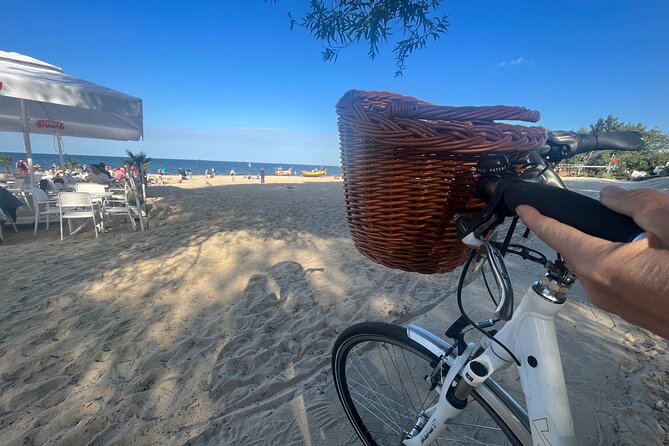
A bike version is offered, but the supplied details do not explain bike rental, bike type, or how the route changes. Ask about those points before booking if cycling is important to you. The stated duration is approximately 90 minutes to two hours, so you should not expect a full-day exploration.
Who will get the most from this Sopot tour?
I would choose this experience if you care about architecture, local stories, historic photographs, or the way seaside resorts are planned. It also suits repeat visitors who have already seen the pier and Monte Cassino Street but want to notice the buildings they previously walked past.
The route works well for a private family group or a small party with mixed interests because you can ask questions and discuss the pace. The guide has been praised for being open, direct, funny, and able to notice when people need coffee or a break.
You may want something else if your main goal is museum access, a long beach visit, or a slow café crawl. The time is compact, and the route covers many locations. It gives you a strong introduction, but it cannot replace several hours of independent wandering.
A little planning will improve the experience. Wear comfortable shoes, especially if you may climb the lighthouse steps, and allow extra time afterward for the pier. If you want to meet Dahlberg or visit a museum, raise that request before the tour rather than assuming it is included.
Should you book the Sopot private tour?
Book it if you want Sopot explained through its buildings and people, not just photographed from the pier. Agnieszka Lasota’s architectural training, warm style, and use of old images give the route more substance than a basic sightseeing circuit.
The strongest reason to book is the combination of major sights and quieter corners: Monte Cassino Street, Dworek Sierakowskich, Villas Street, Tower Villa, the Grand Hotel, spa architecture, fishermen’s cottages, and the lighthouse. The main limit is the short duration, so think of this as a focused introduction.
Free cancellation is available if you cancel at least 24 hours before the local start time. The experience is recommended by all listed participants and carries a five-star rating from 19 reviews, a strong record for a small private tour.
FAQ
Where does the Sopot tour start?
The tour starts at Restauracja McDonald’s, Bohaterów Monte Cassino 21, 81-706 Sopot, Poland.
Where does the tour end?
The activity ends at a different location from the starting point. The route may finish near the southern changing rooms or a plaza by the fishermen’s houses, and you should confirm the exact end point when booking.
How long does the experience last?
The tour lasts approximately one hour and 30 minutes to two hours.
Is the tour private?
Yes. Only your group participates, with up to nine people included in the group price.
Is the tour offered in English?
Yes. English is one of the available languages.
Is the lighthouse climb required?
No. The lighthouse climb is optional, so you can decide during the tour if you want to walk up the steps.
Are museum admissions included?
No. Museum visits are not included. A few buildings may be entered for free during the tour, but museums should be visited separately.
Can I cancel for a full refund?
Yes. You can receive a full refund by canceling at least 24 hours before the experience’s start time. Changes or cancellations made less than 24 hours before the start are not accepted for a refund.
Just added around Gdańsk
- Gdańsk: Boat Cruise from Gdańsk Old Town to Sopot Marina★ 4.4 · 3 reviews
- Stutthof Concentration Camp and Museum of WWII: Private Tour★ 4.7 · 3 reviews
- Gdansk: Bubble Football with Hotel Transfers★ 5.0 · 3 reviews
- Gdansk: Oliwa Zoo with Tickets and Roundtrip Transportation★ 5.0 · 3 reviews
- Segway Tour Gdańsk: Shipyard Tour – 1,5-Hour of Magic!★ 5.0 · 3 reviews
- Gdansk: Escape Room Adventure★ 4.0 · 3 reviews
- Gdańsk : Catamaran River Cruise (group)★ 4.3 · 3 reviews
- Artus Court and Gdansk Old Town Private Tour with Tickets★ 4.7 · 3 reviews
Cycling Tours, compared.
Complete Cracow Bike Tour (small group of maximum 15 people!)
Read our review →
Bike Tour of Old Town, Jewish Quarter and the Ghetto
Read our review →
Full Bike Tour – the Old Town, Jewish Qtr & the Ghetto NEW BIKES
Read our review →
Bike Tour of the Old Town, Kazimierz, and the Ghetto
Read our review →
Half-Day Warsaw City Sightseeing Bike Tour for Small Group
Read our review →Browse the lists this tour appears in