
REVIEW · AUDIO TOURS
Warsaw at War 1939-1945: A Self-guided Audio Tour
Warsaw’s streets carry heavy stories. This 90-minute audio walk turns the city center into an open-air history lesson, tracing Poland’s wartime suffering, resistance, and survival from the area near the Old Town to the statue of Józef Piłsudski. I like the freedom to pause and wander, and I like that offline maps and narration are included for one low price. The main drawback is navigation: the audio works well, but finding the exact route may take patience.
This is a good fit if you prefer exploring alone rather than following a guide holding a flag. You start the tour in the VoiceMap app, put your phone away, and listen as you walk roughly 3 kilometers. The subject matter is serious, covering Nazi Germany, Communist Russia, the Warsaw Uprising, Polish independence, and the people who fought for it.
In This Review
- Key points to know before you go
- Why this Warsaw walk is worth your time
- Starting near St. Anne’s Academic Church
- The Mały Powstaniec and the human cost of 1944
- Warsaw as a phoenix, not just a battlefield
- Paying respect at the Tomb of the Unknown Soldier
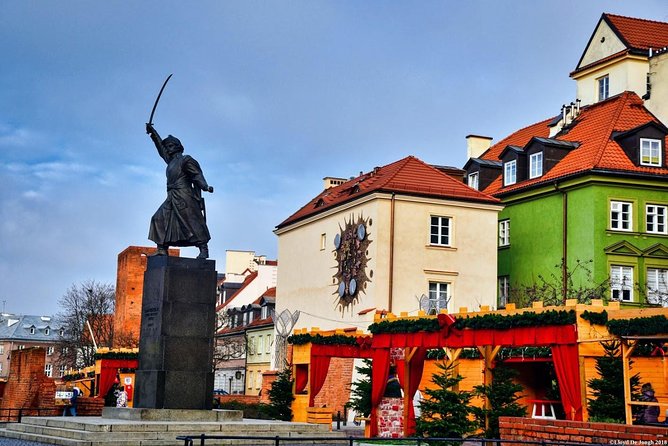
- Ending with Józef Piłsudski
- How the self-guided format works in practice
- Is the $9.99 price good value?
- Who should take this audio tour?
- Should you book Warsaw at War 1939-1945?
- FAQ
- How long does Warsaw at War 1939-1945 take?
- Where does the tour start?
- Where does the tour end?
- Is the tour available in English?
- Do I need to bring my own smartphone?
- Are entrance fees included?
Key points to know before you go
- A 3-kilometer route through central Warsaw: The walk takes about 90 minutes at a steady pace, with room to pause along the way.
- The Mały Powstaniec memorial: You learn why the Little Insurgent honors child soldiers who fought and died during the 1944 Warsaw Uprising.
- A quiet stop at the Tomb of the Unknown Soldier: The narration explains why this memorial contains ashes and soil from Polish battlefields.
- Professional audio with music and sound effects: The production aims to make the story accessible to anyone who can use earbuds, headphones, or a small speaker.
- A self-guided format with lifetime access: You can use the tour at your own pace and return to it after booking.
- A navigation weakness to watch for: The off-route alarm can be too sensitive, and the map does not always make the direction clear.
Why this Warsaw walk is worth your time
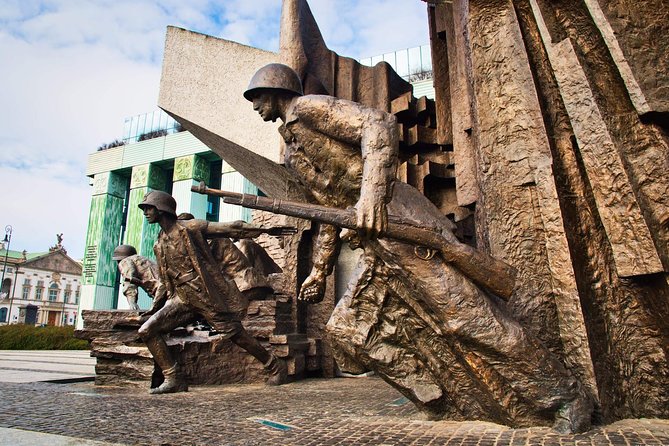
Warsaw is a city rebuilt after catastrophe. The central streets can look polished and orderly today, but this walk asks you to picture the destruction, fear, and resistance that shaped modern Poland.
I like the tour’s broad frame. It does not treat World War II as an isolated event. Instead, it places Poland between two major powers, Nazi Germany and Communist Russia, while explaining how Polish people fought to protect their country, culture, and independence. That makes the walk more useful than a simple list of dates and monuments.
You are not sitting in a museum listening to a long lecture. You are moving from one public place to another, with the city around you. That physical connection matters. A memorial is easier to understand when you are standing in front of it, looking at its size, position, and surroundings while the narration explains what it means.
The route is also flexible. You can pause the audio, stop for photographs, wander in Saxon Garden, or take a break for lunch. The tour specifically allows time for optional stops such as the Vodka Museum and restaurants in the city. Those extras are not included, so you will need to pay any admission or food costs separately.
A few more Warsaw trips worth weighing up
- Warsaw’s Old Town A Self-Guided Audio Tour
★ 4.5 · 10 reviews - Wroclaw: E-Car Tour and Audio Guide
★ 4.6 · 1,738 reviews - Krakow: Vistula River Sightseeing Cruise with Audio Guide
★ 4.4 · 820 reviews
Starting near St. Anne’s Academic Church
The walk begins at Kościół Akademicki św. Anny, or St. Anne’s Academic Church, at Krakowskie Przedmieście 68. This places you just outside the famous Old Town, giving you a practical starting point near one of Warsaw’s best-known historic areas.
The meeting point is not a staffed tour office. You need your own smartphone with the VoiceMap application and the tour ready to start. The package includes offline access to the audio, map, and geodata, which is useful if you do not want to depend on a mobile signal during the walk.
The instructions are simple: start the route in the app, then put your phone away and let the audio guide direct you. That hands-free style is one of the format’s best features. You can keep your eyes on the buildings, monuments, and crossings instead of staring at a screen every few seconds.
Still, I would check the route before setting off. One piece of direct feedback points to a real weakness: the map may not show the walking direction clearly enough. The off-route warning can also sound when you are simply walking on the other side of the street. That means you should not panic every time the alert appears.
The Mały Powstaniec and the human cost of 1944

One of the most memorable stops is the Mały Powstaniec, or Little Insurgent. The memorial honors child soldiers who fought and died during the Warsaw Uprising of 1944.
This is a small monument with a large emotional charge. The subject is difficult because it connects the Warsaw Uprising with children placed in the middle of a brutal conflict. The audio gives the memorial its proper setting, explaining the background rather than asking you to glance at a statue and move on.
I appreciate this kind of stop because it keeps the story personal. Military history can become a blur of armies and dates. The Little Insurgent brings the focus back to young lives and the price paid by ordinary people.
You should allow yourself a little extra time here. The advertised walking time is about 90 minutes, but the app lets you pause whenever you wish. If the story affects you, there is no reason to hurry to the next point.
The subject may not suit very young children, even though the audio is designed for all ages who can wear earbuds or headphones. Parents should decide if the material about child soldiers and wartime deaths is right for their family.
Warsaw as a phoenix, not just a battlefield
The central theme is Warsaw’s destruction and recovery. The city is presented as a phoenix that rose from the ashes of World War II and became a center of Polish culture, art, and public life.
That idea gives the walk a useful sense of place. You are not only hearing about military events. You are learning why Polish heritage mattered so much and why resistance took forms beyond the battlefield.
The tour also discusses Poland’s struggles against both Nazi Germany and Communist Russia. This wider context helps explain why Polish independence is such a powerful subject in Warsaw. Poland’s wartime story did not end neatly in 1945, and the tour’s route toward Józef Piłsudski makes that clear.
The audio format is particularly helpful here. Music and sound effects accompany the narration, and the recording was professionally mastered. For some people, that added production will make the walk more engaging. If you prefer a quiet, plain spoken guide with no effects, you may find the style a little theatrical.
You can use earbuds, headphones, or a small speaker for a small group. A speaker is best used with consideration for people around you, especially at solemn memorials. The tour has a maximum group size of 10, but because it is self-guided, you can also experience it privately.
A completely different kind of day out in Warsaw:
- Warsaw: Chopin Concert in the Old Town
★ 4.8 · 2,287 reviews - Warsaw: Traditional Galar Cruise on The Vistula River
★ 4.6 · 1,640 reviews - Warsaw: Old Town Highlights Walking Tour in English
★ 4.7 · 1,516 reviews - Warsaw Concert: Chopin – Painted by Candlelights with Wine
★ 4.8 · 1,442 reviews
Paying respect at the Tomb of the Unknown Soldier
The route pauses at the Tomb of the Unknown Soldier, one of Warsaw’s most important memorial sites. This is the place to slow down.
The narration explains the monument’s history and the meaning of the ashes and soil it contains. These come from 20th-century battlefields where Polish soldiers lost their lives. That detail gives the site a national reach. The monument is not dedicated to one named person or one single battle. It represents many who died without a known grave.
I like the way this stop shifts the mood. The Little Insurgent focuses on young people and the Warsaw Uprising. The Tomb of the Unknown Soldier broadens the story to include Polish soldiers from battlefields across the 20th century.
You do not need an entrance ticket for the walking tour, and the stop is experienced from the public route. Museum tickets and other attraction fees are not included, so plan to pay separately if you decide to visit somewhere along the way.
Saxon Garden is another possible detour. The tour allows you to wander and take photographs, but these additions will extend the walk beyond the basic 90-minute timing. The same is true if you stop for lunch or visit the Vodka Museum.
Ending with Józef Piłsudski
The tour ends at the statue of Józef Piłsudski on plac Marszałka Józefa Piłsudskiego. This final stop reaches back beyond the 1939 to 1945 period and introduces one of Poland’s most important political and military figures.
Piłsudski is presented as a hero of Polish freedom who fought Russian control and helped defeat Lenin’s Red Army at the gates of Warsaw in 1920. That event gives the ending a clear purpose. The walk is not only about what Poland endured during World War II. It is also about the longer struggle for a Polish state capable of defending itself.
Ending at Piłsudski’s statue creates a forward-looking note. The tour begins with Warsaw’s wartime pain and finishes with a figure connected to independence and national determination.
For visitors who want a narrowly focused 1939 to 1945 tour, the Piłsudski section may feel slightly outside the advertised period. I see it as useful historical framing, but you should know that the walk is really about Polish freedom across several connected conflicts.
How the self-guided format works in practice
A self-guided tour gives you control, but it also gives you responsibility. There is no guide beside you to point down the correct street or explain a missed turn.
The VoiceMap application includes the audio, maps, and geodata offline. That is a strong practical benefit. You can prepare before walking and avoid using data for every audio segment.
The clearest advice is to download and check everything before you leave. Make sure your phone is charged, your volume is comfortable, and you know where the opening point is. The tour operates every day, and the listed hours run from midnight to 11:59 p.m., so you have plenty of scheduling freedom.
The main issue is route guidance. A five-star assessment praised the tour as informative, easy to follow, and well suited to exploring alone. Another assessment gave it three stars because the map direction was often hard to follow and the warning system was overly sensitive.
Those two points can both be true. The narration may be clear while the map is less helpful. I would use the app as your guide, but also pay attention to street names and landmarks. If the alert sounds when you cross the street, first check your position before assuming you have made a major mistake.
Is the $9.99 price good value?
At $9.99 per person, this is an inexpensive way to add structure to a half-day in Warsaw. You receive lifetime access to the tour, plus offline audio and map data. There is no separate guide gratuity, group transport charge, or required museum admission.
The value is strongest for solo visitors and couples who want historical context without committing to a fixed group departure. You can start when you like, pause for lunch, and return to the route later because access does not expire.
The price is less attractive if you expect a live guide who can answer questions, adjust the pace, or solve navigation problems in person. This is a prepared audio program, not a private walking guide.
Remember that your smartphone, transportation, food, and any museum or attraction tickets are extra. The route itself does not include admission tickets. Even so, the low cost makes it a reasonable choice for a first look at Warsaw’s wartime story.
Who should take this audio tour?
I would recommend it to:
- Solo visitors who want a planned route without joining a group
- History fans interested in the Warsaw Uprising and Polish independence
- Visitors who enjoy walking between monuments rather than staying indoors
- Couples or small groups comfortable sharing audio through headphones or a small speaker
- People who value flexible timing and the ability to pause
I would be more cautious if you need flawless turn-by-turn navigation or want detailed answers to personal questions. The sensitive wartime material also means that families should consider the age and interests of children before booking.
Most people can take part, and service animals are allowed. The route is near public transportation, but transportation itself is not part of the price. The group limit is 10 people, though the self-guided design means you are not dependent on a tour leader.
Should you book Warsaw at War 1939-1945?
Book this tour if you want a low-cost, flexible walk that connects Warsaw’s memorials with the country’s long fight for freedom. The Mały Powstaniec and Tomb of the Unknown Soldier give the route real emotional weight, while the ending at Piłsudski’s statue adds useful political context.
I would not book it expecting a polished navigation system or a live historian at your side. Check the map before walking, keep an eye on your location, and treat the off-route alert as a hint rather than an absolute command.
For the price, the combination of professional narration, music, offline access, lifetime use, and a 3-kilometer central route is solid. Just remember that the booking is non-refundable and cannot be changed after purchase. If the subject matter interests you and you are happy to explore at your own pace, this is a practical way to meet Warsaw’s wartime story on foot.
FAQ
How long does Warsaw at War 1939-1945 take?
The walking tour takes approximately 1 hour and 30 minutes and covers about 3 kilometers. You can pause the audio and spend longer at stops or optional attractions.
Where does the tour start?
It starts at Kościół Akademicki św. Anny, St. Anne’s Academic Church, at Krakowskie Przedmieście 68 in Warsaw.
Where does the tour end?
The route ends at the statue of Józef Piłsudski on plac Marszałka Józefa Piłsudskiego.
Is the tour available in English?
Yes. The tour is offered in English.
Do I need to bring my own smartphone?
Yes. A smartphone is not included. You need to use the VoiceMap application to access the audio, map, and route information.
Are entrance fees included?
No. The walking tour has no included admission tickets for museums or other attractions. Food, drinks, transportation, and any attraction fees are also separate.
Just added around Warsaw
- Jewish heritage in Warsaw★ 4.5 · 3 reviews
- Warsaw Outdoor Paintball with Transfers (all year round)★ 5.0 · 3 reviews
- World War II Warsaw Old Town, Military Cemetery Walking Tour★ 4.7 · 3 reviews
- Warsaw: Wolf’s Lair & Swieta Lipka Small-Group Tour + Lunch★ 5.0 · 3 reviews
- Sunset Boat Tour with Unlimited Drinks in Warsaw★ 3.5 · 3 reviews
- Majdanek – German camp from II World War – Private Tour – 1 DAY TRIP FROM WARSAW★ 5.0 · 3 reviews
- From Warsaw: Guided Tour to Wieliczka Salt Mine and Krakow★ 4.5 · 3 reviews
- Warsaw Sightseeing with NEW Mercedes Sclass !!!★ 5.0 · 3 reviews
Audio Tours, compared.


Vistula River Sightseeing Cruise with Audio Guide
Read our review →
Sightseeing Cruise on Vistula River with Audio Guide
Read our review →Vistula River Sightseeing Cruise with Audio Guide
Read our review →
Vistula Night Cruise by Gondola w/ Audio Commentary
Read our review →

The Birthplace of Poland: A Self-Guided Audio Tour of Poznań
Read our review →Browse the lists this tour appears in