
REVIEW · MUSEUMS
Warsaw: Cold War Museum Entry Ticket
Cold War stories come alive in Warsaw. This museum makes the era easier to grasp through original maps, uniforms, and devices, then adds VR games, touch screens, a cinema, and a robot guide. I like the Polish point of view and the way the exhibition connects world politics with people who lived under communism. I also like the space-flight display, especially the hologram of a space station. The main drawback is the museum’s strongly political framing, which gives special attention to Ronald Reagan, Pope John Paul II, and General Ryszard Kukliński.
At about $12 per person, this is a good-value indoor stop if Cold War politics interests you. You can visit any time during the ticket’s three-month validity, subject to available starting times, and the entrance is only about 40 meters from Warsaw’s Old Market Square. I would allow enough time to use the interactive exhibits rather than treating this as a quick room of military objects.
In This Review
- Key things to know before you go
- Why this small Warsaw museum deserves your time
- The Polish perspective, clearly stated
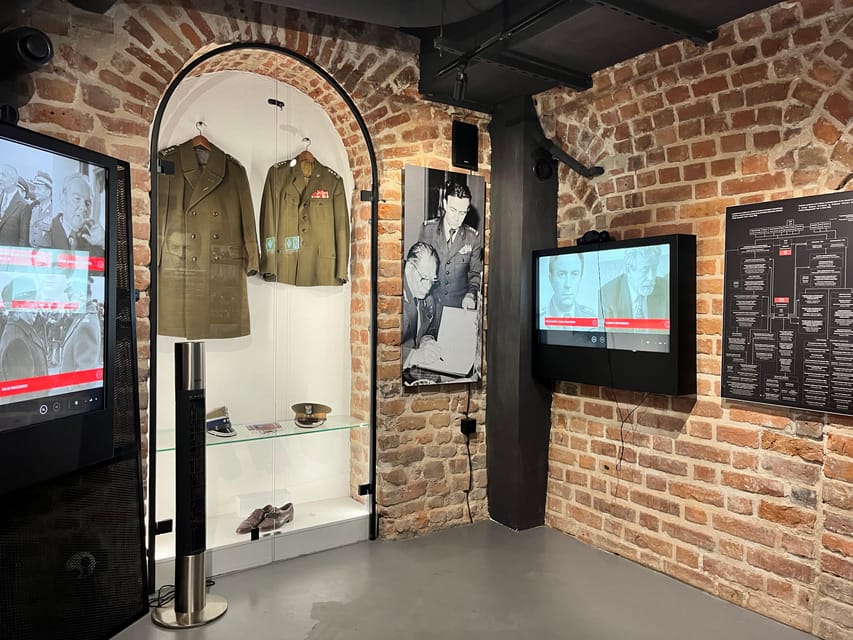
- Original objects, maps, and uniforms
- More than 50 ways to interact with the story
- Three VR games with a secret-agent theme
- Space flights and a hologram of a station
- The robot guide and what it adds
- The building’s difficult memory
- How long to plan and how the ticket works
- Practical points before you enter
- Who will enjoy this museum most?
- Should you book the Cold War Museum?
- FAQ
- Where is the Cold War Museum located?
- What does the admission ticket include?
- How long is the ticket valid?
- Are English-language options available?
- Is the museum wheelchair accessible?
- Can I bring my dog?
Key things to know before you go
- The Polish viewpoint shapes the whole museum: The exhibition presents Poland’s role in the defeat of Soviet communism, not a neutral textbook version of the Cold War.
- More than 50 multimedia features add variety: Touch screens, multimedia tables, VR goggles, a cinema, and a quiz keep the visit active.
- Three VR games put you into the action: You play a Cold War-era secret agent working to disrupt Soviet invasion plans.
- The space display reaches beyond military history: You’ll see the story of space flights and a hologram of a space station.
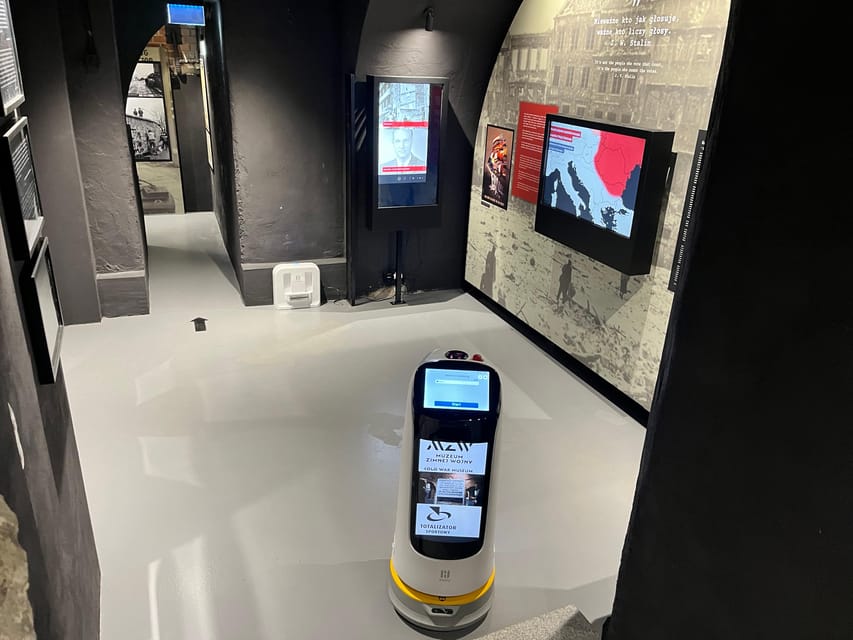
- An autonomous robot can guide you: This is the first and only museum in Poland described as having a robot serving as an autonomous guide.
- The building carries painful local history: The address once housed a communist militia station where high school graduate Grzegorz Przemyk was beaten to death during martial law.
Why this small Warsaw museum deserves your time
Warsaw has no shortage of museums, so this one needs a clear reason to enter. Its strength is the mix of history and participation. You are not limited to reading labels beside old equipment. You can test yourself in a multimedia quiz, handle information through touch screens, sit with film material, and use VR goggles.
That format is especially useful for the Cold War, a subject filled with long timelines, unfamiliar political terms, and events spread across many countries. The interactive material gives you several ways to follow the story. If one section feels heavy with dates and names, another may explain the same period through a map, image, game, or film.
The museum covers the full Cold War period and includes the countries involved in the rivalry between the two blocs. You should expect a broad political story, but the focus remains Poland. That is important. You are not entering a general museum of twentieth-century diplomacy. You are entering a Polish interpretation of how the struggle with Soviet communism unfolded and why Poland’s part mattered.
More Museum Visits in Warsaw
- Warsaw: POLIN Museum of the History of Polish Jews Ticket
★ 4.7 · 1,142 reviews - Warsaw: Polish Vodka Museum Tour with Tasting
★ 4.6 · 788 reviews - Warsaw: Museum World of Illusion Entry Ticket
★ 3.9 · 666 reviews
The Polish perspective, clearly stated
The museum presents the Polish contribution to the victory of the capitalist world over Soviet communism. That wording tells you a lot about the tone. The exhibition is not pretending to offer an evenly weighted account of every political position.
Much of the story centers on three figures from the final two decades of the Cold War: President Ronald Reagan, Pope John Paul II, and General Ryszard Kukliński. Their decisions, public messages, and actions receive special attention. If you already know about the role of the United States, the Catholic Church, and Polish opposition to Soviet power, you may find this approach familiar. If you do not, the museum offers a direct introduction to those connections.
I appreciate the clarity of this point of view, because it helps you understand how many Poles remember the period. Still, you should keep the framing in mind. The museum uses language about the Evil Empire and presents the conflict through the victory of the capitalist side. That can be compelling, but it is also selective. I would visit it as a place of Polish historical memory, then compare its interpretation with other museums or books if you want a wider political picture.
Original objects, maps, and uniforms
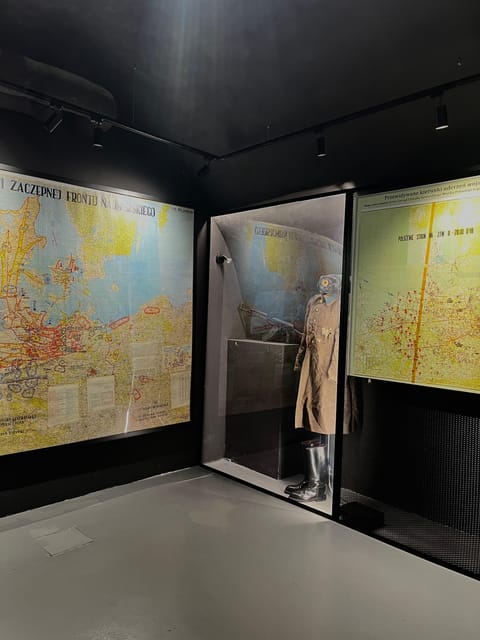
The physical objects provide the museum’s foundation. You can see original devices, maps, and uniforms linked to the Cold War period. These items matter because they give shape to a conflict that often feels abstract. A map shows the division of Europe. A uniform points to the people enforcing the system. A device hints at the technology and surveillance that supported it.
The objects are paired with explanations and multimedia material, so the visit is not just a display of equipment behind glass. You can move between the tangible evidence and the larger political story. That balance should suit you if you like museums that provide context without leaving you alone with a collection of unexplained objects.
The exhibition also covers all countries involved in the rivalry between the two blocs. That broad scope may feel dense, especially if you stop at every screen. You will get more from the museum if you choose the subjects that interest you most rather than trying to absorb every name and date.
More than 50 ways to interact with the story
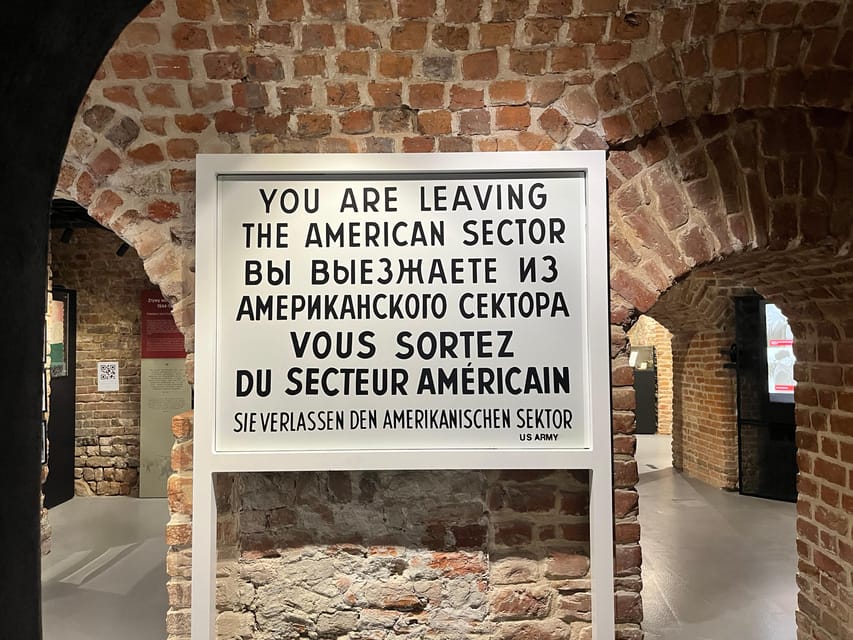
The museum uses more than 50 multimedia elements. These include touch screens, multimedia tables, VR goggles, an autonomous robot, and a cinema. The result is a visit with several different rhythms. You might read a short explanation, examine a map, watch a film, then switch to a hands-on activity.
I like this variety for families and mixed-age groups. One person can focus on the political material while another explores the technology or waits for a VR activity. The museum is open to Polish and foreign visitors of all ages, with English and Polish available.
The multimedia knowledge quiz gives the visit a clear challenge. It is a useful way to check what you have picked up, and it may help younger visitors stay involved. Do not expect a quiet, traditional museum experience from beginning to end. The screens and games are central to the design.
The cinema adds another way to present the period, though the supplied information does not specify the film’s length or screening schedule. Check the available timing when you arrive if you want to include it rather than assuming it runs continuously.
A completely different kind of day out in Warsaw:
- Warsaw: Chopin Concert in the Old Town
★ 4.8 · 2,287 reviews - Warsaw: Traditional Galar Cruise on The Vistula River
★ 4.6 · 1,640 reviews - Warsaw: Old Town Highlights Walking Tour in English
★ 4.7 · 1,516 reviews - Warsaw Concert: Chopin – Painted by Candlelights with Wine
★ 4.8 · 1,442 reviews
Three VR games with a secret-agent theme
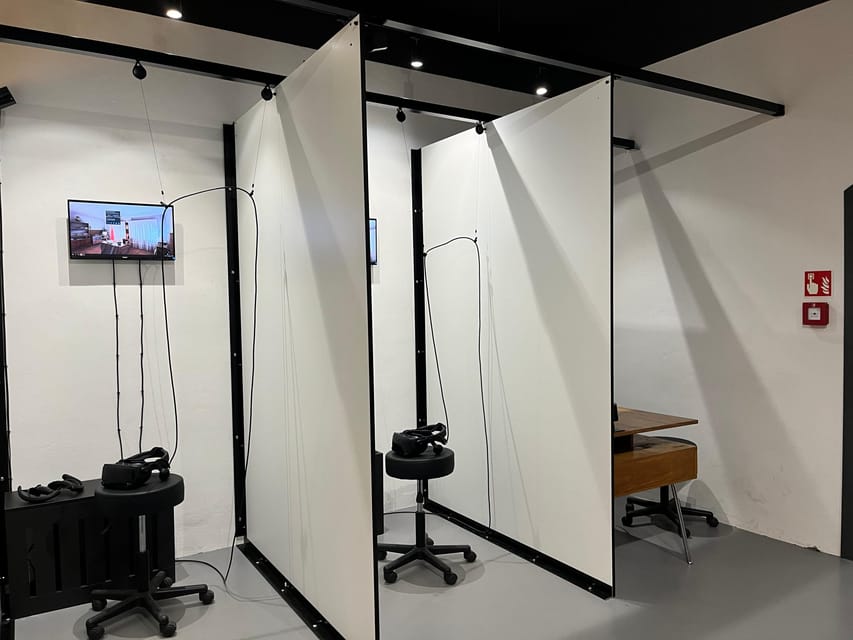
The VR section is one of the most distinctive parts of the visit. You can play three games that place you in the role of a Cold War secret agent. The purpose is to compromise plans connected with a Soviet invasion, giving you a fictional task within a real historical setting.
This is a smart use of VR. Instead of simply watching a historical scene, you have to act inside the game. That can make the pressure and uncertainty of the period easier to imagine, even though the activity is clearly an educational simulation rather than a record of your own historical role.
The games may be a major reason to choose this museum if you are visiting with children or teenagers. They also give adults a break from reading. On the other hand, VR can be less appealing if you prefer objects, documents, and quiet interpretation. Since the museum includes three games, you should plan to spend time here if the equipment is available and you want the full experience.
Space flights and a hologram of a station
The space-flight display broadens the museum beyond the usual story of NATO, the Warsaw Pact, spies, and nuclear fear. You can discover the history of space flights and see a hologram of a space station.
That connection is valuable because space exploration was part of the Cold War competition. Rockets, satellites, and manned missions were scientific achievements, but they also showed political and military power. The display helps you see how the rivalry reached above the Earth as well as across Europe.
The hologram should appeal to visitors who enjoy technology and visual displays. It is also a good pause between the more serious sections about repression, conflict, and political control. The available information does not identify the space station or describe the exact content of the presentation, so think of it as a notable feature rather than a full space museum.
The robot guide and what it adds
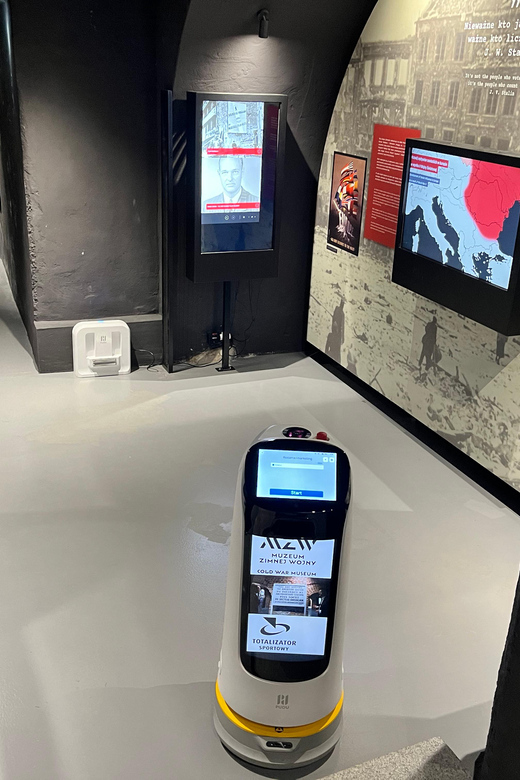
This is the first and only museum in Poland described as having an autonomous robot serving as a guide. The robot can guide you through the museum, and it gives the visit an unusual modern touch.
I would treat the robot as an extra guide rather than a replacement for a human historian. It may help you find your way and provide another form of explanation, but the museum’s central interpretation still comes through its displays, films, games, and written material. The host or greeter can assist in English or Polish, while the robot is part of the exhibition access included with admission.
For children, the robot may be the first thing they remember. For adults, it is a reminder that the museum is as interested in modern presentation as it is in old objects. If you prefer a personal conversation with a guide, note that a human guided tour is not included.
The building’s difficult memory
The museum’s address adds weight to the visit. During Poland’s communist period, the building housed a communist militia station. It was also the place where Grzegorz Przemyk, a well-known victim of martial law, was beaten to death.
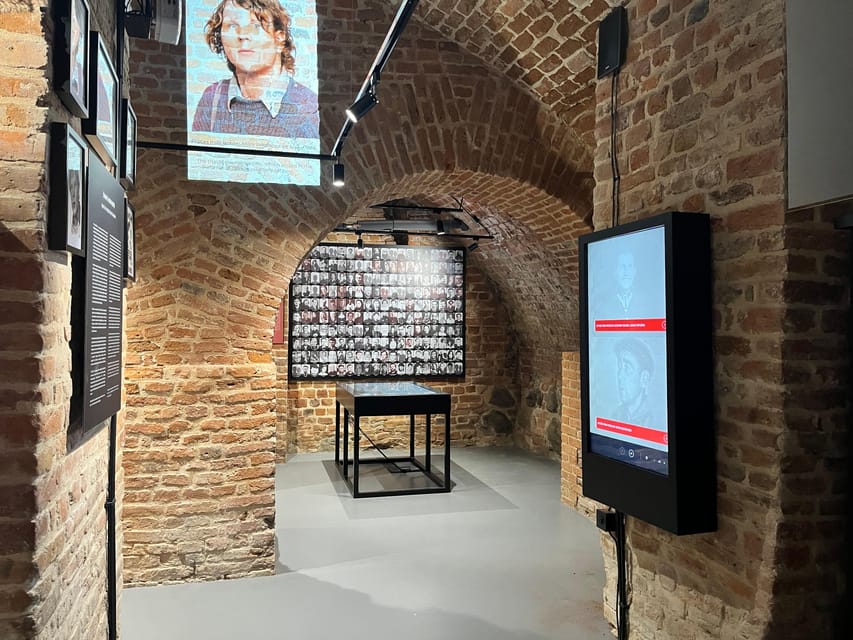
That fact changes how you read the exhibition. You are not only looking at objects from a distant international conflict. You are visiting a site connected with political violence and the victims of the system being discussed. The museum brings together the architecture, the history of the address, and its account of aggressors, survivors, and people who defended their version of the truth.
This can make the experience more serious than the VR games and robot might suggest. The modern technology draws you in, but the location asks you to think about the human cost of authoritarian rule. I would not rush through this part. Even a short pause to consider the building’s former use gives the rest of the museum more meaning.
How long to plan and how the ticket works
The ticket is valid for three months, not for a three-month visit. You select from available starting times, then use the ticket during that validity period. This flexibility is useful if your Warsaw plans are still changing, but it does not tell you how long you will spend inside.
The museum is close to Old Market Square, with the entrance about 40 meters away. That makes it easy to pair with a walk through Warsaw’s Old Town. Transportation is not included, but you do not need a separate transfer as part of the museum visit.
There is skip-the-ticket-line access, which can save time at a busy central location. Still, the interactive exhibits may take longer than a standard museum visit. I would avoid squeezing it into a ten-minute gap between other sights. Give yourself enough time for the objects, the quiz, the VR games, the space display, and the film if the schedule allows.
Admission costs about $12 per person and includes the exhibitions, all attractions within the exhibition, and the autonomous robot guide. I consider that fair value because the fee covers more than entry to a static collection. You are paying for a technology-heavy visit with several activities, and the museum offers material for both first-time learners and people who already know the Cold War.
Practical points before you enter
Smoking, vaping, food, drinks, alcohol, and drugs are not allowed. Four-legged visitors are welcome, which makes this one of the few museums in Warsaw where you can visit with a dog.
The museum is not suitable for wheelchair users. That is an important limitation, especially because the activity takes place inside a historic building. You should confirm current access arrangements directly if mobility is a concern, since the stated information specifically excludes wheelchair users.
English and Polish are available. You can also cancel up to 24 hours before the visit for a full refund, and the reserve-now, pay-later option lets you hold a place without paying immediately. Those policies are useful, but the real planning question is your interest in the subject and your ability to use the interactive equipment.
Who will enjoy this museum most?
I would recommend it most strongly to anyone curious about Poland’s experience under communism, the final decades of the Cold War, or the role of Reagan, John Paul II, and Ryszard Kukliński. It also suits families and groups with different interests because the visit combines objects, film, games, maps, and digital displays.
It may be less satisfying if you want a neutral, global account of the Cold War or a museum focused mainly on original documents. The Polish political position is direct, and the museum gives the most attention to the people and events that support its interpretation.
The experience also works well as a rainy-day addition to an Old Town visit. You do not need to arrange transportation, and the entrance is very close to the square. Just remember that the site carries a serious history, so the lighter elements do not make the subject light.
Should you book the Cold War Museum?
Book it if you want a modern, active way to understand Poland’s place in the Cold War. The strongest reasons are the Polish perspective, the original objects, three VR games, the space-flight display, and the rare autonomous robot guide. At $12, the mix offers solid value.
Skip it if you need wheelchair access, want a human-led tour included, or prefer an entirely neutral account of the conflict. For everyone else, I would add it to an Old Town day, allow more than a quick look, and approach the exhibition with an open mind about its clear political viewpoint.
FAQ
Where is the Cold War Museum located?
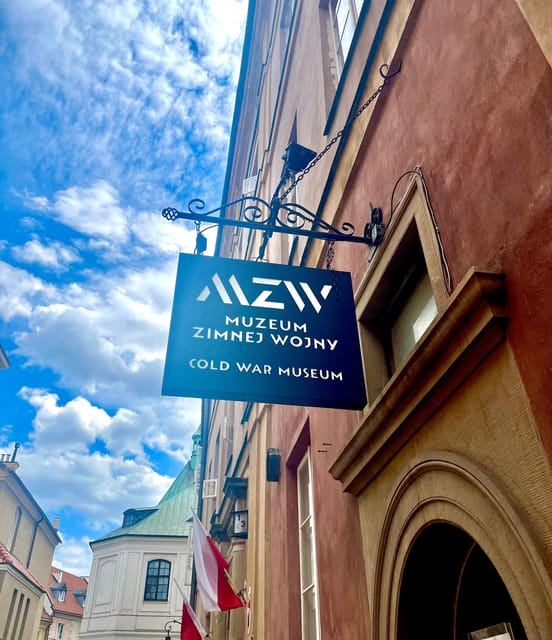
The museum is in Mazovia Province, Poland, about 40 meters from Warsaw’s Old Market Square. Show your ticket at the entrance of the Cold War Museum, or Muzeum Zimnej Wojny.
What does the admission ticket include?
Admission includes entry to the exhibitions, access to all attractions within the exhibition, and use of the autonomous robot guide.
How long is the ticket valid?
The ticket is valid for three months. You need to check availability for the starting times.
Are English-language options available?
Yes. English and Polish are available, and the host or greeter can assist in English or Polish.
Is the museum wheelchair accessible?
The experience is listed as not suitable for wheelchair users.
Can I bring my dog?
Yes. Four-legged visitors are welcome, making this one of the few museums in Warsaw that allows dogs.
Just added around Warsaw
- Jewish heritage in Warsaw★ 4.5 · 3 reviews
- Warsaw Outdoor Paintball with Transfers (all year round)★ 5.0 · 3 reviews
- World War II Warsaw Old Town, Military Cemetery Walking Tour★ 4.7 · 3 reviews
- Warsaw: Wolf’s Lair & Swieta Lipka Small-Group Tour + Lunch★ 5.0 · 3 reviews
- Sunset Boat Tour with Unlimited Drinks in Warsaw★ 3.5 · 3 reviews
- Majdanek – German camp from II World War – Private Tour – 1 DAY TRIP FROM WARSAW★ 5.0 · 3 reviews
- From Warsaw: Guided Tour to Wieliczka Salt Mine and Krakow★ 4.5 · 3 reviews
- Warsaw Sightseeing with NEW Mercedes Sclass !!!★ 5.0 · 3 reviews
Museums, compared.
Auschwitz-Birkenau Museum and Memorial Guided Tour from Krakow
Read our review →
POLIN Museum of the History of Polish Jews Ticket
Read our review →


Krakow Schindler’s Factory Museum Guided Tour in English
Read our review →
Auschwitz Birkenau Museum Guided Tour with Pickup
Read our review →
Browse the lists this tour appears in