
REVIEW · NOWA HUTA COMMUNISM TOURS
Warsaw Communism Private Tour in a Retro Fiat
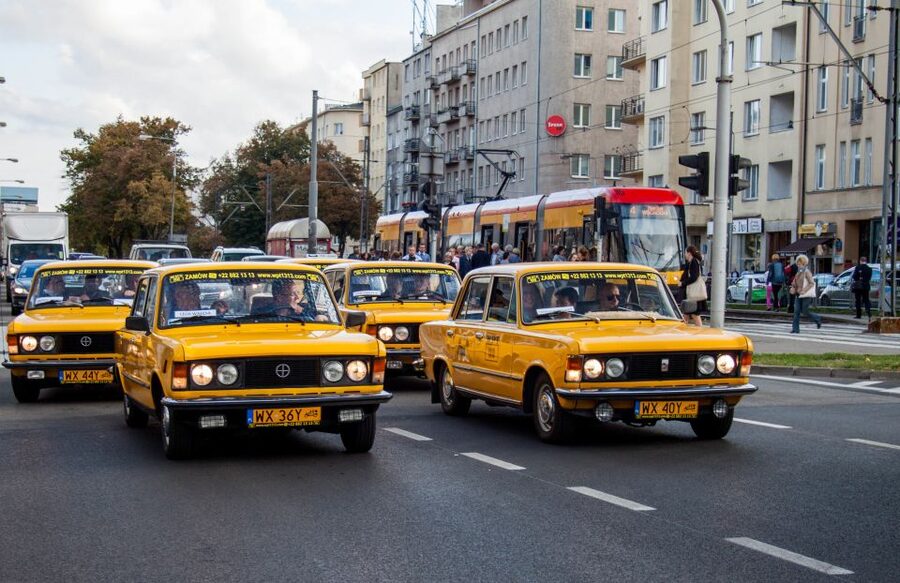
History feels different from the back seat of a Fiat. This four-hour private tour brings Warsaw’s communist past to life through a 1980s Fiat 125p, a local English-speaking guide, and stops that show how politics shaped the city. I especially like the hotel pickup and the chance to ask for a route tailored to your interests. The main consideration is that this is only partly a driving tour, so you should expect a moderate amount of walking.
I also like the human side of the experience. Your guide explains not only what the buildings are, but how communism affected daily Polish life and how Poland changed afterward. Guides such as Martin have earned praise for clear English, warm conversation, and keeping children involved. The Fiat is small, though, and groups larger than four use a blue vintage minivan instead.
In This Review
- Key points to know before booking
- Why the Fiat 125p matters to the experience
- Starting from your central Warsaw hotel
- The Palace of Culture and Science, Warsaw’s biggest communist symbol
- Constitution Square and the planned worker’s city
- The ministerial district and the former Communist Party headquarters
- Muranów and housing built over the former Ghetto
- Stories of everyday Polish life
- Vodka, a doughnut, and the social side of the tour
- Is $105 per person good value?
- Who should book this private Warsaw tour?
- Final verdict: book it for the stories, not just the car
- FAQ
- How long is the Warsaw Communism Private Tour?
- What vehicle is used for the tour?
- Is the tour private?
- Is hotel pickup included?
- What language does the guide speak?
- Which major Warsaw sights are included?
- Is there walking involved?
- Can the amount of walking be adjusted?
- Is the tour wheelchair accessible?
- What food and drink are included?
- Can I cancel the tour for a full refund?
- Do I have to pay when I reserve?
Key points to know before booking
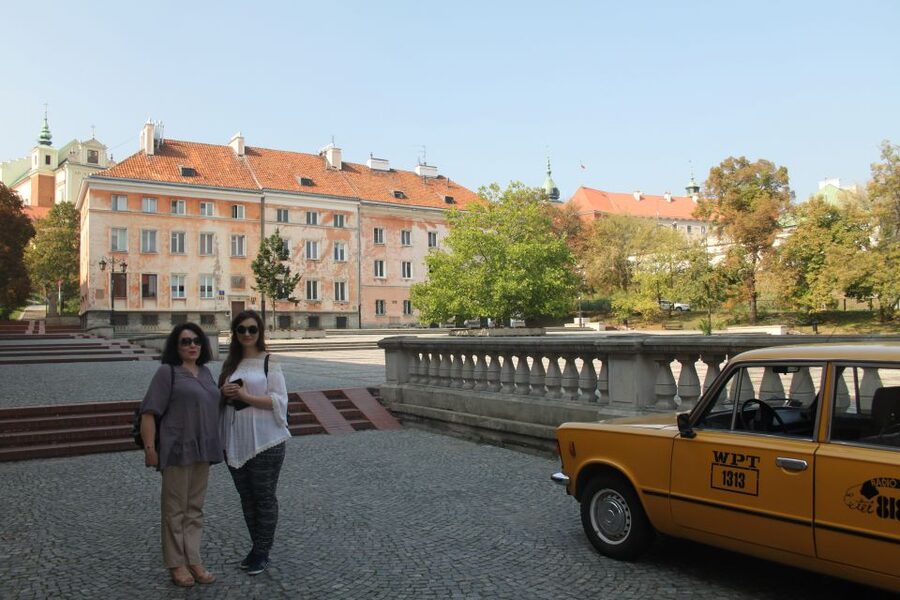
- A Fiat 125p carries you through communist Warsaw: The car is an important part of the experience, not just transport between stops.
- The Palace of Culture and Science anchors the route: You learn why this huge Stalin-era building is known as a gift from Moscow.
- Constitution Square shows planned working-class housing: Its broad design and uniform buildings reveal how the state shaped everyday urban life.
- The route covers politics, ministries, and housing: You see the former Communist Party headquarters, the Ministry of Agriculture, and Muranów’s postwar blocks.
- The tour mixes driving with walking: The guide can adjust the balance if you need less walking.
- Vodka and a doughnut add a Polish touch: A small tasting on board gives the historical discussion a relaxed, social edge.
Why the Fiat 125p matters to the experience
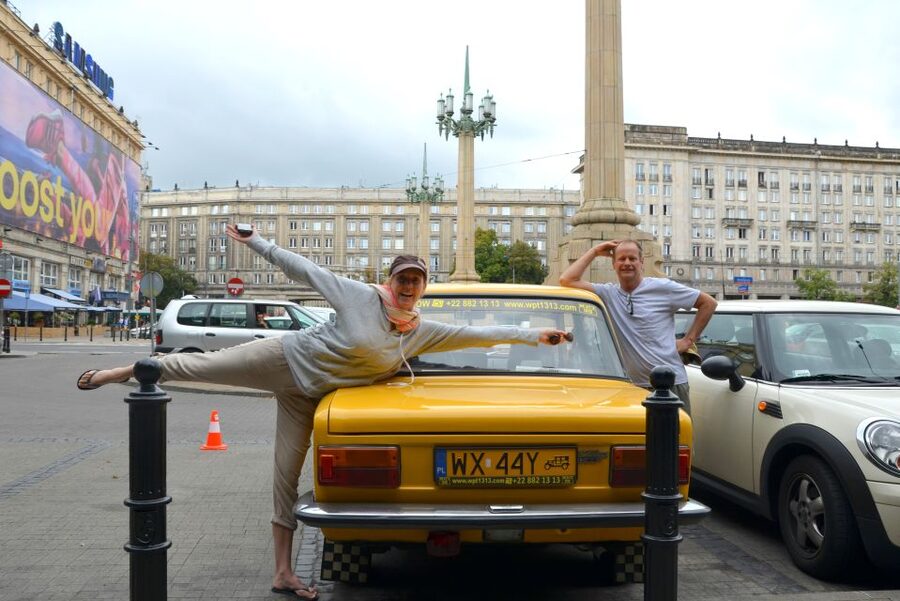
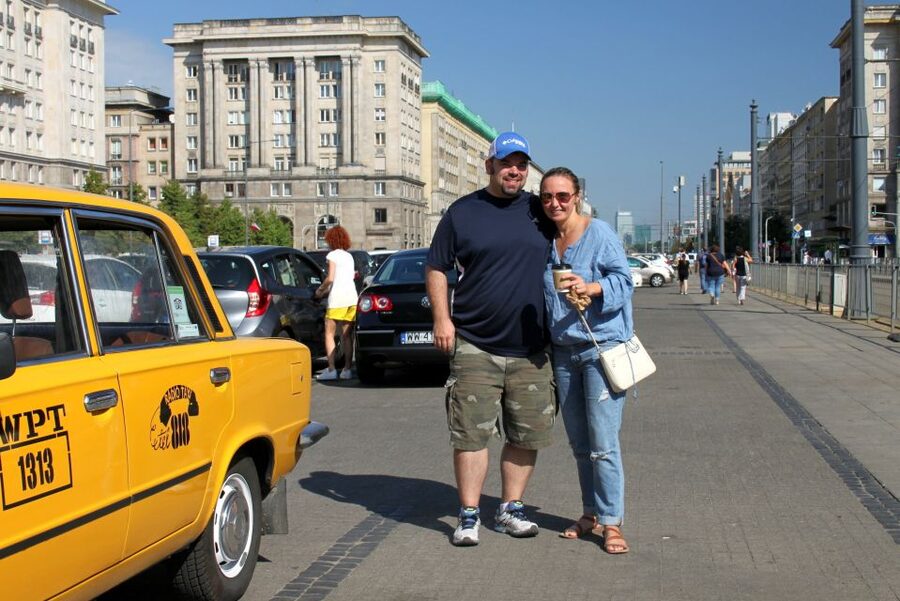
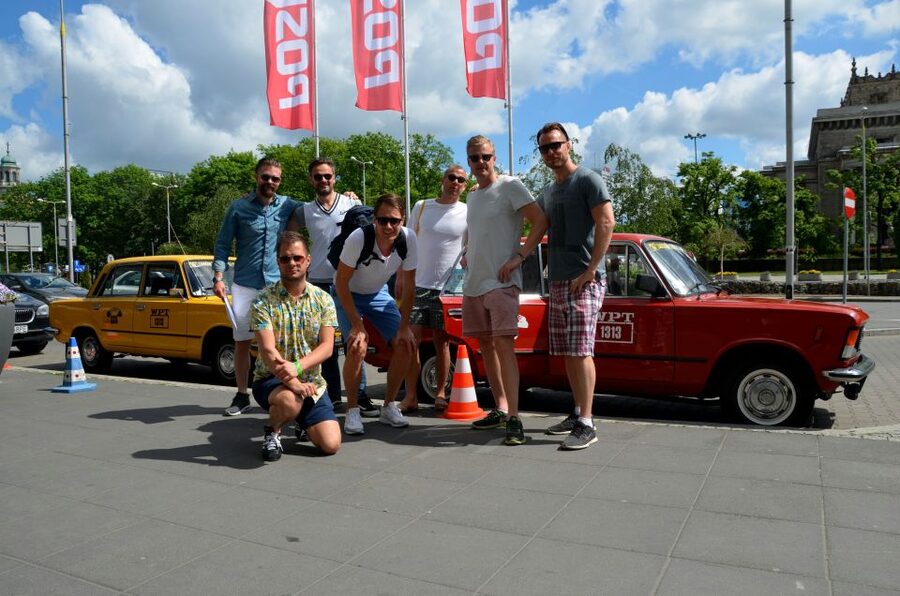
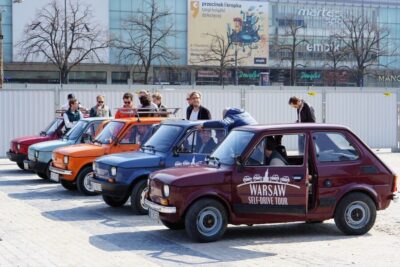
The old Fiat is the tour’s time machine. The 125p was an iconic car in Poland during the 1970s and 1980s, so riding in one gives the outing a physical link to the period you are studying.
You are not simply looking at communist-era buildings from a modern vehicle. You are moving through Warsaw in the sort of car that belonged to the same period. That detail helps the tour feel less like a standard sightseeing circuit and more like a themed city drive.
The car also keeps the group private. You travel with your own guide rather than following a large crowd from stop to stop. That makes it easier to ask about family life, politics, architecture, or the changes that followed the end of communism.
There is a practical limit. The Fiat is a historical vehicle, not a roomy modern sedan. Groups of more than four people are taken around in a blue vintage minivan instead. That vehicle still fits the period mood, but the smaller car is the better choice if the retro Fiat itself is your main reason for booking.
More Retro Car Tours in Warsaw
- Private Tour: Warsaw City Sightseeing by Retro Fiat
★ 5.0 · 562 reviews - Private Tour: Warsaw’s Jewish Heritage by Retro Fiat
★ 5.0 · 208 reviews - Private Historical Tour of Warsaw by a Retro Fiat with Pickup
★ 5.0 · 190 reviews
Starting from your central Warsaw hotel
Pickup is included from a centrally located hotel or another central point at the time you choose from the available options. That is useful in Warsaw, where this route crosses several parts of the central city and nearby districts.
Your guide drives, gives the commentary, and adjusts the route to traffic. The exact order can change, and you can ask to include a place of particular interest. This is one of the strongest reasons to choose a private tour instead of a fixed group excursion.
The four-hour length gives the guide time to explain the city instead of rushing through a photo stop. It also leaves enough room for walking around key sites. I would wear comfortable shoes, since the experience is roughly half driving and half on foot.
The outing can be adapted to suit your needs. It is listed as wheelchair accessible, and the walking portion can be reduced if required. You should still discuss your needs when booking, since the historical vehicle may have practical limitations that are not explained in the available details.
The Palace of Culture and Science, Warsaw’s biggest communist symbol
The Palace of Culture and Science is the clearest starting point for understanding communist Warsaw. Its scale is hard to miss. The building dominates the center and remains one of the most recognizable reminders of the period.
Your guide explains its construction, the stories around it, and its connection to Moscow. It is often described as a gift from Moscow, but the phrase carries political weight. The building was not simply a friendly present. It represented Soviet power and influence in postwar Poland.
That tension makes the stop worthwhile. You can admire the building’s grand proportions and Stalin-era design while also considering how many Polish people viewed it. The tour does not treat architecture as decoration alone. It connects the building to power, public life, and the Polish experience of Soviet control.
The palace is also a useful reference point for the rest of the tour. After seeing one giant state project, you can better understand why nearby squares, ministries, and housing districts were planned in such a controlled way.
One practical point: the supplied details describe a visit to the palace and an explanation of its importance, but they do not promise an interior observation deck or a specific ticketed entry. Expect an exterior-focused stop unless your guide confirms otherwise.
Constitution Square and the planned worker’s city
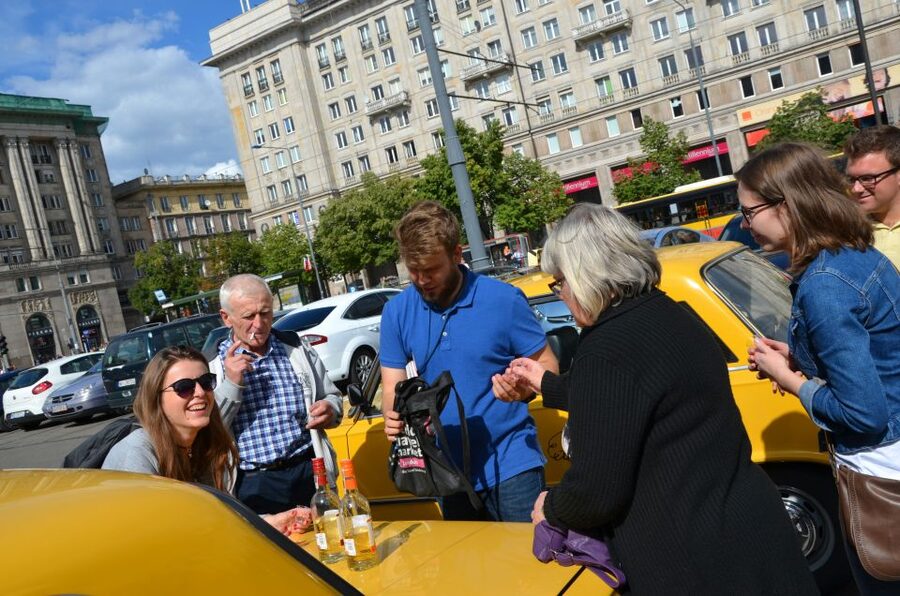
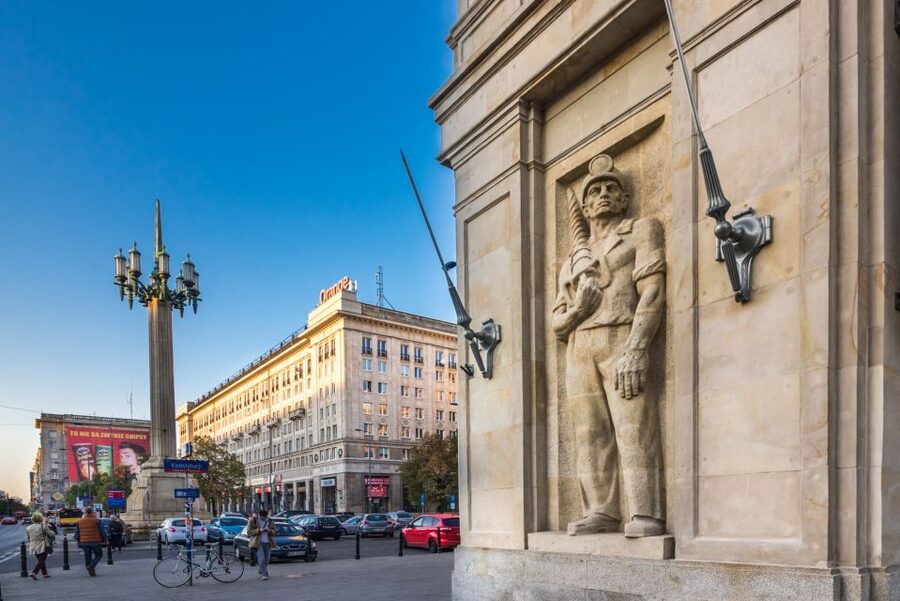
Constitution Square offers a different view of communist design. Instead of one monumental tower, you see a large, orderly housing district built in the Stalin era for working-class residents.
The square is representative because it shows how the government wanted a new society to look. Broad spaces, repeated facades, and carefully planned housing were meant to express order and collective purpose. Your guide can point out details that are easy to miss if you pass through by yourself.
This is also where the tour moves beyond famous sights. The Palace of Culture is easy to recognize, but a housing square tells you more about daily life. It raises practical questions about who lived there, how neighborhoods were planned, and how architecture carried political messages.
Do not expect a preserved museum district frozen in time. Constitution Square is part of a living city. Modern Warsaw continues around it, so the interest comes from comparing the old planning ideals with the city you see today.
The stop is especially good for anyone interested in architecture, urban planning, or how governments use public buildings to shape behavior. It is less satisfying if you want only dramatic monuments and quick photographs.
More Nowa Huta and communism tours:
- Private Tour: Warsaw’s Communist History by Retro Fiat
★ 5.0 · 115 reviews - Warsaw: Communism Tour in an Original Socialist Van
★ 4.9 · 75 reviews - Warsaw: Communist History Self-Driving Tour
★ 4.8 · 52 reviews - Warsaw: Communism Tour in an Original Socialist Van
★ 4.5 · 35 reviews
The ministerial district and the former Communist Party headquarters
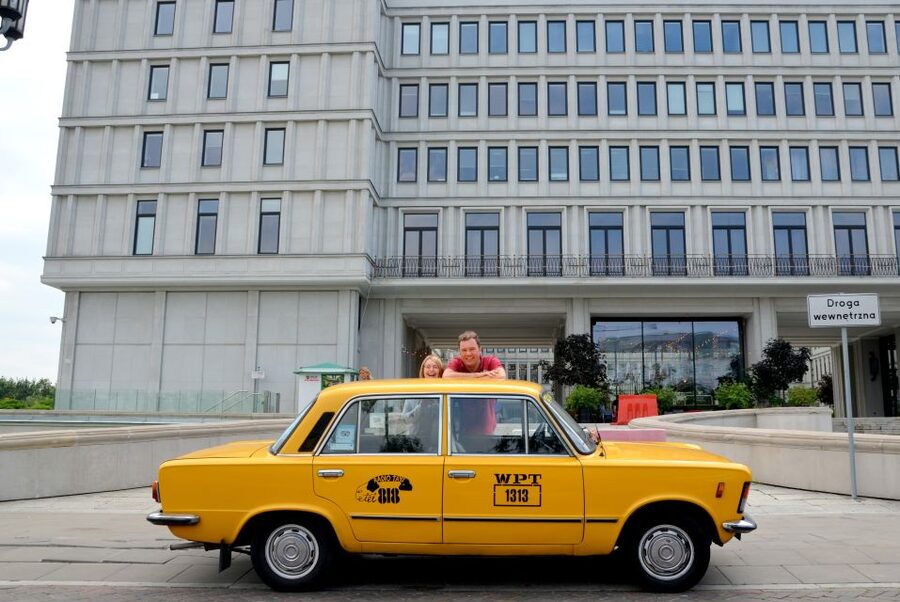
The route continues through the former ministerial district, including the Ministry of Agriculture. Here the focus shifts from housing to administration.
These buildings show how the communist state organized its power. Ministries were not random offices scattered around the city. Their location and appearance formed part of an official center, a place where government authority could be seen in stone, concrete, and formal planning.
Your guide also discusses the former House of the Communist Party and explains what the building is used for now. That present-day connection matters. You are not looking at a sealed relic. The building remains part of Warsaw’s current civic life, even though its political role has changed.
This is where a private guide adds real value. A quick drive past a ministry tells you almost nothing. A good explanation connects the building to the party system, the city, and the end of communist rule. The experience is strongest when you ask questions and let the conversation move beyond dates and names.
The precise route can shift with traffic, so do not treat each stop as a guaranteed timed appointment. The guide may alter the order while keeping the main themes intact.
Muranów and housing built over the former Ghetto
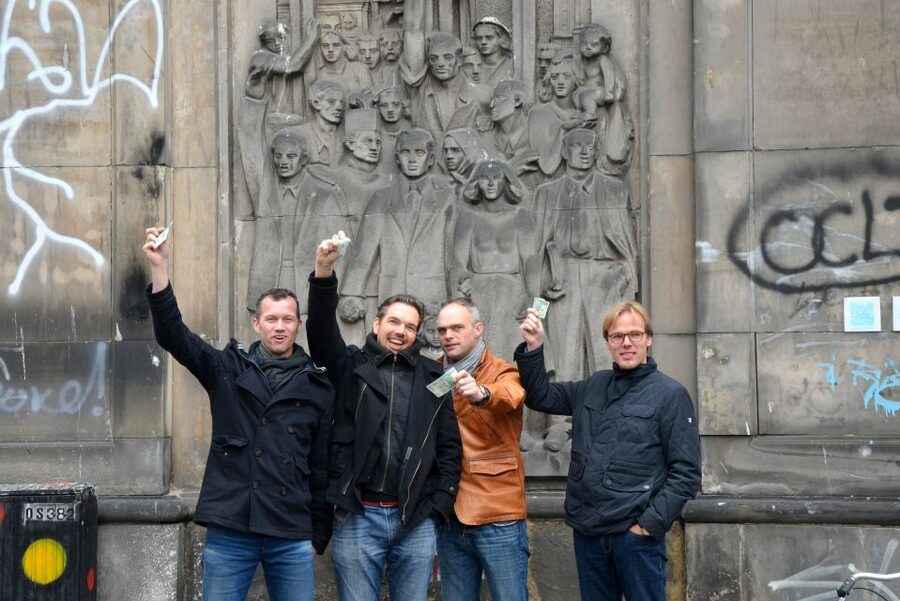
Muranów brings a heavier layer to the tour. The district’s communist-era housing blocks were built upon the former Jewish Ghetto, so the architecture sits on ground marked by wartime destruction and enormous human loss.
The tour uses Muranów to explain how the Communist Party influenced architecture and how postwar housing reshaped the district. This is an important part of the route because it links two periods that should not be separated: the Nazi destruction of Warsaw and the communist rebuilding that followed.
You will see housing blocks rather than a single grand monument. That can make the stop feel less dramatic, but it gives the guide room to discuss how ordinary residential buildings were used to rebuild the city and create a new social order.
I would approach this portion with care. The vodka and doughnut make the overall outing informal, but Muranów calls for attention and respect. The guide’s role is important here, since the meaning of the buildings is not obvious from their facades alone.
The tour does not promise entry to a museum or a dedicated Ghetto memorial visit. It is a street-level look at Muranów’s communist housing and its setting. If you want a full study of wartime Jewish Warsaw, you should add a separate museum or memorial visit.
Stories of everyday Polish life
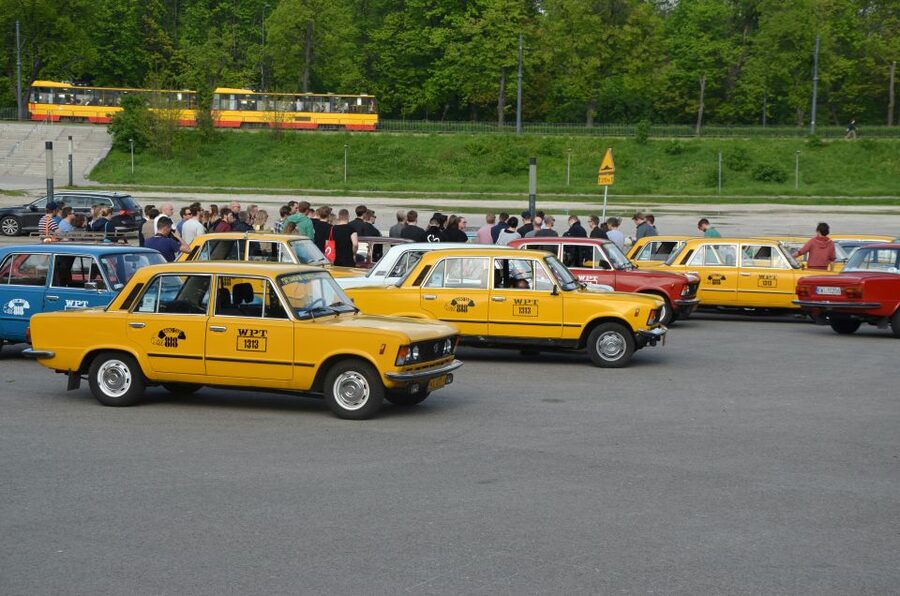
The best part of this experience is likely to be the conversation between stops. The guide discusses what life was like under communism, how the system began, what effect it had on Polish people, and how it ended.
That broad view helps you connect the buildings. The Palace represents Soviet influence. Constitution Square shows planned housing. The ministries show state administration. Muranów shows postwar rebuilding and the Party’s role in architecture.
The tour also asks what it means to be Polish today. That gives the outing a present-day point rather than leaving communism as a closed chapter. You hear about change, memory, and the way Warsaw has moved beyond the system while still carrying visible reminders of it.
The guide quality matters a great deal. Martin is specifically praised for sharing information that changed the way one family experienced Warsaw and for working well with children. Another strong account describes Max explaining both the origins and effects of communism in Poland. Those details suggest that the guide’s storytelling is central to the value of the tour.
Because this is private, you can ask direct questions without worrying about slowing down a group. If you are with children, you can also ask the guide to explain the subject in a more accessible way. The experience has received a five-star rating from 25 reviews, with repeated praise for clear explanations and friendly communication in English.
Vodka, a doughnut, and the social side of the tour
A traditional vodka shot is served on board with a Polish doughnut. It is a small touch, but it fits the period theme and breaks up the more serious political discussion.
You should think of it as a tasting, not a drinking tour. The snack gives you a chance to pause, and the guide can use it to talk about Polish customs or daily life. One short comment specifically praised the vodka at the end, so the tasting appears to be a memorable finishing detail for some people.
If you do not drink alcohol, check with the provider about alternatives before booking. The information supplied confirms the vodka shot but does not state that a nonalcoholic replacement is available.
The doughnut is also a nice practical detail during a four-hour outing. It is not a meal, so you should eat beforehand or plan food afterward.
Is $105 per person good value?
At $105 per person, this is not the cheapest way to see Warsaw’s communist-era buildings. The price makes more sense when you consider what is included: a four-hour private tour, a local guide, hotel pickup and drop-off in the city center, the historical vehicle, the tasting, and photos emailed afterward.
You are paying for context as much as transport. You could pass the Palace of Culture, Constitution Square, and Muranów on your own for far less. The difference is the guide’s explanation, the private route, and the chance to ask questions about Poland’s recent past.
The value is strongest for a first visit to Warsaw, especially if you want an overview before exploring specific museums or districts on foot. It is also a good fit for families who prefer a private schedule. Martin’s ability to keep children interested is a useful sign, though every family’s experience will depend on the guide assigned.
The value is weaker if you already know communist Polish history well or mainly want a long ride in a vintage car. The Fiat is appealing, but this is a history tour with walking, not a simple classic-car transfer.
Who should book this private Warsaw tour?
I would recommend it to you if you want a clear introduction to postwar Warsaw and prefer stories over a list of dates. The route works well for people interested in architecture, political history, urban planning, and the way ordinary neighborhoods reflect government ideas.
Families may also find it a practical choice. Private pickup removes the need to find a meeting point, and the guide can adapt explanations and walking to suit the group.
It is less suitable if you dislike walking, though the balance can be adjusted. It is also not the right pick for anyone expecting a full museum program, extensive interior visits, or a meal. The main sights are experienced from the street and from the vehicle.
Bring comfortable shoes. Pets are not allowed. English is the stated tour language, and the group is private.
Final verdict: book it for the stories, not just the car
I would book this tour if you want Warsaw’s communist period explained through real places rather than a textbook. The Fiat 125p gives the experience character, but the guide is the real reason to choose it.
The Palace of Culture, Constitution Square, the ministerial district, and Muranów form a useful route through power, housing, rebuilding, and memory. Add the hotel pickup, flexible route, photos, vodka, and doughnut, and the $105 price becomes reasonable for a private four-hour experience.
Choose another activity if you want only a scenic drive or a detailed museum visit. Choose this one if you want to ask questions, see how politics shaped Warsaw’s streets, and understand why the city still carries visible traces of its communist past.
FAQ
How long is the Warsaw Communism Private Tour?
The tour lasts four hours.
What vehicle is used for the tour?
The standard vehicle is a historical Fiat 125p from the 1980s. Groups larger than four people use a blue vintage minivan.
Is the tour private?
Yes. It is offered for a private group.
Is hotel pickup included?
Yes. Pickup and drop-off are included from a centrally located Warsaw hotel or another centrally located point.
What language does the guide speak?
The tour is conducted in English with a live guide.
Which major Warsaw sights are included?
The route includes the Palace of Culture and Science, Constitution Square, the former House of the Communist Party, the Ministry of Agriculture area, and communist-era housing in Muranów.
Is there walking involved?
Yes. The experience is approximately half walking and half driving and requires a moderate amount of walking.
Can the amount of walking be adjusted?
Yes. The tour can be adapted to suit your requirements.
Is the tour wheelchair accessible?
Yes. The activity is listed as wheelchair accessible.
What food and drink are included?
A vodka shot and a Polish sweet, described as a doughnut, are included.
Can I cancel the tour for a full refund?
Yes. You can cancel up to 24 hours in advance for a full refund.
Do I have to pay when I reserve?
No. Reserve now and pay later is available.
Just added around Warsaw
- Jewish heritage in Warsaw★ 4.5 · 3 reviews
- Warsaw Outdoor Paintball with Transfers (all year round)★ 5.0 · 3 reviews
- World War II Warsaw Old Town, Military Cemetery Walking Tour★ 4.7 · 3 reviews
- Warsaw: Wolf’s Lair & Swieta Lipka Small-Group Tour + Lunch★ 5.0 · 3 reviews
- Sunset Boat Tour with Unlimited Drinks in Warsaw★ 3.5 · 3 reviews
- Majdanek – German camp from II World War – Private Tour – 1 DAY TRIP FROM WARSAW★ 5.0 · 3 reviews
- From Warsaw: Guided Tour to Wieliczka Salt Mine and Krakow★ 4.5 · 3 reviews
- Warsaw Sightseeing with NEW Mercedes Sclass !!!★ 5.0 · 3 reviews
Nowa Huta Communism Tours, compared.
Legendary Private Nowa Huta Communism Tour with Crazy Guides
Read our review →
Nowa Huta: Steelworks Administration Buildings/Shelters Tour
Read our review →
Private Tour: Warsaw’s Communist History by Retro Fiat
Read our review →
Private Nowa Huta Adventure Tour in Communist Cars
Read our review →
Browse the lists this tour appears in