
REVIEW · MUSEUMS
Warsaw: Guided tour of the Cold War Museum
Cold War history gets hands-on in Warsaw. I like the original uniforms, maps, and devices, and the three VR games give younger visitors a reason to stay engaged. The museum also puts Poland, Ronald Reagan, John Paul II, and General Ryszard Kukliński at the center of the story. The main drawback is access: the museum is not suitable for wheelchair users, and the strongly Polish point of view may feel less even-handed to some visitors.
The tour costs $78 per group of up to 10, so it can be good value for a family or small group. Guides such as Filip, the museum’s director, and Cyprian bring clear enthusiasm to the subject. Allow 90 minutes to two hours, and remember that this is not just a display of old objects. It is an interactive history lesson, with touch screens, films, quizzes, virtual reality, and even an autonomous robot guide.
In This Review
- Key points to know before you go
- A Cold War museum in a former place of repression
- Starting near Old Town Square
- General Kukliński and the Polish side of the conflict
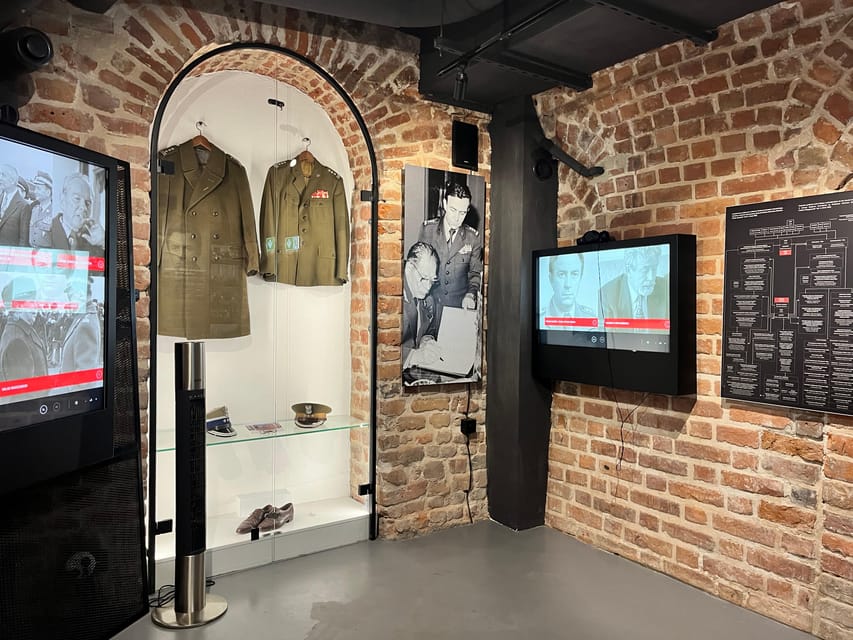
- Original objects that give the story a physical shape
- More than 50 multimedia features
- The quiz and three VR games
- Space flights and a hologram of a space station
- Is the $78 group price good value?
- Who will enjoy this visit most?
- Practical timing and tour details
- Should you book the Cold War Museum?
- FAQ
- Where does the Cold War Museum tour begin?
- Where does the tour end?
- How long does the museum tour last?
- How much does the tour cost?
- What does the price include?
- What languages are available?
- What can I see at the museum?
- Are there interactive activities?
- Is the museum suitable for children?
- Are wheelchair users able to take this tour?
- Can I bring food or drinks?
- Are pets allowed?
- Can I cancel the booking?
- Do I have to pay when I reserve?
Key points to know before you go
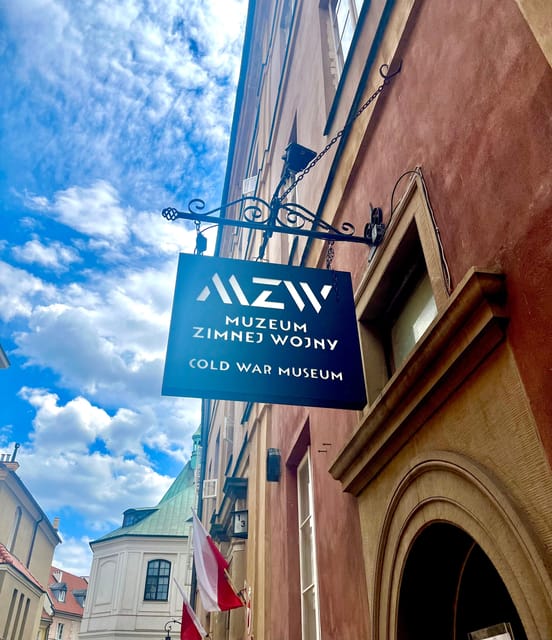
- The meeting point is near Warsaw’s Old Town Square: You meet at the Registry Office of the Capital City Warsaw, about 40 meters from the square.
- Poland is at the heart of the story: The museum explains the Cold War through Poland’s experience under Soviet influence and its contribution to the eventual defeat of communism.
- Three VR games make the subject more physical: You can take part in Cold War-themed virtual activities rather than only reading display panels.
- The space section adds a surprising change of pace: You see the story of space flights and a hologram of a space station.
- The tour uses more than 50 multimedia features: Expect touch screens, interactive tables, VR goggles, a cinema, and an autonomous robot.
- The $78 price covers the whole group: With up to 10 people included, the cost works best when shared by a family or group of friends.
A Cold War museum in a former place of repression
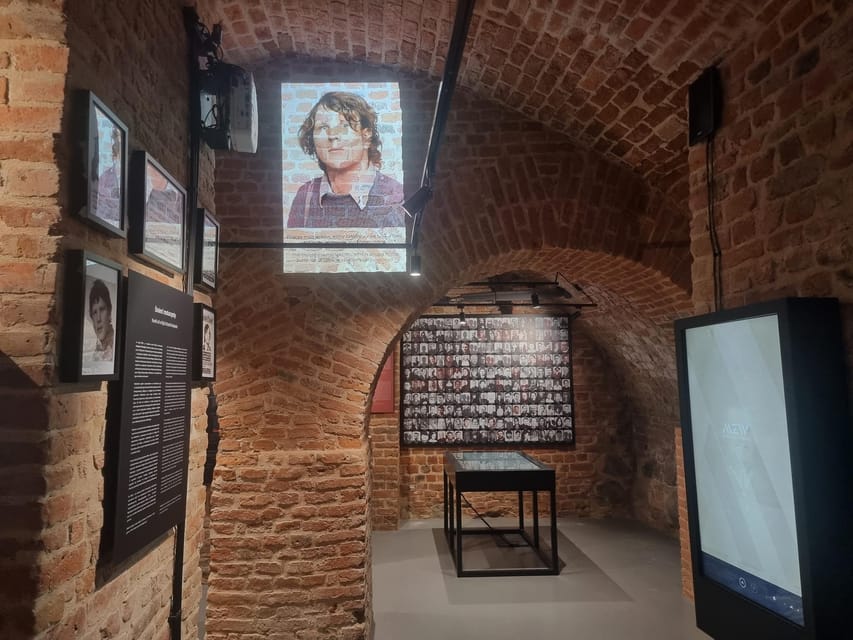
The museum’s address gives the visit extra weight. During Poland’s communist period, the building housed a militia station. It is also linked to the death of Grzegorz Przemyk, a high school graduate beaten there during martial law.
That setting matters. You are not learning about the Cold War in a neutral modern hall with no connection to the past. You are standing in a place tied to the machinery of the Polish state and to one of the victims of political violence. The building helps connect large events, such as the division of Europe, with the fear and pressure faced by ordinary people.
I find this one of the most valuable parts of the experience. The Cold War can seem like a remote contest between presidents, generals, missiles, and spy agencies. Here, the subject is linked to real people and a real Warsaw address. The museum asks you to think about victims, aggressors, survivors, and those who risked their safety to tell the truth.
The tone is clearly pro-free world and strongly critical of Soviet communism. That is not a hidden feature. The exhibition presents the Polish contribution to the victory over Soviet communism, and it gives special attention to three major figures from the final decades of the conflict: US President Ronald Reagan, Pope John Paul II, and General Ryszard Kukliński.
If you want a detached comparison of every political decision made by both blocs, this may not be your ideal museum. If you want to understand how the Cold War looked from Poland, the clear point of view is one of the museum’s strengths.
More Museum Visits in Warsaw
- Warsaw: POLIN Museum of the History of Polish Jews Ticket
★ 4.7 · 1,142 reviews - Warsaw: Polish Vodka Museum Tour with Tasting
★ 4.6 · 788 reviews - Warsaw: Museum World of Illusion Entry Ticket
★ 3.9 · 666 reviews
Starting near Old Town Square
The tour begins at the Registry Office of the Capital City Warsaw, around 40 meters from Old Town Square. That is an easy place to reach if you are already exploring the historic center.
The short distance from the square is practical, especially if you are fitting the museum between other sights. You do not need to plan a separate long transfer from central Warsaw based on the information provided. The meeting point also gives you a familiar landmark for finding the guide.
From there, you visit the Muzeum Zimnej Wojny im. generała Kuklińskiego, or the Cold War Museum named for General Kukliński. The experience returns to the same starting area after the museum visit.
The advertised duration is 90 minutes to two hours. That range is useful to keep in mind. A smaller group moving quickly may finish closer to 90 minutes, while a group that spends time with the screens, games, and questions may need longer. I would avoid scheduling another activity immediately afterward.
The tour includes admission, the guided tour, and access to all attractions inside the exhibition. You also skip the ticket line, which keeps the visit simple once you arrive.
General Kukliński and the Polish side of the conflict
The museum gives General Ryszard Kukliński a major role in its story. For many people from outside Poland, his name may be unfamiliar. One American participant described learning about him for the first time and came away considering him one of the most important figures in the eventual collapse of the Iron Curtain.
The museum’s treatment of Kukliński helps explain why the Polish perspective is so central. The Cold War was not only a contest between Washington and Moscow. Poland was inside the Soviet bloc, and Polish decisions, resistance, faith, military planning, and political pressure all formed part of the wider struggle.
The exhibition also connects Kukliński with Reagan and John Paul II. That gives the final decades of the Cold War a strong narrative shape. You are encouraged to consider how political leadership, religious influence, military information, and public resistance worked together.
I would recommend taking your time with this part. The museum is not simply asking you to memorize dates. It is presenting a case for the role Poland played in weakening Soviet control. That approach will appeal most to people who want political context and moral questions alongside military history.
At the same time, you should arrive ready to think critically. The presentation celebrates particular people and their actions. It is best understood as a Polish interpretation of the conflict, not as a neutral encyclopedia.
Original objects that give the story a physical shape
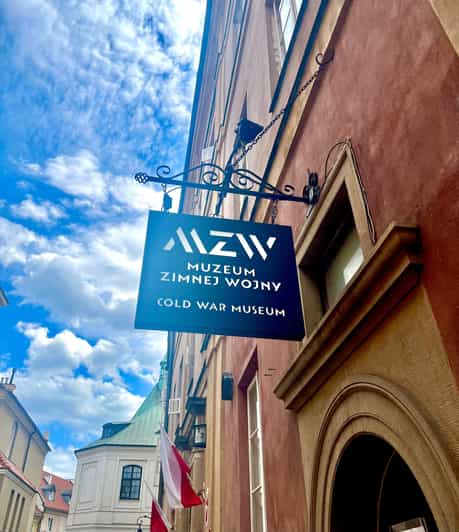
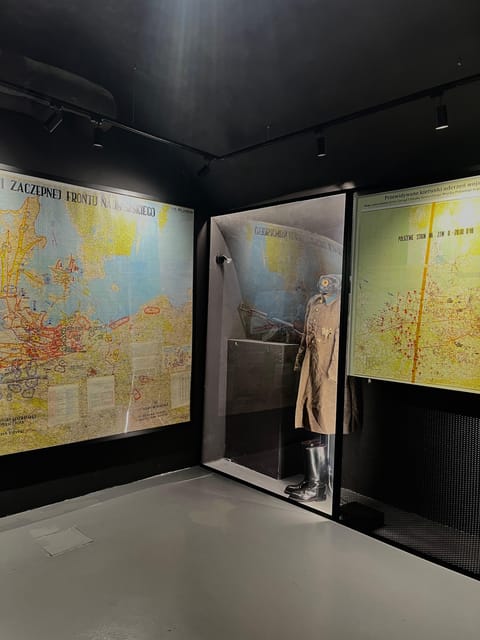
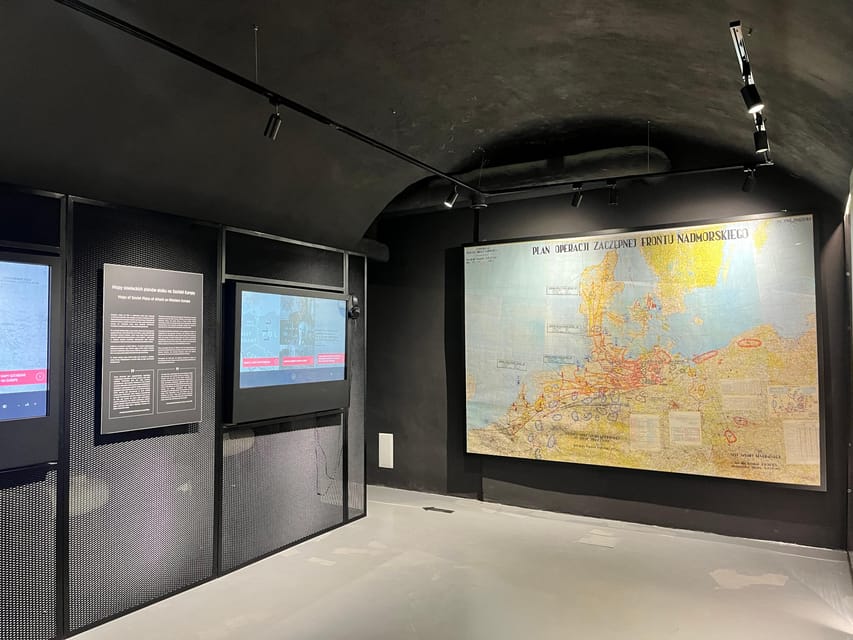
The exhibition includes original Cold War devices, maps, and uniforms. These objects help you move from broad political ideas to the practical world of the period.
A map can show the division of Europe in seconds, but an old uniform or piece of equipment suggests how that division affected daily work and military life. The objects also give the exhibition a sense of age and reality that screens alone cannot provide.
The museum presents the entire Cold War period, including the countries involved in the struggle between the two blocs. You can expect the story to cover its beginnings, its course, the opposing sides, and the eventual outcome.
Because the exhibition deals with the whole period, the guide’s role matters. A good guide helps connect individual objects to the larger story. Filip, who is also the museum’s director, has been praised for explaining Poland’s experience after the Second World War and its incorporation into the Soviet bloc in clear English. Cyprian has also been singled out for his commitment and broad grasp of the subject.
The available tour language is listed as Polish and English. The activity information also lists Polish, English, Russian, German, and Spanish for the guided tour, so it is sensible to confirm the language when booking if you need something other than Polish or English.
A completely different kind of day out in Warsaw:
- Warsaw: Chopin Concert in the Old Town
★ 4.8 · 2,287 reviews - Warsaw: Traditional Galar Cruise on The Vistula River
★ 4.6 · 1,640 reviews - Warsaw: Old Town Highlights Walking Tour in English
★ 4.7 · 1,516 reviews - Warsaw Concert: Chopin – Painted by Candlelights with Wine
★ 4.8 · 1,442 reviews
More than 50 multimedia features
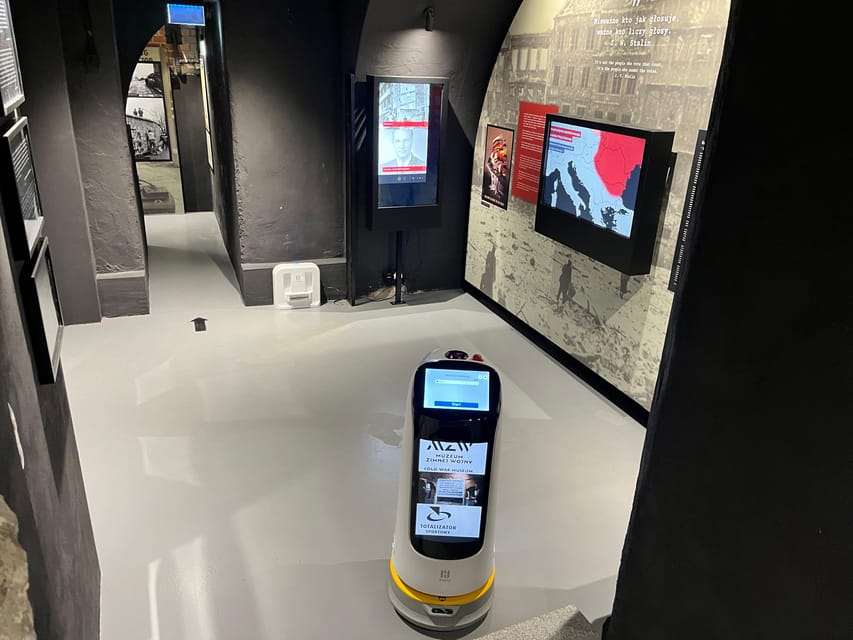
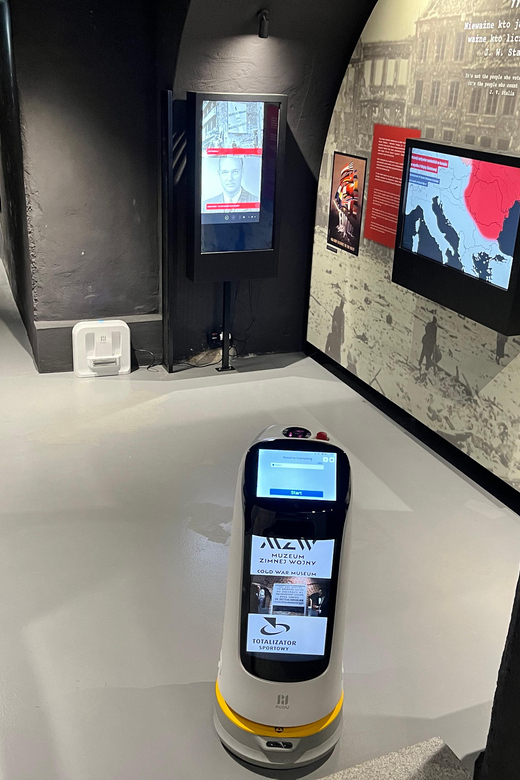
This is not a museum where you spend the entire visit reading long labels. The exhibition uses more than 50 multimedia elements, including touch screens, multimedia tables, VR goggles, a cinema, and an autonomous robot.
That variety changes the pace. You may look at an original object, then move to a screen that explains its context. A film can give you a quick introduction to a period, while an interactive table lets you examine information at your own speed.
The multimedia design also helps families. A 12-year-old and a 16-year-old were able to use the interactive features while building a better grasp of the complicated history of the 20th century. That is a useful clue for parents. The museum does not treat young people as an afterthought.
The autonomous robot is an unusual feature. It is described as the first museum robot in Poland to serve as an autonomous guide. You should not expect it to replace the live guide during your booked visit, but its presence adds a modern twist to a museum about technology, surveillance, military planning, and scientific competition.
The museum welcomes children and has attractions designed for them. The subject includes violence, repression, and political fear, so parents should decide how much detail is right for their children. The interactive format can make the visit more approachable, but it does not turn the Cold War into a harmless game.
The quiz and three VR games
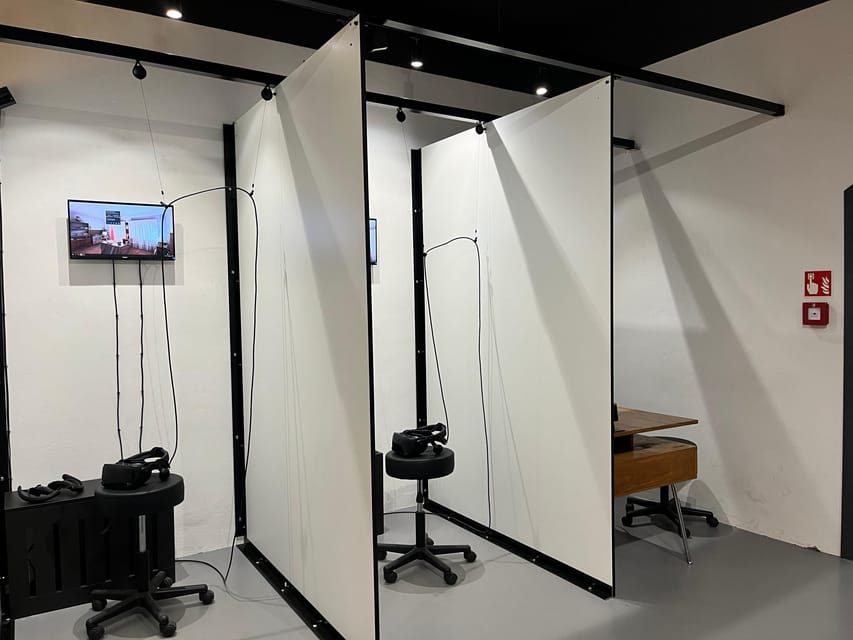
The multimedia quiz tests your understanding of the Cold War. This can be a useful way to check what you have picked up during the visit, especially if you arrive with limited background.
The quiz also gives the museum a social element. You are not only listening to a lecture. You can compare your answers, spot gaps in your understanding, and use the guide’s explanation to put events in order.
The three VR games go a step further. They let you feel more like a participant in the Cold War, at least for a few minutes. Virtual reality is especially helpful for younger visitors who may not yet care about old political speeches or military maps.
I like that these activities are tied to the subject rather than added as random entertainment. The Cold War involved technology, secrecy, communication, military danger, and competition. Interactive games can help you understand those ideas in a direct way.
Still, the games should be treated as an addition, not the main reason to come. The museum’s strongest material is the combination of objects, Polish history, and the guide’s explanation. If the VR section is busy, you should not feel that you have missed the whole visit. The tour still has plenty to offer without spending a long time at every digital station.
Space flights and a hologram of a space station
The space section gives the museum a welcome change of subject. The Cold War was also a contest in science and space exploration, and the exhibition traces the history of space flights.
A hologram of a space station is one of the visual highlights. It helps explain how the rivalry between the two blocs extended beyond borders and military bases. Space exploration carried scientific value, but it also served as proof of national power.
For you, this section can be an easy bridge between political history and technology. Someone who is less interested in military alliances may connect more quickly with rockets, orbit, and space stations.
It also makes the visit more varied. The museum moves between political leaders, military equipment, repression, communication, and scientific competition. The subject is serious, but the changing displays keep the experience from becoming one long line of similar cases.
Is the $78 group price good value?
The advertised price is $78 per group of up to 10 people. That is not a per-person price, so the value depends heavily on the size of your party.
For a full group of 10, the cost works out to $7.80 per person. For five people, it is $15.60 each. For only two people, the effective cost is $39 each. The guided format and included admission make the price easier to justify for a family or small group, while a solo visitor or couple may want to compare it with other Warsaw museum costs.
You receive access to all attractions in the exhibition, not just the basic displays. The price includes the live guide and admission, and you skip the ticket line. The interactive features, cinema, robot, quiz, VR games, and space display are all part of the same visit.
The guide adds real value here. The Cold War is a complicated subject, and the museum has a clear Polish message. A guide can explain names and events that may not be familiar to you, especially General Kukliński and the experience of Poland under Soviet control.
Who will enjoy this visit most?
I would recommend the museum to adults interested in 20th-century politics, military history, Poland, or the end of communism. It is also a strong choice for families with older children and teenagers, thanks to the quiz, VR games, touch screens, and other interactive features.
The visit may suit you if you want to connect Warsaw’s story with wider European and American history. One English-language tour was especially useful for putting postwar Poland and the Soviet bloc into a wider frame.
You do not need to be an expert. The multimedia introduction and guided explanation help set the scene. Still, the experience will be more rewarding if you already know a little about the Second World War, the division of Europe, or the Cold War rivalry.
I would be more cautious if you dislike museums with a clear political position. The presentation is designed to show Poland’s role in the victory of the free world over Soviet communism. It is not trying to give every side equal space.
The museum welcomes four-legged visitors, which is unusual in Warsaw. Smoking, vaping, food, drinks, alcohol, and drugs are not allowed. Wheelchair users should choose another attraction because the museum is listed as unsuitable for them.
Practical timing and tour details
Plan on 90 minutes to two hours. The shorter time may be enough for a focused visit, but the full range of multimedia features gives you reasons to stay longer.
The tour starts near Old Town Square and returns to the same area. That makes it easy to pair with sightseeing in the old center, though you should leave some breathing room around the booking.
Live guiding is available in Polish and English according to the main activity details. The broader language information lists Russian, German, and Spanish as well, so confirm your preferred language before paying.
You can cancel up to 24 hours in advance for a full refund, and the reserve-now, pay-later option lets you hold a place without paying immediately. These policies are useful if your Warsaw schedule is still changing.
Should you book the Cold War Museum?
Book it if you want Poland’s view of the Cold War, not just a general account of the US and Soviet rivalry. The original objects, the former militia-station setting, and the focus on Kukliński, Reagan, and John Paul II give the visit a clear identity.
It is also a good pick for families with children old enough to handle serious history. The quiz, space display, robot, and VR games keep the experience active without removing its difficult themes.
Think twice if you need step-free access, prefer a politically neutral presentation, or are looking for a very short museum stop. For everyone else, the $78 group rate can be fair, especially with several people sharing it. I would set aside close to two hours and take the guided visit in English if that is your strongest language. It is one of the better ways to connect Warsaw’s modern past with the larger story of Europe’s divided decades.
FAQ
Where does the Cold War Museum tour begin?
The tour begins at the Registry Office of the Capital City Warsaw, about 40 meters from Old Town Square.
Where does the tour end?
The tour returns to the Registry Office of the Capital City Warsaw.
How long does the museum tour last?
The stated duration is 90 minutes to two hours.
How much does the tour cost?
The price is $78 per group of up to 10 people.
What does the price include?
The price includes admission to the exhibitions, access to all attractions within the exhibition, and a guided tour.
What languages are available?
The live tour is listed in Polish and English. The activity information also lists Russian, German, and Spanish among the guided-tour languages, so confirm the language you need when booking.
What can I see at the museum?
You can see original Cold War devices, maps, uniforms, multimedia displays, a space-station hologram, and a cinema. The exhibition also covers the history of space flights.
Are there interactive activities?
Yes. The museum has a Cold War knowledge quiz, three VR games, touch screens, multimedia tables, VR goggles, and an autonomous robot guide.
Is the museum suitable for children?
The museum is open to visitors of all ages and includes attractions for children. The subject covers communism, political repression, victims, and the Cold War, so parents should consider the age and maturity of their children.
Are wheelchair users able to take this tour?
No. The experience is listed as not suitable for wheelchair users.
Can I bring food or drinks?
No. Food and drinks are not allowed inside.
Are pets allowed?
Four-legged visitors are welcome at the Cold War Museum.
Can I cancel the booking?
Yes. You can cancel up to 24 hours in advance for a full refund.
Do I have to pay when I reserve?
No. The reserve-now, pay-later option allows you to keep your plans flexible and pay later.
Just added around Warsaw
- Jewish heritage in Warsaw★ 4.5 · 3 reviews
- Warsaw Outdoor Paintball with Transfers (all year round)★ 5.0 · 3 reviews
- World War II Warsaw Old Town, Military Cemetery Walking Tour★ 4.7 · 3 reviews
- Warsaw: Wolf’s Lair & Swieta Lipka Small-Group Tour + Lunch★ 5.0 · 3 reviews
- Sunset Boat Tour with Unlimited Drinks in Warsaw★ 3.5 · 3 reviews
- Majdanek – German camp from II World War – Private Tour – 1 DAY TRIP FROM WARSAW★ 5.0 · 3 reviews
- From Warsaw: Guided Tour to Wieliczka Salt Mine and Krakow★ 4.5 · 3 reviews
- Warsaw Sightseeing with NEW Mercedes Sclass !!!★ 5.0 · 3 reviews
Museums, compared.
Auschwitz-Birkenau Museum and Memorial Guided Tour from Krakow
Read our review →
POLIN Museum of the History of Polish Jews Ticket
Read our review →


Krakow Schindler’s Factory Museum Guided Tour in English
Read our review →
Auschwitz Birkenau Museum Guided Tour with Pickup
Read our review →
Browse the lists this tour appears in