
REVIEW · MUSEUMS
Warsaw Uprising Museum (1944) + POLIN Museum : SMALL GROUP /inc. Pick-up/
Warsaw’s past is powerful, and this tour covers two essential museums in one afternoon. You’ll see how the city fought and suffered in 1944, then trace centuries of Jewish life in Poland at POLIN. I especially like the door-to-door pickup and the fact that both admission tickets and audio guides are included. The main catch is simple: this is transport and museum access, not a guided museum tour.
The small group can reach 15 people, though the vehicle is a car or van rather than a bus. The driver or coordinator helps with tickets and points out sights along the way, but inside the museums you explore independently. At $114.28 per person, the price makes the most sense if you value convenience, hotel pickup, and a carefully paired day of museum visits.
In This Review
- Key points to know before booking
- Two museums, one difficult Warsaw story
- What the door-to-door format really gives you
- Entering the Warsaw Rising Museum
- How to use your 75 minutes
- The move from wartime Warsaw to POLIN
- What you can do in 75 minutes
- Why the no-guide format matters
- Is $114.28 a fair price?
- Timing, group size, and practical comfort
- Who will get the most from this experience?
- Booking and cancellation details
- Should you book the Warsaw museum combination?
- FAQ
- How long does the experience last?
- Are museum admission tickets included?
- Is this a guided tour inside the museums?
- Is hotel pickup available?
- What languages are available for the audio guides?
- How many people can join the booking?
- Can I cancel for a full refund?
Key points to know before booking
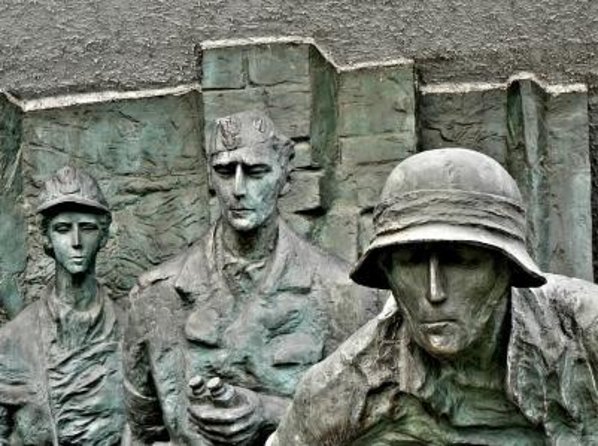
- Two museums with very different stories: The Warsaw Rising Museum focuses on the 1944 revolt and the city’s destruction, while POLIN follows centuries of Jewish life in Poland.
- Tickets and audio guides are included: You can listen in English or choose from a long list of other languages.
- Hotel-to-hotel transport: Pickup and return are arranged from your hotel or apartment by car or van.
- Not a fully guided museum visit: The coordinator assists with transport and entry, but you tour the galleries at your own pace.
- About four hours total: Each museum receives roughly 1 hour and 15 minutes, with time between them for transport.
- A practical choice for a short stay: The format lets you cover two major Warsaw museums without arranging taxis, tickets, and language support yourself.
Two museums, one difficult Warsaw story
This experience links two places that should be visited together. The Warsaw Rising Museum explains the city’s wartime destruction through the eyes of the 1944 uprising. POLIN then broadens the picture, showing the long Jewish presence that helped shape Polish culture, commerce, learning, and daily life.
That pairing matters. If you visit only the Rising Museum, you may leave with a sharp understanding of wartime courage and loss, but a narrower view of Warsaw. If you visit only POLIN, you gain a long view of Polish Jewish life but miss one of the defining tragedies of modern Warsaw. Together, the museums show both the city that was destroyed and the many communities that made it what it was.
The tour runs for approximately four hours. The stated museum time is 1 hour and 15 minutes at each stop, so the schedule is focused rather than leisurely. I would not book this expecting to read every panel or watch every film. I would book it to gain a strong first understanding of both museums, then return later if one captures your attention.
More Museum Visits in Warsaw
- Warsaw: POLIN Museum of the History of Polish Jews Ticket
★ 4.7 · 1,142 reviews - Warsaw: Polish Vodka Museum Tour with Tasting
★ 4.6 · 788 reviews - Warsaw: Museum World of Illusion Entry Ticket
★ 3.9 · 666 reviews
What the door-to-door format really gives you
The most useful feature is not the vehicle itself. It is the removal of small travel chores. You provide your hotel or apartment address when booking, and the coordinator or driver waits outside the building with a card showing your name and surname.
That arrangement is helpful in Warsaw, especially if you are staying in an apartment without a clear reception desk. You do not need to find an unfamiliar meeting point or wonder if you are waiting on the wrong street. The vehicle is wheelchair accessible, and transport is by car or van rather than a large bus.
The driver also handles the practical transition into the museums. This includes helping with the ticket process and getting you on your way. During the drive, the coordinator may point out places of interest. One important detail: the transport service can feel much closer to a private taxi transfer than to a traditional sightseeing tour.
That is both the strength and the limitation. You get a pleasant, helpful person who keeps the day moving, but you should not expect a historian to lead you room by room. Inside each museum, the audio guide becomes your main source of explanation.
Entering the Warsaw Rising Museum
The first museum deals with 1944, a year when Warsaw was nearly erased. Before the uprising, the city was known for its grand tenements, rapid growth, technical progress, and mix of religious and social communities. By the end of the war, much of it had been reduced to rubble.
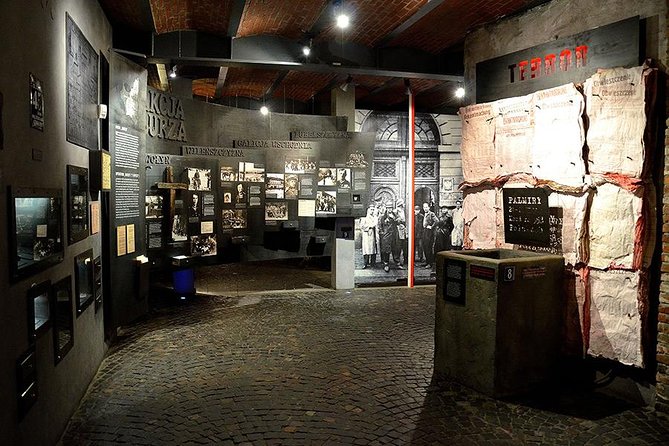
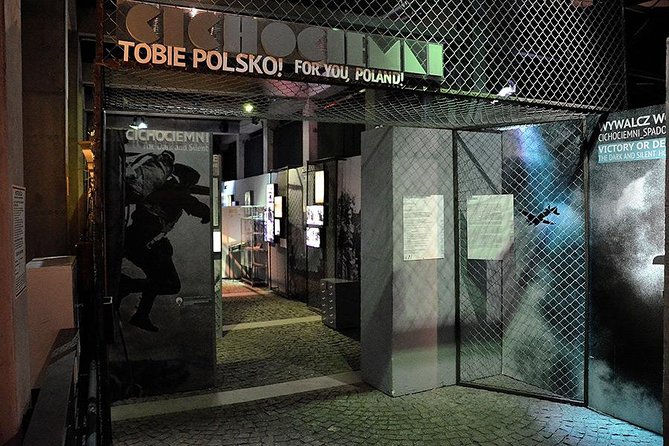
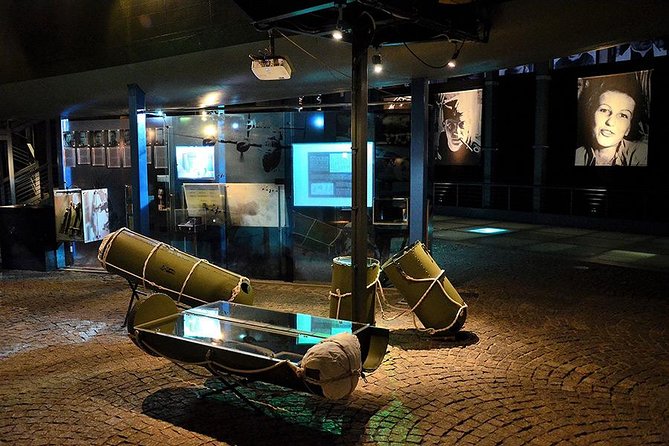
The museum is designed to make that collapse feel immediate. Images, sounds, films, and more than 1,000 authentic objects present the days before the uprising, its different phases, and its final failure. The material is not arranged as a quiet collection of old objects. It is intended to place you inside the pressure and uncertainty of the period.
The central question is difficult and worth considering: why did Poles rise, and was the terrible cost worth the possibility of freedom? The museum does not turn the uprising into a simple tale of victory. A generation of young people died, and the city paid an extraordinary price.
You can also watch a five-minute 3D simulation showing a flight over the ruined city. It is brief, but it gives scale to the destruction. After seeing photographs and objects up close, the aerial view helps you understand that this was not damage to a few streets. Warsaw was demolished on a vast scale.
How to use your 75 minutes
The Warsaw Rising Museum contains a great deal of material. One hour and 15 minutes is enough for a strong first visit, but not enough to study every display carefully. I suggest using the audio guide to follow the main sequence, then pausing at the photographs and personal objects that speak most clearly to you.
The museum’s sound and visual effects can make the visit emotionally heavy. Give yourself a little time afterward before rushing to the next stop. The schedule moves on, so this is not the setting for a long café break or an unhurried second circuit.
The audio guide is available in English, Azerbaijani, Bulgarian, Chinese, Croatian, Czech, Danish, Finnish, French, Georgian, Hebrew, Spanish, Indonesian, Japanese, Macedonian, Dutch, German, Polish, Portuguese, Russian, Romanian, Slovak, Slovenian, Swedish, Ukrainian, Hungarian, and Italian. That range is a real advantage if English is not your preferred listening language.
A completely different kind of day out in Warsaw:
- Warsaw: Chopin Concert in the Old Town
★ 4.8 · 2,287 reviews - Warsaw: Traditional Galar Cruise on The Vistula River
★ 4.6 · 1,640 reviews - Warsaw: Old Town Highlights Walking Tour in English
★ 4.7 · 1,516 reviews - Warsaw Concert: Chopin – Painted by Candlelights with Wine
★ 4.8 · 1,442 reviews
The move from wartime Warsaw to POLIN
The second stop changes the scale and mood. POLIN Museum of the History of Polish Jews follows centuries of Jewish life in Poland, rather than focusing on one short period of destruction.
Its displays explain the contribution of Jewish communities to Polish culture, the economy, and science. You also see how Jewish and Christian communities lived beside one another, formed family and neighborhood relationships, and influenced one another over time.
The museum uses multimedia exhibitions rather than relying only on conventional cases and labels. A virtual library presents important Hebrew and Yiddish works, including the Talmud and religious, philosophical, and moral texts. One hands-on feature lets you print a title page from a 16th-century book using a press.
Those details help make the subject approachable. Instead of presenting Jewish life only through persecution and loss, POLIN presents people as writers, scholars, neighbors, workers, families, and contributors to public life. That wider frame is one of the museum’s most valuable qualities.
What you can do in 75 minutes
As with the first stop, 1 hour and 15 minutes gives you an introduction rather than a complete study. POLIN covers a long period, so you will need to accept that some sections receive only a quick look.
I would listen to the audio guide for the main historical sequence and spend extra time in the multimedia areas that interest you. The virtual library and printing activity are useful examples of how the museum connects major cultural ideas with something you can see and do.
The POLIN audio guide is available in English, Belarusian, French, German, Hebrew, Hungarian, Italian, Polish, Russian, Spanish, and Yiddish. The inclusion of Yiddish is particularly fitting for a museum devoted to Jewish life in Poland.
Why the no-guide format matters
Some people will appreciate the freedom. You can pause the audio guide, skip a display, or linger over a photograph without having to keep pace with a group leader. If you already know something about Warsaw, this independent format also lets you choose your own level of detail.
Others may feel shortchanged. The driver or coordinator can be helpful and well informed about getting you around, but the service does not provide a personal museum lecture. The most important distinction is this: you are paying for transport, admission, and audio support, not for a specialist guide inside the galleries.
That distinction should shape your expectations. One assessment described the service as essentially a ride with a helpful person who assists with tickets and points out sights during the drive. That is a fair description. If you want someone to explain the political choices behind the uprising or interpret Polish Jewish history in conversation, you may prefer to arrange a private guide separately.
Is $114.28 a fair price?
At $114.28 per person, this is not the cheapest way to see two museums. You can save money by arranging your own taxis or public transport, buying museum tickets separately, and renting audio guides on site.
The price pays for convenience. You get round-trip pickup from your hotel or apartment, transport between the museums, admission to both, local taxes and fees, and audio guides. For a first visit to Warsaw, that can be worth paying for, especially if you have limited time or do not want to manage two separate museum visits.
The value is weaker if you are already comfortable using taxis and booking attractions yourself. One direct assessment recommended hiring a taxi and purchasing museum admission and audio guides independently to reduce the cost. That criticism should not be brushed aside. The tour does not add a full-time expert guide, so the convenience premium is the main thing you are buying.
A current rating of 4.5 out of 5 from 14 reviews, with 93 percent recommending the experience, suggests that the basic service works well for most people. The strongest praise centers on punctuality, helpfulness, and the quality of both museums. The most serious complaint concerns the gap between a transport service and a guided tour.
Timing, group size, and practical comfort
The experience accepts between two and 15 people per booking. A small group is more comfortable than a coach party, and a car or van makes hotel pickup easier. Still, a group of 15 can feel less personal than the phrase small group might suggest.
The four-hour duration is efficient. It gives you two major museums in one block without taking an entire day. The tradeoff is limited time at each stop and little room for delays, extended browsing, or a long meal.
Most people can take part, and the transport is wheelchair accessible. The supplied information confirms vehicle accessibility, but it does not give detailed information about every gallery, entrance, or restroom. If you use a wheelchair, contact the provider before booking to confirm the arrangements for both museums.
Pickup is offered in English, and audio guides provide wider language coverage. Confirmation is sent within 48 hours, subject to availability. A minimum of two people is required for a booking, while the maximum is 15.
Who will get the most from this experience?
I would recommend this tour most strongly to:
- First-time visitors who want two major museums handled in one outing
- People staying in apartments who prefer pickup at the door
- Couples or small groups who value simple transport more than a private lecture
- Visitors who want audio support in a language other than English
- Anyone with a short Warsaw stay and limited time for planning
- People who prefer to explore museum galleries at their own pace
I would be more cautious if you have already arranged Warsaw transport, want the lowest possible price, or expect a dedicated guide throughout the museums. In those cases, independent visits may give you better value and more control.
The tour also suits people who like a clear contrast between stops. The Warsaw Rising Museum is concentrated, urgent, and tied to one catastrophic year. POLIN moves across centuries and examines community life, cultural exchange, and identity. The change of subject keeps the day from becoming emotionally one-note.
Booking and cancellation details
Free cancellation is available if you cancel at least 24 hours before the experience begins. A cancellation made less than 24 hours before the start time is not refundable, and changes inside that same period are not accepted.
When you book, provide the full address of your hotel or apartment. On the day, look before entering the building for the coordinator or driver holding a card with your name and surname. That small instruction can save time, particularly at a large apartment block.
Should you book the Warsaw museum combination?
Book it if you want two important museums, hotel pickup, tickets, and audio guides arranged in one compact outing. The pairing is excellent, the transport is practical, and the driver or coordinator helps remove the usual friction.
Do not book it expecting a guided tour led by a museum expert. The service is best understood as an assisted museum transfer with admission and audio support. If you want the freedom to spend less, organize your own transport and tickets. If you want an easy introduction to Warsaw’s wartime story and Jewish heritage, the $114.28 price can be reasonable, especially during a short stay.
FAQ
How long does the experience last?
The experience lasts approximately four hours. Each museum visit is scheduled for about 1 hour and 15 minutes, with the remaining time used for transport and transitions.
Are museum admission tickets included?
Yes. Admission tickets to both the Warsaw Rising Museum and POLIN Museum are included.
Is this a guided tour inside the museums?
No. The driver or coordinator assists with transport and the ticket process, but you explore the museums independently with audio guides.
Is hotel pickup available?
Yes. Door-to-door pickup and return are available from your hotel or apartment. You need to provide the address when booking.
What languages are available for the audio guides?
The Warsaw Rising Museum offers audio guides in many languages, including English, Polish, German, French, Spanish, Italian, Hebrew, Japanese, Chinese, and Ukrainian. POLIN offers audio guides in English, Belarusian, French, German, Hebrew, Hungarian, Italian, Polish, Russian, Spanish, and Yiddish.
How many people can join the booking?
A minimum of two people is required. The maximum is 15 travelers per booking.
Can I cancel for a full refund?
Yes, if you cancel at least 24 hours before the experience start time. Cancellations made less than 24 hours in advance are not refundable.
Just added around Warsaw
- Jewish heritage in Warsaw★ 4.5 · 3 reviews
- Warsaw Outdoor Paintball with Transfers (all year round)★ 5.0 · 3 reviews
- World War II Warsaw Old Town, Military Cemetery Walking Tour★ 4.7 · 3 reviews
- Warsaw: Wolf’s Lair & Swieta Lipka Small-Group Tour + Lunch★ 5.0 · 3 reviews
- Sunset Boat Tour with Unlimited Drinks in Warsaw★ 3.5 · 3 reviews
- Majdanek – German camp from II World War – Private Tour – 1 DAY TRIP FROM WARSAW★ 5.0 · 3 reviews
- From Warsaw: Guided Tour to Wieliczka Salt Mine and Krakow★ 4.5 · 3 reviews
- Warsaw Sightseeing with NEW Mercedes Sclass !!!★ 5.0 · 3 reviews
Museums, compared.
Auschwitz-Birkenau Museum and Memorial Guided Tour from Krakow
Read our review →
POLIN Museum of the History of Polish Jews Ticket
Read our review →


Krakow Schindler’s Factory Museum Guided Tour in English
Read our review →
Auschwitz Birkenau Museum Guided Tour with Pickup
Read our review →
Browse the lists this tour appears in