
REVIEW · WAWEL CASTLE TOURS
Wawel Castle, Cathedral, Old Town and St. Mary’s Basilica
Kraków’s royal story fits into one serious walk. I like the fast-track castle entry and the chance to touch the Sigismund Bell, then I like how the route adds St. Mary’s Basilica and its remarkable Veit Stoss altar. The main drawback is pace: 210 minutes covers a lot, and crowded rooms or a long castle explanation can leave too little time for the cathedral tower.
This $87 tour suits a first visit when you want a clear introduction rather than a loose wander. Guides such as Jadwiga, Anna, and Beata K. have received praise for strong explanations and personal attention. Still, the experience can feel like two linked tours, with a return to the original meeting area between the Wawel and Old Town sections.
In This Review
- Key points to know before booking
- Starting at St. Mary Magdalene Square
- Wawel Castle and the royal State Rooms
- Wawel Cathedral and the Sigismund Bell
- The changeover before the Old Town walk
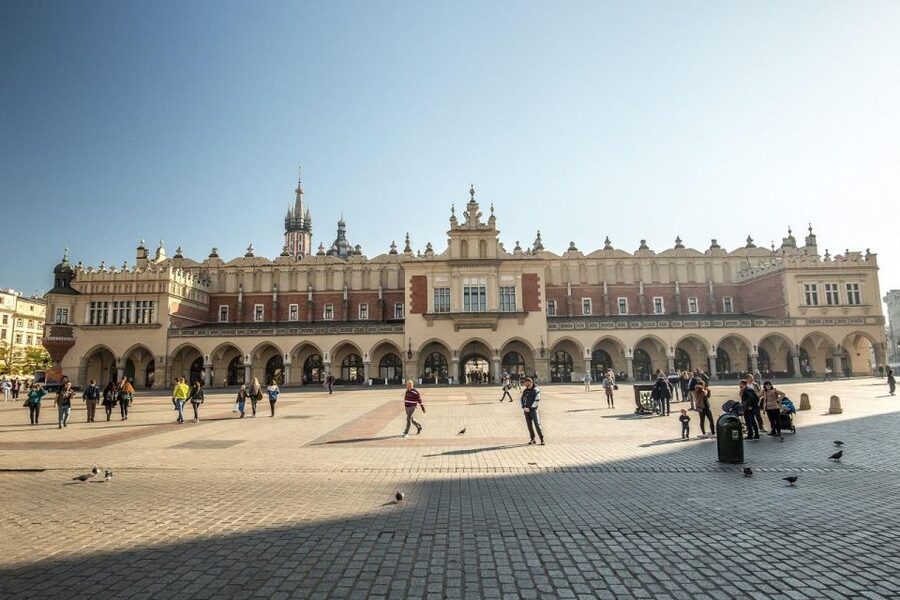
- Kraków’s Main Market Square and Cloth Hall
- Collegium Maius and Kraków’s university tradition
- St. Mary’s Basilica and the Veit Stoss altar
- What $87 buys you
- Who will enjoy this route most
- Small practical choices that improve the day
- Should you book this Wawel and Old Town tour?
- FAQ
- How long does the tour last?
- Where is the meeting point?
- Is the meeting point on Wawel Hill?
- Which attractions are included?
- Is the castle ticket valid for every exhibition?
- Which languages are offered?
- Is the tour suitable for wheelchair users?
Key points to know before booking
- Wawel Castle access varies: Your ticket includes fast-track entry to one permanent exhibition, but the exact exhibition depends on availability.
- The Sigismund Bell requires a climb: The tower visit brings city views and a traditional good-luck ritual, but time may not always allow it.
- The tour covers Kraków’s essential center: Wawel Hill, the Main Market Square, Cloth Hall, Collegium Maius, and St. Mary’s Basilica all fit into one outing.
- The Veit Stoss altar is the artistic high point: Your guide helps you read the carved scenes rather than simply glance at the famous altarpiece.
- This is an active walking tour: Expect stairs, extended walking, and a maximum group size of 30. The experience is not suitable for wheelchair users.
- Language choice matters: Groups operate in one selected language, with English, French, German, Italian, and Polish available.
Starting at St. Mary Magdalene Square
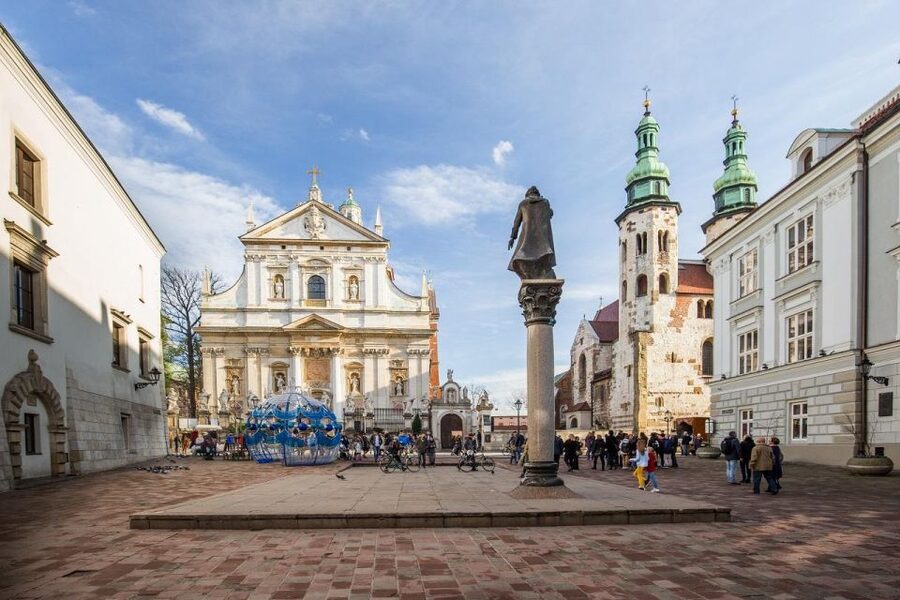
The meeting point is at the Piotr Skarga Monument on St. Mary Magdalene Square. Your guide holds a Wawel Castle and Cathedral Guided Tour sign, but the square is not on Wawel Hill, so check your voucher carefully and arrive at least 10 minutes early.
That warning matters. Once the group enters, late arrivals cannot join, and tickets are not refundable. Kraków’s center is easy to walk around, but an unfamiliar square and a nearby monument can still cost you precious minutes if you are rushing.
The tour lasts 210 minutes, or three and a half hours. There is no lunch included, so eat beforehand or plan food afterward. The length is useful because the route includes several major sights, but you should not expect a leisurely pace at every stop.
The group can contain up to 30 people, in line with museum rules. That is not an intimate private outing, although the group size is still manageable for a good guide. Headphones are not listed among the inclusions, so staying near the guide is sensible, especially in busy public spaces.
More Old Town Walking Tours in Kraków
- Old Town Krakow & Wawel Castle Walking Tour
★ 5.0 · 1,508 reviews - Krakow: Bike Tour of Old Town, Jewish Quarter and the Ghetto
★ 4.9 · 1,155 reviews - Krakow: The Old Town Walking Tour
★ 4.8 · 794 reviews
Wawel Castle and the royal State Rooms
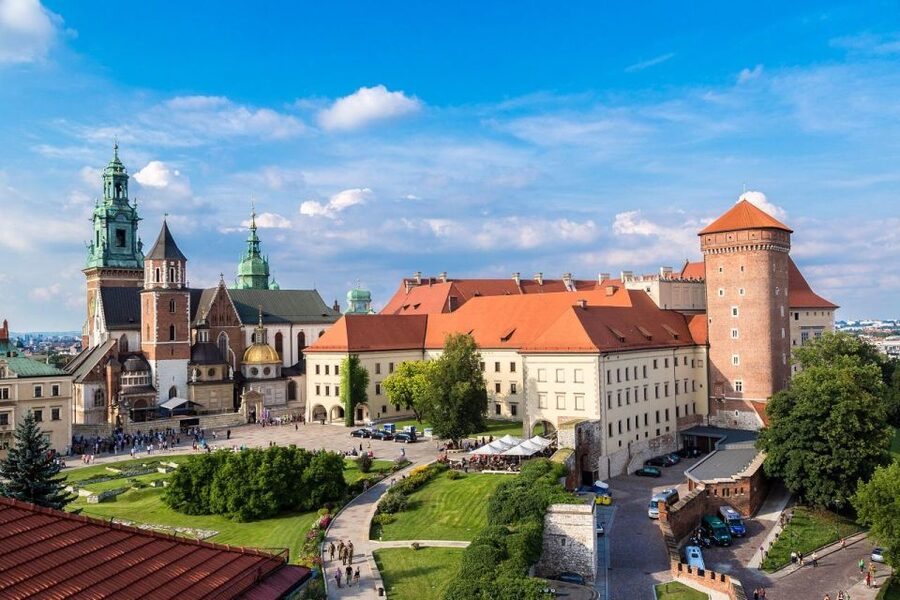
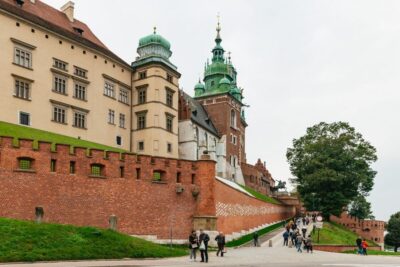
Wawel Castle gives the tour its grand opening. This hilltop complex is tied to Poland’s royal government and national identity, and the State Rooms show that power through decoration rather than bare dates and names.
Inside, your guide leads you through Renaissance interiors, elaborate wall hangings, and the Lanckoroński collection of Italian paintings. These rooms work best with explanation. Without context, a decorated chamber can blur into the next one. A good guide points out how the furnishings, paintings, and royal ceremonies fit together.
The permanent exhibitions also reach beyond court life. Porcelain, weapons, and Eastern art show Poland’s links with other parts of Europe and Asia. One especially unusual feature is the collection of Ottoman tents, described as the largest in Europe. That detail gives the castle more range than a standard royal residence tour.
Your ticket includes fast-track access to one permanent Wawel Castle exhibition. The available choice can vary, so do not assume you will see every gallery named in the description. The value here comes from combining guided interpretation with priority access, not from treating the ticket as an all-access pass.
This first section can take time. A German-language visit led by Jadwiga was praised for detailed explanations, but one participant felt the castle commentary left too little time for the cathedral and tower. That is a useful warning: the more questions and room-by-room detail you enjoy, the less flexible the later schedule may become.
I would ask your guide early how the time is divided. If the Sigismund Bell matters to you, say so politely at the start. The itinerary includes the chance to climb the tower and touch the bell, but the experience may depend on timing and conditions during the group visit.
Wawel Cathedral and the Sigismund Bell
Wawel Cathedral is not simply another church stop. Polish monarchs were crowned, married, and buried here, giving the building a direct link to the country’s royal story.
The interior includes ornate chapels, golden domes, and carefully worked decoration. Your guide helps connect these details to the people commemorated inside. That makes the cathedral a useful counterpoint to the castle: the castle shows royal life and ceremony, while the cathedral presents religion, burial, and national memory.
The tower climb is one of the tour’s most distinctive elements. At the top, you can see across Kraków and touch the Sigismund Bell for good luck. The panoramic view offers a change of scale after the enclosed rooms below, and the bell provides a small physical ritual that you will remember better than another plaque.
There is a practical catch. The tower is reached by stairs, and not every group has enough time to make the climb. One tour participant specifically missed it because the castle section ran long. If you are set on the tower, keep your questions focused and make your priority clear.
The royal crypts are visited after the upper sections. They serve as the resting place of Polish rulers and important national figures. The setting is more solemn than the State Rooms, and the transition helps show how Wawel functions as both a historic residence and a place of national remembrance.
Dress modestly for the cathedral and other worship spaces. Shoulders and knees must be covered, so shorts and sleeveless tops are not permitted. This rule is easy to handle if you plan your clothing before leaving your hotel.
The changeover before the Old Town walk
The Old Town section may use a different guide and can begin back at the original meeting point. This is an important detail that is easy to miss when reading the route as one continuous walk.
A guide accompanies the transition between sections, according to one positive account, but you should still listen for clear instructions. The experience may feel slightly divided rather than like one guide-led story from start to finish.
That arrangement can also work in your favor. Some participants found the second section became highly personal when the group grew smaller. Beata K. received particular thanks for providing extra tips during a very small Old Town group, while Anna was praised for making the visit complete and pleasant.
The guide quality seems to be one of the strongest reasons to book. Jadwiga was praised for answering detailed questions in German, and other guides received strong marks for making the history approachable. Results can vary by language and date, but the tour is built around live local guiding rather than an audio recording.
More Wawel Castle tours:
- Krakow: Wawel Castle & Cathedral Guided Tour
★ 4.7 · 2,111 reviews - Krakow: Wawel Royal Hill with Optional Castle and Cathedral
★ 4.2 · 1,220 reviews - Krakow: Wawel Castle and Cathedral Guided Tour
★ 4.6 · 595 reviews - Kraków: Old Town & Wawel Castle Walking Tour in English
★ 4.8 · 532 reviews
Kraków’s Main Market Square and Cloth Hall
The Old Town route moves into Kraków’s central public space, the Main Market Square. This is where the city’s royal route meets daily urban life, with historic buildings, shops, and open pedestrian space around the square.
The Cloth Hall is a key stop. Its name recalls Kraków’s long role as a trading center, and its location helps explain how merchants’ guilds shaped the city. Your guide also covers royal processions and the city’s golden age, giving the square a political and commercial frame.
I like this part of the tour because it links separate sights. The castle can feel removed from ordinary city life, but the route down into the center shows how royal ceremonies, trade, education, and religion occupied the same compact area.
Crowds are the chief difficulty. One participant found that too many people made it hard to wait for a clear view at some points. You may need to accept a quick look, stay close to the guide, and avoid expecting a quiet photograph of every facade.
The Old Town section was not equally satisfying for everyone. One experience rated the Wawel portion highly but found the city walk disappointing. That does not make the route poor, but it suggests the Old Town portion depends heavily on your guide and your interest in general city history.
Collegium Maius and Kraków’s university tradition
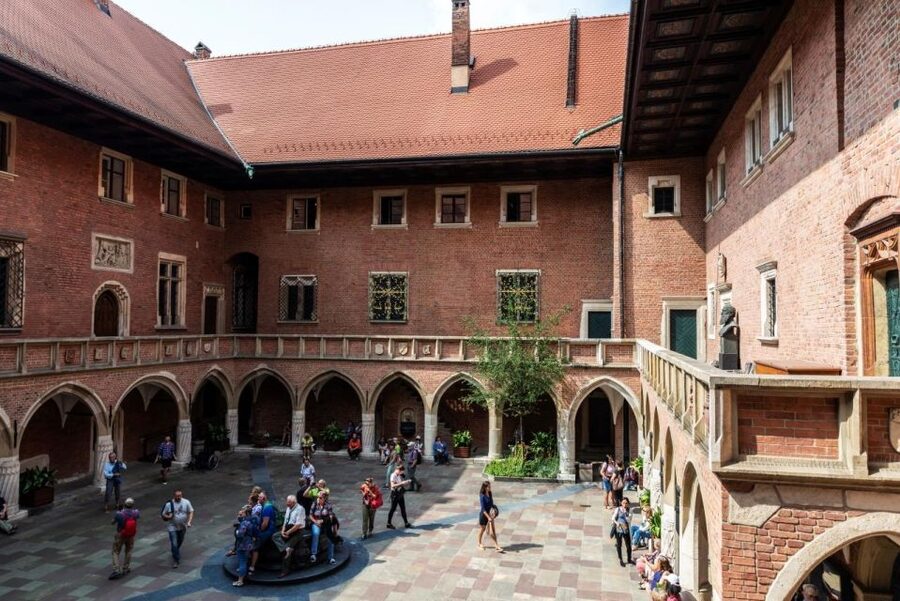
Collegium Maius adds an academic note to the walking route. It is the oldest university building in Poland, and the guide connects it with Nicolaus Copernicus, its most famous student.
This stop broadens the story beyond kings and churches. Kraków was also a place of study, scientific thought, and intellectual exchange. You get a better sense of the city when the route includes the people who shaped ideas, not only the buildings that housed rulers.
The stop is mainly valuable for context. The supplied details do not promise a special interior exhibition or extended university visit, so think of Collegium Maius as a guided landmark along the walk rather than a long museum stop. Your guide’s explanation is what gives it weight.
St. Mary’s Basilica and the Veit Stoss altar
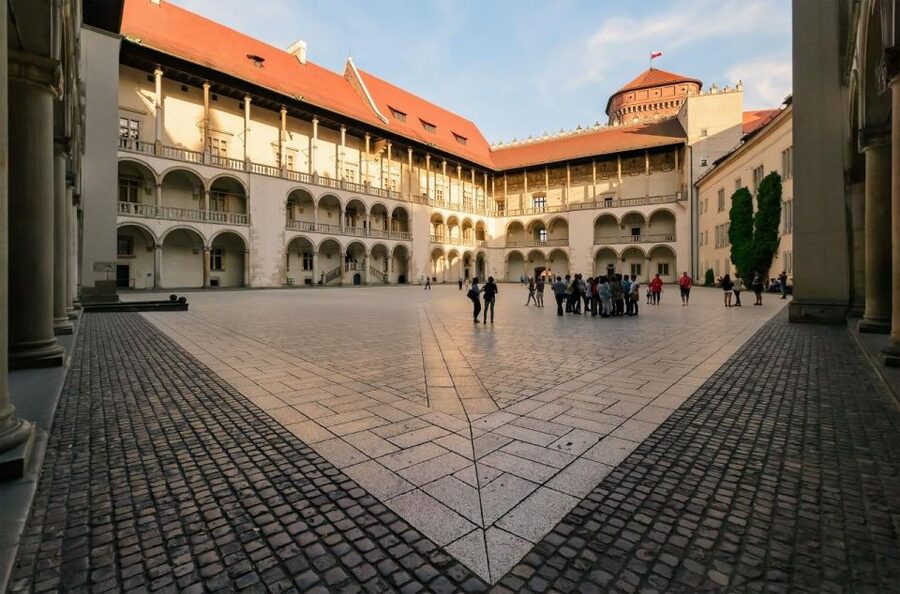
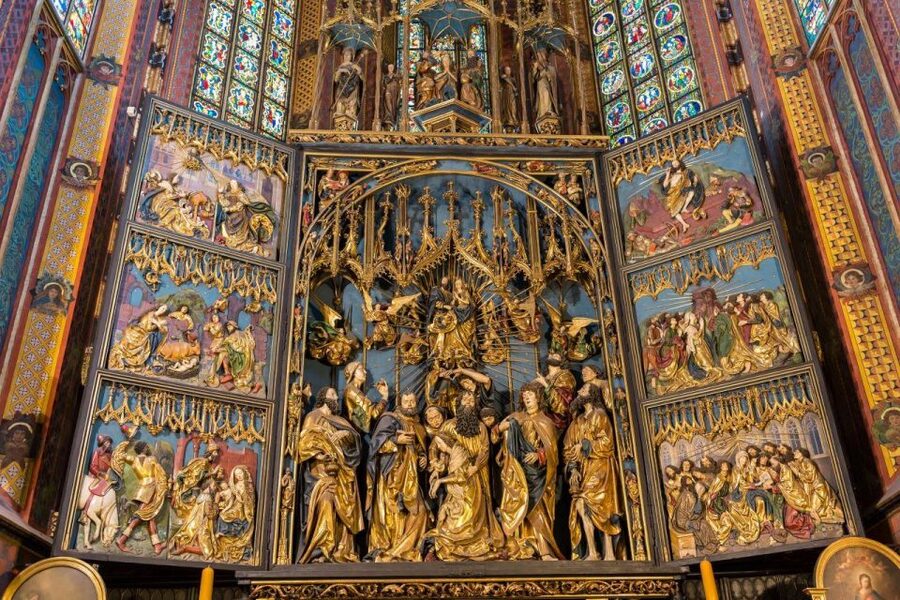
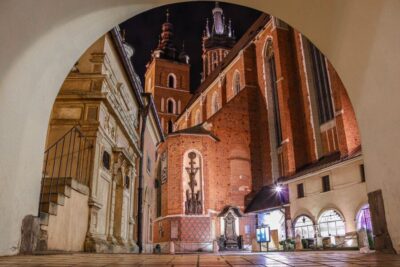
St. Mary’s Basilica is the final major interior, and for many people it will be the artistic peak of the day. The Gothic church contains the Veit Stoss altar, a large medieval work filled with carved figures and religious scenes.
Entry is included, which is important because you are not limited to viewing the church from the square. Your guide explains the altar’s details and history, helping you see how the figures and scenes tell a story. That makes a difference. A quick look at a closed or distant altarpiece cannot show why it matters.
The basilica also gives the tour a strong finish. You have moved from royal rooms to a coronation cathedral, then through the public streets to a church where medieval art carries the story. It is a more satisfying ending than simply stopping at another exterior landmark.
Again, expect other people inside. The tour may not give you unlimited time to stand in front of the altar, and services or crowd movement can affect the visit. The best approach is to listen closely while the guide points out the main features, then take a few quiet moments for your own look if time allows.
What $87 buys you
At $87 per person, this is not a budget walking tour. The price needs to be judged against the number of major admissions and the quality of the route.
You receive a live certified local guide, fast-track entry to one permanent Wawel exhibition, admission to Wawel Cathedral, and admission to St. Mary’s Basilica. You also get one organized visit to the castle, cathedral, Old Town, and basilica, without arranging separate tickets or working out how the sights connect.
The value is strongest for a first-time visit. If you already know Kraków well, have visited Wawel, or prefer to spend an hour studying one collection, the compact format may feel restrictive. You are paying for structure, access, and explanation rather than maximum time inside each attraction.
The group limit of 30 helps keep the price below that of a private tour, but it also means you will share the guide’s attention. Smaller groups can occur, and one person described the second part as almost private, but you should book on the assumption that the full group size is possible.
Free cancellation up to 24 hours before the start and reserve-now, pay-later booking make the price easier to manage when your Kraków plans are still changing. Those terms do not fix the time pressure during the tour, but they reduce the risk of committing too early.
Who will enjoy this route most
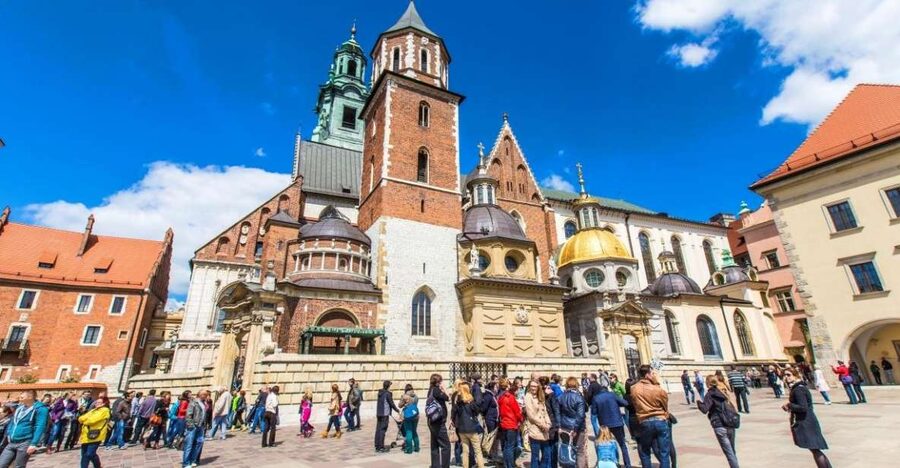
I would recommend this tour to a first-time Kraków visitor who wants the major historic sights explained in one half-day. It is also a good fit if you value art, royal history, and practical orientation more than independent wandering.
The route suits you if you want to hear why the Lanckoroński paintings, Ottoman tents, royal crypts, Copernicus, and the Veit Stoss altar matter. It is especially useful when you do not want to spend your arrival day comparing ticket systems at Wawel.
You should think twice if you need a slow pace, have difficulty with stairs, or want long periods for photography. The tour is not suitable for wheelchair users, and the tower climb may not fit into the schedule.
It may also disappoint you if Old Town walks are not your style. One account found that portion less appealing than Wawel, while others valued the extra local tips and the complete coverage. The safest expectation is a strong orientation walk, not a specialist architectural seminar.
Small practical choices that improve the day
Wear shoes suitable for several hours of walking and stairs. The route includes the Wawel tower option, the castle interiors, cathedral spaces, and the Old Town streets, so comfort matters more than fashion.
Dress with the cathedral rules in mind from the start. Cover your shoulders and knees, and avoid shorts or sleeveless tops. You do not want to lose time dealing with clothing restrictions at the door.
Choose your tour language carefully. Each group operates in one language only, with English, French, German, Italian, and Polish offered. If you prefer German, check the available date closely, since one German-speaking participant wished there had been more dates.
Arrive early at the Piotr Skarga Monument. The meeting point is not on Wawel Hill, and late entry is not allowed after the group has gone inside. Also remember that pets are not permitted.
Should you book this Wawel and Old Town tour?
Book it if you want an efficient first look at Kraków’s royal, religious, artistic, and academic center, and you are happy to trade some independence for a guide’s explanation. The castle, cathedral, and St. Mary’s Basilica admissions give the $87 price a reasonable basis, especially when you value fast-track access.
I would be cautious if your top priority is the Sigismund Bell. Ask about the schedule at the beginning, since the castle portion can run long and the tower may be skipped. For a first visit, though, this is a well-packed introduction with strong guides, a useful route, and enough substance to help you decide where to return on your own.
FAQ
How long does the tour last?
The tour lasts 210 minutes, or three and a half hours.
Where is the meeting point?
Meet your guide at the Piotr Skarga Monument on St. Mary Magdalene Square. The guide will hold a Wawel Castle and Cathedral Guided Tour sign.
Is the meeting point on Wawel Hill?
No. The meeting point is not on Wawel Hill, so check the exact location on your voucher.
Which attractions are included?
The tour includes guided visits to Wawel Castle and Wawel Cathedral, a guided Old Town walk, and entry to St. Mary’s Basilica.
Is the castle ticket valid for every exhibition?
The ticket includes fast-track access to one permanent Wawel Castle exhibition. The exhibition available can vary.
Which languages are offered?
Live tours are available in English, French, German, Italian, and Polish. Each group is conducted in one selected language.
Is the tour suitable for wheelchair users?
No. The experience is listed as unsuitable for wheelchair users. You should also expect walking and stairs, particularly if the tower visit takes place.
Just added around Kraków
- Rynek Underground Museum & Wawel Castle, Cathedral – Cracow★ 5.0 · 3 reviews
- Schindler’s Factory, Ghetto and Plaszow Camp Guided Tour★ 4.7 · 3 reviews
- Nowa Huta – a guided tour of a utopian socialist city★ 5.0 · 3 reviews
- Krakow: Kazimierz by Golf Cart and Schindler’s Factory Tour★ 4.8 · 3 reviews
- Private Krakow City Tour by Car and Walk with private tour guide★ 5.0 · 3 reviews
- Krakow: Jewish Traces Private Electric Car Tour★ 4.1 · 3 reviews
- Discover the Jewish Quarter with a Bike Tour★ 5.0 · 3 reviews
- Krakow: Indoor Go-Karting (24-Minute Races)★ 4.8 · 3 reviews
Wawel Castle Tours, compared.

Wawel Royal Hill with Optional Castle and Cathedral
Read our review →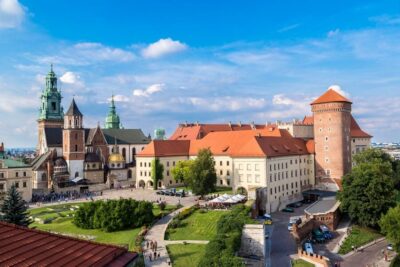
Old Town & Wawel Castle Walking Tour in English
Read our review →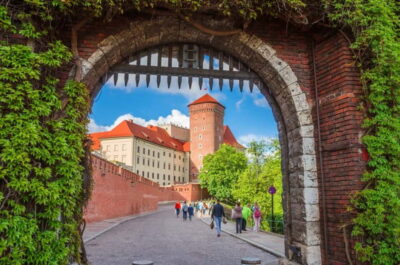
Krakow’s Essential Tour of the Old Town and Wawel Castle
Read our review →Browse the lists this tour appears in