

REVIEW · WALKING TOURS
World War 2 in Warsaw walking tour in English
Warsaw’s wartime story is written into its streets. I like that this 150-minute English walk is led by Poles born and raised in Warsaw, and that guides use old photographs plus family stories to connect major events with ordinary lives. I also like the small-group format, which makes it easier to ask about difficult subjects.
The main drawback is simple: this is an outdoor walk, and Warsaw weather can be harsh. One group managed only 45 minutes in minus 17 Celsius weather, while another found the pace a little quick for an older participant. Bring warm clothing, comfortable shoes, and enough energy for a serious history lesson on foot.
In This Review
- Key points about the Warsaw WWII walk
- Why Warsaw needs a WWII walking tour
- Meeting under the orange umbrella
- The former Nazi German District
- Former Adolf Hitler Square and the symbols of occupation
- The former Jewish Ghetto and the 1943 uprising
- Execution sites and the cost of occupation
- The 1944 Warsaw Uprising and the Polish Resistance
- Photographs, maps, and stories you cannot get from a guidebook
- The Tomb of the Unknown Soldier
- How demanding is the 150-minute walk?
- The guides make or break the experience
- Is $20 good value?
- Who should book this Warsaw tour?
- Practical advice before you go
- Should you book the World War 2 in Warsaw walk?
- FAQ
- How long is the World War 2 in Warsaw walking tour?
- What language is the tour offered in?
- How much does the tour cost?
- Where is the meeting point?
- Is the tour wheelchair accessible?
- Can I cancel the tour for a full refund?
Key points about the Warsaw WWII walk
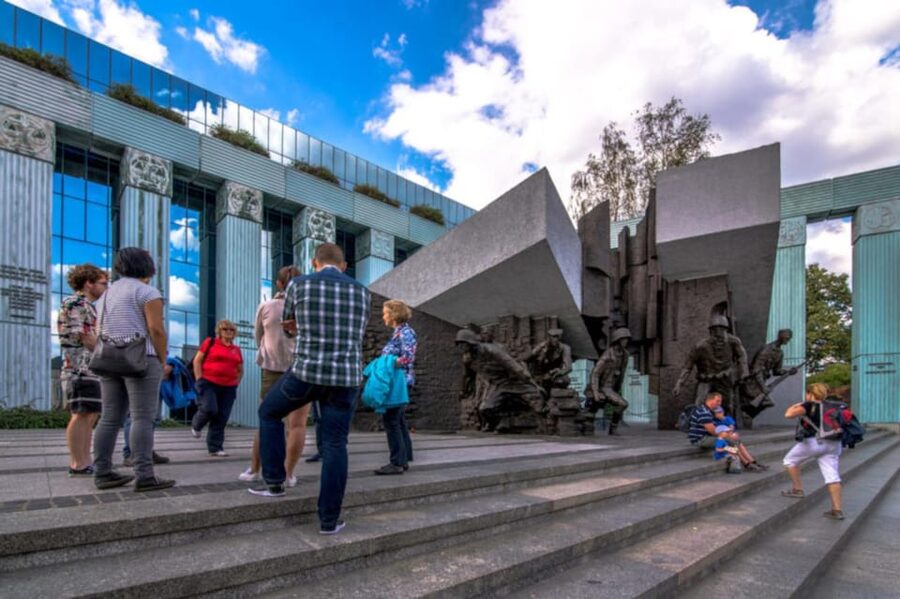
- Local guides with personal connections: Guides such as Magda, Gosia, Piotr, Andrew, Albert, Iga, and Peter have been praised for clear explanations, passion, and family memories connected to wartime Poland.
- A route through the city’s hardest chapters: You visit the former Nazi German District, former Adolf Hitler Square, the former Jewish Ghetto, execution sites, and locations linked to the 1944 Warsaw Uprising.
- Historic photographs bring vanished Warsaw back: Images of the city before, during, and after the war help you understand how much was destroyed.
- Two uprisings receive proper attention: The tour covers both the 1943 Jewish Ghetto Uprising and the 1944 Warsaw Uprising, along with the civilian experience behind them.
- Small groups and a 4.7 rating from 237 reviews: The format suits people who want room for questions and a guide who can adjust explanations to the group.
- Good value at $20: For two and a half hours with a professional local guide, the price is modest, especially if this is your first serious introduction to Warsaw’s wartime past.
Why Warsaw needs a WWII walking tour
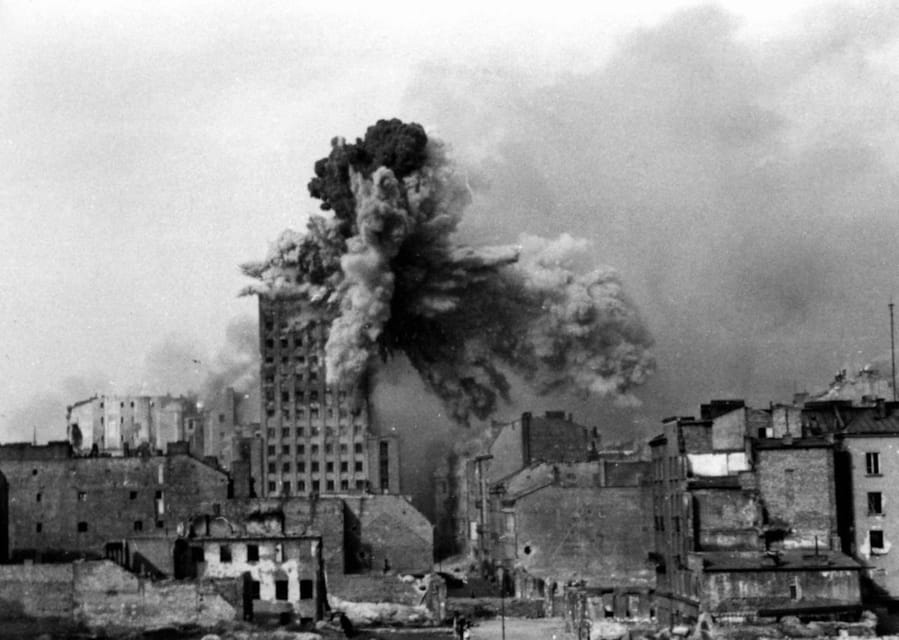
Warsaw can look polished and orderly today, but the modern city hides the scale of what happened here. During World War II, residents lived through bombing, German occupation, SS control, executions, resistance, and the destruction of much of the city.
A museum can give you dates and artifacts. A walk gives you distance and location. You begin to understand how close major events were to one another, how civilians moved through occupied streets, and how a city could continue functioning under constant threat.
I especially value the tour’s attention to more than one group. The story includes Jewish residents trapped in the former ghetto, Polish civilians, resistance fighters, German forces, and the political pressures that affected Poland’s borders and future. That wider view helps you avoid reducing Warsaw’s wartime past to a single event.
The subject is heavy, but the best guides do not turn it into a grim lecture. Piotr was praised for keeping the atmosphere approachable without making light of the suffering. Iga was described as serious when the material required it, while still open to wider discussion. That balance matters.
More Walking Tours in Warsaw
- Warsaw: Old Town Highlights Walking Tour in English
★ 4.7 · 1,516 reviews - Warsaw: Old Town Guided Walking Tour
★ 4.9 · 599 reviews - Half-Day Polish Food Walking Tour with Guide and Dinner
★ 4.5 · 381 reviews
Meeting under the orange umbrella
The meeting point is easy to identify if you know what to look for. Find the guide holding an orange umbrella, standing near the 20-meter-high column topped by a statue.
One useful detail: a past participant specifically clarified that the umbrella was orange, not yellow. That may sound minor, but busy city squares are not the place to guess. Arrive with the column in sight and look for the umbrella rather than only scanning faces.
The tour is offered in English, and the professional local guide is included in the $20 price. You join other tourists, so the experience is not private. That keeps the cost low, but it also means the pace and question time depend partly on the group.
The former Nazi German District
One early focus is the former Nazi German District, where the guide explains how occupation shaped daily life. The important point is not only what the German authorities ordered, but how those orders affected food, movement, fear, work, and family life.
This section gives the tour its human scale. Instead of hearing only about armies and commanders, you learn how Warsaw’s inhabitants lived under the eye of the SS. The guide’s old photographs help you compare the streets you see now with the wartime city that once occupied them.
A strong guide can also explain the political setting clearly. Several guides were praised for handling complicated events in a logical order and for answering difficult questions in good English. That is valuable here, because Warsaw’s wartime story involves occupation, resistance, shifting borders, and competing political forces.
Former Adolf Hitler Square and the symbols of occupation
The route also visits the former Adolf Hitler Square. The name itself shows how public spaces were reshaped by Nazi rule and propaganda.
At a place like this, the guide can explain how power was displayed in the city, not just enforced behind closed doors. The value is in connecting a physical location with the machinery of occupation. Your guide may use photographs or maps to show how the space looked and functioned during the war.
This is one of the reasons I would take the walk early in a Warsaw visit. It gives you a framework for seeing later sights. You begin to notice which areas were rebuilt, which traces remain, and how postwar Warsaw changed the meaning of public spaces.
A completely different kind of day out in Warsaw:
- Warsaw: Chopin Concert in the Old Town
★ 4.8 · 2,287 reviews - Warsaw: Traditional Galar Cruise on The Vistula River
★ 4.6 · 1,640 reviews - Warsaw Concert: Chopin – Painted by Candlelights with Wine
★ 4.8 · 1,442 reviews - Warsaw: City Sightseeing Hop-On Hop-Off Bus Tour
★ 3.6 · 1,415 reviews
The former Jewish Ghetto and the 1943 uprising
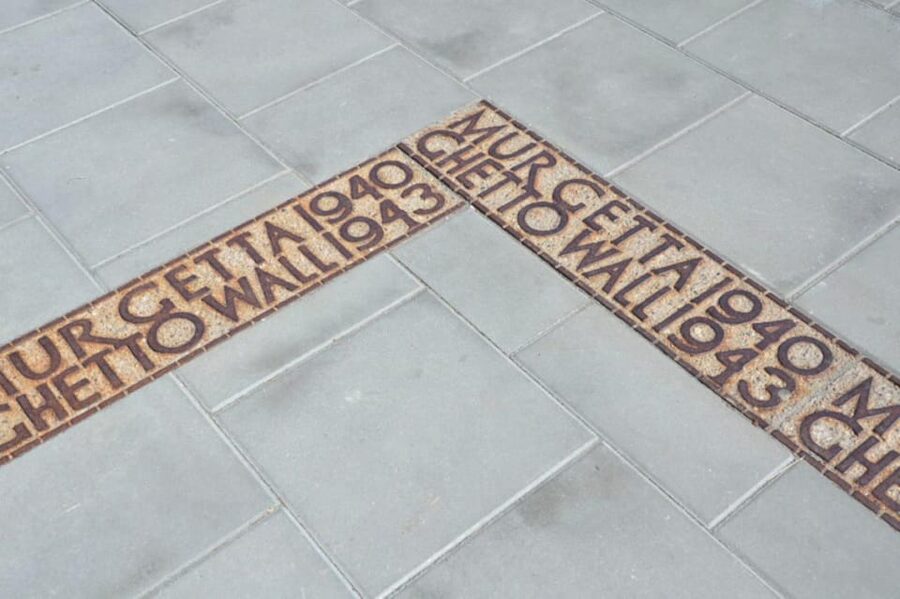
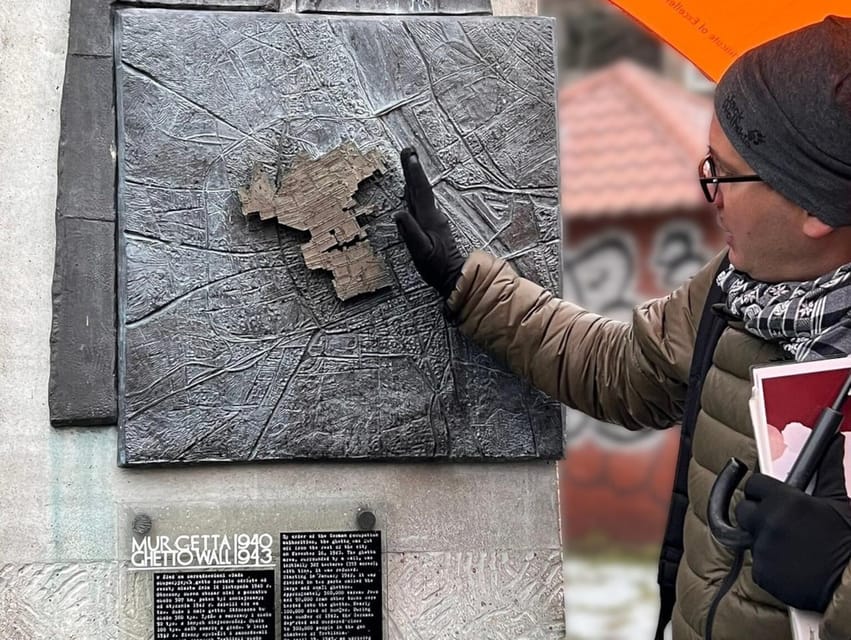
The former Jewish Ghetto is one of the most emotionally difficult parts of the walk. The guide discusses the conditions imposed on Jewish residents and the 1943 Jewish Ghetto Uprising, when resistance fighters rose against German forces despite overwhelming odds.
The route is not simply about a battlefield. It is about people trapped in a controlled area, facing hunger, violence, separation, and the destruction of their community. A personal story or family memory can make this section more immediate, but a good guide must handle it with care.
The strongest comments about this tour repeatedly point to that sensitivity. Guides explain different perspectives and show how civilians lived, rather than treating the uprising as an isolated military episode. That approach makes the stop more meaningful, though it can also be upsetting. You should expect an honest account, not a light sightseeing interlude.
Execution sites and the cost of occupation
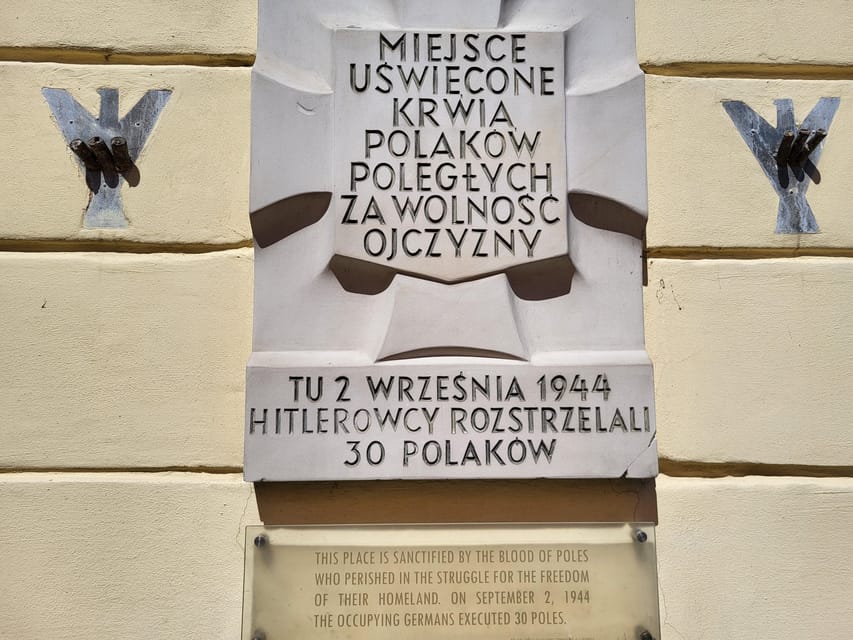
Execution sites add another layer to the story. These places show how terror was used against the population and how danger was built into ordinary life.
The guide’s job here is to explain what happened without overwhelming the group with detail for its own sake. Albert, Gosia, Andrew, and other guides have been praised for presenting painful subjects with compassion and clarity. Their use of family memories can help you understand how wartime fear continued beyond the people who directly experienced it.
Do not expect every location to announce itself dramatically. Some sites may look ordinary today. That contrast is part of the point. You may be standing in a normal-looking part of Warsaw while hearing about an event that changed the lives of people who lived there.
The 1944 Warsaw Uprising and the Polish Resistance
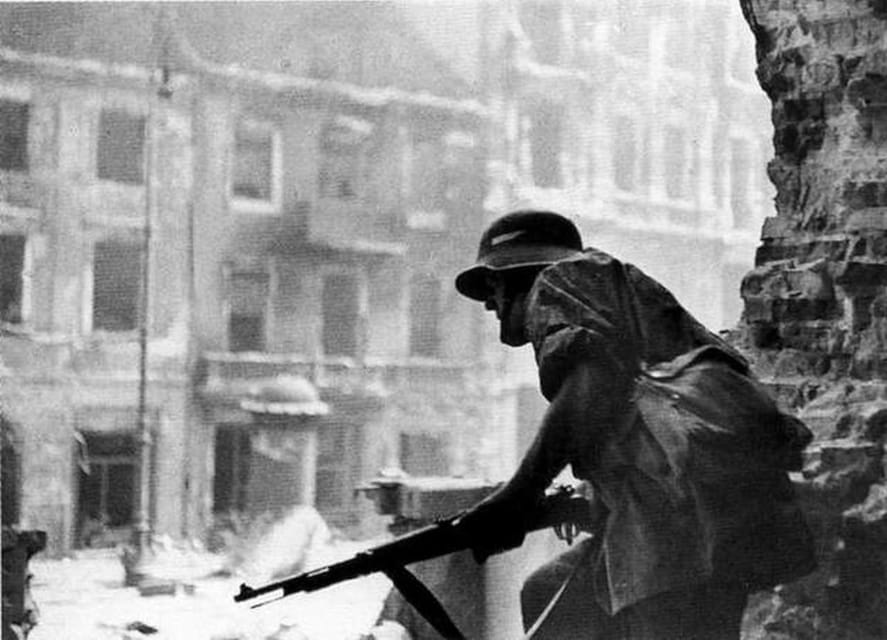
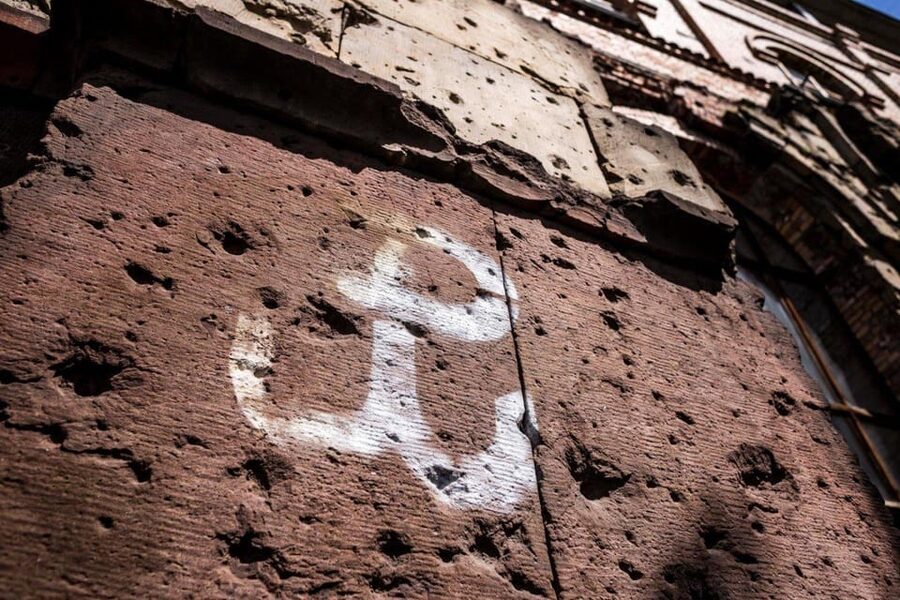
The tour then turns to the Polish Resistance and the 1944 Warsaw Uprising. This was a different uprising from the 1943 Jewish Ghetto Uprising, and the distinction is important.
The guide explains where resistance strongholds were located and how Polish fighters and civilians confronted German power. The tour also places the uprising within the wider political turmoil affecting Poland. That context helps you understand why the uprising remains such a central part of Warsaw’s identity.
I like that the walk presents both courage and cost. It would be easy to make the story a simple tale of heroic resistance. The better approach shows bravery, confusion, sacrifice, and the suffering of civilians caught in the middle.
One guide was praised for explaining the proud yet tragic history of Poland with frankness and compassion. That is exactly the tone this subject needs. You should come away with respect for the people who resisted, but also with a clear sense of how devastating the consequences were.
Photographs, maps, and stories you cannot get from a guidebook
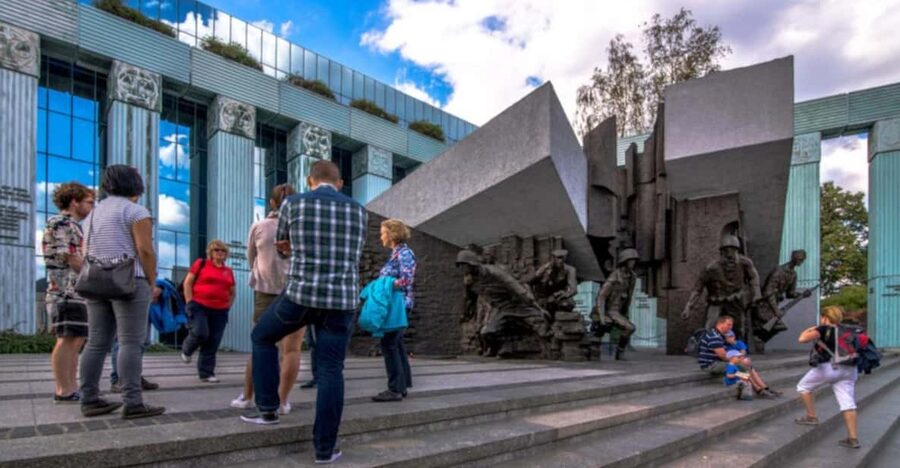
The old photographs are among the tour’s most useful tools. A guide may show you Warsaw before the war, during the occupation, and after the destruction. That sequence helps you see that today’s city is not simply an old city preserved through time. It is a city rebuilt after extraordinary damage.
Maps would make the route even easier to follow. One participant specifically suggested that a map could help people understand where they were going and look up places afterward. I agree. If you are serious about the subject, bring a phone or small notebook and record names, locations, and events as you go.
Family stories add another layer. Several guides have shared memories of how the war affected their families. These accounts do not replace documented history, but they show how national events reached individual homes.
That personal connection is one of the clearest reasons to choose a local guide. A guide born and raised in Warsaw can explain not only what happened, but why the memory of it still matters in the city.
The Tomb of the Unknown Soldier
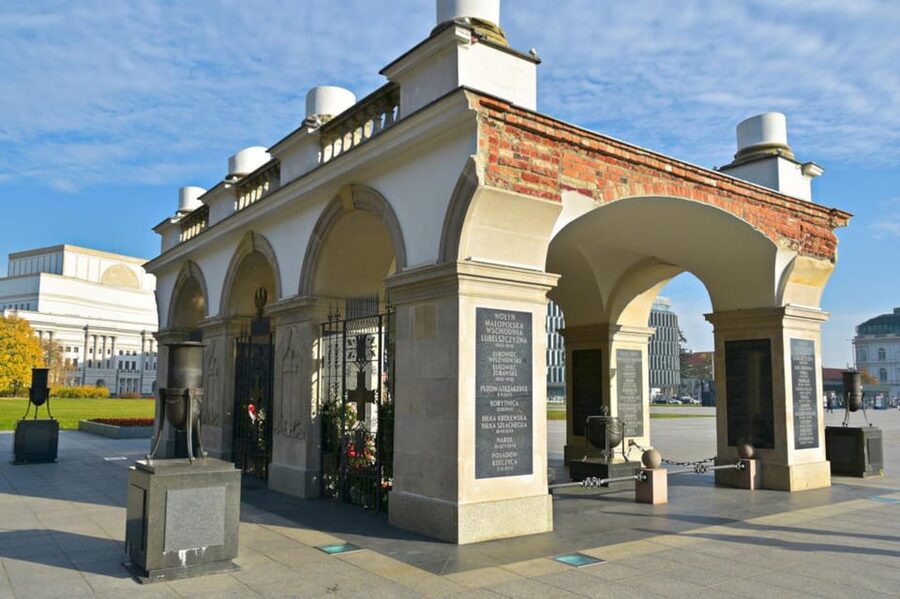
The route includes the Tomb of the Unknown Soldier, and the changing of the guard may coincide with the walk. One participant described this as the most moving part of the experience.
The tomb connects Warsaw’s local wartime story with Poland’s wider military memory. It can feel more ceremonial than the other stops, but that change of mood is useful. After hearing about occupation, executions, and uprisings, the ceremony offers a public expression of remembrance.
Timing is not guaranteed in the activity details, so you should treat the changing of the guard as a possible bonus rather than the main reason to book. If it happens during your visit, give it your attention. It may become the moment you remember most clearly.
How demanding is the 150-minute walk?
Two and a half hours is long enough to cover a serious amount of material without becoming an all-day commitment. Several people found that the time passed quickly because the storytelling kept them engaged.
The route was described as well planned, with no difficult steps or rough ground. The experience is also listed as wheelchair accessible. Still, accessible does not mean effortless. You remain outdoors for the full walk, and one older participant found the guide’s pace demanding.
Weather is the bigger concern. Winter conditions can be severe in Warsaw. At around minus 20 Celsius, even a strong guide could not make the walk comfortable for everyone. On bitter days, dress for standing as well as walking, since stops may involve listening in one place.
Traffic noise can also affect the experience. One participant missed parts of the explanation when city noise rose. If you have hearing difficulty, stay close to the guide and ask to repeat anything you miss. A portable speaker or megaphone was suggested as a possible improvement, but it is not listed as standard equipment.
The guides make or break the experience
The tour depends heavily on the individual guide. The names praised most often include Magda, Gosia or Goska, Andrew, Albert, Piotr, Peter, Iga, Arek, and Martin.
Magda was praised for passion, care, and clear explanations, including during extremely cold weather. Gosia was valued for keeping people engaged through the walking sections. Andrew was praised for answering questions and handling difficult material. Albert was described as especially good at explaining complex events in an engaging way.
That range of names suggests a strong guide team, but your exact experience will depend on who leads your departure. The consistent qualities to look for are clear English, sensitivity, a good pace, and the ability to explain several perspectives without losing the main thread.
The small-group setting helps. You can ask about a family story, a photograph, or a confusing political detail without trying to interrupt a huge crowd. It also makes the guide’s voice easier to follow, though busy streets can still cause problems.
Is $20 good value?
At $20 per person, this is good value for a 150-minute guided walk. You are paying for a local guide, a carefully arranged route, historic images, and interpretation that would take considerable effort to assemble on your own.
The comparison is not simply between this walk and visiting a museum. You can see museum displays independently, but you may not connect them to specific streets and public spaces as easily. Here, the guide gives you a sequence: occupation, persecution, resistance, uprising, destruction, and remembrance.
The price is especially reasonable if you are new to Warsaw or have limited time. You will not learn every detail of the war in two and a half hours, but you will gain a useful structure for further visits.
The tour is not private, and a portion of the payment goes toward broker and agency costs, commissions, and taxes. If you feel the guide gave you a worthwhile experience, the operator suggests tipping. That is optional, but it is worth keeping in mind when planning your budget.
Who should book this Warsaw tour?
I would choose this walk if you want history explained on location rather than only through museum labels. It suits first-time visitors, families with older children, and anyone interested in how civilians experienced occupation.
The tour can work for people who are not major history fans. Ryan specifically noted that you do not need to arrive with a large store of WWII knowledge. The guide builds the story from the beginning and uses photographs to make the changes easier to follow.
Families should know that the topic is serious. A 10-year-old found the discussion thought-provoking, but the material may be upsetting for younger children. Parents should decide based on the child’s comfort with war, persecution, and death.
It also suits older participants who can walk for 150 minutes, but pace matters. If you walk slowly or need frequent rests, tell the guide at the start and remain near the group. The route has no difficult steps or rough ground according to the available information, but it is still a substantial outdoor walk.
Practical advice before you go
Wear comfortable walking shoes and dress for the forecast. In winter, gloves, a hat, and warm layers are not optional extras. Even the most engaging story cannot defeat extreme cold.
Arrive at the column with the statue and search for the orange umbrella. Keep close enough to hear, especially near traffic. If you want to research afterward, note the names of places and people as the guide introduces them.
Allow yourself quiet time after the walk. The former ghetto, execution sites, and uprising locations can leave you with a lot to think about. Pairing the tour with a museum visit on another day may work better than trying to process every aspect of Warsaw’s wartime past at once.
Should you book the World War 2 in Warsaw walk?
Book it if you want an affordable, serious introduction to Warsaw’s WWII story, especially one shaped by local voices. The strongest part is the combination of on-site storytelling, old photographs, family memories, and guides who treat the subject with care.
Skip it if you dislike long outdoor walks, struggle with cold weather, or want a light overview with little emotional weight. For most visitors interested in Warsaw’s past, though, the $20 price and two-and-a-half-hour format offer a strong return. Choose a mild-weather departure if possible, stay near the orange umbrella, and be ready to listen closely.
FAQ
How long is the World War 2 in Warsaw walking tour?
The tour lasts 150 minutes, or two and a half hours.
What language is the tour offered in?
The live tour guide speaks English, and English is the listed tour language.
How much does the tour cost?
The price is $20 per person.
Where is the meeting point?
Meet near the 20-meter-high column with a statue on top. Look for a guide holding an orange umbrella.
Is the tour wheelchair accessible?
Yes, the activity is listed as wheelchair accessible.
Can I cancel the tour for a full refund?
Yes. You can cancel up to 24 hours in advance for a full refund. You can also reserve your place and pay later.
Just added around Warsaw
- Jewish heritage in Warsaw★ 4.5 · 3 reviews
- Warsaw Outdoor Paintball with Transfers (all year round)★ 5.0 · 3 reviews
- World War II Warsaw Old Town, Military Cemetery Walking Tour★ 4.7 · 3 reviews
- Warsaw: Wolf’s Lair & Swieta Lipka Small-Group Tour + Lunch★ 5.0 · 3 reviews
- Sunset Boat Tour with Unlimited Drinks in Warsaw★ 3.5 · 3 reviews
- Majdanek – German camp from II World War – Private Tour – 1 DAY TRIP FROM WARSAW★ 5.0 · 3 reviews
- From Warsaw: Guided Tour to Wieliczka Salt Mine and Krakow★ 4.5 · 3 reviews
- Warsaw Sightseeing with NEW Mercedes Sclass !!!★ 5.0 · 3 reviews
Walking Tours, compared.




Gdańsk City Sights & History Guided Walking Tour in English
Read our review →


Browse the lists this tour appears in