
REVIEW · CITY TOURS
Wrocław: World War II and the non-existent city of Breslau
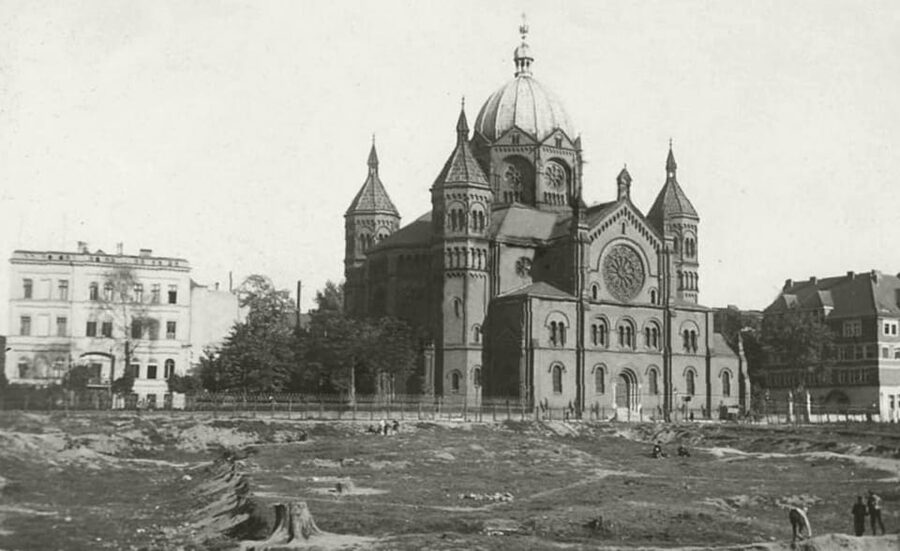
War leaves a city in layers. This private Wrocław walking tour follows those layers from the Market Square to Ostrów Tumski, explaining how German Breslau became Polish Wrocław after the terrible fighting of 1945. You see parade grounds, former Nazi sites, wartime defenses, and restored streets while old photographs help connect today’s city with its past.
I like the small-group format, which gives you a better chance to ask about difficult subjects. I also like the route’s final stretch through Partisan Hill and along the Oder, where wartime command posts and views toward the cathedral add a strong visual finish. One important caution: the experience has a mixed 3.6 rating from three bookings, and one guest felt the guide delivered a general city tour rather than the promised World War II focus.
In This Review
- Key points about the Breslau war-history walk
- Starting at the old Piwnica Świdnicka
- Market Square and Solny Square: from daily life to civil defense
- Plac Wolności and Hotel Monopol: Nazi ceremony in public view
- Świdnicka Street and the arrival of the Soviet Army
- Partisan Hill and the surviving command bunkers
- Along the Oder to Ostrów Tumski
- How much history fits into two hours?
- Price, group size, and practical value
- Who will get the most from this walk?
- Should you book the Wrocław Breslau war tour?
- FAQ
- Where does the tour begin?
- Where does the tour finish?
- How long does the experience last?
- What languages are available?
- Is the tour private?
- Is the tour wheelchair accessible?
- Does the tour enter the underground bunkers?
- Does the tour include the cathedral interior?
- What is included in the price?
- Can you cancel for a full refund?
Key points about the Breslau war-history walk
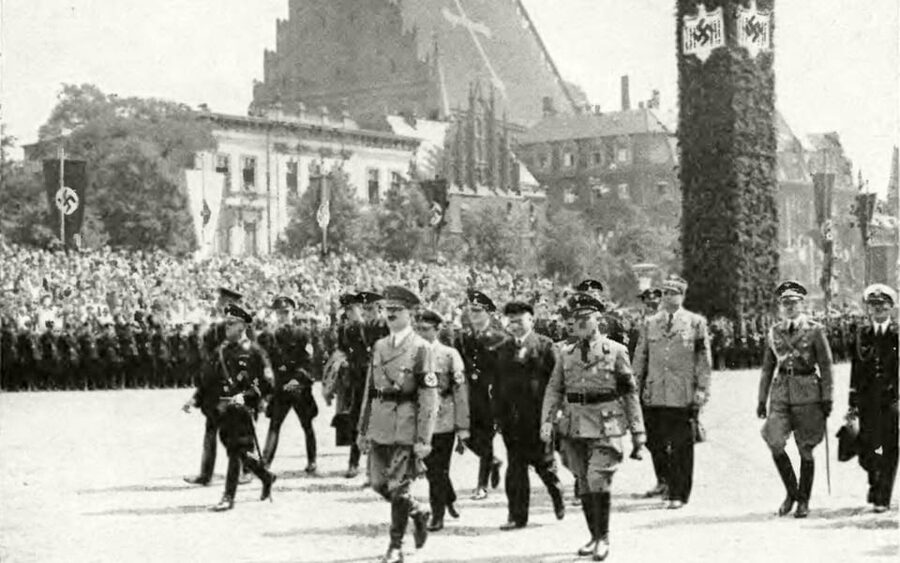
- Breslau was a major Nazi center in eastern Germany, with a large NSDAP headquarters and several visits from Hitler.
- The route connects ordinary city streets with wartime events, including Nazi parades, Soviet entry, and the 1945 siege.
- Partisan Hill contains surviving underground bunkers, though the tour description does not promise entry inside them.
- Old photographs from 1933 to 1945 help show how much Wrocław changed after the war.
- The two-hour walk ends at Ostrów Tumski, giving you time to continue exploring the cathedral island on your own.
- A private group of up to 14 costs $209, which can be fair for a party sharing one guide, but less attractive for one or two people.
Starting at the old Piwnica Świdnicka
You meet at the entrance to Restauracja Piwnica Świdnicka beside the Old Town Hall in the Market Square. This is an easy place to find, but do not confuse the meeting point with the restaurant interior. The tour begins outside at the entrance.
The Market Square is an excellent opening scene because it survived much of the destruction that erased large parts of Breslau. Your guide uses the square to explain the city before 1945, when Wrocław was a German city called Breslau and the capital of Silesia.
The title of the experience, the non-existent city of Breslau, points to the sharp break at the end of the war. The old German city did not simply change its name. Its population, political identity, and national borders changed too. The tour’s main value comes from following that break while standing in the places where the story happened.
The licensed guide leads only your group, with a maximum of 14 people. That is a useful size for a walking tour about politics, ideology, and destruction, since the subject works best when you can stop for questions instead of listening to a speech at the back of a large crowd.
A few more Wrocław trips worth weighing up
- Wroclaw: E-Car Tour and Audio Guide
★ 4.6 · 1,738 reviews - Wroclaw: 2-Hour Private Guided Tour by Electric Car
★ 4.8 · 805 reviews - Wrocław: Old Town and Ostrów Tumski Walking Tour in English
★ 4.8 · 311 reviews
Market Square and Solny Square: from daily life to civil defense
The first section stays near Wrocław’s center. At Rynek, you hear how residents lived until 1945 and how the city became closely tied to the NSDAP movement during the 1930s and war years.
The tour explains that Wrocław held the largest NSDAP authorities’ headquarters in eastern Germany. That detail gives the city a political importance beyond its handsome buildings. Hitler visited Breslau several times, and public spaces were used to display loyalty to the regime.
From the Market Square, you pass to Plac Solny, or Salt Square. This is where the first bunkers were built to protect local residents. The guide points out what remains, if anything is visible today, and places the defensive works in the larger story of a city preparing for air raids and eventual battle.
You should expect a guided exterior visit rather than a bunker expedition. The description says that remnants can be seen and that underground bunkers remain in Partisan Hill, but it does not promise that you enter any bunker. If underground structures are your main reason for booking, ask the provider in advance what you will actually see.
Plac Wolności and Hotel Monopol: Nazi ceremony in public view
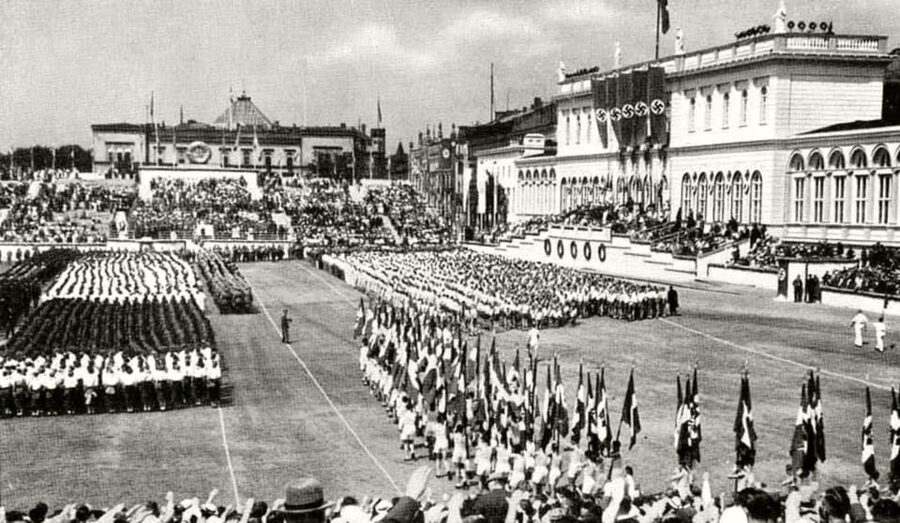
The route continues toward Plac Wolności, formerly Castle Square. Until 1945, this area hosted regular Nazi parades and torchlight processions, known in German as Fackelzüge. These events turned streets into political theater, with crowds, symbols, uniforms, and speeches designed to make party power feel part of daily life.
That is one of the useful features of this walk. It does not treat World War II as something that happened only on distant battlefields. You see how ideology occupied familiar public spaces, including squares and main streets where people shopped, worked, and met friends.
At the Hotel Monopol, the guide points to the balcony from which Hitler greeted supporters. The hotel therefore becomes more than an attractive historic building. It marks the way political authority was staged in the city, with a prominent hotel serving as a backdrop for mass gatherings.
Photographs from 1933 to 1945 add weight here. They let you compare the buildings and street lines you see today with images from the Nazi period and the final months of the war. Because the photographs cover a long span, you can follow the city from political display to military crisis.
Świdnicka Street and the arrival of the Soviet Army
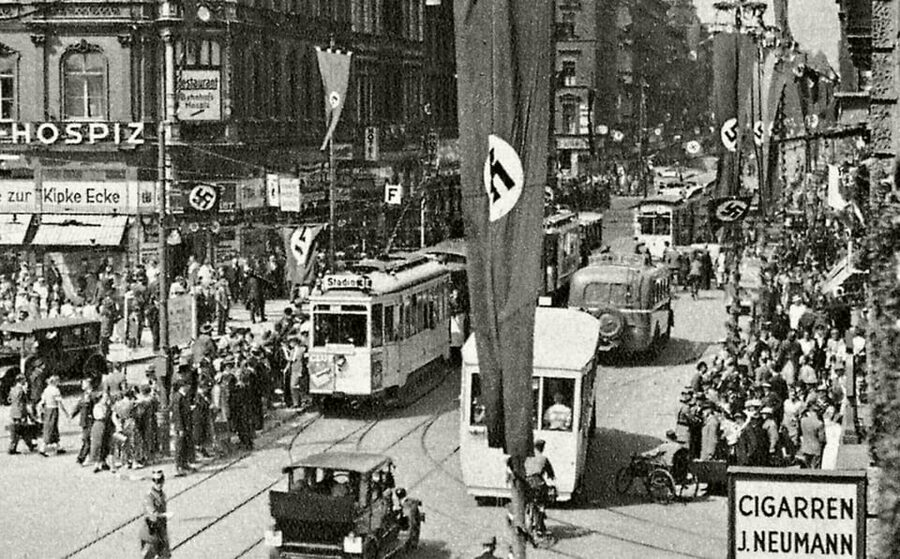
Świdnicka Street was one of Breslau’s representative avenues. The tour explains how residents greeted Hitler when he visited and how the victorious Soviet Army entered the city in 1945.
The same street therefore carries two very different public scenes. First came organized displays of loyalty to the Nazi leader. Later came defeat, occupation, and the collapse of German rule. A guide can make that contrast clear in a way a museum label often cannot, since you are looking at the exact urban setting throughout the explanation.
This is also a point where the tour’s quality depends heavily on the guide. The subject needs more than dates and names. You want a clear account of how a city could be strongly tied to Nazism and then suffer destruction under the very regime it had supported or endured.
A verified booking from September 2025 praised Norbert as a sensational guide and described the experience as very informative. That is the strongest positive signal in the small set of ratings. At the same time, another booking from the following day gave the tour two stars, saying the World War II material was barely covered and the walk felt like a standard city tour. I would treat that difference as a real warning: confirm at the start that the route will remain focused on the war years.
A completely different kind of day out in Wrocław:
- Wroclaw: Private Old Town Guided Walking Tour (2 hours)
★ 4.8 · 275 reviews - Old Town Wrocław Walking Tour
★ 5.0 · 249 reviews - Wroclaw: City Tour Sightseeing By Golf Cart Shared Or Privat
★ 4.8 · 189 reviews - Auschwitz-Birkenau Tour from Wrocław
★ 5.0 · 129 reviews
Partisan Hill and the surviving command bunkers
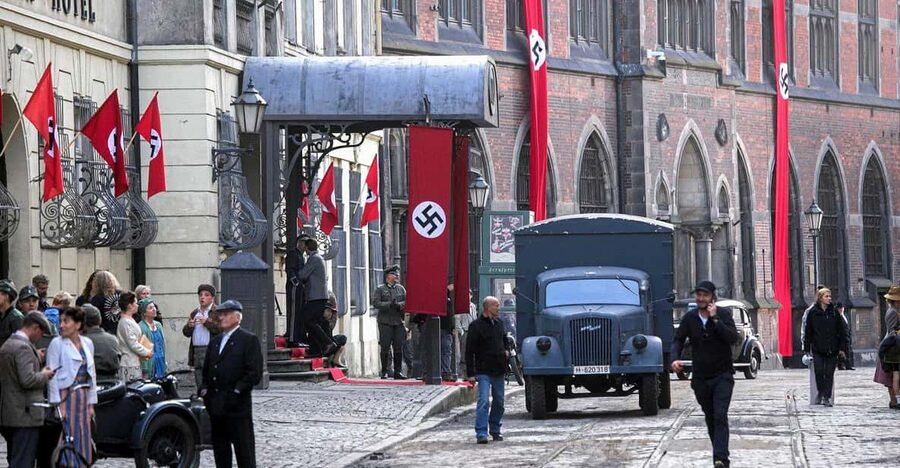
At Wzgórze Partyzantów, or Partisan Hill, the tour reaches one of its most unusual stops. During the siege of Breslau, the command of the fortress was based here, and underground bunkers were built below the hill.
The city was declared Festung Breslau, or Fortress Breslau, in 1945. That decision turned the urban area into a defensive stronghold and helped bring about the destruction that followed. The fighting did not leave every part of the city equally damaged, but the final battle caused enormous loss of buildings, homes, and lives.
Today, Partisan Hill is a public place with cafés and beer gardens. That change is part of the story. A location once tied to military command and underground defenses is now used for rest and social life. You get a pleasant pause in the walk, but the stop also asks you to notice how ordinary city life can cover painful ground.
The hill offers a view over Wrocław, making it one of the better photo stops. The tour description says the underground bunkers remain, but it does not state that visitors go below ground. Expect the guide to explain and point out the site rather than assume an interior visit.
The scheduled stop here is about 30 minutes, longer than most other points. That gives the guide time to explain the fortress, show photographs, and answer questions. It also gives you a chance to catch your breath, since this is a walking tour with several streets and viewpoints rather than a seated lecture.
Along the Oder to Ostrów Tumski
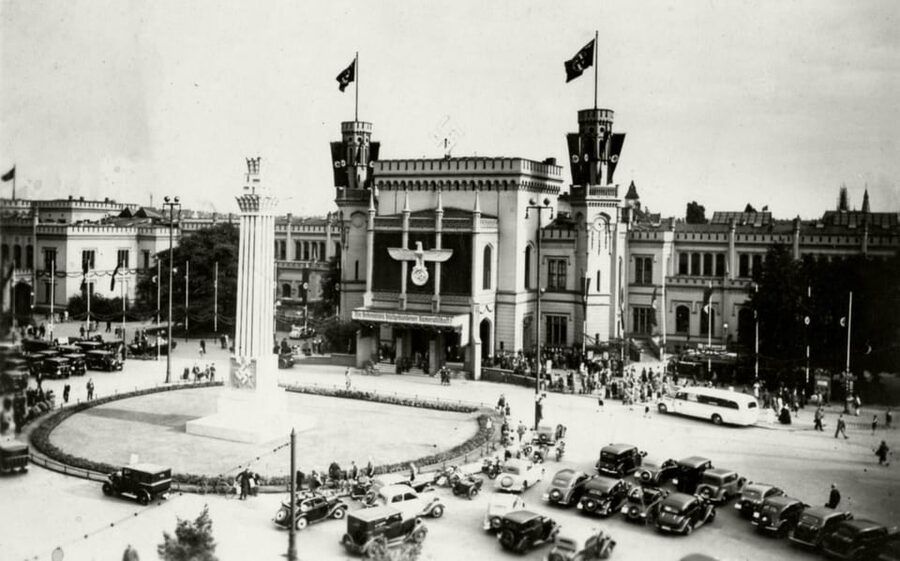
From Partisan Hill, you walk toward the Oder along the Xawery Dunikowski Boulevard. The riverfront changes the mood. After the tight public spaces of the central city, you have more room to consider the scale of the 1945 battle and the physical separation between modern Wrocław and its former German identity.
The walk continues toward Ostrów Tumski, the cathedral island and the oldest part of the city. In 1945, some of the fiercest fighting took place here. Today, the restored cathedral area looks peaceful and carefully maintained, which makes the contrast especially strong.
The route includes a photo stop at Ostrów Tumski and a view from Ceglarski Hill, also called Holtei Hill. From this point, you can admire the oldest part of the city and the cathedral. The tour does not include a detailed interior visit to the cathedral, so you should plan separate time if you want to explore its monuments.
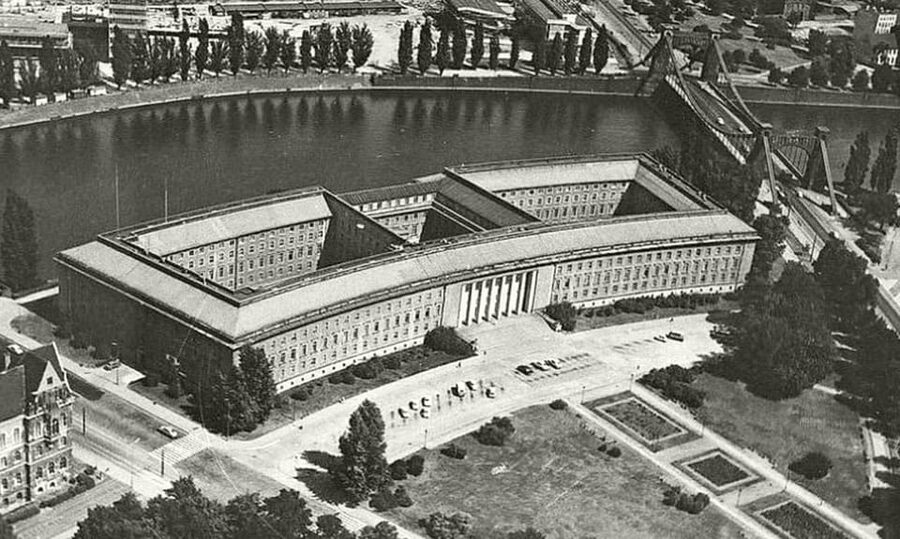
The tour ends in front of the former building that housed the NSDAP authorities’ headquarters in Breslau. This is a pointed final stop. You finish not at a vague historical marker, but at a building tied directly to the political machinery that shaped the city before its destruction.
Afterward, you are free to explore Ostrów Tumski on your own. That works well if you want to see the cathedral, bridges, and surrounding monuments at a slower pace. It also means the experience ends with you still in a useful sightseeing area, rather than requiring transport back to the starting point.
How much history fits into two hours?
The listed duration is two hours, and that is enough for a sharp introduction, not a complete account of Wrocław during World War II. You move through many locations, with around 30 minutes at the Market Square, 10 minutes at Solny Square, 10 minutes at Plac Wolności, 10 minutes at Hotel Monopol, 30 minutes at Partisan Hill, 20 minutes along the riverfront, and a short photo stop at Ostrów Tumski.
The timings suggest a brisk walking pace with explanations at each location. If you like to stop for long photographs or ask detailed questions at every point, the schedule may feel tight. If you want a clear route that connects the main sites in one morning or afternoon, the length is practical.
The experience works best when you arrive with a few questions. You might ask how the Nazi movement shaped local government, what happened when the city became a fortress, and how the German city became Polish Wrocław after 1945. A private guide can respond to your interests, but only if you make those interests clear.
The uneven rating makes this especially important. One guest booked specifically for the wartime subject and felt that expectation was not met. I would state plainly that you want the World War II and Breslau material to be the main focus, not an ordinary orientation walk with a few wartime references added.
Price, group size, and practical value
The cost is $209 for a private group of up to 14 people. For a full group, that works out to about $15 per person, which is a reasonable price for a licensed private guide and a two-hour route through several important sites.
For two people, the same price becomes much harder to justify. You are paying for privacy and flexibility, not admission tickets or transport. The value improves if you are a family, a larger party, or a group with a shared interest in wartime history.
The guide is available in Polish or German. There is no English option stated here, so English-speaking visitors should not assume they can book in English. The tour is listed as wheelchair accessible, though the route includes hills and public streets, so it is sensible to confirm how the Partisan Hill and Ceglarski Hill sections are handled for your group.
Free cancellation is available up to 24 hours before the start, and you can reserve without paying immediately. Those policies help if your schedule in Wrocław is still shifting, but the main decision remains the guide’s language and historical focus.
Who will get the most from this walk?
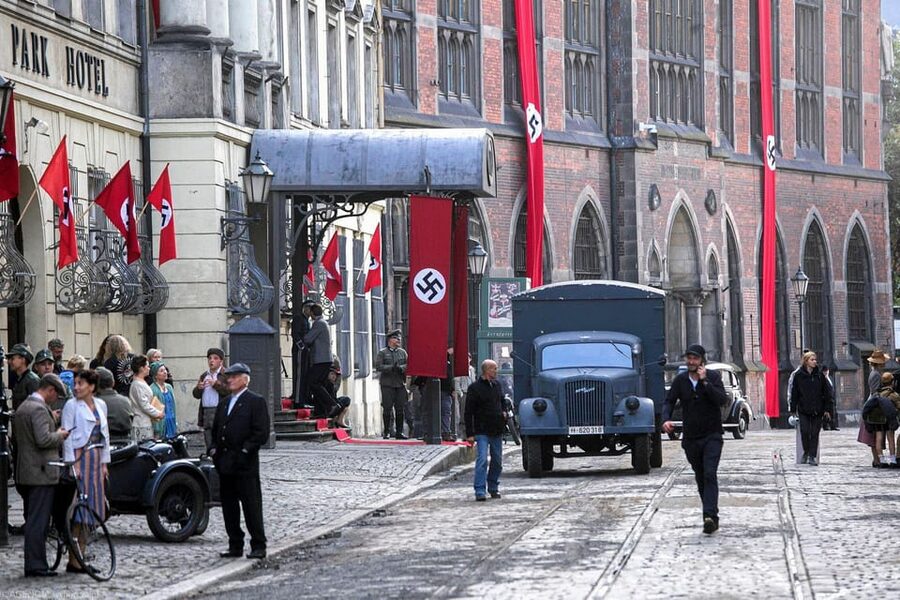
I would recommend this experience to you if you already know the basics of Wrocław and want to understand the city’s German past, Nazi politics, fortress period, and postwar transformation. The route is strongest for people who learn by seeing places rather than only reading museum displays.
It also suits a private family or friend group that wants to ask direct questions. The short duration leaves room for another museum or cathedral visit afterward, and the finish at Ostrów Tumski makes it easy to continue sightseeing.
I would be more cautious if you want access to underground bunkers, a long museum-style lecture, or a tightly documented military study. The supplied details confirm surviving bunkers, but not entry. The mixed ratings also mean you should confirm the subject at the outset.
The most praised elements are the small private group, the flexibility of the guide, and the strong performance of Norbert in one booking. Those are meaningful advantages, but they do not erase the complaint that the central subject was underplayed on another departure.
Should you book the Wrocław Breslau war tour?
Book it if you can travel in Polish or German, value a private guide, and want a compact route linking Nazi Breslau with the 1945 siege and modern Wrocław. The Market Square, Hotel Monopol, Partisan Hill, riverfront, and Ostrów Tumski create a sensible chain of places, and the old photographs should make the changes easier to grasp.
Before paying, confirm two things: that the guide will keep World War II at the center, and that the language suits your group. For up to 14 people, $209 can be good value. For a very small group, the price is less convincing, especially if the walk turns into a general city tour.
FAQ
Where does the tour begin?
It begins at the entrance to the Piwnica Świdnicka restaurant in Wrocław’s Market Square.
Where does the tour finish?
It finishes at Ostrów Tumski in Wrocław.
How long does the experience last?
The tour lasts two hours.
What languages are available?
The live guide is available in Polish or German.
Is the tour private?
Yes. It is a private group experience with a maximum group size of 14 people.
Is the tour wheelchair accessible?
Yes, the activity is listed as wheelchair accessible.
Does the tour enter the underground bunkers?
The information confirms that underground bunkers remain at Partisan Hill, but it does not confirm that the tour enters them.
Does the tour include the cathedral interior?
No cathedral interior visit is specified. The route ends at Ostrów Tumski, where you can explore the cathedral and other monuments independently.
What is included in the price?
A professionally licensed guide for your private group is included.
Can you cancel for a full refund?
Yes. You can cancel up to 24 hours in advance for a full refund.
Just added around Wrocław
- Wrocław: Following the dwarfs’. See the city differently! 2h★ 4.4 · 3 reviews
- Wroclaw to Rock City in Adsprach and Church of Peace in Świdnica Private Tour★ 5.0 · 3 reviews
- From Wroclaw: Full-Day Stolowe Mountains Trekking Tour★ 3.9 · 3 reviews
- Wroclaw: Skip the Line Panorama Raclawicka and Ostrow Tumski Guided Tour★ 4.5 · 3 reviews
- Wrocław: Polish Craft Beer Walking Tour with Tastings★ 4.1 · 3 reviews
- Segway Tour Wroclaw: Ostrów Tumski Tour – 1,5-Hours of Magic!★ 5.0 · 3 reviews
- Private Transfer from Wroclaw (WRO) Airport to Wroclaw city centre★ 5.0 · 3 reviews
- Wrocław: Ostrów Tumski and Old Town Highlights Private Tour★ 5.0 · 3 reviews
City Tours, compared.

City Sightseeing Tour Eco Electric Buggy Golf Cart
Read our review →


Gdańsk City Sights & History Guided Walking Tour in English
Read our review →
Extended City Sightseeing Tour – Eco Buggy Golf Cart
Read our review →
Browse the lists this tour appears in