
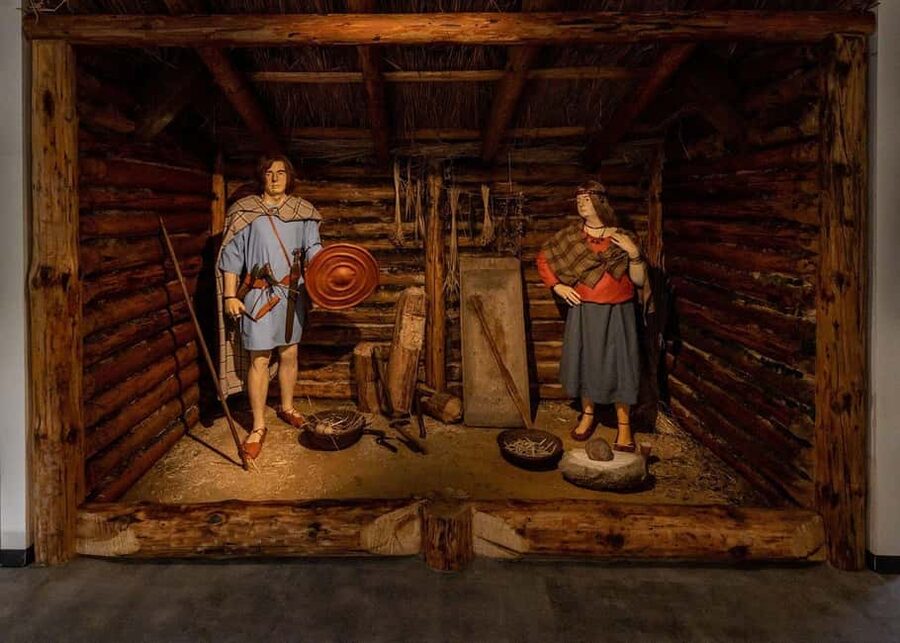
REVIEW · MUSEUMS
Archaeological Museum of Krakow Entrance Ticket
Ancient Krakow has more than churches. The Archaeological Museum gives you a compact route into pagan beliefs, medieval Krakow, and discoveries from across Lesser Poland. I like the 9th to 10th century Światowid statue, a four-faced pagan figure found in Zbrucz in 1848, and I like that the ticket connects the main museum with two smaller branches. The low price of about $2.13 per person also makes this an easy addition to a Krakow sightseeing day.
The main drawback is that this is an entry ticket, not a guided visit. You need to make sense of the displays on your own, and one booking problem has been reported: a visitor did not receive a usable ticket and was refused entry without a QR code. Check that your ticket arrives before you head over, and remember that the last entrance is 90 minutes before closing.
In This Review
- Key details to know before you go
- Why this museum matters in Krakow
- Meeting Światowid, the four-faced pagan god
- Exploring the main museum in the former prison
- Adding St. Wojciech’s Church on Main Square
- Visiting Nowa Huta-Branice
- How much time should you allow?
- Is the $2.13 price good value?
- The ticket issue you should avoid
- Who will enjoy this museum most?
- Practical planning for a smoother visit
- Should you book the Archaeological Museum ticket?
- FAQ
- Where is the Archaeological Museum located?
- What is the most famous object in the museum?
- What does the ticket include?
- How long is the ticket valid?
- Is entry free with the Krakow City Card?
- Can I visit an Archaeological Museum branch with the ticket?
- What is shown at St. Wojciech’s Church?
- What is the Nowa Huta-Branice branch connected with?
- When is the last entrance?
- Can I cancel the booking?
Key details to know before you go
- The Światowid statue is the star attraction: See the famous four-faced pagan god dating from the 9th to 10th century.
- The main building occupies a former prison: The site was once the Monastery of St. Michael, then became St. Michael’s Prison under Austrian rule.
- Three locations are connected to the museum: The main archaeological museum, St. Wojciech’s Church on Main Square, and the Nowa Huta-Branice branch.
- The ticket is unusually inexpensive: At about $2.13 per person, it offers good value if you enjoy archaeology and early Polish history.
- Entry is valid for 1 to 2 days: Check the selected option carefully, since starting times and validity can vary.
- Krakow City Card holders enter free: If you already have the city card, buying this separate ticket is unnecessary.
Why this museum matters in Krakow
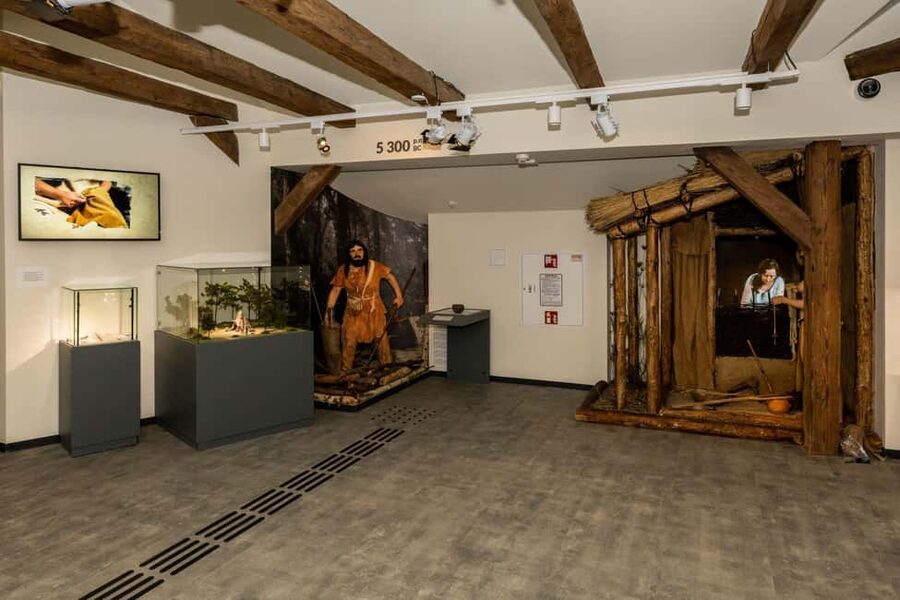
Krakow’s most famous sights usually point you toward kings, churches, polished squares, and grand architecture. The Archaeological Museum shifts your attention to older and less familiar layers. Here, you can think about pagan beliefs, early settlement, religious change, and the objects unearthed in Lesser Poland.
That makes the museum a useful counterweight to the city’s better-known attractions. You are not simply looking at beautiful rooms. You are seeing evidence of people who lived before modern Krakow took shape, along with objects that help explain how the region changed over time.
The museum also has an unusual setting. The main building occupies the place where the Barefoot Carmelite Monastery of St. Michael operated for decades. In the 19th century, the Austrians turned the building into a prison. It kept the monastery’s name and became known as St. Michael’s Prison.
After World War II, the prison closed, and the Archaeological Museum was established there. That change gives the visit an extra layer. You are entering a former religious institution that later served a very different purpose before becoming a home for archaeological collections.
More Museum Visits in Kraków
- Auschwitz-Birkenau Museum and Memorial Guided Tour from Krakow
★ 4.5 · 1,510 reviews - Krakow: Rynek Underground Museum Guided Tour
★ 4.6 · 1,122 reviews - Krakow Schindler’s Factory Museum Guided Tour in English
★ 4.5 · 650 reviews
Meeting Światowid, the four-faced pagan god
The most important object to seek out is the Światowid statue. It dates from the 9th to 10th century and was found in 1848 in Zbrucz. The figure has four faces, making it one of the museum’s most memorable links to pagan religious belief.
I would make this your first target, especially if your museum time is limited. The statue gives the visit a clear focus, and its four-sided form is easy to remember long after smaller objects begin to blur together.
Światowid also helps you understand why this museum feels different from a standard art museum. You are looking at a religious object from a period when belief systems in the region were not yet shaped by the Christian institutions that dominate Krakow’s later story.
The supplied information does not specify the exact display layout or how much interpretation is available beside the statue. Plan to spend a little time reading the labels and examining the figure from more than one angle if the exhibition arrangement allows it. The four faces are the point, and a quick glance from one direction would miss much of the object’s character.
Exploring the main museum in the former prison
The main museum is the strongest choice if you want the broadest introduction to the collection. Its subject is not limited to one era or one building. The displays bring together archaeological treasures found in Lesser Poland and connect them with the region’s early cultures and religious traditions.
The building itself adds atmosphere, but do not expect a dramatic prison tour. The information provided identifies the former use of the site, yet the ticket is for the archaeological museum rather than a separate prison-history exhibition. Think of the prison background as context for your visit, not the main event.
I like this kind of museum for a rainy morning or a quieter afternoon. You can set your own pace, stop at objects that catch your eye, and leave without committing to a long guided program. The lack of a guide is also the main limitation. If you want a detailed explanation of every period and object, you may need to do some reading before or after your visit.
The entry ticket includes the museum entrance only. It does not include a guide, and no guided commentary or group size is specified. That keeps the cost low, but it also means the quality of your visit depends partly on your interest in reading and looking closely.
Adding St. Wojciech’s Church on Main Square
The museum’s first branch is in St. Wojciech’s Church, directly on Krakow’s Main Square. Its underground exhibition focuses on the history of the square, the church, and the church’s patron, Saint Wojciech.
This branch is especially practical because it fits naturally into a walk around the Old Town. You do not need to make a separate trip across the city just to see it. If you are already visiting the Main Square, this stop can add archaeological context beneath the familiar streets and façades.
The exhibition includes remnants of wooden and stone floors, along with Romanesque walls. Those remains are valuable because they let you see physical traces of earlier Krakow instead of only viewing objects in cases.
I would treat this branch as a short, focused stop rather than a full replacement for the main museum. Its subject is specific: the square, the church, and Saint Wojciech. That focus makes it easy to fit into a busy sightseeing day, but you should not expect the same breadth as the main building.
Because the branch is underground, it also changes the feel of the visit. You are looking below the present-day square at remains connected with earlier stages of the site. The exhibition helps turn a familiar public space into a place with several visible layers of history.
A completely different kind of day out in Kraków:
- From Krakow: Auschwitz-Birkenau Guided Tour & Hotel Pickup
★ 4.5 · 33,358 reviews - From Krakow: Auschwitz-Birkenau Guided Tour & Hotel Pickup
★ 4.5 · 29,340 reviews - Krakow: Auschwitz Guided Tour with Optional Hotel Pickup
★ 4.5 · 15,280 reviews - Krakow–Zakopane: Cable Car, Chocholow Baths, Cheese & Vodka
★ 5.0 · 10,720 reviews
Visiting Nowa Huta-Branice
The second branch is Nowa Huta-Branice. It is closely linked with the Nowa Huta district and its metallurgical plant, and archaeological discoveries there began in 1949 during the first construction works.
This branch offers a different angle from the central museum and St. Wojciech’s Church. Instead of focusing mainly on a former religious building or the historic Main Square, it connects archaeology with the growth of a modern industrial district.
That connection matters. Archaeological work often comes to light when roads, factories, and buildings are being constructed. The discoveries at Nowa Huta-Branice began during early construction, showing how modern development can reveal much older remains.
The supplied details do not give the exact transport arrangements, opening hours, or time needed to visit this branch. You should check the current schedule and location before planning it as part of the same day. Since the ticket can be valid for 1 to 2 days depending on the option, spreading the branches across separate days may be the more sensible plan.
If you have only a short stay in Krakow, I would prioritize the main museum and the underground branch at St. Wojciech’s Church. Nowa Huta-Branice makes more sense if you have extra time or a particular interest in the Nowa Huta area and archaeology connected with industrial expansion.
How much time should you allow?
The ticket information gives a validity period of 1 to 2 days, but it does not state how long a standard visit lasts. That means you should avoid building a tightly timed itinerary around an assumed visit length.
For a simple plan, start with the main building and then decide if the two branches fit your day. St. Wojciech’s Church is the easiest branch to pair with Old Town sightseeing because it is on the Main Square. Nowa Huta-Branice deserves separate planning because its connection to the Nowa Huta district makes it less naturally linked to a central walking route.
The museum’s last entrance is 90 minutes before closing. This is an important detail, especially if you are visiting late in the day. Do not arrive near closing and assume you still have plenty of time to get in. Check the exact opening hours before setting out, since they can change.
The ticket is valid for 1 to 2 days, but the exact option matters. When you check availability, look for the selected validity period and starting time. Opening hours may differ from those shown when you first browse the experience.
Is the $2.13 price good value?
At about $2.13 per person, this is one of the easier Krakow museum purchases to justify. Even if you spend only a modest amount of time at the main building, the price is low enough that the visit does not need to compete with a major paid attraction.
The value improves if you use the ticket for more than one branch. St. Wojciech’s Church adds a different setting and a focused underground exhibition, while Nowa Huta-Branice extends the subject beyond central Krakow. Before buying, confirm which locations are covered by your selected option and how long the ticket remains valid.
There is one important price check. Entry is free for Krakow City Card holders. If you already own that card, use it rather than paying for a separate ticket. The City Card also covers a long list of other museums and landmarks, including Schindler’s Factory, the Rynek Underground Museum, the Polish Aviation Museum, the Princes Czartoryski Museum, Krakow’s defensive walls, and the Archaeological Museum locations.
That wider city card list includes many major sights. If you plan to visit several of them, compare the separate ticket costs with the card price before buying anything. For a visitor without the card, this archaeological ticket remains a very inexpensive stand-alone option.
The ticket issue you should avoid
The overall rating is 3.8 from 31 reviews, which suggests a generally mixed but usable experience rather than a flawless booking process. The clearest warning concerns ticket delivery.
One customer reported not receiving a ticket and then being refused entry at the ticket office because there was no QR code. This is not a complaint about the archaeological collection itself, but it can ruin a museum visit if you discover the problem at the door.
I would check your confirmation and ticket as soon as you book. Make sure the QR code is visible and saved where you can access it. If the ticket has not arrived, resolve the issue before traveling to the museum. The meeting point can vary depending on the option booked, so read the confirmation carefully rather than assuming every option begins at the main building.
The activity allows cancellation up to 24 hours in advance for a full refund. That gives you some room to change plans, but it does not remove the need to check the ticket details promptly.
Who will enjoy this museum most?
I would recommend this experience to you if you enjoy archaeology, early religious history, and Krakow beyond its royal and Christian landmarks. The Światowid statue alone gives the visit a strong reason to go, particularly if pagan belief systems interest you.
It also suits families with older children who are curious about ancient objects and unusual buildings. The former monastery and prison setting can help make the museum feel more concrete than a collection presented in a modern gallery.
This may be less satisfying if you want a guided story from start to finish. No guide is included, and the available information does not identify any guide or guided tour. You should be comfortable exploring independently and using the displays to shape your own understanding.
It is also not the best choice for someone with only a few hours in Krakow who wants the city’s biggest headline sights. The Archaeological Museum is worthwhile, but it is more specialized than the Main Square, Wawel attractions, or the city’s major art museums.
Practical planning for a smoother visit
Before you go, check four things:
- Confirm the exact museum location included with your booking.
- Check the current opening hours on the local operator’s official website.
- Save or print the QR code before arriving.
- Plan to enter at least 90 minutes before closing.
Smoking, alcohol, and drugs are not allowed. The ticket does not include a guide. If you want help interpreting the objects, prepare by reading a little about Światowid, Zbrucz, pagan beliefs, and the history of St. Michael’s site.
I would pair the central locations with a walking day in the Old Town. St. Wojciech’s Church belongs naturally with a Main Square visit, while the former monastery and prison can be visited as a separate museum stop. Treat Nowa Huta-Branice as an optional extension, not an automatic add-on, unless you have checked the timing and transport for your day.
Should you book the Archaeological Museum ticket?
Yes, if you want an inexpensive and unusual addition to Krakow’s cultural sights. The Światowid statue, the former monastery and prison setting, and the underground remains at St. Wojciech’s Church give the experience more character than the low price suggests.
I would skip the separate purchase if you hold a Krakow City Card, since entry is free with that card. I would also avoid booking until you know which branch you want and have checked the current opening hours.
For most visitors, the best plan is simple: see the main museum, add St. Wojciech’s Church while exploring the Main Square, and visit Nowa Huta-Branice only if your schedule allows. At roughly $2.13, the risk is small, but checking the QR code and location details is essential.
FAQ
Where is the Archaeological Museum located?
The main museum is located in the former site of the Monastery of St. Michael, which later became St. Michael’s Prison. The museum also has branches at St. Wojciech’s Church on Krakow’s Main Square and at Nowa Huta-Branice.
What is the most famous object in the museum?
The most famous object is the Światowid statue, a four-faced pagan god dating from the 9th to 10th century. It was discovered in 1848 in Zbrucz.
What does the ticket include?
The ticket includes entrance to the Archaeological Museum. A guide is not included.
How long is the ticket valid?
The activity is listed as valid for 1 to 2 days, depending on the option selected. Check availability and the booking details for the exact validity period.
Is entry free with the Krakow City Card?
Yes. Krakow City Card holders receive free entrance to the Archaeological Museum.
Can I visit an Archaeological Museum branch with the ticket?
The museum has two branches: St. Wojciech’s Church on the Main Square and Nowa Huta-Branice. Check the details of your selected option to confirm the locations included.
What is shown at St. Wojciech’s Church?
The underground exhibition presents the history of Krakow’s Main Square, St. Wojciech’s Church, and Saint Wojciech. You can see wooden and stone floor remains, as well as Romanesque walls.
What is the Nowa Huta-Branice branch connected with?
The Nowa Huta-Branice branch is connected with the Nowa Huta district and its metallurgical plant. Archaeological discoveries there began in 1949 during early construction works.
When is the last entrance?
The last entrance is 90 minutes before closing. Opening hours can change, so check the local operator’s official website before visiting.
Can I cancel the booking?
Yes. You can cancel up to 24 hours in advance for a full refund.
Just added around Kraków
- Rynek Underground Museum & Wawel Castle, Cathedral – Cracow★ 5.0 · 3 reviews
- Schindler’s Factory, Ghetto and Plaszow Camp Guided Tour★ 4.7 · 3 reviews
- Nowa Huta – a guided tour of a utopian socialist city★ 5.0 · 3 reviews
- Krakow: Kazimierz by Golf Cart and Schindler’s Factory Tour★ 4.8 · 3 reviews
- Private Krakow City Tour by Car and Walk with private tour guide★ 5.0 · 3 reviews
- Krakow: Jewish Traces Private Electric Car Tour★ 4.1 · 3 reviews
- Discover the Jewish Quarter with a Bike Tour★ 5.0 · 3 reviews
- Krakow: Indoor Go-Karting (24-Minute Races)★ 4.8 · 3 reviews
Museums, compared.
Auschwitz-Birkenau Museum and Memorial Guided Tour from Krakow
Read our review →
POLIN Museum of the History of Polish Jews Ticket
Read our review →


Krakow Schindler’s Factory Museum Guided Tour in English
Read our review →
Auschwitz Birkenau Museum Guided Tour with Pickup
Read our review →
Browse the lists this tour appears in