
REVIEW · KRAKóW TOURS
From Krakow: Zalipie Village Day-Tour
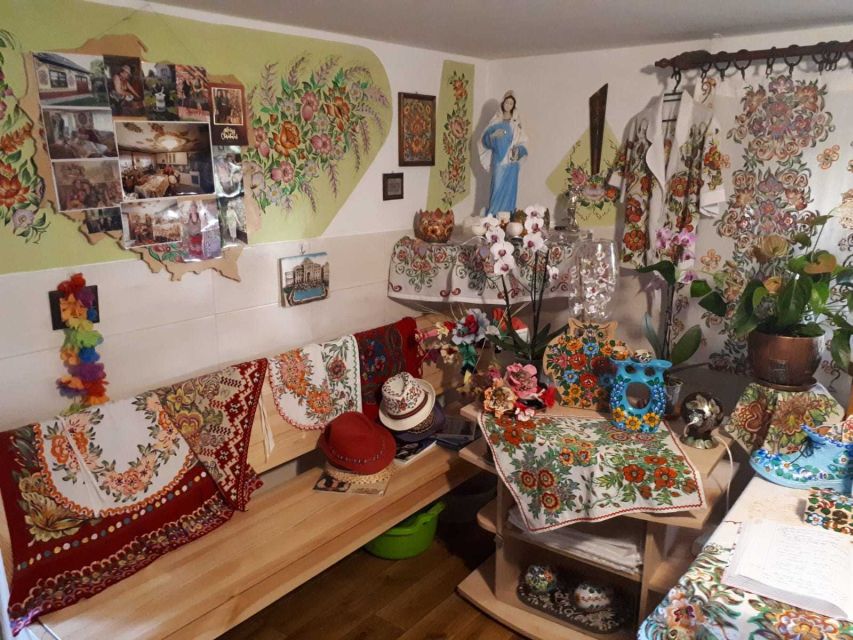
Some villages are painted like flower gardens. Zalipie is one of them, and this six-hour trip from Krakow gives you an easy way to see its decorated homes, fences, wells, stables, and folk-art centers without arranging rural transport yourself. I especially like the personal private-group format and the chance to meet local artists, rather than simply photographing houses from the roadside. The tour also includes the Felicja Curyłowa Cottage and St. Joseph’s Church, so you get both the art and the story behind it.
The main consideration is price. At $61 per person, this is not the cheapest half-day outing, particularly for solo visitors or couples who could otherwise share transport with a larger group. Still, the cost includes hotel pickup, a private air-conditioned car, entrance tickets, an English-speaking guide, and a driver. I also like that guides such as Wojtek, Bart, Damian, Mateusz, and Alex have helped visitors meet artists and enter private homes when local hosts are available.
In This Review
- Five things to know before visiting Zalipie
- Why Zalipie makes a worthwhile day trip from Krakow
- The Krakow pickup and the road east
- Three hours among Zalipie’s painted buildings
- House of the Female Painters and the folk-art story
- Felicja Curyłowa Cottage and the artist behind Zalipie’s fame
- St. Joseph’s Church and the link between faith and folk art
- Meeting local artists and entering private homes
- Is $61 per person good value?
- Food, timing, and what to pack
- Who should book this Zalipie tour?
- Should you book it?
- FAQ
- Where does the Zalipie tour begin?
- How long does the tour last?
- Is transport included?
- Is this a private tour?
- Is an English-speaking guide included?
- What can you see in Zalipie?
- Are entrance tickets included?
- Are food and drinks included?
- What should you bring?
Five things to know before visiting Zalipie
- Zalipie’s flowers began as household decoration: The painting tradition dates from the late 19th century and has continued for more than 100 years.
- The art goes beyond house walls: Look for flowers on fences, wells, chicken coops, stables, and other small rural buildings.
- Personal connections add real value: Guides may introduce you to local artists and families, something you would be unlikely to arrange alone.
- Three hours in the village feels well judged: You have time for museums, the church, village roads, and photographs without turning the outing into a full exhausting day.
- Bring food and water: Food options can be limited, especially outside the busy season, so a small snack is a sensible backup.
- This is best for folk-art fans and curious day-trippers: You do not need specialist art knowledge, but you should enjoy a slower visit centered on craft, local life, and photography.
Why Zalipie makes a worthwhile day trip from Krakow
Krakow gives you grand churches, royal buildings, and busy squares. Zalipie offers something quieter: a rural community where domestic decoration became a local art form. The contrast is the point. After a few days in the city, I like the chance to trade cobblestones and crowds for open roads and small painted houses.
The journey takes you east from Krakow into Lesser Poland. The drive is part of the outing, not merely a transfer between attractions. Several visitors enjoyed the countryside views and the chance to ask their guide questions about Poland along the way. Guides often explain how the village tradition developed, how the motifs are made, and how the work became known beyond Poland.
You should set your expectations correctly. Zalipie is not a theme park or a village where every building is covered from roof to foundation. The painted houses are scattered, and some decoration is more elaborate than others. That makes the visit feel more like a real community than a staged attraction, but it also means you need to pay attention as you move between stops.
The private format helps here. Instead of following a fixed crowd, you can usually spend a little more time at a house or pause for photographs. Alex was praised for allowing plenty of time for pictures, while other guides were described as flexible with the order of stops. That matters in Zalipie, where an unexpected painted detail can be more appealing than the next scheduled point.
A few more Kraków trips worth weighing up
- From Krakow: Auschwitz-Birkenau Guided Tour & Hotel Pickup
★ 4.5 · 33,358 reviews - From Krakow: Auschwitz-Birkenau Guided Tour & Hotel Pickup
★ 4.5 · 29,340 reviews - Krakow: Auschwitz Guided Tour with Optional Hotel Pickup
★ 4.5 · 15,280 reviews
The Krakow pickup and the road east
Pickup is included from your Krakow hotel. If you are staying in an apartment, the driver meets you at the front of the building, and hotel guests are asked to wait in the lobby. This removes one of the awkward parts of visiting a rural village: figuring out the right bus, finding a connection, and getting back before service ends.
Transport is by air-conditioned car, and the trip is operated as a private group. The vehicle was repeatedly praised for being clean and comfortable, and guides were often complimented for punctual pickup and careful driving. Damian, Bart, Wojtek, and Mateusz were all singled out for friendly service, good communication, and smooth driving.
The drive also gives you time to learn. If you are interested in Polish culture, ask about the region, village life, and the role of folk art in local communities. Guides have answered broad questions about Poland as well as specific questions about Zalipie, which makes the outward and return journeys more useful than silent transfers.
Bring comfortable clothing and shoes. You will not be hiking a mountain, but the visit involves walking around village sites and standing outside for photographs. Water is a sensible addition. Some guides have provided water in the car, but it is still wise not to rely on refreshments being available in the village.
Three hours among Zalipie’s painted buildings
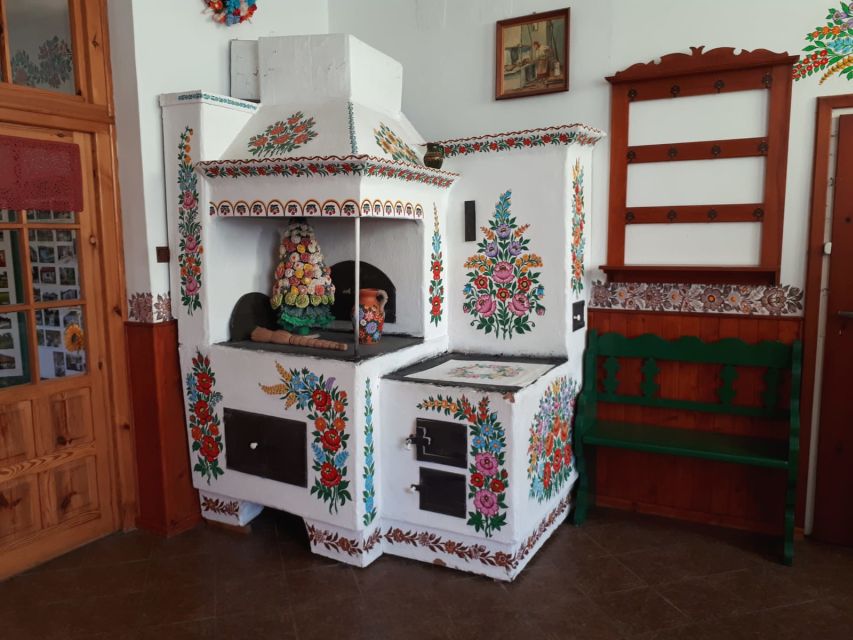
The main village visit lasts about three hours. That gives you enough time to see the principal sites while leaving room for a relaxed pace. The best way to approach the art is to look at the small details first. A floral pattern on a well or stable tells you that the custom was not limited to making the main house look pretty. It became part of the visual character of daily life.
You may see painted fences, chicken coops, stables, wells, and village homes. Some motifs are bold and symmetrical. Others have a more personal, handmade look. The differences in color, scale, and pattern are worth noticing because they show that this is not one uniform design copied across the village.
Photography is a major part of the appeal. Zalipie is easy on the camera, but do not rush from one facade to the next. Your guide can point out details and may offer to take photographs of you in front of the houses. The private setting makes that easier than trying to ask a stranger while keeping up with a group.
There is also a respectful side to the visit. Many decorated houses are private homes, not museums. You should photograph from public areas unless your guide or a resident invites you closer. The best encounters have come when guides introduced visitors to families and artists, but those meetings depend on local availability and should not be treated as guaranteed.
That balance is important. Zalipie is more meaningful when you remember that people live and work here. The flowers are not simply a backdrop for a day trip. They are part of a continuing local practice.
House of the Female Painters and the folk-art story
The House of the Female Painters, known in Polish as Dom Malarek, is one of the most useful stops because it places the village art in a wider context. It is a center devoted to preserving and continuing the floral-painting tradition. You can see examples of the work and learn how the craft is taught and maintained.
Several visits included time with women creating their artwork. Guides translated explanations from Polish into English and helped visitors understand the stages of the process. This is a strong reason to book a guided visit rather than simply drive to Zalipie and wander around. Without translation, you might admire the patterns but miss the human story behind them.
The House of the Female Painters also helps correct a common assumption. Zalipie is not just a collection of photogenic buildings. The tradition was shaped by local women, household creativity, and the wish to brighten plain interiors and exteriors. The art belongs to ordinary domestic spaces, which gives it a warmth that formal galleries often lack.
The center can be a good place to buy or see locally made work, but the supplied tour details do not promise a shop or a particular selection. Think of it first as a cultural stop, not a guaranteed shopping opportunity.
A completely different kind of day out in Kraków:
- Krakow–Zakopane: Cable Car, Chocholow Baths, Cheese & Vodka
★ 5.0 · 10,720 reviews - Krakow: Auschwitz-Birkenau Guided Tour with Pickup & Lunch
★ 4.5 · 9,800 reviews - From Krakow: Wieliczka Salt Mine Tour
★ 4.6 · 9,393 reviews - Krakow: Auschwitz-Birkenau Guided Tour Pickup/Lunch Options
★ 4.5 · 9,057 reviews
Felicja Curyłowa Cottage and the artist behind Zalipie’s fame
The Felicja Curyłowa Cottage is tied to the artist who helped make Zalipie known across Poland and internationally. Curyłowa’s home is important because it shows how the floral style could shape an entire living space. Here, the relationship between art and household life becomes especially clear.
The cottage is not simply another decorated facade. It connects the visual tradition with a named artist and with the story of how Zalipie gained wider attention. If you enjoy folk art, this is likely to be one of the most memorable stops.
A guide adds value by explaining what you are seeing. The difference between a painted house and a preserved artist’s cottage can be easy to miss if you are moving quickly. A good explanation helps you notice the arrangement of motifs, the domestic setting, and the way Curyłowa’s work influenced the village’s reputation.
The amount of interior access can vary by opening conditions and local arrangements, so you should not assume every private building will be open. The cottage itself is a central part of the visit, and some tours also arrange introductions to living artists, but personal meetings depend on the day.
St. Joseph’s Church and the link between faith and folk art
St. Joseph the Betrothed Church provides a different view of Zalipie’s style. The small church contains floral motifs that connect local religious life with the same decorative tradition seen around the village.
I like this stop because it prevents the tour from becoming a simple house-spotting exercise. The church shows how folk art can move between the home and the community. The flowers are not only for private pride or decoration. They also appear in a shared spiritual setting.
The church is described as small and charming rather than grand. That is useful to know if you are expecting a major historic monument. Its value comes from the local connection and the painted interior, not from scale or elaborate architecture.
Please remember that a church is an active religious place. Keep your voice low and follow any local instructions during your visit. Your guide can explain the motifs and the setting while helping you avoid treating the church as merely a photo stop.
Meeting local artists and entering private homes
The strongest part of this outing may be the personal access arranged by the guide. Wojtek, Bart, Damian, and Mateusz have been praised for knowing local families and artists. That has allowed some visitors to see private homes, talk with residents, and watch artists at work.
One particularly memorable visit included meeting Janina, described as one of the better-known artists in the area. Other outings included conversations with artists in their homes and time for coffee, food, or ice cream. These moments turn the village from a pretty place into a living community.
This is also where you should keep your expectations flexible. The tour description promises visits to key cultural sites, but it does not guarantee that a particular artist or family will be home. Local introductions depend on schedules, openness, and the conditions of the day.
A private group makes these encounters more comfortable. You can ask questions, listen to translations, and avoid the hurried feeling that often comes with a large coach tour. The guide’s relationship with residents is a major part of what you are paying for.
Is $61 per person good value?
At $61 per person, this tour sits above the cost of simply taking local transport, assuming you could arrange the journey and find the sites yourself. But that comparison does not tell the whole story.
You are paying for hotel pickup and drop-off, an air-conditioned car, entrance tickets, an English-speaking driver, and a licensed English-speaking guide. You also receive route planning, translation, local introductions, and the convenience of returning to Krakow the same day. For a couple or small private group, that package can be fair value.
The price feels less attractive if you are traveling alone. One solo visitor still felt well cared for, but another visitor noted that the private-driver cost makes the tour more expensive. There is no shared minivan rate described here, so you should view the booking as a comfort and access purchase rather than a budget excursion.
The value is highest if you care about context and personal contact. If you only want to photograph a few painted walls, the price may seem high. If you want to understand the tradition, visit the museums, see the church, and possibly meet artists, the private format earns its keep.
Food, timing, and what to pack
Food and drinks are not included. Some visits included stops for coffee, lunch, ice cream, or a rest break, but this depends on timing and what is open. In early October, one couple found no food options in Zalipie and was glad to have brought snacks and water.
I would follow that advice year-round. Pack a small meal or snack, especially if you have dietary needs or a tight schedule. Guides may suggest a rest-area stop or a local place, but the village should not be treated as a dependable food destination.
The tour lasts six hours, with roughly three hours devoted to sightseeing in Zalipie. Starting times vary, so check availability before booking. The half-day length works well after several busy days in Krakow. You get a change of pace without giving up an entire day.
Free cancellation is available up to 24 hours before departure, and you can reserve now and pay later. Those terms are useful if your Krakow plans are still shifting, but they should not replace checking the exact pickup time and meeting instructions.
Who should book this Zalipie tour?
I would recommend it most strongly if you fit one of these groups:
- You enjoy folk art, traditional craft, or local cultural history.
- You want a quiet break from Krakow’s city center.
- You prefer private transport to arranging rural buses and connections.
- You want an English-speaking guide who can translate and explain local details.
- You enjoy photography but also want to meet people connected to the art.
- You are traveling as a couple, family, or small private group and value flexibility.
It may be less suitable if you want a packed schedule of major monuments or a full day of formal museum visits. Zalipie’s appeal is gentle and specific. The village rewards curiosity, patience, and an interest in ordinary places made special by local hands.
Should you book it?
Yes, if you want to see a distinctive side of Poland beyond Krakow’s headline sights. The combination of comfortable transport, three hours in Zalipie, museum visits, the cottage, the church, and possible meetings with artists makes this more than a quick photo excursion.
I would hesitate only if your budget is tight or if you prefer joining a larger group to lower the cost. For everyone else, the private format solves the practical problems and gives you a better chance to understand the people behind the flowers. Bring snacks, wear sensible shoes, and leave room in your schedule for an unplanned conversation at a painted doorway.
FAQ
Where does the Zalipie tour begin?
The tour begins with pickup in Krakow. Hotel pickup takes place in the lobby, while apartment pickup takes place at the front of the building.
How long does the tour last?
The full tour lasts six hours. Around three hours are spent sightseeing in Zalipie before returning to Krakow.
Is transport included?
Yes. The tour includes transfers in an air-conditioned car, hotel pickup, and hotel drop-off.
Is this a private tour?
Yes. The activity is arranged for a private group.
Is an English-speaking guide included?
Yes. A licensed English-speaking guide and an English-speaking driver are included.
What can you see in Zalipie?
You can see floral-painted houses, fences, wells, chicken coops, stables, the House of the Female Painters, Felicja Curyłowa Cottage, and St. Joseph the Betrothed Church.
Are entrance tickets included?
Yes. Entrance tickets are included in the tour price.
Are food and drinks included?
No. Food and drinks are not included. Food options may be limited, particularly outside the busy season, so bringing snacks and water is sensible.
What should you bring?
Wear comfortable shoes and comfortable clothing. You may also want to bring water and a snack, since refreshments are not included.
Just added around Kraków
- Rynek Underground Museum & Wawel Castle, Cathedral – Cracow★ 5.0 · 3 reviews
- Schindler’s Factory, Ghetto and Plaszow Camp Guided Tour★ 4.7 · 3 reviews
- Nowa Huta – a guided tour of a utopian socialist city★ 5.0 · 3 reviews
- Krakow: Kazimierz by Golf Cart and Schindler’s Factory Tour★ 4.8 · 3 reviews
- Krakow: Jewish Traces Private Electric Car Tour★ 4.1 · 3 reviews
- Private Krakow City Tour by Car and Walk with private tour guide★ 5.0 · 3 reviews
- Krakow: Indoor Go-Karting (24-Minute Races)★ 4.8 · 3 reviews
- Discover the Jewish Quarter with a Bike Tour★ 5.0 · 3 reviews
Kraków Tours, compared.

Auschwitz-Birkenau Guided Tour & Hotel Pickup
Read our review →Auschwitz-Birkenau Guided Tour & Hotel Pickup
Read our review →
Auschwitz Guided Tour with Optional Hotel Pickup
Read our review →
Zakopane: Cable Car, Chocholow Baths, Cheese & Vodka
Read our review →
Auschwitz-Birkenau Guided Tour with Pickup & Lunch
Read our review →

Auschwitz-Birkenau Guided Tour Pickup/Lunch Options
Read our review →