
REVIEW · MUSEUMS
Galicja Jewish Museum
Memory lives in photographs. The Galicia Jewish Museum makes that idea tangible through more than 140 photographs documenting Jewish life, surviving sites, and the destruction of Jewish culture in southern Poland during World War II. I like its calm, self-guided format and the way it connects local places with the wider story of Polish Jewish life. The main drawback is clear: this is primarily a photography museum, so you will see fewer physical artifacts than at a traditional history museum.
I also like the chance to visit at your own pace. You can spend an hour here or stay for roughly two hours, as one visitor did, reading the captions and giving each image time. Allow extra care with the ticket, though. A separate ticket arrives by email, and only a printed copy is accepted unless you print it at Plac Szczepański 8.
In This Review
- Key points to know before visiting
- Why the Galicia Jewish Museum matters in Krakow
- Traces of Memory and the power of photographs
- What the museum feels like inside
- How long should you allow?
- A good addition to Krakow’s Jewish quarter
- Ticket details that can affect your day
- Who will appreciate this museum most?
- Is the $4.33 admission worth it?
- Should you book the Galicia Jewish Museum?
- FAQ
- Where is the Galicia Jewish Museum located?
- What is the main exhibition called?
- How much does admission cost?
- How long is the visit?
- Do I need a printed ticket?
- Can I cancel the booking?
Key points to know before visiting
- More than 140 photographs: The permanent Traces of Memory exhibition records Jewish sites and communities across former Galicia.
- A museum of remembrance: Its purpose is to honor Holocaust victims and celebrate Jewish culture in Poland.
- Self-guided visit: You can move at your own speed, with no fixed tour group or required starting time listed.
- About two hours works well: The museum is easy to rush through, but the photographs reward careful reading.
- Good value at $4.33: The modest admission price makes this a strong addition to a day in Krakow’s Jewish quarter.
- City Card access: Krakow City Card holders enter free, subject to the card’s terms and museum opening hours.
Why the Galicia Jewish Museum matters in Krakow
The Galicia Jewish Museum was created to remember the victims of the Holocaust and to honor the Jewish culture of Polish Galicia. Galicia was the former region covering much of southern Poland, including areas connected with Krakow and other communities that once had a strong Jewish presence.
That purpose shapes the entire visit. This is not simply a collection of old objects behind glass. It asks you to look at what remains, what disappeared, and how photographs can preserve evidence of lives and communities that were nearly destroyed.
The museum’s permanent exhibition is called Traces of Memory. It grew from twelve years of artistic work by Chris Schwarz, a British photographer who documented Jewish sites and cultural traces in Poland. Schwarz later became the museum’s director and remained connected with its mission until his death in 2007.
I find that background useful because it explains the museum’s visual approach. The photographs are not random snapshots. They are part of a long effort to record remnants of Jewish life in southern Poland and to show how the Nazi destruction of World War II affected both people and culture.
The experience asks for attention rather than speed. You will not get the same kind of visit as you would at a museum filled with large collections of objects. Instead, you will spend time with images, captions, and the connections between places.
More Museum Visits in Kraków
- Auschwitz-Birkenau Museum and Memorial Guided Tour from Krakow
★ 4.5 · 1,510 reviews - Krakow: Rynek Underground Museum Guided Tour
★ 4.6 · 1,122 reviews - Krakow Schindler’s Factory Museum Guided Tour in English
★ 4.5 · 650 reviews
Traces of Memory and the power of photographs
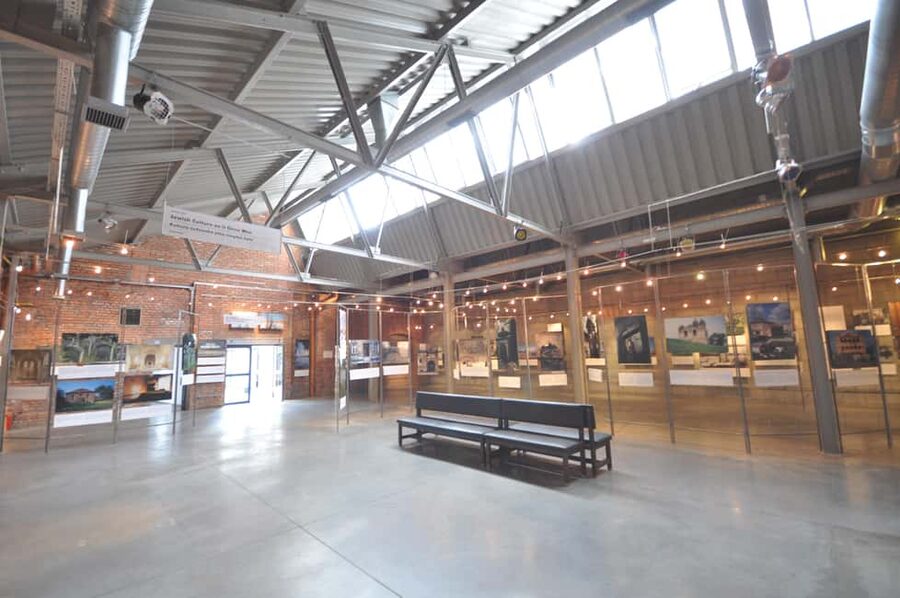
The permanent display contains more than 140 photographs by Chris Schwarz. They present the remaining signs of Jewish life in former Galicia, including places and cultural traces linked to communities that once lived across the region.
The strength of this format is its directness. A photograph can show a building, a cemetery, a fragment of decoration, or another surviving sign of Jewish presence. It can also show absence. A place may remain, while the people and daily life that once gave it meaning are gone.
That contrast is central to the exhibition. The photographs record an 800-year history of Jewish culture in Poland, but they also document the violent destruction of that culture under the Nazis. You are encouraged to look at the pictures not only as historical records, but as evidence of what endured and what was lost.
One of the best ways to approach the exhibition is slowly. Read the text beside the photographs instead of treating the display as a quick picture gallery. A visitor who arrived at opening time at 10 a.m. spent about two hours in the museum, finding the quieter early hours helpful for reflection and reading.
The images may affect you in different ways. Some will interest you as records of architecture or local history. Others may feel much heavier because they show the traces of communities erased during the Holocaust. The museum’s tone is serious, but the visit also celebrates Jewish life rather than presenting it only through tragedy.
That balance is important. The Holocaust is part of the museum’s story, but Jewish culture in Galicia existed for centuries before World War II. The exhibition gives that longer story room, even while showing how thoroughly the Nazi campaign attacked it.
What the museum feels like inside
The Galicia Jewish Museum includes exhibition space, a cafe, a bookshop, and rooms used for temporary exhibitions, concerts, lectures, author meetings, and workshops. Your admission centers on the museum visit, but these other spaces give the institution a wider cultural role.
The cafe can be useful if you want a quiet pause after the permanent exhibition. The bookshop is also worth a look if you want to continue learning after leaving. It offers books in Polish, English, and German on Jewish life and culture, the Holocaust, Jewish thought, identity, and literature.
The museum’s atmosphere suits visitors who prefer thoughtful cultural stops to large, crowded attractions. One advantage of the self-guided setup is that you do not need to keep up with a guide or wait for a group. You can pause at an image, reread a caption, or take a short break without losing your place.
The tradeoff is that the museum may feel limited if you expect a large collection of artifacts. One visitor appreciated the photographs but specifically noted that there were more images than physical objects. That is not a flaw in the exhibition’s purpose, but it is something to understand before you buy a ticket.
If you want a museum built around objects, rooms, and extensive material collections, this may feel small. If you value visual documentation and quiet reflection, the approach works very well.
How long should you allow?
The ticket is listed as valid for one to two days, with starting times depending on availability. Since this is a museum admission rather than a guided excursion, you should check the current option carefully when booking.
For the museum itself, I would plan on around 90 minutes to two hours. You can go faster, but that would mean giving the photographs and written material less attention. You can also stay longer if you want time in the bookshop, cafe, or temporary exhibition areas.
The last entrance is 90 minutes before closing. That rule matters because arriving late in the day could leave you with too little time for the permanent exhibition. Check the opening hours close to your visit, since they may change from the times shown when you first book.
An early visit has a practical advantage. The museum can be easier to experience when it is fairly empty, especially if you want to read the captions and reflect without people moving closely around you. The 10 a.m. opening time mentioned by one visitor may be useful as a planning guide, but you should confirm the current hours before setting out.
A completely different kind of day out in Kraków:
- From Krakow: Auschwitz-Birkenau Guided Tour & Hotel Pickup
★ 4.5 · 33,358 reviews - From Krakow: Auschwitz-Birkenau Guided Tour & Hotel Pickup
★ 4.5 · 29,340 reviews - Krakow: Auschwitz Guided Tour with Optional Hotel Pickup
★ 4.5 · 15,280 reviews - Krakow–Zakopane: Cable Car, Chocholow Baths, Cheese & Vodka
★ 5.0 · 10,720 reviews
A good addition to Krakow’s Jewish quarter
The museum works well as part of a day focused on Krakow’s Jewish heritage. It gives you a photographic record and wider cultural context, while nearby attractions can offer different forms of evidence and interpretation.
If you are using the Krakow City Card, the Galicia Jewish Museum is one of the included attractions. The card can provide access to 36 museums and landmarks for one to three days, depending on the option you choose. Other listed sites include the Old Synagogue, Schindler’s Factory, the Eagle Pharmacy, the Podgórze Museum, and the Pomorska Street museum.
That makes the Galicia Jewish Museum especially useful for visitors planning several paid attractions. The separate admission is only about $4.33 per person, so it is already inexpensive on its own. With the City Card, entry is free of charge for card holders, giving you another reason to include it if the card fits your wider plans.
Do not treat the museum as a replacement for every other Jewish history site in Krakow. Its focus is different. The photographs connect Jewish life to locations across southern Poland and former Galicia, while other museums may focus more tightly on Krakow, wartime occupation, personal stories, or material objects.
Together, these places can give you a fuller picture. On its own, the Galicia Jewish Museum offers a compact but serious visit.
Ticket details that can affect your day
Transportation is not included, so you need to make your own way to the museum. The meeting point can vary depending on the booking option, and the activity ends back at that meeting point.
After booking, you receive a separate ticket from the local operator by email. Print it before you go. Only a printed version is accepted, although you can print the ticket at Plac Szczepański 8 if you cannot print it at home.
This is the most important practical warning. A digital confirmation alone may not be enough for entry. Do not wait until you are standing at the museum door to discover that you need a paper ticket.
Smoking is not allowed. Opening hours can change, and the final admission time is 90 minutes before closing. The activity also allows free cancellation up to 24 hours before the scheduled visit, which gives you some flexibility if your Krakow plans shift.
The advertised price of $4.33 is low for a central cultural attraction. I consider it good value even if you spend only 90 minutes inside. It becomes especially strong value if you stay for two hours, use the cafe or bookshop, and connect the visit with other nearby sites.
Who will appreciate this museum most?
I would recommend the Galicia Jewish Museum to you if you enjoy photography, cultural history, memorial sites, or self-guided visits. It is also a good choice if you want a museum that treats Jewish life as more than a chapter in Holocaust history.
The exhibition can suit solo visitors and couples who prefer to set their own pace. You can read extensively or simply take in the images, then return to sections that hold your attention.
It is also suitable for people visiting Krakow on a limited budget. The admission is modest, and City Card holders receive free entry. The museum adds substance to a day without requiring a major time commitment.
Families with older children or teenagers may find useful material here, especially if they have already studied World War II or Jewish history. Younger children may find the serious subject matter and text-heavy format less engaging, though the museum’s small size makes it easier to manage than a huge institution.
You should think twice if you want a hands-on museum, many artifacts, or a guided narrative that explains every display aloud. The core experience is visual and reflective. You need to be comfortable reading and forming your own connections.
Is the $4.33 admission worth it?
Yes, for most visitors interested in Krakow’s history and Jewish culture. The price is low, and the museum offers a focused experience built around original photographic documentation rather than a generic overview.
The value comes from the quality and purpose of the collection. You are not paying for a long list of attractions under one roof. You are paying for time with a carefully developed exhibition that records Jewish life in former Galicia and the damage caused by Nazi persecution.
The museum is not likely to fill an entire afternoon unless you attend a temporary exhibition, lecture, concert, workshop, or other event. That is fine. A 90-minute to two-hour museum stop can fit neatly between other Krakow plans.
I would pair it with another nearby attraction if you want a fuller day. The Old Synagogue, Schindler’s Factory, the Eagle Pharmacy, and other Krakow City Card sites can add different viewpoints. Just remember that each place has its own hours and entry rules.
Should you book the Galicia Jewish Museum?
Book it if you want a quiet, meaningful museum visit centered on photographs, Jewish culture, and the memory of communities affected by the Holocaust. The permanent Traces of Memory exhibition gives you a clear reason to visit, and the low price makes the decision easy for most history-minded visitors.
I would not book it expecting a large artifact collection or a fast sightseeing stop. Give the photographs time, read the explanations, and arrive early if you want a calmer setting. Print your separate ticket in advance, confirm opening hours, and allow about two hours.
For a small admission fee, this museum offers a serious look at Jewish Poland that complements Krakow’s larger historic attractions. It is a worthwhile stop, especially for visitors who want to understand not only what was destroyed, but also what Jewish life in Galicia had been for centuries.
FAQ
Where is the Galicia Jewish Museum located?
The Galicia Jewish Museum is in Lesser Poland, Poland, in Krakow.
What is the main exhibition called?
The permanent exhibition is called Traces of Memory. It presents more than 140 photographs by Chris Schwarz documenting Jewish sites and cultural traces in former Galicia.
How much does admission cost?
The listed price is $4.33 per person. Krakow City Card holders receive free entry.
How long is the visit?
The ticket is valid for one to two days, with starting times depending on availability. You should allow about 90 minutes to two hours for a careful visit to the museum.
Do I need a printed ticket?
Yes. A separate ticket is sent by email after booking, and only a printed version is accepted. If you cannot print it, you can do so at Plac Szczepański 8.
Can I cancel the booking?
You can cancel up to 24 hours in advance for a full refund.
Just added around Kraków
- Rynek Underground Museum & Wawel Castle, Cathedral – Cracow★ 5.0 · 3 reviews
- Schindler’s Factory, Ghetto and Plaszow Camp Guided Tour★ 4.7 · 3 reviews
- Nowa Huta – a guided tour of a utopian socialist city★ 5.0 · 3 reviews
- Krakow: Kazimierz by Golf Cart and Schindler’s Factory Tour★ 4.8 · 3 reviews
- Krakow: Jewish Traces Private Electric Car Tour★ 4.1 · 3 reviews
- Private Krakow City Tour by Car and Walk with private tour guide★ 5.0 · 3 reviews
- Krakow: Indoor Go-Karting (24-Minute Races)★ 4.8 · 3 reviews
- Discover the Jewish Quarter with a Bike Tour★ 5.0 · 3 reviews
Museums, compared.
Auschwitz-Birkenau Museum and Memorial Guided Tour from Krakow
Read our review →
POLIN Museum of the History of Polish Jews Ticket
Read our review →


Krakow Schindler’s Factory Museum Guided Tour in English
Read our review →
Auschwitz Birkenau Museum Guided Tour with Pickup
Read our review →
Browse the lists this tour appears in