
REVIEW · HISTORICAL TOURS
Warsaw: Jewish History Guided Walking Tour in English
History feels different on foot. This 150-minute Warsaw walk brings Jewish life, wartime destruction, and survival into focus through streets where the past is still visible. I like the attention given to both sides of the story: the thriving Jewish culture that existed before the war, and the courage that followed persecution. I also like the price, $26, which buys a live English-speaking guide rather than a rushed audio commentary. The main drawback is simple: you stay outside for the entire tour, so cold or wet weather can make the final hour hard going.
You meet beside All Saints Church at Grzybowski Square, then follow a route through central Warsaw connected with the former Jewish district and wartime events. The tour joins a general walking group, not a guaranteed private party, so the size and pace can vary. If you prefer a smaller private experience, the operator can help arrange one after booking.
In This Review
- Key points to know before you go
- Why this walk matters before you see the ruins
- Starting at Grzybowski Square and All Saints Church
- Nożyk Synagogue, Warsaw’s surviving pre-war link
- Chłodna Street and the vanished bridge
- Waliców Street and the Warsaw Uprising
- From pre-war culture to Holocaust destruction
- The value of a live guide for a rebuilt city
- Pace, weather, and the 150-minute commitment
- Is $26 a fair price?
- Who should book this Warsaw walk?
- Should you book it?
- FAQ
- How long is the Jewish History Guided Walking Tour?
- What language is the tour in?
- How much does the tour cost?
- Where does the tour meet?
- Is hotel pickup included?
- Is the Nożyk Synagogue included?
- Will the tour visit the former Warsaw ghetto?
- Does the tour discuss the Warsaw Uprising?
- Is this a private tour?
- Can I cancel the tour?
- Can I reserve now and pay later?
Key points to know before you go
- Nożyk Synagogue is the only surviving pre-war synagogue in Warsaw, making it one of the clearest physical links to the city’s Jewish past.
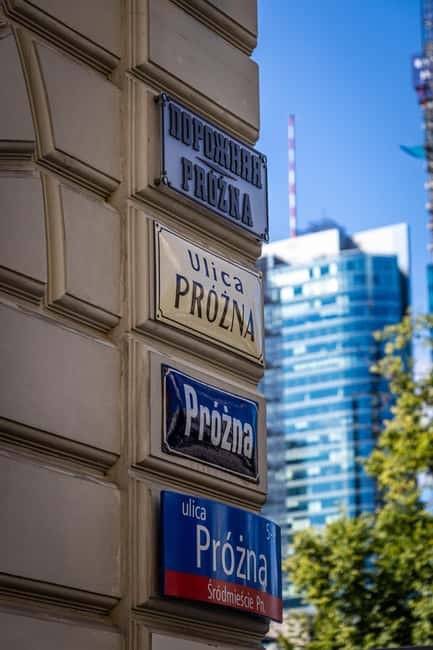
- Chłodna Street marks the former ghetto bridge site, where a raised passage once connected two separated sections of the ghetto.
- Waliców Street carries two chapters of history, first as part of the ghetto boundary and later as a place connected with the Warsaw Uprising.
- The tour explains Jewish life before the Holocaust, including artists, writers, actors, journalists, and political participation in Warsaw.
- The guides handle a painful subject with care, often using humor, photographs, maps, and time for questions.
- Dress for 150 minutes outdoors, especially in winter. Cold conditions have not stopped the tour, but they have affected comfort.
Why this walk matters before you see the ruins
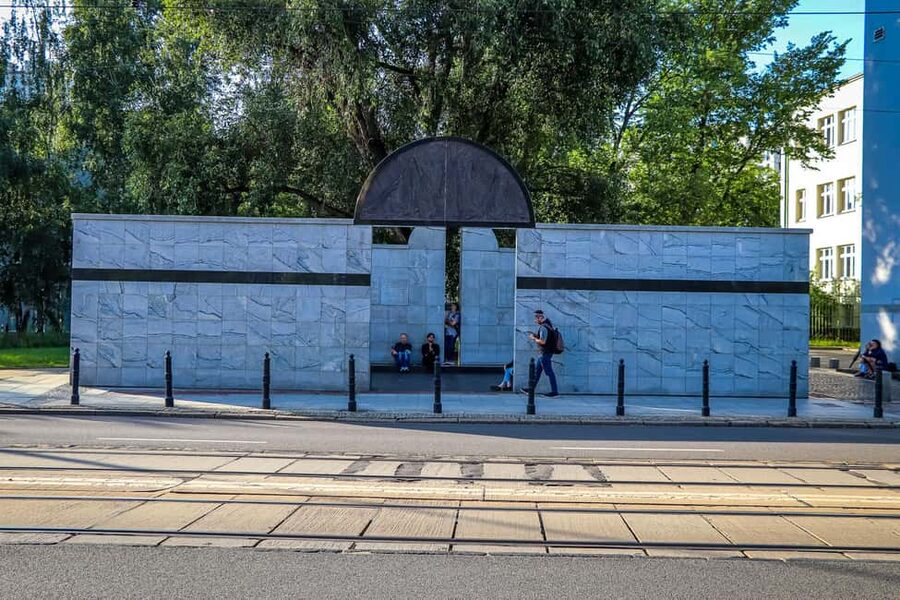
It is easy to visit Warsaw and learn only the wartime headline: the ghetto, the uprising, and the destruction. This tour begins with a wider picture. Before the Second World War, Warsaw was the second-largest Jewish city in the world, and Jewish residents had shaped the city for centuries.
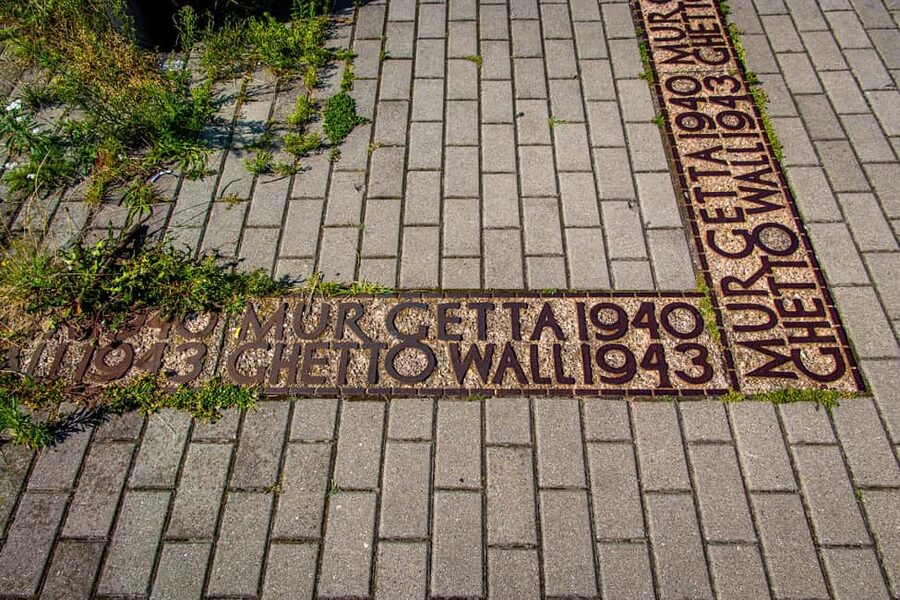
That context matters. If you see only fragments, a memorial, a synagogue, or a line in the pavement, the scale of what vanished can be hard to grasp. The guide helps you picture a living community with its own schools, newspapers, religious institutions, performers, writers, and political voices.
The walk also places Jewish history inside the wider story of Poland. In the 19th century, Jews joined other Warsaw residents in opposition to occupying powers and took part in Polish uprisings. That detail pushes back against the idea of Jewish history as a separate track. Jewish residents were part of Warsaw’s civic life, its arguments, and its struggles.
I appreciate that the tour does not treat Jewish Warsaw as a story that ended in 1945. It also points toward the young and active Jewish community in Poland today. That gives the walk a little balance at the end, without softening the terrible facts that come before it.
More History Tours in Warsaw
- Warsaw: POLIN Museum of the History of Polish Jews Ticket
★ 4.7 · 1,142 reviews - Warsaw: Chopin Concert at Historical Venue in Old Town
★ 4.7 · 445 reviews - Small-Group Historical Guided Tour of Warsaw with pick up/drop off. Public Tour.
★ 4.5 · 343 reviews
Starting at Grzybowski Square and All Saints Church
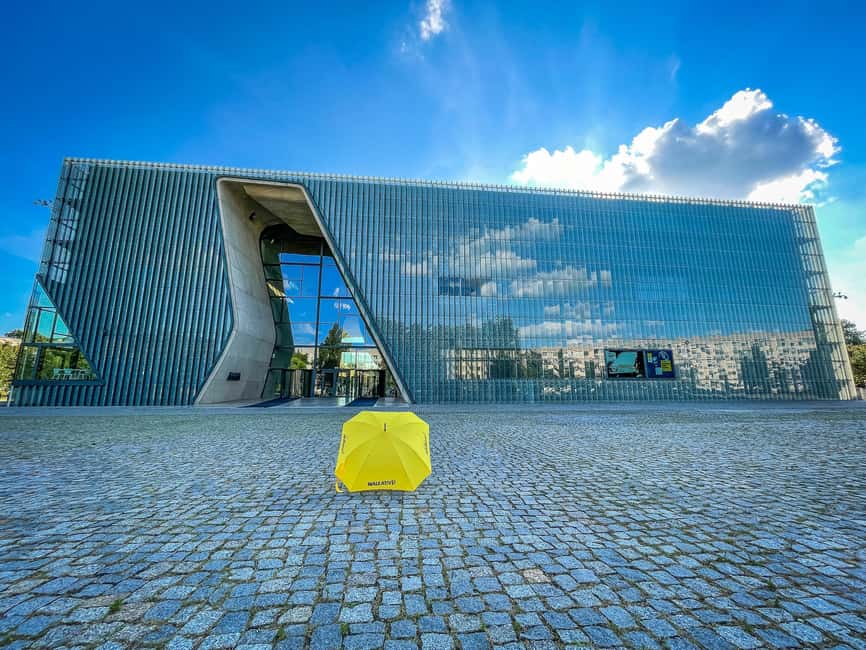
The meeting point is next to All Saints Church at Grzybowski Square. Look for the yellow umbrella. This is a useful landmark in a city where street corners can look similar, and the meeting point is easy to identify from the information provided.
Grzybowski Square is a fitting place to begin because it connects present-day Warsaw with the former Jewish district. The surrounding city has been rebuilt and changed, so the guide’s explanation is important from the first minutes. You are not simply looking at old buildings. You are learning how streets that seem ordinary today fitted into a much larger pre-war and wartime city.
The guide sets out the basic timeline before the walk moves on. That helps if you know little about the Warsaw ghetto, but it also gives structure if you have already read about the subject. Guides have included Andrzej, Jacek, Luke, Anna, Christopher, Aga, and Agneska, among others. The strongest descriptions focus on clear explanations, fluent English, compassion, and a willingness to answer questions.
One useful feature is the range of teaching styles. Some guides have brought old photographs and maps to show what has disappeared. Others have used stories, comparisons with present-day life, or recommendations for films and television programs connected with the period. You should expect the exact presentation to depend on who leads your group.
Nożyk Synagogue, Warsaw’s surviving pre-war link
The Nożyk Synagogue is the tour’s most important surviving religious building. It is described as the only pre-war Warsaw synagogue that survived, so seeing it gives the past a physical address rather than leaving it only in photographs.
The synagogue also helps explain the scale and variety of Jewish life in Warsaw. The point is not merely that Jewish people worshipped there. The guide connects religious life with the wider community, including culture, journalism, art, and everyday city life.
You should note the wording carefully: the tour promises that you will see the Nożyk Synagogue. It does not promise admission inside. One person specifically wished that the group had been able to enter, while another had already visited the interior separately. If going inside matters to you, treat that as a separate plan rather than an automatic part of this walking tour.
That limitation is not a reason to skip the stop. In a city where so much of the pre-war Jewish quarter was destroyed, the building itself has unusual weight. The guide’s explanation turns an exterior visit into a lesson about continuity, loss, and the Jewish community that remains.
Chłodna Street and the vanished bridge
At Chłodna Street, you learn about the site of the bridge that joined two parts of the ghetto. The bridge is gone, but the location shows how the ghetto was divided and how ordinary urban space became part of a system of control.
This is one of the tour’s strongest stops because it connects geography with human experience. A map can show a boundary, but standing on the street helps you understand the practical problem of moving between separated areas. The guide’s task is to explain what stood here, what the division meant, and how the street functioned during the occupation.
The absence of the bridge can be frustrating. There is no preserved structure to inspect, and much of the tour takes place in a rebuilt city. That is why photographs and maps are so useful. A guide who simply points at an empty street would leave you with little. The better approach, reflected in several accounts of the guiding, is to show the earlier view and then place it against what you see now.
Chłodna Street also gives the tour an emotional shift. The opening discussion of Jewish culture and civic life becomes more immediate here. The route shows how a familiar city was reshaped into a place of confinement, separation, and fear.
More Walking Tours in Warsaw
- Warsaw: Old Town Highlights Walking Tour in English
★ 4.7 · 1,516 reviews - Warsaw: Old Town Guided Walking Tour
★ 4.9 · 599 reviews - Half-Day Polish Food Walking Tour with Guide and Dinner
★ 4.5 · 381 reviews - Warsaw: Warsaw Ghetto Private Walking Tour with Hotel Pickup
★ 4.9 · 369 reviews
Waliców Street and the Warsaw Uprising
Waliców Street adds another layer. It once formed part of the ghetto border, and the tour also explains its connection with the Warsaw Uprising. These are not identical events, and the guide’s ability to keep the timelines clear matters.
The stop helps you understand that Warsaw’s wartime story did not consist of one single uprising or one single act of resistance. Jewish resistance inside the ghetto and the later Warsaw Uprising belong to different chapters, with different circumstances and goals. A well-paced explanation can show how they relate without blending them together.
Several guides have been praised for being factual, direct, and open about difficult subjects. Some ask the group before sharing especially harsh details. That is a considerate touch, particularly for people with children or anyone who may need to prepare themselves emotionally.
The street itself may not look like a dramatic memorial site. That is part of the lesson. Warsaw was so heavily destroyed and rebuilt that historical places often require explanation. You are not paying to see a perfectly preserved quarter. You are paying for the guide to help you read the traces, gaps, and changed streets.
From pre-war culture to Holocaust destruction
The best part of this tour is the contrast between what existed and what was destroyed. The guide discusses the interwar period, when Warsaw was home to hundreds of Jewish artists, actors, writers, and journalists. Its Jewish cultural life was unusually active and varied.
That section keeps the tour from becoming a list of suffering. You learn about people who made films, wrote, performed, published, debated, and took part in the city’s public life. The result is a clearer sense of the human cost of the Holocaust. The victims were not an abstract population. They belonged to families, professions, neighborhoods, religious communities, and artistic circles.
The subject is heavy, but the guides generally keep people engaged through storytelling rather than a dry chain of dates. One guide combined family experience with humor while discussing terrible events. Another was praised for blunt honesty and for asking permission before going into graphic material. That kind of judgment can make a difficult walk more bearable without making it lighter than it should be.
You should still come prepared. This is not a cheerful sightseeing loop with a few historical notes. The purpose is to confront persecution, death, resistance, and loss, while also recognizing courage and survival.
The value of a live guide for a rebuilt city
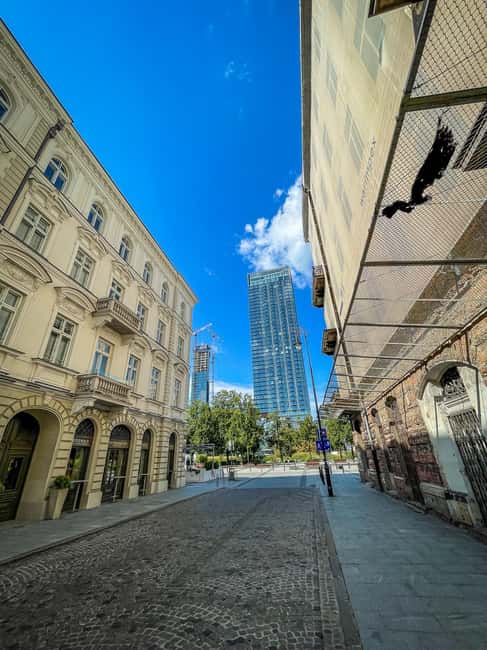
Warsaw creates a special challenge for any history walk. Many buildings connected with Jewish life and the ghetto no longer exist. You often need a photograph, map, quotation, or careful description to understand what occupied the space before.
That makes the guide more valuable than a standard city walk. A strong guide does not just identify a site. The guide explains what changed, why it changed, and how the people connected with it lived. Several guides have used visual material, while others have stayed after the official finish to answer questions.
The English is generally reported as fluent and easy to follow. Ana was praised for speaking clearly with almost no accent, which may matter if English is not your first language. Jacek, Christopher, Luke, and Andrzej were also singled out for clear delivery, strong command of the subject, and an inviting approach to questions.
There is one practical group issue. With a large party, it can be hard to hear if the guide walks ahead before finishing a sentence. Stay close, especially at busy street crossings or when the group spreads out. The tour joins the general walking tour, so a private, quiet pace is not the default.
Pace, weather, and the 150-minute commitment
Two and a half hours is a good length for the subject. Several people found that the time passed quickly, and some wished the tour had lasted longer. The pace is usually described as comfortable, with enough room for questions and reflection.
You are outside for the whole experience. Winter conditions have included freezing mornings, and one person specifically wished for a café break. There is no advertised indoor stop, so wear warm layers, gloves, and suitable shoes in cold weather. In warmer months, the same duration should be easier physically, but you are still committing to a long city walk.
The route is not described as a strenuous hike. Still, this is a walking tour, not a seated talk. You should be comfortable remaining on your feet for 150 minutes and moving between several streets.
The group format also affects the pace. A smaller group may make questions easier, while a larger group can create distance from the guide. If you want a private tour, the supplier can help organize one after booking, but that may change the price and arrangement.
Is $26 a fair price?
At $26 per person, the tour offers good value if Jewish Warsaw is a priority for you. The fee covers the walking tour, the local guide, and the guide’s payment. You are not paying for admission to a museum or synagogue interior, so the value rests mainly on the explanation and route.
For this subject, that is a sensible trade. Many important sites are open streets or empty spaces, and a guide is what turns those places into something understandable. The price is especially reasonable if you are new to Warsaw’s Jewish history and want a structured introduction before visiting other museums or memorials.
The value is lower if you want a private tour, a museum visit, or a long indoor break. The standard outing joins the general group, and admission is not included. You may want to pair it with separate visits to indoor sites, but those are not part of this booking.
Flexible booking also helps. You can reserve now and pay later, and cancellation is free up to 24 hours before the start for a full refund. Check the available starting times when you book, since the schedule is not fixed in the information provided.
Who should book this Warsaw walk?
I would recommend it to first-time visitors who want a clear introduction to Jewish Warsaw, as well as people who already know some Polish or Second World War history but want to connect it to actual streets.
It suits you especially well if you:
- Want an English-language guide who welcomes questions
- Prefer walking through real locations instead of listening to a lecture indoors
- Need help understanding sites that no longer look as they did before the war
- Want Jewish history placed within the wider story of Warsaw and Poland
- Can manage 150 minutes outdoors
- Appreciate a serious subject handled with warmth, honesty, and occasional humor
It may be less suitable if you dislike emotionally difficult material, need frequent indoor rests, or want to enter the Nożyk Synagogue as part of the tour. It is also not the best choice if your main goal is a private experience with a custom route.
Should you book it?
Yes, if you want a thoughtful first look at Warsaw’s Jewish past and can handle a long outdoor walk. The strongest feature is the balance between pre-war life, Holocaust destruction, resistance, and the Jewish community in Warsaw today.
Book with warm clothing in winter, stay close enough to hear the guide, and do not assume synagogue entry is included. At $26, this is a sound choice for an informative introduction, especially when led by one of the strong English-speaking guides such as Jacek, Christopher, Luke, Andrzej, or Aga. If you want more time, quieter discussion, or a guaranteed small group, ask about a private option instead.
FAQ
How long is the Jewish History Guided Walking Tour?
The tour lasts 150 minutes, or two and a half hours.
What language is the tour in?
The live guided tour is conducted in English.
How much does the tour cost?
The listed price is $26 per person.
Where does the tour meet?
Meet next to All Saints Church at Grzybowski Square. Look for a yellow umbrella.
Is hotel pickup included?
No. Hotel pickup and drop-off are not included.
Is the Nożyk Synagogue included?
The route includes seeing the Nożyk Synagogue, described as the only surviving pre-war synagogue in Warsaw. Entry inside is not listed as included.
Will the tour visit the former Warsaw ghetto?
Yes. The route includes Chłodna Street, the site of the former bridge connecting parts of the ghetto, and Waliców Street, once part of the ghetto boundary.
Does the tour discuss the Warsaw Uprising?
Yes. The guide explains the connection between Waliców Street and the Warsaw Uprising.
Is this a private tour?
No. The standard tour joins a general walking group. You can contact the supplier after booking about arranging a smaller private tour.
Can I cancel the tour?
Yes. You can cancel up to 24 hours in advance for a full refund.
Can I reserve now and pay later?
Yes. The booking option allows you to reserve your place and pay later.
Just added around Warsaw
- Jewish heritage in Warsaw★ 4.5 · 3 reviews
- Warsaw Outdoor Paintball with Transfers (all year round)★ 5.0 · 3 reviews
- World War II Warsaw Old Town, Military Cemetery Walking Tour★ 4.7 · 3 reviews
- Warsaw: Wolf’s Lair & Swieta Lipka Small-Group Tour + Lunch★ 5.0 · 3 reviews
- Sunset Boat Tour with Unlimited Drinks in Warsaw★ 3.5 · 3 reviews
- Majdanek – German camp from II World War – Private Tour – 1 DAY TRIP FROM WARSAW★ 5.0 · 3 reviews
- From Warsaw: Guided Tour to Wieliczka Salt Mine and Krakow★ 4.5 · 3 reviews
- Warsaw Sightseeing with NEW Mercedes Sclass !!!★ 5.0 · 3 reviews
Historical Tours, compared.


POLIN Museum of the History of Polish Jews Ticket
Read our review →

Gdańsk City Sights & History Guided Walking Tour in English
Read our review →

Small-Group Historical Guided Tour of Warsaw with pick up/drop off. Public Tour.
Read our review →Browse the lists this tour appears in