
REVIEW · HISTORICAL TOURS
Gdansk: Jewish Heritage Guided Private Walking Tour
Gdansk’s Jewish story rewards a slower walk. This private four-hour tour connects the city’s Old Town, former Jewish sites, cemetery, ghetto area, and surviving synagogue, giving you a clear path through centuries of Jewish life in Pomerania. I especially like the private format, since you can ask questions and set the pace, and I like that hotel pickup, drop-off, and transportation are included. The main consideration is that entrance fees are not included, so the $60 per person price may not be the final cost if any paid site visits are added.
The tour also benefits from guides who adapt well to different groups. Beata was praised for being informative and engaging, while Eva was described as patient, clear, and responsive to personal interests. Luis also received a brief but positive mention. The subject is serious, and much of the visit concerns loss, persecution, and the Holocaust, so this is best for you if you want history rather than a light sightseeing stroll.
In This Review
- Key points before you book
- Why Gdansk’s Jewish story needs a guided route
- Old Town sites where the Jewish past is easy to miss
- The Jewish cemetery and the value of surviving walls
- Granary Island and the former ghetto area
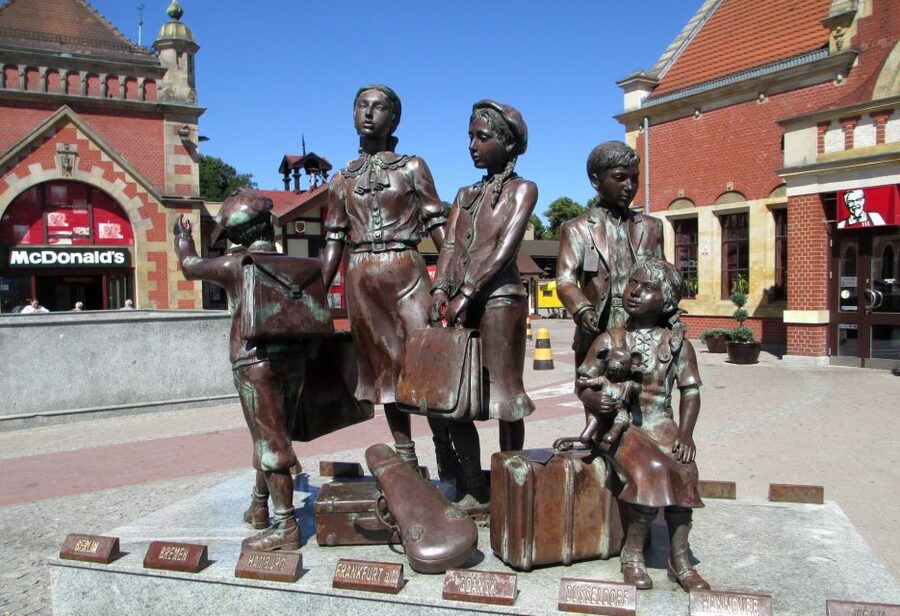
- The Kindertransports monument and a story of rescue
- The New Synagogue in Wrzeszcz, built in 1926
- What $60 per person gets you
- Guides, languages, and group comfort
- Who should book this Gdansk tour?
- Should you book it?
- FAQ
- How long is the Gdansk Jewish heritage tour?
- Is the tour private?
- Does hotel pickup and drop-off come with the tour?
- Which languages are available?
- Are entrance fees included?
- Is the tour wheelchair accessible?
Key points before you book
- A private four-hour route through Jewish Gdansk: Your guide meets you at your hotel, and the tour is reserved for your group.
- The former Great Synagogue site: Learn about the city’s largest synagogue, its role in uniting Gdansk’s Jewish community, and its destruction by Germans in 1939.
- A preserved Jewish cemetery: See original walls, the entrance gate, and surviving graves.
- Granary Island and the former ghetto area: Connect Gdansk’s wartime geography with the history of the Holocaust.
- The Kindertransports monument: Learn what these rescue efforts meant for Jewish children during the Nazi period.
- The New Synagogue in Wrzeszcz: End at Gdansk’s sole remaining synagogue, built in 1926.
Why Gdansk’s Jewish story needs a guided route
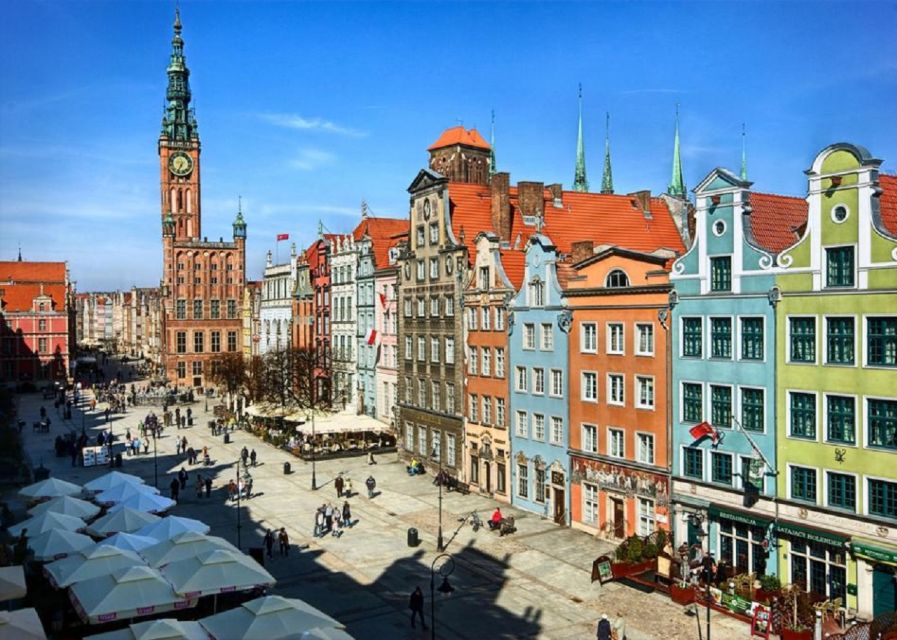
Gdansk is often introduced through its handsome waterfront, reconstructed Old Town, and long history as a Baltic port. This tour adds a less visible layer. Jewish life in the city may reach back to the 10th century, and Jewish merchants later became part of Gdansk’s trade, industry, and crafts as the port grew in wealth and importance.
That background matters because the tour is not only about buildings that survived. It also deals with places that disappeared. A guide helps you understand how a thriving community could leave so few visible landmarks behind, and why a street corner or open site can carry as much meaning as an intact structure.
The historical focus reaches its height in the 15th and 16th centuries, when Gdansk was one of Poland’s most prosperous and densely populated cities. Jewish merchants were drawn to that economic activity, contributing to commercial and craft life. You will hear this story while walking through a city filled with art and architecture from many periods, so the Jewish past is placed within the wider story of Gdansk.
I find that setting useful. Instead of treating Jewish history as a separate subject, the tour shows how it was part of the city’s daily economic and cultural life.
More History Tours in Gdańsk
- Gdansk: City Cruise on Historical Polish Boat
★ 4.8 · 2,913 reviews - Gdańsk: Sunset Cruise on a Historic Polish Boat
★ 4.9 · 977 reviews - Gdańsk City Sights & History Guided Walking Tour in English
★ 4.8 · 876 reviews
Old Town sites where the Jewish past is easy to miss
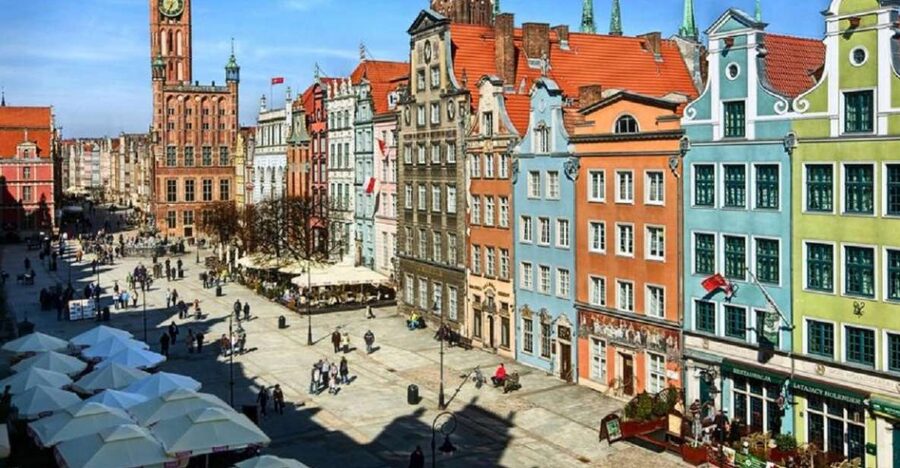
Your guide meets you in your hotel lobby before the private sightseeing begins. The exact walking order can vary, but the central portion takes place in and around the Old Town, where you see places tied to Jewish life while also taking in Gdansk’s impressive architecture.
The Old Town portion gives you visual contrast. Magnificent buildings and carefully restored streets can make the city feel like a grand architectural display, but your guide keeps bringing the conversation back to the people who lived, worked, worshipped, and traded here. That human focus is the real reason to take this route with a guide rather than simply follow a list of locations.
One important stop is the place where the Great Synagogue once stood. At the end of the 19th century, Gdansk’s Jewish community built the city’s largest synagogue. It represented the unification of local Jews and served as a major religious and community center.
Today, the building is gone. Germans destroyed it in 1939. Your guide explains what the synagogue meant before its destruction, so you are not left looking at an empty site without context.
You will also hear the story of Jewish veterans who saved the Great Synagogue on Kristallnacht. That detail adds a striking layer to the visit. It reminds you that Jewish veterans were not only victims of persecution, but also people who had served and fought, and who took action to protect their community.
The tour also covers Gdansk’s former Jewish Theatre. The information provided for the experience does not promise an interior visit, so expect the guide to explain its place in the city’s Jewish cultural life rather than assume a performance or museum stop. Still, it helps show that Jewish identity in Gdansk included theatre, public culture, work, worship, and family life.
The Jewish cemetery and the value of surviving walls
The Jewish cemetery is one of the more tangible stops on the route. You will see its original walls, entrance gate, and graves. Compared with a former synagogue site, a cemetery gives you physical markers that have survived and can be read as direct evidence of a community that once lived in the city.
I would pay close attention here. The gate and walls are not just architectural details. They help you understand the cemetery as a place that had a clear role in Jewish civic life, with boundaries, access, and a lasting connection to the surrounding city.
The tour description does not promise a long cemetery visit or identify individual graves, so you should not book it expecting a full genealogical or specialist cemetery study. The value is in seeing the preserved site and hearing your guide explain how it fits into the larger story.
Because this is a private tour, you can ask for more time if the cemetery matters especially to you. Eva was praised for responding to personal preferences, and that sort of flexibility can be useful at a quiet, reflective stop where a fixed group schedule might feel rushed.
Granary Island and the former ghetto area
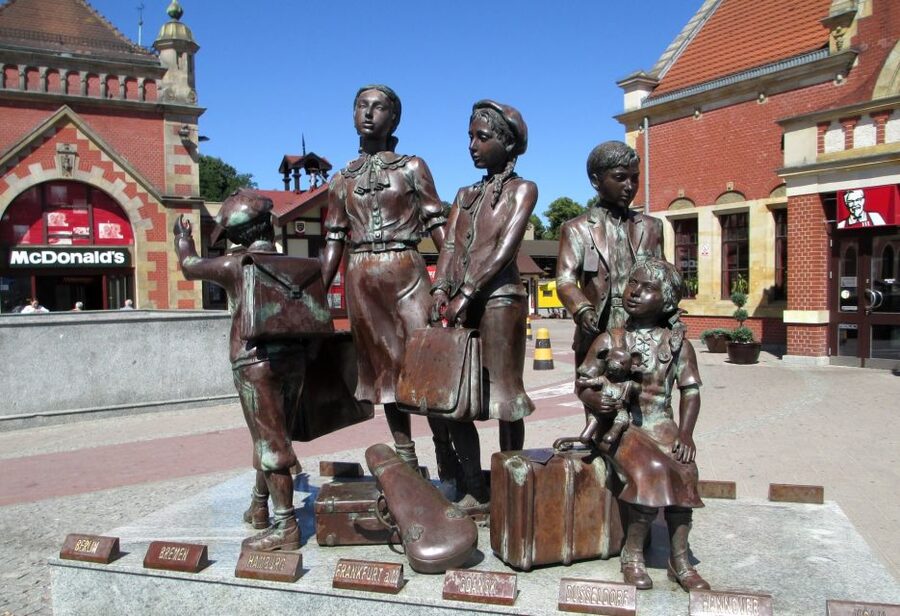
The route continues to Granary Island, where you learn about the area of the former Jewish ghetto and the Holocaust. This is one of the most difficult parts of the tour, but also one of the most important.
A guide gives the location meaning. Without explanation, an urban district can look like any other part of modern Gdansk. With historical context, you begin to see how wartime policies changed everyday life, separated families, and destroyed the structures that had supported Jewish life for generations.
The wording of the experience identifies the area as the former ghetto location, but it does not promise reconstructed buildings, preserved barracks, or a museum exhibition there. Keep your expectations focused on an outdoor history stop with spoken interpretation. The subject is serious, and I would allow yourself time afterward rather than plan an exhausting string of attractions immediately after the tour.
This section also shows why a private tour can be preferable for difficult history. You can ask direct questions without worrying about a large group, and your guide can adjust the pace if you need a quieter moment.
More Walking Tours in Gdańsk
- Main Town Gdańsk Walking Tour
★ 5.0 · 644 reviews - Discover Gdansk Walking Tour
★ 5.0 · 495 reviews - Gdańsk: Old Town Private Walking Tour with Legends and Facts
★ 4.9 · 245 reviews - Gdansk Old Town 2-Hour Walking Tour
★ 4.5 · 94 reviews
The Kindertransports monument and a story of rescue
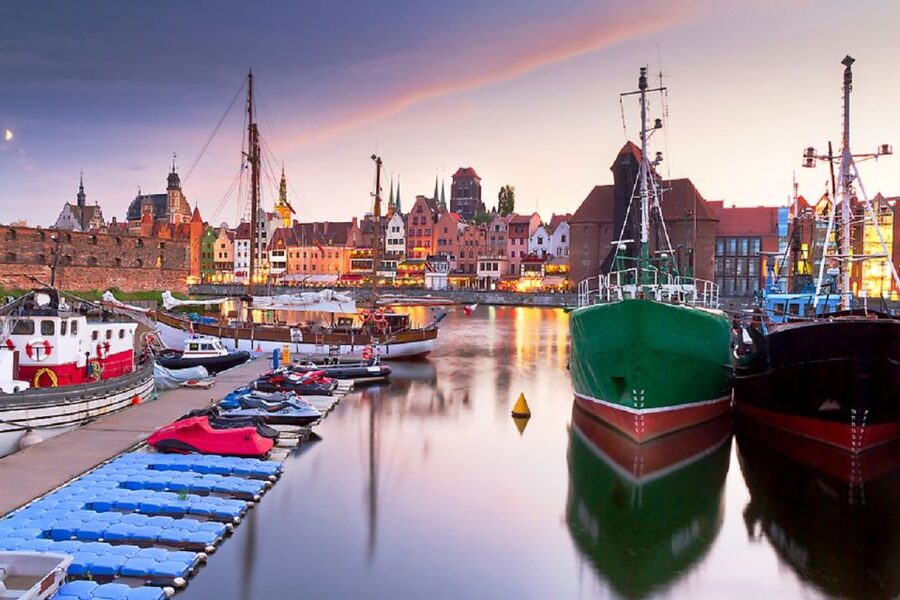
The Kindertransports monument gives the tour another angle on the Nazi period. You will learn what Kindertransports were and why they mattered in the history of Jewish children during the Holocaust.
The subject brings the focus to children and rescue. It is a painful reminder that safety often meant separation from parents and home. The monument helps connect broad historical events to individual family decisions, especially the impossible choices people faced as danger grew.
This stop works well within the wider route because it follows the story from community life to destruction, then to attempts to save lives. It keeps the tour from becoming only a sequence of losses. You also hear about the people who acted, protected others, and tried to create a future under terrible conditions.
The experience does not state that the monument includes an indoor display or a long visit. You should expect a stop where your guide explains the memorial and its historical meaning.
The New Synagogue in Wrzeszcz, built in 1926
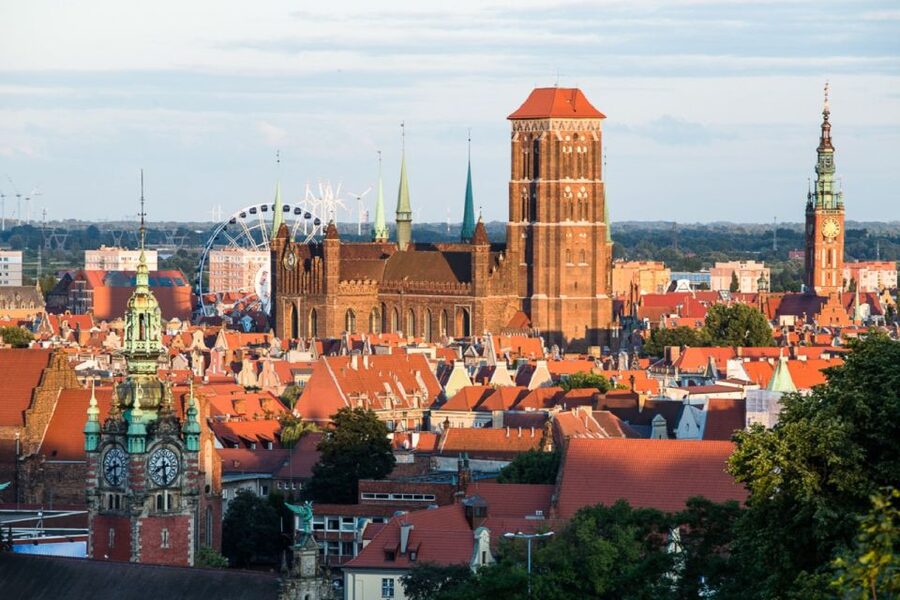
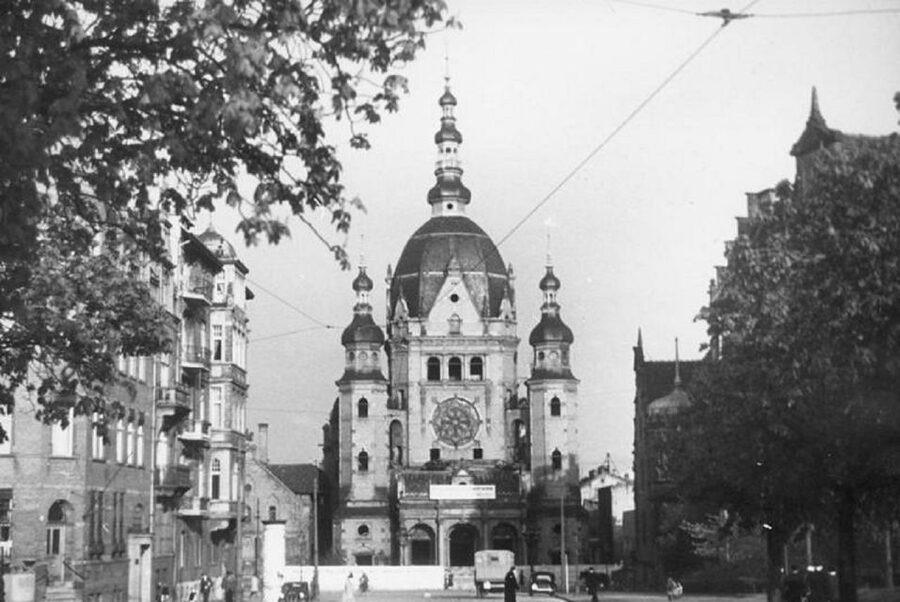
The final major sight is the New Synagogue in Wrzeszcz, built in 1926. It is described as the sole remaining synagogue in Gdansk, making it an especially important end point.
After seeing a cemetery, a destroyed synagogue site, a theatre connection, a ghetto area, and a Holocaust memorial, the surviving synagogue gives the tour a physical place of continuity. It also shows that Jewish life in Gdansk cannot be described only in the past tense.
The tour information does not say that entrance is included or guaranteed. Since entrance fees are specifically excluded from the price, ask your guide or the operator what access is planned on your date. You may see the exterior and learn its story, but you should not assume that the four-hour outing includes an interior visit.
Wrzeszcz also makes the final transfer relevant. Transportation is included for the tour, along with hotel pickup and drop-off, so you are not left to work out the return journey on your own. The exact vehicle is not specified, but the included transport is useful because the route covers more than a compact Old Town circuit.
What $60 per person gets you
At $60 per person, this is not a cheap self-guided walk, but it offers more than a standard group orientation. You receive four hours with a private guide, hotel pickup and drop-off, transportation, and a route built around locations that can be difficult to interpret on your own.
The price makes the most sense for couples, families, and small groups who want to ask questions and shape the conversation. If you are traveling alone, the cost is higher in practical terms, since it is still priced per person. For a group sharing the private experience, the value improves because everyone gets direct access to the guide.
There are two limits to keep in mind. First, entrances are not included. Second, the core of the tour is walking and outdoor explanation, not a series of paid museum interiors. That is not a flaw, but it means you are paying mainly for interpretation, transport, and a carefully connected route.
I like that the guide also offers ideas for what you can discover on your own afterward. That makes the tour useful beyond its four-hour length. You get an introduction to the subject, then can decide which synagogue, memorial, museum, or Old Town site deserves more of your time.
Guides, languages, and group comfort
The tour is available with a live guide in English, Polish, French, Italian, Portuguese, Spanish, German, or Russian. You should select your preferred language when booking and confirm that it is available for your chosen time.
The private format is the strongest comfort feature. You will not be placed in a large group, and the guide will wait in your hotel lobby with your name. Be ready on time, since a delayed start could cut into a four-hour schedule that already covers several areas.
The named guide feedback is especially encouraging. Beata was described as informative and engaging, and Eva as clear, patient, and responsive to preferences. Luis also received a positive note. Those comments point to the qualities that matter most on this subject: careful explanation, patience with questions, and the ability to communicate difficult material without turning it into a lecture.
The tour is listed as wheelchair accessible. Since the route includes walking through urban areas and a cemetery, you may still want to confirm the exact route and transportation arrangements in advance if you have specific mobility needs.
Who should book this Gdansk tour?
I would choose this experience if you want a focused introduction to Jewish Gdansk and prefer a private guide to a general city tour. It suits you especially well if you care about the connection between trade, religion, architecture, cultural life, wartime persecution, and the few places that survived.
It is also a smart choice if you are in Gdansk for a short stay. Four hours is long enough to cover a serious subject without using an entire day, and hotel transport removes some of the planning work.
You may want a different experience if you are looking mainly for interiors, artifacts, or extended time in museums. The listed route centers on walking, outdoor sites, monuments, and guided explanation, and paid entrances are not included.
Should you book it?
Book this tour if you want Jewish history in Gdansk explained through real places, including the Great Synagogue site, the Jewish cemetery, Granary Island, the Kindertransports monument, and the New Synagogue in Wrzeszcz. The private setting, hotel transport, language choices, and strong praise for guides such as Beata and Eva make the $60 price reasonable for a small group.
Skip it if you want a light Old Town walk or a museum-heavy outing. This is a serious, focused experience, but for anyone ready to listen and ask questions, it offers a useful way to understand the Jewish life that helped shape Gdansk and the losses that changed the city forever.
FAQ
How long is the Gdansk Jewish heritage tour?
The tour lasts four hours.
Is the tour private?
Yes. It is offered for a private group rather than as a shared group experience.
Does hotel pickup and drop-off come with the tour?
Yes. Your guide waits in the hotel lobby with your name, and hotel pickup, drop-off, and transportation are included.
Which languages are available?
Live guiding is available in French, Italian, Portuguese, English, Polish, Spanish, German, and Russian.
Are entrance fees included?
No. Entrance fees are not included in the tour price.
Is the tour wheelchair accessible?
Yes. The experience is listed as wheelchair accessible.
Just added around Gdańsk
- Gdańsk: Boat Cruise from Gdańsk Old Town to Sopot Marina★ 4.4 · 3 reviews
- Stutthof Concentration Camp and Museum of WWII: Private Tour★ 4.7 · 3 reviews
- Gdansk: Bubble Football with Hotel Transfers★ 5.0 · 3 reviews
- Gdansk: Oliwa Zoo with Tickets and Roundtrip Transportation★ 5.0 · 3 reviews
- Segway Tour Gdańsk: Shipyard Tour – 1,5-Hour of Magic!★ 5.0 · 3 reviews
- Gdansk: Escape Room Adventure★ 4.0 · 3 reviews
- Gdańsk : Catamaran River Cruise (group)★ 4.3 · 3 reviews
- Artus Court and Gdansk Old Town Private Tour with Tickets★ 4.7 · 3 reviews
Historical Tours, compared.


POLIN Museum of the History of Polish Jews Ticket
Read our review →

Gdańsk City Sights & History Guided Walking Tour in English
Read our review →


Small-Group Historical Guided Tour of Warsaw with pick up/drop off. Public Tour.
Read our review →Browse the lists this tour appears in