
REVIEW · NOWA HUTA COMMUNISM TOURS
Gdansk Private Communism Tour with Solidarity Center Museum
History feels close here. Gdansk’s shipyards are where Polish workers challenged Communist rule, and this private walking tour connects the places, people, and documents behind that struggle. I like the private guide format, which gives you room to ask questions, and I like the included visit to the European Solidarity Centre, one of the city’s most important museums.
The tour also offers useful choices: a shorter visit or a longer half-day version, several departure times, nine language options, and pickup from hotels in Gdansk Old Town. The main caution is timing. One account describes a four-hour visit ending after about three hours, while another found the museum portion rushed. I would confirm the exact duration and museum time when booking.
- The 1970 workers’ monument gives the tour an immediate sense of place and purpose.
- Sala BHP is where the Gdansk Agreement of August 31, 1980, was signed.
- The four-hour option includes Sala BHP, the shipyard, a Polish vodka tasting, and the museum.
- The European Solidarity Centre displays the original Tables of 21 Postulates from the 1980 strikes.
- Private guiding works well here, especially if you want context rather than a quick walk past monuments.
- Weekend planning matters, because Gdansk Shipyard is closed on Saturdays and Sundays.
In This Review
- Why Gdansk’s shipyards matter
- Starting beneath the Monument to the Fallen Shipyard Workers
- Anna Walentynowicz and the people behind Solidarity
- Sala BHP and the Gdansk Agreement
- Walking through Stocznia Gdańska
- The European Solidarity Centre in one focused hour
- Choosing between two hours and four hours
- What the $139.10 price means
- Who will enjoy this experience most
- Practical planning before you book
- Should you book the Gdansk Communism Tour?
- FAQ
- Where does the tour begin?
- Is hotel pickup available?
- How long does the experience last?
- Is the European Solidarity Centre included?
- Is Sala BHP included?
- Is the Polish vodka shot included?
- Is the tour available in different languages?
- Is the shipyard open every day?
Why Gdansk’s shipyards matter
Gdansk is often introduced through its handsome Old Town, riverside cranes, and waterfront streets. This tour takes you a short distance from that postcard setting into the former industrial heart of the city. The mood changes quickly. Here, workers, strikes, funerals, negotiations, and political pressure shaped events far beyond Poland.
After World War II, Poland was governed as part of the Communist Eastern Bloc. Daily life was controlled by a one-party state, and workers had little power to challenge the authorities. In Gdansk, the shipyards became a center of resistance.
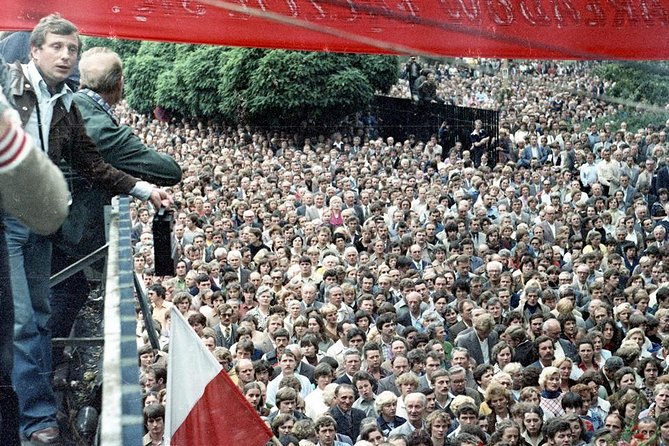
In 1980, around 17,000 shipbuilders began civil resistance against the Communist regime. Their demands were not simply about wages. They included worker protections and wider rights, and the movement grew into Solidarity, the independent trade union associated with Lech Wałęsa.
I find this setting valuable because you are not studying an abstract political story from a distance. You are walking through the spaces where those events unfolded. The tour helps link the memorials and shipyard buildings to the broader changes that later affected Poland and other Eastern European countries.
Starting beneath the Monument to the Fallen Shipyard Workers
The meeting point is beneath the Monument to the Fallen Shipyard Workers of 1970 at Plac Solidarności. If your hotel is within about 1.5 kilometers of the meeting point, pickup may be arranged from your accommodation in Gdansk Old Town. Otherwise, you meet the guide at the monument.
Allow a few extra minutes to find the correct spot. The meeting address is Plac Solidarności, 80-001 Gdańsk, and the official starting point matters because the tour begins with the monument itself, not with a general walk from the Old Town.
You spend about 10 minutes here. Admission is free, but the stop carries serious weight. The monument honors shipyard workers killed during the 1970 protests. Your guide explains the tragedy behind it and sets up the connection between the earlier protests and the larger strikes of 1980.
This is a good opening because it gives you the political background before you enter the museum. You begin with the human cost of state power, then move toward the workers who organized against it.
More Nowa Huta and communism tours:
- Gdansk: Private Communism Tour with Solidarity Center Museum
★ 5.0 · 28 reviews - Krakow: Nowa Huta Guided Tour in Vintage Car
★ 4.9 · 277 reviews - Legendary Private Nowa Huta Communism Tour with Crazy Guides
★ 5.0 · 262 reviews
Anna Walentynowicz and the people behind Solidarity
The next stop is the monument to Anna Walentynowicz, with about 20 minutes for explanation and discussion. Walentynowicz was a shipyard worker whose dismissal helped spark the 1980 strike. She is also one of the important figures in the story of Solidarity, alongside Lech Wałęsa and other organizers.
A guide can make a real difference here. The names are easy to blur together if you only read a few panels in a museum. With a private guide, you can ask how individual actions connected to the larger strike and why the movement mattered beyond Gdansk.
The experience is offered in nine European languages, and your guide holds an official Gdansk license. One particularly warm account praises Aneta, described as a friendly and passionate guide who enjoyed sharing the story of her country. That kind of personal connection suits this subject well, though guide assignments can vary.
This stop is brief, so do not expect a full biography of every key figure. Think of it as a bridge between the monument and the institutions where the workers negotiated with the authorities.
Sala BHP and the Gdansk Agreement
The four-hour option adds a visit to Sala BHP, where the Gdansk Agreement was signed on August 31, 1980. You spend about an hour here, making it one of the most substantial stops before the museum.
Sala BHP was the worker protection center of the Gdansk Shipyard. Its importance comes from what happened inside: the agreement recognized demands made by the striking workers and marked a major moment in the relationship between the Communist authorities and organized labor.
I like this stop because it gives political history a physical setting. A document signed in a room can change the way you understand a movement. Instead of hearing only that negotiations happened, you see where the discussions took place and how the shipyard’s work environment shaped the movement.
Your guide also explains more about the Polish People’s Republic, commonly known as the PRL. You can ask questions about Communist-era life and the way the authorities responded to opposition. One private-tour account specifically praised the guide’s ability to provide first-hand accounts of the events shown in the museum. That can add a personal layer to the exhibits, though the depth will depend on your guide and on how much time your group spends here.
Sala BHP is not included in every version of the experience. It is part of the four-hour option, so check the package carefully if this building is a main reason for your visit.
Walking through Stocznia Gdańska
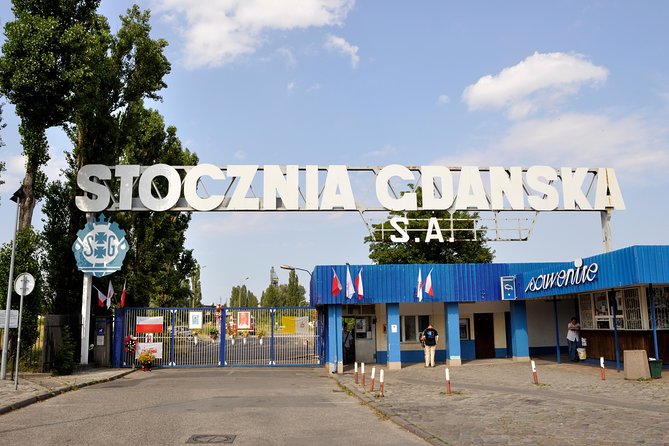
The final outdoor stop is Stocznia Gdańska, or Gdansk Shipyard. The tour allows about an hour here in the longer version. This is where the 1980 resistance began, with thousands of shipbuilders taking action against the Communist system.
The shipyard is more than a backdrop. It explains why the workers could organize so effectively. A large industrial workplace brought people together, and the site became closely tied to the struggle for worker rights and political freedom.
You should expect a walking tour rather than a full industrial-site visit. The exact route and access can vary, and the shipyard is closed on Saturdays and Sundays. That weekend closure is important. If your schedule allows only a weekend visit, confirm what parts of the route will be available before paying.
The tour includes a shot of traditional Polish vodka in the four-hour option. It is a small gesture, but it fits the local setting and the old PRL theme. If you do not drink alcohol, ask the guide about alternatives. The supplied information confirms the vodka shot is included, but it does not specify a nonalcoholic replacement.
More museum visits in Gdańsk:
- Museum of the Second World War Gdansk Private Tour & Tickets
★ 5.0 · 24 reviews - Gdansk Private WWII Tour with Museum of the Second World War
★ 4.9 · 22 reviews - Gdansk: Museum of World War II – True Story of a Living Hell
★ 4.5 · 6 reviews - Stutthof Concentration Camp and Museum of WWII: Private Tour
★ 4.7 · 3 reviews
The European Solidarity Centre in one focused hour
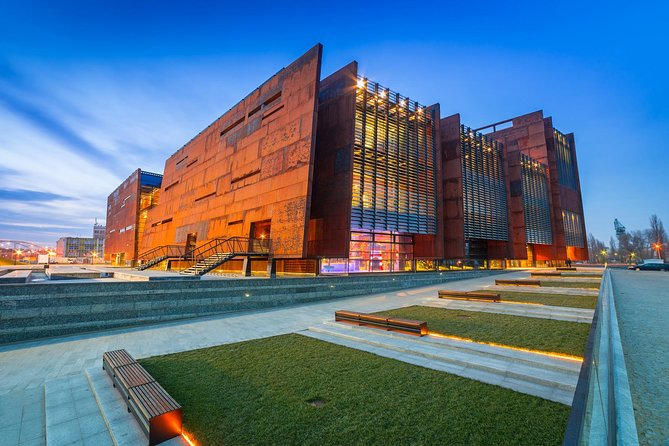
The European Solidarity Centre is the main indoor attraction. The museum visit lasts about an hour, and skip-the-line admission is included in both the two-hour and four-hour options according to the tour details.
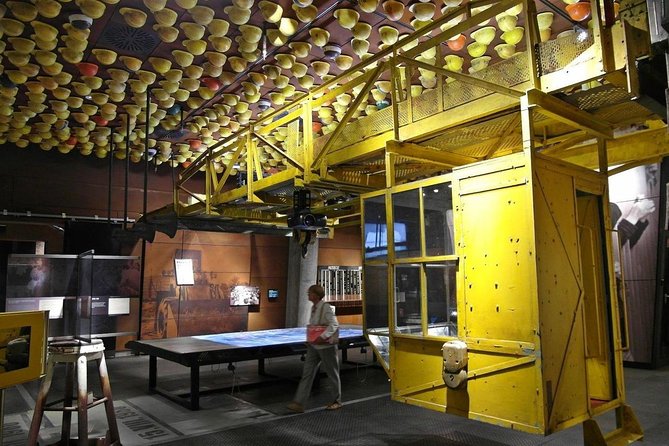
The museum follows the story of Solidarity step by step. You see original documents, photographs, and material from the strikes, the 1989 round table talks, and Poland’s first pluralistic election since 1947. The original Tables of 21 Postulates are especially important. These were the written demands made by strikers at the Lenin Shipyard, now Gdansk Shipyard, in 1980.
An hour gives you a useful introduction, but it is not enough for every display. One account praised the museum as excellent but felt the visit was rushed and that more time should have been allowed inside. I agree with that concern. If you enjoy museums, you may want to return on your own after the tour, provided your schedule permits.
A private guide helps most when you want the exhibits explained in context. The museum contains dates, political terms, names, and documents that can feel dense if you are unfamiliar with Poland’s postwar history. Your guide can point out what matters most and answer questions as you go.
The skip-the-line feature is practical, but it should not be confused with extra museum time. It may help you enter more efficiently, yet the planned visit remains about an hour.
Choosing between two hours and four hours
The shorter version is best if your main goal is the European Solidarity Centre and a quick introduction to the shipyards. You still get a private guide, the museum visit, and the central story of the Solidarity movement.
The four-hour option is the stronger choice for anyone who wants the places behind the story. It adds Sala BHP, more time at Gdansk Shipyard, and the Polish vodka tasting. It also gives your guide more space to explain the PRL and the 1970 and 1980 protests.
The advertised duration is approximately two to four hours. Since one account describes a four-hour booking finishing after three hours, I would ask the provider to confirm the expected schedule. That is especially important if you have a train, a second tour, or a timed museum visit afterward.
The tour is private, so only your group participates. That is a real advantage for a serious subject. You can stop to ask about Lech Wałęsa, Anna Walentynowicz, the workers’ demands, or the transition to democracy without waiting for a large group to catch up.
What the $139.10 price means
At $139.10 per person, the tour is not a budget walk. The value depends heavily on your group size and on choosing the right duration.
You are paying for a private guide, an official Gdansk license, a choice of language, hotel pickup within the Old Town area, and skip-the-line entry to the European Solidarity Centre. The four-hour option also includes Sala BHP, Gdansk Shipyard access, and a vodka shot.
For a couple or a small group that wants personal explanation, the price can make sense. You are not simply paying to be led from one monument to another. You are buying help with a complicated subject that is easy to misunderstand when read in fragments.
For a solo visitor, the cost is harder to justify unless the private format and language choice are especially important. If you mainly want to see the museum, an independent visit may offer more time inside. If you want the shipyard locations and a guide who can connect them, the private tour provides more than a museum ticket.
Group discounts are available, so check the total cost for your party rather than judging the per-person figure alone.
Who will enjoy this experience most
I would recommend this tour to you if modern European history interests you, especially if you want to understand how a labor movement challenged a Communist government. It also suits first-time visitors who want a structured introduction instead of piecing together the story alone.
The tour is a good fit for:
- Couples or families who prefer a private guide
- People interested in Poland’s Communist-era past
- Visitors who want both outdoor sites and a museum
- Anyone who values a choice of language
- Small groups that can make good use of the private format
You may want another plan if you dislike walking, want a leisurely museum visit, or can visit only on Saturday or Sunday. Most people can participate, and the tour is near public transportation, but the available information does not provide a detailed accessibility description.
The experience is also less suitable if your main interest is Gdansk’s medieval architecture. This is a focused political and industrial history tour, not a general city walk.
Practical planning before you book
Give the provider your accommodation address when booking if you want pickup. The service covers Gdansk Old Town only, and the accommodation must be within about 1.5 kilometers of the meeting point. If you do not provide the address, meet beneath the Monument to the Fallen Shipyard Workers.
Check your email the day before departure. Important tour information is sent then, and it is worth reading before you set out.
Plan for the shipyard closure on Saturdays and Sundays. A weekday booking is the safer choice if Sala BHP and the shipyard itself are priorities.
You can cancel for a full refund up to 24 hours before the local start time. Changes or cancellations inside that 24-hour window are not refunded, so leave some room in your plans if your schedule is uncertain.
Should you book the Gdansk Communism Tour?
Book it if you want the Solidarity story explained at the places where it happened, not just presented as a museum display. The private format, language choices, and knowledgeable local guidance make the tour especially useful for people who want to ask questions and connect the 1970 protests, the 1980 agreement, and the democratic changes of 1989.
Choose the four-hour option if you value Sala BHP and the shipyard itself. Choose the shorter version if your time is tight and the European Solidarity Centre is your main target, but ask how much museum time is planned.
My main advice is simple: book on a weekday, confirm the duration, and protect enough time for the museum. With those details settled, this is a thoughtful and worthwhile way to understand why Gdansk matters in the story of modern Europe.
FAQ
Where does the tour begin?
The tour begins beneath the Monument to the Fallen Shipyard Workers of 1970 at Plac Solidarności, 80-001 Gdańsk, Poland.
Is hotel pickup available?
Pickup is available from accommodations in Gdansk Old Town located within about 1.5 kilometers of the meeting point. If your accommodation is farther away, the route may be changed, or you may need to meet the guide at the stated meeting point.
How long does the experience last?
The experience lasts approximately two to four hours, depending on the option selected.
Is the European Solidarity Centre included?
Yes. Skip-the-line tickets to the European Solidarity Centre are included in the two-hour and four-hour options.
Is Sala BHP included?
Free entry to Sala BHP is included in the four-hour option.
Is the Polish vodka shot included?
A shot of traditional Polish vodka is included in the four-hour option.
Is the tour available in different languages?
Yes. The experience is offered in nine different European languages. You select your preferred language when booking.
Is the shipyard open every day?
Gdansk Shipyard is closed on Saturdays and Sundays. Plan a weekday visit if entering or touring the shipyard is important to you.
Just added around Gdańsk
- Gdańsk: Boat Cruise from Gdańsk Old Town to Sopot Marina★ 4.4 · 3 reviews
- Stutthof Concentration Camp and Museum of WWII: Private Tour★ 4.7 · 3 reviews
- Gdansk: Bubble Football with Hotel Transfers★ 5.0 · 3 reviews
- Gdansk: Oliwa Zoo with Tickets and Roundtrip Transportation★ 5.0 · 3 reviews
- Segway Tour Gdańsk: Shipyard Tour – 1,5-Hour of Magic!★ 5.0 · 3 reviews
- Gdansk: Escape Room Adventure★ 4.0 · 3 reviews
- Gdańsk : Catamaran River Cruise (group)★ 4.3 · 3 reviews
- Artus Court and Gdansk Old Town Private Tour with Tickets★ 4.7 · 3 reviews
Nowa Huta Communism Tours, compared.

Legendary Private Nowa Huta Communism Tour with Crazy Guides
Read our review →
Nowa Huta: Steelworks Administration Buildings/Shelters Tour
Read our review →
Private Tour: Warsaw’s Communist History by Retro Fiat
Read our review →
Private Nowa Huta Adventure Tour in Communist Cars
Read our review →


Browse the lists this tour appears in