
REVIEW · NOWA HUTA COMMUNISM TOURS
Gdansk: Private Communism Tour with Solidarity Center Museum
Poland’s revolution began at the waterfront. This four-hour private tour connects Gdansk’s Communist-era story with the workers, documents, and buildings that helped change Eastern Europe. You visit the European Solidarity Centre, walk through the Gdansk Shipyard, and enter Sala BHP, where the 1980 Gdańsk Agreement was signed.
I especially like the skip-the-line museum entry, which leaves more time for explanation instead of waiting. I also like the private car pickup from central Old Town accommodations, a useful touch when you want a focused history lesson without sorting out transport.
The main consideration is the price: at $184 per person, this is not a cheap sightseeing outing. It makes the most sense if you value a private guide, want serious historical context, or are sharing the experience with family or a small group. Shipyard access also changes by day, since the Gdansk Shipyard is closed on Saturdays and Sundays.
In This Review
- Key points to know before booking
- Why Gdansk matters to modern European history
- Starting beneath the 1970 workers’ monument
- Inside the European Solidarity Centre
- Solidarity Square and the memory of 1970
- Sala BHP and the agreement of August 31, 1980
- Walking through the Gdansk Shipyard
- The guide makes the difference
- What $184 per person gets you
- Timing, access, and small practical details
- Who should choose this Gdansk tour?
- Should you book it?
- FAQ
- How long does the Gdansk Communist tour last?
- What does the four-hour option include?
- Where does the tour meet?
- Is hotel pickup available?
- Is the tour available in English?
- Is the Gdansk Shipyard open every day?
Key points to know before booking
- The original 21 Postulates are on display: See the written demands made by striking shipyard workers in 1980.
- Sala BHP is a major stop: This is where the Gdańsk Agreement was signed on August 31, 1980.
- The tour links people to places: You learn about Lech Walesa, Anna Walentynowicz, and the workers who organized the strikes.
- The shipyard visit adds scale: The former Lenin Shipyard was the setting for a movement involving 17,000 shipbuilders.
- A private guide changes the pace: You can ask questions and spend more time on exhibits that matter to you.
- The ending has a Polish touch: The four-hour version includes a shot of traditional Polish vodka.
Why Gdansk matters to modern European history
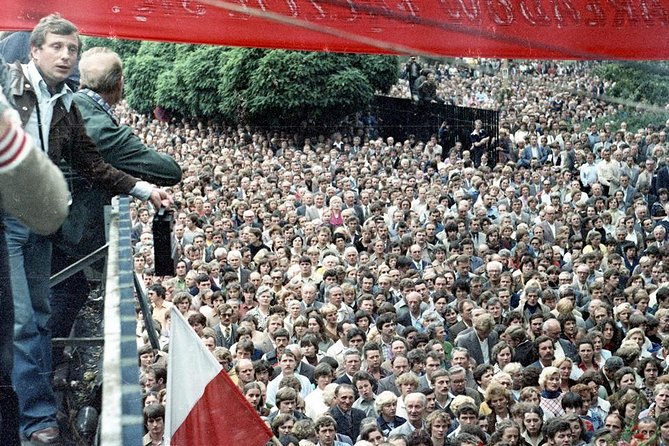
Gdansk’s Solidarity story is not just a local labor dispute. It became one of the most important political movements in modern Poland and helped weaken Communist rule across Eastern Europe.
The key date is August 31, 1980. After strikes at the Lenin Shipyard, workers reached an agreement with the Communist authorities. The deal allowed the creation of the Solidarity trade union, an independent organization that grew into a broad civic movement.
That date matters because it showed that organized workers could force political change through negotiation and public pressure. The movement did not bring instant freedom, and the road ahead included repression and hardship. Still, the agreement marked a major break from the usual Communist system.
I find this tour useful because it places the story in the exact locations where it unfolded. You are not only looking at a timeline. You are connecting a museum display to the square, shipyard, and meeting room nearby.
More Nowa Huta and communism tours:
- Gdansk Private Communism Tour with Solidarity Center Museum
★ 5.0 · 14 reviews - Krakow: Nowa Huta Guided Tour in Vintage Car
★ 4.9 · 277 reviews - Legendary Private Nowa Huta Communism Tour with Crazy Guides
★ 5.0 · 262 reviews
Starting beneath the 1970 workers’ monument
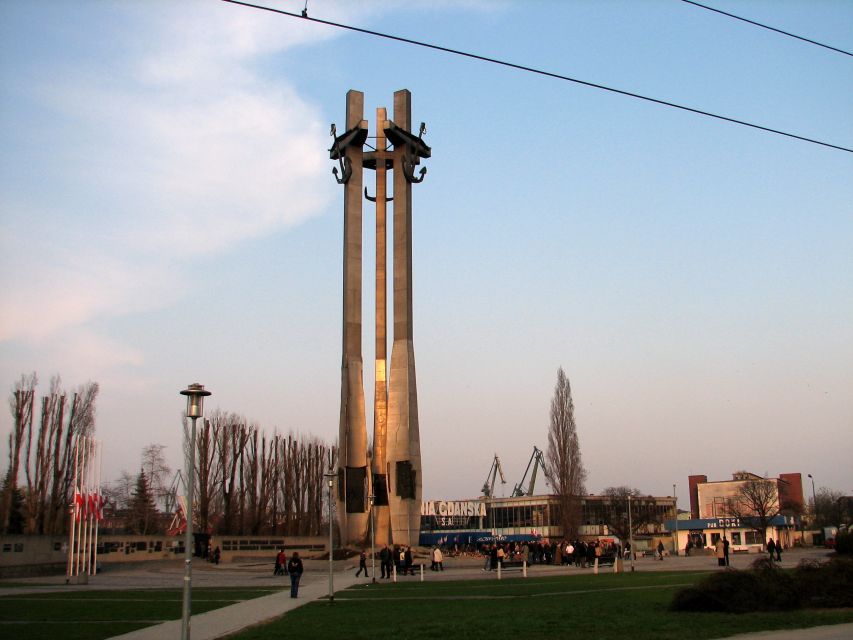
The usual meeting point is beneath the Monument to the Fallen Shipyard Workers of 1970 at Plac Solidarności. If your accommodation is within 1.5 kilometers of the meeting point, pickup can be arranged in Gdansk Old Town.
The monument honors workers killed during protests in 1970. Their deaths form an important part of the story because the unrest of 1970 helped shape the demands and memory of the later Solidarity strikes.
This is a good place to begin. Before you enter the museum, you already have a physical reminder that the movement grew from years of conflict between workers and the Communist authorities.
The monument also gives you a clear meeting landmark. If you are not staying in the Old Town pickup area, you meet the guide there instead. Check your email the day before for the final meeting instructions, especially if your accommodation address was provided during booking.
Inside the European Solidarity Centre
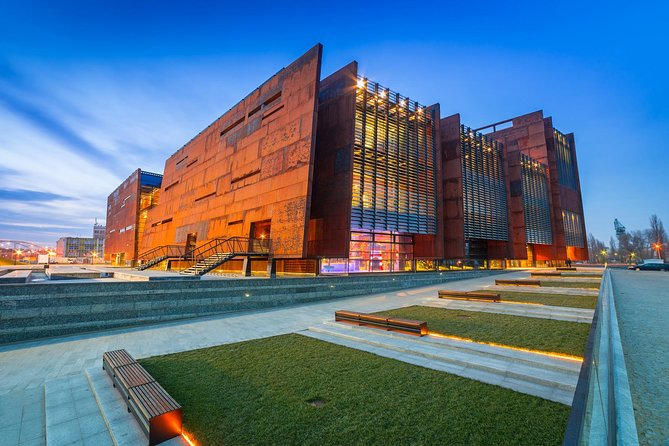
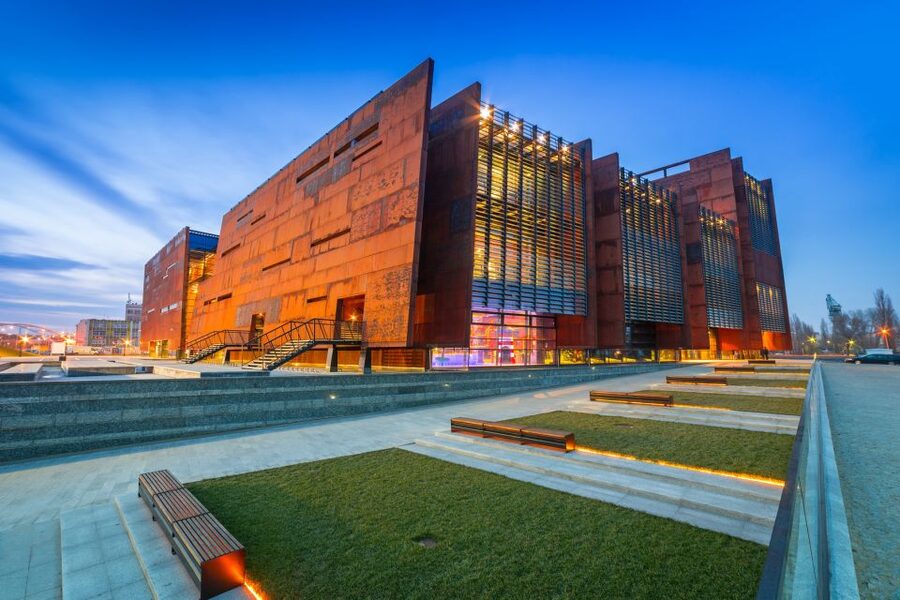
The European Solidarity Centre is the central part of the experience. Skip-the-line entry is included, which is helpful because the museum can take up much of the available tour time.
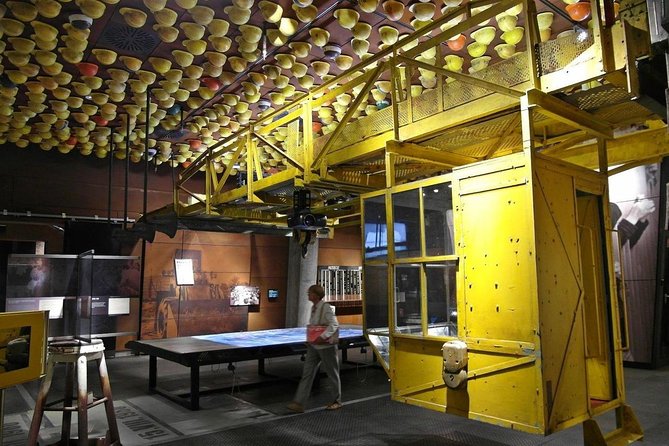
The exhibits guide you through the birth of Solidarity, the strikes, the written demands of the workers, the 1989 round table talks, and Poland’s first pluralistic election since 1947. The museum uses original documents, photographs, and other material from the movement.
The most important object for many people is the original set of 21 Postulates. These were the written demands presented by the strikers at the Lenin Shipyard in 1980. Seeing the actual documents gives the political struggle a practical human scale. These were not abstract slogans prepared long afterward. They were demands put forward during a tense confrontation with the authorities.
Your guide helps explain the setting behind each part of the exhibition. That matters because the museum covers a large and complicated period. Without guidance, it is possible to notice the major dates but miss how one event led to another.
You will also learn about Lech Walesa and Anna Walentynowicz, along with other figures connected to the movement. The personal stories help keep the tour from becoming a string of political facts.
A French-speaking guide named Małgorzata has been especially praised for clear explanations and strong command of the language. German, Polish, Russian, and English are also available, depending on the guide assigned to your booking.
The museum is the best part of the tour for anyone who wants detail. It is also the portion most likely to feel serious and emotionally heavy. If you prefer a quick introduction to Gdansk, four hours may feel long. If you want to understand why the movement mattered, the time is justified.
Solidarity Square and the memory of 1970
After or around the museum visit, the tour takes you through Solidarity Square. Here, your guide explains the story behind the Monument to the Fallen Shipyard Workers of 1970.
The three tall crosses make the monument easy to recognize, but its meaning is more important than its shape. It recalls the shipyard workers killed during protests and connects the events of 1970 to the strikes ten years later.
This is where a private guide can add real value. You can ask how the earlier protests influenced the later movement, or pause to discuss why a worker-led organization became such a powerful challenge to Communist rule.
Do not treat this stop as only a photo opportunity. The square is one of the places where the political memory of Gdansk remains visible in public space. The tour gives you a reason to slow down and understand what the monument represents.
More museum visits in Gdańsk:
- Museum of the Second World War Gdansk Private Tour & Tickets
★ 5.0 · 24 reviews - Gdansk Private WWII Tour with Museum of the Second World War
★ 4.9 · 22 reviews - Gdansk: Museum of World War II – True Story of a Living Hell
★ 4.5 · 6 reviews - Stutthof Concentration Camp and Museum of WWII: Private Tour
★ 4.7 · 3 reviews
Sala BHP and the agreement of August 31, 1980
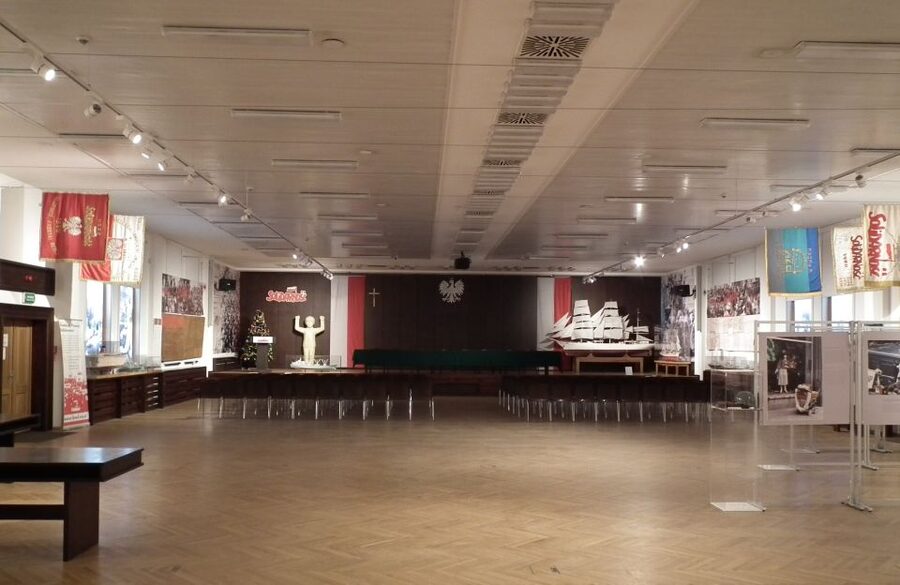
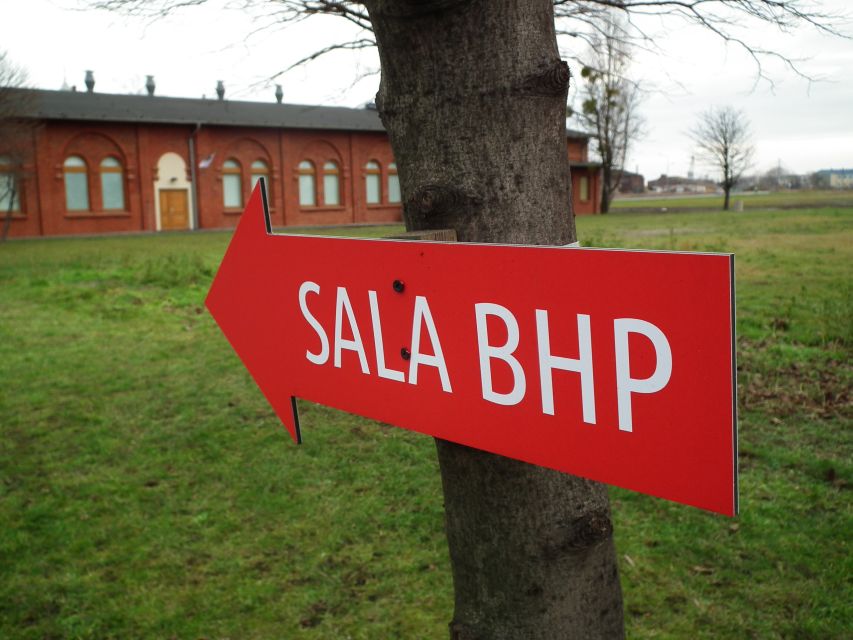
The four-hour version continues to Sala BHP, also known as the Center of Worker Protection of the Gdansk Shipyard. This is the historic room where the Gdańsk Agreement was signed on August 31, 1980.
For me, this is one of the strongest reasons to choose the longer option. The European Solidarity Centre explains the movement through displays and documents. Sala BHP gives you the actual setting where the agreement took shape.
The location helps you picture the pressure surrounding the negotiations. Workers had organized a strike, the authorities faced a major challenge, and both sides eventually signed an agreement that allowed Solidarity to operate.
You should not expect a theatrical performance or a reconstructed show. The value is in the place itself and in the guide’s explanation. A good guide can show how the room fits into the larger sequence of strikes, negotiations, and political change.
Because this stop is part of the four-hour option, it also helps explain the higher price. You are paying for access to more than the main museum and for the guide’s time across several connected sites.
Walking through the Gdansk Shipyard
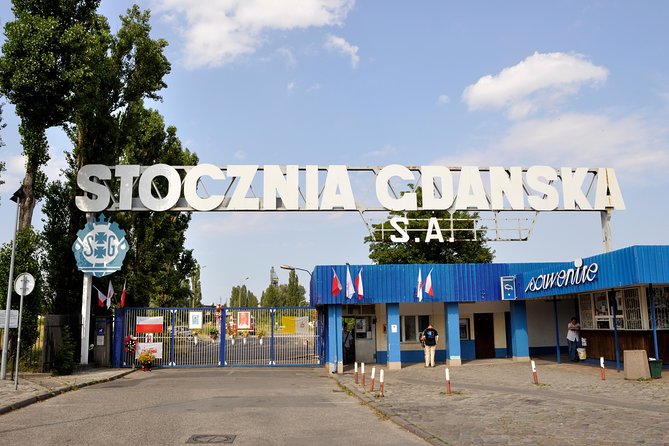
The final major stop is the Gdansk Shipyard, known in Polish as Stocznia Gdansk. This is where around 17,000 shipbuilders began civil resistance against the Communist regime in 1980.
The shipyard is not simply a backdrop. It is the workplace at the heart of the movement. Seeing it after the museum and Sala BHP gives the story a clear sequence: the workers, the demands, the negotiations, and the wider political consequences.
The shipyard area is changing, and this is where a guide familiar with its history can save you time. Małgorzata, for example, has been praised for knowing the area well and helping visitors make sense of its changing layout.
That changing setting is also a practical consideration. You may not see every feature in exactly the same way on a future visit, and access can depend on the day. The shipyard is closed on Saturdays and Sundays, so do not book the four-hour program for a weekend if seeing the site is important to you.
The walking portion adds variety after the indoor museum. Still, wear comfortable shoes. The tour includes several locations, and the shipyard is a working historic area rather than a polished old-town attraction.
The guide makes the difference
This experience depends heavily on the guide. The advertised guide is a licensed history expert, and the strongest praise has focused on clear explanations, strong language skills, and personal stories that make social history easier to follow.
That personal approach is especially helpful with Communist-era Poland. The basic facts are easy to list: strikes, negotiations, Solidarity, round table talks, and elections. The harder task is explaining what daily life, political control, and worker resistance meant in practice.
A private format gives you room to ask direct questions. You can ask about a person, a document, or a date without worrying about holding up a large public group.
The format can also work for a larger private party. A German-language booking for 18 people received very positive feedback for its clear and entertaining presentation. That suggests the tour can handle a sizable group, though you should confirm the exact arrangement when booking.
Guides speak English, German, Polish, and Russian. French is also relevant in practice, since Małgorzata has led the tour in fluent French. Select your preferred language carefully because the quality of the experience depends on being able to discuss complex events comfortably.
What $184 per person gets you
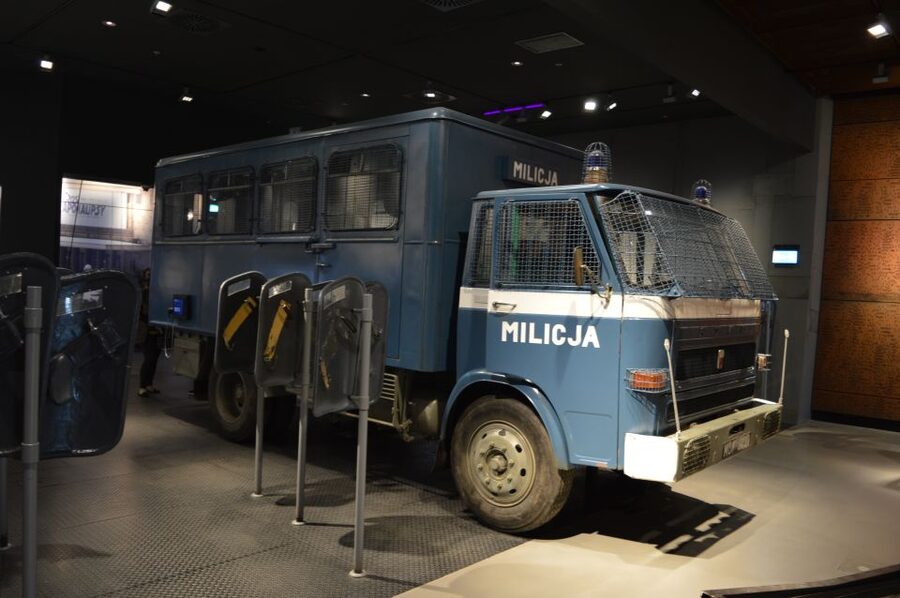
At $184 per person, the tour is best viewed as a private educational experience rather than a standard city walk. The price includes hotel pickup and drop-off within the stated Old Town area, a private guide, skip-the-line entry to the European Solidarity Centre, and the four-hour visits to Sala BHP and the Gdansk Shipyard.
You also receive a traditional Polish vodka shot at the end. It is a small detail, but it fits the Communist-era theme and gives the tour a lighter finish after several serious subjects.
The value improves if you are traveling with people who have different levels of interest in history. A private guide can adjust the discussion and answer questions instead of following a fixed public-group script.
The price is harder to justify if you only want to see the exterior monuments or take a short walk near the shipyard. You could spend less with a basic self-guided visit, but you would lose the connected explanation and the access included in the longer program.
The tour also saves practical time. Pickup, transport, museum entry, and the route between sites are arranged for you. In Gdansk, that matters because the most important Solidarity locations are close enough to connect but not all part of the Old Town sightseeing circuit.
Timing, access, and small practical details
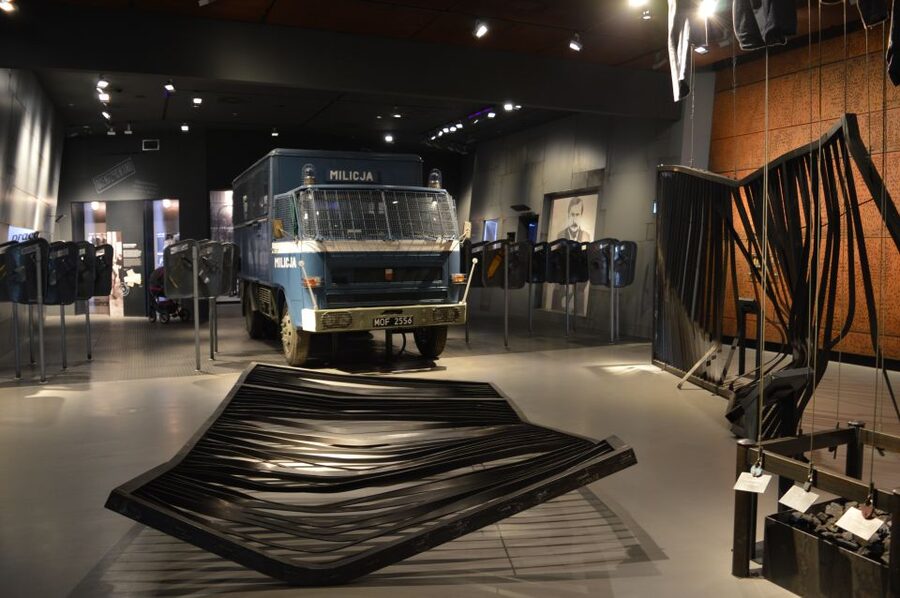
The full experience lasts four hours, though the description also refers to a two-hour core tour centered on the museum and Communist-era history. Confirm the exact option and schedule before paying, particularly if you are comparing different tour lengths.
Pickup is available only from Gdansk Old Town accommodations within 1.5 kilometers of the monument meeting point. If your hotel is outside that area, the route may be changed, or you may need to meet the guide at Plac Solidarności.
Wheelchair access is listed as available. Because the itinerary includes the shipyard area and several sites, it is still sensible to confirm the practical route for your particular needs before booking.
Free cancellation is available up to 24 hours before the tour, and you can reserve now and pay later. Those terms are useful if your Gdansk schedule is still moving around, but they do not replace checking the shipyard closure dates.
The tour runs in English, German, Polish, and Russian, with French also supported by at least one guide. Confirm your language preference at booking.
Who should choose this Gdansk tour?
I would choose this tour if you want more than a quick introduction to Gdansk. It suits anyone interested in modern European politics, labor movements, Poland under Communist rule, or the personal stories behind major political change.
It is also a strong choice for families with older children and teenagers who need a clear narrative. The museum objects and shipyard locations give the subject something concrete to hold onto.
Couples and small groups will appreciate the private format if they like asking questions. Larger private groups can also benefit, provided the language and transport arrangements are confirmed.
I would be more cautious if your main goal is medieval Gdansk, Gothic churches, or the city’s waterfront architecture. This is a focused Communist-era tour, not a general introduction to the city.
I would also avoid the four-hour version on a Saturday or Sunday if the shipyard is essential. The museum and monuments may still form part of your plans, but the shipyard itself is listed as closed on weekends.
Should you book it?
Book this tour if the Solidarity movement is a major reason you came to Gdansk, or if you want a guide to connect the European Solidarity Centre with the actual shipyard sites. The original 21 Postulates, Sala BHP, Solidarity Square, and the former Lenin Shipyard create a strong chain of places and evidence.
At $184 per person, it is a premium outing. I think the cost is worthwhile for a private group that values clear explanations, central pickup, and access to several important locations in one half-day.
Choose another activity if you want a cheap overview or prefer to explore at your own pace. But if you want to understand how Gdansk workers helped challenge Communist power, this is a focused and well-structured way to do it.
FAQ
How long does the Gdansk Communist tour last?
The advertised full option lasts four hours. The tour description also refers to a two-hour core program focused on Communist-era Poland and the European Solidarity Centre, so confirm the exact option when booking.
What does the four-hour option include?
The four-hour option includes the European Solidarity Centre, Sala BHP, Gdansk Shipyard access, a private guide, transport, and a traditional Polish vodka shot.
Where does the tour meet?
The meeting point is beneath the Monument to the Fallen Shipyard Workers of 1970 at Plac Solidarności, 80-001 Gdańsk.
Is hotel pickup available?
Pickup is available from accommodations in Gdansk Old Town located within 1.5 kilometers of the meeting point. You need to provide your accommodation address when booking for pickup to be arranged.
Is the tour available in English?
Yes. The listed tour languages are English, German, Polish, and Russian. French is also available with a French-speaking guide such as Małgorzata.
Is the Gdansk Shipyard open every day?
No. The Gdansk Shipyard is closed on Saturdays and Sundays. Choose a weekday if the shipyard visit is important to you.
Just added around Gdańsk
- Gdańsk: Boat Cruise from Gdańsk Old Town to Sopot Marina★ 4.4 · 3 reviews
- Stutthof Concentration Camp and Museum of WWII: Private Tour★ 4.7 · 3 reviews
- Gdansk: Bubble Football with Hotel Transfers★ 5.0 · 3 reviews
- Gdansk: Oliwa Zoo with Tickets and Roundtrip Transportation★ 5.0 · 3 reviews
- Segway Tour Gdańsk: Shipyard Tour – 1,5-Hour of Magic!★ 5.0 · 3 reviews
- Gdansk: Escape Room Adventure★ 4.0 · 3 reviews
- Gdańsk : Catamaran River Cruise (group)★ 4.3 · 3 reviews
- Szymbark: Kashubian Switzerland 5-Hour Private Tour★ 3.7 · 3 reviews
Nowa Huta Communism Tours, compared.

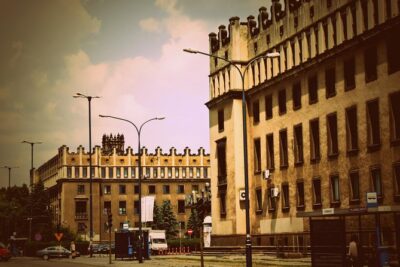
Legendary Private Nowa Huta Communism Tour with Crazy Guides
Read our review →
Nowa Huta: Steelworks Administration Buildings/Shelters Tour
Read our review →
Private Tour: Warsaw’s Communist History by Retro Fiat
Read our review →
Private Nowa Huta Adventure Tour in Communist Cars
Read our review →


Browse the lists this tour appears in