
REVIEW · MUSEUMS
Gdansk: Museum of World War II – True Story of a Living Hell
History can feel brutally close here. I like the museum’s clear link between politics, war, and daily life, and I like having a private, English-speaking guide to explain Poland’s difficult wartime story. The displays move from the rise of totalitarian regimes to personal survival, using everything from an Enigma machine to a Sherman tank.
The main drawback is the pace. Three hours is only enough to cover most of the museum, and the amount of film, text, and repeated detail can wear you down. You may prefer to use the audio guide for selected sections, even with a live guide, so you can pause and absorb the material.
In This Review
- Key points at a glance
- Why Gdansk is the right place for this museum
- Meeting your guide outside the museum
- The opening rooms explain how war began
- Twenty rooms connect the global war to daily life
- Objects that turn dates into human events
- Poland’s wartime experience takes center stage
- Why three hours is a realistic minimum
- Audio guides, language help, and accessibility
- What the private format adds
- The practical value of the admission arrangement
- Who will appreciate this museum most
- Should you book the Museum of World War II tour?
- FAQ
- Where does the tour begin?
- Where does the tour end?
- How long does the experience last?
- Is admission to the museum included?
- Is the tour private?
- Is the tour offered in English?
- Is hotel pickup included?
- Does the museum have audio guides?
- Are lifts available?
- Can I cancel for a full refund?
Key points at a glance

- The museum begins with the political causes of war, including the complicated status of Danzig after the Treaty of Versailles.
- Twenty rooms cover the war at several levels, from military campaigns and geopolitics to homes, shops, families, and individual lives.
- Original objects make the story tangible, including Stalin’s pipe, an Enigma machine, and a Sherman tank.
- The private format keeps the visit focused, with a five-star licensed guide speaking fluent English and adapting the commentary to your interests.
- Plan at least three hours inside, since films, photographs, reconstructed streets, and written displays take time.
- Useful facilities include lifts, a cloakroom, a café, and audio headsets for translation or extra explanation.
Why Gdansk is the right place for this museum
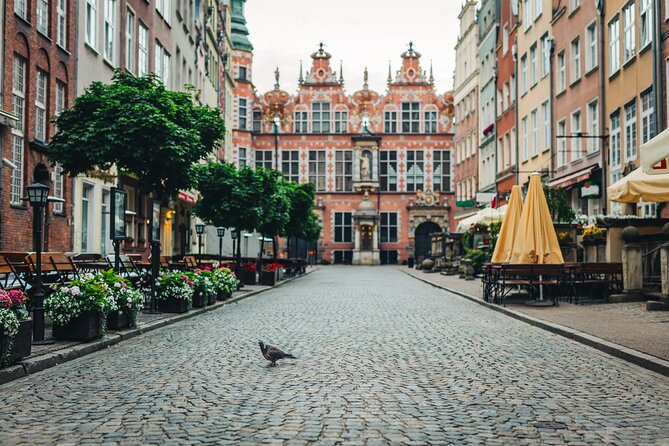
The Museum of the Second World War does not treat the war as a distant series of battles. It begins with the political conditions that made conflict possible, then shows how those decisions affected Poland, Europe, and ordinary households.
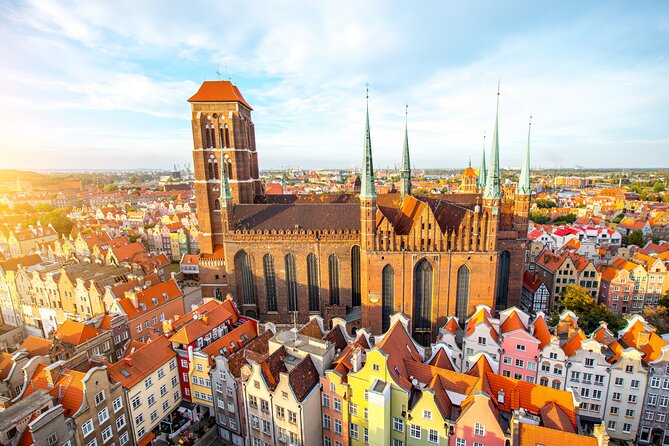
Gdansk is especially important to that opening story. After World War I, the Treaty of Versailles left Danzig in an unusual political position. The city was not simply part of the newly restored Polish state, yet it was no longer governed by Germany, which had controlled Poland for much of the previous 146 years after the partitions.
That unsettled status helps explain why Gdansk is such a powerful setting for this subject. You are not looking at a generic war museum placed in an unrelated city. The local story is tied directly to the international tensions that led to the war.
I appreciate that the museum gives you this context before it moves into combat and occupation. Without it, the later sections could feel like a long list of armies and dates. Here, you first see how borders, ideology, and power shaped the choices that followed.
More museum visits in Gdańsk:
- Gdansk: Private Communism Tour with Solidarity Center Museum
★ 5.0 · 28 reviews - Museum of the Second World War Gdansk Private Tour & Tickets
★ 5.0 · 24 reviews - Gdansk Private WWII Tour with Museum of the Second World War
★ 4.9 · 22 reviews
Meeting your guide outside the museum
The tour starts in front of the Museum of the Second World War at plac Władysława Bartoszewskiego 1 in Gdansk. You meet your guide there, with the activity ending back at the same point.
That simple meeting arrangement is useful if you are already exploring central Gdansk. The museum is near public transportation, and hotel pickup is not included. Transportation can be arranged for an additional fee of 20 euros, so you should request that in advance if you do not want to make your own way there.
The first ten minutes are set aside for meeting the guide and getting started. Since this is a private activity, only your own group takes part. That matters inside a museum this large. You can ask for more detail about Polish civilians, military history, family stories, or the political background instead of following a fixed script meant for a large crowd.
No guide name is provided in the tour information, but the guide is described as a five-star licensed professional fluent in your selected language. English is available for this experience.
The opening rooms explain how war began
The main exhibition starts with a semi-circular screen showing the rise of totalitarian regimes across Europe. This gives the museum a strong opening because you are introduced to the forces behind the war before reaching the familiar images of soldiers and battlefields.
The early sections set up the crisis surrounding Poland and Danzig. You see how the aftermath of World War I, the Treaty of Versailles, and competing national claims created a dangerous political situation.
I like this approach because it asks you to think about cause and effect. The museum is not only asking who fought whom. It is asking how political systems, propaganda, borders, and fear made ordinary people vulnerable.
The presentation is designed to be readable, with carefully researched information and a clear route through the exhibition. That helps with a subject that can quickly become confusing. Still, the amount of material is considerable, so you will want to keep your attention on the guide’s main points rather than trying to read every panel.
Twenty rooms connect the global war to daily life
The central exhibition occupies 20 rooms arranged on both sides of a long corridor. That corridor contains displays about everyday life during the war, creating a useful contrast with the larger military story.
You may see reconstructed streets, shops, and scenes of domestic life. These settings help you understand how war changed ordinary routines. Food, work, family life, clothing, public information, and fear become part of the story instead of being pushed aside by maps and troop movements.
The museum also uses many photographs, films, documentaries, and video clips. Some run in loops, so you do not always need to arrive at the exact beginning of a presentation. That is handy when you are moving through a large exhibition, though it also means the visit can feel slow if you try to watch everything.
A private guide can help you choose. I would ask early in the visit which films are essential and which can be skipped. That small decision could save time and keep the final sections from becoming a hurried march.
A few more Gdańsk trips worth weighing up
- Gdansk: City Cruise on Historical Polish Boat
★ 4.8 · 2,913 reviews - Gdańsk: Sunset Cruise on a Historic Polish Boat
★ 4.9 · 977 reviews - Gdańsk City Sights & History Guided Walking Tour in English
★ 4.8 · 876 reviews - Gdansk: Firearm Shooting Experience with Instructor
★ 4.8 · 866 reviews
Objects that turn dates into human events
The collection includes major military objects, but the smaller items can make the strongest impression. Stalin’s pipe, for example, brings one of the war’s most powerful political figures down to a personal scale. The Enigma machine connects abstract discussions of intelligence and secrecy to a physical object you can actually see.
A Sherman tank gives the exhibition a different kind of weight. It is hard to think of armored warfare as a clean diagram when a machine built for combat occupies the room.
The museum balances such objects with photographs, films, and personal stories. Major events alternate with individual fates, helping you see how decisions made by governments reached homes and streets.
This is one of the museum’s most praised qualities. It does not soften the violence. The exhibition deals directly with the horrors of war, including the suffering of people caught between Nazi Germany and the Soviet system.
For many people, that is the reason to visit. You are not being offered a polished heroic version of the conflict. The story includes occupation, repression, survival, and the long experience of living under two hostile powers.
Poland’s wartime experience takes center stage
The museum covers World War II in Poland, Europe, and beyond, but Poland remains the emotional center. That focus is important because Poland’s experience cannot be reduced to one invasion or one occupation.
The exhibition shows the country caught between Nazi Germany and the Soviet Union, with civilians paying the price for decisions made far above them. The final sections continue that difficult story and examine how the war affected the region after the fighting ended.
I find this especially useful if you know the broad outline of World War II but want a stronger understanding of Poland. The museum explains the local experience while still connecting it to events elsewhere in Europe and beyond.
It also encourages links with present-day events. That can make the exhibition feel urgent, but it may not suit everyone. Some people prefer a museum to remain tightly focused on the past, while others value the chance to consider how propaganda, authoritarian politics, invasion, and civilian suffering still affect the present.
Why three hours is a realistic minimum
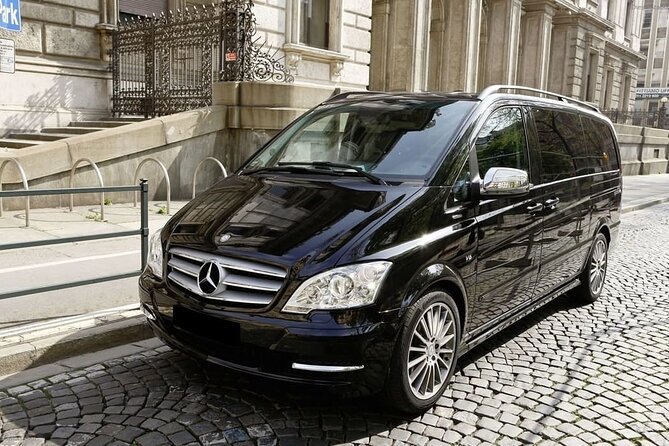
The official tour lasts about three hours, with roughly ten minutes for meeting the guide and around two hours and 50 minutes in the museum. That sounds generous until you see how much there is to read and watch.
You will probably need the full period if you want to follow the main route, view several films, inspect the artifacts, and listen to the guide. Some people have spent three hours inside and still felt they had not seen every section.
The museum’s length is both its strength and its weakness. You get a broad account rather than a short introduction, but the experience can become tiring. One section may repeat an idea already explained elsewhere, and long stretches without a pause can be demanding.
I would wear comfortable shoes and avoid scheduling another major attraction immediately afterward. The café offers a place to pause, and the manned cloakroom is useful if you are carrying coats or bags.
Audio guides, language help, and accessibility

The museum has audio headsets available at the desk, and an audio guide is strongly worth considering. It is easy to use and can detect the area where you are standing, so you can receive information without constantly searching for the correct track.
The headsets also help with translation. Information is available in several languages, including Italian according to the visitor information, while this private tour is offered in English.
A live guide and an audio guide serve different purposes. Your guide can explain the wider story, answer questions, and adjust the visit to your interests. The headset gives you extra detail when you want to linger over an object or move at your own speed.
The museum has lifts. Since the entrance is at street level and the main exhibition continues on lower levels, the lifts are important for anyone who cannot manage stairs. The available information says most people can participate, but you should raise any specific mobility needs when booking.
What the private format adds
The private structure is the main difference between this experience and a basic museum visit. You are not sharing the guide with a large crowd, and the commentary can be tailored to your group’s interests.
That can be valuable in a museum with such a wide scope. If you are interested in military technology, you can spend more time with objects such as the Enigma machine and Sherman tank. If your priority is civilian life, you can ask for more attention to the reconstructed streets, shops, and household displays.
The guide also helps you keep the chronology straight. The exhibition moves between countries, political systems, military events, and personal stories. Without some structure, you could lose track of how one section connects to the next.
The tradeoff is that the price is high. The listed cost is $217.08 per person, although group discounts are available. Admission to the museum, an English-speaking licensed guide, and expert commentary are included, but hotel transport costs extra.
I would see the price as easier to justify for a small private group with a strong interest in history. If you are alone or traveling on a tight budget, a self-guided museum visit with an audio headset may offer better value. The private tour makes more sense when you want interpretation, questions answered, and a visit shaped around your group.
The practical value of the admission arrangement
Museum admission is included in the tour, which removes one task from your arrival. Some days offer free public admission, with Tuesday identified as a free day in the visitor information, but you should confirm the current schedule before building your plans around it.
Free admission does not necessarily make this private tour poor value. You are paying for the guide, planning, private format, and expert explanation as well as access to the exhibition. Still, it does mean you should compare the tour price with a self-guided visit before booking.
The experience includes free cancellation up to 24 hours before the start time. Changes or cancellations made less than 24 hours before the start are not accepted for a refund, and all cut-off times use local time.
Who will appreciate this museum most
I would recommend this experience to you if you enjoy serious history and want more than a quick collection of tanks and uniforms. It suits people who want to understand how Gdansk, Poland, and Europe were changed by the war.
It is also a good choice for visitors who find large museums hard to organize. A private guide gives you a route and a person to ask when the chronology becomes dense.
Families with older children and teenagers may appreciate the visual displays, reconstructed settings, and machines, but the subject is grim. The museum does not avoid the worst parts of the war, so younger children may find it upsetting.
You should think twice if you dislike long museum visits or prefer a light sightseeing stop. The route is serious, detailed, and emotionally heavy. Even people who enjoy history should plan a pause.
Should you book the Museum of World War II tour?
Book it if you want a guided, private reading of one of Europe’s most important wartime museums. The strongest reasons are the clear opening context, the mix of personal and geopolitical history, the original objects, and the chance to ask questions in English.
I would not book it solely for quick entry or basic admission. At $217.08 per person, the value depends on how much you want the guide’s interpretation and how many people share the cost.
For the best experience, reserve enough time, consider using the museum’s audio headset, and do not rush the final rooms. If you are deeply interested in history, this can be the reason you return to Gdansk. If you have only a short amount of free time, visit independently and focus on the sections most connected to Poland and the city.
FAQ
Where does the tour begin?
The tour begins in front of the Museum of the Second World War at plac Władysława Bartoszewskiego 1, 80-862 Gdansk, Poland.
Where does the tour end?
The activity ends back at the museum meeting point.
How long does the experience last?
The experience lasts approximately three hours. About ten minutes are allowed for meeting the guide, followed by roughly two hours and 50 minutes in the museum.
Is admission to the museum included?
Yes. Tickets to the Museum of World War II are included in the private tour.
Is the tour private?
Yes. Only your own group participates in the activity.
Is the tour offered in English?
Yes. The experience is offered in English, with a licensed guide fluent in the selected language.
Is hotel pickup included?
No. Hotel pickup and drop-off are not included. Transportation can be arranged upon request for an additional fee of 20 euros.
Does the museum have audio guides?
Yes. Audio headsets are available at the museum desk, and the audio guide can provide translation and additional information.
Are lifts available?
Yes. The museum has lifts connecting the street-level entrance with the lower exhibition levels.
Can I cancel for a full refund?
Yes, if you cancel at least 24 hours before the experience begins. Cancellations or changes made less than 24 hours before the start time are not accepted for a refund.
Just added around Gdańsk
- Gdańsk: Boat Cruise from Gdańsk Old Town to Sopot Marina★ 4.4 · 3 reviews
- Stutthof Concentration Camp and Museum of WWII: Private Tour★ 4.7 · 3 reviews
- Gdansk: Bubble Football with Hotel Transfers★ 5.0 · 3 reviews
- Gdansk: Oliwa Zoo with Tickets and Roundtrip Transportation★ 5.0 · 3 reviews
- Segway Tour Gdańsk: Shipyard Tour – 1,5-Hour of Magic!★ 5.0 · 3 reviews
- Gdansk: Escape Room Adventure★ 4.0 · 3 reviews
- Gdańsk : Catamaran River Cruise (group)★ 4.3 · 3 reviews
- Szymbark: Kashubian Switzerland 5-Hour Private Tour★ 3.7 · 3 reviews
Museums, compared.
Auschwitz-Birkenau Museum and Memorial Guided Tour from Krakow
Read our review →
POLIN Museum of the History of Polish Jews Ticket
Read our review →


Krakow Schindler’s Factory Museum Guided Tour in English
Read our review →
Auschwitz Birkenau Museum Guided Tour with Pickup
Read our review →
Browse the lists this tour appears in