
REVIEW · WALKING TOURS
Jewish Krakow Walking Tour in English
Krakow’s Jewish story rewards a slow walk. This 150-minute tour links the old Jewish quarter of Kazimierz with Podgórze, the former Jewish ghetto, and gives you the historical thread connecting them. I like the way it covers both Jewish life before World War II and the destruction that followed. I also like the chance to walk between districts rather than view them through a vehicle window.
The tour’s strongest feature is its guides. Max, Maciek, Pawel, Lucy, Tom, and others are praised for clear storytelling, warmth, humor, and serious command of the subject. My main caution is the walking: much of it is on cobblestones, and the tour finishes across the river from the Old Synagogue, not back at the starting point.
In This Review
- Key points to know before you go
- Why Krakow’s Jewish quarter needs a guided walk
- Meeting at the Old Synagogue in Kazimierz
- Kazimierz before the war
- The middle break and the pace of the walk
- Podgórze and the former Jewish ghetto
- What the guides add to the experience
- Price, format, and what $26 really means
- Practical advice for a more rewarding walk
- Who should book this Jewish Krakow tour?
- FAQ
- How long is the Jewish Krakow walking tour?
- What language is the tour conducted in?
- Where does the tour meet?
- How early should I arrive?
- Does the tour include hotel pickup and drop-off?
- Are snacks included?
- Is the tour wheelchair accessible?
- Can I cancel for a refund?
- Should you book it?
Key points to know before you go
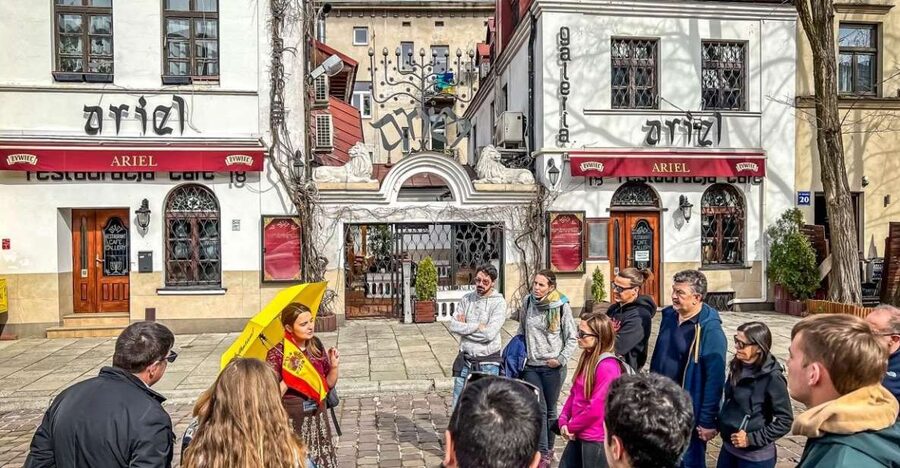
- Seven historic synagogues help reveal Kazimierz’s former importance as a center of Jewish life.
- Kazimierz and Podgórze appear in one walk, linking daily life before the war with the Nazi ghetto years from 1941 to 1943.
- Guides are the main reason to book, with frequent praise for Max, Maciek, Pawel, Tom, Lucy, and others.
- A short café break may be included, useful on a long or chilly afternoon, though the tour does not include snacks.
- The walk ends across the river, so plan a little extra time to find your way onward.
- The $26 price covers the reservation and guide payment, despite the pay-as-you-wish format.
Why Krakow’s Jewish quarter needs a guided walk
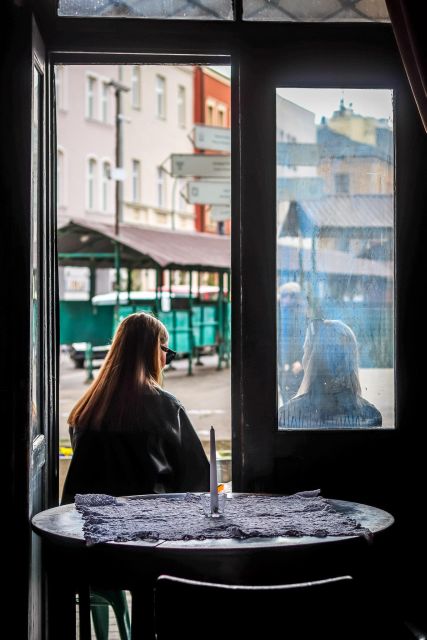
Kazimierz is easy to reach and pleasant to wander, but its meaning is not always obvious from the street. A synagogue facade, a quiet courtyard, or a worn stone wall can tell a very different story once you understand who lived there, how the district developed, and what happened during the German occupation.
That is where this tour earns its keep. You are not simply shown old buildings. You are given a narrative about Krakow’s Jewish community before the war, the violence and displacement of World War II, and the small but active Jewish presence in the city today.
Poland was once home to one of the world’s largest Jewish populations. Krakow was an important center of that civilization, and Kazimierz was its local heart. The district still contains seven old synagogues that survived the destruction of the war and Holocaust. Their survival does not make the story cheerful, but it gives you physical places through which to understand what was lost.
I find that historical setting especially useful early in a Krakow visit. It helps you see Kazimierz as more than a fashionable district of cafés, bars, and restaurants. The modern cultural scene is real, but it sits among buildings connected to centuries of religious, family, commercial, and community life.
More Walking Tours in Kraków
- Old Town Krakow & Wawel Castle Walking Tour
★ 5.0 · 1,508 reviews - Creepy Krakow: 2-Hour City Walking Tour
★ 4.7 · 1,131 reviews - Krakow: The Old Town Walking Tour
★ 4.8 · 794 reviews
Meeting at the Old Synagogue in Kazimierz
The meeting point is on the stairs in front of the Old Synagogue, on the main street of the Jewish quarter. Arrive 10 minutes early. The location is central to the subject, but it can be a little hard to identify in poor weather or a busy crowd. One participant had trouble finding it in the rain and was redirected quickly.
The Old Synagogue makes a sensible starting point because it gives you immediate context. You are beginning beside one of the district’s key religious buildings, not at a random street corner. From here, the guide can explain the setting before leading you farther through Kazimierz.
You should wear comfortable shoes. The route is not described as strenuous, and one guide was praised for keeping the pace comfortable, but two and a half hours on uneven paving can tire you. If you have mobility concerns, the activity is listed as wheelchair accessible, though you may want to confirm the exact route conditions before booking.
Kazimierz before the war
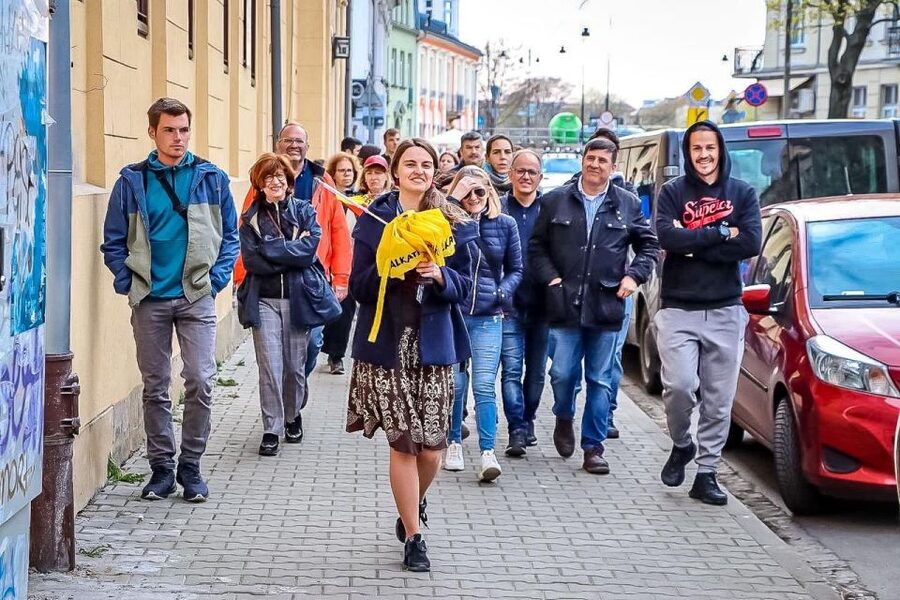
The first part of the walk focuses on Jewish Krakow before World War II. This is important because a tour about the Holocaust can become too narrowly centered on death and destruction. Here, the earlier story receives proper attention.
You learn about the local community, its institutions, religious traditions, and place in Krakow. The synagogues are not treated as empty shells. They help you picture a district shaped by worship, education, family life, and public gathering.
The seven surviving synagogues are among the most meaningful sights along the route. Even if you do not enter each one, seeing them together helps explain the scale and character of the former community. The tour provides the historical links that you would likely miss if you simply photographed each facade and moved on.
The guides also seem to understand that the subject needs a human voice. Maciek is praised for combining strong historical knowledge with entertaining storytelling and real feeling for the topic. Max receives similar praise for passion and a distinctive command of Krakow’s past. That combination matters. A guide who only lists dates can make an important place feel flat. A guide who tells stories without care can make it feel like entertainment. The best comments suggest that this tour usually finds a respectful balance.
The middle break and the pace of the walk
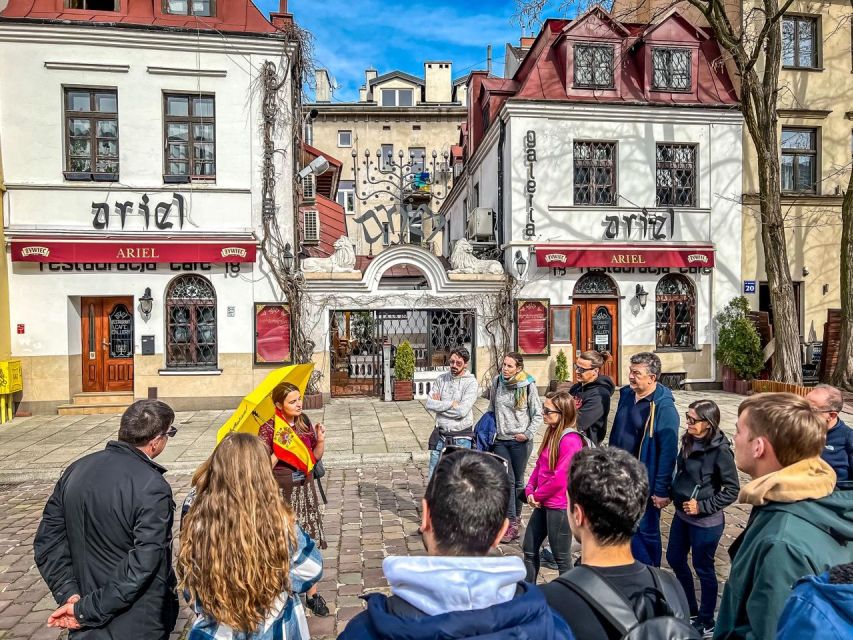
A break may come roughly halfway through the experience. One family appreciated having time to rest and buy coffee before continuing toward the Jewish quarter, while another participant described stopping at a beautiful bar for mulled wine on a gray afternoon.
That pause is not a formal food component. Snacks are not included, and you should not book this as a tasting tour. Still, the break can make a real difference, especially in cold weather or if you are walking with a young child.
A family with a four-year-old decided to stop after the coffee break because the child was tired. That is a useful warning for parents. The tour may suit older children and teenagers who can handle a serious subject and a long walk, but two and a half hours can be too much for a small child.
The pacing is generally one of the tour’s strengths. Several guides are praised for keeping the walk informative without making it feel exhausting. Still, the route covers a lot of ground, and one person found it a little too long. If you prefer quick sightseeing stops and lots of free time, this may feel slow. If you want context, the length is reasonable.
A completely different kind of day out in Kraków:
- From Krakow: Auschwitz-Birkenau Guided Tour & Hotel Pickup
★ 4.5 · 33,358 reviews - From Krakow: Auschwitz-Birkenau Guided Tour & Hotel Pickup
★ 4.5 · 29,340 reviews - Krakow: Auschwitz Guided Tour with Optional Hotel Pickup
★ 4.5 · 15,280 reviews - Krakow–Zakopane: Cable Car, Chocholow Baths, Cheese & Vodka
★ 5.0 · 10,720 reviews
Podgórze and the former Jewish ghetto
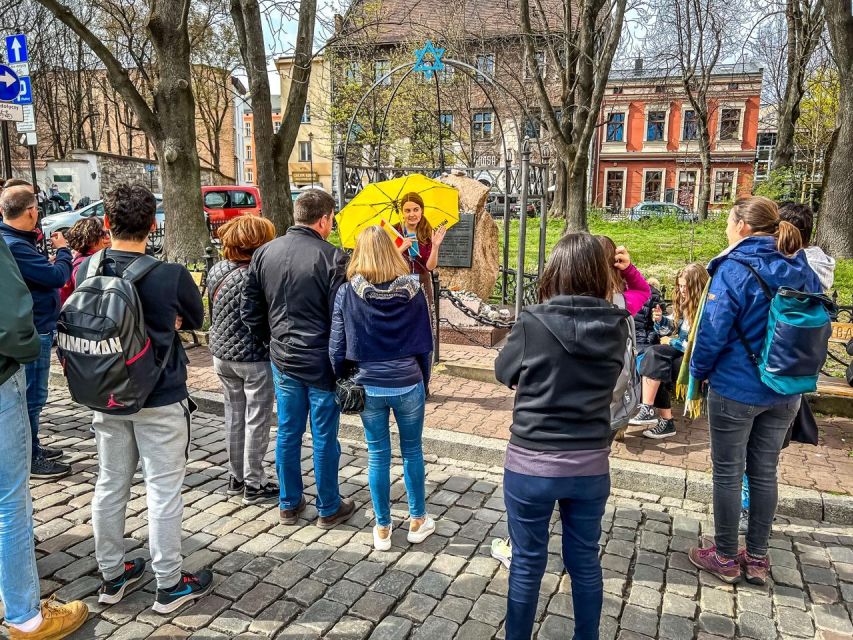
The emotional weight increases when the route reaches Podgórze, across the river. This was the site of Krakow’s former Jewish ghetto during the years 1941 to 1943. The district still contains buildings connected with that period, and the guide explains how the area’s streets and structures relate to the tragedy.
This section gives the earlier walk through Kazimierz a sharper meaning. You have first learned about Jewish life as a functioning community. You then see the places where families were confined, displaced, and subjected to Nazi persecution.
The tour’s description specifically promises sites connected with where the Holocaust took place in Krakow. That does not mean every major memorial or museum is included. It means the walk points out locations and buildings that help you connect the historical account to real streets.
One practical issue deserves attention. The walk begins at the Old Synagogue but finishes miles away, across the river. One participant expected to return to the starting point and found the ending inconvenient. Another noted that a remaining section of the ghetto wall was only about 200 metres farther on and wished it had been included.
That criticism is useful rather than fatal. The route still reaches Podgórze and the former ghetto, but you should not assume every nearby memorial or surviving wall fragment is part of the scheduled walk. If a particular section of the ghetto wall matters to you, ask the guide where it is before the tour ends, then allow time to visit it yourself.
What the guides add to the experience

The guide is the heart of this tour. The strongest praise goes to people who can explain difficult material plainly, answer questions, and keep a group attentive without treating the subject lightly.
Maciek is described as an exceptional storyteller with clear passion. Max is repeatedly praised for his historical command, enthusiasm, and ability to make the walk enjoyable. Pawel is noted for understanding the whole area and caring about what he explains. Tom receives praise for being friendly, amusing, and well informed, while Lucy is credited with answering questions thoroughly.
Other guides, including Natalia, Damian, Michael, Mateusz, Krzysztof, Johanna, and Victoria, are also praised for friendliness, humor, clarity, or sympathy. You should remember that the guide assigned to your departure may differ, so do not book solely because of one named guide. The broader pattern is encouraging: the company appears to have several strong English-speaking guides.
Humor is used, but the better comments suggest it supports the storytelling rather than undermines the subject. That is a difficult line to walk when discussing the Holocaust. A guide who can keep you engaged while remaining respectful is offering real value.
Price, format, and what $26 really means
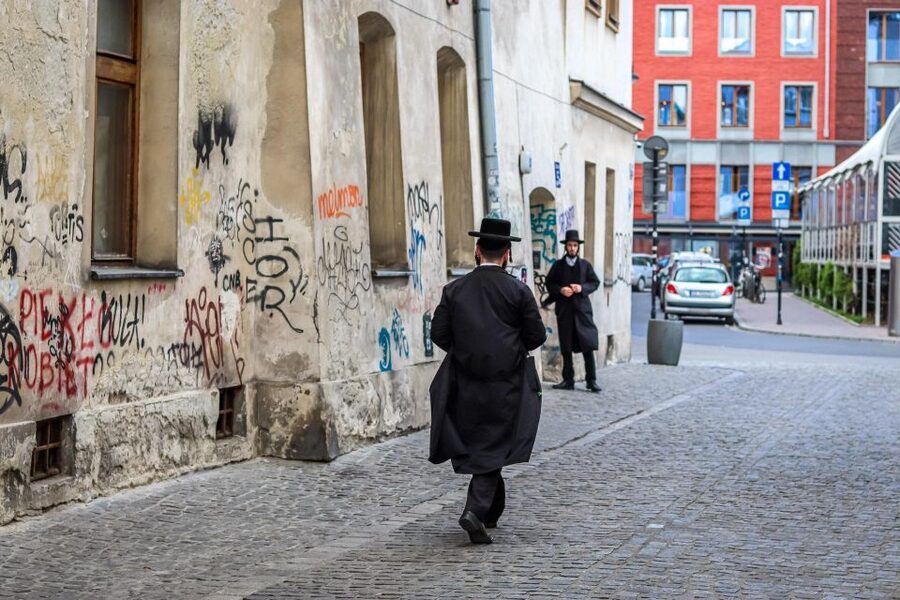
The advertised price is $26 per person. That is a fair rate for a 150-minute guided walk covering two historic districts and a subject that benefits greatly from explanation.
The payment arrangement needs careful reading. This is presented as a general pay-as-you-wish tour, but the $26 amount covers the reservation fee and the guide’s payment. In other words, you are not expected to treat the listed price as a small booking charge followed by a completely separate tip. One person was confused about paying the guide after already paying through the booking platform, so clarify the arrangement when you meet.
I consider the value good if you want a structured introduction to Krakow’s Jewish past. You are paying for the guide’s preparation, the route between Kazimierz and Podgórze, and the connections between places that are easy to misunderstand alone.
The value is lower if you mainly want synagogue interiors, museum admissions, or a short orientation walk. No entry tickets, hotel transfers, or snacks are included. This is a walking and storytelling experience, not a museum tour or a full-day excursion.
Practical advice for a more rewarding walk
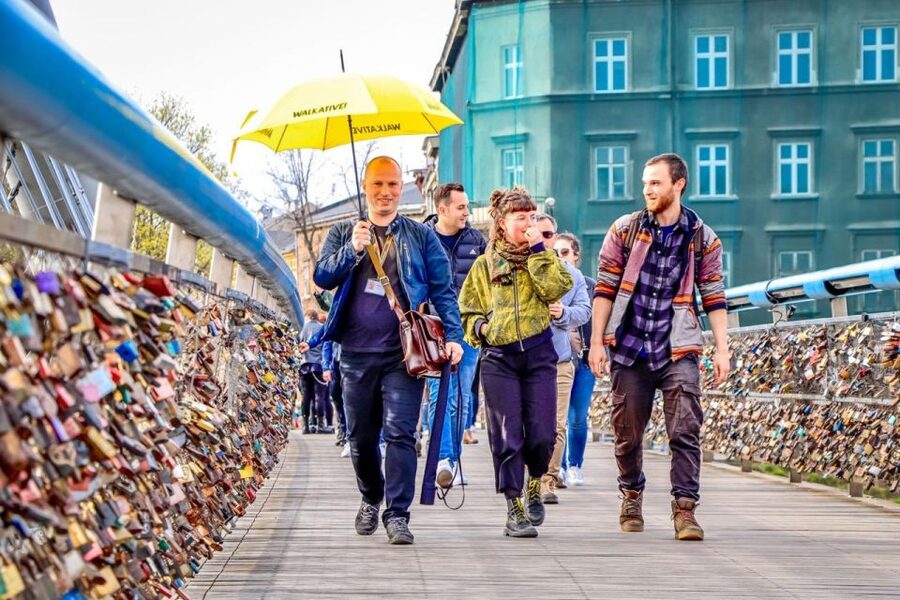
Book this early in your Krakow stay if you plan to visit other Holocaust sites later. One participant found the walk especially useful before visiting Auschwitz because it provided a local setting and background first.
Give yourself extra time before departure. The Old Synagogue stairs are a clear reference point, but rain or crowds can make the meeting area less obvious. Arriving 10 minutes early gives you time to locate the guide without starting the tour flustered.
Wear shoes with firm soles. The cobblestones are not a minor detail, especially after the halfway point. Bring water, and carry a little money if you would like coffee or a drink during the break.
Plan your route after the tour before you leave. Since the finish is across the river from Kazimierz, you may need to arrange your next stop separately. The tour does not include hotel pickup or drop-off.
The activity is wheelchair accessible, but the combination of cobblestones, a long walking period, and the route between districts makes it sensible to confirm the specific meeting and finishing conditions in advance. Accessibility on paper does not always describe the comfort of every street surface.
Free cancellation is available up to 24 hours before the start time, and you can reserve now while paying later. That flexibility is useful if your Krakow schedule depends on weather or other timed visits.
Who should book this Jewish Krakow tour?
I would choose this walk if you want history explained in place, rather than read from a guidebook while moving from one sight to the next. It suits first-time visitors, students, couples, and anyone preparing to visit Auschwitz or other Holocaust memorial sites.
It is also a good choice for people who want to see Kazimierz beyond its present-day nightlife. You will hear about the community that shaped the district, the catastrophe that nearly erased it, and the Jewish life that continues in Krakow today.
You may want a different option if you dislike group walks, cannot manage 150 minutes on foot, or want extensive interior visits. Families with very young children should consider the duration carefully. The break helps, but it does not turn the walk into a child-focused activity.
FAQ
How long is the Jewish Krakow walking tour?
The tour lasts 150 minutes, or two and a half hours.
What language is the tour conducted in?
The live tour guide speaks English.
Where does the tour meet?
The meeting point is on the stairs in front of the Old Synagogue on the main street in Krakow’s Jewish quarter.
How early should I arrive?
You should arrive at the meeting point 10 minutes before the scheduled start.
Does the tour include hotel pickup and drop-off?
No. Hotel pickup and drop-off are not included.
Are snacks included?
No. Snacks are not included, though a break for coffee or a drink may take place during the walk.
Is the tour wheelchair accessible?
Yes, the activity is listed as wheelchair accessible. The route includes cobblestone streets, so you may wish to confirm the precise conditions before booking.
Can I cancel for a refund?
Yes. You can cancel up to 24 hours before the activity for a full refund.
Should you book it?
Book this tour if you want a serious, well-paced introduction to Kazimierz, Podgórze, and Krakow’s Jewish past in one outing. The $26 cost is sensible for the time, route, and guide-led explanation, and the repeated praise for guides such as Max, Maciek, Pawel, and Tom gives the experience a strong foundation.
Go in with the right expectations. You will walk on cobblestones, cover ground, and finish across the river. You may not visit every synagogue or nearby fragment of the ghetto wall. But if you want the streets of Krakow to make sense, this is a thoughtful and useful way to begin.
Just added around Kraków
- Rynek Underground Museum & Wawel Castle, Cathedral – Cracow★ 5.0 · 3 reviews
- Schindler’s Factory, Ghetto and Plaszow Camp Guided Tour★ 4.7 · 3 reviews
- Nowa Huta – a guided tour of a utopian socialist city★ 5.0 · 3 reviews
- Krakow: Kazimierz by Golf Cart and Schindler’s Factory Tour★ 4.8 · 3 reviews
- Krakow: Jewish Traces Private Electric Car Tour★ 4.1 · 3 reviews
- Private Krakow City Tour by Car and Walk with private tour guide★ 5.0 · 3 reviews
- Krakow: Indoor Go-Karting (24-Minute Races)★ 4.8 · 3 reviews
- Discover the Jewish Quarter with a Bike Tour★ 5.0 · 3 reviews
Walking Tours, compared.




Gdańsk City Sights & History Guided Walking Tour in English
Read our review →


Browse the lists this tour appears in