
REVIEW · WALKING TOURS
Krakow: A Magical Walking Tour of the Old City – 120 min
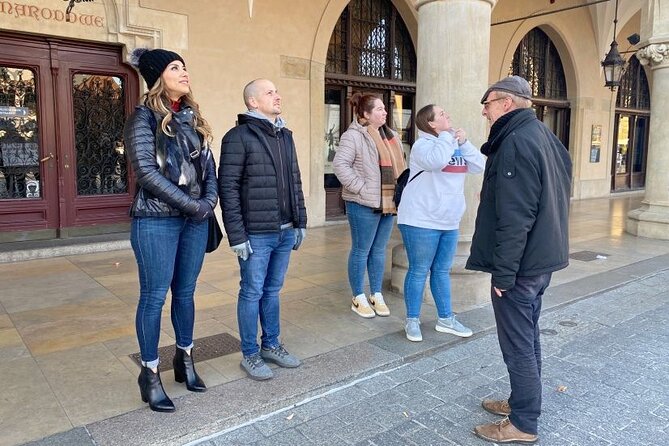
Krakow’s Old City is best read on foot. This two-hour walking tour links the main square, Wawel Hill, medieval streets, churches, city gates, and local legends in one compact route. I like the wide range of sights, and I like that the storytelling includes Krakow’s dragon, St. Mary’s towers, the Royal Way, and the city’s wartime defenses. The main drawback is the pace: thirteen stops in about 120 minutes leaves little time to linger.
I also like the modest group ceiling of 50 people, the English-language format, and the chance to ask questions along the way. Guides have earned high praise for clear history and humor, including Vlad and a French-speaking guide, though one participant reported a sharp encounter over the meeting point. That makes arriving early and knowing the exact start address especially wise.
In This Review
- Key points at a glance
- Starting at Wiślna 4 and finding your footing
- Rynek Glowny, Krakow’s great opening scene
- The Royal Way and Kanonicza Street
- St. Peter and St. Paul Church before Wawel
- Wawel Castle and the Polish royal story
- Meeting Krakow’s dragon
- Papal memories at Okno Papieskie and Plac Franciszkański
- Franciscan Basilica and the Jagiellonian University route
- The Barbican and Krakow’s defensive past
- St. Mary’s Basilica and the city’s best-known legends
- Finishing at St. Florian’s Gate
- What $36.09 buys you
- Who will enjoy this walk most
- Should you book the Krakow Old City walk?
- FAQ
- Where does the walking tour start?
- Where does the tour end?
- How long does the experience last?
- What language is the tour offered in?
- How much does the tour cost?
- How many people can join the tour?
- Are admission tickets included?
- Can I cancel for a full refund?
Key points at a glance
- Thirteen central Krakow sights: The route covers Rynek Glowny, Wawel Castle, Kanonicza Street, St. Mary’s Basilica, the Barbican, and St. Florian’s Gate.
- Local legends add color: Hear the stories of the Wawel Dragon, St. Mary’s Church, the Cloth Hall, and the different-height basilica towers.
- A useful first-day orientation: The walk connects the Old Town’s major landmarks and explains the Royal Way and Planty Park.
- A short, steady route: The advertised duration is about two hours, with most stops lasting ten minutes or less.
- Free cancellation with a weather condition: You can cancel up to 24 hours before the start for a full refund, but poor weather can also affect the departure.
- Strong but not perfect feedback: The experience is rated 4.5 out of 5, with 92 percent recommending it.
Starting at Wiślna 4 and finding your footing
The tour begins at Wiślna 4 in Krakow. This is a central location near public transportation, but the one negative account points to a practical concern: the meeting place may not be marked as clearly as you expect. I would arrive early, check the address on your phone, and give yourself time to identify the guide before the group moves off.
The format is simple. You walk between landmarks while the guide explains what you are seeing. There is no admission charge listed for the stops, so your price of $36.09 pays mainly for the guide’s route planning, explanations, and local context rather than entry into museums or interiors.
That distinction matters. If you want paid access inside Wawel Castle, the Barbican, or the churches, this experience does not include it. If you want a useful first look at Krakow before choosing which places deserve a longer visit, the format makes good sense.
The tour is offered in English and can include up to 50 people. That is a sizeable possible group, even if the actual departure is smaller. With a large group, stay close to the guide and expect the experience to work better as a listening walk than as a quiet stroll.
More Walking Tours in Kraków
- Old Town Krakow & Wawel Castle Walking Tour
★ 5.0 · 1,508 reviews - Creepy Krakow: 2-Hour City Walking Tour
★ 4.7 · 1,131 reviews - Krakow: The Old Town Walking Tour
★ 4.8 · 794 reviews
Rynek Glowny, Krakow’s great opening scene
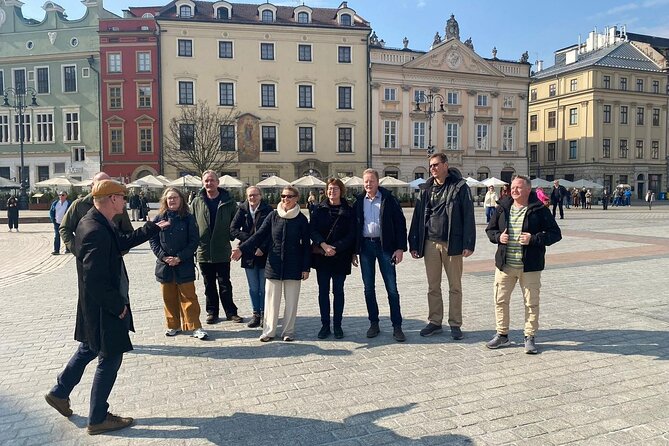
The first stop is Rynek Glowny, Krakow’s Central Square, where the tour spends about ten minutes. This is the right place to begin because so many of the city’s main stories meet here: St. Mary’s Basilica, the Cloth Hall, surrounding historic buildings, and the old commercial life of Krakow.
The guide explains the square and the sites around it, with special attention to local legends. That makes the stop more than a quick orientation. You get the basic layout, then a reason to look again at the church towers and the Cloth Hall after the tour ends.
Ten minutes is enough for an introduction, not a full architectural lesson. I would treat this as a primer and return later if the square catches your eye. The central setting also means the area can feel busy, so a larger group may be harder to keep together here.
The Royal Way and Kanonicza Street
The next two stops explain how Krakow’s ceremonial route worked. The Royal Way, or Droga Krolewska, takes about ten minutes. You learn why this road carries its royal name and how it connects the Old City with the places tied to Poland’s rulers.
This is useful context because a route can look like an ordinary city street until you understand who once passed along it and why. The walk turns Krakow’s street plan into a story of processions, power, and movement.
Then comes Ulica Kanonicza, one of the oldest streets in Krakow. The guide tells its history during another ten-minute stop. Kanonicza is a strong change of mood from the open square. Its age and street character give you a closer view of Krakow’s older urban fabric.
I like this pairing because it shows two different ways to read the city. The Royal Way explains a grand route, while Kanonicza brings you down to a single historic street. You will not have much time for photographs or extended stops, so note any building you want to revisit.
St. Peter and St. Paul Church before Wawel
The walk continues to the Church of St. Peter and St. Paul for about five minutes. The church is presented as one of Krakow’s most beautiful, with the guide providing its main story and setting it within the route toward Wawel.
Five minutes signals a quick exterior-focused explanation rather than a long church visit. If you want to study the interior, attend services, or spend time on decorative details, plan to return independently. The advantage of the brief stop is that it keeps the tour moving toward the castle and river area.
A completely different kind of day out in Kraków:
- From Krakow: Auschwitz-Birkenau Guided Tour & Hotel Pickup
★ 4.5 · 33,358 reviews - From Krakow: Auschwitz-Birkenau Guided Tour & Hotel Pickup
★ 4.5 · 29,340 reviews - Krakow: Auschwitz Guided Tour with Optional Hotel Pickup
★ 4.5 · 15,280 reviews - Krakow–Zakopane: Cable Car, Chocholow Baths, Cheese & Vodka
★ 5.0 · 10,720 reviews
Wawel Castle and the Polish royal story
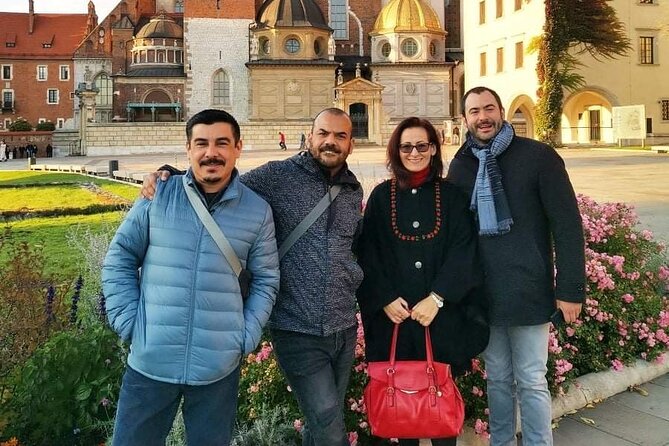
Wawel Royal Castle receives another five-minute explanation. Here the focus shifts to Poland’s kings and queens and the role of Wawel in the country’s royal story.
The short timing is both a strength and a limitation. You get a clear reason why Wawel matters without losing half the walk inside one complex. At the same time, the castle grounds and interiors deserve far more time than this tour can provide.
I see this stop as a decision point. After hearing the royal background, you can decide if Wawel deserves a separate visit. Since admission is not included, budget extra if you want to explore the castle more fully. The walking tour gives you the setting and the story, not a complete castle visit.
Meeting Krakow’s dragon
The Monument of the Wawel Dragon gets about ten minutes, making it one of the longer story stops. The guide tells the famous Krakow dragon legend, a tale closely tied to the city and especially popular with children.
This is the kind of local story that can make a historic walk feel human. You are not only hearing about rulers, walls, and churches. You are also getting the folklore that people associate with the city itself.
For families, this may be one of the most memorable moments. For adults, it offers a break from dates and dynasties. The stop also gives the route a clear link between Wawel’s royal setting and the legends connected to the hill.
Papal memories at Okno Papieskie and Plac Franciszkański
The route then moves to Okno Papieskie, or the Papal Window, for about ten minutes. The guide explains why the place has this name and shares related stories.
The stop adds a more recent layer to the walk. After ancient legends and royal history, you hear about a site remembered through modern religious and civic life. The information supplied for the tour does not promise entry or a special viewing arrangement, so expect an explanation at the location rather than an interior experience.
Plac Franciszkański follows, also with about ten minutes for facts and local legends. Squares like this help connect separate landmarks. Instead of seeing Krakow as a string of isolated monuments, you begin to understand how streets, churches, and public spaces relate to one another.
This part of the route should suit you if you enjoy stories tied to local memory. It may feel less essential if you only want the most famous postcard sights, but the slower rhythm of place names and legends can make the city easier to remember.
Franciscan Basilica and the Jagiellonian University route
The Basilica of the Franciscans of St. Francis of Assisi receives another ten-minute explanation. The guide covers facts and local legends connected with the basilica.
Again, the timing points to a guided introduction rather than a detailed church tour. You can learn why the building matters, then return later if you want a longer look. Keep in mind that the route includes many churches, so this walk is best for broad coverage rather than close study of every interior.
From there, the walk heads toward the Jagiellonian University and Collegium Medicum. The route passes along Planty Park, the green belt surrounding Krakow’s Old Town. Planty is described as a beloved park for Cracovians, and it offers a welcome change from stone streets and enclosed squares.
The university stop takes about ten minutes. Jagiellonian University is Poland’s oldest university, so this section adds education and civic life to the royal and religious themes already covered. The park approach is part of the appeal. You are not simply ticking off a university building; you are seeing how Krakow’s former defensive edge became a public park wrapped around the Old Town.
The Barbican and Krakow’s defensive past
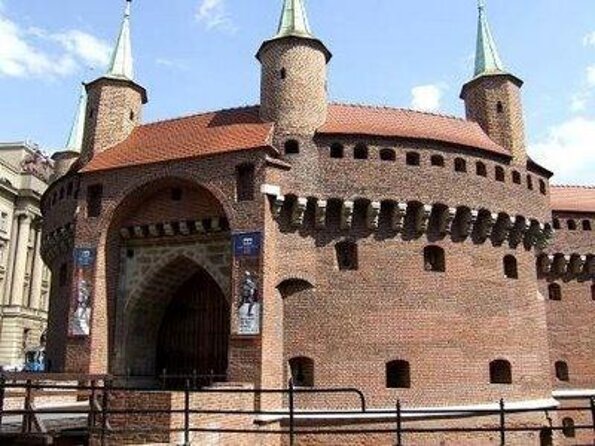
The Barbican, now associated with the Museum of Krakow, receives about ten minutes. Here the guide explains how Krakow was defended and how the city changed during and after the partition of Poland.
This is one of the most useful history stops because it gives the Old Town a defensive frame. Walls and gates can look decorative today, but the Barbican helps you picture Krakow as a city that needed protection. The mention of the partitions also points to a difficult period in Poland’s political history.
The tour does not list museum admission, so you should not expect a museum visit to be included in the $36.09 price. Still, a concise explanation outside can help you decide if you want to return for a closer look.
St. Mary’s Basilica and the city’s best-known legends
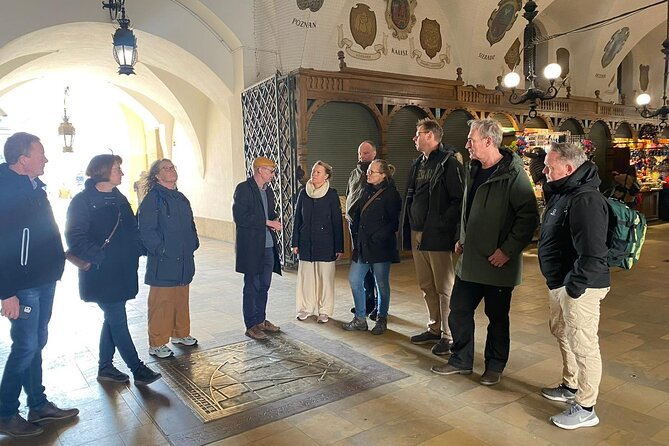
St. Mary’s Basilica receives about ten minutes. The guide explains why its two towers are different heights and shares other legends connected with the church.
This is a good example of the tour’s approach. Instead of giving you only a date and an architectural label, the guide uses a visible oddity, the uneven towers, as a doorway into Krakow’s stories. You can look at the building and immediately connect what you see with what you have heard.
The stop is also linked to the earlier explanation of Rynek Glowny. By the time you reach the basilica later in the walk, the square and church should make more sense as parts of one historic center. Ten minutes will not cover every feature, but it gives you a clear reason to return.
Finishing at St. Florian’s Gate
The final listed stop is St. Florian’s Gate, described as the last remaining fragment of Krakow’s wall. The guide explains what happened to the wider wall and what you can find on the inner side.
This is a fitting finish because it brings the story back to the city’s edge. You have seen the royal route, churches, university, park, and castle. Now the gate explains how the Old Town was enclosed and defended.
The tour information gives the end location as Sienna 2a and also says the walk ends at Krakow’s Central Square near the Adam Mickiewicz monument. Because the route details mention both the gate and the central square, I would listen for the guide’s final instructions before separating from the group.
What $36.09 buys you
At $36.09 per person, this is not the cheapest way to hear a few facts about Krakow. Its value depends on how much structure you want. In two hours, you receive a planned route through thirteen major points, explanations of local legends, and a broad introduction to royal, religious, defensive, academic, and modern Krakow.
That is useful on a first visit. You can learn which places deserve a return visit and avoid spending your first day wandering without context. The price is easier to justify if you would otherwise book separate orientation walks or pay for a guide at several sites.
The limits are clear. The stops are short, the tour is outdoors, and admission tickets are listed as free because no paid entry is included. If you want a slow photography walk, long interior visits, or detailed architecture, this may feel hurried.
Who will enjoy this walk most
I would recommend it most for first-time visitors who want a strong introduction without committing to a full-day activity. Families may especially enjoy the dragon legend, while history-minded visitors will appreciate the links between Wawel, the Royal Way, the city walls, and the partitions of Poland.
It also suits anyone who likes local stories alongside formal history. The mix of church legends, the Papal Window, St. Mary’s towers, and the Cloth Hall keeps the walk from becoming a string of dates.
You should think twice if stairs, prolonged walking, or standing are difficult, since the activity is a walking tour and no special accessibility details are provided. Most people can participate, according to the supplied information, but the route still requires you to keep moving between stops.
The English format is straightforward, and one French-speaking guide was praised for clear communication, humor, and willingness to answer questions. Vlad was also singled out for an enjoyable evening walk and strong command of Polish and Krakow history. Guide quality can shape this experience, so the positive comments are encouraging, while the complaint about one rude guide is worth keeping in mind.
The tour is recommended by 92 percent of participants and carries a 4.5 out of 5 rating from 13 reviews. That is a good result, though the small number means you should not treat it as a guarantee. I would book with realistic expectations: a lively overview, not a private scholarly tour.
Free cancellation is available until 24 hours before the start time for a full refund. Changes made inside that 24-hour window are not accepted, and late cancellations are not refunded. The activity requires good weather and a minimum number of participants, so a weather or minimum-group cancellation can lead to another date, another experience, or a full refund.
Should you book the Krakow Old City walk?
Book it if you want one organized route through Krakow’s essential center and enjoy history delivered through legends and short stories. The mix of Rynek Glowny, Wawel, Kanonicza Street, Planty Park, St. Mary’s Basilica, the Barbican, and St. Florian’s Gate gives you a useful map of the city.
Skip it if your priority is entering monuments, taking your time, or studying one site in detail. For everyone else, $36.09 is a reasonable price for a first orientation, especially if you arrive early at Wiślna 4, stay near the guide in a large group, and save time afterward for the sights that catch your interest.
FAQ
Where does the walking tour start?
The tour starts at Wiślna 4, 33-332 Kraków, Poland.
Where does the tour end?
The end point is listed as Sienna 2a, 31-041 Kraków. The tour information also says the walk ends at Krakow’s Central Square near the monument to Adam Mickiewicz.
How long does the experience last?
The tour lasts approximately two hours, or 120 minutes.
What language is the tour offered in?
The experience is offered in English.
How much does the tour cost?
The listed price is $36.09 per person.
How many people can join the tour?
The maximum group size is 50 participants.
Are admission tickets included?
The listed stops show free admission, and the experience does not include paid entry into attractions such as Wawel Castle or the Barbican Museum.
Can I cancel for a full refund?
Yes. You can cancel at least 24 hours before the start time for a full refund. Poor weather or failure to meet the minimum number of participants may also lead to a different date, another experience, or a full refund.
Just added around Kraków
- Rynek Underground Museum & Wawel Castle, Cathedral – Cracow★ 5.0 · 3 reviews
- Schindler’s Factory, Ghetto and Plaszow Camp Guided Tour★ 4.7 · 3 reviews
- Nowa Huta – a guided tour of a utopian socialist city★ 5.0 · 3 reviews
- Krakow: Kazimierz by Golf Cart and Schindler’s Factory Tour★ 4.8 · 3 reviews
- Private Krakow City Tour by Car and Walk with private tour guide★ 5.0 · 3 reviews
- Krakow: Jewish Traces Private Electric Car Tour★ 4.1 · 3 reviews
- Discover the Jewish Quarter with a Bike Tour★ 5.0 · 3 reviews
- Krakow: Indoor Go-Karting (24-Minute Races)★ 4.8 · 3 reviews
Walking Tours, compared.




Gdańsk City Sights & History Guided Walking Tour in English
Read our review →


Browse the lists this tour appears in