
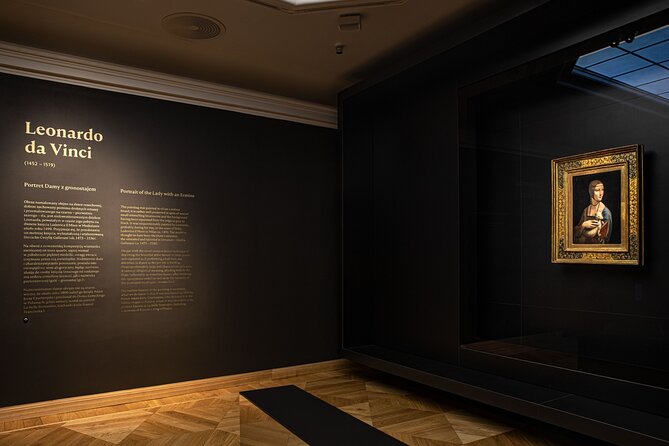
REVIEW · MUSEUMS
Krakow City Pass – Museums, Atractions & City Transport
Krakow rewards curious museum hoppers. This pass combines free tram and bus travel with admission to a broad selection of museums, churches, galleries, and historic sights. I especially like the freedom to move around the city without buying separate tickets, and the chance to visit smaller places such as the Pharmacy Under the Eagle, the Home Army Museum, and Jan Matejko’s former home.
The pass is most useful if you plan full museum days and use public transport often. The main drawback is that some of Krakow’s most popular sights, including the Rynek Underground and Oskar Schindler’s Factory, may require advance reservations, so admission is not always as simple as showing the card at the door.
In This Review
- Krakow’s museum pass at a glance
- What the $42.61 price really buys you
- Using the card without losing precious hours
- The Old Town sights: small churches, major art, and an underground market
- Kazimierz and wartime Krakow
- National Museum houses and Polish artists
- MOCAK, aviation, and the city beyond the center
- Kościuszko Mound and a panoramic break
- A playful stop for Krakow legends
- A practical one, two, or three-day plan
- Who gets the best value from this pass?
- Final verdict: buy it for a museum-heavy Krakow stay
- FAQ
- How long is the Krakow City Pass valid?
- Does the pass include public transport?
- How many museums are included?
- Does the pass include food or drinks?
- Is hotel pickup included?
- Are all museums open every day?
- Do I need to reserve museums in advance?
- Does the pass always let me skip the line?
- What time should I start using the card?
- Can most people participate?
Krakow’s museum pass at a glance
- One card covers museums and city transport: Ride Krakow’s buses and trams free during the selected one, two, or three consecutive days.
- World War II history is a major strength: The Pharmacy Under the Eagle, Schindler’s Factory, and the Home Army Museum offer different views of wartime Krakow.
- The pass reaches beyond the Old Town: MOCAK, the Polish Aviation Museum, Kościuszko Mound, and the Ethnographic Museum give you reasons to explore farther out.
- The best value comes from a busy schedule: You need several admissions and some tram rides before the $42.61 price begins to make sense.
- Monday requires careful planning: Many museums close that day, and some popular museums use timed entry or advance booking.
- It is valid by calendar dates, not rolling hours: Starting early matters, especially with a one-day card.
What the $42.61 price really buys you
The pass costs $42.61 per person and is sold for one, two, or three days. The exact value depends less on the number of places listed than on how many you can realistically visit before the card expires.
Krakow is compact in its central districts. You can walk between the Main Market Square, Wawel Hill, and much of Kazimierz. That means the transport element is handy, but it may not save a great deal if you mostly stay in the Old Town.
The card becomes more attractive when you visit museums outside the central walking loop. MOCAK, the Polish Aviation Museum, and Kościuszko Mound are the sort of places where included tram and bus rides can save both money and fuss. You also avoid hunting for tickets and spare change every time you board.
The pass includes entry to 22 museums, although older descriptions connected with this product refer to more than 40 places. Check the current attraction list before paying. The exact selection matters, especially if your plan is built around a particular museum.
A useful rule is simple: count the admission fees for the sights you truly intend to visit, then add the public transport you would otherwise buy. If your list includes only two or three low-cost museums, paying separately may be cheaper. If you plan four or more museums, plus outlying sights and frequent tram rides, the card has a better chance of earning its keep.
More Museum Visits in Kraków
- Auschwitz-Birkenau Museum and Memorial Guided Tour from Krakow
★ 4.5 · 1,510 reviews - Krakow: Rynek Underground Museum Guided Tour
★ 4.6 · 1,122 reviews - Krakow Schindler’s Factory Museum Guided Tour in English
★ 4.5 · 650 reviews
Using the card without losing precious hours
The card is valid for consecutive calendar days, not for a full 24, 48, or 72 hours from the moment you first use it. Start at breakfast, not late afternoon. A three-day card activated at 5 p.m. on Monday does not give you three full days of sightseeing.
This detail is easy to overlook and can make a major difference. A late arrival may leave you with less usable time than expected, particularly if you collect the card in person. Collection points, including the airport location mentioned in the booking information, have had limited evening hours. One reported problem involved arriving after 7 p.m. and finding collection points closed.
For that reason, check the pickup location and opening hours before you travel. If you land late, do not assume you can immediately use the pass for your airport transfer. This is one of the least convenient parts of the arrangement.
The card covers Krakow buses and trams day and night. That is useful for reaching Kazimierz, Nowa Huta, MOCAK, the Aviation Museum, and Kościuszko Mound. You still need a good route map. The pass gives you transport, but it does not replace planning.
At museums, admission is included, but the card does not always mean instant entry. Some places may still require you to collect a ticket, and the most popular attractions can fill their timed slots. Last admission is usually about 90 minutes before closing, so an afternoon museum sprint can end sooner than expected.
The Old Town sights: small churches, major art, and an underground market
Begin near the Main Market Square, where several included sights are close enough to connect on foot.
The Church of St. Adalbert is a compact stop beside the square. Give it about an hour if you want to pause properly rather than simply glance inside. Its small scale makes it a useful first visit, especially on a day when you are already exploring the center.
The Czartoryski Palace Museum offers a stronger art focus. Its collection gives you a break from Krakow’s churches and archaeology, and the historic palace setting adds to the visit. Plan about an hour, though art lovers may want longer.
The House of Jan Matejko introduces you to the home and work of one of Poland’s best-known painters. The appeal here is personal rather than grand. You are seeing an artist’s domestic setting, not just a large gallery of framed works.
The Gallery of 19th-Century Polish Art occupies the historic Cloth Hall in the middle of the Main Market Square. Its collection includes paintings and sculptures by Jan Matejko, Henryk Siemiradzki, and Józef Chełmoński. The displays cover Classicism, Romanticism, Academic Art, and Realism or Impressionism.
Allow about an hour. The gallery also has a terrace with a view over the square, giving you a good pause between indoor visits. This is one of the easiest card attractions to add to a walking day.
The Town Hall Tower is another central highlight. It is an architectural feature of the Main Market Square and fits naturally into a day of Old Town sightseeing. The pass also includes access to selected churches and art galleries, though you should confirm current opening rules before setting your schedule around one specific church.
The Rynek Underground is one of the more distinctive experiences. Below the square, a route follows excavated merchant stalls and traces of the medieval city. It connects modern Krakow with the trading center that existed beneath your feet.
There is an important catch: advance booking may be needed, and available times can disappear. Do not leave this museum until the last afternoon of your card period.
Kazimierz and wartime Krakow
Kazimierz is one of the best areas for combining history, food, and museum visits. The Ethnographic Museum occupies a former town hall in the district. The building dates back to the 15th century and was altered into a Renaissance structure in the 16th century.
The museum is a good choice when you want to see Polish folk culture rather than another collection of royal or religious art. Allow about an hour, and pair it with a walk through Kazimierz.
The Galicia Jewish Museum focuses on Jewish culture in Polish Galicia and commemorates Holocaust victims. Its approach is designed to show both the destruction of Jewish life and the culture that existed before and beyond the Holocaust.
The Pharmacy Under the Eagle and Oskar Schindler’s Factory offer two different ways to understand Krakow during World War II. The pharmacy recalls Tadeusz Pankiewicz and the wartime efforts connected with saving Jewish lives. Schindler’s Factory examines the German occupation and the people whose lives were affected by Oskar Schindler’s actions.
Schindler’s Factory is a major reason some people buy the card. It can save money and may help with the entry process, but do not assume you can simply walk in at any time. Advance booking has been necessary at times, and fully booked slots have reduced the value of the pass for people who planned late.
The Home Army Museum shifts attention to the Polish resistance during World War II. It is a useful companion to the Jewish history museums because it shows another part of the wartime story. Give it roughly an hour, but expect the subject matter to be serious.
A completely different kind of day out in Kraków:
- From Krakow: Auschwitz-Birkenau Guided Tour & Hotel Pickup
★ 4.5 · 33,358 reviews - From Krakow: Auschwitz-Birkenau Guided Tour & Hotel Pickup
★ 4.5 · 29,340 reviews - Krakow: Auschwitz Guided Tour with Optional Hotel Pickup
★ 4.5 · 15,280 reviews - Krakow–Zakopane: Cable Car, Chocholow Baths, Cheese & Vodka
★ 5.0 · 10,720 reviews
National Museum houses and Polish artists
Several included locations are smaller branches of the Krakow National Museum. These are valuable if you prefer focused visits to a long general collection.
The Józef Mehoffer House presents the home of the Polish artist Józef Mehoffer. Like the Matejko house, its strength is the connection between art and daily life. You can see how a residence shaped the experience rather than simply moving from gallery to gallery.
The Bishop Erazm Ciołek Palace houses National Museum collections in a historic palace. It is a good option if you want religious art and older Polish works in a more intimate setting.
The Hutten-Czapski Museum, located in the Czapski Palace complex, focuses on the collection associated with Emeryk Hutten-Czapski. The nearby Władysław Łoziński House is also connected with the museum site. Set aside about 90 minutes if you want to take this branch seriously.
The Wyspiański Museum occupies the Szolayski Tenement House and presents the work of Stanisław Wyspiański. He worked across painting, design, literature, and theatre, and is often placed alongside major turn-of-the-century European artists such as Klimt, Mucha, and Gaudí.
The collection contains about 900 works, with around 500 displayed in the major presentation described for the museum. This is a strong choice for anyone interested in Polish modernism and the artistic life of Krakow around 1900.
The Museum Gallery of the 19th Century Polish Art is a separate highlight from these smaller houses. If you have limited time, put it near the top of your list because it is central, visually impressive, and easy to combine with other sights.
MOCAK, aviation, and the city beyond the center
The card makes more sense when you use it to reach places you might otherwise skip.
MOCAK Museum of Contemporary Art in Krakow offers a modern counterpoint to the city’s churches, medieval excavations, and 19th-century painting. Contemporary art can be hit or miss, but the change of pace is worthwhile if you want something less traditional.
The Polish Aviation Museum is another outlying attraction. Its subject gives you a break from Krakow’s political, religious, and artistic collections. It is particularly suitable if you enjoy machines, aircraft, or technical history.
The Archaeological Museum’s Nowa Huta branch is located in a manor and park complex in Branice. The site has links to settlement dating back to the Neolithic period, around 6000 BC, and the branch adds a rural and archaeological angle to the city experience.
Do not treat these places as quick additions between Old Town stops. Their distance means you should group them into a planned transport day. The free bus and tram travel helps, but your time still has value.
Kościuszko Mound and a panoramic break
Kościuszko Mound is not a museum, but it gives the pass itinerary some fresh air and a broad view. The artificial mound honors Tadeusz Kościuszko, a major Polish national leader, and was modeled after Krakow’s prehistoric mounds.
A winding path leads to the top, about 326 meters above sea level. From there, you can see across the Vistula River and over the city. Allow about 90 minutes, including the climb and time at the summit.
This is a useful stop after several indoor museums. The mound is also a reminder that Krakow is more than its Old Town streets. Plan it with nearby transport rather than trying to squeeze it into a tightly packed central walking route.
A playful stop for Krakow legends
The Legends of Cracow presentation takes a lighter approach to the city. A robotic show presents stories connected with the Wawel Dragon, Kinga and the Wieliczka Salt Mine, the Mariacki towers, the yellow boot, and the Sigismund Bell.
Allow around 90 minutes. This is not a substitute for a major museum, but it can work well for families or anyone who wants a break from war history and formal art. It also gives you a quick introduction to the stories that shape Krakow’s popular identity.
A practical one, two, or three-day plan
For one day, stay central. Choose the Gallery of 19th-Century Polish Art, St. Adalbert’s Church, the Czartoryski Palace Museum, and either the Rynek Underground or a nearby church. Reserve the underground museum first if it is a priority.
For two days, use the first day for the Main Market Square and Old Town. Spend the second day in Kazimierz, combining the Ethnographic Museum, Galicia Jewish Museum, and one or both World War II museums.
For three days, use public transport for MOCAK, Kościuszko Mound, the Aviation Museum, or the Nowa Huta archaeological branch. You will enjoy the card more if you group distant sights instead of crisscrossing the city.
Do not count Auschwitz-Birkenau or the Wieliczka Salt Mine as part of this pass. They can take a full day and half a day respectively, leaving much less time for museums covered by the card. If those are the centerpieces of a short Krakow visit, a museum pass may not suit your schedule.
Who gets the best value from this pass?
I would recommend it most strongly to first-time visitors who want a packed cultural schedule, families who value simple tram and bus use, and repeat visitors looking for smaller museums beyond the standard highlights.
It is less convincing for a short weekend focused on walking, Wawel, the Main Market Square, Kazimierz, Auschwitz, and the salt mine. Krakow’s center is easy to explore on foot, and individual museum tickets can be inexpensive, with one reported average of about 10 złoty for many museums and around 24 złoty for Schindler’s Factory.
The pass also suits people who like flexibility. You can decide between art, archaeology, Jewish history, aviation, or city legends based on your mood. That freedom is its best feature, provided you have enough days to use it.
The overall rating associated with this experience is 3.8 out of 5. That feels fair. The card can be very convenient and good value, but only when your itinerary matches its strengths.
Final verdict: buy it for a museum-heavy Krakow stay
Buy the Krakow City Pass if you can start early, use it for at least two full days, and plan to visit several included museums. It is especially useful when you want Schindler’s Factory, the Rynek Underground, MOCAK, Kościuszko Mound, or the Aviation Museum in the same trip.
Skip it if you have only a short weekend, expect to walk almost everywhere, or have already filled your days with Auschwitz and Wieliczka. Before booking, check the current attraction list, Monday closures, reservation rules, and collection hours. With that homework done, the pass can turn Krakow’s many separate museum tickets into one simple plan.
FAQ
How long is the Krakow City Pass valid?
You can choose a one, two, or three-day pass. It is valid for consecutive calendar days, not for a rolling number of hours.
Does the pass include public transport?
Yes. It includes free travel on Krakow’s buses and trams at any time of day or night during the valid dates.
How many museums are included?
The supplied details state that entrance to 22 museums is included. Check the current attraction list because older descriptions have referred to a larger number.
Does the pass include food or drinks?
No. Food and drinks are not included, although the pass may provide discounts at selected restaurants, shops, and other businesses.
Is hotel pickup included?
No. Hotel pickup and drop-off are not included.
Are all museums open every day?
No. Some museums do not operate on Mondays. Check opening days before activating the pass.
Do I need to reserve museums in advance?
Some popular museums may require advance booking or timed entry. The Rynek Underground and Oskar Schindler’s Factory have had limited availability, so reserve them early if they are important to you.
Does the pass always let me skip the line?
No. Included admission does not always remove the need to collect a ticket or wait. Conditions can vary by museum.
What time should I start using the card?
Start as early as possible in the morning. Since the card uses calendar dates rather than hourly validity, a late start reduces the time available.
Can most people participate?
Yes. The information states that most people can participate, and the pass is near public transportation. The separate attractions may have their own access conditions.
Just added around Kraków
- Rynek Underground Museum & Wawel Castle, Cathedral – Cracow★ 5.0 · 3 reviews
- Schindler’s Factory, Ghetto and Plaszow Camp Guided Tour★ 4.7 · 3 reviews
- Nowa Huta – a guided tour of a utopian socialist city★ 5.0 · 3 reviews
- Krakow: Kazimierz by Golf Cart and Schindler’s Factory Tour★ 4.8 · 3 reviews
- Private Krakow City Tour by Car and Walk with private tour guide★ 5.0 · 3 reviews
- Krakow: Jewish Traces Private Electric Car Tour★ 4.1 · 3 reviews
- Discover the Jewish Quarter with a Bike Tour★ 5.0 · 3 reviews
- Krakow: Indoor Go-Karting (24-Minute Races)★ 4.8 · 3 reviews
Museums, compared.
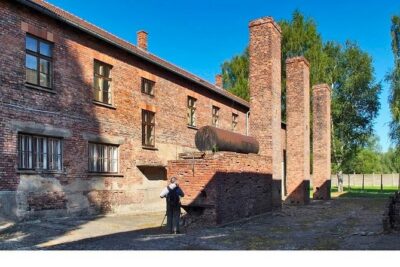
Auschwitz-Birkenau Museum and Memorial Guided Tour from Krakow
Read our review →
POLIN Museum of the History of Polish Jews Ticket
Read our review →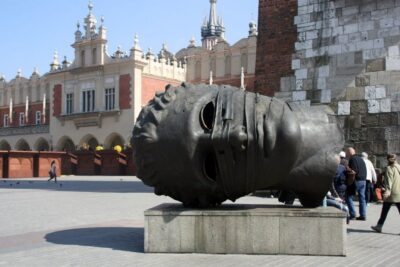


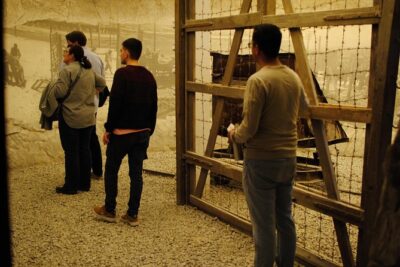
Krakow Schindler’s Factory Museum Guided Tour in English
Read our review →
Auschwitz Birkenau Museum Guided Tour with Pickup
Read our review →
Browse the lists this tour appears in