
REVIEW · GOLF CART TOURS
Krakow Guided Tour by Electric Golf Cart
Krakow reveals itself quickly from a golf cart. This $37.99 city tour links the Old Town, Kazimierz, Podgórze, and Krakow’s Jewish and wartime landmarks without asking you to cover every street on foot. I like the broad route and the easy photo stops, especially Krakus Mound and Ghetto Heroes Square. I also like that the driver may add personal commentary beyond the English audio guide.
The main trade-off is depth. Most synagogues, Schindler’s Factory, Wawel Castle, the Barbican, and the Eagle Pharmacy are viewed from outside, so this is best as a city orientation rather than a museum tour. Also check your pickup point carefully: one booking problem involved a location change that was not noticed in time.
In This Review
- Key points to know before booking
- What this Krakow golf cart tour is really designed to do
- From Schindler’s Factory to Ghetto Heroes Square
- Market Square and the practical snack stop
- Kazimierz, where the route slows down
- Wawel Hill and two important churches
- Krakus Mound gives the tour its best pause
- Barbican, Matejko Square, and the final Old Town views
- Driver commentary, audio guide, and photo time
- Is $37.99 good value?
- Who should book this ride?
- Should you book the Krakow electric golf cart tour?
- FAQ
- How long does the Krakow electric golf cart tour last?
- What language is the tour offered in?
- Is admission to Schindler’s Factory included?
- Can I enter Wawel Royal Castle during the ride?
- Is it possible to enter the synagogues during the tour?
- Can the driver stop for zapiekanki?
- How far in advance can I cancel for a full refund?
Key points to know before booking
- A wide route in 90 minutes to two hours: You see several parts of Krakow that are spread across the city, including Old Town, Kazimierz, Podgórze, and Krakus Mound.
- The golf cart saves your legs: This is useful if you want a quick overview without walking between distant sights.
- Schindler’s Factory and Wawel are exterior views: Admission is not included, and the cart does not take you inside.
- The best stop is Krakus Mound for many visitors: You get about 20 minutes to go up the hill and look across Krakow.
- Your driver can add real-time advice: Philippe received special praise for clear commentary, while Andrzej was appreciated for photo time and a useful drop-off.
- Ask about the zapiekanki stop: The driver can pause for five to ten minutes so you can buy Krakow’s famous toasted snack.
What this Krakow golf cart tour is really designed to do
I would treat this as a first look at Krakow, not a substitute for visiting its major museums and churches. The route covers a lot of ground, and the electric cart lets you connect areas that would otherwise require a fair amount of walking.
The stated duration is about one hour and 30 minutes to two hours. Timing can vary because some stops are short photo pauses, while Krakus Mound receives about 20 minutes and the two churches receive about 10 minutes each.
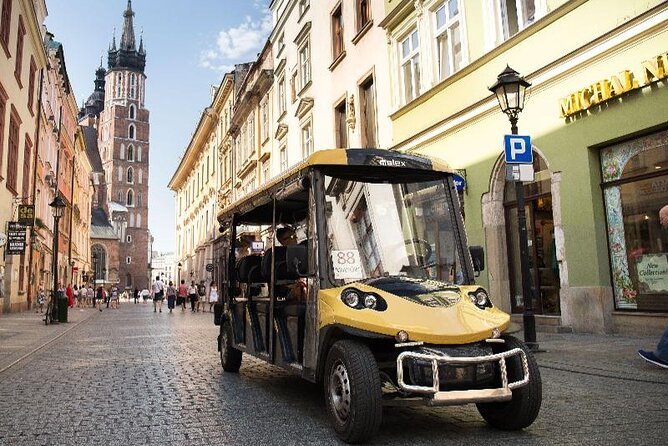
The cart carries a maximum of 47 people. That is a large possible group, so the experience may feel more like a shared city circuit than a private ride. At the same time, the open-sided vehicle gives you a useful view of streets and buildings as you move through town.
You receive an English-speaking driver and an English audio guide. The strongest version of the experience seems to come when the driver adds commentary instead of relying only on the recording. Philippe was singled out for giving more information than the prerecorded guide, explaining local history, and stopping to let the group look around.
More Golf Cart Tours in Kraków
- Krakow: City Sightseeing Tour by Electric Golf Cart
★ 4.5 · 3,264 reviews - Krakow: City Sightseeing Tour Eco Electric Buggy Golf Cart
★ 4.7 · 3,143 reviews - Krakow: Extended City Sightseeing Tour – Eco Buggy Golf Cart
★ 4.7 · 794 reviews
From Schindler’s Factory to Ghetto Heroes Square
The first major area is connected with Krakow’s wartime story. The cart passes the former Fabryka Emalia Oskara Schindlera, known in English as Oskar Schindler’s Factory.
You see the building from the vehicle, but admission is not included. The listed passage takes about five minutes, which is enough to place the factory on your mental map but not enough for the museum inside.
If you want to visit the museum, plan that as a separate activity. The golf cart route gives you context and saves you from searching for the building, but it cannot provide the full exhibitions, documents, and personal stories found inside.
The cart then passes Ghetto Heroes Square, once called Plac Zgody. This is one of the most serious places on the route. It was used for executions and the forced displacement of Krakow’s Jewish population during the liquidation of the ghetto in 1943.
Take this part slowly, even if the cart pauses only briefly. The square is not just another photo stop. Its name and memorials point to the people who were confined here and sent away during the German occupation.
Nearby are the original ghetto wall and the Eagle Pharmacy Museum. The surviving wall is only a 12-meter section, but it is an unusually direct piece of evidence from the former ghetto. A plaque in Hebrew and Polish commemorates the people who lived, suffered, and died here before being sent to death camps.
The Eagle Pharmacy is tied to Tadeusz Pankiewicz, the Polish pharmacist who ran the only pharmacy inside the ghetto and had permission to remain there. The cart passes this important site, but you should not expect an interior visit as part of the tour.
Market Square and the practical snack stop
The route crosses Krakow’s Main Market Square, the city’s central gathering place. The listed stop is about five minutes, so you get a quick look rather than a long wander among the square’s buildings and arcades.
This is one place where a small request can improve the outing. Ask the driver about stopping for zapiekanki, Krakow’s well-known open-faced toasted snack. The pause may last five to ten minutes, giving you time to buy one before continuing.
Snacks are not included, and bottled water is not included either. Bring water, especially if you plan to climb Krakus Mound after sitting in the cart. The snack pause is optional, but it adds a local food note to a route otherwise focused on monuments and difficult wartime subjects.
The compact timing means you should not expect a full meal or a long stay in the square. I would use the stop for a quick taste, a photo, or both.
Kazimierz, where the route slows down
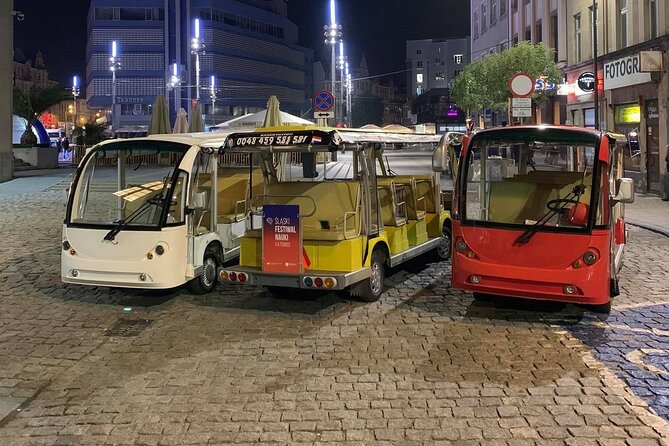
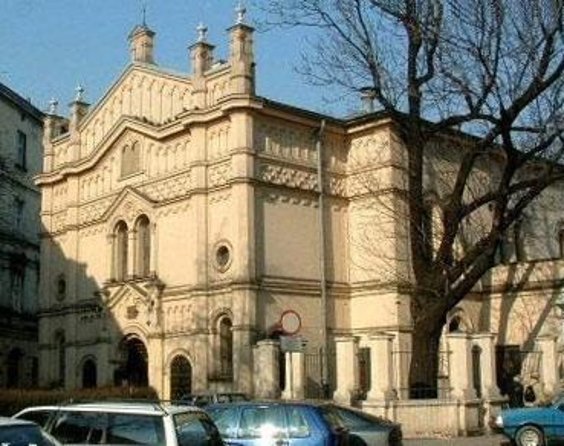
Kazimierz is one of the most rewarding parts of the tour because the cart passes a dense group of Jewish landmarks within a relatively small area. You see the Old Synagogue, Kupa Synagogue, Tempel Synagogue, Izaak Synagogue, High Synagogue, Wolf Popper Synagogue, and Remuh Synagogue.
The Old Synagogue is the oldest surviving synagogue building in Poland and an important example of Jewish architecture in Europe. You see it from outside. The same applies to Kupa Synagogue, founded in 1643 with funding from Kazimierz’s Jewish community.
Tempel Synagogue remains a major place of worship and a center for concerts and Jewish cultural events. Izaak Synagogue dates from 1644 and was funded by Izaak Jakubowicz, a banker connected with King Ladislaus IV.
The High Synagogue is also called the Tall Synagogue because of its height or because its prayer hall was on an upper floor. Wolf Popper Synagogue, founded in the early 17th century, now serves as a bookshop and art gallery in part of the building.
These drive-by views are useful if you are unfamiliar with Kazimierz, but the short format has limits. You will not have time to study each facade or compare the buildings in detail. You also cannot enter the Old Synagogue or Kupa Synagogue during the tour.
Remuh Synagogue receives about five minutes. It is the smallest of Kazimierz’s historic synagogues and one of the two active synagogues in Krakow. Admission is not included, so check separately if you want to go inside.
The route also passes the former Jewish hospital area near Kupa Synagogue and a location connected with the Krakow-born pianist and actress Rubinstein. These brief references add human detail, though the audio guide or driver will determine how much explanation you receive at each point.
A completely different kind of day out in Kraków:
- From Krakow: Auschwitz-Birkenau Guided Tour & Hotel Pickup
★ 4.5 · 33,358 reviews - From Krakow: Auschwitz-Birkenau Guided Tour & Hotel Pickup
★ 4.5 · 29,340 reviews - Krakow: Auschwitz Guided Tour with Optional Hotel Pickup
★ 4.5 · 15,280 reviews - Krakow–Zakopane: Cable Car, Chocholow Baths, Cheese & Vodka
★ 5.0 · 10,720 reviews
Wawel Hill and two important churches
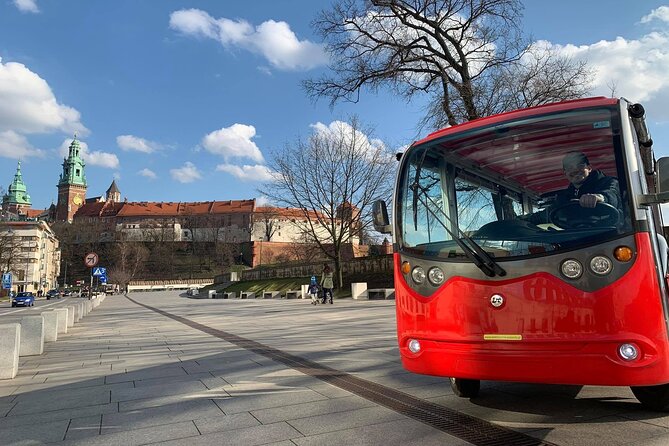
The cart passes Wawel Royal Castle, the historic royal complex on the Vistula River. Wawel Hill is one of Poland’s most important cultural sites, with buildings shaped by medieval, Renaissance, and Baroque design.
This is an exterior view only. You do not enter the castle, and admission is not included. That distinction matters because Wawel requires time if you want to see its courtyards, rooms, and collections properly.
The route continues through Plac Wolnica, once the great market square of Kazimierz. When Kazimierz was founded in 1335, the square was nearly as large as Krakow’s Main Market Square. It served as a center for administration, justice, and trade, with stalls selling items such as fur, tobacco, salt, and amber.
Church of St. Joseph appears in Podgórze on Podgórski Square. The stop is listed at about five minutes, with admission free. That makes it a simple place to pause for a photograph and see a different district beyond the Old Town and Kazimierz.
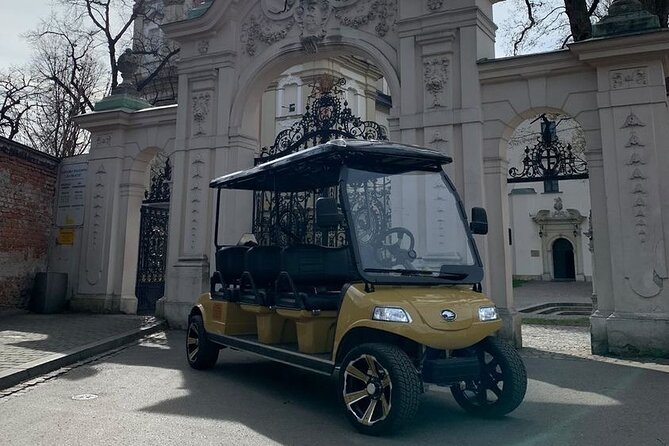
Church on the Rock, or Skałka, receives about 10 minutes. The basilica and Pauline monastery are linked with the killing of Saint Stanislaus in 1079, an event that led to the exile of King Bolesław II the Bold and the later canonization of the bishop.
Corpus Christi Church also receives about 10 minutes. Construction began in 1340 and continued into the 15th century. It was built as a monastery church and later given to the Canons Regular of the Lateran by King Władysław II Jagiełło.
The church stops are helpful because you can get out, take pictures, and see the buildings at closer range. Still, the tour does not promise long interior visits. If religious art or architecture is a main interest, return later with more time.
Krakus Mound gives the tour its best pause
Krakus Mound is the most active stop on the route. You have about 20 minutes, and you can walk up the hill for a broad view over Krakow.
The mound is in Podgórze, about three kilometers south of the city center. Local tradition connects it with King Krakus, with the mound said to have been formed by townspeople carrying earth in their sleeves after his death.
The climb is the one part of the tour where you do more than step out for a quick photograph. Wear shoes suitable for walking uphill, and use the time to look back across the city. The view gives you a better sense of how the Old Town, Kazimierz, and Podgórze relate to one another.
If you are choosing this tour mainly for sightseeing from the cart, Krakus Mound may surprise you. The ride gets you there, but the value comes from leaving the vehicle and making the short climb.
Barbican, Matejko Square, and the final Old Town views
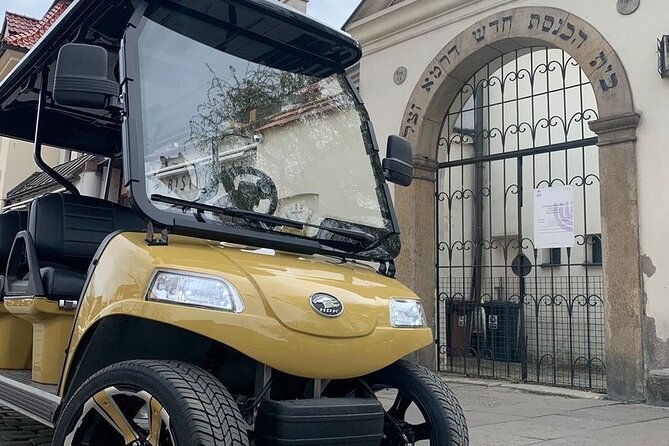
Near the end, the cart passes the Krakow Barbican, the rounded medieval defensive structure once linked to the city gate by a protected passage. The listed stop is only one minute, and admission is not included.
Matejko Square also receives about one minute. Here you see the Grunwald Monument, an equestrian statue of King Władysław II Jagiełło, along with the Tomb of the Unknown Soldier.
These are quick orientation points, not full visits. I would use them to note places to return to later. The Barbican and nearby Old Town streets are easy to explore on foot after the tour.
The route also includes a beautiful, popular church without giving a precise name in the tour details. That means you should rely on the driver or audio guide for the explanation at that point rather than expect a dedicated church visit.
Driver commentary, audio guide, and photo time
The English audio guide gives the tour a reliable base, especially if the driver is busy with traffic or the group is spread out. But the most useful moments may come from asking questions and requesting short stops.
One especially strong account praised Philippe for being friendly, explaining the different districts, and offering more detail than the recording. Another praised Andrzej for allowing time for pictures and dropping the group where it wanted to go, which saved time afterward.
You should not assume every ride will include the same personal touches. The supplied experience includes an English-speaking driver and photo time, so it is reasonable to ask for a brief pause when the route allows. If you want a snack stop or a particular drop-off, ask early.
The cart may also have blankets, a small comfort detail that matters on a cool Krakow day. You remain exposed to the weather more than you would in a standard enclosed vehicle, so dress for the conditions.
Is $37.99 good value?
At about $38 per person, this is not the cheapest way to see Krakow. You are paying for transport, a broad route, a driver, an audio guide, and the chance to cover four districts in under two hours.
I think the value is good if your time is short, your walking range is limited, or you want a clear first orientation before exploring on foot. The route reaches places that are not all clustered around the Main Market Square, especially Podgórze and Krakus Mound.
The value is weaker if you expect entry to museums and synagogues. Schindler’s Factory, Wawel Castle, the synagogues, the Barbican, and the Eagle Pharmacy are not included as interior visits. You will need separate tickets and additional time for those.
The maximum group size is 47, which can make the price feel more reasonable than a private car but may reduce personal attention. The strongest experience depends on the driver’s commentary and willingness to pause.
Who should book this ride?
I would recommend it for first-time visitors who want a fast introduction to Krakow. It also suits anyone who prefers sitting transport, families who need to conserve energy, and people with only a short window in the city.
History-minded visitors should use it as a preview. The ghetto sites, Schindler’s Factory, and Jewish Kazimierz deserve more time than this route can provide, but seeing their locations first can help you plan a return visit.
It is less suitable if your main goal is museum entry, long church visits, or a quiet private guide. The cart covers a lot, but the pace is brisk and many sights remain outside.
Be careful with pickup information. One poor experience came from a changed pickup location that went unnoticed, resulting in 45 minutes spent waiting in the wrong place. Check the latest meeting details before setting out.
Free cancellation is available if you cancel at least 24 hours before the start time. Changes or cancellations inside that period are not accepted for a refund.
Should you book the Krakow electric golf cart tour?
Book it if you want breadth, easy transport, and a useful city overview. The route connects Old Town, Kazimierz, the former ghetto, Wawel, and Krakus Mound far faster than most people could walk them.
Skip it if you want to enter the major sights during the same outing. For the best plan, take this ride early in your Krakow stay, note the places that interest you, then return to Schindler’s Factory, Wawel, the synagogues, or the churches with dedicated time.
At its best, this is a comfortable, practical introduction with a good driver and plenty of visual variety. Its limits are clear, but so is its purpose: get your bearings, hear the basic story, and save your legs for the places you choose to explore more deeply.
FAQ
How long does the Krakow electric golf cart tour last?
The tour lasts approximately one hour and 30 minutes to two hours.
What language is the tour offered in?
The tour is offered in English. It includes an English-speaking driver and an English audio guide.
Is admission to Schindler’s Factory included?
No. The cart passes through the area around Oskar Schindler’s Factory, but admission is not included and you do not enter during the tour.
Can I enter Wawel Royal Castle during the ride?
No. You see Wawel Royal Castle from the golf cart, and castle admission is not included.
Is it possible to enter the synagogues during the tour?
The tour information says you cannot enter the Old Synagogue or Kupa Synagogue during the ride. Remuh Synagogue is listed as an approximately five-minute stop, but admission is not included.
Can the driver stop for zapiekanki?
Yes. If you ask, the driver can stop for about five to ten minutes so you can buy zapiekanki. Snacks and bottled water are not included.
How far in advance can I cancel for a full refund?
You can cancel at least 24 hours before the experience start time for a full refund. Cancellations or changes made less than 24 hours before the start time are not accepted.
Just added around Kraków
- Rynek Underground Museum & Wawel Castle, Cathedral – Cracow★ 5.0 · 3 reviews
- Schindler’s Factory, Ghetto and Plaszow Camp Guided Tour★ 4.7 · 3 reviews
- Nowa Huta – a guided tour of a utopian socialist city★ 5.0 · 3 reviews
- Krakow: Kazimierz by Golf Cart and Schindler’s Factory Tour★ 4.8 · 3 reviews
- Private Krakow City Tour by Car and Walk with private tour guide★ 5.0 · 3 reviews
- Krakow: Jewish Traces Private Electric Car Tour★ 4.1 · 3 reviews
- Discover the Jewish Quarter with a Bike Tour★ 5.0 · 3 reviews
- Krakow: Indoor Go-Karting (24-Minute Races)★ 4.8 · 3 reviews
Golf Cart Tours, compared.
City Sightseeing Tour Eco Electric Buggy Golf Cart
Read our review →
Extended City Sightseeing Tour – Eco Buggy Golf Cart
Read our review →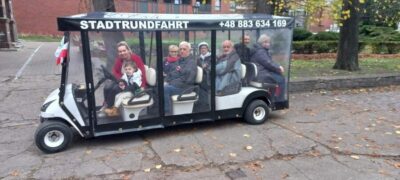
City Sightseeing Tour by Golf Cart/Buggy Guided Tour
Read our review →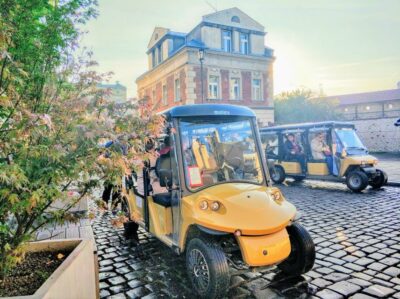
Jewish Quarter and Ghetto Electric Golf Cart Tour
Read our review →City Sightseeing Tour Eco Electric Buggy Golf Cart
Read our review →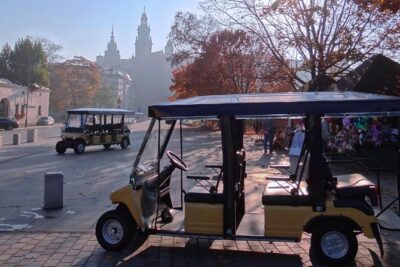
Krakow Grand City Tour by golf cart – All 3 districts
Read our review →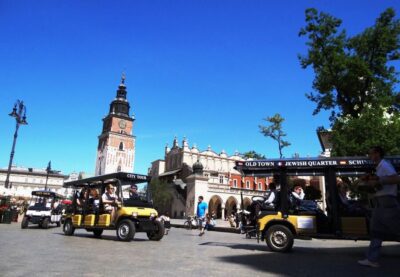
Browse the lists this tour appears in